Why This Camera & Lens Are Great for Panoramas
The Sony A7 IV paired with the Sigma 15mm f/1.4 DG DN Diagonal Fisheye Art is a powerhouse combo for 360° and ultra-wide panoramas. The A7 IV’s 33MP full-frame Exmor R BSI sensor delivers crisp detail with strong dynamic range at base ISO, and robust high-ISO performance for dim interiors and night scenes. The diagonal fisheye’s 180° diagonal field of view reduces the number of frames you need for full spherical coverage, speeding up capture and cutting stitching errors in dynamic scenes. Add in Sony’s reliable manual controls, focus magnification, and clean RAW files, and you have a practical, field-proven setup.
Key advantages: the A7 IV’s 14+ stops of usable dynamic range at ISO 100 help you retain highlight detail (windows, clouds) while pulling up shadows cleanly. Pixel pitch is approximately 5.1 μm, a solid sweet spot between resolution and noise control. The Sigma 15mm is purpose-built for mirrorless mounts (E and L), with excellent edge sharpness for a fisheye, low coma and chromatic aberration control, and a bright f/1.4 aperture that’s helpful when composing in low light (though you’ll typically shoot stopped down for depth of field). Because it’s a diagonal fisheye (not circular), distortion is expected and desirable for pano workflows—stitching software understands this projection and uses it to align frames with fewer control points.
Quick Setup Overview
- Camera: Sony A7 IV — Full-frame 35.9×23.9 mm, 33MP BSI sensor, native ISO 100–51,200 (expandable 50–204,800), ~14 stops usable DR at base ISO, 5-axis IBIS (disable on tripod).
- Lens: Sigma 15mm f/1.4 DG DN Diagonal Fisheye Art — diagonal fisheye (≈180° diagonal), extremely sharp stopped down, well-controlled CA, bulbous front element (no front filters), robust build.
- Estimated shots & overlap (tested ranges):
- Single row: 6 around at 60° yaw spacing, ~30–35% overlap, plus zenith and nadir (total 8).
- Fast-capture variant: 6 around at slight upward tilt (+10–15°), plus nadir only; zenith is covered by the tilt in many scenes.
- Max safety overlap: 8 around at 45° spacing if you anticipate heavy motion or complex parallax.
- Difficulty: Moderate — fisheye simplifies coverage but requires precise nodal alignment for perfect results.
Planning & On-Site Preparation
Evaluate Shooting Environment
Walk the scene and anticipate stitching challenges. Reflective surfaces (glass, glossy floors), fine repeating patterns (railings, tiles), or foreground objects near the lens can amplify parallax. If you must shoot through glass, place the lens hood as close to the glass as possible and shoot at a slight angle to avoid your reflection and reduce flare. In mixed lighting, note the color temperatures—this will guide your white balance lock. For outdoor sun, consider the sun’s position to avoid strong flare on the fisheye front element.
Match Gear to Scene Goals
The A7 IV & Sigma 15mm fisheye combo shines when you need speed and coverage. The A7 IV’s RAWs handle high-contrast scenes well, and it tolerates ISO 800–1600 cleanly when the tripod forces longer shutter speeds. The fisheye reduces shot count and stitching complexity versus rectilinear lenses, particularly useful for real estate interiors, sunset landscapes, or crowded events where time is limited. The trade-off is inherent fisheye distortion—which is expected and corrected in the stitch to produce an equirectangular 360 photo.
Pre-shoot Checklist
- Charge batteries; carry spares. Format high-speed UHS-II cards.
- Clean the front element carefully (bulbous glass is prone to smudges). Check the sensor for dust.
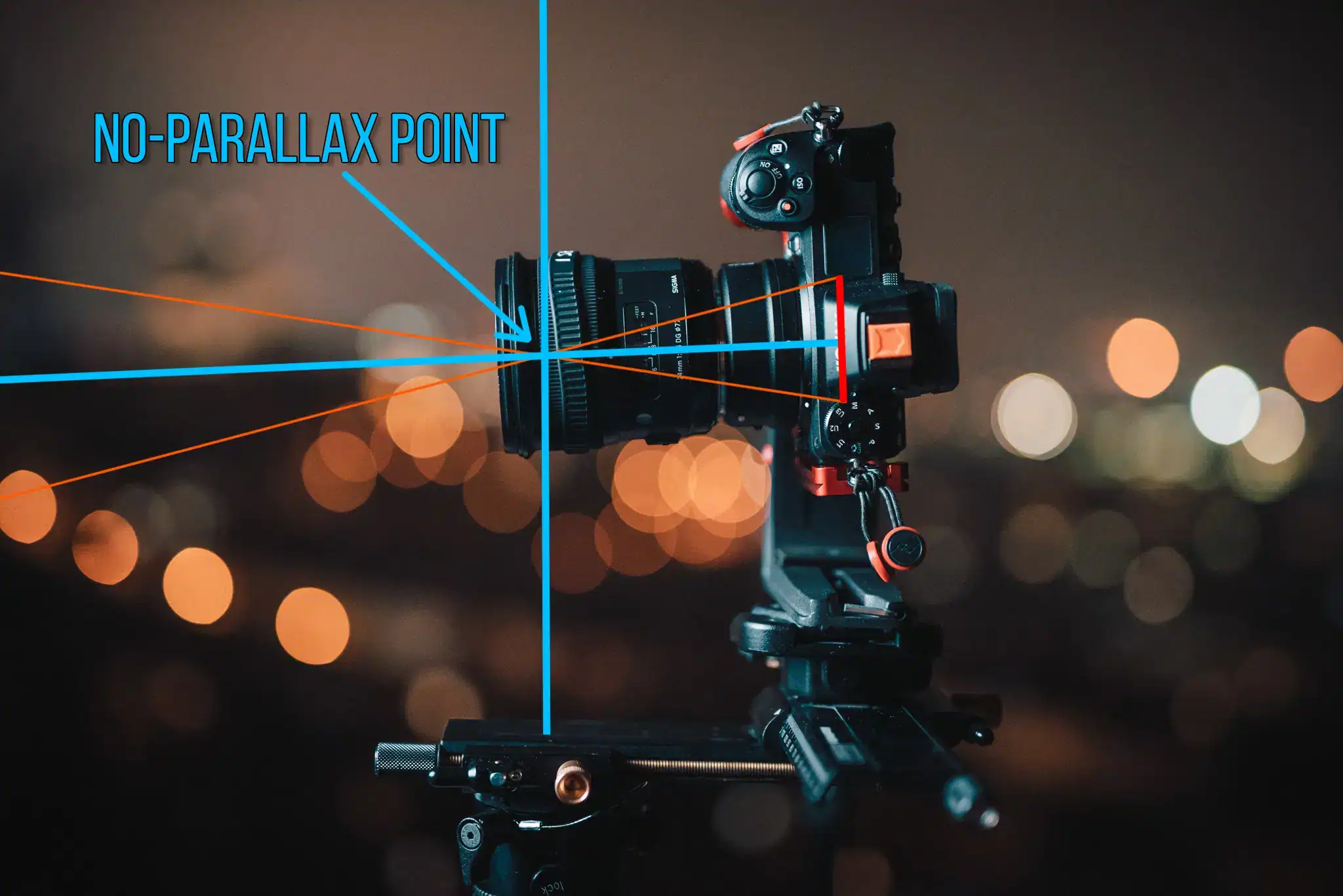
- Level your tripod and calibrate your panoramic head for the lens’s entrance pupil (nodal point).
- Safety: weigh or tether the tripod in wind; use tethers on rooftops or poles; ensure car mounts are rated and secured.
- Backup workflow: shoot a second pass if time allows; one extra nadir frame often saves a panorama.
Essential Gear & Setup
Core Gear
- Panoramic head: Use an L-bracket and rail system to align the lens’s entrance pupil over the rotation axis. This minimizes parallax when foreground objects overlap with background elements, which is critical for flawless stitches.
- Stable tripod with leveling base: A leveling base speeds setup and ensures your yaw rotation stays true, improving control point distribution in software.
- Remote trigger or app: Use Sony Imaging Edge Mobile or a wired remote to avoid vibration, especially with multi-shot HDR brackets.
Optional Add-ons
- Pole or car mount: For elevated or vehicle-based shooting, use a rated pole, guy lines, and safety tethers. Check wind conditions; reduce exposure times and spin slower to limit vibration blur.
- Lighting aids: Small LED panels can raise ambient levels in dark interiors, helping you run lower ISO and faster shutter speeds.
- Weather protection: A rain cover stops droplets on the fisheye; keep microfiber cloths handy—one drop can ruin a set.
Step-by-Step Shooting Guide
Standard Static Scenes
- Level and align: Level the tripod using the leveling base. Mount the panoramic head and set the lens so its entrance pupil sits above the rotation axis. A quick field test: position two vertical objects (one close, one far) along the frame edge; rotate the camera—if their relative position shifts, adjust the rail until the shift disappears.
- Manual exposure and WB: Switch to Manual (M). Set a fixed white balance (Daylight outside, 3200–4000K indoors) to avoid color shifts across frames. Disable Auto ISO; keep exposure locked throughout the set.
- Capture sequence: With the Sigma 15mm fisheye, shoot 6 frames around the horizon at 60° yaw spacing with 30–35% overlap. Add 1 zenith (tilt up ~60–75°) and 1 nadir (tilt down ~60–75°) for a clean 360×180.
- Nadir capture: After the main round, move the tripod slightly and take a handheld nadir shot from above the original tripod position to patch out tripod legs using viewpoint correction later.
HDR / High Dynamic Range Interiors
- Bracket: Use AEB with 5 frames at ±2 EV if the windows are very bright, or 3 frames at ±2 EV for moderate contrast. The A7 IV supports up to 9 frames—overkill for most panos but useful for extreme scenes.
- Lock WB and peripheral features: Fix WB to avoid bracket-to-bracket color shifts. Disable in-camera distortion/vignette corrections for RAW; let the stitcher handle projection. Keep IBIS off on tripod to avoid micro-blur during brackets.
Low-Light / Night Scenes
- Exposure strategy: Start around f/4–f/5.6, ISO 200–800, and drag shutter as needed (1–8s is common on tripod). The A7 IV handles ISO 1600 well; 3200 is usable with noise reduction.
- Stability: Use a remote trigger and 2s delay. Turn off IBIS on tripod. Shield the lens from wind; a hanging weight from the tripod center column helps.
Crowded Events
- Two passes: First pass for coverage; second pass to catch gaps when people move. Later, blend the clean areas using masks.
- Faster shutter: Aim for 1/200s or faster if people are close to the lens to reduce ghosting across frames.
Special Setups (Pole / Car / Drone)
- Pole: Use a rigid pole rated for your kit. Keep the set to 4–6 frames around to reduce time aloft. Avoid long exposures; ISO 800–1600 is fine on the A7 IV for speed.
- Car mount: Only on closed courses or permitted environments. Use high shutter speeds (1/500s+), and shoot in short bursts between vibrations. Safety tethers are mandatory.
Recommended Settings & Pro Tips
Exposure & Focus
| Scenario | Aperture | Shutter | ISO | Notes |
|---|---|---|---|---|
| Daylight outdoor | f/8–f/11 | 1/100–1/250 | 100–200 | Lock WB (Daylight); optimal sharpness and DOF |
| Low light/night | f/4–f/5.6 | 1/30–8s | 200–800 (1600 if needed) | Tripod & remote; IBIS off on tripod |
| Interior HDR | f/8 | Bracket ±2 EV | 100–400 | Windows vs shadows; merge evenly across all frames |
| Action / moving subjects | f/5.6–f/8 | 1/200+ | 400–800 | Freeze motion; consider two-pass strategy |
Critical Tips
- Manual focus: Use focus magnification and peaking. At 15mm and f/8, focusing around 0.7–1 m approximates hyperfocal for full-frame, keeping near-to-infinity sharp.
- Nodal calibration: Mark your rail position once found. Re-check if you change plates or L-brackets. With fisheyes, even a few millimeters off can show in near foregrounds.
- White balance lock: Avoid AWB; shift between frames creates seams. Use Kelvin or a custom WB target.
- RAW over JPEG: Keep the fisheye projection intact; disable lens corrections in-camera. Handle everything in the stitcher.
- IBIS and long exposures: Turn IBIS off on a tripod; keep it on only for handheld tests.
- Drive mode: Use self-timer (2s) or remote to minimize vibration, especially during bracketed HDR.
Stitching & Post-Processing
Software Workflow
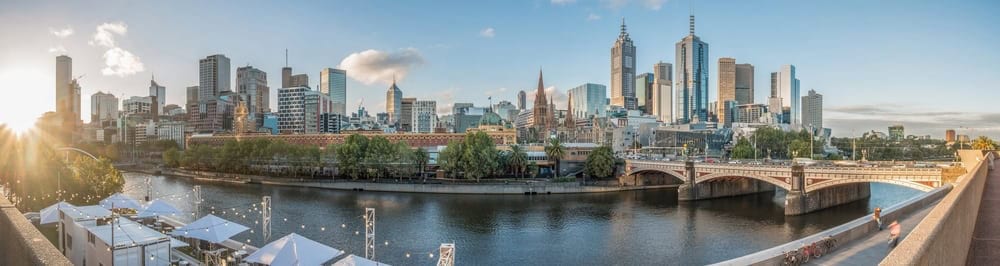
Import RAWs into your favorite converter (Lightroom, Capture One) for basic noise reduction and color consistency, but avoid profile-based distortion corrections. Export 16-bit TIFFs to your stitcher. In PTGui or Hugin, set lens type to “Full-frame fisheye,” focal length 15mm, and let the optimizer find control points. Fisheye pano sets typically need 25–35% overlap; the Sigma’s clean edges make automatic control point placement very reliable. After alignment, optimize yaw/pitch/roll and lens parameters, then check the control point table for outliers. For the nadir, use viewpoint correction (PTGui Pro) or patch manually in Photoshop.
For output, an 8,000–12,000 px wide equirectangular JPEG strikes a good balance for web/VR. For high-end virtual tours or fine art prints, 16,000 px is reasonable with the A7 IV’s 33MP sensor, depending on your overlap and sharpening workflow.
Cleanup & Enhancement
- Nadir patch: Export a layered PSD with a hole for the nadir and fill with the handheld nadir frame or a logo plate. Viewpoint correction helps align perspectives.
- Color matching: Apply global WB and tone curves. Use selective HSL to tame mixed lighting (e.g., tungsten lamps with daylight windows).
- Noise reduction: Apply mild chroma NR for ISO 1600+ night panos; preserve detail with masked luminance NR.
- Horizon control: Use the stitcher’s horizon tool to fix roll/tilt; keep verticals straight for real estate work.
- Export: Save a master 16-bit TIFF and a web-ready JPEG. If targeting VR, export equirectangular (2:1) with appropriate metadata.
For deeper dives into pano heads and stitching techniques, see this panoramic head setup tutorial and pano best practices. Panoramic head tutorial. For software evaluation, many pros rely on PTGui for speed and control point reliability. PTGui review and workflow insights.
Useful Tools & Resources
Software
- PTGui (Pro recommended for viewpoint correction)
- Hugin (open source)
- Lightroom / Photoshop (color and cleanup)
- AI tripod removal tools or manual clone for nadir
Hardware
- Panoramic heads: Nodal Ninja, Leofoto, Really Right Stuff
- Carbon fiber tripods with leveling bases
- Wireless remote shutters or smartphone app
- Pole extensions and safety tethers
For a broader overview on DSLR/mirrorless 360 capture and platform requirements, see the official guide to shooting and stitching 360 photos with interchangeable-lens cameras. Using a DSLR or mirrorless camera to shoot and stitch a 360 photo
Common Mistakes & How to Avoid Them
- Parallax error: Incorrect nodal alignment causes stitching gaps around nearby objects. Use rails and test with near/far objects before the main shoot.
- Exposure flicker: Auto modes change frame-to-frame. Lock exposure and WB; keep ISO fixed for the set.
- Tripod shadows and footprints: Always plan a nadir shot; patch in post.
- Ghosting from motion: Shoot faster shutter speeds, take double passes, and mask in post.
- Flare and smudges on the fisheye: Use a flag or your hand to shade the bulbous front element. Clean often; a single smear ruins an entire panorama.
- IBIS on tripod: Can cause micro-blur during long exposures or brackets. Disable stabilization when mounted solidly.
Frequently Asked Questions
- Can I shoot handheld panoramas with the Sony A7 IV?
You can, but success varies. Use very fast shutter speeds (1/250s+), lock exposure/WB, and keep overlap generous (40%+). Expect more manual control point cleanup in stitching. A tripod with a pano head dramatically reduces errors.
- Is the Sigma 15mm f/1.4 DG DN diagonal fisheye wide enough for single-row 360s?
Yes. A single row of 6 shots around plus a zenith and nadir reliably covers 360×180 with solid overlap. In many outdoor cases, 6 around at a slight upward tilt (+10–15°) plus a nadir is enough.
- Do I need HDR for interiors with bright windows?
Usually. Bracket 3–5 exposures at ±2 EV to protect window highlights and lift shadow areas. The A7 IV’s base-ISO dynamic range is strong, but HDR ensures clean tonality across the sphere.
- How do I avoid parallax issues with this combo?
Use a panoramic head and align the lens’s entrance pupil. Calibrate by aligning near/far verticals at the frame edge and adjusting the rail until there’s no relative shift during rotation. Once found, mark the rail position and keep it consistent with the same plate and body.
- What ISO range is safe on the A7 IV in low light?
On tripod, try to keep ISO 100–800 for the cleanest files. ISO 1600 is often fine with mild noise reduction; ISO 3200 is workable for events or poles where you need faster shutter speeds.
- Can I set up Custom Modes for pano work?
Yes. Example: C1 for daylight pano (M, f/8, 1/160, ISO 100, WB Daylight). C2 for HDR interiors (M, f/8, ISO 100, bracket ±2 EV, WB 3500–4000K). C3 for night (M, f/4–5.6, 1–8s, ISO 200–800, IBIS off).
- How do I reduce fisheye flare?
Avoid pointing directly at the sun when possible; use your hand or a small flag just outside the frame to shade the lens. Clean the front element frequently and consider repositioning to keep bright sources off-axis.
- What’s the best tripod head for this setup?
A multi-row panoramic head with fore-aft and lateral rails (e.g., Nodal Ninja, Leofoto) is ideal. Look for precise scales, rigid clamps, and a compact L-bracket for repeatable nodal alignment.
For practical Q&A and optical math around resolution and overlaps, the Panotools wiki is a helpful rabbit hole. DSLR spherical resolution reference. For broader community techniques, see this curated discussion. Best techniques to take 360 panoramas
Real-World Use Cases with the A7 IV + 15mm Fisheye
Indoor Real Estate
Tripod height at 1.3–1.5 m keeps furniture proportions natural. Shoot 6 around + zenith + nadir at f/8. Bracket ±2 EV for bright windows. Lock WB around 3800K for tungsten-heavy rooms, or use a custom WB target to keep colors consistent between rooms.
Outdoor Sunset
When the sun is low, aim for a frame with the sun partially blocked by a structure to minimize flare. Expose for the highlights and lift shadows later, or do 3-frame brackets. A slight upward tilt in the 6-around pass often covers the zenith without a dedicated shot.
Crowded Events
Two passes with faster shutter speeds (1/250s) reduce ghosting. If a frame is ruined by a moving subject, you can swap it with the corresponding frame from the second pass in PTGui via masks.
Safety, Limitations, and Backup Strategy
Always secure your gear—tether on rooftops and elevated poles, and weigh the tripod in wind. The fisheye’s front element is exposed; use a cap between locations and avoid contact with sand or salt spray. Disable IBIS on tripod to prevent micro-vibrations during multi-second or bracketed exposures. In wet weather, dry the front element before each frame; a single droplet can ruin a group.
Limitations to note: the diagonal fisheye’s edge areas, while sharp stopped down, are more sensitive to misalignment—minor rail errors can show as stitch stress near the frame periphery. In extreme mixed lighting, color casts vary across the sphere; consider a gray card shot per location to normalize in post. Finally, adopt a backup workflow: shoot a second coverage round or at least extra zenith/nadir frames so you don’t lose a job to a single missed frame.
For an in-depth, structured pano-head setup refresher, this training resource is excellent. Set up a panoramic head for high-end 360 photos