Why This Camera & Lens Are Great for Panoramas
The Sony A7 IV paired with the Pentax DA 10–17mm f/3.5–4.5 ED Fisheye is an unconventional but highly capable panorama setup. Here’s why it works. The A7 IV’s 33MP full-frame back-illuminated sensor delivers excellent dynamic range (about 14 stops at base ISO 100), strong color depth, and reliable high-ISO performance. Its pixel pitch is roughly 5.1µm, which helps keep noise controlled in long exposures. It also offers 5-axis IBIS, responsive manual focus aids (focus peaking and magnification), a deep buffer, and dual card slots—practical for high-volume, bracketed 360° work.
The Pentax DA 10–17mm is a diagonal fisheye designed for APS-C. On the A7 IV, you can use it in APS-C mode, which avoids severe vignetting and gives you the expected fisheye field of view: around 180° diagonal at 10mm. A diagonal fisheye for APS-C greatly reduces the number of shots needed for a full spherical panorama compared with a rectilinear lens—stitching is usually easier because overlap is generous and the projection is predictable. Do note the lens is K-mount and lacks an aperture ring; you will need a quality K-to-E adapter with an aperture control lever. Most adapters do not provide AF for screw-drive Pentax lenses, so treat this as a manual-focus setup—ideal for panoramas anyway.
Bottom line: the A7 IV’s clean files and Sony’s dependable ecosystem, combined with the fisheye’s extreme coverage in APS-C mode, make a compact, affordable, and field-proven rig for 360° virtual tours, outdoor sceneries, and even low-light interiors with HDR bracketing.
Quick Setup Overview
- Camera: Sony A7 IV — Full-frame 33MP BSI CMOS, approx. 35.9 × 23.9 mm sensor. APS-C crop mode yields about 14MP images. Excellent DR at ISO 100; clean to ISO 800–1600 for panoramas.
- Lens: Pentax DA 10–17mm f/3.5–4.5 ED — Diagonal fisheye for APS-C. Best sharpness near f/5.6–f/8; some lateral CA and edge softness typical of fisheyes. Requires K–E adapter with aperture control.
- Estimated shots & overlap (tested ranges):
- 10mm (APS-C mode): 6 around (60° yaw) + 1 zenith + 1 nadir. Safe overlap ≈ 30–35%.
- 12–14mm: 8 around + zenith + nadir. Overlap ≈ 30%.
- 17mm: 10–12 around + zenith + nadir; or two rows for higher resolution.
- Difficulty: Moderate — requires adapter, nodal calibration, and locked manual exposure for best results.
Planning & On-Site Preparation
Evaluate Shooting Environment
Identify light levels, reflective surfaces (glass, polished metals), and sources of movement (people, trees in wind, traffic). For windows and glass railings, shoot at a slight angle and keep the front element clean to reduce flare. If you must shoot through glass, get as close as possible (1–2 cm) and shield the lens with your hand or a flexible hood to minimize reflections. In interiors with mixed lighting, note how color temperatures vary; you’ll lock white balance to avoid stitching mismatches.
Match Gear to Scene Goals
The A7 IV’s DR and 14-bit RAW files are excellent for HDR interiors and sunset skies. ISO 100–400 is optimal; safe handheld or low-light ranges are about ISO 800–1600 if needed. The fisheye’s big advantage is fewer frames with generous overlap—great for quick 360 photos and faster stitching. The trade-off is pronounced fisheye distortion in the raw frames (normal), which the stitcher will project correctly. In very tight spaces, the fisheye reduces the number of frames and increases your chances of a seamless stitch despite nearby objects.
Pre-shoot Checklist
- Battery & cards: Charge fully and carry spares. Use dual recording on the A7 IV for redundancy.
- Adapter: Use a K–E mount adapter with an aperture lever. Without it, the DA 10–17 stays wide open.
- Lens & sensor cleaning: Dust shows up in big skies and bright walls—clean before each job.
- Tripod leveling & pano head calibration: Level the base and confirm nodal settings for this lens.
- Safety checks: In wind, weigh down the tripod; on rooftops or vehicles, tether your gear.
- Backup workflow: If time permits, shoot a second pass (especially HDR) in case of missed frames or motion.
Essential Gear & Setup
Core Gear
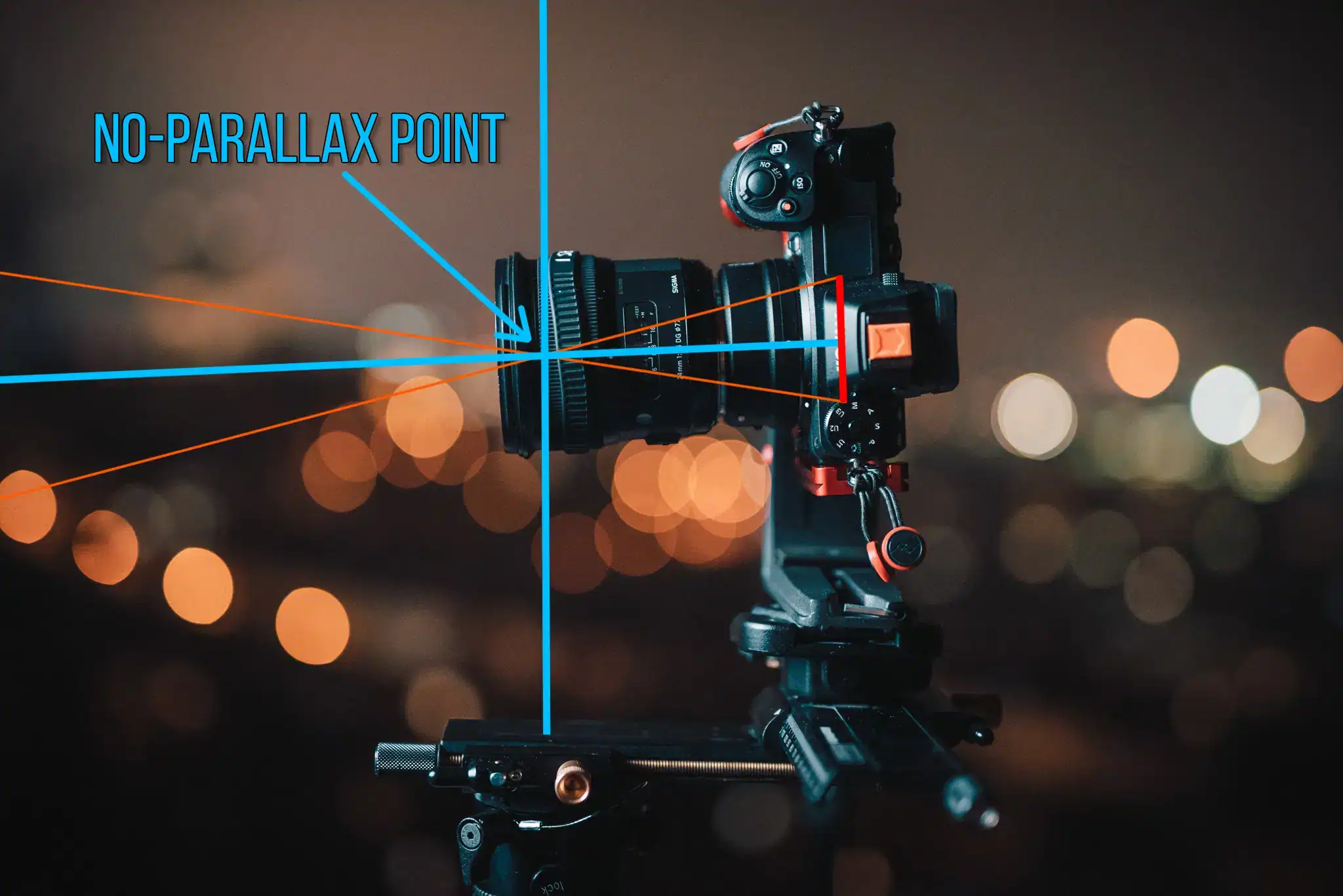
- Panoramic head: A proper pano head lets you rotate around the lens’s no-parallax point (entrance pupil), preventing parallax errors that cause stitching gaps near the camera. This is critical with close foreground objects.
- Stable tripod with leveling base: A leveling base speeds setup and keeps your yaw rotation true to horizon.
- Remote trigger or app: Use the Sony Imaging Edge app or a simple remote to avoid introducing vibrations.
Optional Add-ons
- Extension pole or car mount: Great for elevated or vehicle-based shots, but secure everything with tethers. Watch wind and vibration—slow your rotation and use faster shutter speeds.
- Low-light aids: Compact LEDs to balance interior lighting; a small flag to block flare from point lights.
- Weather covers: Protect the A7 IV in drizzle; rain droplets on a fisheye are very visible.
Nodal Calibration (Quick Method)
Mount the A7 IV with the DA 10–17 on your pano head. Place a light stand 50–100 cm in front of the camera and a building edge or pole several meters behind it. Rotate the pano head side to side. If the front and back objects shift relative to each other, adjust the fore-aft rail until that shift disappears. Repeat at your working focal length (10mm if you shoot 6-around). Re-check at +10° and -10° pitch because the entrance pupil of zoom fisheyes can shift slightly through the zoom range. Mark the rail for faster setup next time.
For a deeper dive on panoramic head setup and no-parallax alignment, see this panoramic head tutorial by 360Rumors. Learn more about nodal alignment.
Video: Pano-Head Basics
Prefer watching? This concise video covers essential considerations when aligning and rotating on a pano head.
Step-by-Step Shooting Guide
Standard Static Scenes
- Set APS-C Mode: On the A7 IV, set APS-C/Super 35 = ON to avoid severe vignetting with the DA 10–17. You’ll get ~14MP files—more than enough for most virtual tours.
- Level & Align: Level the tripod with a bubble or the A7 IV’s level display. Confirm nodal alignment on your pano head.
- Manual Exposure & WB:
- Mode: M. Meter the brightest part of the scene and expose to protect highlights (especially outdoors).
- White Balance: Lock to Daylight/Tungsten or a Kelvin value. Avoid Auto WB for panoramas.
- Manual Focus: Use magnification and peaking; at 10mm and f/8, set focus near the hyperfocal distance (~0.6–0.7 m) for front-to-back sharpness.
- Capture Sequence:
- At 10mm: 6 around at 60° yaw, then 1 zenith shot (tilt up ~90°), and at least 1 nadir shot. If using a tall tripod, take 2–3 nadir shots after slightly shifting the tripod or using a nadir adapter.
- Use a 2-second self-timer or remote for vibration-free frames. IBIS off on tripod.
HDR / High Dynamic Range Interiors
- Bracket: Shoot ±2 EV (3 or 5 frames). The A7 IV’s clean base ISO files blend smoothly and preserve window detail.
- Keep WB locked: Mixed lighting will average out better; fix residual casts in post.
- Sequence: For each yaw position, capture the full bracket before rotating to keep movement consistent between frames.
Low-Light / Night Scenes
- Aperture f/4–f/5.6; shutter 1/15–1/60; ISO 400–800 (push to 1600 if necessary). Use long exposure on a rigid tripod.
- Disable IBIS (SteadyShot) on a tripod to prevent micro jitter. Use EFCS or full mechanical shutter to avoid any banding from lights.
- Use a remote or 2–5 s self-timer. Shield the lens from point light sources to limit flare.
Crowded Events
- Do two passes: First for composition, second waiting for gaps in movement. Favor faster shutter (1/200+) and ISO 800–1600 as needed.
- In post, use masks to keep one person per area and remove duplicates and ghosts.
Special Setups (Pole / Car / Rooftop)
- Secure & Tether: Use safety lines on pole rigs or car mounts. Pre-check for flex and resonance.
- Increase Shutter Speed: 1/250–1/500 if possible to counter vibration; shoot fewer angles if time-constrained.
- Wind Warning: Elevated fisheyes catch wind; keep rotations minimal and plan your sequence before lifting.
Recommended Settings & Pro Tips
Exposure & Focus
| Scenario | Aperture | Shutter | ISO | Notes |
|---|---|---|---|---|
| Daylight outdoor | f/8–f/11 | 1/100–1/250 | 100–200 | Lock WB (Daylight). Expose for highlights, recover shadows in RAW. |
| Low light/night | f/4–f/5.6 | 1/30–1/60 | 400–800 | Tripod & remote. Consider stacking or NR in post. |
| Interior HDR | f/8 | Bracket ±2 EV | 100–400 | Keep bracket order consistent; turn off Auto ISO. |
| Action / moving subjects | f/5.6–f/8 | 1/200+ | 400–800 | Freeze movement and mask in post as needed. |
Critical Tips
- Manual focus at hyperfocal: At 10mm and f/8 in APS-C, set ≈0.6–0.7 m to keep everything from ~0.35 m to infinity acceptably sharp.
- Nodal calibration: Mark the fore-aft rail position for 10mm and 14mm—the entrance pupil shifts slightly as you zoom.
- White balance lock: Prevent color shifts between frames that are hard to fix across brackets.
- RAW vs JPEG: Shoot RAW for DR and WB latitude. JPEGs can band in HDR merges.
- IBIS off on tripod: The A7 IV’s IBIS can introduce micro movement during long exposures on solid support.
Stitching & Post-Processing
Software Workflow
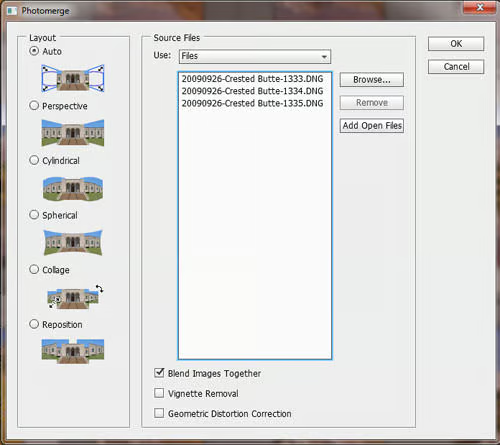
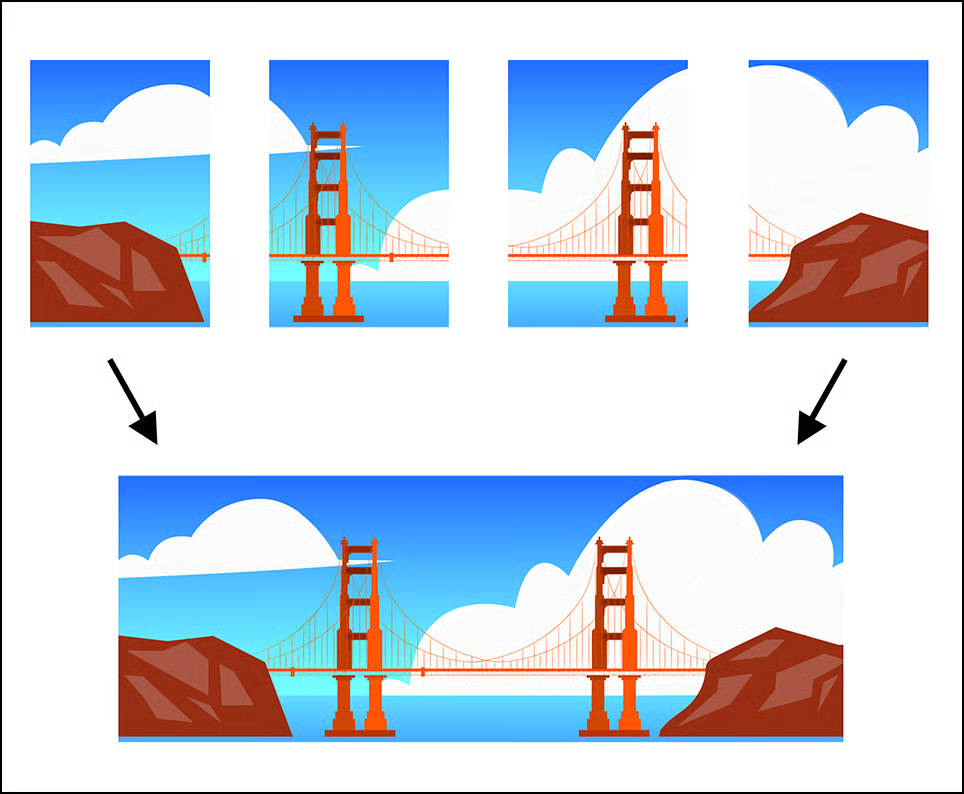
PTGui is the industry standard for fast, accurate spherical stitching with fisheye lenses. Hugin is a robust open-source alternative. Import your sequence (or bracketed stacks), set lens type to fisheye, and confirm the approximate focal length (10mm in APS-C). With the DA 10–17, 25–35% overlap stitches cleanly. For bracketed interiors, either pre-merge HDR per angle (exposure fusion) or use PTGui’s built-in HDR fusion. Fisheye sequences typically require fewer images and stitch faster; rectilinear sets need more frames but tend to avoid extreme edge curvature. A concise PTGui overview can be found here. Fstoppers: PTGui review.
Cleanup & Enhancement
- Nadir patching: Use a dedicated nadir shot or content-aware fill. Many AI tools work well on uniform floors.
- Color correction & NR: Apply selective noise reduction for shadow areas. Keep WB consistent across the set.
- Leveling: Use the stitcher’s horizon tool to correct roll and pitch. Ensure the final projection is equirectangular for 360 viewers.
- Export: Save a 2:1 equirectangular JPEG/TIFF. For VR platforms, a 12k–16k width output from this setup is feasible if you shoot multi-row or higher coverage; single-row APS-C mode often yields 6k–8k.
For platform-ready guidance (metadata and viewer compatibility), this VR creator guide is useful. Oculus: Using a mirrorless camera to shoot and stitch a 360 photo.
Note: Software updates change features and interfaces. Always follow the latest official documentation.
Useful Tools & Resources
Software
- PTGui panorama stitching
- Hugin open source
- Lightroom / Photoshop for RAW, color, and finishing
- AI tripod/nadir removal tools
Hardware
- Panoramic heads: Nodal Ninja, Leofoto, or equivalent
- Carbon fiber tripods with leveling bases
- Wireless remote shutters or the Sony Imaging Edge app
- Pole extensions and car mounts with safety tethers
Disclaimer: Names provided for search convenience; confirm compatibility and specs on official sites.
If you’re new to choosing camera/lens combos and pano heads, here’s a practical resource on virtual-tour gear trade-offs. DSLR/VT gear guide and FAQ.
Common Mistakes & How to Avoid Them
- Parallax error → Rotate around the no-parallax point; verify with close/far alignment tests.
- Exposure flicker → Manual exposure and locked white balance; avoid Auto ISO for panoramas.
- Tripod shadows/footprint → Shoot a nadir frame and patch; avoid casting your own shadow.
- Ghosting from people/trees → Time your frames, do a second pass, and mask in post.
- Softness at the edges → Stop down to f/5.6–f/8 and use the hyperfocal; avoid shooting wide open.
- Adapter oversight → The DA 10–17 needs an adapter with an aperture control lever; confirm before the shoot.
Frequently Asked Questions
- Can I shoot handheld panoramas with the Sony A7 IV?
Yes, but results vary. Use 10mm, shoot fast (1/250+), and overlap generously (40–50%). Handheld is fine for casual 360 photos outdoors; for paid work or interiors, use a leveled tripod and pano head for predictable stitching.
- Is the Pentax DA 10–17mm wide enough for single-row 360?
At 10mm in APS-C mode, yes—plan for 6 shots around plus a zenith and a nadir. In tight spaces or with complex ceilings, add one extra up-tilted frame for safety.
- Do I need HDR for interiors with bright windows?
Usually, yes. Bracket ±2 EV (3–5 frames) per angle. The A7 IV’s DR is strong, but HDR preserves window views and clean shadows without noise or color banding.
- How do I avoid parallax issues with this lens and adapter?
Use a panoramic head with fore-aft adjustment. Calibrate at 10mm (your most-used focal length). Keep foreground objects at least 1–2 meters away when possible. Check your alignment after moving locations.
- What ISO range is safe on the A7 IV in low light?
For tripod panoramas, stay at ISO 100–400 when you can. ISO 800–1600 still looks clean. Only push higher if motion requires faster shutter speeds; otherwise increase exposure time.
Real-World Case Studies
Indoor Real Estate, Mixed Lighting
With the A7 IV in APS-C mode and the DA 10–17 at 10mm, shoot 6-around + Z + N. Use f/8, ISO 100–200, and bracket ±2 EV. Lock WB to 4000–4500K to average tungsten and daylight. In PTGui, use exposure fusion or HDR and balance the windows with gentle highlight recovery in Lightroom. This fast workflow often delivers a clean 8k equirectangular suitable for virtual tour platforms.
Outdoor Sunset, High DR
Expose for the sky to protect highlights (f/8, ISO 100, 1/125–1/250), or bracket if foregrounds are important. Add a zenith shot after the sun sets a bit to minimize flare. Dehaze sparingly and keep saturation realistic—stitching seams are easier to hide when color is consistent across frames.
Event Crowd, Limited Time
Shoot 6-around quickly at 1/250, f/5.6, ISO 800. Do a second pass when the crowd flows change, then mask the cleanest subjects per sector in post. A fisheye is forgiving here—overlap is generous, and you can complete a full rotation in seconds.
Rooftop or Pole Capture
Mount the pano head on a sturdy carbon pole and tether the camera. Use 1/250–1/500, f/5.6–f/8, ISO 200–800. Plan the rotation sequence before lifting to reduce time aloft. Wind gusts cause micro misalignments; overshoot a couple of safety frames and lean on PTGui’s control point optimizer to clean up small errors.
Visual Notes
Safety, Reliability & Data Integrity
- Wind and edges: Heavier tripods are safer on rooftops. Always use tethers near drop edges.
- Rain and spray: Fisheyes are vulnerable to droplets—keep a microfiber handy and shield the front element.
- Data safety: Use dual-card recording, and back up to a laptop or SSD during breaks. Shoot a second pass for mission-critical jobs.
- Adapter checks: Ensure the aperture lever on your K–E adapter reliably stops down; test at home before client work.
For more pano technique fundamentals and community-sourced tips, this Q&A thread is a useful reference. Best practices for 360 panoramas.