Why This Camera & Lens Are Great for Panoramas
If your goal is to learn how to shoot panorama with Sony A7 IV & Nikon AF-S 8-15mm f/3.5-4.5E ED Fisheye, you’ve picked a flexible, high‑quality combo. The Sony A7 IV’s 33MP full‑frame sensor (approx. 35.9 × 23.9 mm) delivers excellent detail and roughly 14 stops of usable dynamic range at base ISO with 14‑bit RAW, while its 5‑axis IBIS helps for handheld scouting shots. The Nikon 8–15mm is a fisheye zoom that can be circular at 8mm (full 180° in every direction within a circle) or diagonal at 15mm (180° across the frame’s diagonal). That lets you choose between ultra‑fast 360° capture with fewer frames (8–10mm) or higher per‑shot resolution with more frames (12–15mm).
Mount compatibility note: this lens is Nikon F‑mount with an electronic “E‑type” diaphragm. On the Sony A7 IV (E‑mount), use a smart Nikon F → Sony E adapter that supports aperture control for E‑type lenses (e.g., Commlite CM‑ENF‑E1 Pro, Viltrox NF‑E1). Autofocus on adapters can be inconsistent, but for panoramas you’ll typically use manual focus anyway. Without a compatible smart adapter, the lens will remain wide open, which is not ideal for pano sharpness and depth of field.
Fisheye optics give you huge angle of view and fast capture with fewer shots. The tradeoff is strong projection curvature, which is expected and corrected in stitching. With proper nodal/entrance‑pupil alignment and overlap, the combo stitches cleanly and can deliver high‑resolution equirectangular outputs suitable for virtual tours, social media 360 photos, and immersive web players.
Quick Setup Overview
- Camera: Sony A7 IV — 33MP full-frame (approx. 35.9×23.9 mm), 14‑bit RAW, excellent base ISO dynamic range, 5‑axis IBIS.
- Lens: Nikon AF-S 8-15mm f/3.5-4.5E ED Fisheye — fisheye zoom; circular at 8mm, diagonal at ~15mm; sharpest around f/8–f/11; CA is modest and easy to correct in post.
- Estimated shots & overlap (tested starting points):
- 8mm circular: 4 shots around (90° apart) + optional zenith + nadir (30–35% overlap).
- 10–12mm: 6 shots around + zenith (+ optional nadir), 30% overlap.
- 15mm diagonal: 8 shots around + zenith + nadir, 25–30% overlap.
- Difficulty: Easy to Moderate (fisheye requires careful nodal alignment; fewer shots, but alignment matters).
Planning & On-Site Preparation
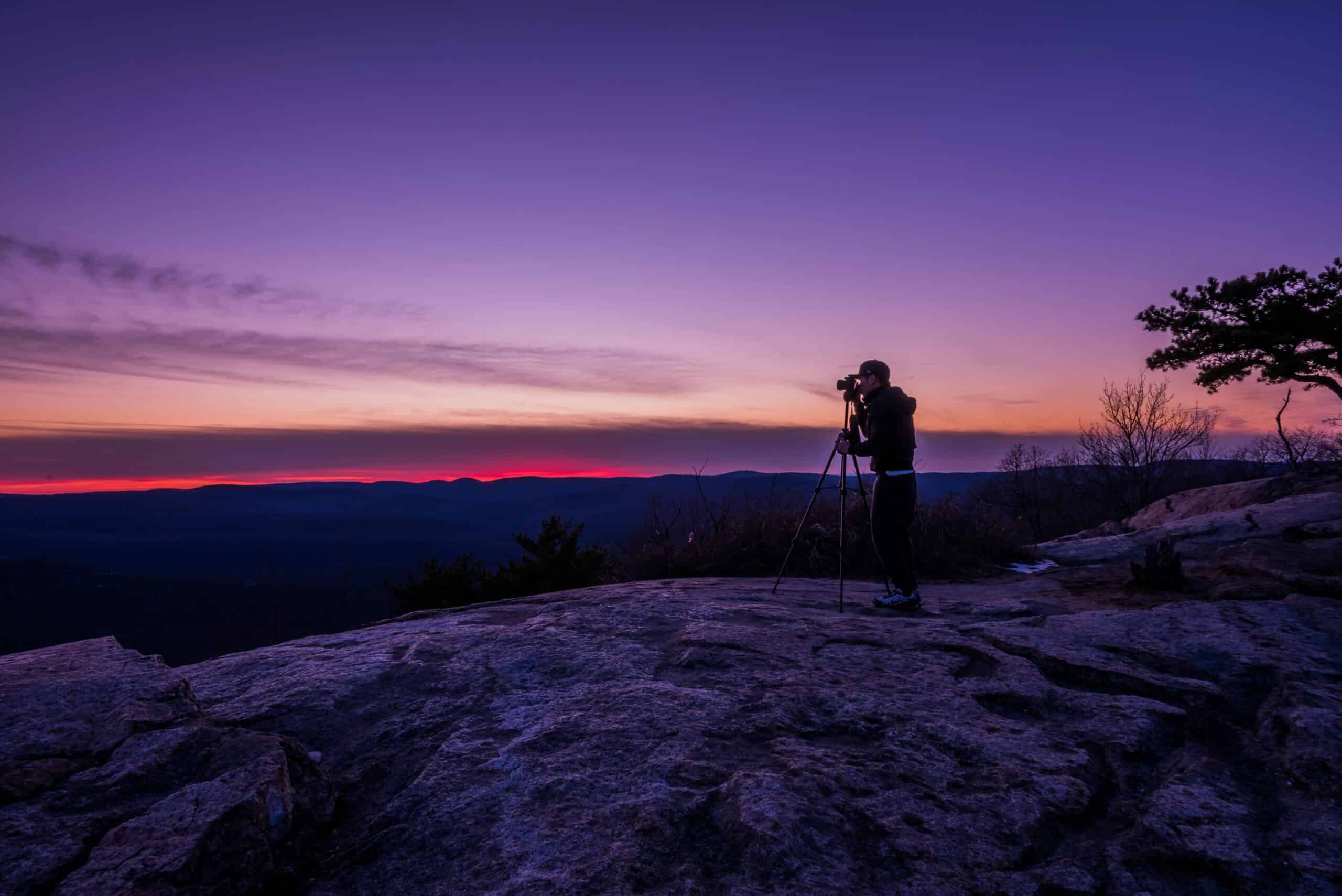
Evaluate Shooting Environment
Scan the scene for moving subjects, reflective/glass surfaces, and strong light sources. For interiors with windows, plan for HDR brackets to balance highlights and shadows. If shooting through glass, keep the lens as close as possible (1–2 cm) to reduce reflections and ghosting, and use a rubber lens hood or a dark cloth to block stray light.
Match Gear to Scene Goals
The A7 IV’s base ISO files are very clean and flexible; you can safely shoot at ISO 100–200 outdoors and ISO 200–800 indoors on a tripod. The 8–15mm fisheye’s major advantage is speed: at 8–12mm you can cover a full 360° with far fewer frames, minimizing stitching problems in crowds or wind. If you need more detail for giant prints or gigapixel panos, consider the longer end (~15mm), accept more frames, and keep overlap consistent. The A7 IV’s color and dynamic range are forgiving when lifting shadows, but avoid drastic ISO pushes (beyond ~1600) for 360° work unless necessary.
Pre-shoot Checklist
- Power, storage, optics: fully charged batteries, fast cards, and clean front/rear elements and sensor.
- Tripod and pano head: level the base; confirm nodal/entrance‑pupil alignment marks for this combo.
- Adapter: verify the smart adapter can control the lens aperture. Set camera to “Release w/o lens” if needed.
- Safety: secure straps, use a tether on rooftops; avoid edge gusts and vibrations; mind traffic if car‑mounted.
- Backup workflow: when time allows, shoot a second pass in case of stitching issues or moving subjects.
Essential Gear & Setup
Core Gear
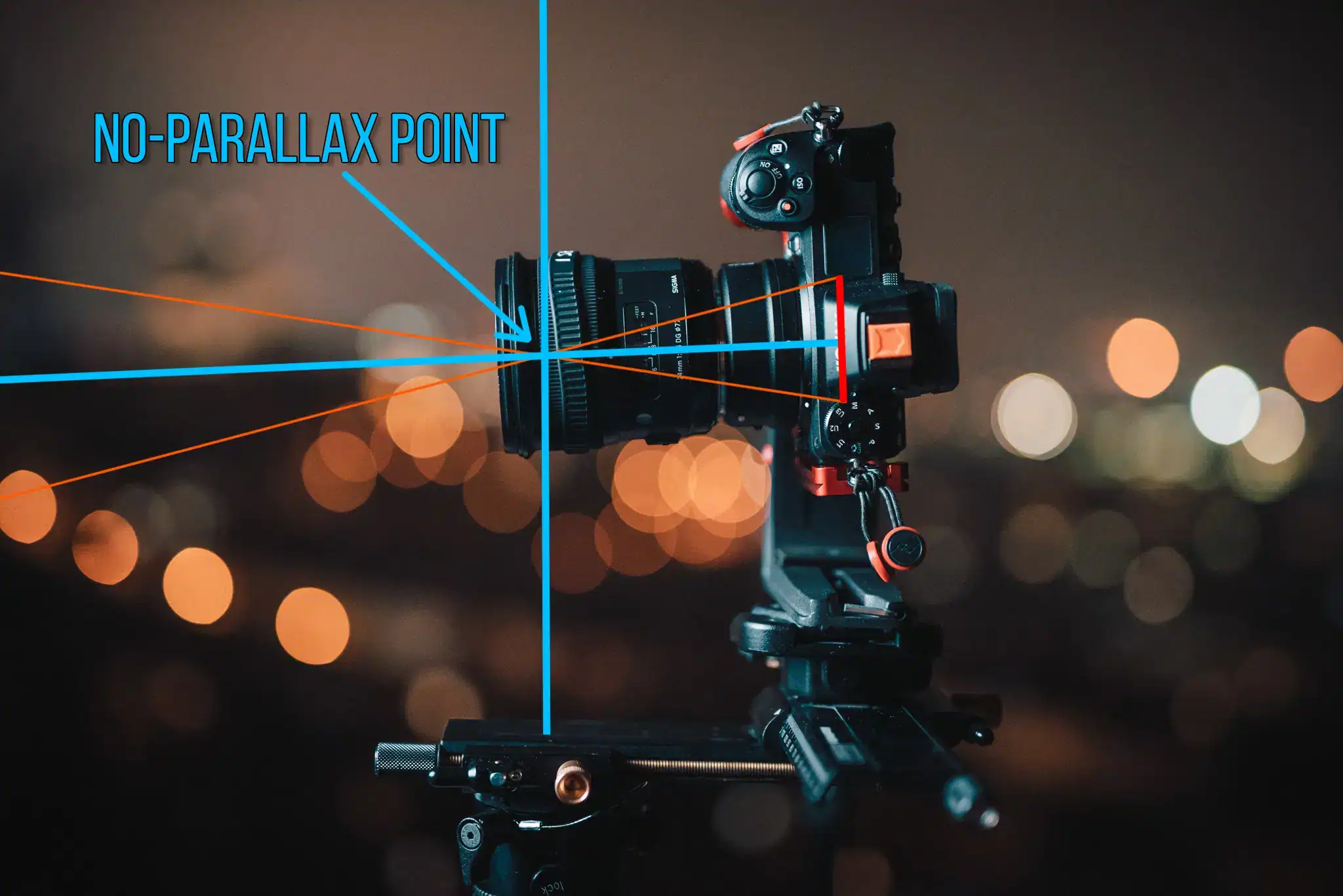
- Panoramic head: A rotator plus fore‑aft rail to place the lens’s entrance pupil over the rotation axis. This minimizes parallax and simplifies stitching.
- Stable tripod with a leveling base: A leveled base keeps your rotator clicks aligned and reduces post‑leveling corrections.
- Remote trigger or app: Use the Sony Imaging Edge app or a remote release to avoid vibrations, especially for long exposures and HDR brackets.
Optional Add-ons
- Pole or car mount: Useful for crowds or elevated views. Use safety tethers, watch wind loads, and avoid high speeds or gusts that can flex the pole.
- Lighting aids: LED panels or bounced flash (when allowed) to lift dark interiors; keep lighting consistent for all frames.
- Weather protection: Rain covers, microfiber cloths, and silica packs to manage drizzle and dew (fisheye fronts fog easily).
Step-by-Step Shooting Guide
Standard Static Scenes
- Level and align: Level the tripod using a leveling base. Mount the pano head and align the lens’s entrance pupil (nodal point) over the rotation axis using your rail settings. For the Nikon 8–15mm, remove the hood for 8mm to avoid vignetting on full frame.
- Manual exposure and white balance: Set manual mode (M), fix ISO, aperture, and shutter for all frames. Lock white balance to a fixed Kelvin (e.g., 5200K daylight outside; 3000–4000K indoors) to avoid color shifts during stitching.
- Focus: Switch to manual focus. Use magnification to focus slightly beyond hyperfocal for your focal length and aperture. As a guide: at 8mm and f/8 the hyperfocal is around 0.28 m; at 15mm and f/8 it’s about 0.95 m. Set and leave it.
- Capture with overlap:
- 8mm: 4 shots around at 0° tilt (90° apart). Add a zenith (+90°) and a nadir (−90°) if you want the cleanest patching.
- 10–12mm: 6 shots around at 0° + zenith; nadir if you need to remove the tripod with real texture.
- 15mm: 8 around + zenith + nadir.
- Nadir coverage: Either shoot a dedicated nadir frame or perform a quick offset technique (rotate the head so the tripod moves and capture the ground plate for patching).
HDR / High Dynamic Range Interiors
- Bracket exposure: Use 3–5 frames at ±2 EV for bright window scenes. Keep aperture and ISO fixed; vary shutter only. Shoot the full rotation for each bracket set before moving the head.
- WB consistency: Keep white balance locked. Mixed lighting (tungsten + daylight) is common; correct later globally in RAW processing.
Low-Light / Night Scenes
- Stability first: Turn off IBIS when on a tripod to prevent sensor micro‑movements. Use a remote or 2s self‑timer.
- Exposure choices: Aim for f/5.6–f/8; start at ISO 100–400 and lengthen shutter as needed. The A7 IV can handle ISO 800–1600 if wind or motion forces faster shutters, but lower ISO yields cleaner 360s.
- Noise control: Use long exposure NR off (for speed) and apply noise reduction uniformly in post instead.
Crowded Events
- Two passes: Shoot a fast first pass for coverage (8–10mm, 4–6 around), then a second pass waiting for gaps.
- Masking strategy: In PTGui or similar, use masks to keep the cleanest people positions and remove ghosts.
Special Setups (Pole / Car / Drone)
- Pole: Use a compact rotator and pre‑marked rail settings. Keep shutter quick (1/125–1/250) and ISO 200–800 to counter sway. Always tether.
- Car mount: Avoid highways; secure suction mounts on clean glass or use roof racks. Short exposures to combat vibration. Plan for excessive overlap.
- Drone: This combo isn’t drone‑friendly; use drone‑specific workflows. For elevated placement, prefer a pole or mast instead.
Recommended Settings & Pro Tips
Exposure & Focus
| Scenario | Aperture | Shutter | ISO | Notes |
|---|---|---|---|---|
| Daylight outdoor | f/8–f/11 | 1/100–1/250 | 100–200 | Lock WB (daylight). Stop down for edge‑to‑edge sharpness. |
| Low light/night | f/4–f/5.6 | 1/30–1/60 | 400–800 | Tripod + remote. Use 2s timer. Consider ISO 1600 only if needed. |
| Interior HDR | f/8 | Bracket ±2 EV | 100–400 | Balance windows and interior lamps; keep WB fixed. |
| Action / moving subjects | f/5.6–f/8 | 1/200+ | 400–800 | Freeze motion; do a second pass to clean ghosts. |
Critical Tips
- Manual focus at or just beyond hyperfocal. For 8mm f/8, focus ≈0.3 m; for 15mm f/8, ≈1 m.
- Nodal/entrance‑pupil calibration: Use two vertical objects (near and far). Pan the head; adjust the rail until the near/far alignment stays fixed while rotating. Mark the rail for 8mm and 15mm separately.
- White balance lock: Use Kelvin preset instead of Auto WB to avoid frame‑to‑frame color shifts that complicate stitching.
- RAW over JPEG: Shoot 14‑bit RAW (lossless compressed) for maximum DR and color flexibility.
- IBIS on tripod: Turn IBIS off for tripod panoramas to avoid micro‑blur from sensor corrections.
- Lens hood: Remove at 8mm to avoid clipping; reattach at ~15mm to reduce flare when appropriate.
Stitching & Post-Processing
Software Workflow
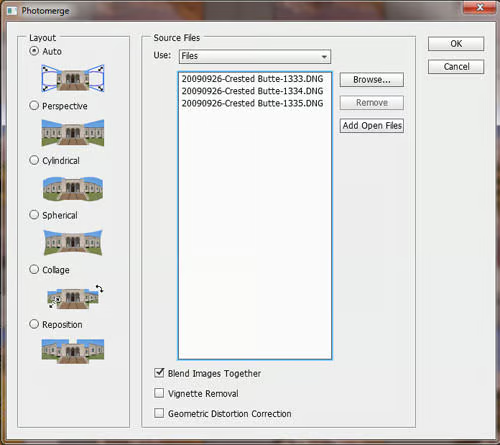
Import RAWs into your editor (Lightroom/ACR), sync white balance and base corrections, then export to a stitching app like PTGui or Hugin. Fisheye footage is straightforward for control point detection, provided overlap is consistent. Start with 30% overlap for fisheye and 25% for rectilinear. PTGui’s template and masking tools make multi‑row, HDR, and nadir patching efficient, while Hugin is a capable open‑source alternative. For output, choose equirectangular projection with a 2:1 aspect ratio, sized to your resolution needs (e.g., 8K–16K wide for web/VR). For more on PTGui’s strengths for pro panoramas, see this review from Fstoppers. PTGui for high‑end panorama stitching
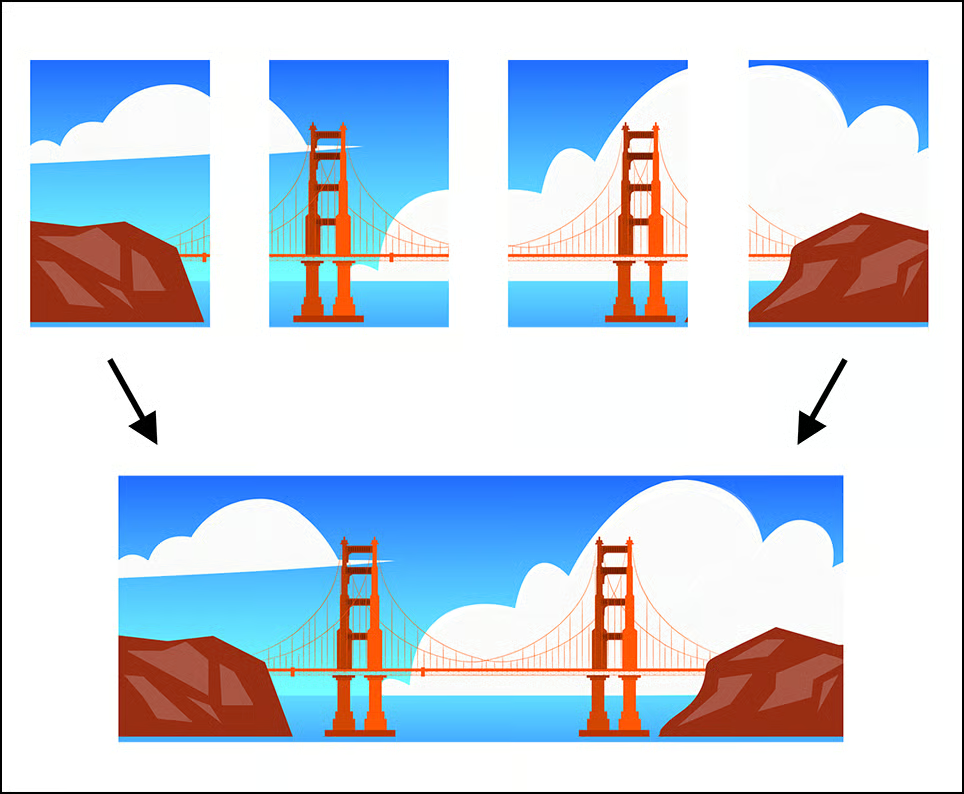
Cleanup & Enhancement
- Nadir patching: Capture a clean ground plate and use “Viewpoint” optimization in PTGui or clone/AI fill in Photoshop to remove the tripod.
- Color consistency: Apply global WB and tone, then fine‑tune selective HSL to match mixed lighting.
- Noise reduction: Apply uniform NR for night scenes. Add local sharpening to textures away from seams.
- Level the horizon: Use the stitching software’s pitch/roll/yaw tools to ensure a level 0° horizon.
- Export: Save high‑quality JPEG (8–12K width for the web) or 16‑bit TIFF masters if further grading is needed. For VR publishing, follow platform guidelines for metadata and max dimensions. See Oculus’ guide for DSLR 360 workflows. Guide to shooting and stitching DSLR 360 photos
Estimating effective resolution: The final equirect width depends on focal length, overlap, and sensor resolution. The Nikon 8–15mm at 8–12mm on a 33MP sensor typically yields high‑quality 8–12K equirects with 4–6 shots around; at 15mm with 8 around + Z/N you can reach well beyond 12K. For deeper math, see the PanoTools spherical resolution reference. Spherical resolution basics for DSLR panoramas
Video: A concise visual refresher on head setup, overlap, and workflow.
Useful Tools & Resources
Software
- PTGui (fast, pro‑level control points, masking, HDR)
- Hugin (open‑source, powerful once configured)
- Lightroom / Photoshop / Affinity Photo
- AI tripod removal tools (Content‑Aware Fill, Generative Fill)
Hardware
- Panoramic heads: Nodal Ninja, Leofoto, or similar with fore‑aft rail
- Carbon fiber tripod with leveling base
- Click‑stop rotator (e.g., 4, 6, 8 stops per 360°)
- Wireless remote or app tether
- Pole extensions / car mounts with safety tethers
For a thorough primer on panoramic head concepts and setup techniques, this tutorial is a reliable reference. Panoramic head setup and best practices
Disclaimer: software/hardware names provided for search reference; check official sites for the latest versions and compatibility notes.
Common Mistakes & How to Avoid Them
- Parallax error: Not aligning the entrance pupil. Always calibrate and use the correct rail marks.
- Exposure flicker: Auto ISO or Auto WB on. Lock both for consistent color and luminance.
- Tripod shadows and footprints: Capture a dedicated nadir or use a robust patching workflow later.
- Ghosting from movement: Shoot a second pass and use masks to keep the cleanest subjects.
- Vignetting at 8mm: Remove the lens hood on full frame to avoid clipping the circular image.
- Adapter surprises: Without a smart adapter the E‑type diaphragm stays wide open. Confirm aperture control before you’re on site.
Frequently Asked Questions
-
Can I shoot handheld panoramas with the Sony A7 IV?
Yes for quick tests, but for high‑quality 360s use a tripod and pano head. Handheld fisheye rotations can work outdoors at 8–10mm if you keep the camera level and rotate around the lens, but expect alignment challenges and lower stitch yield.
-
Is the Nikon 8–15mm wide enough for single‑row 360 capture?
Absolutely. At 8–12mm you can cover a full 360° with 4–6 frames around plus a zenith/nadir as needed. At 15mm you’ll need 8 around + Z/N, but you’ll gain per‑shot detail.
-
Do I need HDR for interiors with bright windows?
In most real estate or high‑contrast interiors, yes. Bracket at ±2 EV (3–5 shots) to protect window highlights and lift shadows cleanly in post. Keep WB fixed across the brackets.
-
How do I avoid parallax issues with this lens?
Use a pano head with a fore‑aft rail and align the lens’s entrance pupil over the rotation axis. Calibrate once with near/far objects; mark the rail for 8mm and 15mm. Recheck after changing focal length.
-
What ISO range is safe on the A7 IV for low‑light panoramas?
Prefer ISO 100–400 on a tripod; ISO 800 is typically still clean. Push to 1600 if you need to shorten shutter for wind or minor motion, and apply consistent noise reduction in post.
Field Notes & Case Studies
Indoor Real Estate
Use 10–12mm to balance speed and resolution. Shoot 6 around + zenith; bracket ±2 EV (3–5 frames). Lock WB around 3600–4200K for mixed lighting, then correct globally. Keep a microfiber cloth handy; fingerprints on a fisheye front element flare easily around downlights.
Outdoor Sunset Overlook
At 8–10mm, shoot 4–6 around quickly as the light transitions. Bracket if the sky is fiery and the foreground is dark. Shield the lens from low sun with your hand just outside the frame and rotate your body to keep consistent shading; remove any tiny shadows during editing.
Event Crowds
Fewer frames are your friend. Use 8–10mm to minimize moving subject inconsistencies. Shoot a fast first pass, then a second pass for cleanup plates. In PTGui, mask in the cleanest subjects and mask out inconsistent positions.
Rooftop or Pole Work
Safety first: add a tether and keep the center of gravity over the legs. Shorten shutter (1/125–1/250), ISO 200–800, and keep rotations smooth but quick. Avoid gusts; wait between frames if the pole sways.
Final Thoughts
Mastering how to shoot panorama with Sony A7 IV & Nikon AF-S 8-15mm f/3.5-4.5E ED Fisheye is about repeatable technique: solid nodal alignment, consistent exposure and WB, and disciplined overlap. With the A7 IV’s strong RAW files and the fisheye’s speed, you’ll produce reliable, high‑resolution 360 images for virtual tours, editorial features, and immersive web publishing.
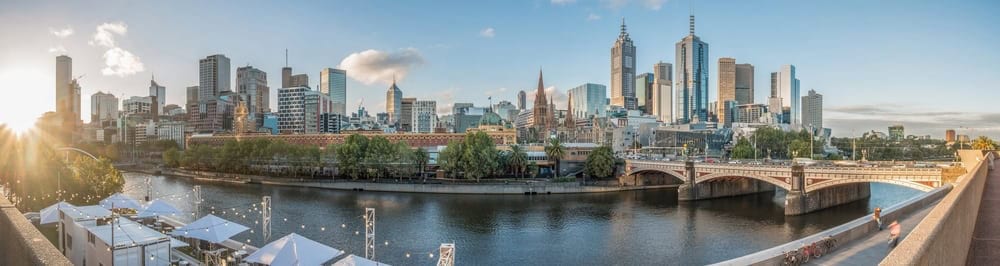
Want a refresher on pano shooting fundamentals and gear choices before your next job? This overview is a solid companion piece. Techniques for 360 panorama photography