
Why This Camera & Lens Are Great for Panoramas
If you want to learn how to shoot panorama with Sony A7 IV & Laowa 4mm f/2.8 Circular Fisheye, you’ve picked a combo that is fast, compact, and surprisingly capable. The Sony A7 IV is a 33MP full-frame mirrorless body (35.9 × 23.9 mm sensor) with roughly 5.1 µm pixel pitch and about 14 stops of dynamic range at base ISO. That means clean shadows, resilient highlights, and robust color in RAW—ideal for HDR panoramas and low-light interiors. The in-body stabilization (IBIS) helps handheld work, while the deep buffer and solid battery life keep you shooting without fuss.
The Laowa 4mm f/2.8 is a fully manual circular fisheye. It projects a circular image with an extremely wide field of view (around 210°), letting you cover a full 360×180 sphere with as few as two shots around. Fewer images mean faster capture and far less risk of parallax mismatches in moving scenes. The trade-off: pronounced fisheye distortion and a circular image that doesn’t fill the frame. On the A7 IV, you can shoot with APS-C crop enabled (~14MP) or leave crop disabled (recommended) to record the largest possible circular image on the full sensor background. Stitching software understands circular fisheye images well, so the workflow is smooth once you calibrate your nodal point.
Quick Setup Overview
- Camera: Sony A7 IV — Full-frame 33MP (7008×4672), ~14 stops of DR at ISO 100, excellent color depth, reliable AF (though pano shooting is best done in manual focus).
- Lens: Laowa 4mm f/2.8 Circular Fisheye — circular fisheye, approx. 210° field of view, fully manual focus and aperture, strong curvature by design, minimal flare control (use your body or a flag to block sun/lamps).
- Estimated shots & overlap: At 4 mm circular fisheye, 2 shots around (180° apart) can cover a full sphere with ~25–30% overlap; add 1 nadir for clean tripod removal. For extra safety or tricky scenes: 3 shots around at 120° + nadir.
- Difficulty: Easy for basics; Moderate for precision (nodal calibration and nadir patching).
Planning & On-Site Preparation
Evaluate Shooting Environment
Start by mapping light and motion. For interiors, note bright windows, mixed lighting (warm lamps vs daylight), and reflective surfaces like glass, polished floors, and mirrors. Outdoors, watch for sun position—circular fisheyes can amplify flare; use your hand, hat, or a small flag off-frame to block direct rays. If shooting near glass, keep the lens close and parallel to the surface to reduce reflections; a few centimeters distance and slight angle tweaks can kill ghosting. In crowds, plan two passes: one fast to lock coverage, another to catch clean frames during movement gaps.
Match Gear to Scene Goals
The A7 IV’s dynamic range helps hold window highlights while preserving indoor detail. For most interiors, ISO 100–400 with bracketing keeps noise low; in darker venues ISO 800–1600 is still very workable on this sensor. The fisheye’s biggest advantage is speed: two frames cover it all, so moving clouds, people, or traffic cause fewer stitch problems. The trade-off is distortion and lower stitched resolution compared to multi-row rectilinear rigs; expect ~8–10K equirectangular outputs from a two-shot circular workflow—perfect for web 360 tours and many VR platforms.
Pre-shoot Checklist
- Power & storage: fully charge batteries; carry a spare. Use fast, high-capacity cards (UHS-II recommended).
- Optics: clean the Laowa’s front element thoroughly; fisheyes see everything, including dust.
- Support: level your tripod; verify panoramic head calibration (nodal alignment) before critical shoots.
- Safety: assess wind, edges on rooftops, and crowd flow. If using a pole or car mount, add tethers and ensure all clamps are tight.
- Backup workflow: always shoot an extra round of coverage or a safety nadir. If light changes rapidly, capture an extra bracket set.
Essential Gear & Setup
Core Gear
- Panoramic head: this lets you rotate the camera around the lens’s no-parallax point (NPP). When aligned, foreground and background stay registered, avoiding stitching errors. Even with a 210° fisheye, accurate NPP alignment saves you time in post.
- Stable tripod with leveling base: fast leveling makes rotations consistent, prevents horizon slant, and speeds up complex environments.
- Remote trigger or app: use the Sony Imaging Edge Mobile or a simple remote to avoid vibration. On tripod, turn IBIS off to prevent micro-blur.
Optional Add-ons
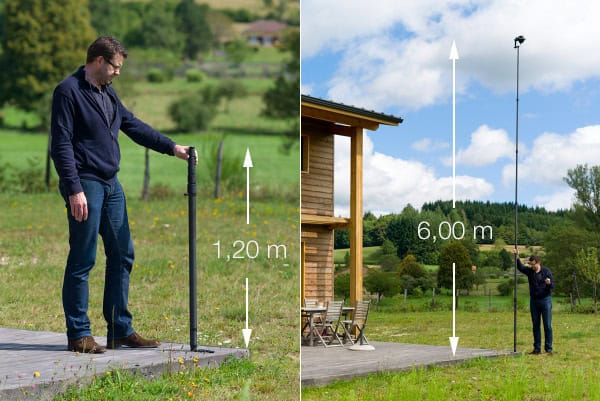
- Pole or car mount: great for elevated and vehicle shots. Always use a safety tether; wind and vehicle vibrations can wreak havoc—rotate more slowly and use higher shutter speeds.
- Lighting aids: small LED panels for dim interiors. Keep light diffuse to minimize hotspots in reflective scenes.
- Weather protection: lens rain cover, microfiber cloths, and silica gel packets if shooting in humid environments.

For a deeper primer on panoramic head setup and why the no-parallax point matters, see this panoramic head tutorial by 360 Rumors. Learn more about panoramic head basics
Step-by-Step Shooting Guide
Standard Static Scenes
- Level the tripod and align the nodal point. Slide the camera along the panoramic rail until objects near and far don’t “shift” relative to each other as you pan. Mark this position for the A7 IV + Laowa 4mm combo so you can return to it quickly.
- Set manual exposure and lock white balance. With a circular fisheye, tonal and color consistency are vital—set WB (Daylight/Tungsten/Custom) based on the dominant light. Shoot RAW to refine later.
- Capture your frames. For two-shot coverage, take one frame, rotate 180° yaw, and take the second. Aim for at least 25–30% overlap; with 210° FOV this is naturally achieved by the 180° rotation.
- Take a nadir shot. Tilt the camera down and shoot the ground after moving the tripod out of frame, or hold the camera above the tripod position. You can also shoot a “patch plate” separately to clone/replace in post.
HDR / High Dynamic Range Interiors
- Bracket ±2 EV (3 or 5 frames) at each position. The A7 IV’s dynamic range is strong, but bright windows and dark corners demand bracketing for clean results.
- Lock the white balance and disable auto ISO. Keep aperture constant (often f/8) and vary shutter speed.
- Use the 2-second timer or remote. Any vibration can blur fine detail when bracketing.
Low-Light / Night Scenes
- Stabilize: use tripod, turn IBIS off, use remote. Start at f/4–f/5.6, 1/30–1/60 s, ISO 400–800. On the A7 IV, ISO 800–1600 remains quite usable; try to keep ISO ≤1600 for best texture.
- Noise control: expose to the right without clipping highlights; denoise in post. Long exposure NR can stay off if you’re bracketing.
Crowded Events
- Two passes tactic: first pass fast to lock geometry; second pass wait for gaps in traffic for clean plates to mask later.
- Speed wins: with a 4mm fisheye, you’re done in seconds. This reduces ghosting compared to longer multi-row rigs.
Special Setups (Pole / Car / Rooftop)
- Secure everything: tighten clamps, add a safety tether, and verify balance. Wind torque increases with height; rotate slowly on tall poles.
- Shutter strategy: use faster shutter speeds (1/250 s or faster) to freeze vibration when elevated or moving.
Case Studies from the Field
Indoor Real Estate
Use f/8, ISO 100–200, bracket ±2 EV. Two shots around plus a clean nadir are plenty. Keep the camera parallel to walls to minimize uneven lighting across frames, and avoid pointing directly at bright downlights to reduce flare.
Outdoor Sunset
Expose for the sky in a bracket set and merge later. The A7 IV retains color in the highlights well at base ISO. Block the sun with your hand (kept outside the circle) to minimize flare during one of the passes, then remove the hand from the second pass for a clean stitch.
Event Crowds
Two frames around, then capture extra “clean plates” facing the busiest areas. During stitching, mask in the clean plates to reduce ghosting. The fisheye’s speed keeps people from moving too far between frames.
Recommended Settings & Pro Tips
Exposure & Focus
| Scenario | Aperture | Shutter | ISO | Notes |
|---|---|---|---|---|
| Daylight outdoor | f/8–f/11 | 1/100–1/250 | 100–200 | Lock WB (Daylight) for consistent color |
| Low light/night | f/4–f/5.6 | 1/30–1/60 | 400–800 (≤1600 if needed) | Tripod + remote; keep IBIS off on tripod |
| Interior HDR | f/8 | Bracket ±2 EV | 100–400 | Match WB to dominant light (Tungsten/Custom) |
| Action / moving subjects | f/5.6–f/8 | 1/200+ | 400–800 | Freeze motion; consider a second pass for masking |
Critical Tips
- Manual focus: set focus near hyperfocal at your working aperture. With a 4mm fisheye at f/8, almost everything is sharp from very close to infinity.
- Nodal point calibration: place two vertical objects (one near, one far), pan the camera, and adjust the rail until they don’t shift relative to each other. Mark the rail once found for the A7 IV + 4mm combo.
- White balance lock: auto WB may shift between frames or brackets, making seams obvious. Use a fixed WB or a custom Kelvin value.
- RAW vs JPEG: shoot RAW 14-bit for maximum latitude, especially for HDR merges and color work.
- IBIS on/off: on tripod, turn IBIS off. Handheld panos? IBIS on can help at 1/60 s and slower—still, keep your body rotation steady.
- APS-C crop mode: disable it for the largest possible circular image on the full sensor. This yields higher final pano resolution after stitching.
Stitching & Post-Processing
Software Workflow
Import RAWs, apply lens-agnostic corrections (exposure/WB), then stitch using PTGui or Hugin. For circular fisheye inputs, set lens type to “Circular Fisheye” and FOV ~210°. Typically, two images around will auto-align. Choose equirectangular output (2:1 ratio) for 360 platforms. Expect ~8–10K output width from two shots on the A7 IV with this lens (depending on crop and overlap). Industry overlap guidance: ~25–30% for fisheyes, ~20–25% for rectilinear lenses. PTGui excels at viewpoint optimization (useful for nadir patching). See Fstoppers’ review for why pros rely on PTGui. Why PTGui is a top choice for stitching
Cleanup & Enhancement
- Tripod/nadir patch: shoot a patch plate or use PTGui’s Viewpoint Correction. You can also clone in Photoshop or use AI tools for quick covers.
- Color correction: unify temperature/tint across the sphere; tame mixed lighting. Subtle global adjustments plus selective masks work best.
- Noise reduction: denoise shadows especially in HDR interiors. Keep detail in textures like wood and fabric.
- Level & straighten: use the horizon/vertical line tools in your stitcher to set pitch/roll/yaw accurately.
- Export: equirectangular JPEG (quality 90–95) for the web; 16-bit TIFF for archival or heavy edits. Many VR platforms prefer 8K–12K widths.
For a structured, end-to-end 360 stills pipeline with mirrorless cameras, Oculus Creator’s guide is concise and practical. Mirrorless 360 photo guide
Useful Tools & Resources
Software
- PTGui panorama stitching
- Hugin open source
- Lightroom / Photoshop
- AI tripod removal tools
Hardware
- Panoramic heads (Nodal Ninja, Leofoto)
- Carbon fiber tripods
- Leveling bases
- Wireless remote shutters
- Pole extensions / car mounts
Want more background on DSLR/mirrorless pano rigs and lens choices? This field guide is helpful for choosing bodies, lenses, and heads. DSLR/virtual-tour camera & lens guide
Disclaimer: software/hardware names are for reference; always check official sites for current features and compatibility.
Common Mistakes & How to Avoid Them
- Parallax error → Use a panoramic head and align the no-parallax point before critical shoots.
- Exposure flicker → Manual exposure and locked white balance prevent seam mismatches.
- Tripod shadows or footprints → Plan a nadir shot or patch later with viewpoint correction.
- Ghosting from moving subjects → Shoot a second pass for clean plates; mask in post.
- Night noise and blur → Keep ISO moderate, stabilize the setup, use a remote, and denoise in post.
- Flare with fisheyes → Shield the lens from direct light; adjust angle slightly to avoid hot spots.
Frequently Asked Questions
- Can I shoot handheld panoramas with the Sony A7 IV?
Yes, especially with a circular fisheye. Use IBIS on, 1/125–1/250 s shutter, and rotate from your waist for smoother panning. Expect small stitching artifacts if parallax is present; a panoramic head still produces the cleanest result.
- Is the Laowa 4mm f/2.8 wide enough for a single-row 360?
Yes. Two shots around at 180° yaw generally cover the full sphere thanks to ~210° FOV. Add a nadir shot for tripod removal and consider a 3-shot around sequence if you want extra overlap in challenging scenes.
- Do I need HDR for interiors with bright windows?
Often, yes. Bracket ±2 EV (3–5 frames) to retain window detail and lift shadows cleanly. The A7 IV’s dynamic range helps, but HDR guarantees cleaner results in high-contrast interiors.
- How do I avoid parallax issues with this combo?
Use a panoramic head and calibrate the nodal point. With the A7 IV + Laowa 4mm, mark your rail position once dialed in so you can reproduce it quickly on every job.
- What ISO range is safe on the A7 IV in low light?
ISO 100–400 is optimal. ISO 800–1600 remains clean for most web/VR outputs. If you must push to ISO 3200, expect more aggressive denoising in post.
- Can I set Custom Modes for pano on the A7 IV?
Yes. Save a pano setup to a Custom Mode (e.g., C1): Manual mode, fixed WB, RAW, IBIS off (tripod), EFCS on, 2-second timer, and your preferred aperture/shutter/ISO. You’ll be ready to shoot in seconds.
- How can I reduce flare with the circular fisheye?
Shield the front element from direct light using your hand, a hat, or a small flag kept outside the image circle. Slightly adjust pitch/yaw to move hotspots off critical areas and capture a second frame to blend if needed.
- Which tripod head should I choose?
A two-axis panoramic head with fore-aft and lateral adjustment (e.g., Nodal Ninja or similar) is ideal. You need precise control to set the no-parallax point and keep rotations centered.
Safety, Quality, and Backup Practices
Rooftops and poles require strict safety: tether the camera, keep metal away from power lines, and mind wind loads. For car-mounted work, check local laws, drive slowly on closed routes, and use high shutter speeds. Back up in the field: dual card writing (RAW to both) or promptly copy files to a second device. For paid jobs, shoot an extra full round—two additional minutes can save an entire project.
For a great fundamentals refresher on pano techniques and planning, this curated Q&A is a reliable starting point. Best techniques to take 360 panoramas
Wrap-Up: Fast, Reliable 360s with the A7 IV + 4mm Fisheye
The Sony A7 IV and Laowa 4mm f/2.8 Circular Fisheye combine speed, simplicity, and strong image quality. With careful nodal alignment, locked exposure and WB, and a solid tripod workflow, you can capture clean 360 photo spheres in seconds. Use HDR where needed, keep ISO sane, and let PTGui or Hugin do the heavy lifting in post. This setup shines for real estate, events, travel, and social/VR content—anywhere fast coverage and dependable stitching matter most.
