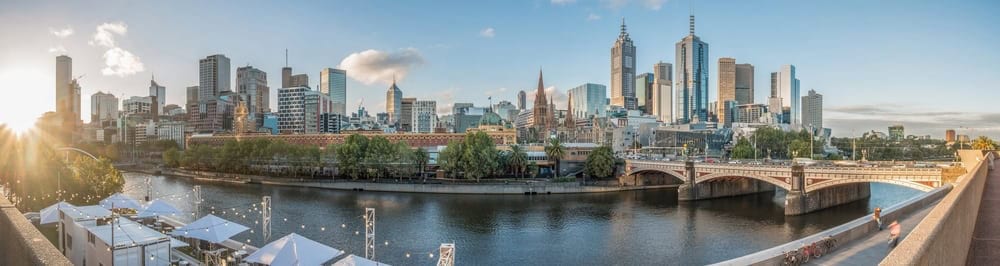
Why This Camera & Lens Are Great for Panoramas
If you want to learn how to shoot panorama with Sony A1 & Tamron 17-28mm f/2.8 Di III RXD, you’ve picked a powerhouse combo. The Sony A1’s 50.1MP full-frame stacked BSI sensor provides exceptional resolving power for high-detail 360 photos and large virtual tours. Expect roughly 14+ stops of usable dynamic range at base ISO in RAW, 14-bit capture, and excellent ISO resilience for low-light interiors. Pixel pitch is about 4.16 µm—fine enough for crisp textures in masonry, foliage, and signage without moiré becoming a frequent issue.
The Tamron 17–28mm f/2.8 is a compact, rectilinear ultra-wide zoom that keeps straight lines straight—ideal for architecture and real estate—while the constant f/2.8 aperture helps in darker spaces. It’s light, fast to focus, and very sharp by f/5.6–f/8 across most of the frame. At 17mm you’ll cover a large field of view with fewer shots per row compared to longer focal lengths, making it efficient for multi-row 360° panoramas. Distortion is mild and well-controlled at 17–20mm and even better near 24–28mm once corrected in post. The lens lacks optical stabilization (OSS), but the A1’s in-body stabilization (IBIS) covers general shooting—though for tripod panoramas, you’ll usually want IBIS off.
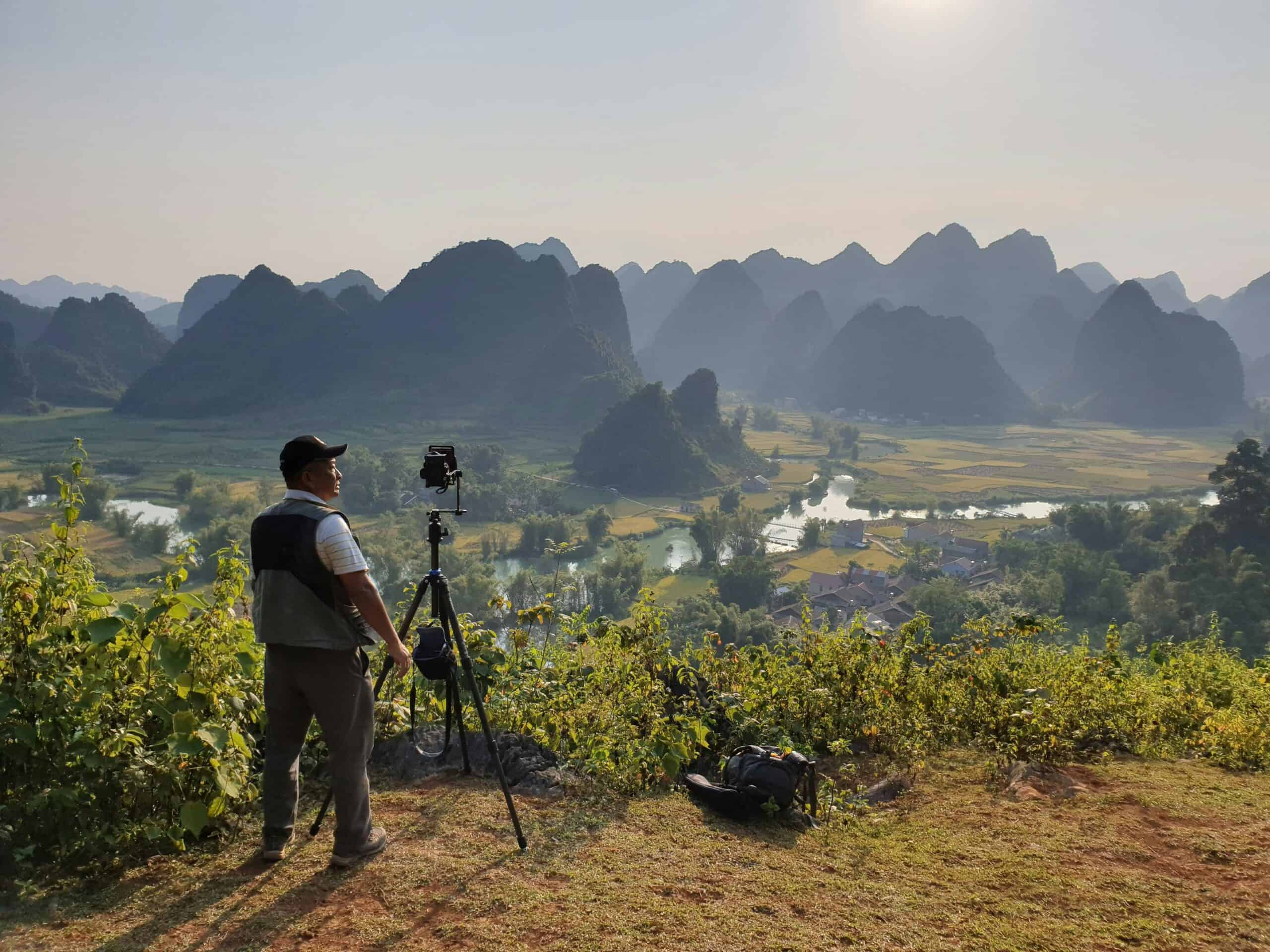
Quick Setup Overview
- Camera: Sony A1 — Full-frame 50.1MP stacked BSI CMOS (approx. 35.9 × 24mm), ~14-bit RAW, excellent DR at ISO 100, pixel pitch ~4.16 µm.
- Lens: Tamron 17-28mm f/2.8 Di III RXD — rectilinear zoom, very sharp by f/5.6–f/8, mild barrel distortion at 17mm, minimal CA when stopped down, 67mm filter thread.
- Estimated shots & overlap (tested ranges with 25–35% overlap):
- 17mm spherical 360: 8 shots @ +45°, 8 shots @ 0°, 8 shots @ −45° + zenith + nadir ≈ 26 frames.
- 20mm spherical 360: 10 shots per row × 3 rows + zenith + nadir ≈ 32 frames.
- 28mm spherical 360 (high-detail): 8–10 shots per row × 4–5 rows + zenith + nadir ≈ 42–52 frames.
- Cylindrical 360 (single row at 17mm): 6–8 shots around for a level sweep.
- Difficulty: Intermediate (easier with a calibrated panoramic head).
Planning & On-Site Preparation
Evaluate Shooting Environment
Before you set up, analyze light direction and range, moving elements (cars, crowds, trees), and reflective surfaces such as glass, polished floors, or water. If shooting through glass, keep the lens hood flush with the glass and angle slightly off-axis to reduce internal reflections; distance to glass should be minimal (a few millimeters with a rubber hood) to limit flare and ghosting. Note any wind exposure for rooftop or pole work—vibration can cause misalignment and stitching artifacts, especially at longer focal lengths or long exposures.
Match Gear to Scene Goals
The Sony A1’s dynamic range helps retain highlight detail in skies and window views while preserving shadow texture indoors. At base ISO, you can pull shadows cleanly by 2–3 stops in RAW. For interiors, the Tamron at 17–20mm reduces shot count per row and keeps lines straight—great for real estate. For ultra-high-resolution outdoor scenes (cityscapes, gigapixel-style), zooming toward 28mm increases per-pixel detail at the cost of more frames and longer stitching time.
Pre-shoot Checklist
- Charge batteries, carry spares; format high-speed cards; enable dual-slot backup if available.
- Clean front and rear lens elements, and check sensor for dust (f/16 test shot against a white wall).
- Level the tripod; verify panoramic head calibration and nodal alignment.
- Safety checks: weigh/stabilize tripod in wind; tether camera on rooftops or over railings; use safety lines for pole or car mounts.
- Backup workflow: shoot a second pass at key rows or add an extra overlap shot per row for insurance.
Essential Gear & Setup
Core Gear
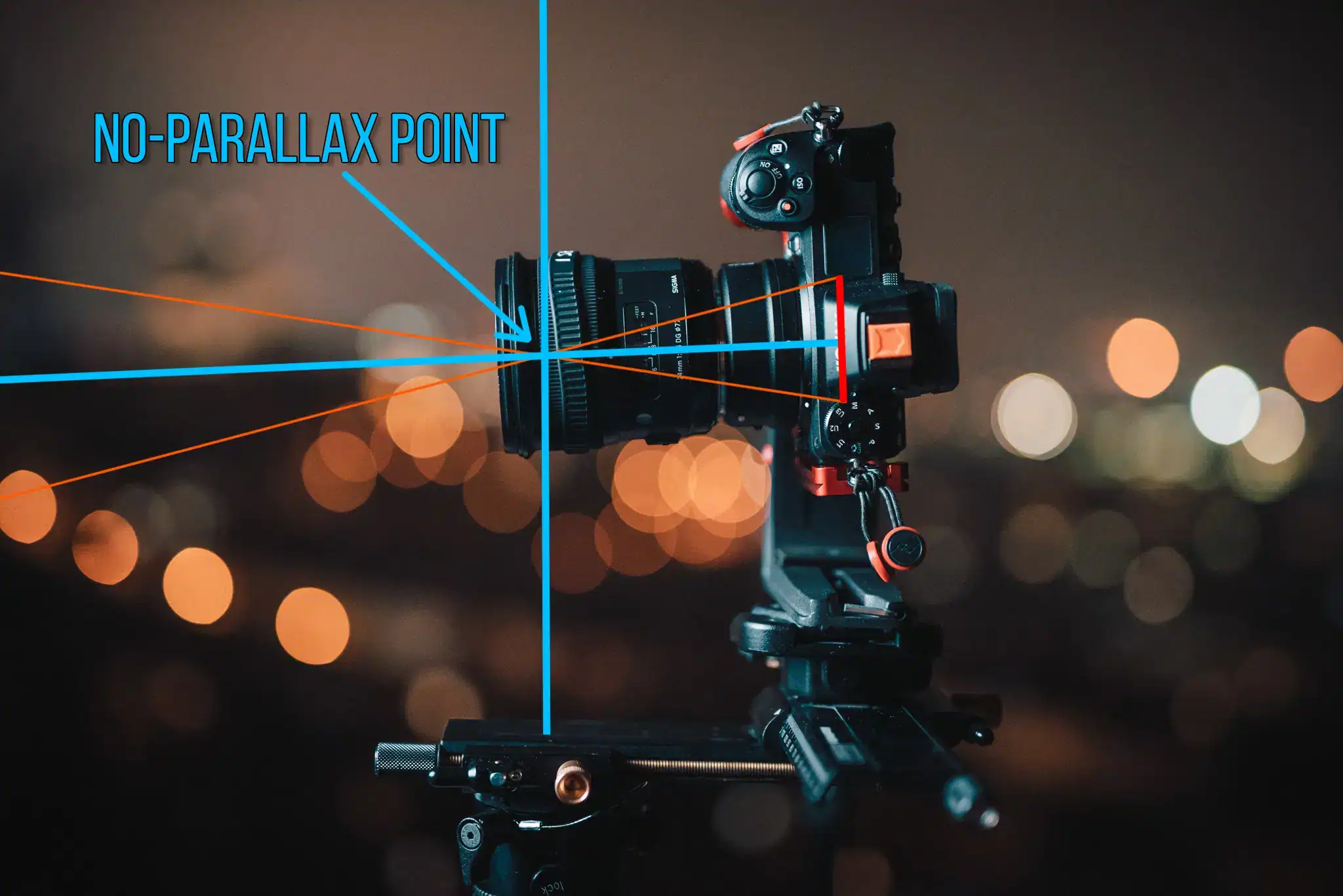
- Panoramic head: A properly calibrated pano head aligns the lens’s entrance pupil (nodal point) with the yaw/pitch axes to eliminate parallax, which is essential when foreground objects are close.
- Stable tripod with a leveling base: Quick, precise leveling (within 0.5°) keeps your horizon true and reduces post corrections.
- Remote trigger or app (Sony Imaging Edge): Fire without touching the camera to avoid vibration; use a 2s delay if needed.
Optional Add-ons
- Pole or car mount: Use guy lines and tethers. Keep speeds low, avoid gusty conditions, and plan for gradual rotation to minimize blur.
- Lighting aids: Small LED panels or bounced flash for interiors to fill dark corners (avoid mixed color temperatures where possible).
- Weather protection: Rain cover and lens hood; wipe frequently in sea spray or fog.
Step-by-Step Shooting Guide
Standard Static Scenes
- Level tripod & align nodal point: Mount the Tamron 17–28mm on your panoramic head. Slide the camera/lens along the rail until near and far verticals don’t shift relative to each other as you yaw the head. Re-check at 17mm and your chosen focal length; entrance pupil shifts slightly with zoom.
- Manual exposure & locked white balance: Set M mode. Meter for highlights you want to preserve, then expose to protect them (often −0.3 to −0.7 EV in bright exteriors). Lock WB to Daylight (outdoors) or a measured Kelvin value indoors (e.g., 3200–4000K). Turn off auto ISO.
- Set focus and stabilization: Use manual focus. Focus at or near the hyperfocal distance (e.g., f/8 at 17mm puts most of the scene in focus). Turn IBIS off for tripod work to avoid sensor micro-shifts.
- Capture your rows: For 17mm, a reliable pattern is 8 shots at +45°, 8 at 0°, 8 at −45°, then a zenith (straight up) and nadir (straight down). Use 25–35% overlap horizontally and maintain small vertical overlaps between rows.
- Take the nadir: Either shoot a clean nadir after shifting the tripod slightly, or capture a handheld plate to patch later.
HDR / High Dynamic Range Interiors
- Bracket ±2 EV (3–5 frames): The A1’s dynamic range is strong, but interiors with bright windows often require HDR. Keep exposure sequence consistent across every yaw position.
- Lock WB: Bracket with a fixed WB to avoid color shifts. Use ISO 100–400, f/8, and let shutter vary.
- Shoot methodically: Complete one bracket set before rotating. Confirm “beep” or review for each bracket to prevent missing frames.
Low-Light / Night Scenes
- Use slower shutters with a sturdy setup: ISO 100–200 preferred. If needed, the A1 stays clean up to ISO 800–1600; beyond that, noise reduction in post is recommended.
- Remote triggering: Use a 2–5s delay or remote app; turn off IBIS on a tripod. Shield the rig from wind; add weight to the center column hook.
- Beware light movement: Passing cars create light trails; either embrace it or time your rotation to minimize inconsistent streaks across frames.
Crowded Events
- Two-pass approach: First pass for the entire panorama, second pass where you wait for gaps or capture clean plates.
- Mask in post: Use masks in PTGui/Photoshop to blend people from different frames and remove duplicates.
Special Setups (Pole / Car / Drone)
- Secure everything: Use tethers and safety line. On a pole, keep rotation slow, use 17mm to reduce shot count and exposure time.
- Mitigate vibrations: For car mounts, drive on smooth surfaces at minimal speed. Use higher shutter speed (1/200–1/500) and slightly higher ISO to freeze vibration.
Field-Tested Mini Case Studies
Indoor Real Estate, Mixed Light
At 17mm, f/8, ISO 100–200, bracket ±2 EV. Lock WB to 4000K if tungsten/LED dominate. 3-row capture keeps vertical lines straight and windows controlled after HDR merging.
Outdoor Sunset at Rooftop
Expose for highlights (−0.3 to −0.7 EV), f/8, ISO 100, 1/60–1/250s depending on light. Shoot quickly as color changes; consider a second pass just for the sky to blend later.
Event Crowds
Use 20–24mm for fewer frames than 28mm but more detail than 17mm. 1/200s, f/5.6–f/8, ISO 400–800. Two-pass technique reduces ghosting.
High-Res Cityscape (Tripod)
At 28mm, f/8, ISO 100. 8–10 shots per row × 4–5 rows. Expect 40–50+ frames. Stitch in PTGui with lens profile correction for micro-precision.
Recommended Settings & Pro Tips
Exposure & Focus
| Scenario | Aperture | Shutter | ISO | Notes |
|---|---|---|---|---|
| Daylight outdoor | f/8–f/11 | 1/100–1/250 | 100–200 | Lock WB (Daylight). Expose for highlights to preserve sky detail. |
| Low light/night | f/4–f/5.6 | 1/30–1/60 | 400–800 (up to 1600 if needed) | Tripod & remote, IBIS off. Add weight for stability. |
| Interior HDR | f/8 | Bracket ±2 EV (3–5 frames) | 100–400 | Fixed WB; merge to HDR before stitching or in PTGui. |
| Action / moving subjects | f/5.6–f/8 | 1/200+ | 400–800 | Freeze motion; consider two-pass method for clean plates. |
Critical Tips
- Manual focus near the hyperfocal distance: At 17mm and f/8, focusing ~1–1.5 m keeps near-to-infinity sharp in most scenes. Zoomed-in shots (24–28mm) need slightly more precise focus.
- Nodal calibration: Start with the lens centered on the rotation axis; adjust the rail so near verticals don’t shift vs. far verticals as you pan. Re-check at the focal length you’ll use.
- White balance lock: Avoid AWB. Set a Kelvin value or use Daylight/Incandescent to maintain consistent color across frames and brackets.
- RAW over JPEG: RAW preserves dynamic range and color latitude for blending and exposure matching. The A1’s 14-bit RAW files handle heavy post-processing well.
- IBIS on/off: Turn off on a tripod to prevent micro-blur. If shooting from a pole or a moving platform, a modest ISO increase plus faster shutter helps more than IBIS.
- Sony A1 custom modes: Save pano settings (manual exposure, MF, WB, drive/bracket) to MR1/MR2 for instant recall on location.
Stitching & Post-Processing
Software Workflow
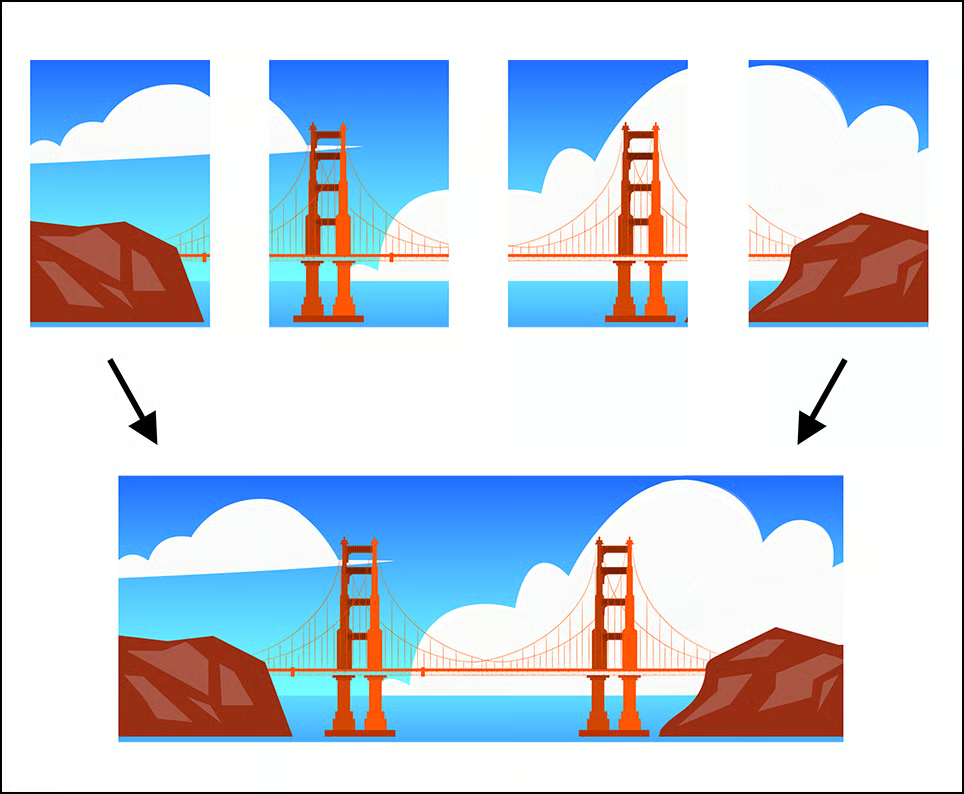
For rectilinear panoramas from the Tamron 17–28mm, industry standards include PTGui (fast, precise control points and masking), Hugin (open-source), Lightroom/Photoshop (good for simpler panos), and Affinity Photo. Fisheye lenses typically need fewer shots but require defishing; with this rectilinear zoom, expect more frames but straighter edges and cleaner architecture. Aim for 25–35% overlap. HDR can be merged first (per yaw position) or let PTGui handle bracketed fusion—both approaches work, but merging first gives more control over tone mapping.
PTGui excels with large multi-row sets and complex masks; if you expect challenging parallax, masked control points and vertical guides help. Hugin offers similar control with more manual steps. See a professional review of PTGui to understand its advanced toolset at the end of this section. Why PTGui is favored for complex panoramas.
Cleanup & Enhancement
- Nadir patching: Capture a clean ground plate or clone/AI-fill the tripod area after stitching.
- Color: Match color temperature across frames; gently unify mixed lighting with local HSL adjustments.
- Noise reduction: Apply luminance NR selectively to shadows if you had to push ISO.
- Leveling: Use pitch/roll/yaw corrections for a true horizon; PTGui’s vertical/horizontal line tools ensure plumb walls.
- Export: For 360/VR, export an equirectangular JPEG/TIFF (e.g., 16k width if your coverage supports it) for platforms like web viewers and VR headsets.
For a structured overview of professional panoramic head setup and shooting flow, this guide is an excellent primer. Set up a panoramic head for high-end 360 photos.
Useful Tools & Resources
Software
- PTGui (fast, robust stitching; masking and control points ideal for multi-row)
- Hugin (open-source alternative with manual control)
- Lightroom / Photoshop (catalog, pre-merge HDR, basic stitch/cleanup)
- AI tools (Content-Aware Fill, generative remove for tripod/nadir)
Hardware
- Panoramic heads: Nodal Ninja, Leofoto, or similar multi-row rigs
- Carbon fiber tripods (high stiffness-to-weight), leveling bases
- Wireless remotes or smartphone app triggers
- Pole extensions/car mounts with safety tethers and vibration damping
Disclaimer: software/hardware names are provided for research; check official sites for specs and compatibility.
More on panoramic head fundamentals and parallax control: Panoramic head tutorial with real-world examples.
If you’re planning ultra-high-res panoramas and want to estimate output resolution, see the community-maintained reference on spherical resolution. Understanding spherical pano resolution.
Common Mistakes & How to Avoid Them
- Parallax error → Calibrate the entrance pupil and use a pano head. Re-check after changing focal length.
- Exposure flicker → Shoot manual exposure and fixed WB; don’t mix auto ISO with manual shutter/aperture.
- Tripod shadows & nadir mess → Capture a dedicated nadir or a clean plate to patch later.
- Ghosting from movement → Two-pass method; use masks in PTGui to choose the clean subject.
- Night noise and blur → Lower ISO when possible, use longer shutter on a stable setup, and disable IBIS on tripod.
- Insufficient overlap → Keep 25–35% overlap; increase to 35–40% if shooting handheld or in wind.
Frequently Asked Questions
- Can I shoot handheld panoramas with the Sony A1?
Yes, for quick cylindrical or small multi-row panos, but expect more stitching errors. Use 17mm, shoot fast with 35–40% overlap, and keep elbows tucked. For full 360×180 and interior work, a tripod with a panoramic head is strongly recommended.
- Is the Tamron 17–28mm wide enough for single-row 360?
At 17mm, a single-row cylindrical 360 is easy with 6–8 shots. For full spherical 360×180, you need multiple rows (e.g., 8 shots per row at +45°, 0°, −45° plus zenith and nadir).
- Do I need HDR for interiors with bright windows?
Usually yes. Bracketing ±2 EV (3–5 frames) lets you retain exterior window detail while keeping interior shadows clean. Merge per frame before stitching or use a stitcher that supports bracket fusion.
- How do I avoid parallax issues with this setup?
Use a calibrated panoramic head and align the lens’s entrance pupil over the rotation axis. Re-calibrate when changing focal length (17 vs 28mm). Keep nearby objects from touching the lens when rotating.
- What ISO range is safe on the Sony A1 in low light?
On a tripod, aim for ISO 100–200 and use longer shutter speeds. If you must raise ISO, 800–1600 is still very usable on the A1; apply selective noise reduction in post.
- Can I set up Custom Shooting Modes for panoramas?
Yes. Save manual exposure, MF, fixed WB, single shot (or bracketed drive), and IBIS off to an MR slot. It speeds up field setup and prevents accidental auto changes.
- How can I reduce flare with a rectilinear ultra-wide?
Use the hood, avoid including the sun directly at frame edges, and slightly shade the lens with your hand (keep it out of the frame). Clean the front element to minimize veiling flare.
- What’s the best tripod head for this combo?
A multi-row panoramic head with fore-aft and lateral adjustment rails (e.g., Nodal Ninja, Leofoto) works best. Ensure it can hold the A1 + 17–28mm securely and allows precise angle indexing.
Safety, Limitations & Honest Advice
The Sony A1 and Tamron 17–28mm can produce exquisite 360° panoramas, but precision matters. Always stabilize in wind, tether over edges, and watch for vibration on poles or car mounts. The Tamron’s lack of OSS isn’t an issue on a tripod; in fact, turn IBIS off for locked-down shooting. For extreme high-res scenes, consider zooming to 24–28mm and accept the larger frame count and longer stitch time. When the scene is fast-changing (clouds, crowds), prioritize fewer frames at 17–20mm to reduce temporal differences across rows.
If you’re new to multi-row workflows, practice on static scenes and verify overlap and alignment with a quick stitch before leaving the location. For supplementary reading on camera/lens choices and pano foundations, see this comprehensive Q&A. Choosing cameras and lenses for virtual tours.
Visual Examples