Why This Camera & Lens Are Great for Panoramas
If you’re wondering how to shoot panorama with Sony A1 & Laowa 8-15mm f/2.8 FF Zoom Fisheye, you’ve picked a powerhouse combo. The Sony A1 is a 50.1MP full-frame mirrorless camera with a stacked CMOS sensor, delivering excellent dynamic range (about 14.5 stops at base ISO), fast readout that minimizes rolling shutter, and 5-axis in-body stabilization. Its pixel pitch is roughly 4.16 µm, striking a balance between high resolution and low-light performance. While the Laowa 8-15mm is manual focus and manual aperture, it’s a unique fisheye zoom for full-frame: at 8mm it produces a circular fisheye with extreme coverage; at 15mm it gives a diagonal fisheye reaching 180° across the frame. That flexibility lets you choose between minimal shots (fast field work) and higher-resolution coverage (more frames for finer detail).
For 360 photos and virtual tours, fisheyes mean fewer frames and faster capture—great for interiors with moving people or outdoor scenes with changing light. The tradeoff is fisheye distortion, which your stitching software will remap. On a calibrated panoramic head, the Laowa’s entrance pupil can be aligned to keep parallax low, while the A1’s robust RAW files handle HDR bracketing gracefully. It’s a reliable, pro-ready system for both beginners and semi-pros learning panoramic technique.
Quick Setup Overview
- Camera: Sony A1 — Full-frame 35.7×23.8 mm, 50.1MP stacked CMOS, ~14.5 stops DR at base ISO, 5.5-stop IBIS, lossless compressed RAW available.
- Lens: Laowa 8-15mm f/2.8 FF Zoom Fisheye — manual focus, manual aperture, circular fisheye at 8mm, diagonal fisheye at 15mm. Sharp center by f/4–f/5.6; stopping down to f/8 improves corners. Some CA typical of fisheyes; easily corrected in post.
- Estimated shots & overlap (field-tested):
- At 8mm (circular): 3 around at 120° + zenith + nadir (or 4 around for extra safety); 35–40% overlap.
- At ~11–12mm (diagonal): 5–6 around + zenith + nadir; ~30% overlap.
- At 15mm (diagonal): 6–8 around + zenith + nadir; 25–30% overlap.
- Difficulty: Moderate. The fisheye simplifies shot count but nodal calibration and careful exposure/WB locking are essential.
Planning & On-Site Preparation
Evaluate Shooting Environment
Before you set up, read the scene for light changes, reflective surfaces (glass, mirrors, polished floors), and moving elements (people, trees, traffic). If shooting through glass, keep the front element close to the glass (1–3 cm) and use a lens hood or black cloth to reduce reflections. Watch for direct sun in frame with a fisheye—flare can be dramatic; plan your rotation to minimize strong backlight in each frame.
Match Gear to Scene Goals
The Sony A1’s dynamic range and robust RAW files make it ideal for HDR interiors, while its stacked sensor handles fast capture when lighting is changing. For interiors and real estate, the Laowa at 15mm diagonal fisheye gives higher per-tile resolution with manageable shot counts. For fast outdoor 360s at sunset when clouds move quickly, 8mm circular fisheye keeps frames to a minimum so you can beat the light shift. The A1 is clean at ISO 100–800 and still very usable at ISO 1600–3200 with modern denoise, which helps in low-light multi-shot panoramas.
Pre-shoot Checklist
- Power and storage: charge batteries, bring spares; use fast, high-capacity CFexpress/SD cards. Enable lossless compressed RAW.
- Clean optics: fisheyes see everything; clean front element and sensor. Bring microfiber and blower.
- Tripod and head: level the tripod; ensure panoramic head rails are marked for this lens’s entrance pupil (nodal point).
- Safety: on rooftops or with poles, add a tether; monitor wind loading; never leave gear unattended.
- Backup pass: capture a second round of frames; it’s insurance against blink/ghosting or missed coverage.
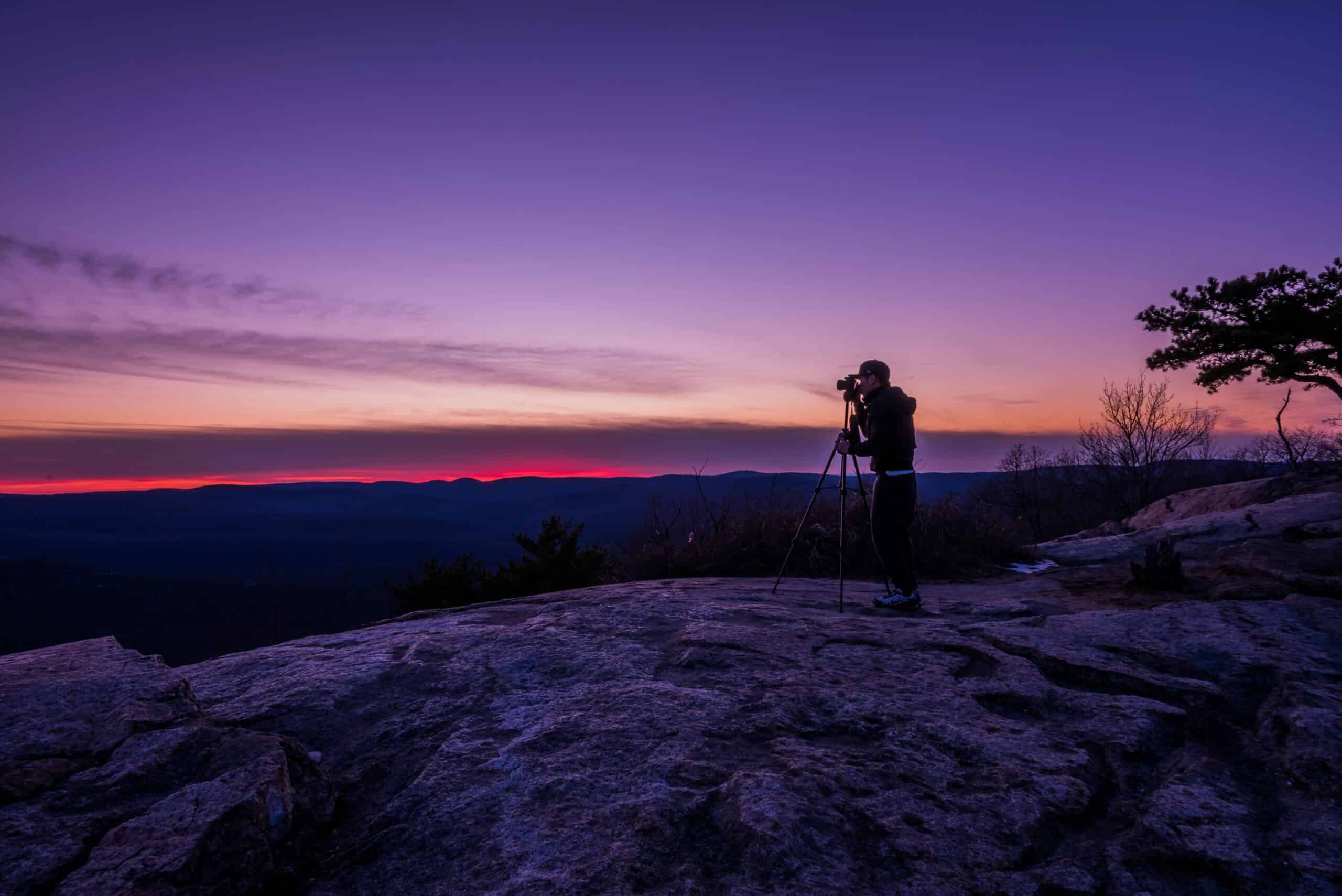
Essential Gear & Setup
Core Gear
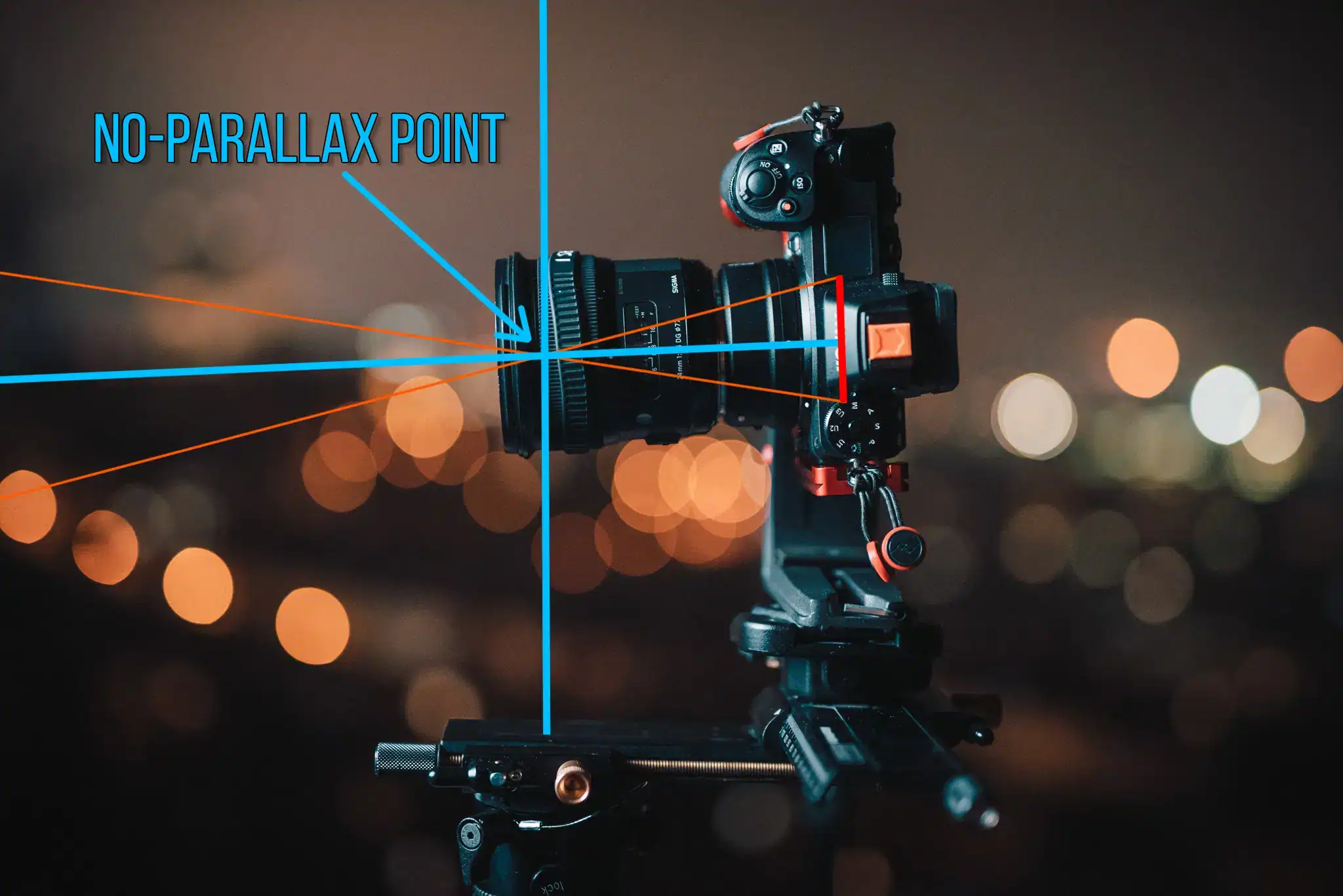
- Panoramic head: lets you rotate around the lens entrance pupil (nodal point) to minimize parallax. Use fore-aft and lateral adjustments to align the pivot precisely.
- Stable tripod with leveling base: a bowl-leveling base speeds setup and keeps horizon true across frames.
- Remote trigger or app: use Sony Imaging Edge Mobile or a wired remote/self-timer to avoid vibrations.
Optional Add-ons
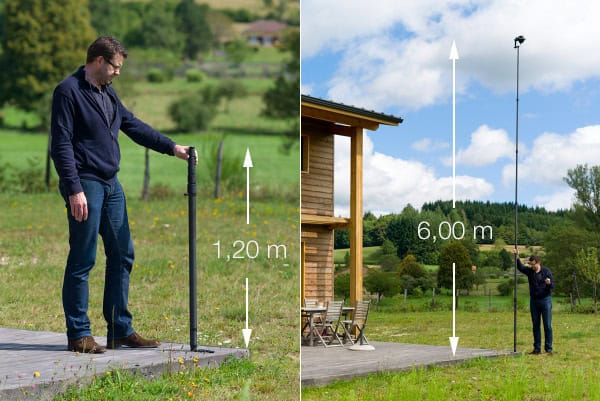
- Pole or car mount: great for elevated or moving perspectives. Use safety tethers, watch wind, and drive slowly on smooth surfaces to reduce vibrations.
- Lighting aids: LED panels or flash bounced off ceilings for evenly lit interiors. Keep WB consistent if adding light.
- Weather protection: rain covers, microfiber cloths, and silica packs for humid or dusty environments.
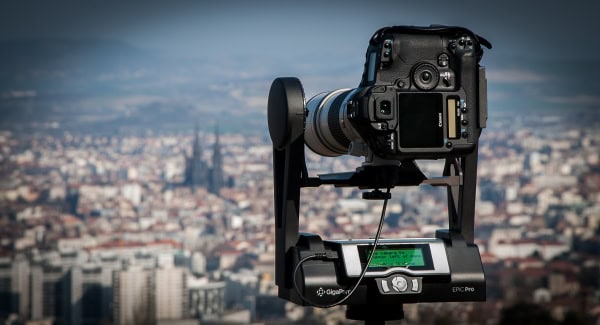
Short video refresher on panoramic head concepts:
Step-by-Step Shooting Guide
Standard Static Scenes
- Level and align: Level the tripod using the leveling base. On the panoramic head, slide the camera so rotation occurs around the entrance pupil. Confirm by aligning a near object against a far object; rotate left/right—if the near object shifts relative to the far object, adjust further until the shift disappears.
- Manual exposure and white balance: Set M mode and lock WB (Daylight, Tungsten, or a custom Kelvin). Consistency prevents visible seams. Use RAW for latitude.
- Focus: Switch the Laowa to manual focus. Use magnified live view and focus peaking. For most scenes, set focus near hyperfocal (e.g., at 15mm f/8, focus around 1 m for front-to-back sharpness).
- Capture sequence:
- 8mm circular fisheye: shoot 3 frames around at 120° intervals. Add a zenith frame tilted up and a nadir for tripod removal. For absolute safety, do 4 around.
- 11–12mm: 5–6 around with 30% overlap, plus zenith and nadir.
- 15mm: 6–8 around with 25–30% overlap, plus zenith and nadir.
- Nadir shot: Shift the tripod aside or use a handheld offset to get a clean ground plate for patching. Mark your position to keep perspective consistent.
HDR / High Dynamic Range Interiors
- Bracket exposures: Use 3–5 frames at ±2 EV to balance bright windows and interior shadows. The A1’s clean base ISO lets you keep ISO 100–200 for best DR.
- Lock WB and aperture: Maintain f/8 for sharpness; vary shutter only. Avoid auto ISO and auto WB—consistency matters for easy stitching.
- Drive mode: Use self-timer or remote. If using the A1’s electronic shutter under LEDs, watch for banding; mechanical shutter is safer indoors with flicker.
Low-Light / Night Scenes
- Exposure: Start around f/4–f/5.6, 1–4 s, ISO 100–400 on tripod. The A1 is clean up to ISO 800–1600 if you must shorten shutter in wind.
- Stability: Turn IBIS off on a locked tripod to avoid micro-jitter. Use a remote or 2 s timer.
- Noise management: Disable Long Exposure NR to avoid delays between frames; denoise later in post for consistent results.
Crowded Events
- Two passes: First pass quickly for coverage; second pass wait for gaps in people. You can mask moving subjects later.
- Focal choice: 8mm minimizes shots and timing mismatches. Keep rotations steady and fast to reduce motion differences.
Special Setups (Pole / Car / Drone)
- Pole: Use a lightweight carbon pole with tether. Rotate slowly, keep shutter speeds up (1/200–1/500 if handheld on pole) and use higher ISO if needed. The A1’s stacked sensor helps reduce rolling shutter.
- Car mount: Use vibration-damped suction rigs. Drive slowly on smooth surfaces; use mechanical shutter to avoid LED tail-light banding if present.
- Drone: If adapting the A1 on heavy-lift platforms, ensure payload ratings and wind limits are observed; prioritize safety and legal compliance.
Recommended Settings & Pro Tips
Exposure & Focus
| Scenario | Aperture | Shutter | ISO | Notes |
|---|---|---|---|---|
| Daylight outdoor | f/8–f/11 | 1/100–1/250 | 100–200 | Lock WB (Daylight). Use 8mm if clouds move fast. |
| Low light/night | f/4–f/5.6 | 1/30–1 s (tripod) | 200–800 | Tripod & remote; disable IBIS on tripod. |
| Interior HDR | f/8 | Bracket ±2 EV | 100–400 | Keep aperture fixed; vary shutter only. |
| Action / moving subjects | f/5.6–f/8 | 1/200+ | 400–1600 | Freeze motion; do two passes for clean masks. |
Critical Tips
- Manual focus at hyperfocal: With fisheye depth of field, set f/8 and focus just shy of infinity for edge-to-edge clarity.
- Nodal calibration: Mount the A1 on your pano head; slide fore-aft until near/far objects stay aligned during rotation. Mark rail positions for 8mm and 15mm—entrance pupil shifts with focal length on zoom fisheyes.
- White balance lock: Mixed lighting (tungsten + daylight) causes color seams. Pick a Kelvin value (e.g., 4000–4500K for warm interiors) and stick with it.
- RAW advantage: Shoot lossless compressed RAW. It preserves DR and color for HDR merges and stitch blending.
- Shutter mode: Prefer mechanical shutter in environments with LED flicker; use silent only when necessary to avoid banding.
- IBIS on/off: On a tripod, turn IBIS off. Handheld/pole work: leave it on but use higher shutter speeds.
- Custom buttons: Assign “APS-C/Super 35” toggle off to avoid cropping; map bracket burst and drive mode to buttons for speed.
Stitching & Post-Processing
Software Workflow
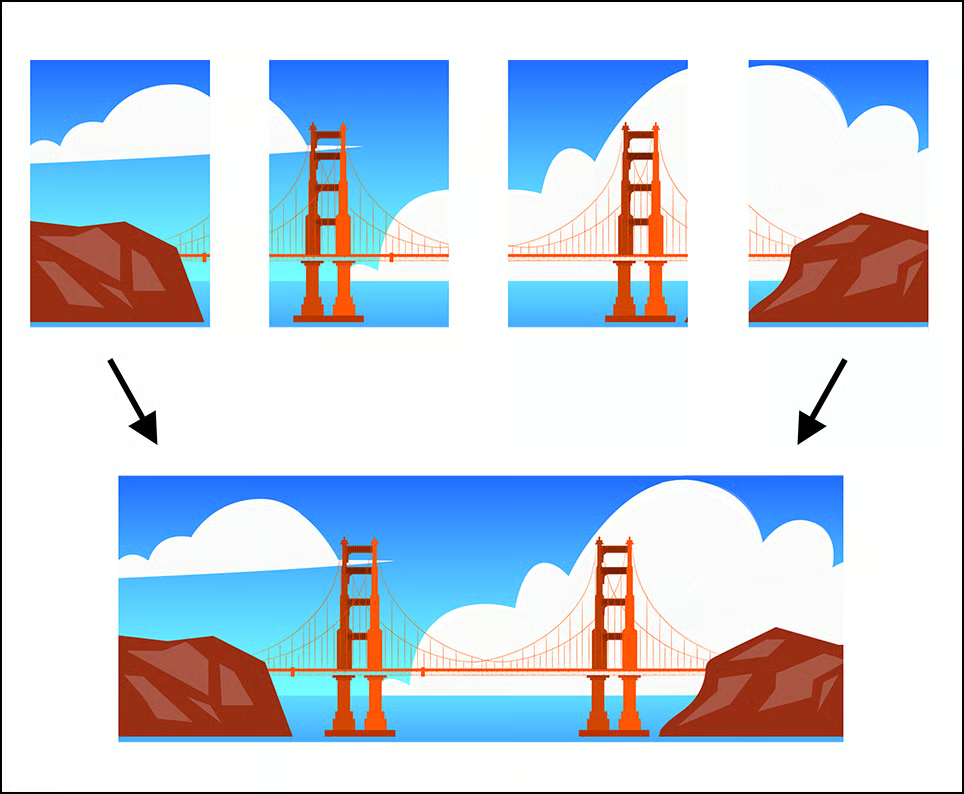
Fisheye images are easy to stitch in dedicated tools. PTGui is an industry standard for speed and control; Hugin is a solid open-source alternative. For fisheyes, aim for 25–35% overlap; rectilinear lenses like 24–35mm typically need 20–25% but many more tiles. Export your RAWs to 16-bit TIFFs after basic tone and lens CA corrections (don’t defish beforehand). Import into PTGui/Hugin, set lens type to fisheye, and let the optimizer find control points. Correct horizon, then export an equirectangular pano (2:1 ratio) for VR or a high-res JPEG/TIFF for web galleries. For more on PTGui’s strengths and speed advantages, see this review. PTGui reviewed for professional panoramas.
Cleanup & Enhancement
- Nadir patch: Use a dedicated nadir frame and patch with cloning or a logo plate. Many AI tools can speed tripod removal.
- Color harmony: Match color across brackets before merging. Apply a subtle dehaze and contrast curve; reduce saturation in mixed lighting areas.
- Noise reduction: Use RAW denoise on low-light sets; apply selectively to shadows to retain detail in midtones/highlights.
- Level and compass: Ensure roll/yaw/pitch are correct so the horizon is straight. Many viewers rely on proper metadata and level alignment.
- Export: Equirectangular 2:1, 8K–16K for high-end VR; add XMP metadata if required by your 360 viewer.
If you’re new to DSLR/mirrorless 360 workflows, Oculus’s technical guide is concise and practical. Using a mirrorless camera to shoot and stitch a 360 photo.
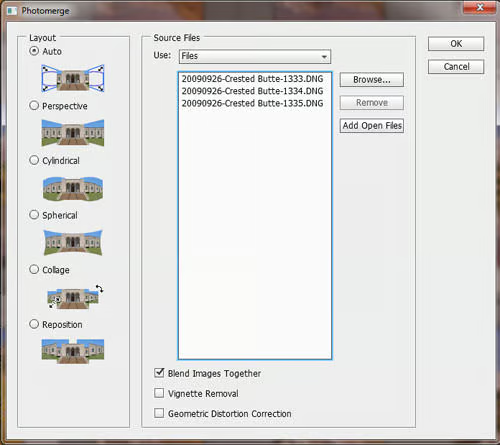
For panoramic head setup best practices and control point strategies, this tutorial is a helpful reference. Panoramic head fundamentals and workflow.
Useful Tools & Resources
Software
- PTGui panorama stitching
- Hugin open source panorama tool
- Lightroom / Photoshop for RAW and retouching
- AI tripod removal tools
Hardware
- Panoramic heads (Nodal Ninja, Leofoto)
- Carbon fiber tripods with leveling bases
- Wireless remote shutters or intervalometers
- Pole extensions and vehicle mounts with safety tethers
Disclaimer: software/hardware names provided for search reference; check official sites for details.
Common Mistakes & How to Avoid Them
- Parallax error: Not aligning the entrance pupil leads to stitching seams—calibrate your pano head before real jobs.
- Exposure flicker: Auto exposure or WB between frames causes visible seams—use full manual and locked WB.
- Tripod shadows and footprints: Capture a clean nadir and patch in post.
- Ghosting from moving subjects: Do a second pass and mask; keep shot cadence fast.
- Night noise and blur: Use a stable tripod, turn off IBIS on tripod, keep ISO low, and use longer shutter instead of pushing ISO too high.
Frequently Asked Questions
- Can I shoot handheld panoramas with the Sony A1?
Yes, but expect more stitching challenges. Use the Laowa at 8mm to minimize shot count, keep shutter at 1/200 or faster, enable IBIS, and rotate around your body as steadily as possible. For professional results, a tripod and panoramic head are strongly recommended.
- Is the Laowa 8-15mm wide enough for single-row 360?
At 8mm circular fisheye, you can do 3–4 shots around plus zenith/nadir—very fast. At 15mm diagonal fisheye, 6–8 around plus top/bottom is typical. Both cover a full 360×180 with proper overlap and a nadir patch.
- Do I need HDR for interiors with bright windows?
Usually yes. Bracket ±2 EV in 3–5 frames to capture both window views and interior detail. The A1’s dynamic range is strong, but multi-exposure HDR blends produce cleaner results without pushing shadows too far.
- How do I avoid parallax issues with this lens?
Calibrate the entrance pupil on your pano head for 8mm and 15mm separately (it shifts with focal length). Use near-and-far alignment tests and mark the rail positions. Recheck if you change the zoom.
- What ISO range is safe on the A1 in low light?
ISO 100–800 is essentially clean; ISO 1600–3200 remains very usable with modern denoise, especially for web/VR. Prefer longer shutters on a tripod over pushing ISO whenever possible.
- Can I set up custom shooting modes for pano on the A1?
Yes. Save a “Pano” setup with Manual exposure, locked WB, RAW, single-shot drive (or bracketed), IBIS off (tripod), peaking on, and EFCS/mechanical shutter set. Recall it instantly at the scene.
- How do I reduce flare with a fisheye?
Avoid pointing directly into the sun; rotate so the sun is near the edge of a frame rather than the center. Use a clean front element, shade with your hand (keep it out of frame), and consider stopping down to f/8–f/11.
- What’s the best tripod head for this setup?
A two-rail panoramic head (e.g., Nodal Ninja or a robust Leofoto) with precise fore-aft and lateral adjustment is ideal. Make sure the head can handle the A1’s weight and lets you repeat exact entrance pupil positions.
Practical Case Studies With This Combo
Indoor Real Estate
Use 15mm at f/8 for good corner sharpness. Lock WB around 4000–4500K in mixed interior lighting. Bracket ±2 EV in 5 frames for bright windows. Capture 6 around + zenith + nadir. The A1’s files handle bright window pulls while preserving midtone color. Patch the tripod with your dedicated nadir frame.
Outdoor Sunset
Clouds move fast; shoot 8mm circular fisheye to reduce shot count. Stay at f/8, ISO 100–200, and 1/100–1/250. Do 3 around quickly, then a zenith. If time allows, do a second pass for safety. Blend exposures selectively if sun is in frame.
Event Crowds
Go 8–12mm depending on how close people are. First pass fast for coverage; second pass to catch gaps and heads turned away. Mask in post to remove duplicates and ghosting. Consider mechanical shutter indoors to avoid LED banding in signs.
Rooftop / Pole Shooting
Use a carbon pole with a tether. Favor faster shutter speeds (1/250+), raise ISO to 400–800 if needed. Rotate slowly and evenly, watching wind gusts. Capture an extra nadir via handheld offset once the pole is down.
Safety, Limitations & Trustworthy Practices
Fisheye lenses see more than you think; mind your feet, legs, and bag. In high winds, reduce the camera profile or postpone pole work. On rooftops, use weighted bases and tethers. The Laowa’s manual-only design is a plus for consistency but requires careful focus and aperture control; always double-check the aperture ring before starting a sequence. The A1’s silent shutter is excellent in quiet venues but can band under LED/fluorescent lighting—prefer mechanical when in doubt. Back up on-site: keep to a fast culling/check routine and shoot a full second pass when time allows. For a deeper foundation on setup, this panoramic head guide is helpful. Panoramic head setup and theory.