
Why This Camera & Lens Are Great for Panoramas
The Pentax K-1 II is a rugged full-frame DSLR that excels in landscape and architectural work—exactly the kind of environments where panoramic and 360 photos shine. Its 36.4MP full-frame sensor (36 × 24 mm) delivers fine detail and strong dynamic range (~14 EV at base ISO), while the in-body stabilization (SR II) and AA-filter simulator can be selectively disabled for tripod-based panorama work. Pixel pitch is roughly 4.9 µm, which balances resolution and manageable noise in low-light scenes.
The Sigma 14–24mm f/2.8 DG DN Art is a modern rectilinear ultra-wide zoom known for excellent edge-to-edge sharpness and well-controlled distortion after profile correction. At 14 mm, it offers a sweeping rectilinear field of view (~114° diagonal, ~104° horizontal) that is ideal for multi-row spherical panoramas and high-resolution gigapixel mosaics. Its constant f/2.8 aperture makes it versatile indoors and at twilight. Note that the DG DN version is designed for mirrorless mounts (e.g., Sony E, L-mount). There isn’t a straightforward mechanical adapter to Pentax K mount because of flange distance constraints. If you cannot mount the DG DN version, use an equivalent rectilinear ultra-wide—e.g., Pentax D FA 15–30mm f/2.8 or any 14–24 mm class lens available for K-mount. All techniques below apply directly to a 14–24 mm rectilinear lens on a K-1 II.
Bottom line: if you’re learning how to shoot panorama with Pentax K-1 II & Sigma 14–24mm f/2.8 DG DN Art (or a K-mount equivalent), you get high resolution, robust weather sealing, and a flexible focal range that stitches reliably when paired with a calibrated panoramic head.
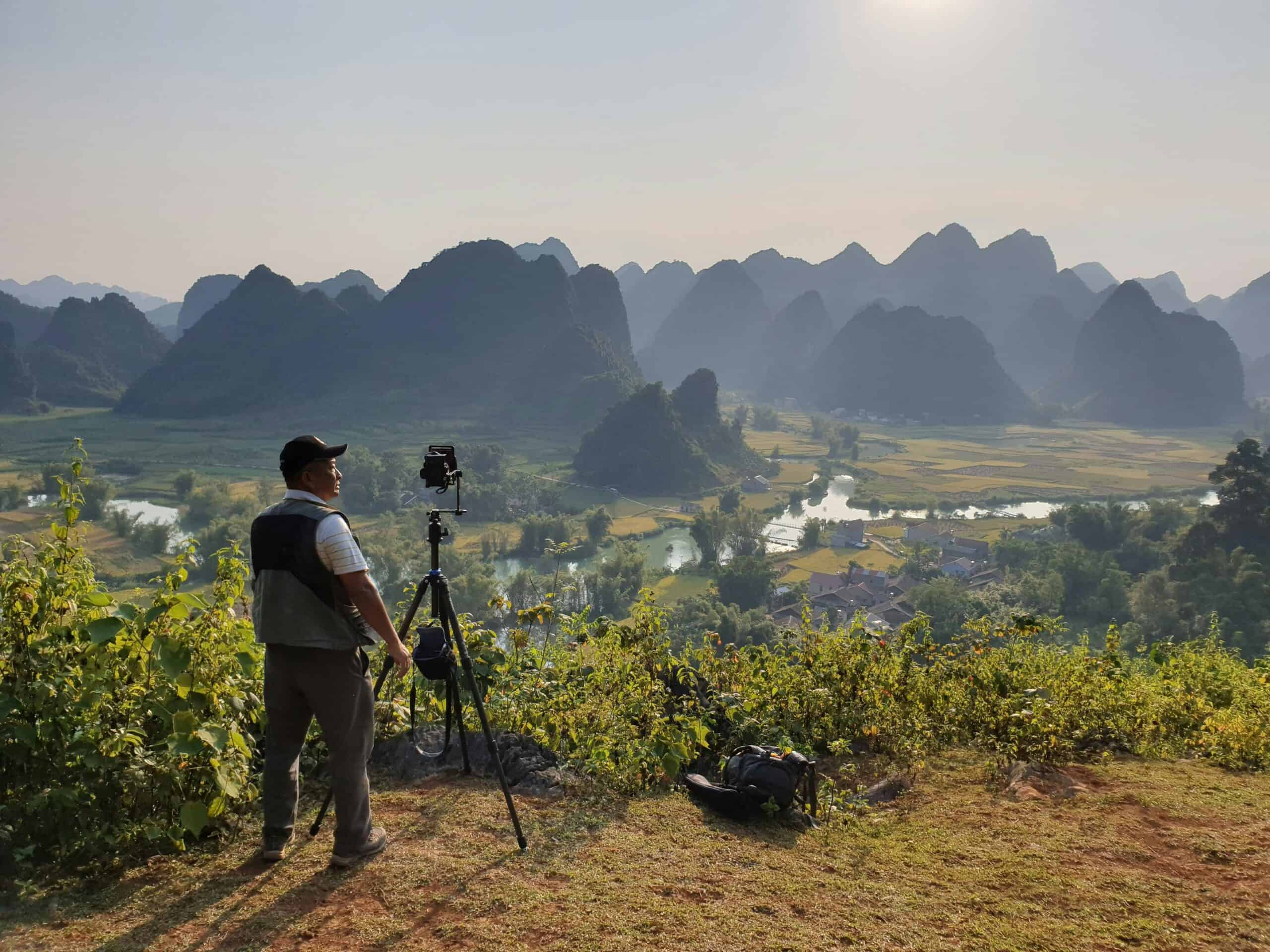
Quick Setup Overview
- Camera: Pentax K-1 II — Full Frame, 36.4MP; base ISO 100; strong DR (~14 EV); IBIS (turn off on tripod); AA filter simulator (turn off for pano).
- Lens: Sigma 14–24mm f/2.8 DG DN Art — rectilinear ultra-wide; sharp from center to edges stopped down; bulbous front element (no standard front filters); good coma/flare control for night cityscapes; note: mirrorless mount. Use a K-mount equivalent if needed.
- Estimated shots & overlap (tested safe ranges for full spherical 360×180):
- At 14 mm: 3 rows at +35°, 0°, −35° with 10–12 frames per row (≈30–36) + zenith + nadir ⇒ ~32–38 frames total.
- At 18 mm: 3 rows with 12–14 frames per row + Z/N ⇒ ~38–44 frames.
- At 24 mm: 3 rows with 16–18 frames per row + Z/N ⇒ ~50–56 frames.
- For a simple cylindrical pano at 14 mm: ~12 frames around at 25–30% overlap.
- Difficulty: Intermediate. Rectilinear UWA is very forgiving if the nodal point is calibrated, but multi-row spherical still requires care.
Planning & On-Site Preparation
Evaluate Shooting Environment
Survey light direction and intensity, reflective surfaces (glass, polished stone), and moving objects (people, cars, trees in wind). For interiors, note mixed lighting (tungsten, LED, daylight) and high-contrast windows—this often calls for HDR bracketing. If shooting through glass, get as close as safely possible (1–3 cm) to minimize reflections and ghosting. Shade the lens with your hand or a flag when you can’t avoid strong backlight.
Match Gear to Scene Goals
The K-1 II’s dynamic range and clean low-ISO performance let you keep ISO 100–400 for maximum quality. In dim interiors or blue hour exteriors, the sensor remains very usable at ISO 800–1600 if you need faster shutter speeds to control motion. The 14–24 mm rectilinear at 14 mm reduces the number of frames compared to longer focal lengths, yet keeps straight lines straight—helpful for architecture and real estate. A fisheye would cut frame count drastically but introduces projection-related compromises; with rectilinear, expect more frames but seamless edges and more natural rendering of straight lines.
Pre-shoot Checklist
- Power & storage: Fully charged batteries, spare battery in cold weather; dual SD cards with enough headroom (panos generate hundreds of RAW files).
- Optics: Clean lens front element and rear element; check for dust on the sensor (f/11 sky tests are useful before a job).
- Support: Leveling base on tripod; panoramic head calibrated for entrance pupil; quick check of all clamps and knobs.
- Safety: Assess wind and footing; tether camera on rooftops; use a safety line for pole/car-mount work.
- Backup capture: When time allows, shoot a second pass—especially for critical commercial interiors. It’s cheap insurance.
Essential Gear & Setup
Core Gear
- Panoramic head: A two-axis panoramic head (e.g., Nodal Ninja, Leofoto, or similar) lets you align the lens’s entrance pupil (often called the “nodal point”) over the rotation axes. This eliminates parallax, the number-one reason stitches fail in tight spaces.
- Stable tripod with leveling base: A leveling base speeds setup and keeps your rows aligned, reducing the need for corrective warps during stitching.
- Remote trigger or app: Use a cable release or the Pentax app to avoid touching the camera. Enable 2 s mirror lockup if you use the optical viewfinder.
Optional Add-ons
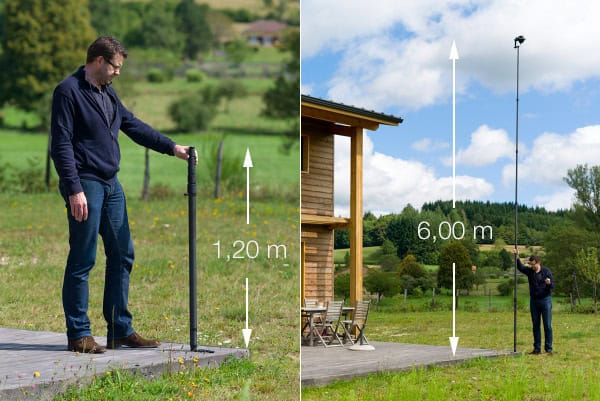
- Extension pole or car mount: Great for elevated perspectives or moving platforms. Use guy-lines in wind and always tether the camera. Keep speeds modest on vehicle mounts.
- Lighting aids: Small LED panels or bounced flashes can lift deep shadows in interior HDR sets. Keep lighting consistent across frames.
- Weather protection: Rain cover, microfiber cloths, and a lens hood flag can save a shoot in drizzle or ocean spray.
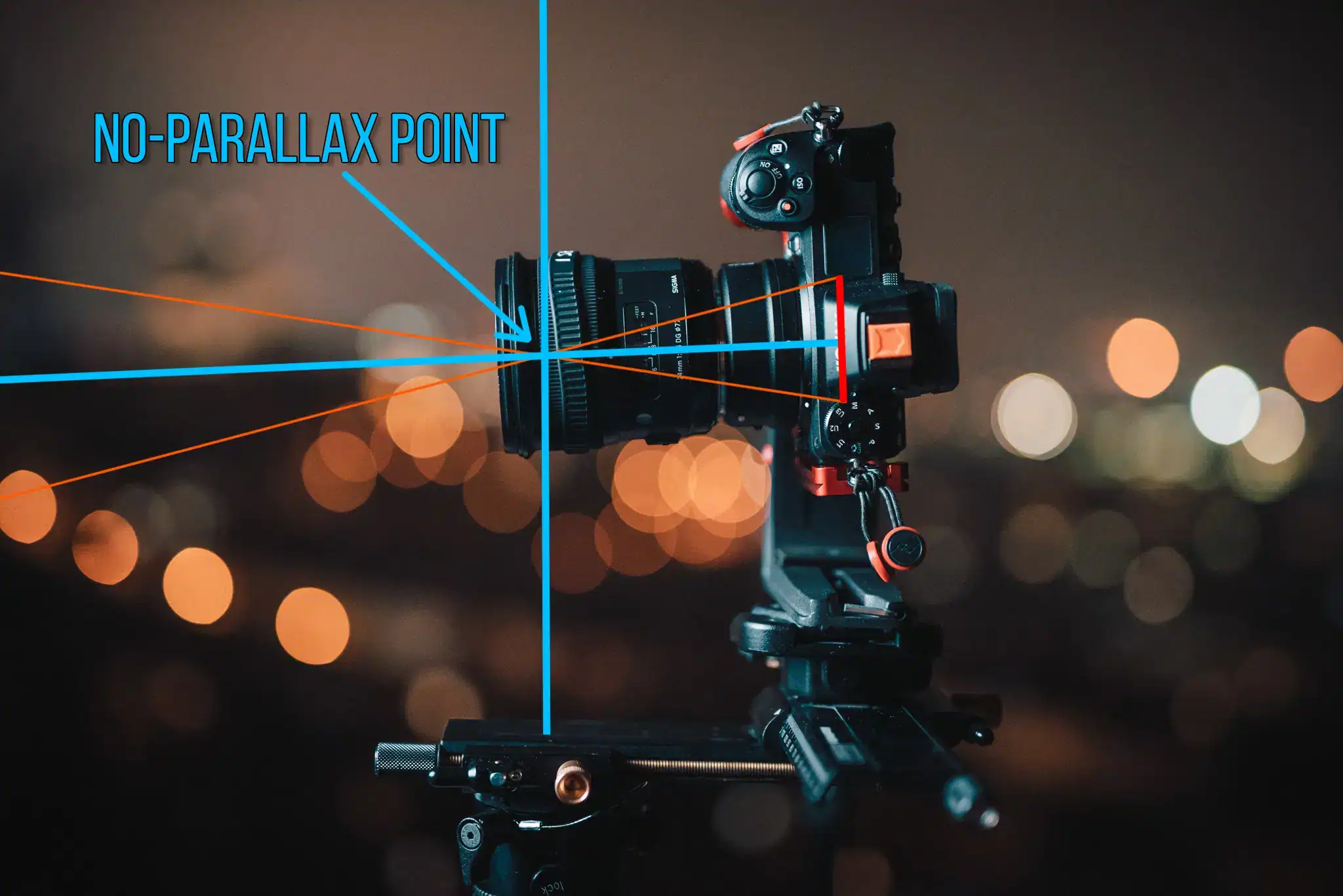
Want a refresher on panoramic head fundamentals? See this panoramic head setup tutorial for a clear step-by-step overview.
Step-by-Step Shooting Guide
Standard Static Scenes
- Level and align the system:
- Level the tripod using the leveling base. Confirm level on the pano head’s bubble and in-camera horizon.
- Align the entrance pupil: Place two light stands (or vertical objects) one near and one far along the frame edge. Rotate the camera: if the relative position shifts, adjust the fore-aft rail until the shift disappears. Repeat at 14 mm and 24 mm and mark both positions on the rail.
- Lock exposure and white balance:
- Switch to Manual exposure. Meter a mid-tone and lock it. Keep the same exposure for the whole panorama.
- Set White Balance to a fixed preset (Daylight, Tungsten, or a custom Kelvin) to avoid shifts across frames.
- Focus and stabilize:
- Manual focus near the hyperfocal distance (e.g., at 14 mm f/8, set focus around 1 m and verify with live view magnification). Then switch AF off.
- Turn off IBIS (Shake Reduction) and the AA-filter simulator for tripod-based shots.
- Capture sequence:
- At 14 mm, shoot 10–12 frames per row with 25–30% overlap. For full spherical 360, capture three rows: +35°, 0°, −35°. Then take a zenith and a nadir shot.
- Use a remote trigger or 2 s timer + mirror lockup to minimize vibration.
- Nadir (ground) capture:
- After the main sequence, raise the camera or offset the tripod slightly and shoot the floor plate for easier patching later.
HDR / High Dynamic Range Interiors
- Bracket exposures: Use ±2 EV (3 frames) as a default; go to 5 or 7 frames in extreme contrast. Keep shutter speed the variable; aperture and ISO fixed.
- Lock WB and focus: Maintain consistency across brackets and angles for seamless blending and stitching.
- Workflow tip: Either merge HDR per angle first (to 32-bit or a clean 16-bit TIFF) and then stitch, or stitch per exposure set and HDR-merge the equirectangulars—both are viable, but the first approach is simpler in most cases.
Low-Light / Night Scenes
- Use sturdy support and lower ISO: On the K-1 II, ISO 100–400 yields the cleanest files; 800–1600 is still practical if you need to freeze subtle motion (people, flags, foliage).
- Open the aperture moderately: f/4–f/5.6 balances sharpness and exposure time. Use 1/30–1/60 s if there’s movement; go longer if the scene is static.
- Trigger safely: Remote or 2 s timer with mirror lockup minimizes blur.
Crowded Events
- Two-pass approach: First pass quickly around to get full coverage; second pass wait for gaps or better subject positions.
- Mask in post: Select the cleanest region for each overlap and mask out duplicates/ghosts in the stitching software or a pixel editor.
- Faster shutters: Aim for 1/200 s+ if you want to freeze hands/faces during the sweep. Push ISO to 800–1600 if needed.
Special Setups (Pole / Car / Rooftop)
- Safety first: Use a tether line from camera to pole/vehicle; secure all clamps; wear gloves. Wind loads increase dramatically with surface area at height.
- Control vibrations: Use faster shutter speeds (>1/200 s), image averaging (multiple frames per angle), and limit pole height when gusty.
- Car-mounted: Drive slowly, shoot at stops, or capture video bursts and extract stills. Avoid long exposures.
Recommended Settings & Pro Tips
Exposure & Focus
| Scenario | Aperture | Shutter | ISO | Notes |
|---|---|---|---|---|
| Daylight outdoor | f/8–f/11 | 1/100–1/250 | 100–200 | Lock WB (Daylight). Turn off IBIS and AA-sim on tripod. |
| Low light/night | f/4–f/5.6 | 1/30–1/60 | 400–800 | Tripod + remote; go to ISO 1600 if you must freeze motion. |
| Interior HDR | f/8 | Bracket ±2 EV | 100–400 | Merge HDR per angle before stitching for consistency. |
| Action / moving subjects | f/5.6–f/8 | 1/200+ | 400–800 | Double-pass method; mask in post to reduce ghosts. |
Critical Tips
- Manual focus near hyperfocal for the selected aperture and focal length; verify with 10× live view magnification.
- Nodal calibration: Mark fore-aft rail positions for 14 mm and 24 mm; keep a note on your phone. Recheck after any knocks.
- White balance lock: Mixed lighting makes auto WB drift across frames. Use a fixed Kelvin or gray card to maintain consistent color.
- RAW always: You’ll need latitude for color and highlight recovery; the K-1 II’s RAW files respond well to gentle shadow lifts.
- Stabilization: Turn off IBIS and AA-simulator on tripod; enable IBIS only for handheld panos.
- Lens care: The bulbous front element is prone to flare and smudges—keep a microfiber cloth and shoot with the hood petals aligned.
Stitching & Post-Processing
Software Workflow
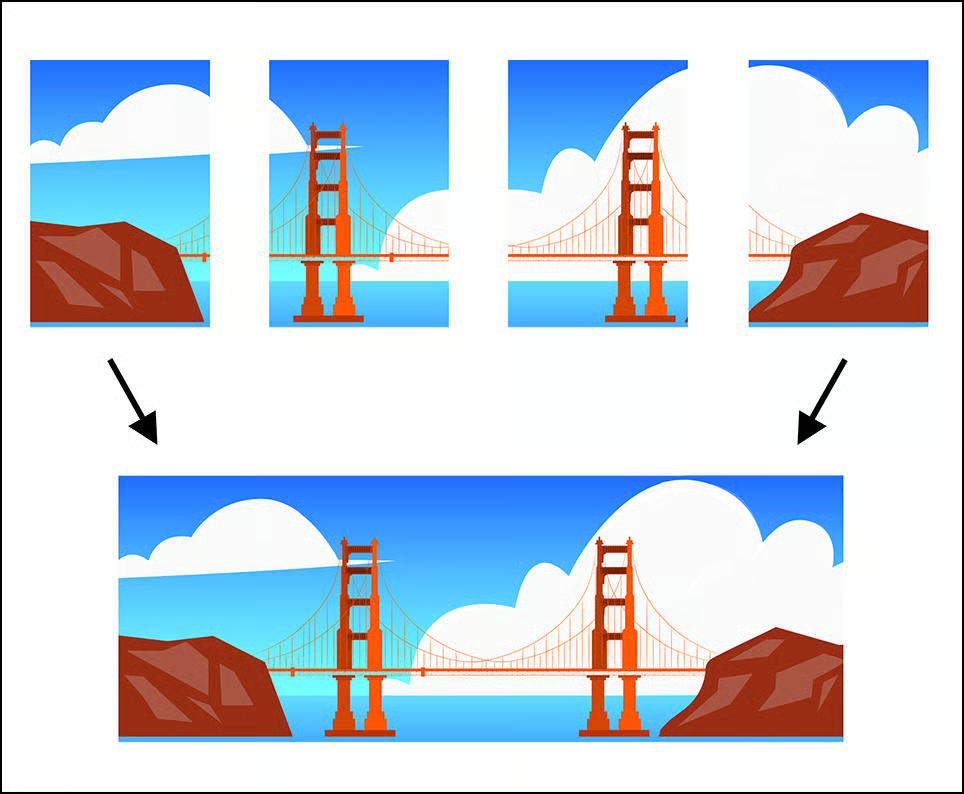
For spherical work, PTGui is an industry standard because it handles complex multi-row sets, HDR brackets, and masking with speed and precision. Hugin and other tools can also do an excellent job with careful control-point management. With a rectilinear 14–24 mm, aim for 25–30% overlap per frame around each row; ensure the zenith and nadir have substantial overlap with their adjacent frames. For fisheye lenses, you can get away with fewer frames but will need to defish or choose appropriate projections during export. For rectilinear lenses like the 14–24 mm, expect more frames but cleaner geometry around architectural lines. See a comprehensive review of PTGui’s strengths here:
PTGui review and why it’s ideal for complex panoramas (Fstoppers)
Cleanup & Enhancement
- Nadir patch: Patch the tripod using a clean floor shot; tools like PTGui’s Viewpoint correction or content-aware fill help.
- Color & noise: Normalize color across rows, then apply mild noise reduction to shadow regions (particularly if ISO ≥ 800).
- Level & straighten: Use pitch/roll/yaw controls in the stitcher to level the horizon and align verticals.
- Export: For VR players export a 2:1 equirectangular at 8K–16K on high-end jobs; keep a 16-bit TIFF master for archival quality.
Meta’s overview of DSLR workflow for 360 photos is a solid reference if you’re transitioning from single frames to full spherical content.
Prefer a visual walkthrough? This video covers practical panorama shooting/stitching fundamentals that map well to the K-1 II workflow.
Useful Tools & Resources
Software
- PTGui panorama stitching
- Hugin (open source)
- Lightroom / Photoshop / Affinity Photo
- AI tripod removal and cloning tools
Hardware
- Panoramic heads: Nodal Ninja, Leofoto, Sunwayfoto
- Carbon fiber tripods with leveling bases
- Wireless remote shutters / intervalometers
- Pole extensions and vehicle mounts with safety tethers
Disclaimer: brands are for reference; verify specs and compatibility on official sites before purchasing.
Common Mistakes & How to Avoid Them
- Parallax error: Always align the entrance pupil and lock down the pano head before shooting, especially indoors.
- Exposure/WB drift: Manual exposure and fixed WB across the entire sequence. Avoid auto ISO and auto WB for panoramas.
- Inconsistent overlap: Keep 25–30% overlap per frame. Underlap is a common reason for control-point failures.
- Tripod shadows and missing nadir: Plan the sun angle, shoot a clean floor plate, and patch the nadir during post.
- Night noise: Don’t push ISO unnecessarily; lengthen shutter on a tripod. Clean up with mild noise reduction in post.
- Forgetting to disable IBIS/AA-sim: On tripod, turn off stabilization and the AA-simulator to maximize detail.
Frequently Asked Questions
- Can I shoot handheld panoramas with the Pentax K-1 II?
Yes for simple cylindrical panos outdoors—use high shutter speeds (1/250 s+), continuous overlap marks, and enable IBIS. For multi-row 360×180, a tripod and panoramic head are strongly recommended to avoid parallax and stitching errors.
- Is the Sigma 14–24mm f/2.8 DG DN Art wide enough for single-row 360?
For a cylindrical 360, 14 mm works in a single row (~12 frames). For a full spherical 360×180 with a rectilinear lens, you’ll need multi-row coverage (commonly three rows plus zenith and nadir). A fisheye can reduce frame count but changes geometry.
- Do I need HDR for interiors with bright windows?
Often, yes. Bracket ±2 EV (3–5 frames). Merge to HDR per angle, then stitch. This retains window detail and clean shadow tones, taking advantage of the K-1 II’s dynamic range.
- How do I avoid parallax issues with this setup?
Use a pano head and calibrate the entrance pupil at 14 mm and 24 mm. Keep the lens at the same zoom for the entire pano. Don’t move the tripod mid-sequence; lock all clamps.
- What ISO range is safe on the K-1 II in low light?
ISO 100–400 is ideal. ISO 800 remains very clean; ISO 1600 is still usable when you need faster shutter speeds (events, wind). Favor longer shutter times on a tripod whenever possible.
- Can I set up custom modes for panorama on the K-1 II?
Yes. Assign a custom mode with Manual exposure, fixed WB, SR off, 2 s self-timer + mirror lockup, and RAW. It speeds up on-location workflow.
- Any special flare tips with bulbous ultra-wides?
Avoid direct sun across the frame edges; use your hand or a flag to shade the lens; keep the front element impeccably clean; bracket an extra frame with your hand out of frame for flare-free blending.
- What’s the best tripod head for this setup?
A two-axis panoramic head with clear fore-aft and vertical rails (e.g., Nodal Ninja/Leofoto) and a leveling base. For heavy field use, choose Arca clamps and metal detents for repeatable stops.
Field Notes & Case Studies
Indoor Real Estate
Shoot at 14–16 mm to minimize frame count while keeping lines straight. Use f/8, ISO 100–200, and bracket ±2 EV. Watch for mirrors and glass—shoot an extra clean frame for those areas to mask reflections later.
Sunset Landscapes
Meter for the highlights to preserve color in the sky, then lift shadows in post. If the dynamic range is extreme, bracket. Consider a second sweep 5–10 minutes later as the light settles for a richer final blend.
Crowded Events
Use 1/200 s or faster, ISO 800–1600. Take two passes and mask moving subjects. Keep the head’s detents engaged so you can repeat angles quickly.
Rooftop or Pole Shooting
Tether gear; mind wind loads. At height, use faster shutter speeds (>1/200 s) and consider reducing the number of frames slightly to finish a rotation before gusts change the scene dramatically.
For more background on lens choices and virtual tour workflow with interchangeable-lens cameras, this guide is a good complement to the techniques above.
DSLR/Mirrorless virtual tour camera & lens guide (360 Rumors)
Safety, Compatibility & Limitations
- Compatibility: The Sigma 14–24mm f/2.8 DG DN Art is not natively compatible with Pentax K mount. Use an optically similar K-mount ultra-wide or confirm a reliable adaptation path before planning a job.
- Bulbous front element: No traditional screw-in filters; always use the hood petals and protect from impacts. A small ding can ruin edge sharpness.
- Weather: The K-1 II is well-sealed; still, use a rain cover in heavy precipitation and wipe salt spray immediately.
- Backup capture: If time allows, do a second sweep, especially for commercial work. Memory is cheap; reshoots are not.
Wrap-Up
Learning how to shoot panorama with Pentax K-1 II & Sigma 14–24mm f/2.8 DG DN Art (or a K-mount equivalent ultra-wide) comes down to consistent technique: level support, entrance pupil alignment, locked exposure/WB, and disciplined overlap. With those fundamentals and a solid stitching workflow in PTGui or Hugin, the K-1 II’s 36MP files deliver crisp, immersive 360° panoramas fit for print, web, and VR.
For a visual primer on setting up a panoramic head from start to finish, this training resource is also helpful:
Set up a panoramic head for high-end 360 photos (Meta/Oculus)