
Why This Camera & Lens Are Great for Panoramas
The Pentax K-1 II is a rugged, full-frame DSLR with 36.4MP resolution, pixel pitch of approximately 4.9 µm, strong weather sealing, and 5-axis in-body stabilization (SR II). Its large sensor delivers excellent color depth and roughly 14 EV of dynamic range at base ISO—ideal for clean, flexible files in panoramic and 360 photo workflows. The body also offers Pixel Shift Resolution for static scenes and features that travel shooters love (top ISO up to 819,200, built-in GPS/Compass for Astrotracer), though for panoramic work you’ll keep ISO low and stabilization off while on a tripod.
The Olympus M.Zuiko Digital ED 8mm f/1.8 PRO is a stellar diagonal fisheye, renowned for its f/1.8 speed, sharpness even near wide apertures, low coma (useful at night), excellent close focus, and robust weather sealing. On a Micro Four Thirds (MFT) body it covers a 180° diagonal field of view, which greatly reduces the number of shots required for 360° panoramas compared with rectilinear lenses.
Important compatibility note: the Olympus 8mm f/1.8 PRO is a Micro Four Thirds lens and does not mount or function on the Pentax K-1 II (K-mount) without electronics and optics that don’t exist in a practical form. If your end goal is “how to shoot panorama with Pentax K-1 II & Olympus 8mm f/1.8 PRO Fisheye,” you have two viable paths:
- Use the K-1 II with a comparable K-mount fisheye (e.g., Sigma 8mm circular fisheye, Samyang/Rokinon 12mm f/2.8 fisheye, or the Pentax 10–17mm fisheye). You’ll get equivalent coverage and stitching advantages on full frame.
- Use the Olympus 8mm f/1.8 PRO on a Micro Four Thirds body for the capture, then follow the same stitching workflow described here. The shooting method is nearly identical; only the shot count and overlap differ.
Below, you’ll find the exact step-by-step guidance to shoot high-quality panoramas for both scenarios, with tested shot counts for this focal range. Where it matters, we’ll call out differences between full-frame fisheye on the K-1 II and the Olympus 8mm on MFT.
Quick Setup Overview
- Camera: Pentax K-1 II — Full Frame 35.9×24mm, 36.4MP; pixel pitch ~4.9 µm; ~14 EV dynamic range at base ISO; 5-axis IBIS (disable on tripod).
- Lens: Olympus 8mm f/1.8 PRO Fisheye — diagonal fisheye, 180° diagonal FOV on MFT; very sharp and fast; well-controlled CA and flare for a fisheye; weather-sealed.
- Estimated shots & overlap (choose your path):
- K-1 II + circular 8mm fisheye (FF): 3–4 around (120° or 90° yaw steps) + zenith + nadir; 30–40% overlap.
- K-1 II + diagonal 12mm fisheye (FF): 6 around (60° steps) + zenith + nadir; 25–30% overlap.
- Olympus 8mm on MFT: 6–8 around (60–45° steps) + zenith + nadir; 25–30% overlap.
- Difficulty: Easy to Moderate (fisheye panos are forgiving; nodal alignment still required for perfect results).
Planning & On-Site Preparation
Evaluate Shooting Environment
Assess light, movement, and reflective surfaces. Indoors, watch glass, mirrors, and glossy floors; keep the camera perpendicular to glass and slightly back from it to reduce flare and ghosting. Outdoors, consider wind and tripod stability—especially if using a pole. Note moving subjects (people, cars, trees) and plan for masking in post. For sunset or city lights, expect a wide dynamic range requiring bracketing.
Match Gear to Scene Goals
The K-1 II’s full-frame sensor gives clean files at ISO 100–400 with excellent color and headroom for grading; ISO 800–1600 remains very usable if you’re careful with exposure and denoise. The Olympus 8mm’s fisheye perspective reduces shot count and speeds work, particularly helpful in real estate and events. Fisheye distortion is irrelevant for equirectangular outputs but demands precise nodal alignment to avoid parallax seams, especially near foreground objects.
Pre-shoot Checklist
- Charge batteries; carry spares. Use large, fast cards; format in camera.
- Clean lens and sensor; check for dust that could replicate around the pano.
- Level your tripod; verify panoramic head calibration for this lens combo.
- Safety checks: wind and crowd management; rooftop or pole use requires a safety tether; verify all clamps are locked.
- Backup workflow: if the scene allows, shoot a second pass for safety and a dedicated nadir shot for tripod cleanup.
Essential Gear & Setup
Core Gear
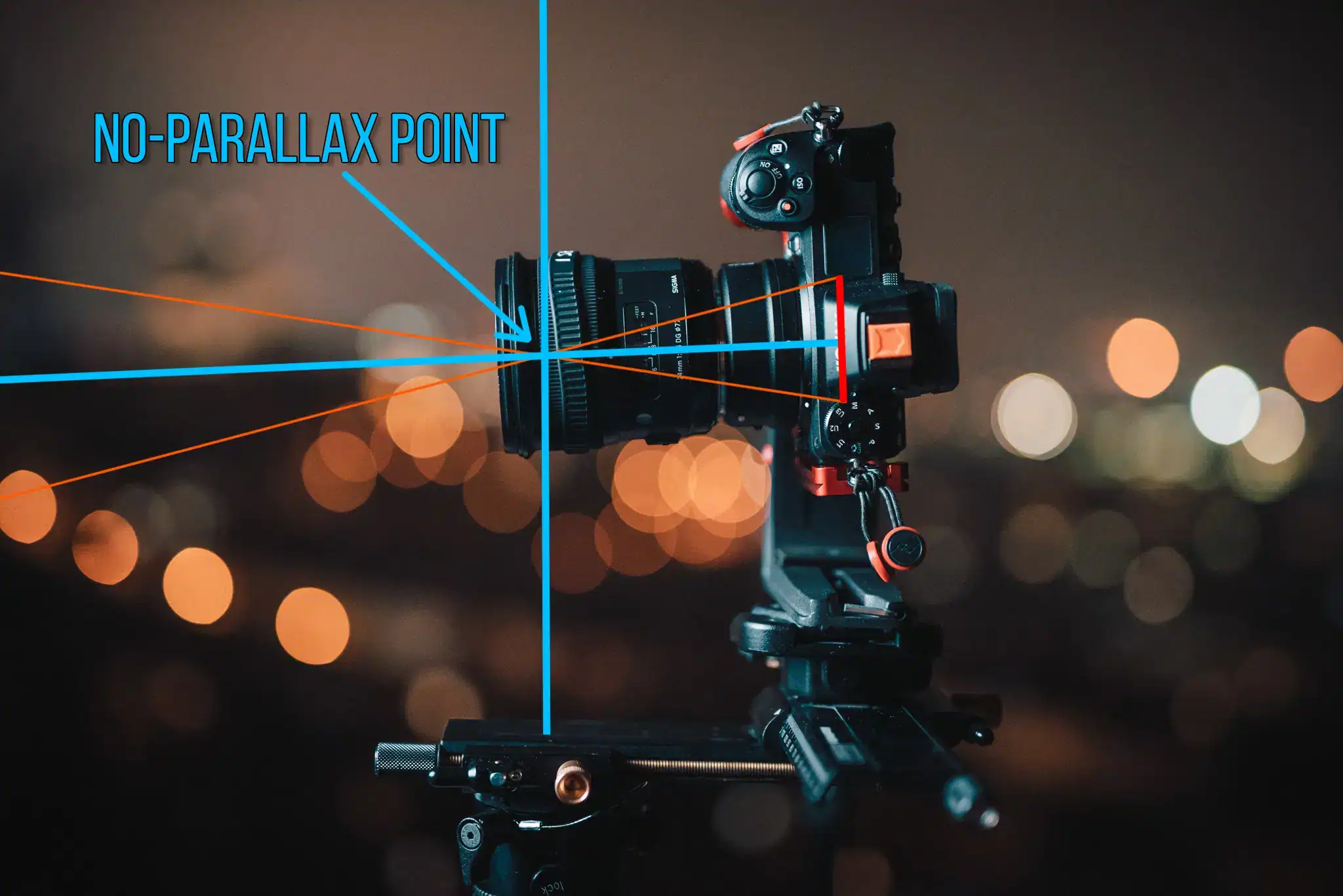
- Panoramic head: A multi-row panoramic head lets you place the rotation axes through the lens’s entrance pupil (nodal point), eliminating parallax. Accurate alignment is the single biggest factor in clean stitches.
- Stable tripod with leveling base: A leveling base speeds setup and keeps horizon leveling consistent as you rotate.
- Remote trigger or camera app: Prevents vibration when pressing the shutter; a 2s self-timer also works.
Optional Add-ons
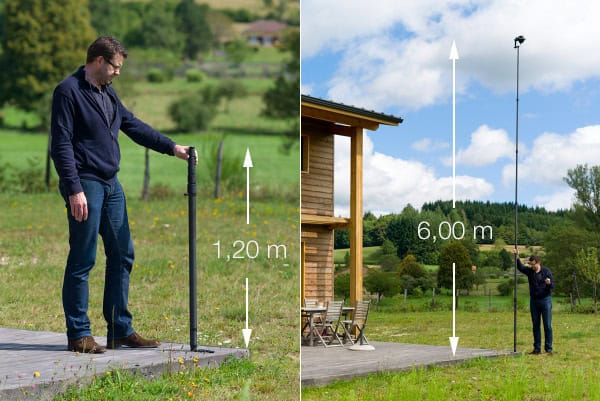
- Pole or car mount: For elevated views or vehicle-based captures. Use a safety tether, assess wind loads, and minimize vibration (short exposures and faster shutter speeds help).
- Lighting aids: Portable LEDs or flash for interior shadows; keep lighting consistent across frames.
- Weather protection: Rain covers and lens hoods; keep droplets off the fisheye front element.
For a deeper primer on panoramic heads and why alignment matters, see this concise panoramic head tutorial. Panoramic head concepts and setup
Step-by-Step Shooting Guide
Standard Static Scenes
- Level tripod and align nodal point. Start by aligning two vertical objects at different distances; rotate the camera and adjust the rail until the foreground and background stay aligned. Save the rail measurements for your lens/body combo.
- Switch to manual exposure and lock white balance. Take a test frame, check the histogram, then lock exposure and WB to avoid stitching flicker and color shifts.
- Capture the series with appropriate overlap. For K-1 II + circular 8mm, shoot 3–4 around at 120–90° yaw steps. For K-1 II + 12mm fisheye, shoot 6 around at 60°. For Olympus 8mm on MFT, shoot 6–8 around at 60–45°.
- Take an extra zenith and nadir. Tilt up for the zenith and capture a clean nadir for patching the tripod footprint later. If the ground is patterned, consider a handheld nadir offset shot.
HDR / High Dynamic Range Interiors
- Bracket exposures ±2 EV (3 or 5 frames) to balance windows and interior shadows. Keep bracketing identical across every pano position.
- Lock white balance to ensure consistent color temperature across brackets; shoot RAW to preserve highlight headroom.
Low-Light / Night Scenes
- Use longer exposures with a stable mount; on K-1 II start at ISO 100–400, f/4–f/5.6, and 1–8s depending on the scene. On MFT, ISO 200–800 is typical; leverage the Olympus 8mm’s fast aperture if depth of field allows.
- Turn off IBIS on the tripod; use a remote or 2s timer. Enable Pixel Shift for static scenes on the K-1 II, but only if nothing moves across frames.
Crowded Events
- Two-pass method: first for composition, second timing shots between moving subjects. Keep overlap generous (30–40%) for easier masking.
- In post, mask frames to remove duplicates or ghosting. Prioritize frames with fewer people in critical seams.
Special Setups (Pole / Car / Drone)
- Secure every clamp and add a safety tether. For poles, keep the camera above head height and minimize rotation speed to reduce sway.
- Use faster shutter speeds (1/250–1/1000) and higher ISO if necessary to combat vibration. For cars, avoid rough roads; stop-and-shoot for best results.
Recommended Settings & Pro Tips
Exposure & Focus
| Scenario | Aperture | Shutter | ISO | Notes |
|---|---|---|---|---|
| Daylight outdoor | f/8–f/11 | 1/100–1/250 | 100–200 | Lock WB (Daylight); shoot RAW |
| Low light/night | f/4–f/5.6 | 1/30–8s | 100–800 (K-1 II), 200–800 (MFT) | Tripod & remote; IBIS off on tripod |
| Interior HDR | f/8 | Bracket ±2 EV | 100–400 | Uniform bracketing at each yaw step |
| Action / moving subjects | f/5.6–f/8 | 1/200+ | 400–1600 | Freeze motion; consider higher ISO if needed |
Critical Tips
- Manual focus at or near hyperfocal distance. With fisheyes at f/8, set focus slightly past 1 m; verify with magnified live view.
- Nodal point calibration: For your specific rail, mark the fore-aft position that keeps near/far objects aligned as you yaw. Record the rail scale for fast re-setup. Repeat for each lens you use with the K-1 II.
- White balance lock: Mixed lighting can cause color banding between frames. Lock WB and harmonize in post if needed.
- RAW over JPEG: Panos stress tonal latitude; RAW maintains highlight detail and smooth gradients for skies and interiors.
- IBIS on/off: On tripod, disable stabilization to prevent micro-blur. For quick handheld panos, IBIS can help but expect more stitching challenges.
Stitching & Post-Processing
Software Workflow
Import your series and, if bracketed, first merge exposure stacks for each camera angle. Then stitch with a dedicated tool like PTGui or Hugin. Fisheye sources are often easier: they need fewer shots, have ample overlap, and PTGui’s fisheye optimization is mature. Rectilinear lenses take more frames but show less edge stretching per frame. Industry best practices suggest 25–30% overlap for fisheye and 20–25% for rectilinear. Why many pros prefer PTGui for demanding panoramas
Cleanup & Enhancement
- Tripod/nadir patch: Capture a dedicated nadir and patch manually, or use AI-assisted tools to remove the tripod footprint cleanly.
- Color and noise control: Apply consistent color correction across frames; use moderate noise reduction (especially for high-ISO night panos).
- Level horizon: Use the stitching software’s horizon tool to correct roll/yaw/pitch; set a reliable vertical via control points.
- Export: Deliver equirectangular JPEG/TIFF (2:1 aspect) for VR/360 platforms. Maintain a high-quality master (e.g., 16-bit TIFF) for archival.
If you’re new to DSLR/mirrorless 360 workflows, these official guides provide a great foundation. Shooting and stitching a 360 photo with interchangeable-lens cameras
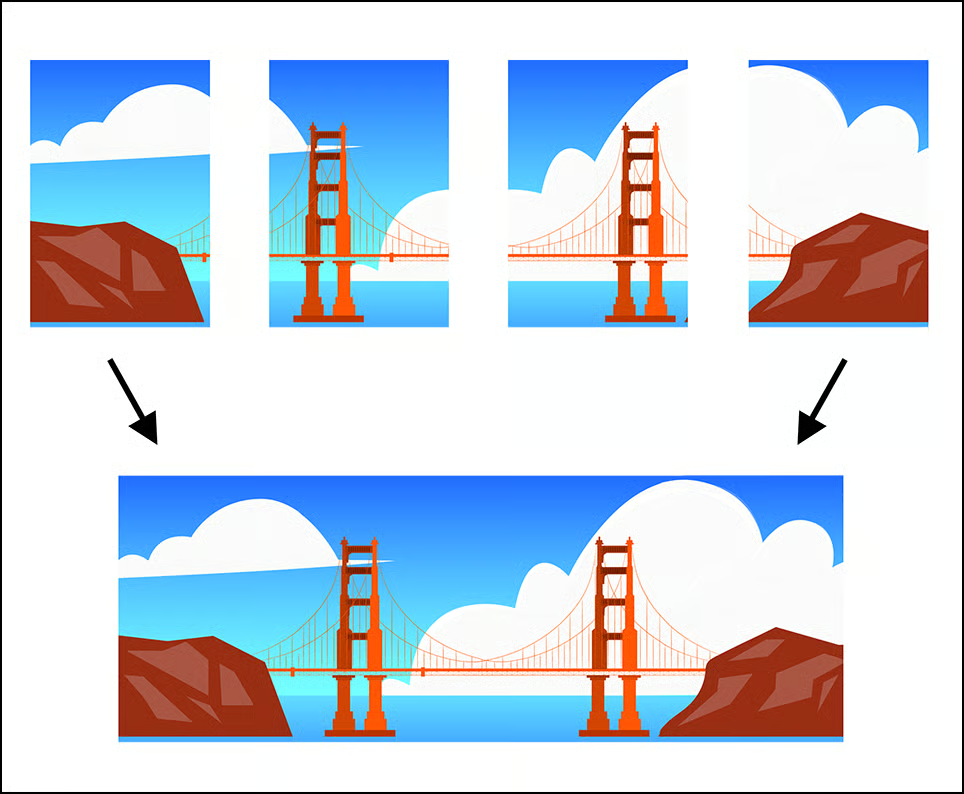
For a structured approach to setting up your head for perfect seams, see this step-by-step primer. Panoramic head setup: principles and workflow
Useful Tools & Resources
Software
- PTGui panorama stitching
- Hugin open source panorama tool
- Lightroom / Photoshop for RAW development and retouching
- AI tripod removal tools for nadir cleanup
Hardware
- Panoramic heads (Nodal Ninja, Leofoto, Fanotec)
- Carbon fiber tripods with leveling bases
- Wireless remote shutters or intervalometers
- Pole extensions and car mounts with proper safety tethers
Disclaimer: software and hardware names are provided for search reference; check official sites for specifications and compatibility.
Common Mistakes & How to Avoid Them
- Parallax error → Precisely align the lens on the panoramic head’s rails and test with near/far objects.
- Exposure flicker → Manual mode and locked WB; avoid auto ISO; keep bracketing consistent.
- Tripod shadows or footprints → Capture a clean nadir frame and patch in post.
- Ghosting from movement → Use the two-pass method and mask moving elements in the stitcher.
- Night noise and blur → Keep ISO modest, use longer exposures on a stable setup, and disable IBIS on tripod.
Real-World Case Studies
Indoor Real Estate (K-1 II + 12mm fisheye)
Set f/8, ISO 100–200, and bracket ±2 EV. Shoot 6 around + zenith + nadir. Keep lights consistent (turn them all on or all off). Watch mirrors and glossy floors; shoot a safety pass. In PTGui, optimize control points on straight lines and mask people out if needed.
Outdoor Sunset (K-1 II + circular 8mm)
Shoot 4 around + zenith + nadir for generous overlap. Expose for highlights (protect the sunlit sky), and consider a 5-frame bracket at key angles. Color-match across frames before stitching to ensure a smooth gradient.
Event Crowds (Olympus 8mm on MFT)
Go 8 around for extra overlap; shoot at 1/250–1/500, f/4–f/5.6, ISO 400–800. Time frames between crowd flows. In post, prefer frames with fewer subjects crossing seams and use masks extensively.
Compatibility & Practical Alternatives
Because the Olympus 8mm f/1.8 PRO is an electronic MFT lens with a short flange distance, it cannot be adapted to the Pentax K-1 II in a way that preserves aperture/focus control and full image coverage. To achieve the same “fisheye advantage” on the K-1 II, consider one of these K-mount options:
- Sigma 8mm circular fisheye (FF coverage): 3–4 shots around + zenith + nadir.
- Samyang/Rokinon 12mm f/2.8 diagonal fisheye: 6 shots around + zenith + nadir.
- Pentax 10–17mm fisheye (at 12–14mm on FF for reduced edge clipping).
If you already own the Olympus 8mm f/1.8 PRO, you can follow the same capture and stitching workflow on an OM SYSTEM/OLYMPUS MFT body, then process identically. The difference is mainly shot count and slight noise behavior at higher ISOs due to sensor size.
Frequently Asked Questions
- Can I shoot handheld panoramas with the Pentax K-1 II?
Yes, for quick 360 photos outdoors in good light. Use fast shutter speeds (1/250+), IBIS on, and higher overlap (40–50%). However, for professional results—especially indoors—use a tripod and panoramic head to eliminate parallax.
- Is the Olympus 8mm f/1.8 PRO wide enough for single-row 360?
On MFT, it’s a diagonal fisheye with 180° diagonal FOV. Expect 6–8 shots around plus zenith/nadir for robust results. A circular fisheye on full frame can reduce that to 3–4 around.
- Do I need HDR for interiors with bright windows?
Usually yes. Window-to-wall contrast often exceeds single-shot dynamic range. Bracket ±2 EV (3 or 5 shots) at each yaw position and keep exposure/WB locked across the series.
- How do I avoid parallax issues?
Mount the camera on a panoramic head and align the rotation through the lens’s entrance pupil. Calibrate with near/far alignment tests and record the rail settings for repeatability.
- What ISO range is safe on the K-1 II in low light?
For tripod-based panos, ISO 100–400 is ideal. Up to ISO 800–1600 is workable with careful exposure and denoising. Prefer longer shutter speeds over pushing ISO whenever possible.
Further Reading
For additional context on gear choices and pano approaches, this overview is helpful. DSLR/mirrorless 360 virtual tour gear guide