
Why This Camera & Lens Are Great for Panoramas
If you’re searching for how to shoot panorama with Pentax K-1 II & Nikon Z 20mm f/1.8 S, here’s the first thing to know: this pairing is not natively compatible. The Pentax K-1 II is a K-mount DSLR with a 45.46 mm flange distance, while the Nikon Z 20mm f/1.8 S is built for the Nikon Z mirrorless mount with a 16 mm flange distance and fully electronic aperture/focus control. There is no practical adapter to mount the Z 20mm S lens onto the K-1 II while retaining focus and aperture control (and infinity focus). If you own the Z 20mm S, use it on a Nikon Z camera; if you’re committed to the K-1 II body, choose a comparable full-frame rectilinear 20–21 mm prime in K-mount (for example, Pentax D FA 21mm Limited, Sigma 20mm f/1.4 Art, or Samyang/Rokinon 20mm f/1.8).
With that compatibility caveat, the techniques below apply perfectly to a 20–21 mm rectilinear prime on the full-frame Pentax K-1 II, and they also translate directly if you’re using the Nikon Z 20mm f/1.8 S on a Nikon Z body. The K-1 II’s 36.4 MP full-frame sensor (approx. 4.9 µm pixel pitch) delivers excellent acuity and about 14 stops of dynamic range at base ISO, while the in-body stabilization (IBIS) helps for handheld and pole work (turn it off on a tripod). The Nikon Z 20mm f/1.8 S is a modern, high-contrast rectilinear lens with low coma and well-controlled CA, especially stopped to f/5.6–f/8—great for stitching crisp, wide panoramas.
Quick Setup Overview
- Camera: Pentax K-1 II — Full-frame 36.4 MP CMOS; IBIS; excellent build and weather sealing; best at ISO 100–800 for critical quality.
- Lens: Nikon Z 20mm f/1.8 S — rectilinear wide-angle; sharp by f/5.6–f/8; low coma; 94° diagonal FOV. Note: not physically compatible with K-1 II (see intro).
- Estimated shots & overlap (20–21 mm rectilinear on full-frame):
- Landscape orientation spherical 360: 3 rows of 6 around (−60°, 0°, +60°) + 1 zenith + 1–3 nadir = 20–22 shots (30% overlap).
- Portrait orientation spherical 360: 2 rows of 9 around (−45°, +45°) + 1 zenith + 1–2 nadir = 20–21 shots (30% overlap).
- Cylindrical 360 (no top/bottom): 8–10 around in portrait at 25–30% overlap.
- Difficulty: Moderate (rectilinear 20 mm needs multi-row for full 360×180 coverage).
Planning & On-Site Preparation
Evaluate Shooting Environment
Walk the scene before you set up. Note light direction, moving subjects, and reflective glass or polished floors that can cause flare and ghosting. If shooting through glass, place the front element as close as safely possible (1–3 cm) and use a rubber lens hood to reduce internal reflections. Check wind exposure for rooftop or pole shots and look for trip hazards. For interiors, identify mixed lighting sources and decide whether you’ll brace for HDR.
Match Gear to Scene Goals
The Pentax K-1 II provides robust dynamic range at base ISO and reliable battery life—great for long multi-row sessions. Its IBIS is helpful handheld, but turn it OFF on a tripod to avoid sub-pixel sensor shifts between frames. A 20 mm rectilinear lens gives natural-looking perspective with minimal distortion, ideal for architecture and landscapes. The tradeoff is shot count: you’ll need multiple rows for a full 360×180, but your straight lines will stitch beautifully with proper nodal alignment. In low light, aim for ISO 100–400 on tripod, stretching to 800–1600 only if shutter times become impractical with subject motion.
Pre-shoot Checklist
- Charge batteries and carry a spare; format two memory cards and enable dual write if available.
- Clean lens front/rear and check the sensor; dust becomes very visible in skies and walls.
- Level tripod; calibrate your panoramic head’s nodal point before the job.
- Safety: add a tether on rooftops/poles; avoid overhanging crowds; monitor wind gusts.
- Backup workflow: shoot a second complete pano pass whenever time allows—lifesaver if one frame blurs or someone walks through a key seam.
Essential Gear & Setup
Core Gear
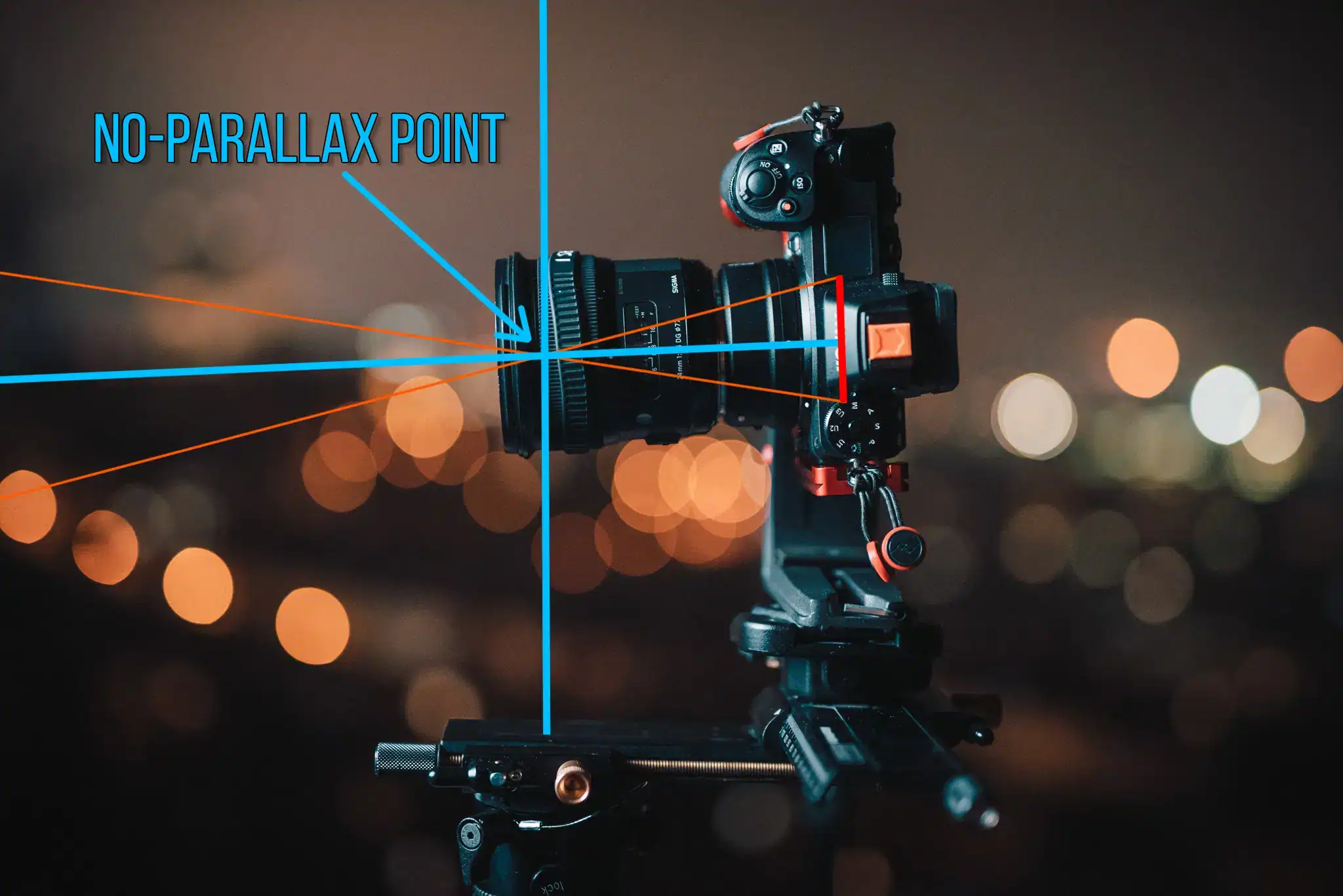
- Panoramic head: lets you rotate around the lens’s no-parallax (nodal) point, eliminating foreground/background shifts that break stitches. Calibrate once and mark your rails.
- Tripod with leveling base: faster than fiddling with tripod legs on uneven ground; keeps your horizon true.
- Remote trigger/app or 2s timer: avoid vibration. On the K-1 II, mirror lock-up or EFCS/electronic shutter (Live View) further reduce micro-shake.
Optional Add-ons
- Pole or car mount: use safety tethers, keep shutter speeds higher (1/200–1/500), and limit rotation speed to reduce motion blur and parallax.
- Lighting aids: small LED panels for dark corners in interiors; keep color temps consistent to simplify white balance across frames.
- Weather protection: rain covers and microfiber cloths; the K-1 II is robust, but water drops on glass will ruin stitching.
Step-by-Step Shooting Guide
Standard Static Scenes
- Level the tripod and align the nodal point. Place two vertical objects (one near, one far) and rotate the camera; adjust the rail so the relative position doesn’t shift. Mark this setting on your rail for the 20–21 mm prime.
- Switch to full Manual: set exposure, focus, and white balance. Lock WB (Daylight outdoors; measured/custom in interiors). Shoot RAW for maximum latitude.
- Frame sequence: use the tested overlap for your chosen orientation. Example (portrait): two rows, 9 around at +45° and 9 around at −45°, then 1 zenith. Rotate in consistent increments (use head detents if available) and keep the bubble level centered.
- Nadir capture: tilt down and shoot 1–3 frames to cover the tripod footprint. For ultra-clean floors, shoot a hand-held nadir after lifting the tripod out and later patch it in post.
HDR / High Dynamic Range Interiors
- Bracket ±2 EV in 3–5 exposures per angle to balance bright windows and interior shadows. The K-1 II handles bracketing smoothly in a burst; ensure no movement of the head between brackets.
- Keep WB locked and avoid auto-ISO. Consider f/8 at ISO 100–200, letting shutter vary across brackets. In PTGui or your HDR app, merge per-angle brackets before stitching for clean transitions.
Low-Light / Night Scenes
- Use a solid tripod and turn IBIS off. Aim for f/4–f/5.6, ISO 100–400, and lengthen shutter (1–10 seconds) as needed. For stars, the K-1 II’s Astrotracer is fantastic, but don’t enable it for panorama frames—star movement between frames makes stitching harder.
- Use a remote or 2s delay. In Live View, use electronic shutter if available to minimize vibrations. Watch for moving lights (cars, boats) and time exposures to avoid bright streaks across seams.
Crowded Events
- Shoot two passes: one fast for coverage, a second to capture clean plates when people clear seams. Keep shutter speeds high (1/200+) to freeze motion.
- In post, blend or mask the cleaner frames into your master stitch. Plan your rotation so key seams fall on less busy backgrounds.
Special Setups (Pole / Car / Drone)
- Secure all gear with tethers. On poles, keep the rig as light as possible and avoid strong winds. Increase shutter speed and consider higher ISO (400–800) to keep frames crisp.
- Accept a slightly higher overlap (35–40%) to give the stitcher more to work with in the presence of vibration or sway.
Recommended Settings & Pro Tips
Exposure & Focus
| Scenario | Aperture | Shutter | ISO | Notes |
|---|---|---|---|---|
| Daylight outdoor | f/8–f/11 | 1/100–1/250 | 100–200 | Lock WB (daylight) |
| Low light/night | f/4–f/5.6 | 1/30–2s+ | 100–400 (800 if needed) | Tripod, IBIS off, remote release |
| Interior HDR | f/8 | Bracket ±2 EV | 100–400 | Merge brackets per angle before stitching |
| Action / moving subjects | f/5.6–f/8 | 1/200+ | 400–800 | Double pass for cleaner seams |
Critical Tips
- Manual focus near the hyperfocal distance (around 2 m at 20 mm, f/8 on full-frame) and tape the ring to prevent drift.
- Nodal point calibration: with a 20–21 mm rectilinear lens, expect the entrance pupil roughly near the front element—fine-tune using the near/far alignment test and mark your rail.
- White balance: lock it. Mixed lighting? Set a custom Kelvin value (e.g., 4200–4800 K interiors) or use a gray card and stick with it.
- RAW beats JPEG: you’ll preserve highlight detail and correct lens vignetting and CA consistently across frames.
- IBIS: on tripod, turn it OFF. Handheld or on a swaying pole, IBIS can help, but excessive sensor movement may complicate stitches—use higher shutter speeds.
- Pixel Shift: leave it OFF for panoramas; micro-differences between frames make stitching fragile.
Stitching & Post-Processing
Software Workflow
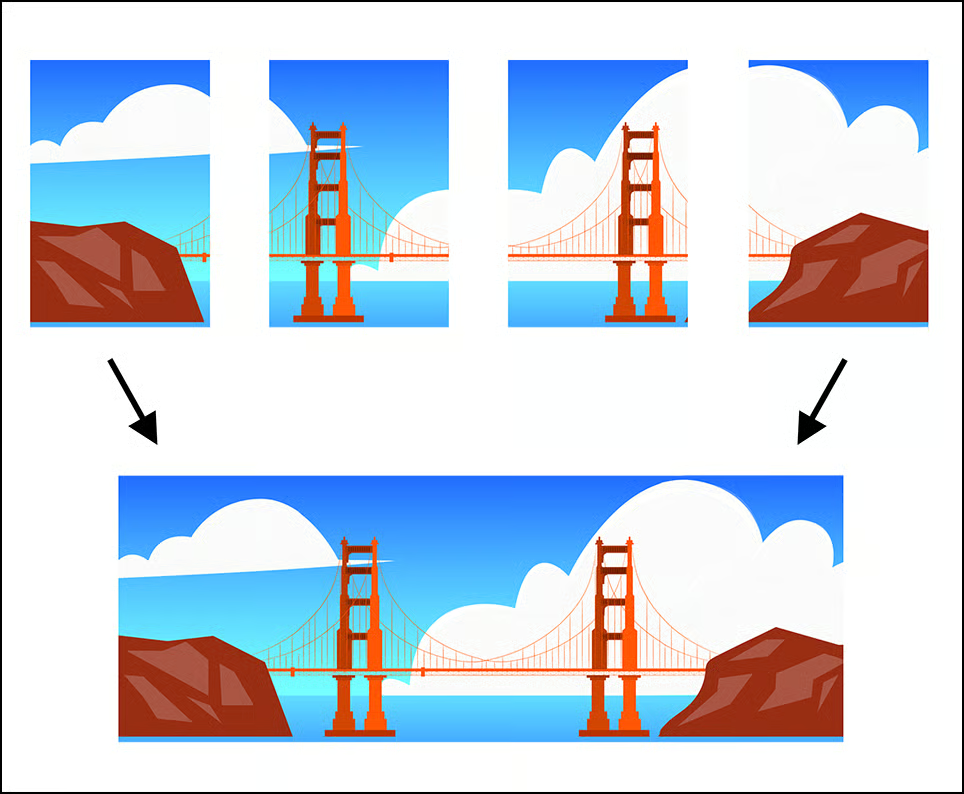
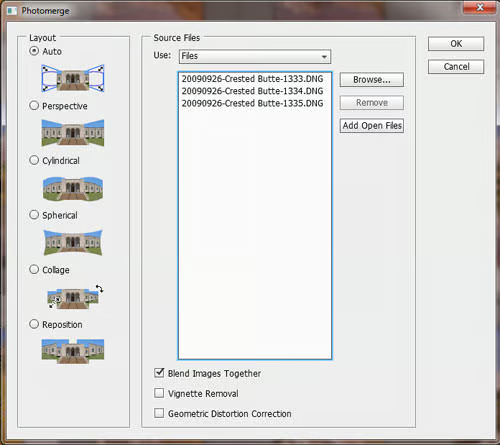
Import and cull. For HDR sets, merge per-angle brackets first (PTGui Pro, Lightroom HDR, or SNS-HDR), then stitch the tonemapped frames. PTGui and Hugin are excellent stitchers; PTGui’s optimizer and masking tools make quick work of small parallax and moving people. With 20 mm rectilinear frames, aim for 25–35% overlap. Rectilinear lenses need more frames than fisheyes, but they produce cleaner straight lines and less extreme edge stretching. Learn to set control points across multiple rows and refine horizon using the optimizer. For a deeper dive on PTGui’s strengths, see this practical review. Why PTGui excels at complex panoramas.
Cleanup & Enhancement
- Nadir patch: capture an extra handheld floor plate and patch it in PTGui’s Viewpoint or in Photoshop with content-aware fill/clone. AI tools can speed this up.
- Color correction: equalize white balance and tint; apply lens profiles consistently. Gentle global denoise if you used ISO 800–1600.
- Level and straighten: set horizontal/vertical lines and correct roll/yaw/pitch so the viewer horizon is neutral.
- Export: for VR players, export an equirectangular 2:1 JPEG/TIFF at 12k–16k width if your source resolution allows. Keep a 16-bit master TIFF archived.
Industry best practices on panoramic heads and setup can accelerate your learning curve. Panoramic head setup explained. For production VR delivery considerations, see the Oculus guide. Using a DSLR or mirrorless camera to shoot and stitch a 360 photo.
Useful Tools & Resources
Software
- PTGui panorama stitching
- Hugin open-source stitcher
- Lightroom / Photoshop for HDR merge and cleanup
- AI tripod removal and content-aware fill tools
Hardware
- Panoramic heads (Nodal Ninja, Leofoto, Sunwayfoto)
- Carbon fiber tripods with leveling base
- Arca-compatible rails with precise scales
- Wireless remote shutters / intervalometers
- Pole extensions / car suction mounts with safety tethers
Disclaimer: brand names are for reference; always check official specs and compatibility for your exact setup.
Common Mistakes & How to Avoid Them
- Parallax errors: not shooting from the nodal point. Calibrate with a near/far object test and lock your rail position.
- Exposure flicker: auto exposure or auto white balance changes frame-to-frame. Use full manual exposure and locked WB.
- IBIS on tripod: can cause sub-pixel shifts. Turn IBIS off when mounted.
- Insufficient overlap: below 20% overlap raises stitch failures. Target 25–35% for rectilinear lenses.
- Tripod shadows and footprints: capture clean nadir plates and patch later.
- Rushing rotation in crowds: shoot two passes, mask later. Use higher shutter speeds to freeze motion.
Field-Proven Scenarios
Indoor Real Estate, Mixed Light
Set to f/8, ISO 100–200, bracket ±2 EV in 5 shots. Two rows in portrait (9 around per row), plus nadir. Use custom WB (~4200 K) to avoid shifts. Merge HDR per angle, then stitch. Stabilize tripod on carpets and ensure doors don’t move between rows.
Outdoor Sunset Landscape
Manual at f/8, ISO 100, shutter to taste. If the sun is in-frame on some angles, consider a second pass with your hand flagging the sun and blend to reduce flare. Watch for moving clouds; be efficient but consistent in rotation. The K-1 II at ISO 100 retains highlight roll-off for vibrant skies.
Rooftop Pole Shot
Switch to a lighter body if possible, or shorten the pole to maintain control. Use 1/250–1/500 shutter at ISO 400–800, f/5.6. Slightly increase overlap (35–40%). Tether everything and mind wind gusts. Expect minor stitching cleanup from sway—masking helps.
Compatibility Note: Pentax K-1 II and Nikon Z 20mm f/1.8 S
Because the Nikon Z lens has a much shorter flange distance and electronic controls, it cannot be adapted to the K-1 II with simple hardware and still reach infinity focus and iris control. If your priority is to use the Nikon Z 20mm f/1.8 S, pair it with a Nikon Z body and follow the same capture methods here (the shot counts and overlaps for a 20 mm rectilinear lens on full-frame remain valid). If you stay with the K-1 II, select a native 20–21 mm rectilinear prime for identical results.
For background on choosing body/lens for virtual tours, this overview is helpful. DSLR/mirrorless lens choices for virtual tours.
Frequently Asked Questions
- Can I shoot handheld panoramas with the Pentax K-1 II?
Yes for simple cylindrical panos; keep shutter at 1/200+ and overlap generously (40%+). For full 360×180, a tripod and pano head are strongly recommended to control nodal alignment and vertical coverage.
- Is the Nikon Z 20mm f/1.8 S wide enough for single-row 360?
For a full spherical 360×180, 20 mm rectilinear generally needs multi-row capture. A single row can cover a cylindrical 360, but not the zenith/nadir without severe stretching or gaps.
- Do I need HDR for interiors with bright windows?
Often yes. Bracket ±2 EV (3–5 frames per angle). Merge each angle’s bracket set first, then stitch. This preserves window detail and maintains consistent noise across the pano.
- How do I avoid parallax seams?
Use a proper panoramic head, find the lens’s entrance pupil, and rotate only around that point. Verify with the near/far test before your shoot. Keep the tripod level to minimize warping.
- What ISO range is safe on the K-1 II in low light?
For critical quality, ISO 100–400 on tripod. ISO 800 is usable with light denoising; ISO 1600 is acceptable for events when you need faster shutter speeds.
Safety, Reliability, and Backup Workflow
Always tether gear on rooftops or poles; wind can turn your setup into a sail. On busy sidewalks, maintain a footprint and consider a spotter. Enable dual card recording if available (RAW to card 1, JPEG to card 2) and back up to a laptop or SSD the same day. Keep a simple naming scheme per scene and note the nodal rail marks you used in case you must reshoot later. If time allows, shoot a second complete pass—it’s the cheapest insurance you’ll ever buy.
For more practical fundamentals and community-tested techniques, this Q&A thread is timeless. Best techniques to take 360 panoramas.