
Why This Camera & Lens Are Great for Panoramas
If you’re wondering how to shoot panorama with Pentax K-1 II & Nikon Z 14-24mm f/2.8 S, here’s the good news and the caveat. The Pentax K‑1 II is a robust full-frame DSLR with excellent weather sealing, a 36.4 MP sensor, and in-body stabilization (SR II). It’s known for crisp detail, reliable color, and very good dynamic range at base ISO—ideal traits for panoramic and 360 photography. The Nikon Z 14–24mm f/2.8 S is one of the sharpest rectilinear ultra-wides available, with low distortion and excellent corner performance by f/5.6–f/8—exactly what you want when stitching.
Compatibility note (important): A Nikon Z-mount lens cannot be natively mounted to a Pentax K-mount DSLR. Adapting Z to K is not practical for infinity focus or aperture control. In practice, to get the look and coverage of the Z 14–24 on a K‑1 II, use a comparable rectilinear ultra-wide (e.g., Pentax D FA 15–30mm f/2.8, Irix 15mm, or a 14mm prime). If you own the Nikon Z 14–24, use it on a Nikon Z body and follow the same pano technique described below. All capture/stitching principles, overlap, and nodal alignment guidance remain the same for a 14–24mm rectilinear lens on full-frame.
Quick Setup Overview
- Camera: Pentax K‑1 II — Full-frame 36.4 MP (approx. 24×36 mm sensor, ~4.9 µm pixel pitch), strong DR at base ISO, 5‑axis IBIS (turn off on tripod), weather sealed.
- Lens: Nikon Z 14–24mm f/2.8 S — rectilinear ultra-wide zoom (on a Nikon Z camera), extremely sharp, low distortion/CA; for K‑1 II, use an equivalent 14–15mm rectilinear lens.
- Estimated shots & overlap (full-frame, rectilinear):
- At 14–15mm: 3 rows × 8 around (≈45° yaw) + zenith + nadir = ~26 shots (30–35% overlap)
- At 24mm: 4 rows × 12 around (≈30° yaw) + zenith + nadir = ~50 shots (25–30% overlap)
- Difficulty: Intermediate (requires careful nodal alignment and consistent exposure; easy with a calibrated panoramic head).
Planning & On-Site Preparation
Evaluate Shooting Environment
Assess light direction and contrast. For interiors with windows, expect high dynamic range; bracket exposures. Watch for reflective surfaces (glass, polished floors, cars) which cause ghosting and flare. If shooting through glass, place the lens hood close to the glass (without touching) and shoot at a slight angle to minimize reflections. Clear the immediate area around the tripod: even small movements close to the camera can cause stitching problems due to parallax.
Match Gear to Scene Goals
The K‑1 II’s full-frame sensor offers excellent base-ISO dynamic range, making it great for landscape and architectural panoramas. It’s comfortable at ISO 100–800 for professional pano work; use 1600–3200 with care and good noise reduction. A 14–15mm rectilinear lens reduces the number of shots per row, yet still demands multi-row capture for full 360×180 coverage. Rectilinear coverage preserves straight lines—important in architecture—while demanding more frames than a fisheye. For outdoor sunsets, lean on base ISO and bracket. For interiors, prioritize stable tripod, consistent white balance, and HDR bracketing.
Pre-shoot Checklist
- Charge batteries and bring spares; format fast cards.
- Clean lens front/rear elements and the sensor if needed.
- Level your tripod and verify panoramic head calibration (no-parallax alignment).
- Set the K‑1 II to Manual exposure and Manual white balance; disable IBIS (SR) when on tripod.
- Safety: assess wind, rooftop edges, crowd movement, and car-mounted vibration. Use tethers on poles or car rigs.
- Backup workflow: shoot a second full pass, or a safety row at 0° pitch, in case any frame is blurred or blocked.
Essential Gear & Setup
Core Gear
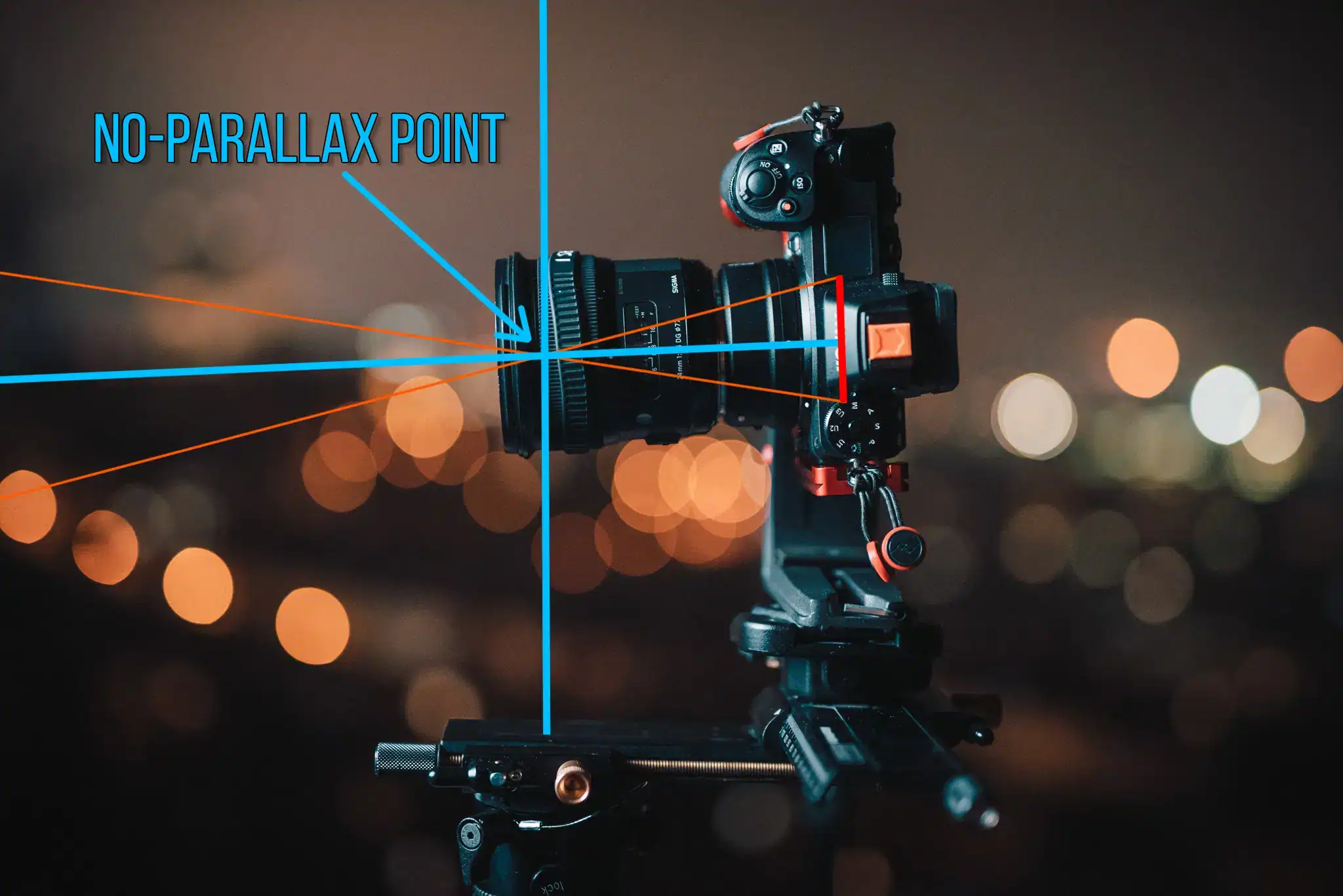
- Panoramic head: Allows you to rotate around the lens’s no-parallax point (entrance pupil). This eliminates foreground/background shifts that break stitching. A two-axis head with fore-aft and left-right rail adjustment is ideal.
- Stable tripod with a leveling base: Fast leveling makes multi-row capture efficient and keeps horizons true.
- Remote trigger or app: Prevents vibrations, especially at longer exposures or on flexible flooring.
Optional Add-ons
- Pole or car mount: Excellent for elevated or moving perspectives, but require safety cables, slow rotations, and conservative shutter speeds to mitigate vibration.
- Portable lighting: Small LED panels or bounced flash for interiors. Keep light positions consistent across frames.
- Weather protection: Rain covers and lens hoods for drizzle or ocean spray; a microfiber towel for quick wipes.
For deeper reading on pano heads and why they matter, see this panoramic head tutorial by 360 Rumors. Panoramic head basics and setup
Step-by-Step Shooting Guide
Standard Static Scenes
- Level and lock: Level your tripod with a leveling base. Ensure the panoramic head’s yaw axis is vertical. Set the K‑1 II to Manual mode; turn off IBIS (SR) on tripod.
- Calibrate the nodal point: With a nearby foreground object and a distant background line, adjust the fore-aft rail until rotating the camera doesn’t shift the relative position of near vs. far details. Make a mark on your rail for 14–15mm and for 24mm.
- Manual exposure and WB: Meter for the mid-tones (or slightly protect highlights), then lock exposure and set a fixed white balance. Shoot RAW for maximum flexibility; keep shutter speed consistent across frames.
- Capture sequence:
- At 14–15mm: shoot three rows at approximately +45°, 0°, −45° pitch. Do 8 shots per row (45° yaw steps). Capture a separate zenith (+90°, overlap 4 shots if needed) and nadir (patch frame for tripod removal).
- At 24mm: four rows at +60°, +20°, −20°, −60°. Do 12 shots per row (30° yaw steps), plus zenith and nadir. More frames but higher detail.
- Nadir capture: Take an extra frame pointing down after moving the tripod out of the way (offset tripod or use a handheld nadir shot). Mark your tripod spot so you can move it precisely.
HDR / High Dynamic Range Interiors
- Bracket ±2 EV (3 or 5 frames) at each yaw position to balance windows and interior shadows. Keep WB fixed to avoid tint shifts between brackets.
- Use a 2–5 s self-timer or remote. Review histograms to ensure at least one bracket preserves window highlights without clipping.
- In post, either merge brackets first, then stitch; or stitch bracket sets and fuse exposures in the pano software if supported (e.g., PTGui exposure fusion/HDR).
Low-Light / Night Scenes
- Keep ISO low where possible (ISO 100–800 on K‑1 II yields clean files). If wind or vibrations force faster shutter, ISO 1600–3200 can work with careful denoising.
- Enable Mirror Lock-Up (if using optical viewfinder) or use Live View to reduce vibration. Trigger with a remote.
- Watch moving lights and people; consider two passes to capture clean background plates for masking later.
Crowded Events
- Do a fast “coverage” pass first, then wait for gaps and reshoot problem sectors for clean plates.
- Keep yaw increments consistent; use masking during stitching to remove ghosting from moving subjects.
Special Setups (Pole / Car / Drone)
- Pole: Secure a safety tether and keep the rotation slow. Increase shutter speed to 1/200–1/500 to combat sway. Shoot slightly more overlap (35–40%).
- Car mount: Use vibration-damped suction rigs; shoot on smooth pavement at low speed or stationary. Avoid long exposures; shoot bursts for redundancy.
- Drone: Follow local regulations. If using a drone, the technique changes—use the drone’s built-in pano program or manual yaw with high overlap.
Recommended Settings & Pro Tips
Exposure & Focus
| Scenario | Aperture | Shutter | ISO | Notes |
|---|---|---|---|---|
| Daylight outdoor | f/8–f/11 | 1/100–1/250 | 100–200 | Manual exposure, WB Daylight; protect highlights for skies |
| Low light/night | f/4–f/5.6 | 1/30–1/60 (or longer on solid ground) | 400–800 (1600–3200 if needed) | Tripod + remote; turn off IBIS (SR) when on tripod |
| Interior HDR | f/8 | Bracket ±2 EV (3–5 frames) | 100–400 | Lock WB; ensure a bracket preserves windows |
| Action / moving subjects | f/5.6–f/8 | 1/200+ | 400–800 | Freeze motion; plan two passes for masking |
Critical Tips
- Focus: Use manual focus, set near the hyperfocal distance at your chosen aperture (e.g., f/8 at 14–15mm). Take a test shot at 100% to confirm corner sharpness.
- Nodal calibration: Slide the camera forward/backward on the fore-aft rail until near/far elements don’t shift when panning. Mark the rail for 14–15mm and for 24mm positions.
- White balance: Lock WB. Mixed lighting can vary frame-to-frame; a fixed WB keeps color consistent for seamless stitching.
- RAW capture: Shoot RAW for the K‑1 II’s dynamic range. You’ll recover highlights and balance white balance/tints across the set.
- IBIS: Turn off Shake Reduction (IBIS) on tripod to prevent sensor micro-shifts during exposure; enable it only for handheld sequences.
- Pixel Shift (K‑1 II): Great for single-frame detail when nothing moves, but not recommended across multi-frame panoramas; micro-detail changes between frames can complicate stitching.
Stitching & Post-Processing
Software Workflow
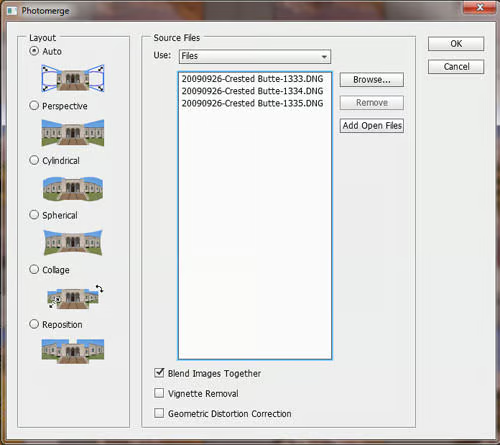
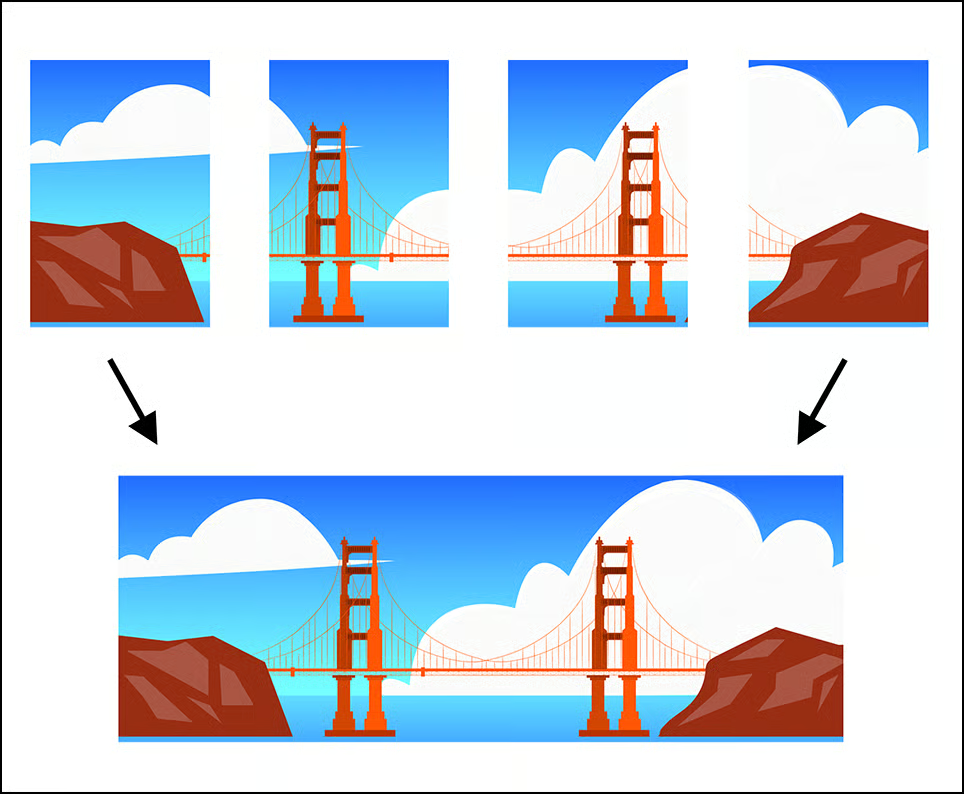
For professional results, PTGui is a gold standard for both regular and 360×180 panoramas. Hugin is an excellent open-source alternative. Lightroom/Photoshop can stitch single-row or simple sets, but multi-row 360s with HDR/bracketing are more reliable in PTGui or Hugin. For rectilinear ultra-wides, plan 25–35% overlap; more overlap makes control points easier in complex scenes. Read a detailed review of PTGui’s strengths here: Fstoppers on PTGui for incredible panoramas
Cleanup & Enhancement
- Nadir patch: Use a dedicated nadir frame or an AI-based tripod removal tool. Clone in Photoshop if needed.
- Color and noise: Match exposure and tint across all frames. For K‑1 II high-ISO frames, run gentle luminance NR and a touch of color NR.
- Leveling: Use horizon line and verticals in PTGui/Hugin; fine-tune pitch/roll/yaw so the 360 horizon is straight.
- Export: For VR/virtual tours, export equirectangular 2:1 JPEG/TIFF at the maximum resolution your platform supports.
For a structured, end-to-end approach to DSLR/mirrorless 360 creation, Meta’s Creator guide is a solid reference. Using a DSLR or mirrorless camera to shoot and stitch a 360 photo
Useful Tools & Resources
Software
- PTGui panorama stitching
- Hugin (open source)
- Lightroom / Photoshop for RAW and finishing
- AI tripod removal and sky cleanup tools
Hardware
- Panoramic heads: Nodal Ninja, Leofoto, Sunwayfoto
- Carbon fiber tripods and leveling bases
- Wireless remotes or intervalometers
- Pole extensions and vehicle mounts (with safety tethers)
Disclaimer: product names are for research reference; check official sites for current specs.
Want a concise visual walkthrough? This video is a helpful primer on practical panorama technique:
Field-Proven Scenarios
Indoor Real Estate (Bright Windows)
Mount the K‑1 II on a panoramic head with a 14–15mm rectilinear at f/8, ISO 100–200. Bracket ±2 EV (3–5 frames) for each yaw position. Keep WB fixed (e.g., 5000K) to avoid color mismatch between frames. Slightly over-shoot overlap in tight rooms (35–40%) to help control points on plain walls. Stitch in PTGui with exposure fusion or HDR merge, then color-balance to a neutral white.
Outdoor Sunset Landscape
At base ISO, shoot a multi-row set around the golden/blue hour. Expose to protect highlights near the sun, and—if needed—do a second bracketed pass. Wind can cause micro-blur; use a weighted bag on the tripod and a 2 s timer. Expect some flare at extreme angles; shield the lens with your hand just outside the frame.
Event Crowds
Use faster shutters (1/200–1/320) at f/5.6–f/8, ISO 400–800. Shoot two passes: one fast for coverage, another selectively when people move to open gaps. In post, mask moving subjects using control-point weighting and layer masks.
Rooftop / Pole Shooting
On rooftops, wind is the enemy. Use a low-profile head, tighten all clamps, and consider higher ISO for faster shutter. On a pole, tether the rig, rotate slowly, and increase overlap to 40%. If you must shoot handheld, shoot extra frames to compensate for imperfect leveling.
Common Mistakes & How to Avoid Them
- Using the Nikon Z 14–24 on K‑1 II directly: They are not mount-compatible; use a Pentax ultra-wide or a Nikon Z body.
- Parallax error: Not aligning the entrance pupil causes stitching ghosts. Calibrate rails and mark positions.
- Exposure flicker: Auto exposure and AWB will shift between frames—use Manual exposure and fixed WB.
- Tripod shadows and nadir holes: Capture a proper nadir frame or plan to patch in post.
- Underlapping frames: Too little overlap leads to weak control points. Aim for 25–35% overlap.
- IBIS left on: Disable in-body stabilization on tripod to avoid micro-shift blur.
Frequently Asked Questions
- Can I shoot handheld panoramas with the Pentax K‑1 II?
Yes for single-row or partial panos, but for full 360×180 with a 14–24mm rectilinear, a tripod and panoramic head are strongly recommended. Handheld introduces roll/pitch errors and parallax, increasing stitching artifacts.
- Is the Nikon Z 14–24mm f/2.8 S wide enough for single-row 360s?
No. At 14mm rectilinear on full-frame, you still need multi-row capture for full 180° vertical coverage. A fisheye can do it in fewer shots, but rectilinear preserves straight lines better.
- Do I need HDR for interiors with bright windows?
Often yes. Bracketing ±2 EV at each position helps retain both window detail and interior shadows. Merge brackets before or during stitching (PTGui supports both workflows).
- How do I avoid parallax issues?
Use a calibrated panoramic head and align the entrance pupil. Start with a near object (e.g., light stand) and a distant vertical line; adjust fore-aft until there’s no relative shift when panning. A step-by-step primer is available here: Set up a panoramic head to shoot high-end 360 photos
- What ISO range is safe on the K‑1 II in low light?
ISO 100–800 is the sweet spot for clean, professional-grade panos. ISO 1600–3200 is usable with careful denoising and good exposure. Always prefer a solid tripod to pushing ISO.
- Can I create custom modes for pano shooting?
Yes. Configure a Custom Mode with Manual exposure, Manual WB, RAW, IBIS off (tripod), 2 s timer/remote, and your preferred aperture. Save another for handheld (IBIS on).
- What’s the best tripod head for this setup?
A two-axis panoramic head with precise rail markings (e.g., Nodal Ninja/Leofoto) simplifies no-parallax alignment. Add a leveling base for fast setup and repeatable results.
Helpful References
For broader technique Q&A from the photo community, this discussion is a useful read: Best techniques to take 360 panoramas