
Why This Camera & Lens Are Great for Panoramas
This guide explains how to shoot panorama with Pentax K-1 II & Nikon AF-S 8-15mm f/3.5-4.5E ED Fisheye, with exact steps, tested shot counts, and practical tips for 360 photos. The Pentax K-1 II is a robust full-frame DSLR (36.4MP, 14-bit RAW) with class-leading weather sealing, excellent dynamic range at base ISO (≈14+ stops), and in-body stabilization (SR II) that helps for handheld frames or pole work. Pairing it with a fisheye zoom like the Nikon 8-15mm gives you ultra-wide coverage that reduces the number of frames needed for a full 360°, speeding up capture and improving stitching reliability in moving scenes.
Important compatibility note: the Nikon AF-S 8-15mm f/3.5-4.5E ED Fisheye is a Nikon F-mount E-type lens (electromagnetic diaphragm). On a Pentax K-1 II (K-mount), there is no native aperture or autofocus control. As of this writing, there is no widely available “smart” F-to-K adapter that provides electronic aperture control for E-type Nikon lenses. Purely mechanical adapters will leave the aperture stopped down or at an uncontrollable setting. For reliable, everyday work, strongly consider a native K-mount fisheye (e.g., Samyang 12mm f/2.8 Fisheye, Sigma 8mm f/3.5 Circular Fisheye, or a modified Pentax DA 10–17mm) instead. That said, if you have a specialized adapter that ensures aperture control, this tutorial covers the capture workflow and settings specific to a full-frame body with a fisheye zoom, including shot counts at 8–15mm.
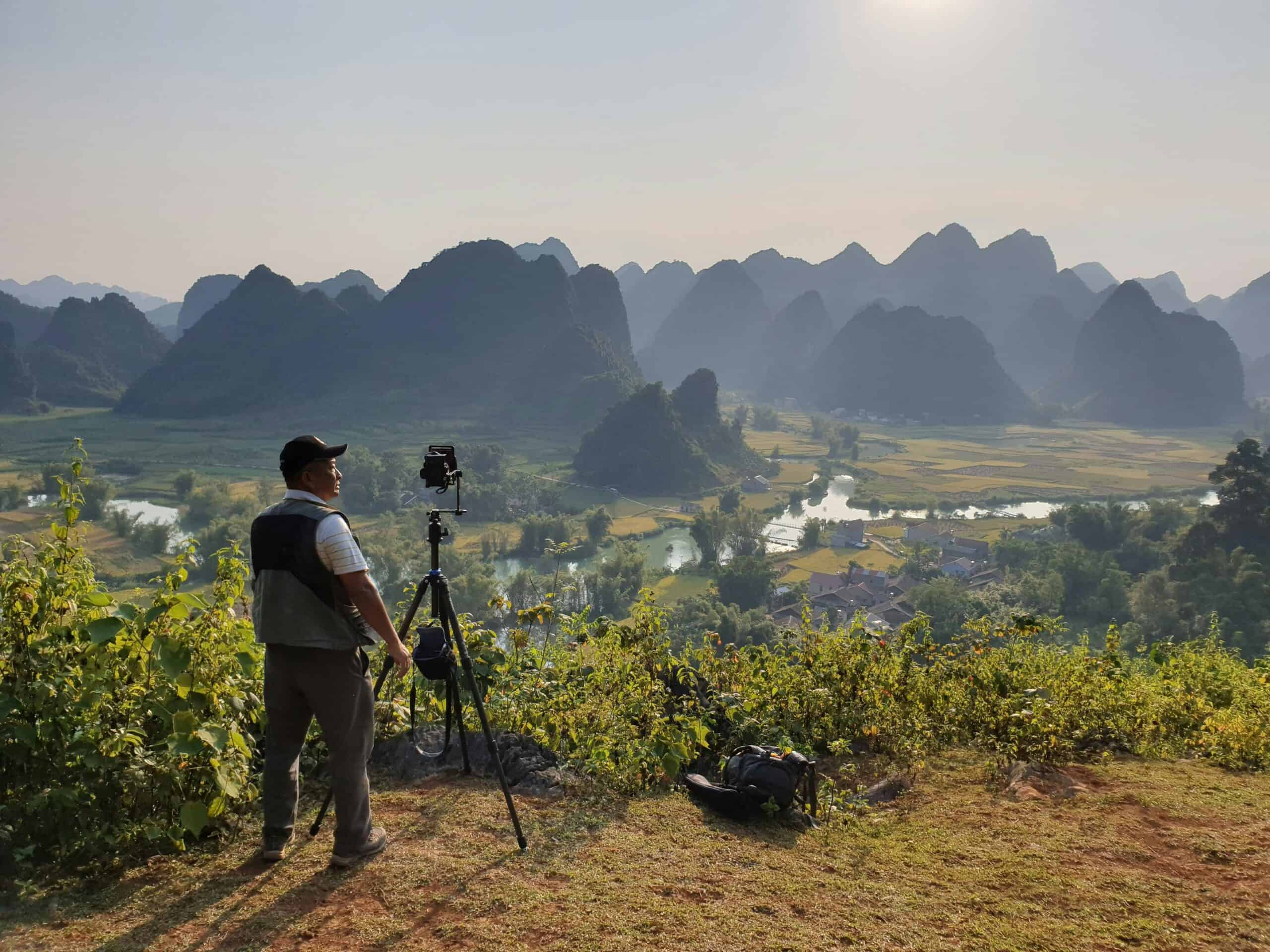
Why this combo shines when adapted correctly: full-frame resolution for detailed equirectangular output, deep depth of field from a fisheye (easy manual focus), and fewer shots per panorama (faster capture, less chance of parallax issues). A fisheye’s distortion is expected in pano workflows—stitchers like PTGui understand fisheye projection natively and will remap the frames cleanly.
Quick Setup Overview
- Camera: Pentax K-1 II — Full Frame (36×24mm), 36.4MP, pixel pitch ≈4.9 µm, strong DR at base ISO, SR II in-body stabilization (turn off on tripod).
- Lens: Nikon AF-S 8-15mm f/3.5-4.5E ED Fisheye — circular at 8mm (full 180° circular image), diagonal fisheye at 15mm (~180° diagonal); sharpest around f/5.6–f/8; typical fisheye CA along edges (easily corrected in post).
- Estimated shots & overlap (Full Frame):
- 8mm circular fisheye: 4 around (90° steps) + zenith + nadir (≈6 frames total, ~30% overlap). Advanced users can do 3 around + Z + N.
- 10–12mm: 6 around (60° steps) + Z + N (8–9 frames total, ~25–30% overlap).
- 15mm diagonal fisheye: 8 around (45° steps) + Z + N (10–12 frames total, ~25–30% overlap).
- Difficulty: Intermediate (due to cross-mount aperture control). Easy if using a native K-mount fisheye with similar field of view.
Planning & On-Site Preparation
Evaluate Shooting Environment
Before setting up, scan for moving people, wind, reflective glass, specular highlights, and strong backlight. For interiors with glass, get the lens as close as safely possible to reduce reflections (a few millimeters to a centimeter from the pane), and shade the lens with your hand or a rubber lens hood to prevent flare/ghosting. In outdoor sunset scenes, plan for brackets or multi-exposure blending to hold sky detail without crushing shadows.
Match Gear to Scene Goals
The K-1 II’s dynamic range at ISO 100 is excellent for high-contrast scenes, and its 36MP sensor gives you clean 16k–18k equirectangular exports when using a fisheye workflow. Indoors, the safe ISO range for professional pano work is typically ISO 100–800; ISO 1600 is usable with careful noise reduction. A fisheye lens minimizes the number of shots needed, which is valuable in busy environments (less chance of subject movement between frames), but introduces fisheye curvature in single-frame use—no problem for stitching software.
Pre-shoot Checklist
- Charge batteries, format cards, clean lens and sensor (dust spots are magnified on skies).
- Level the tripod; ensure the panoramic head is calibrated to the lens’s no-parallax point.
- Cross-mount safety: verify your adapter provides reliable infinity focus and aperture control for the Nikon E lens. If not, use a native K-mount fisheye.
- Environmental safety: weigh down tripod in wind; use tethers on rooftops and poles; avoid vibration near traffic.
- Backup workflow: capture a second rotation as a safety pass (especially in crowds or changing light).
Essential Gear & Setup
Core Gear
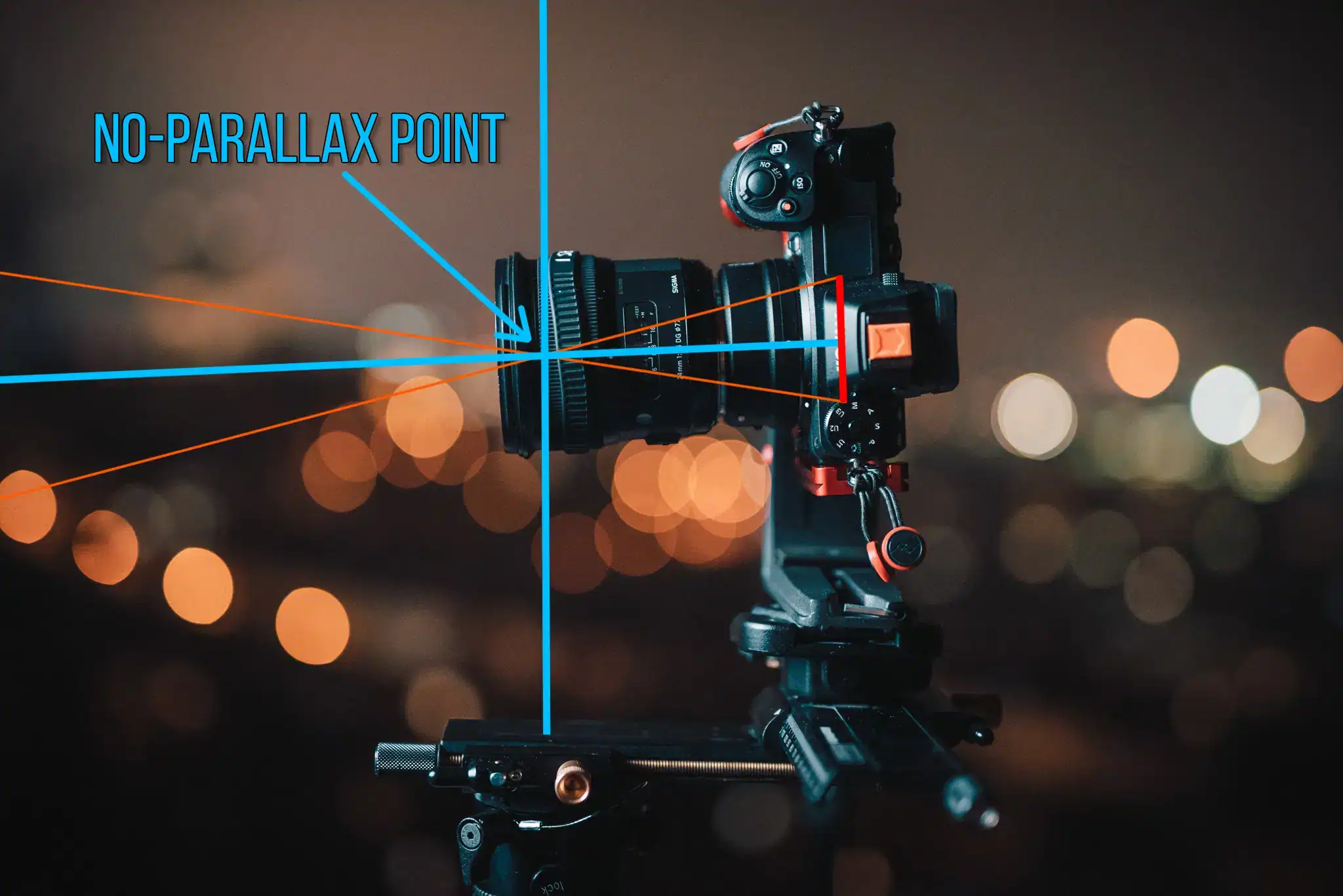
- Panoramic head: A proper pano head lets you align the lens’s no-parallax (entrance pupil) point over the rotation axis, eliminating parallax errors between foreground and background and ensuring clean stitches.
- Stable tripod with leveling base: Leveling keeps roll angles consistent. A leveling base makes setup faster and more accurate than adjusting tripod legs alone.
- Remote trigger or app: Use a cable release, wireless remote, or the K-1 II’s self-timer in mirror-up/live view to prevent vibrations.
Optional Add-ons
- Pole or car mount: Great for crowds or rooftop perspectives. Always tether the camera, check wind load, and avoid rotating too fast (allow vibrations to dampen).
- Lighting for interiors: Small LED panels to lift dark corners when HDR isn’t allowed. Keep lighting consistent across frames.
- Weather protection: Rain covers and lens cloths; fisheyes are prone to flare from raindrops and smears.
Step-by-Step Shooting Guide
Standard Static Scenes
- Level and align: Level the tripod. On the pano head, slide the camera until the no-parallax point is centered over the yaw axis. Use a near object (≈1 m) and a far object (20–50 m): rotate the camera left-right. If the near object “shifts” against the far, adjust the rail until the relative position stays fixed.
- Exposure and WB: Set Manual mode. Meter a midtone and lock the exposure across the whole rotation to avoid flicker lines. Lock White Balance (Daylight, Cloudy, or a measured Kelvin) so color doesn’t shift frame to frame.
- Focus: Switch to Manual Focus. With a fisheye at f/8, focusing around 1–1.5 m typically yields sharpness from near foreground to infinity. Use Live View magnification to confirm.
- Capture sequence: For 8mm circular, shoot 4 around at 90° steps, then a zenith and a nadir. For 12–15mm, use 6–8 around with 25–30% overlap, then Z and N. Always shoot the nadir for tripod removal later.
- Stability: On tripod, turn off SR (IBIS). Use mirror-up or electronic shutter in Live View to minimize vibration; trigger via remote or 2s timer.
HDR / High Dynamic Range Interiors
- Bracketing: Use ±2 EV (3 or 5 frames) to balance bright windows and interior shadows. Keep bracketing consistent for every yaw position.
- Color consistency: Lock WB and disable auto lighting optimizers that may alter contrast per frame. The K-1 II supports exposure bracketing—test your step count before the job.
- Workflow choice: Either bracket first and stitch HDR-merged frames per angle, or stitch per bracket set and blend as an exposure fusion in the stitcher. PTGui handles both paths well.
Low-Light / Night Scenes
- Exposure: Start around f/4–f/5.6, ISO 200–800, and shutter speeds from 1/4s to multi-seconds on a tripod. Use the 2s timer or remote release; disable SR (IBIS) on tripod.
- Noise control: The K-1 II is clean through ISO 800–1600; prefer longer shutter times over pushing ISO whenever possible to keep cleaner stitch lines.
- Star or city scenes: Consider an extra zenith frame with a slightly different exposure to keep stars or highlight detail, then blend during post.
Crowded Events
- Two-pass method: Do a fast first pass to lock coverage, then a slower second pass when gaps appear in the crowd for cleaner plates.
- Masking later: In PTGui or your editor, use masks to keep only one instance of moving subjects, reducing ghosting.
- Short exposures: Use 1/200s+ at f/5.6–f/8 and ISO 400–800 to freeze motion if light allows.
Special Setups (Pole / Car / Drone)
- Pole safety: Tether the camera, mind wind gusts, and keep rotations deliberate. Consider shooting 8mm circular to minimize frame count at height.
- Car mount: Avoid high speeds; vibrations will blur. Use faster shutter and higher ISO; stabilize with suction plus safety straps.
- Drone: Not typical with a DSLR; if attempted, ensure payload capacity, gimbal lock safety, and pre-check aviation rules.
Recommended Settings & Pro Tips
Exposure & Focus
| Scenario | Aperture | Shutter | ISO | Notes |
|---|---|---|---|---|
| Daylight outdoor | f/8–f/11 | 1/100–1/250 | 100–200 | Lock WB (Daylight) and exposure across the set |
| Low light/night | f/4–f/5.6 | 1/4–8s | 200–800 | Tripod and remote; disable SR on tripod |
| Interior HDR | f/8 | Bracket ±2 EV | 100–400 | Consistent bracketing per yaw position |
| Action / moving subjects | f/5.6–f/8 | 1/200+ | 400–800 | Two-pass method; mask in post |
Critical Tips
- Manual focus at or near hyperfocal: With a fisheye at f/8, setting focus around 1–1.5 m gives razor-sharp frames end-to-end.
- No-parallax calibration: Use a rail and the near/far alignment method; mark rail stops for 8, 12, and 15mm so you can recall them fast on location.
- White balance lock: Mixed lighting can vary frame to frame; WB lock avoids visible seams after stitching.
- RAW over JPEG: RAW preserves highlight detail and color latitude, crucial for skies and window pulls in HDR panoramas.
- Stabilization: Turn SR off on tripod. Handheld or on a lightly flexing pole, SR can help—but be consistent across the set.
- Compatibility reality: Unless you have an adapter that controls the Nikon E diaphragm, use a native K-mount fisheye for consistent aperture and focus control.
Stitching & Post-Processing
Software Workflow
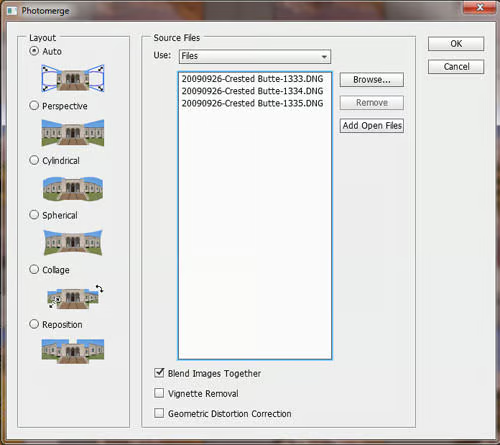
Import RAWs, apply global lens corrections if needed (don’t defish; stitchers do that), then stitch using fisheye parameters. PTGui is the industry favorite for speed, masking, and control point management; Hugin is a solid open-source option. With a fisheye, you can use fewer frames and still achieve clean stitches. Aim for ~25–30% overlap for fisheye rotations. Export an equirectangular 2:1 panorama (e.g., 12k–16k pixels on the long side) for virtual tours or social VR. For a deeper dive on how a panoramic head affects stitch quality, see this panoramic head tutorial at 360 Rumors. Panoramic head principles and setup tips
Cleanup & Enhancement
- Nadir patch: Shoot a dedicated nadir frame (move the tripod aside) or use a clean plate; patch with PTGui’s Viewpoint correction or clone/AI tools afterward.
- Color and noise: Normalize white balance across exposures; apply gentle noise reduction for high ISO frames. Avoid over-sharpening seams.
- Horizon leveling: Use the horizon tool and straighten yaw/pitch/roll. A slight pitch correction often cleans up the zenith.
- Export formats: Save a 16-bit TIFF master and a web-ready JPEG. For VR platforms (Meta, web viewers), export equirectangular JPEG with correct metadata.
PTGui’s masking and HDR workflows are especially effective for real estate and event work. See an in-depth review for more on why it’s favored by pano pros. PTGui: robust panorama stitching for professionals
Video: Visualizing the Process
Watch this practical walkthrough on panoramic capture and stitching concepts to reinforce the steps above.
For broader guidance on DSLR 360 capture workflow and publishing for VR, Meta’s creator documentation is also helpful. Using a DSLR to shoot and stitch a 360 photo
Useful Tools & Resources
Software
- PTGui panorama stitching (fast, powerful, masking and HDR)
- Hugin open source (control point flexibility, free)
- Lightroom / Photoshop (RAW prep, local cleanup, nadir patch)
- AI tripod removal tools (content-aware fill, generative tools)
Hardware
- Panoramic heads (Nodal Ninja, Leofoto, Fanotec)
- Carbon fiber tripods (good stiffness-to-weight, less vibration)
- Leveling bases (faster setup than adjusting legs)
- Wireless remote shutters (reduce shake)
- Pole extensions / car mounts (add tethers and safety straps)
Disclaimer: software/hardware names provided for search reference; check official sites for details.
Common Mistakes & How to Avoid Them
- Parallax error: Always align the entrance pupil (no-parallax point) on a pano head; test with near/far objects.
- Exposure flicker: Shoot in full Manual and lock WB; avoid any auto tonal adjustment between frames.
- Tripod in frame: Capture a nadir frame and patch; consider a low-profile tripod and narrow stance.
- Ghosting: Use masks in PTGui; shoot a second pass to capture clean plates when the scene clears.
- Noise and blur: Use lower ISO and longer shutter on a stable tripod; remote trigger and mirror-up reduce micro-shake.
- Cross-mount oversight: Without electronic aperture control, the Nikon 8–15E is impractical on K-1 II; choose a native K-mount fisheye to avoid exposure headaches.
Field-Proven Scenarios
Indoor Real Estate
At 12mm fisheye on full frame, shoot 6 around + Z + N. Use f/8, ISO 100–200, and ±2 EV bracketing for windows. Keep lights either all on or all off to avoid mixed color temperatures across frames. A clean nadir patch elevates the professional look.
Outdoor Sunset
At 8mm circular, do 4 around + Z + N to beat changing light. Meter for the highlights and bracket to recover shadows. Expect to blend or use HDR to avoid banding near the sun. Shade the front element—fisheyes flare easily.
Event Crowds
At 15mm, go 8 around + Z + N. Use 1/200s at ISO 400–800 and f/5.6–f/8 to freeze people. Do a second rotation once foot traffic clears, and mask to remove duplicates and ghosting.
Mount Compatibility & Workarounds
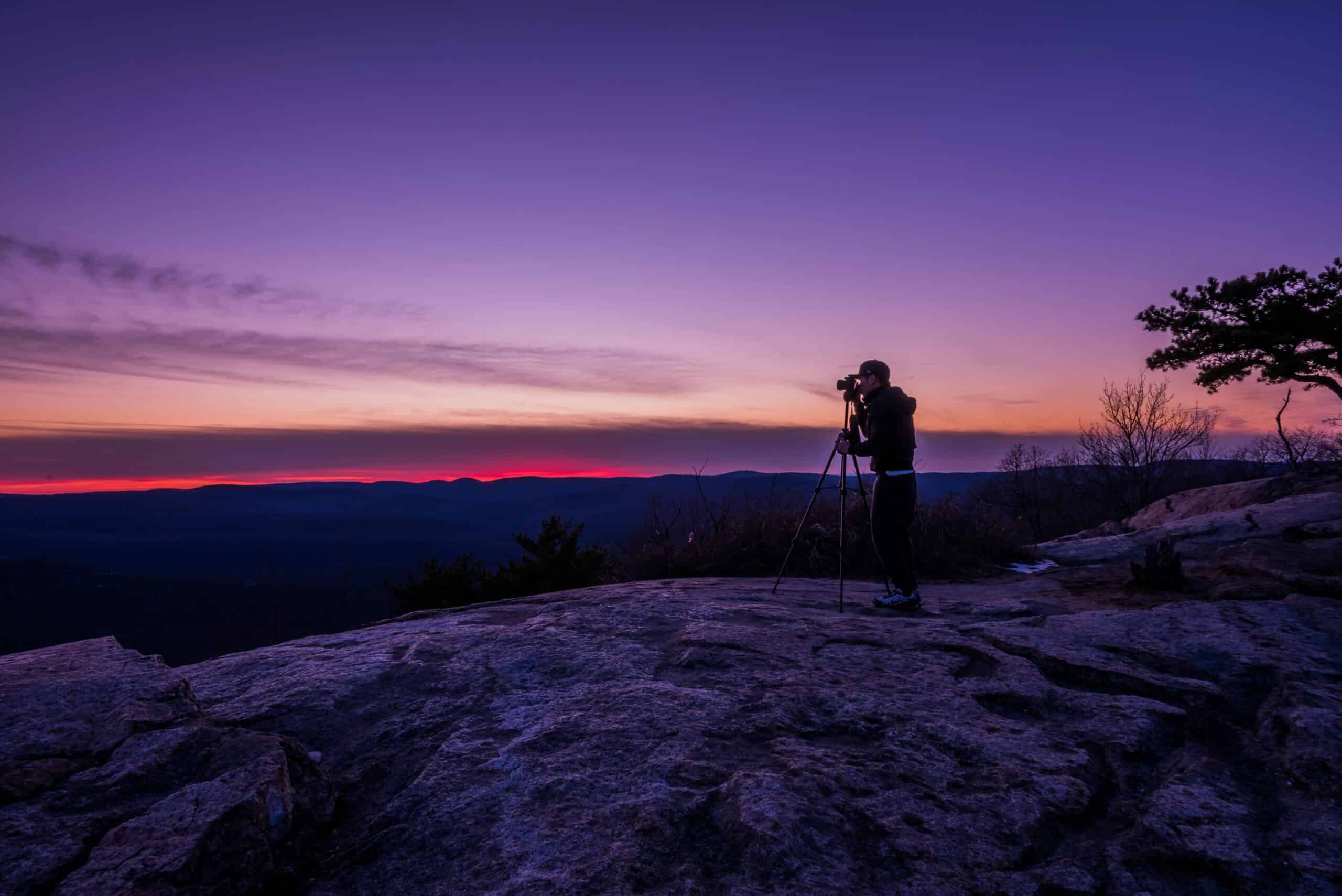
The Nikon AF-S 8-15mm f/3.5-4.5E ED Fisheye is an E-type lens with an electronic diaphragm. On Pentax K-1 II, there is typically no control for this diaphragm via passive adapters, making the lens impractical for consistent exposure. If you cannot verify an adapter that fully supports electronic aperture control and (ideally) focus confirmation, use a native K-mount fisheye instead. The pano workflow described here works identically with native K-mount fisheyes of comparable focal lengths—the shot counts and nodal alignment principles remain the same.
Frequently Asked Questions
- Can I shoot handheld panoramas with the Pentax K-1 II?
Yes, for quick captures or when tripods are not allowed. Keep shutter speeds fast (1/200s+), enable SR (IBIS), and shoot more overlap (35–40%). Expect more post-production cleanup and occasional misalignments, especially indoors with nearby foreground objects.
- Is the Nikon 8–15mm fisheye wide enough for a single-row 360?
Yes. At 8mm (circular), 3–4 shots around plus a zenith/nadir can cover a full sphere. At 12–15mm (diagonal fisheye), plan on 6–8 shots around plus zenith/nadir. Stitchers handle fisheye projection natively.
- Do I need HDR for interiors with bright windows?
Usually. Bracket ±2 EV (3–5 frames) to retain window detail and clean interior tones. Keep WB locked and process brackets consistently before or during stitching.
- How do I avoid parallax issues?
Use a panoramic head and align the lens’s entrance pupil over the rotation axis. Calibrate with a near/far object test and mark your rail positions for 8, 12, and 15mm so you can repeat them reliably at jobs.
- What ISO range is safe on the K-1 II for low light panoramas?
For professional results, ISO 100–800 is the sweet spot; ISO 1600 remains usable with careful noise reduction. Prefer longer shutter times on a sturdy tripod to keep noise low and stitch lines clean.
- Can I save a Custom Mode for pano on the K-1 II?
Yes—assign a custom mode with Manual exposure, WB lock, SR off (for tripod), RAW, and your preferred bracketing. This speeds up setup and keeps results consistent across shoots.
Safety, Reliability, and Backup Practices
Always tether cameras when elevated, avoid gusty conditions with poles, and weigh down tripods. On rooftops or near crowds, control your perimeter. For mission-critical work, shoot a second rotation as a backup, verify frames in the field, and maintain a dual-card or dual-backup workflow after the shoot. Keep lens cloths handy—one fingerprint on a fisheye can ruin an entire set.
For additional perspective on DSLR pano best practices, see this community discussion of techniques and pitfalls. Best techniques to take 360 panoramas