
Why This Camera & Lens Are Great for Panoramas
The Pentax K-1 II paired with the Laowa 8–15mm f/2.8 FF Zoom Fisheye is a power combo for creating high‑quality 360° panoramas and immersive 360 photos. The K‑1 II’s 36.4MP full‑frame sensor (approx. 35.9×24mm) delivers excellent detail with a pixel pitch around 4.9µm and a real‑world base ISO dynamic range near 14+ stops, giving you clean shadows and highlight headroom. The in‑body stabilization (IBIS) is fantastic for general photography, but for tripod‑mounted panoramic work you can—and should—turn it off to avoid micro‑blur from stabilization “hunting.”
The Laowa 8–15mm f/2.8 is a full‑frame fisheye zoom designed to cover both circular fisheye at the wide end and diagonal fisheye at the long end. At 8mm it captures an extremely wide field—ideal for reducing the number of shots per 360. At 15mm, you still get 180° diagonal coverage with higher edge sharpness and less stretching. For panoramas, a fisheye’s intentional distortion is not a downside; stitching software remaps fisheye frames to equirectangular output, making capture faster and more reliable with fewer images than a rectilinear ultra‑wide.
Mount compatibility is straightforward: the K‑1 II uses the K‑mount; Laowa offers a K‑mount version of the lens. Autofocus is less relevant for panos (you’ll use manual focus at or near hyperfocal), but the K‑1 II’s robust handling, weather sealing, and dual SD card slots make it a dependable body for field work.
Quick Setup Overview
- Camera: Pentax K‑1 II — Full‑Frame 36.4MP sensor; strong base ISO dynamic range; dual SD slots; weather‑sealed body.
- Lens: Laowa 8–15mm f/2.8 FF Zoom Fisheye — fisheye zoom covering circular (8mm) to diagonal (15mm); sharp stopped down; typical fisheye CA is present but manageable; minimal focus breathing; robust metal build.
- Estimated shots & overlap (tested guidance):
- 8mm (circular fisheye): 3–4 shots around (120° or 90° yaw) + optional zenith + nadir; use 30–35% overlap.
- 12mm (diagonal): 6 shots around + zenith + nadir; 30% overlap.
- 15mm (diagonal): 8 shots around + zenith + nadir; 25–30% overlap.
- Difficulty: Easy to Moderate (easy capture, moderate when calibrating the nodal point and managing HDR).
Planning & On-Site Preparation
Evaluate Shooting Environment
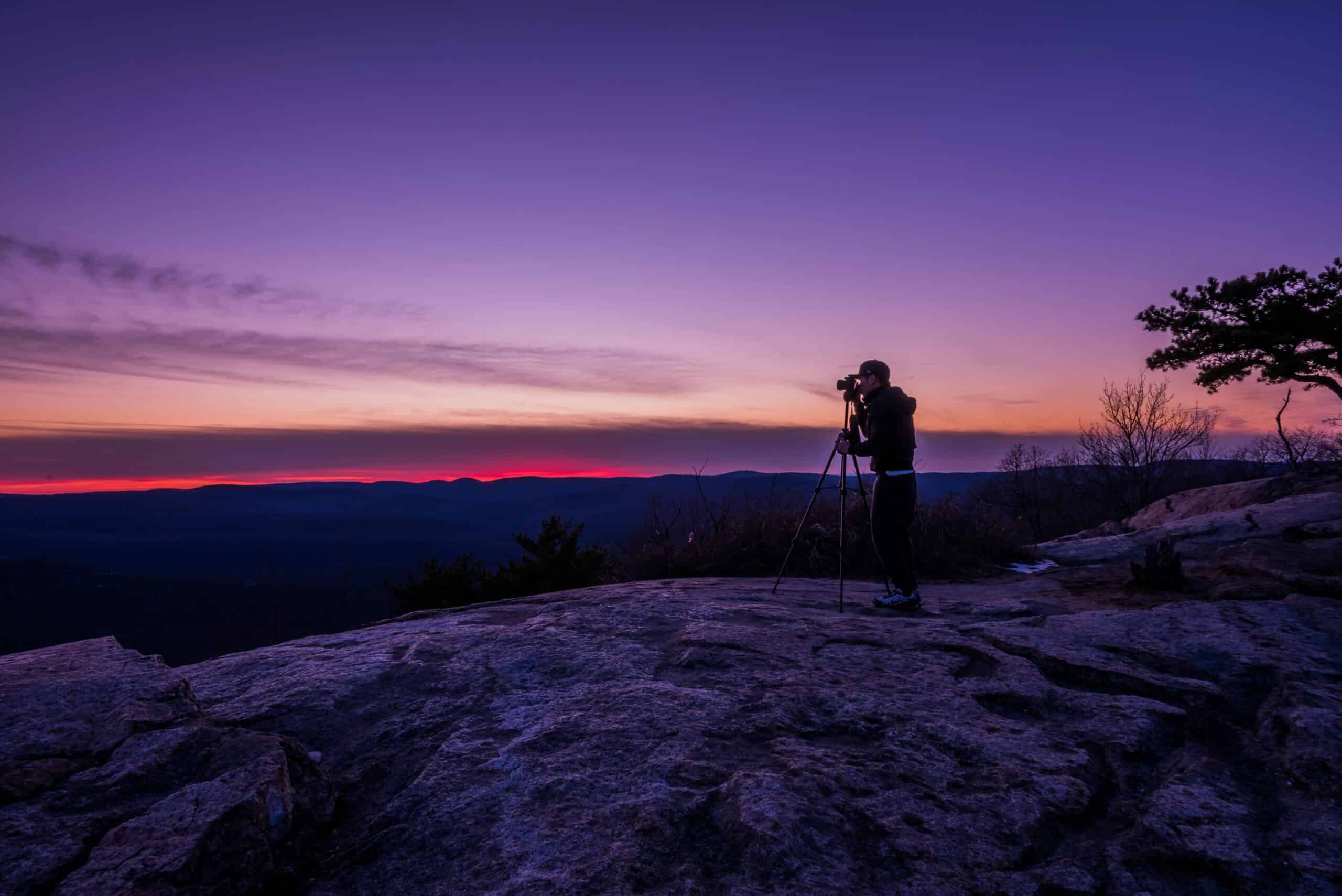
Before you set up, scan the scene for moving elements (people, trees, traffic), reflective surfaces (glass, polished floors), and strong light sources (sun or intense spotlights). With fisheye coverage, flare can creep in from just outside the frame; shading with your hand or timing the sun’s position helps. For glass, keep at least 30–50 cm away to reduce reflections and ghosting; shoot slightly off‑axis to avoid capturing your own reflection or the tripod in the glass.
Match Gear to Scene Goals
The K‑1 II’s strong dynamic range supports high‑contrast scenes, and the Laowa 8–15mm lets you choose between ultra‑fast capture at 8mm (fewer frames) or cleaner edges at 12–15mm (more frames). Indoors, the K‑1 II stays clean at ISO 100–800; ISO 1600 is usable with noise reduction when needed. Use 8mm for speed (events, rooftops, busy streets) and 12–15mm when you want better corner sharpness (real estate interiors, architecture).
Pre-shoot Checklist
- Charge batteries; format cards; enable dual‑slot backup (Record to Both).
- Clean lens front element—fisheye glass attracts fingerprints, which will flare under bright light.
- Level tripod and verify panoramic head calibration for this lens and focal length.
- Safety checks: wind conditions (tighten clamps), rooftop edges (use tethers), car mounts (double lanyards), avoid overhead cables.
- Backup workflow: shoot a safety pass at the end (same settings) in case of a stitching issue later.
Essential Gear & Setup
Core Gear
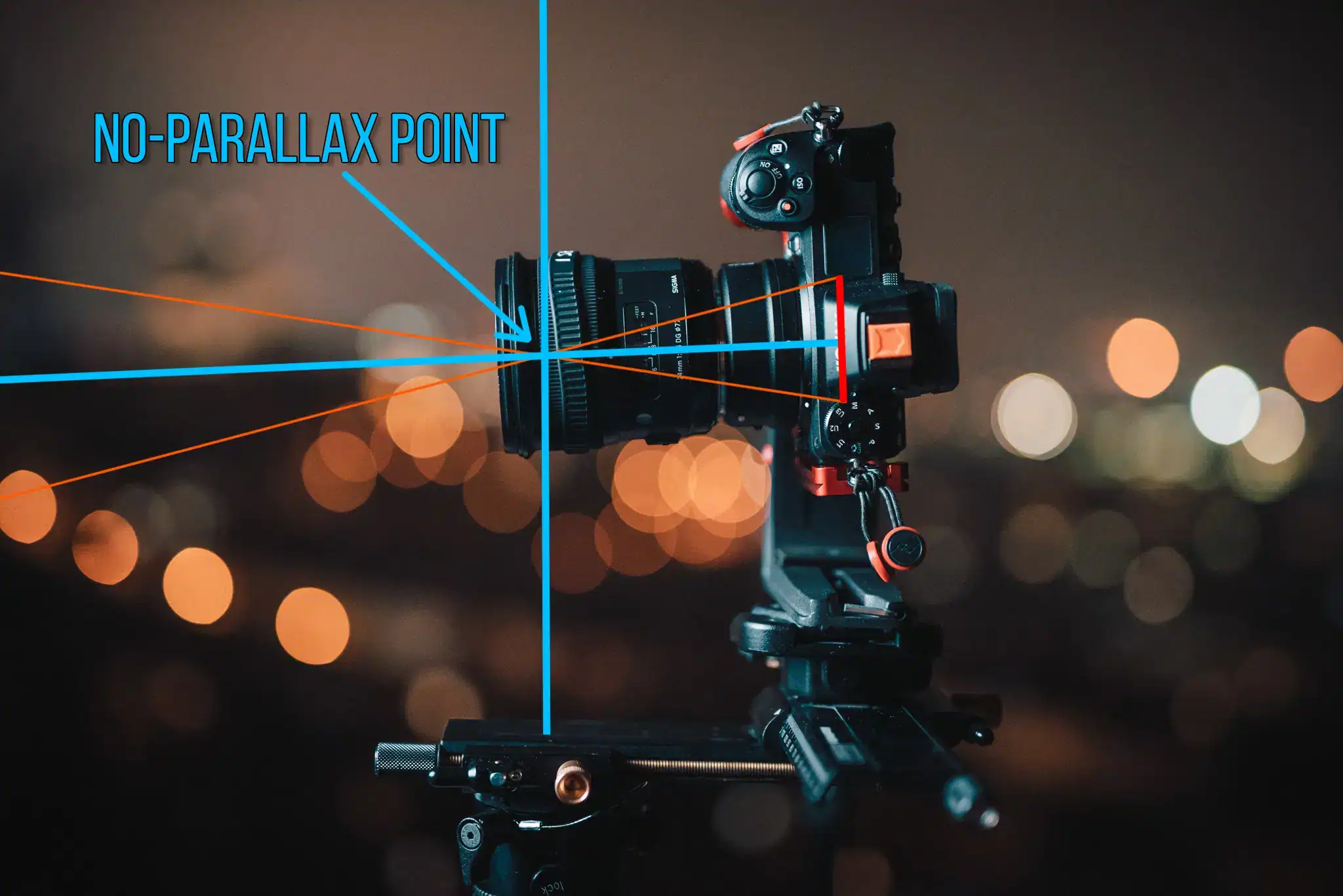
- Panoramic head: A dedicated panoramic head ensures rotation around the lens’s entrance pupil (nodal point), eliminating parallax. Calibrate once for 8mm and again for 12–15mm and note the rail marks for repeatability.
- Stable tripod with leveling base: A leveling base speeds up set‑up and keeps your horizon true. Pan with the panoramic index rotator, not the ball head.
- Remote trigger or app: Use a cable release, 2‑second timer with mirror‑up, or the Pentax Image Sync app to minimize vibrations.
Optional Add-ons
- Pole or car mount: Great for dynamic perspectives and crowds. Use a guy line and safety tether; avoid windy conditions with the pole fully extended.
- Lighting aids: Small LED panels to lift shadows in deep interiors; keep color temperatures consistent.
- Weather covers: The K‑1 II is weather‑sealed, but a rain cover helps when rotating the head in persistent drizzle.
For deeper understanding of panoramic head setup and why nodal alignment matters, see this clear panoramic head tutorial. Panoramic head tutorial (360 Rumors)
Step-by-Step Shooting Guide
Standard Static Scenes
- Level and align:
- Mount the K‑1 II and Laowa lens on the pano head; level the base.
- Disable SR (IBIS) in the menu for tripod work.
- Use Live View and the electronic shutter or 2s timer with mirror lock‑up to eliminate vibration.
- Calibrate the nodal point:
- Place a near object (1–2 m) and a far background line; rotate and adjust the fore‑aft rail until parallax disappears.
- Expect the entrance pupil to sit relatively close to the front element at 8mm and to shift slightly when zooming toward 15mm. Record your rail markings for 8, 12, and 15mm.
- Manual exposure and white balance:
- Set Manual mode; disable Auto ISO; choose RAW.
- Set WB to Daylight or Kelvin (e.g., 5200K outdoors). Consistency prevents color shifts in stitching.
- Capture sequence:
- 8mm: Shoot 4 frames at 0°, 90°, 180°, 270°; add a zenith (tilt up 60–90°) and a nadir (tilt down) if needed. Alternatively, 3 around at 120° with a slight up‑tilt can work in open scenes.
- 12–15mm: 6–8 frames around + zenith + nadir for robust overlap and clean edges.
- Nadir shot:
- Tilt down to capture the ground for tripod removal. Consider moving the tripod slightly and shooting a handheld nadir for an easier patch.
HDR / High Dynamic Range Interiors
- Bracket exposures: Use ±2 EV, 3–5 frames per angle. The K‑1 II handles ISO 100–400 well for interiors; keep ISO low and extend shutter instead.
- Lock WB and focus. Do not change aperture between brackets; the fisheye’s geometry must remain constant.
- If windows are extremely bright, consider a 5‑frame sequence (−4, −2, 0, +2, +4 EV) to protect highlights and lift shadows.
Low-Light / Night Scenes
- Open to f/4–f/5.6 if needed and extend shutter; aim for ISO 100–800. The K‑1 II remains quite clean to ISO 1600 if you expose to the right and denoise later.
- Use a remote or 2s timer and mirror‑lock‑up. Avoid Astrotracer or Pixel Shift for panos; they alter alignment across frames.
- Watch for moving lights (cars). Time your rotation between traffic bursts to reduce ghosting.
Crowded Events
- Shoot two passes: a fast pass at 8mm to lock in environment, then a second pass waiting for gaps in moving crowds.
- In post, mask people to remove duplicates or ghosting. Shorter shutter speeds (1/200s+) help freeze motion if light allows.
Special Setups (Pole / Car / Drone)
- Pole: Keep the pole vertical; use a lightweight head; rotate slowly to minimize sway. Always tether the camera and avoid strong crosswinds.
- Car: Use vibration‑damped suction mounts; add a safety strap; stop the car to shoot or shoot at very slow speed to prevent blur and misalignment.
- Drone: This setup is heavy for most drones; consider a dedicated 360 camera or lighter mirrorless for aerials.
Recommended Settings & Pro Tips
Exposure & Focus
| Scenario | Aperture | Shutter | ISO | Notes |
|---|---|---|---|---|
| Daylight outdoor | f/8–f/11 | 1/100–1/250 | 100–200 | Lock WB to Daylight or ~5200K |
| Low light/night | f/4–f/5.6 | 1/30–1/60 (tripod) | 100–800 | Use remote; turn IBIS (SR) off |
| Interior HDR | f/8 | Bracket ±2 EV (3–5 frames) | 100–400 | Balance windows and interior lights |
| Action / moving subjects | f/5.6–f/8 | 1/200+ | 400–800 | Short shutter to freeze people/cars |
Critical Tips
- Focus: Switch to MF and set near hyperfocal. At 8mm f/8 on full‑frame, focusing around 0.5–0.7 m keeps most of the scene sharp; at 15mm f/8, ~1–1.2 m is a good start. Verify in Live View zoom.
- Nodal calibration: Mark your fore‑aft and vertical rail positions for 8, 12, and 15mm. Even a few millimeters off can cause stitching gaps near the tripod.
- White balance lock: Avoid Auto WB. Mixed lighting? Pick a Kelvin value (e.g., 4000–4500K) that averages tungsten and daylight to ease batch correction.
- RAW over JPEG: RAW maximizes the K‑1 II’s dynamic range and color latitude. You can apply unified corrections across all frames easily.
- Stabilization and mirror: Turn off IBIS (SR) on tripod. Use 2s timer with mirror lock‑up or electronic shutter in Live View to reduce micro‑shake.
- Pentax specifics: Disable Pixel Shift and Astrotracer for pano sequences; both alter alignment between frames and complicate stitching.
Stitching & Post-Processing
Software Workflow
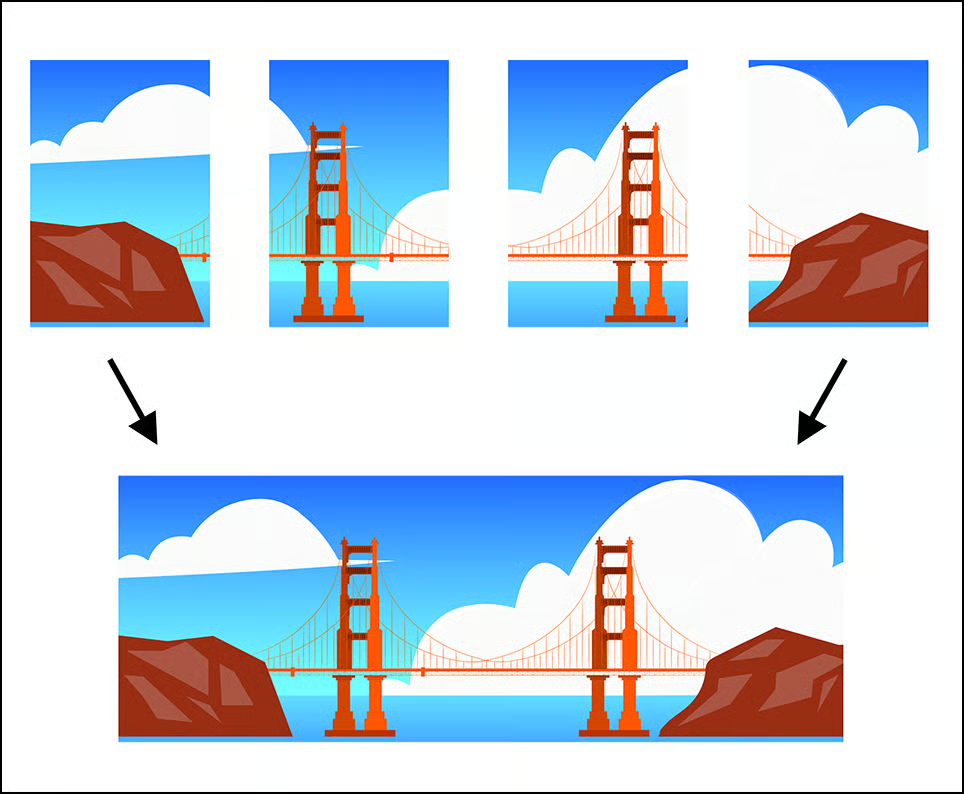
Import your RAWs into Lightroom, apply identical base corrections (lens profile off when using fisheye—let the stitcher handle projection), and export to 16‑bit TIFF or feed the RAWs directly into PTGui or Hugin. In PTGui, set Lens Type to Fisheye and let it estimate parameters; the Laowa 8–15 typically behaves like an equisolid‑angle fisheye, but auto‑detection works well. For overlap, aim for ~30–35% at fisheye focal lengths and 20–30% at longer focal lengths. Why PTGui is a top choice for complex panoramas
Cleanup & Enhancement
- Nadir patch: Export a layered panorama or use a dedicated nadir patch from a handheld ground shot. Content‑aware fill and AI tools can remove the tripod quickly.
- Color balance: Apply subtle HSL tweaks to fix mixed lighting. Use a unified white balance across all frames.
- Noise reduction: If you used ISO 800–1600, apply luminance NR selectively to shadows; protect edges and small details.
- Level horizon: Use the stitcher’s optimizer to correct yaw/pitch/roll, or align the horizon manually in the panorama editor.
- Export: For VR platforms, export equirectangular 2:1 at 12–16k width when shooting 36MP fisheye multipass; for web tours, 8–12k is often sufficient.
If you’re new to high‑end 360 processing, this hands‑on guide from Meta (Oculus) explains DSLR pano workflows end‑to‑end. Set up a panoramic head and stitch high‑end 360 photos
Video: A Quick Overview of Stitching
Watch a practical walkthrough of panorama stitching fundamentals and PTGui’s workflow:
For additional discussion on DSLR pano resolution and coverage planning by focal length, explore the PanoTools community knowledge base. Estimating spherical resolution for DSLR panoramas
Useful Tools & Resources
Software
- PTGui panorama stitching
- Hugin (open source)
- Lightroom / Photoshop for RAW development and cleanup
- AI tripod removal and cloning tools (e.g., Photoshop’s Generative Fill)
Hardware
- Panoramic heads: Nodal Ninja, Leofoto, or similar with rail marks
- Carbon fiber tripods with a leveling base
- Wireless/cabled remote shutters
- Pole extensions and car mounts with safety tethers
Disclaimer: product and software names are for reference; check official documentation for the latest features and compatibility.
Field‑Tested Case Studies
Indoor Real Estate (Windows + Mixed Lighting)
Use 12–15mm for cleaner edges near walls. Shoot at f/8, ISO 100–200, and bracket ±2 EV (3–5 frames). Lock WB to a Kelvin value that balances daylight and tungsten (e.g., 4300–4800K). Keep the camera mid‑room for symmetric coverage, avoid pushing the tripod too close to furniture to reduce parallax‑sensitive foregrounds.
Outdoor Sunset (High Contrast)
At 8mm, shoot 4 around + zenith and add a 3‑frame bracket at each angle to protect highlights. Expose so the sky is just below clipping; the K‑1 II’s shadow recovery is strong. Consider a second pass a few minutes later as the light equalizes—sometimes the best stitch happens when the dynamic range naturally narrows.
Event Crowds (Speed Matters)
Go 8mm and keep shutter at 1/200s+ if light allows, ISO 400–800. Capture a fast pass for the base panorama, then rotate again to get cleaner frames for masking out motion. Mark your yaw angles on the rotator for consistent frame spacing.
Rooftop / Pole Shooting (Safety First)
Extend the pole only as high as needed; even small winds can cause sway. Use a safety tether to your harness or railing. To minimize vibration, rotate slowly, wait 1–2 seconds after each movement, and use a higher shutter speed than normal.
Car‑Mounted (Urban Drive‑By)
Use vibration‑dampened suction mounts and an extra strap through the window frame. Stop the vehicle for each rotation. If forced to move, keep speed under 5 km/h and use 1/500s+ shutters. Check local laws for camera rigs on vehicles.
Trustworthy Workflow & Safety Notes
- Always disable IBIS (SR) on tripod to avoid micro‑motion blur.
- Use dual SD recording (“Save to Both”) for in‑camera redundancy. Back up the card to a laptop or SSD after each location.
- Weather: Even though the K‑1 II is sealed, fisheye glass is exposed and sensitive. Keep a microfiber cloth handy; tiny droplets flare under point lights.
- Avoid Pixel Shift, Astrotracer, or any frame‑to‑frame sensor movement features during panoramas; they cause misalignment.
- On rooftops or poles, use tethers and keep bystanders clear of the rig’s path.
For broader background on DSLR 360 workflows and gear choices, this primer covers practical Q&A and best practices. DSLR virtual tour FAQ and gear guide
Common Mistakes & How to Avoid Them
- Parallax error: Not aligning the entrance pupil causes nearby objects to shift. Calibrate the panoramic head for each focal length and record the rail positions.
- Exposure flicker: Using Auto ISO or Auto WB changes frame to frame. Lock exposure and WB across the full sequence.
- Tripod shadows and footprints: Plan a nadir shot and patch it, or reposition the tripod to avoid self‑shadow in bright sunlight.
- Lens flare: With fisheye FOV, the sun or bright fixtures sneak in. Shade the lens with your hand (out of frame) or re‑angle the seam away from the light.
- Night noise: Don’t over‑push ISO. The K‑1 II retains quality at ISO 100–800 (1600 in a pinch); use longer shutters on a stable tripod instead.
Frequently Asked Questions
- Can I shoot handheld panoramas with the Pentax K‑1 II?
Yes for partial panos, but for full 360s handheld is risky. Parallax becomes hard to control without rotating around the nodal point. Use a tripod and panoramic head for consistent, stitchable results.
- Is the Laowa 8–15mm wide enough for single‑row 360?
Yes. At 8mm (circular fisheye), you can cover a full 360 with 3–4 shots around plus a zenith/nadir if needed. At 12–15mm, expect 6–8 shots around plus zenith and nadir for robust coverage.
- Do I need HDR for interiors with bright windows?
Usually. Bracket ±2 EV (3–5 frames) to preserve window detail and clean shadows. The K‑1 II’s dynamic range is strong, but HDR ensures a natural look without crushed blacks or blown highlights.
- How do I avoid parallax issues with this combo?
Use a panoramic head and calibrate the entrance pupil for 8mm and 12–15mm. Keep near‑field objects as centered as possible during capture, and avoid moving foregrounds close to the lens.
- What ISO range is safe on the K‑1 II for low light?
ISO 100–800 is the sweet spot; ISO 1600 is usable with careful exposure and NR. When on a tripod, prioritize longer shutter speeds over boosting ISO.
- Can I save a pano setup as a custom mode?
Yes. Assign Manual mode, RAW, fixed WB, SR off, 2s timer with mirror‑up, and your preferred aperture/ISO to a custom mode (U1/U2). This speeds up field work.
- How do I reduce flare when using a fisheye?
Avoid aiming the seam into the sun; shade the lens with your hand just outside the frame; clean the front element frequently; and consider slightly re‑positioning to keep strong lights behind the camera for the majority of frames.