
Why This Camera & Lens Are Great for Panoramas
If you’re wondering how to shoot panorama with Pentax K-1 II & Canon EF 8-15mm f/4L Fisheye USM, this guide will walk you through a field-proven workflow. The Pentax K-1 II is a rugged, full-frame 36.4MP DSLR known for excellent weather sealing, in-body stabilization (IBIS), and strong high-ISO performance for its class. Its large sensor (35.9 × 24mm, ~4.88 µm pixel pitch) provides clean detail, wide dynamic range at base ISO, and 14-bit RAW files—ideal for stitching and tonal recovery.
The Canon EF 8-15mm f/4L Fisheye is a versatile zoom fisheye that offers both circular fisheye at 8mm (full 180° in all directions on full-frame) and diagonal/full-frame fisheye at 15mm (180° on the image diagonal). For 360° work, this flexibility lets you choose “speed mode” (fewer shots, circular) or “quality mode” (more shots, higher per-pixel detail, diagonal). Fisheye lenses simplify spherical capture by requiring fewer frames with generous overlap, and modern stitchers handle fisheye projections exceptionally well.
Important mount-compatibility note
Canon EF lenses are not natively compatible with Pentax K mounts. Mechanical EF-to-Pentax K adapters exist, but the EF 8-15mm uses an electronic diaphragm with no manual aperture ring. Without an electronic adapter (rare to nonexistent for this pairing), the lens will default to wide open (f/4). While you can still shoot panoramas at f/4, depth-of-field and corner sharpness improve at f/5.6–f/8. If you have access to a Canon EF body, you can set the aperture and hold it with the DOF preview “aperture hold” trick before transferring the lens to the Pentax—still a clunky workaround. If aperture control is critical, consider a native K-mount fisheye (e.g., Pentax 10-17mm or Sigma 8mm) or ensure your adapter supports aperture control.
Quick Setup Overview
- Camera: Pentax K-1 II — Full-frame 36.4MP CMOS (~4.88 µm pixel pitch), robust weather sealing, in-body stabilization (turn off on tripod), very usable ISO 100–1600.
- Lens: Canon EF 8-15mm f/4L Fisheye USM — Fisheye zoom; circular at 8mm (180° omni), diagonal/full-frame fisheye at 15mm; excellent sharpness stopped down; minor edge CA and flare if shooting into the sun; removable hood (remove for 8mm on full-frame).
- Estimated shots & overlap (tested recipes):
- 8mm circular: 4 around at 90° yaw + zenith + nadir (safe overlap, fast); advanced users can do 3 around + Z + N in clean scenes.
- 15mm diagonal: 6 around at 60° yaw + zenith + nadir; for ultra-reliability or complex interiors, 8 around + Z + N.
- Difficulty: Moderate. Fisheye makes the stitch easy; mount pairing and aperture control add complexity.
Planning & On-Site Preparation
Evaluate Shooting Environment
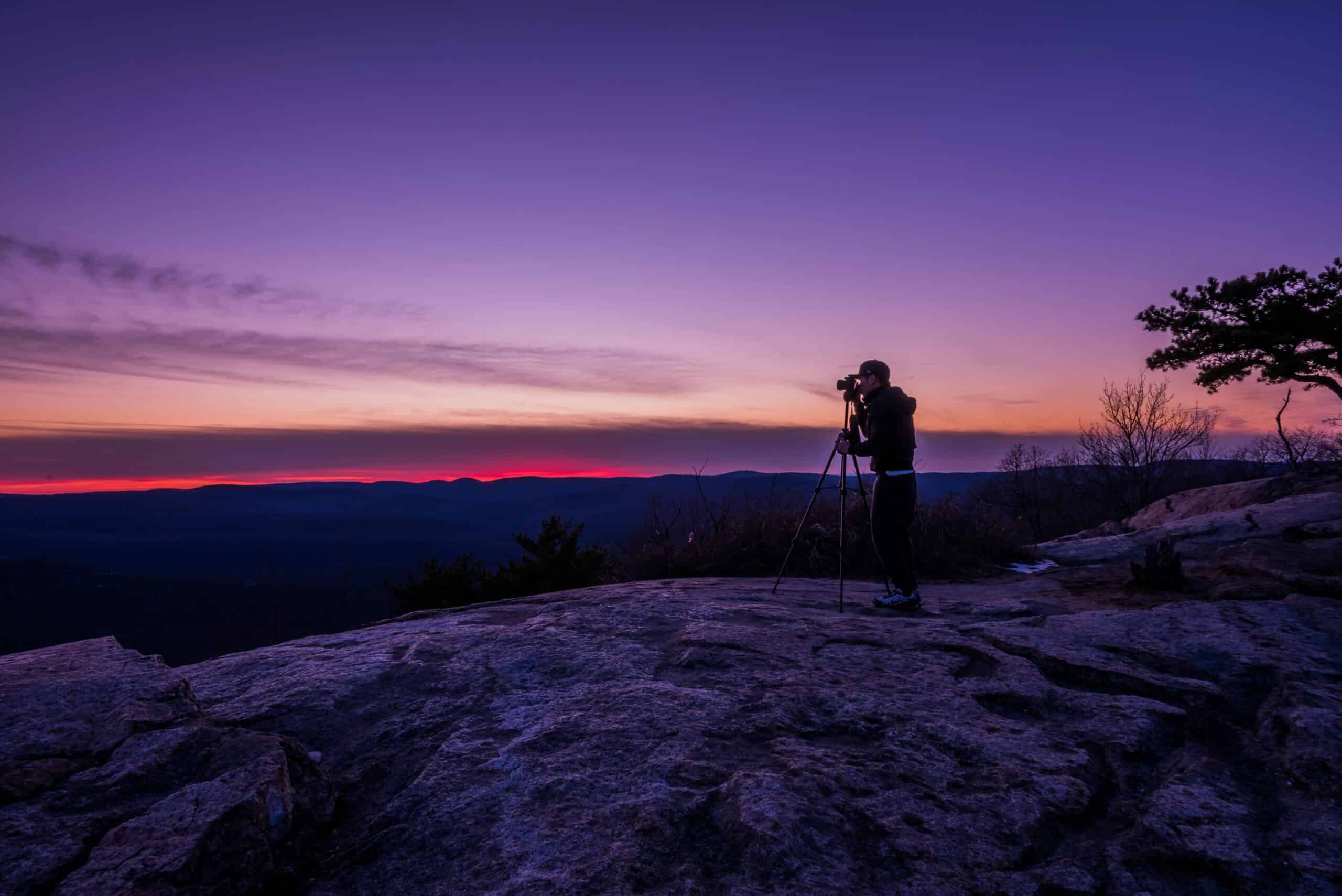
Walk the scene before you set up. Identify bright light sources, reflective surfaces (glass, glossy floors), and moving elements (people, foliage, traffic). If shooting through glass, get the front element as close as possible (1–2 cm) to reduce reflections; use a rubber lens hood if you must shoot through windows. For sunsets and night cityscapes, plan for bracketing or long exposures. Keep the tripod footprint in mind to make nadir cleanup easier.
Match Gear to Scene Goals
The K-1 II’s dynamic range at ISO 100 gives you excellent highlight control and shadow recovery, while its high-ISO performance remains practical through ISO 1600 (and 3200 for web-sized output). The fisheye’s 180° field excels when you need fewer frames and robust stitching. Use 8mm for speed (busy events, pole work) and 15mm when you want the cleanest detail per pixel (real estate, museum interiors). Indoors, expect to stay near ISO 100–400 with a tripod; outdoors at dusk, ISO 100–200 with longer shutter times delivers clean files.
Pre-shoot Checklist
- Batteries charged; large, fast SD cards (shoot RAW; bracketing multiplies file count).
- Clean lens front element (fisheye sees everything) and sensor. Remove the 8-15’s hood at 8mm on full-frame to avoid heavy vignetting.
- Tripod leveled; panoramic head calibrated for this camera/lens combo (record your rail marks).
- Safety: On rooftops or poles, use a tether/lanyard. Consider wind gusts; lower center column to reduce flex.
- Backup workflow: Shoot an extra safety pass, especially for moving scenes or critical client work.
Essential Gear & Setup
Core Gear
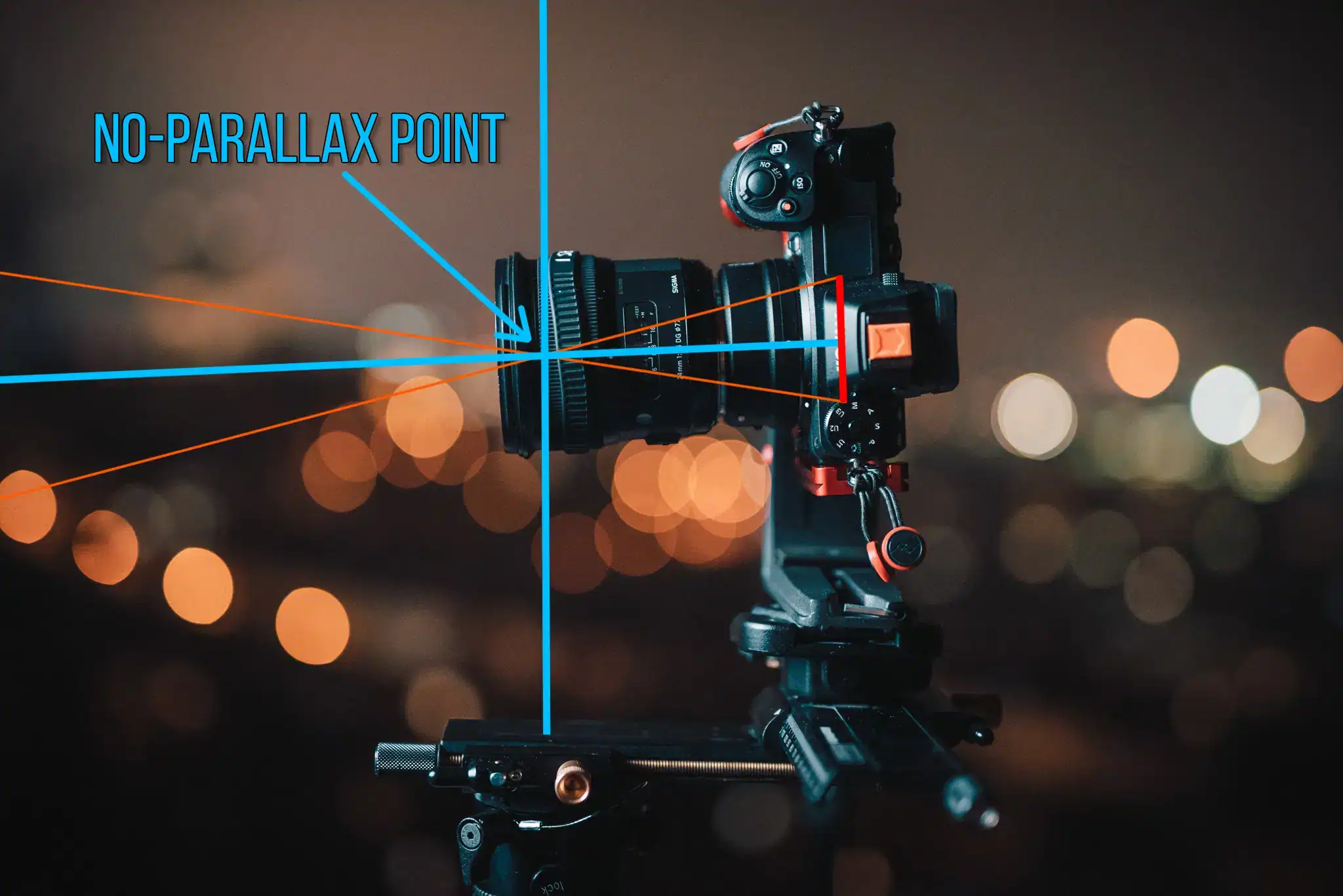
- Panoramic head with fore-aft and lateral adjustment. Aligning the entrance pupil (nodal point) removes parallax, which is crucial when foreground objects are within a few meters.
- Stable tripod + leveling base. Level the rotator so yaw turns are true; this minimizes stitching corrections.
- Remote trigger or interval-timer. On the K-1 II, a 2-second timer with mirror lock (or Live View with electronic front curtain) reduces vibration.
Optional Add-ons
- Pole or car mount for elevated or moving capture. Safety first: tether the rig, avoid high winds, and plan slow rotation to reduce blur from vibration.
- Compact LED lights or flash for dim interiors (bounce where possible). Keep output consistent across frames.
- Weather protection: a rain cover and microfiber cloth; fisheye front elements invite water spots.
For an illustrated primer on panoramic heads and nodal alignment, see this panoramic head tutorial. 360Rumors panoramic head basics
Step-by-Step Shooting Guide
Two capture recipes for this combo
Speed mode — 8mm circular fisheye
- Frames: 4 around at 90° yaw + zenith + nadir (6 total). Advanced: 3 around + Z + N (5 total) in simple scenes.
- Pros: Fast, fewer frames to stitch; great for events and poles.
- Cons: Lower final resolution; more visible people/object distortion near the lens.
Quality mode — 15mm diagonal fisheye
- Frames: 6 around at 60° yaw + zenith + nadir (8 total). For difficult interiors, 8 around + Z + N.
- Pros: Higher detail and cleaner edges; easier masking of moving subjects thanks to overlap.
- Cons: More shooting time; greater chance of scene changes between frames.
Standard Static Scenes
- Level and align: Level the tripod head; set the panoramic head so the lens’s entrance pupil sits over the yaw axis. Calibrate by placing two light stands (near/far) and rotating—adjust fore/aft until relative position doesn’t shift.
- Exposure and color: Switch to Manual exposure and fix white balance (e.g., Daylight or a Kelvin value). Consistency prevents stitching seams and color flicker.
- Focus: Set Manual focus slightly before the hyperfocal distance. For 8mm at f/5.6, focusing around 0.5–0.7 m keeps everything sharp from near to infinity; at 15mm f/8, ~1 m works well. Use Live View magnification to confirm.
- Capture sequence: Shoot around at your planned interval (90° or 60°), then shoot zenith (tilt up) and nadir (tilt down). The nadir helps remove the tripod later.
- K-1 II body tips: Turn off SR (IBIS) on tripod, use 2-second timer or remote, and enable electronic front curtain in Live View to minimize vibration. Avoid Pixel Shift unless the scene is very static; it increases time per frame and can complicate stitching if anything moves.
HDR / High Dynamic Range Interiors
- Bracket ±2 EV (3 or 5 frames). The K-1 II’s bracketing makes this straightforward; keep the same bracket count for every angle.
- Lock white balance and aperture to avoid shifts across brackets. For window-lit rooms, base ISO 100–200, f/5.6–f/8, and vary shutter speed only.
- Keep your sequence consistent: shoot all brackets per angle before rotating. Use a remote or the interval timer to speed up capture.
Low-Light / Night Scenes
- Use longer shutter speeds with a rigid setup. ISO 100–400 is ideal for quality; ISO 800–1600 is still quite usable on the K-1 II for web delivery.
- Use the timer/remote to avoid vibrations, and wait a moment for any wind-induced sway to settle before each exposure.
- Consider exposure averaging instead of high ISO (capture multiple identical frames and average in post to reduce noise).
Crowded Events
- Shoot two passes: one quick pass to secure full coverage and a second pass waiting for people to clear each frame.
- In the stitcher, mask moving subjects using images from your cleaner pass. Extra overlap (e.g., 8 around at 15mm) gives you more masking options.
Special Setups (Pole / Car / Drone)
- Pole: Secure everything with a tether; test stability at low height first. At 8mm, 4-around + Z + N is your friend—fast and forgiving.
- Car mount: Watch for vibration and rolling shutter; choose faster shutter speeds (1/250s+) and time your capture at traffic lights or low speeds.
- Drone: This combo is DSLR-based and heavy; only specialized rigs apply. Consider lighter ecosystems for aerial 360s.
Recommended Settings & Pro Tips
Exposure & Focus
| Scenario | Aperture | Shutter | ISO | Notes |
|---|---|---|---|---|
| Daylight outdoor | f/8–f/11 | 1/100–1/250 | 100–200 | Lock WB to Daylight or Kelvin (e.g., 5600K) |
| Low light/night | f/4–f/5.6 | 1/30–1/60 (tripod) | 400–800 (1600 ok) | Use timer/remote; SR off on tripod |
| Interior HDR | f/8 | Bracket ±2 EV | 100–400 | Expose for mid-tones; blend/bracket evenly across angles |
| Action / crowds | f/5.6–f/8 | 1/200+ | 400–800 | Freeze motion; do multiple passes for masking |
Critical Tips
- Manual focus near hyperfocal for each focal length (8mm vs 15mm); confirm via Live View magnification.
- Nodal alignment: Mark your rail positions once dialed in and tape a quick reference to your head.
- White balance: Lock it. Mixed lighting? Pick a neutral Kelvin (e.g., 4000–4600K indoors) and correct globally later.
- RAW over JPEG: Maximizes dynamic range and consistent color; 14-bit K-1 II RAWs stitch cleaner.
- Stabilization: Turn off SR on tripod. Handheld panos? Enable SR and shoot fast, but expect more stitching cleanup.
- Lens hood: Remove it at 8mm on full-frame to avoid hard vignetting; shield the front element from stray light with your hand off-frame.
Stitching & Post-Processing
Software Workflow
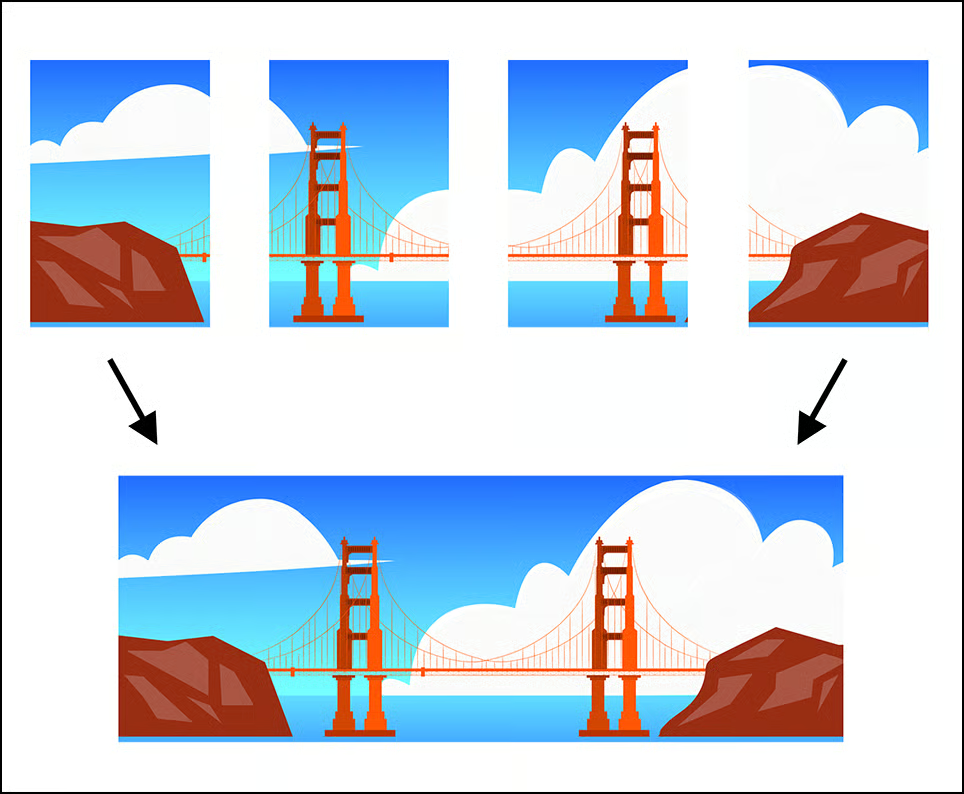
Import and sort your frames, then stitch in PTGui, Hugin, or other pro tools. For fisheye, set the correct lens model in the stitcher (circular or full-frame fisheye). Typical overlap targets: ~25–35% for fisheye; with the 8-15mm this is achieved by the 4-around or 6-around patterns described above. PTGui’s control-point detector is robust, and its masking, HDR and viewpoint correction features are excellent for nadir fixes and moving subjects. For a deeper look at why PTGui remains a top choice for complex panos, see this review. Fstoppers: PTGui review
After stitching, bring the equirectangular result into Lightroom/Photoshop for global color, contrast, and noise reduction. For VR platforms, export as an 8-bit or 16-bit equirectangular JPEG/TIFF at a size appropriate for your host (e.g., 8K–12K on the long edge). For end-to-end best practices in DSLR 360 workflows, this guide from Meta is a solid reference. Oculus Creator: Using a DSLR to shoot & stitch a 360 photo
Cleanup & Enhancement
- Nadir patch: Shoot a dedicated nadir or use PTGui’s Viewpoint correction. Patch with a cloned floor tile or a branded logo plate.
- Color balance: Apply a single WB and tone curve across all frames before stitching, or correct the stitched pano as a whole.
- Noise control: For night panos, modest luminance NR plus selective sharpening is cleaner than aggressive NR.
- Level the horizon: Ensure roll/yaw/pitch are correct; use vertical guides and auto-level tools.
- Output: Save a layered project and export multiple sizes. Keep a master 16-bit TIFF for archival and re-edits.
Want a concise visual walkthrough on panoramic head setup and capture? The short video below complements this section.
Useful Tools & Resources
Software
- PTGui panorama stitching
- Hugin (open-source)
- Lightroom / Photoshop for finishing
- AI tripod removal / content-aware tools
Hardware
- Panoramic heads: Nodal Ninja, Leofoto, or similar with fore-aft rail
- Carbon-fiber tripod with leveling base
- Wireless remote shutter or interval timer
- Pole extensions / car mounts with tethers
Disclaimer: product names are provided as search references; check official sites and manuals for compatibility and the latest features.
Common Mistakes & How to Avoid Them
- Parallax error → Calibrate the entrance pupil; don’t skip nodal alignment.
- Exposure or WB flicker → Manual mode and fixed WB across every frame and bracket.
- Tripod footprint distractions → Shoot and patch a nadir, or use viewpoint correction.
- Ghosting from movement → Use multi-pass capture and mask in PTGui.
- Night noise or blur → Lower ISO, longer shutter, solid support, and remote trigger.
- Flare with fisheye → Shade the front element; avoid pointing directly at the sun unless intentional.
Frequently Asked Questions
- Can I shoot handheld panoramas with the Pentax K-1 II?
Yes, but expect more stitching work. Use the 8mm setting for fewer frames, enable SR (stabilization), and keep shutter speeds high (1/200s+). For critical work or interiors, use a tripod and a panoramic head.
- Is the Canon EF 8-15mm f/4L wide enough for a single-row 360?
Absolutely. At 8mm, 4 shots around plus zenith and nadir cover a full sphere with healthy overlap. At 15mm, plan 6 around plus zenith and nadir for clean coverage.
- Do I need HDR for interiors with bright windows?
Usually yes. Bracket ±2 EV (3–5 frames) so you can retain window view and clean interior shadows. Keep WB and aperture fixed and vary shutter speed only.
- How do I avoid parallax issues with this combo?
Use a panoramic head and align the lens’s entrance pupil over the rotation axis. Mark your rail positions after calibration and reuse them. Extra overlap (e.g., 6–8 around at 15mm) gives stitchers more flexibility.
- What ISO range is safe on the K-1 II in low light?
ISO 100–400 is pristine, 800–1600 is very usable, and 3200 is workable for web-sized delivery. Prefer longer shutter times on a tripod over pushing ISO when quality is critical.
Field Notes & Mini Case Studies
Indoor real estate
Use “quality mode” at 15mm diagonal for cleaner edge detail and more pixels. Shoot 6 around + Z + N, bracketing ±2 EV. Keep ISO 100–200, f/8, and vary shutter. Consistent color is key—lock WB and avoid mixed bulbs if possible. Mask windows and lamps in PTGui; do a tidy nadir patch using viewpoint correction.
Outdoor sunset
Balance highlights by exposing for the sky and bracketing. With “speed mode” at 8mm, capture quickly as light changes. Use a lens hood removal and careful shading to reduce flare. In post, blend brackets and recover shadows—K-1 II RAWs at ISO 100 hold up well.
Event crowds
Go 8mm circular for speed and reliability. Do two passes—first for coverage, second for cleaner frames to mask people. Keep 1/200s+ shutter and ISO 400–800. Expect to spend time masking in the stitcher to remove duplicates or ghosting.
Rooftop or pole shooting
Safety first: tether the rig and watch wind. Use 8mm, 4 around + Z + N to minimize total shots. Lower ISO (100–200) with 1/125s if the pole is stable; otherwise, bump ISO to maintain sharpness.
For an in-depth DSLR pano Q&A and gear considerations, this resource compiles practical answers to common challenges. DSLR 360 virtual tour FAQ