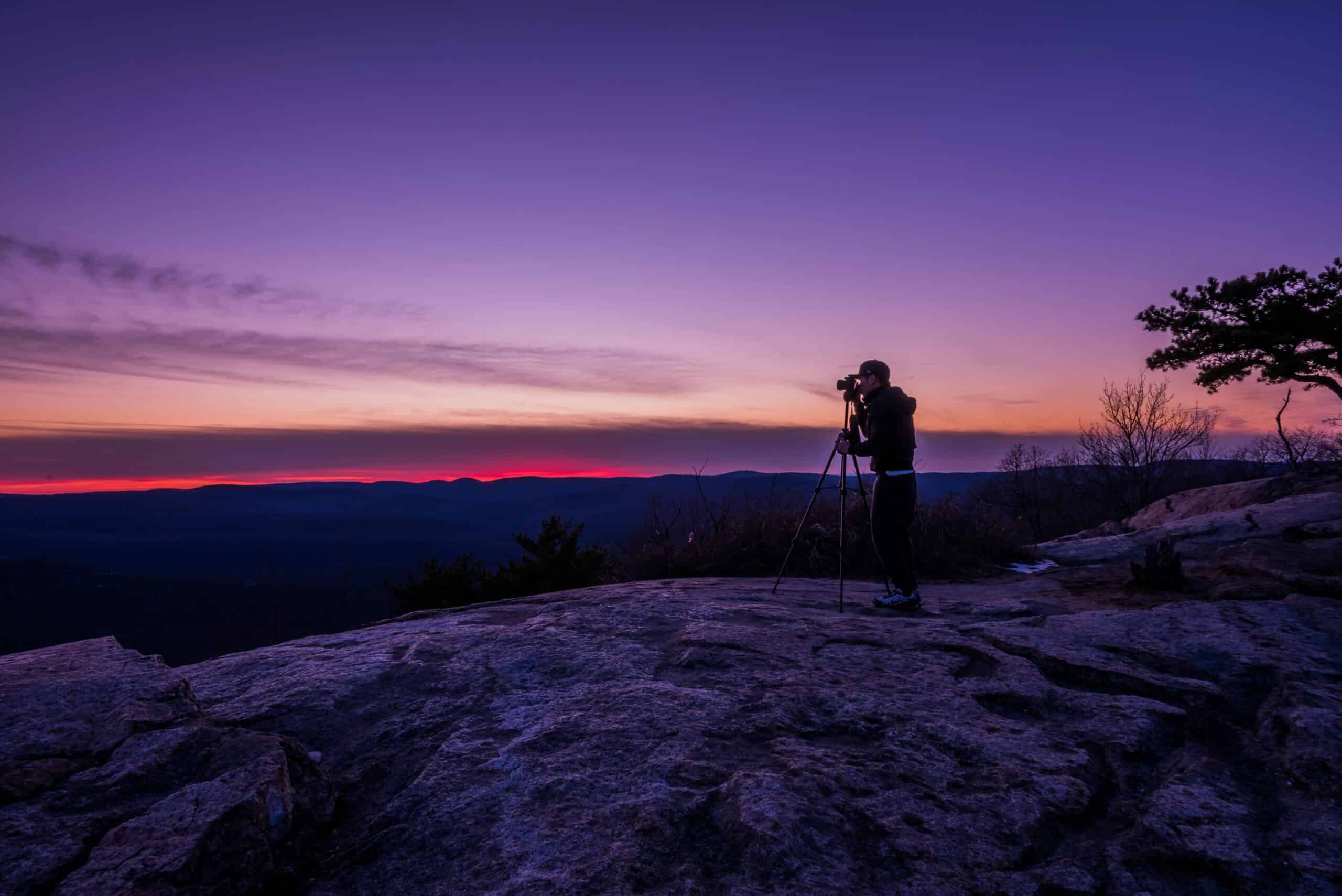
Why This Camera & Lens Are Great for Panoramas
The Pentax K-1 II paired with the AstrHori 12mm f/2.8 Fisheye is a surprisingly powerful 360° panorama combo for creators who want robust build, excellent dynamic range, and the speed of a diagonal fisheye workflow. The K-1 II’s 36.4MP full-frame sensor (35.9 × 24 mm, pixel pitch ~4.9 μm) provides plenty of resolution for high-quality equirectangular exports and virtual tours, while its weather-sealed magnesium-alloy body and 5-axis in-body stabilization (IBIS) make it dependable for outdoor and mobile use. Its dynamic range at base ISO is strong (≈14+ EV in real-world use), so shadows and highlights survive stitching and tone mapping well.
The AstrHori 12mm f/2.8 is a manual, full-frame diagonal fisheye that delivers a very wide field of view (up to 180° on the diagonal). As a fisheye, it trades rectilinear straightness for reach—resulting in fewer shots required per 360°, faster capture in changing light or crowded scenes, and easier control point generation in stitching software. It’s small and light, and on the K-1 II the aperture ring and fully manual focus give you precise control. Expect some chromatic aberration and edge softness when shot wide open; stopping down to f/5.6–f/8 markedly tightens the frame and improves corner detail, ideal for VR presentation.
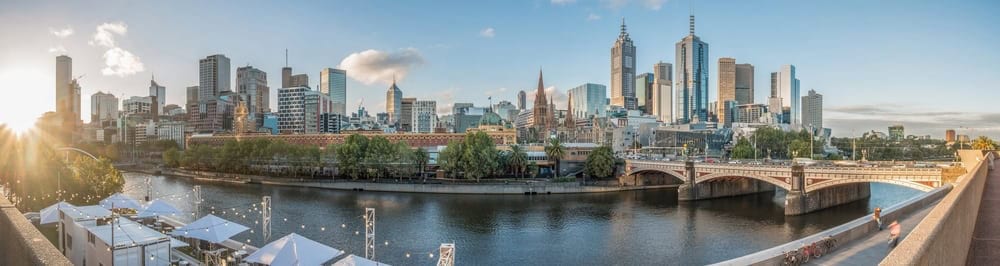
Quick Setup Overview
- Camera: Pentax K-1 II — Full-frame 36.4MP; base ISO 100; excellent weather sealing; 5-axis IBIS; tilting LCD; Pixel Shift mode (tripod only; not needed for panos).
- Lens: AstrHori 12mm f/2.8 Fisheye — full-frame diagonal fisheye; manual focus/aperture; sharpest around f/5.6–f/8; some CA and edge softness wide open.
- Estimated shots & overlap: field-tested starting points
- Fast single row: 6 shots around at 60° yaw spacing, tilt +5° to +10° (plus 1 nadir). ~30% overlap.
- High-detail/safer coverage: 8 around (45° spacing) across two rows: +25° and -25°, plus 1 nadir.
- HDR interiors: same patterns, bracket ±2 EV in 3–5 frames per view.
- Difficulty: Moderate — easy shot count, but demands nodal alignment and careful exposure control.
Planning & On-Site Preparation
Evaluate Shooting Environment
Start by walking the scene. Identify moving subjects, reflective or glass surfaces, tight spaces, and potential tripod positions. In interiors, note mixed lighting (tungsten + daylight) that can cause color shifts across frames. For glass viewpoints, position the lens as close as safely possible to reduce reflections and ghosting, and shoot with the lens slightly off-axis to avoid strong backlight flare. Outdoors, plan your rotation to keep the sun either in a consistent quadrant or blocked by architectural elements to minimize flare with the fisheye’s large front element.
Match Gear to Scene Goals
The K-1 II’s dynamic range allows solid recovery of shadows and highlights—useful at sunrise or with interiors where windows are bright. The AstrHori 12mm fisheye keeps your capture sequence short (6–8 shots around vs. 12–24 with rectilinear lenses), helping in crowds or changing light. For low light, the K-1 II remains clean up to ISO 800–1600 if you expose to the right (ETTR) and stitch from RAW. Use the fisheye specifically when you need speed and broader coverage; for architectural lines that must remain straight, a rectilinear lens is better but slower.
Pre-shoot Checklist
- Power: 2+ batteries; IBIS and live view can drain faster in cold weather.
- Storage: fast, redundant cards; shoot RAW+JPEG if you want quick previews.
- Optics: clean front element carefully (fisheye domes show dust easily); blow off the sensor.
- Support: level tripod; panoramic head calibrated for the nodal point (entrance pupil).
- Safety: tether on rooftops/poles; check wind loads; tighten all clamps; avoid crowds brushing the tripod.
- Backup workflow: shoot an extra full pass; if a person or car obstructed a frame, you’ll have a clean alternative.
Essential Gear & Setup
Core Gear
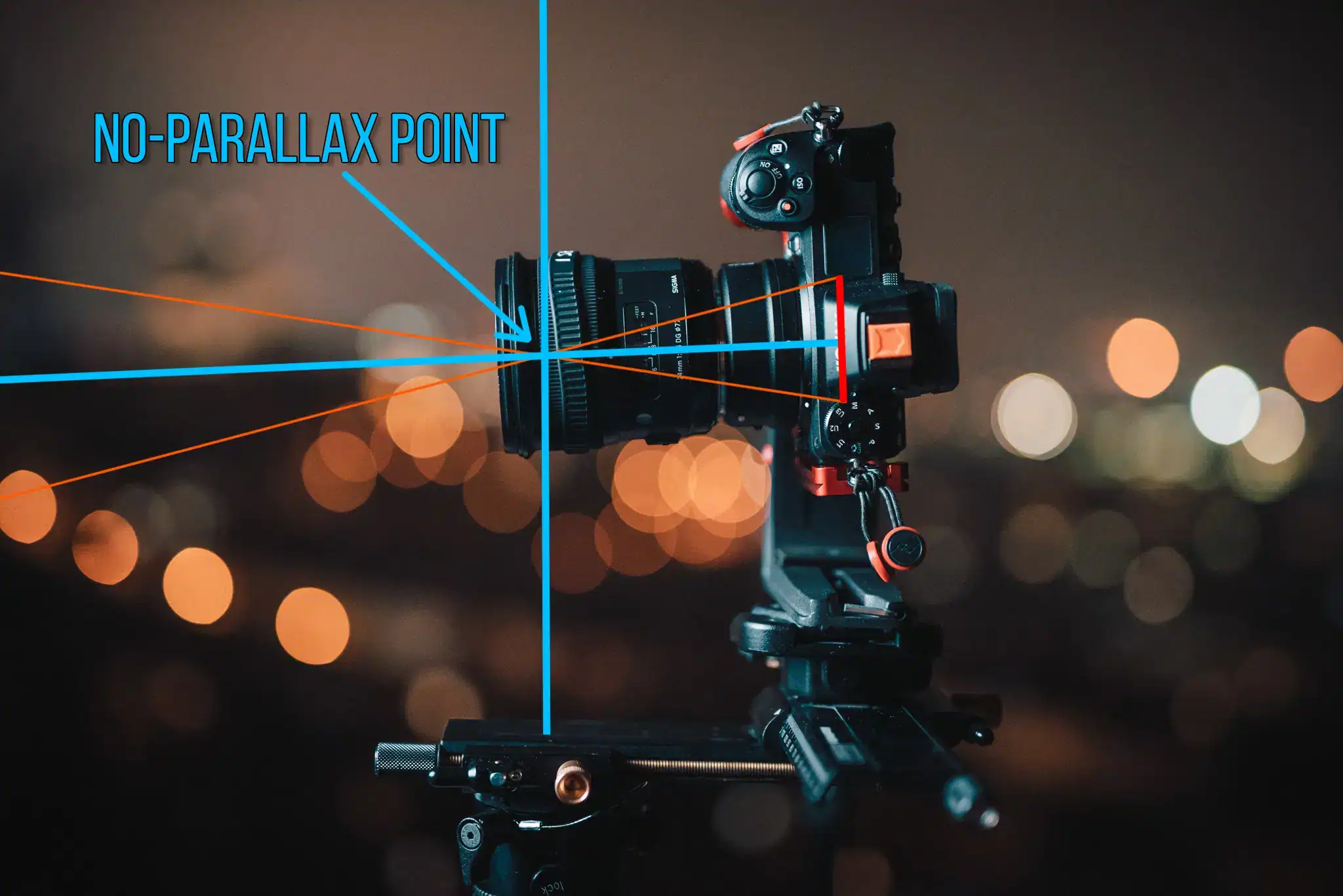
- Panoramic head: Enables rotation around the lens’s entrance pupil (nodal point) to eliminate parallax. This is crucial when foreground objects are near. A simple 2-rail head works for the 12mm; mark your rail positions once calibrated.
- Stable tripod with leveling base: A leveling base lets you zero the head quickly; even a few degrees off-level introduces stitching drift.
- Remote trigger or app: Use a cable release or a 2-second timer. The K-1 II’s mirror/shutter adds vibration; minimize it. Enable electronic front-curtain shutter if available with your setup.
Optional Add-ons
- Pole or car mount: Great for elevated or moving perspectives. Always use a safety tether and plan for wind. Keep speeds low and rotations deliberate; vibrations blur frames and ruin overlaps.
- Lighting aids: Small LED panels for dim interiors, especially to tweak nadir coverage or reduce extreme contrast.
- Weather gear: Rain covers and a microfiber cloth. The fisheye’s bulbous front is flare- and droplet-prone.
For a deeper dive into panoramic head fundamentals and alignment, see this panoramic head tutorial resource at the end of this section. Comprehensive panoramic head tutorial (360 Rumors)
Step-by-Step Shooting Guide
Standard Static Scenes
- Level tripod & align nodal point: Mount the K-1 II and AstrHori on your pano head. Align the entrance pupil so that when you pan, near and far objects don’t shift relative to each other. Start with the lens pushed forward on the rail; watch two verticals (near post vs. far edge) while panning. Adjust until their relative position doesn’t move. On many 12mm fisheyes, the entrance pupil is relatively close to the front element; your final fore-aft offset from the sensor plane is often in the 60–80 mm range, then fine-tune.
- Manual exposure & locked white balance: Switch to M mode. Meter the brightest area you must retain detail in (e.g., sky) and set exposure so highlights aren’t clipped; use histogram. Lock white balance (Daylight/Tungsten/Custom) to prevent color flicker between frames. Disable Auto ISO.
- Capture with tested overlap: For speed, shoot 6 around at +5° to +10° tilt. Rotate exactly 60° per shot for ~30% overlap. If you need maximum safety, do two rows of 8 around (+25° and -25°). Add a dedicated nadir frame by tilting down or reframing after lifting the tripod; a nadir patch is easier with a clean frame.
- Nadir (ground) shot: Take a clean plate of the ground where your tripod stood. It will help you patch the tripod in post using viewpoint correction or manual cloning.
HDR / High Dynamic Range Interiors
- Bracket ±2 EV: Use 3–5 bracketed exposures per view (e.g., -2/0/+2 or -2/-1/0/+1/+2) to balance windows and interior shadows. The K-1 II handles bracket sequences well; keep shutter the changing variable, not ISO or aperture.
- Lock WB and picture style: Mixed lighting will otherwise shift hue across brackets, complicating stitching and merging. Shoot RAW for best latitude and consistent tone mapping.
Low-Light / Night Scenes
- Long exposure on tripod: Shoot at f/4–f/5.6 to keep diffractions low and edges sharp. Start at ISO 100–400 and extend shutter. If wind or people force faster speeds, raise ISO up to 800–1600 on the K-1 II before image quality degrades notably.
- Remote trigger or 2-second timer: Avoid vibrations. Turn off IBIS (SR) on a tripod—IBIS can introduce micro-blur during long exposures when the camera is perfectly still.
Crowded Events
- Two-pass strategy: First pass captures geometry and background; second pass fills gaps when people move. Note frame numbers to assist masking later.
- Mask in post: Blend frames to remove ghosting. PTGui’s masking tools make choosing the cleanest people positions easier.
Special Setups (Pole / Car / Drone)
- Safety first: Use a safety tether and keep total load within pole/head specs. The K-1 II is solid but heavy; be mindful of leverage and wind.
- Control vibrations: Use faster shutter speeds (1/250–1/500) and higher ISO (up to 1600) for pole/car shots. Rotate slowly and pause between frames to let oscillations settle.
For a broader perspective on DSLR 360 capture sequence and concepts, this quick primer is helpful: Using a DSLR to shoot and stitch a 360 photo (Meta/Oculus Creator)
Recommended Settings & Pro Tips
Exposure & Focus
| Scenario | Aperture | Shutter | ISO | Notes |
|---|---|---|---|---|
| Daylight outdoor | f/8–f/11 | 1/100–1/250 | 100–200 | Lock WB (Daylight); expose for highlights |
| Low light/night | f/4–f/5.6 | 1/30–10s | 100–800 (up to 1600 if needed) | Tripod & remote; IBIS OFF when on tripod |
| Interior HDR | f/8 | Bracket ±2 EV | 100–400 | Balance windows & lamps; keep aperture fixed |
| Action / moving subjects | f/5.6–f/8 | 1/200+ | 400–800 | Freeze motion; consider two-pass capture |
Critical Tips
- Manual focus and hyperfocal: With a 12mm on full frame at f/8, set focus around 0.5–0.7 m to keep almost everything sharp from ~0.3 m to infinity. Confirm with magnified live view.
- Nodal calibration: Use two verticals (near/far) and pan. Adjust the rail until there is no relative shift. Mark your rail pointers for the AstrHori 12mm and tape your final values for repeatability.
- White balance lock: Choose Daylight, Tungsten, or a custom Kelvin. AWB variations cause seams and color differences across frames.
- RAW over JPEG: For fisheye, CA and vignetting corrections, and HDR merges, RAW preserves dynamic range and color integrity.
- IBIS/SR behavior: On tripod, turn off SR to avoid micro-movements. With manual lenses, set the focal length in the K-1 II menu when shooting handheld so IBIS can work correctly.
- Use the K-1 II’s composition tools: Live horizon and electronic level help keep rows even. Pixel Shift is not recommended for panos due to movement between frames.
Field-Proven Case Studies
Indoor Real Estate
Shoot 6 around + nadir with 3–5 bracketed exposures. Keep at f/8, ISO 100–200, and vary shutter. Lock WB to a consistent Kelvin (e.g., 4000–4500K if dominant LED/tungsten). This reduces color grading time and improves stitch consistency.
Outdoor Sunset
Work quickly: 6 around + zenith if you need sky coverage. Start exposures at the brightest part of the sky. If the sun is in-frame, take a second pass a few minutes later when intensity drops, then mask for the cleanest sun disk.
Event Crowds
Use single-row 6 around without bracket (unless absolutely necessary). Bump ISO to 400–800, keep 1/200 s to reduce motion blur, and do a second pass for clean background areas to mask in post.
Stitching & Post-Processing
Software Workflow
Import RAW files into Lightroom, Capture One, or similar for base corrections (WB, exposure). For stitching, PTGui and Hugin are industry standards. With a diagonal fisheye, select “Full-frame fisheye” lens type at 12mm focal length and FF crop. Typical overlaps of ~25–35% work well. Let the software generate control points, then optimize. If the nadir isn’t covered in your main sequence, add a nadir plate and use viewpoint correction. Export an equirectangular image (2:1 aspect, e.g., 12000 × 6000 px or higher depending on your needs). A solid review of PTGui’s strengths if you’re picking a tool is here: PTGui review and panorama workflow insights (Fstoppers)
Cleanup & Enhancement
- Tripod/nadir patch: Use PTGui’s Viewpoint correction with your nadir plate, or patch in Photoshop. Clone/heal to blend textures seamlessly.
- Color correction & NR: Apply gentle noise reduction (especially for ISO 800–1600 night scenes). Balance color casts from mixed lighting.
- Leveling: Ensure the horizon is level. Use roll/yaw/pitch adjustments in PTGui or Hugin to set a clean horizon and logical starting view.
- Export formats: Save an 8-bit or 16-bit TIFF master and a high-quality JPEG for web. For VR players, export standard equirectangular with suitable metadata.
Disclaimer: Software changes frequently; check the latest documentation for PTGui, Hugin, and your RAW processor for new features and best practices.
Useful Tools & Resources
Software
- PTGui panorama stitching
- Hugin open source pano tool
- Lightroom / Photoshop for RAW and retouch
- AI tripod removal/masking tools
Hardware
- Panoramic heads (Nodal Ninja, Leofoto, Sunwayfoto)
- Carbon fiber tripods with leveling base
- Quick-release L-plates and Arca clamps
- Wireless remote shutters
- Pole extensions and car suction mounts (rated for your load)
For a great fundamentals recap on panoramic heads and best practices, see: Panoramic head tutorial (360 Rumors). Disclaimer: brand names and links are for reference—check official sites for current specs and instructions.
Common Mistakes & How to Avoid Them
- Parallax error: Calibrate the entrance pupil. Even a few millimeters off will cause misalignments in tight interiors.
- Exposure flicker: Avoid Auto ISO and Auto WB. Use manual exposure and fixed WB per scene.
- Tripod shadows/footprint: Shoot a nadir plate. Plan for the sun’s direction to minimize your own shadow in outdoor scenes.
- Ghosting from moving subjects: Capture two passes and use masks to choose clean areas.
- High ISO noise at night: Favor longer shutter at base ISO on a tripod; raise ISO only as needed (K-1 II remains usable to ISO 1600 with careful processing).
- Stabilization artifacts: Turn off IBIS (SR) on tripod. Use it only handheld and set the correct focal length for the manual lens.
Frequently Asked Questions
- Can I shoot handheld panoramas with the Pentax K-1 II?
Yes, but it’s best for non-critical output. IBIS helps stabilize, but parallax will be an issue without a pano head, especially with nearby objects. Use high shutter speeds (1/200+), keep overlap generous (40–50%), and shoot quickly. For professional VR, use a tripod and calibrated head.
- Is the AstrHori 12mm f/2.8 wide enough for single-row 360?
Yes. A single row of 6 shots around (60° steps) plus one nadir is a reliable start. For more zenith safety or very tight interiors, add a second row or include a dedicated zenith shot.
- Do I need HDR for interiors with bright windows?
Usually. Bracket ±2 EV (3–5 frames) to preserve window views while maintaining interior detail. Keep aperture and ISO constant, changing only shutter. Merge HDR per view before stitching or use PTGui’s built-in exposure fusion.
- How do I avoid parallax issues with this lens?
Use a panoramic head and align the entrance pupil. Start with the lens advanced ~6–8 cm from the sensor plane and fine-tune using near/far verticals. Mark the rail positions for repeatable results.
- What ISO range is safe on the K-1 II in low light?
For tripod-based panos, stay at ISO 100–400 and lengthen shutter. If you must raise ISO, 800–1600 is still quite usable with good noise reduction. Above that, expect more aggressive NR and detail loss.
- Can I set a Custom Mode for pano on the K-1 II?
Yes. Save a Custom mode with M exposure, fixed WB, RAW, SR OFF (tripod), 2-sec timer or remote, and your preferred aperture (e.g., f/8). It speeds up on-site setup.
- How do I reduce flare with a fisheye?
Avoid pointing directly into strong light sources when possible. Slightly adjust the yaw so the sun or bright lights sit near frame edges you can mask or blend. Keep the front element spotless; even minor smudges will bloom.
- What’s the best tripod head type for this setup?
A compact, two-rail panoramic head is ideal: one rail for fore-aft entrance pupil adjustment and one for vertical offset. Ensure it supports the K-1 II’s weight and locks solidly.
Real-World Safety, Maintenance, and Reliability Notes
The K-1 II is built for the field: weather sealing and rugged construction handle light rain and dust, but your lens’s front element is exposed and curved—keep a microfiber cloth handy and avoid touching the glass. In windy conditions, lower your tripod, spread the legs wide, and use a weight bag. On rooftops or balconies, use a tether line to the camera or head. When using poles, know the total payload and wind limits; pause between frames to let oscillations die down.
For data safety, shoot dual-card backups if possible (if your K-1 II setup allows), or immediately back up cards to a portable SSD after the session. If a shot sequence had interruptions (people, cars, or gusts), shoot a second full pass before moving the tripod. That extra two minutes often saves you in post.
If you are transitioning from rectilinear lenses, note that fisheye panoramas can show stretching near the nadir/zenith in the equirectangular view. This is normal and not a sign of optical failure; it’s a projection characteristic. Carefully choose your horizon and default view in the viewer to present the most natural perspective.
Capture Scenarios Illustrated
Below are illustrative visuals that match typical parts of a 360° workflow with this setup.