
Why This Camera & Lens Are Great for Panoramas
If you’re wondering how to shoot panorama with Olympus OM-1 & Sigma 8mm f/3.5 EX DG Circular Fisheye, you’ve chosen a rugged, fast, and efficient combo for 360° work. The OM SYSTEM OM-1 is a 20.4MP Micro Four Thirds mirrorless body with a stacked BSI Live MOS sensor (17.3 × 13.0 mm). With a pixel pitch of roughly 3.3 µm and a practical base ISO of 200, it delivers clean files and dependable dynamic range (about 12 EV at base, real-world) in a compact, IP53 weather-sealed body. Its strong in-body stabilization (IBIS) helps handheld frames, though you’ll typically disable IBIS on a tripod for panorama precision.
The Sigma 8mm f/3.5 EX DG Circular Fisheye is a specialty lens that captures an ultra-wide field of view with characteristic fisheye projection. On full frame it renders a 180° circular image; on Micro Four Thirds (via appropriate mount or adapter), the sensor crops the circle. The result is still an exceptionally wide field that drastically reduces the number of shots required for a full spherical. Expect pronounced fisheye distortion and potential chromatic aberration at the periphery, both of which modern stitchers handle well. The key advantages for 360 work are speed (fewer frames), broader overlap tolerance, and reliable control-point generation in software compared to long rectilinear lenses.
In practice, this combo shines for travel, real estate scouting, rooftop vistas, and fast-moving environments where you need to grab a clean, stitchable set quickly. Weather sealing and a lightweight footprint make it a confidence-inspiring rig outdoors, while the fisheye’s coverage means fewer moving parts (and fewer people drifting between frames) in busy scenes.
Quick Setup Overview
- Camera: Olympus OM-1 — Micro Four Thirds sensor (17.3 × 13.0 mm), 20.4MP stacked BSI, approx. 12 EV base dynamic range, IP53 weather sealing, strong IBIS.
- Lens: Sigma 8mm f/3.5 EX DG Circular Fisheye — circular fisheye design (full-frame), produces a heavily wide, cropped circle on MFT; sharpest around f/5.6–f/8; some edge CA and flare susceptibility.
- Estimated shots & overlap (tested on MFT crop):
– 6 around (every 60°) + zenith + nadir for robust 360 coverage with ~30% overlap.
– Outdoors with clear skies: 5 around + nadir may work, but 6+Z+N is safer.
– High-detail interiors: 6 around + Z + N; consider a second safety pass. - Difficulty: Easy to Intermediate — fewer frames than rectilinear, but careful nodal alignment is required for clean stitches.
Planning & On-Site Preparation
Evaluate Shooting Environment
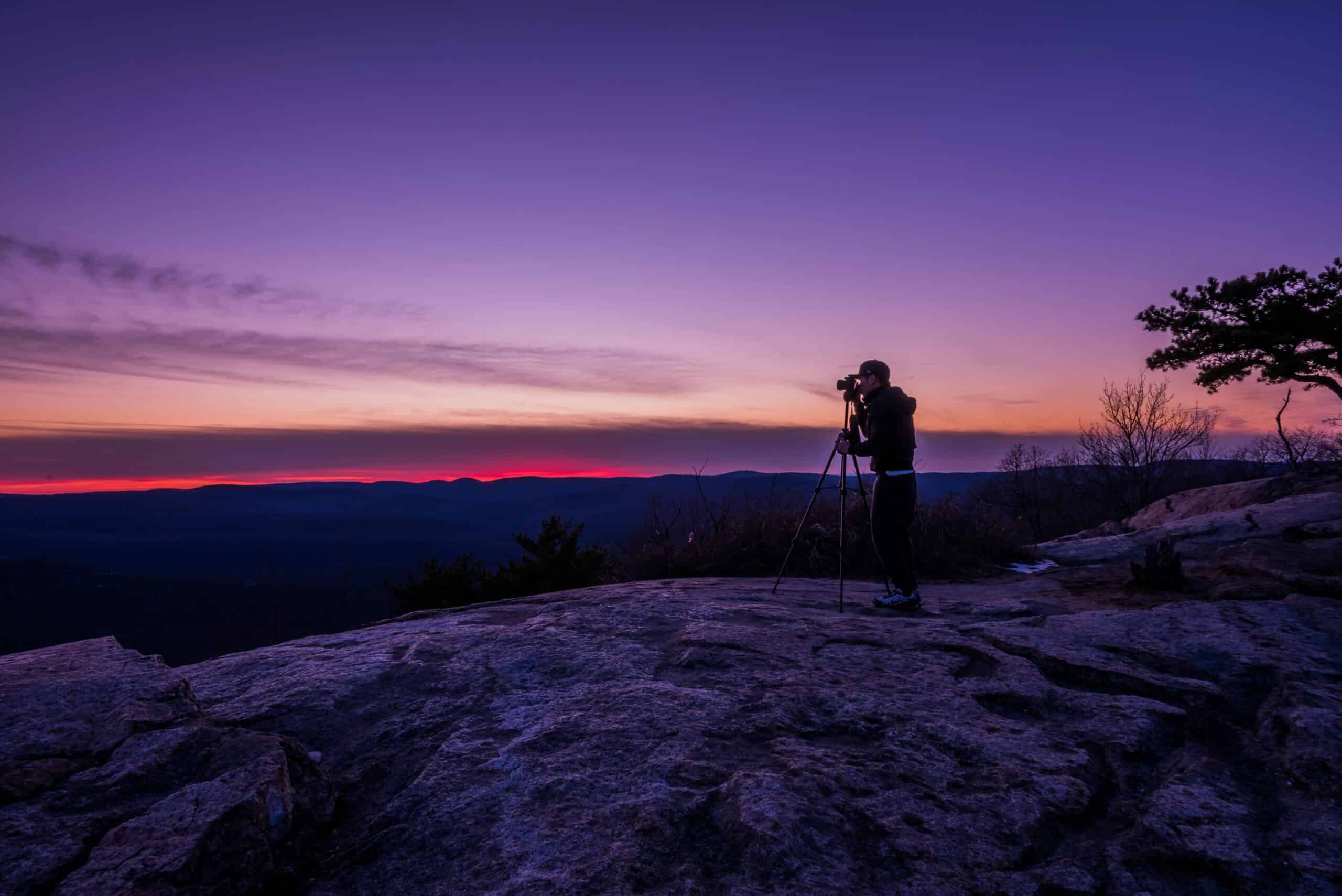
Before setting up, scan the scene for moving elements (people, traffic, trees in wind), reflective surfaces (glass, mirrors, polished floors), and light extremes (bright windows vs. dark corners). If shooting through glass, press the lens hood or a black cloth against the surface to minimize reflections. Keep the lens as close to the glass as possible without touching to avoid scratching coatings and to reduce ghosting. Mind the sun’s position with a fisheye; flare arcs are common if bright sources sit near the frame edge.
Match Gear to Scene Goals
The OM-1’s stacked sensor handles real-time adjustments fast and offers dependable noise control up to ISO 1600 in panoramas (ISO 200–800 is the practical sweet spot). The Sigma 8mm fisheye reduces shot count, a major benefit in crowds or changing light. For interiors with window contrast, the OM-1’s RAW files hold up well if exposed for highlights; bracketed HDR is even better. The fisheye’s distortion is irrelevant after stitching into an equirectangular output; just make sure you feed the stitcher proper lens type (fisheye/circular) so it can model projection correctly.
Pre-shoot Checklist
- Charge batteries; ensure you have ample, fast storage. Clean lens front element carefully—fisheye fronts are flare-prone.
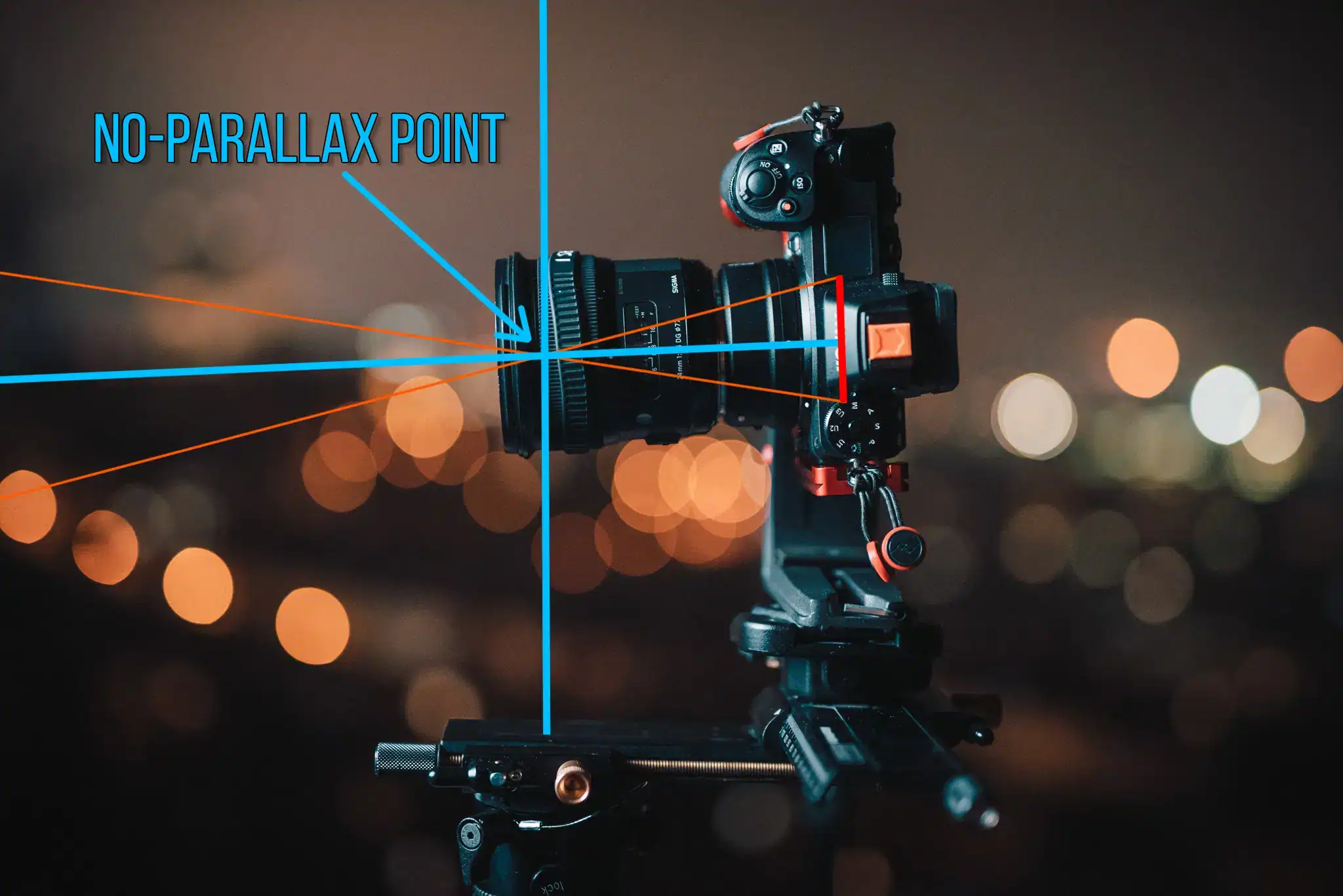
- Level the tripod. Calibrate your panoramic head’s nodal (no-parallax) settings for the OM-1 + Sigma 8mm combo.
- Safety: In wind or on rooftops, add a weight bag to the tripod; tether gear when elevated on a pole or car mount.
- Backup workflow: Shoot a second pass if possible—especially interiors or client work—to hedge against ghosting or missed frames.
Essential Gear & Setup
Core Gear
- Panoramic head: A multi-row head with fore-aft and left-right rail adjustment lets you align the lens’s entrance pupil with the rotation axis to eliminate parallax. This is critical for clean stitching of nearby objects (furniture, railings, door frames).
- Stable tripod with leveling base: Leveling ensures consistent horizons across frames. A built-in bubble or digital level saves time.
- Remote trigger or app: Use Olympus OI.Share or a wired remote to avoid camera shake and maintain consistent framing between shots.
Optional Add-ons
- Pole or car mount: Use a safety tether and minimize rotation speed. Watch wind load—fisheye fronts catch gusts easily.
- Lighting aids: Small LED panels or bounced flash for dim interiors (keep lighting consistent across frames).
- Weather protection: Rain cover and anti-fog wipes for dawn/dusk humidity; keep a microfiber cloth handy for the fisheye dome.
Step-by-Step Shooting Guide
Standard Static Scenes
- Level tripod & align nodal point: On your panoramic head, adjust the fore-aft rail until nearby vertical edges show no relative shift against the background when panning left/right. With the Sigma 8mm fisheye, the entrance pupil sits close to the front element—start with the lens front just ahead of the rotation axis, then fine-tune.
- Manual exposure & white balance: Meter for the midtones or slightly protect highlights (especially outdoors). Set Manual mode, lock ISO, shutter, aperture, and WB (e.g., Daylight). This prevents flicker or color shifts across frames.
- Capture sequence with overlap: For this setup on Micro Four Thirds, a safe pattern is 6 around at 0° tilt (every 60° yaw), then 1 zenith and 1 nadir for a full spherical. If you see thin coverage in the sky, add a second zenith at a slight tilt.
- Take nadir frame: After the around shots, tilt down for the ground shot to patch out the tripod later. A small lateral offset of the camera can help get a clean patch area.
HDR / High Dynamic Range Interiors
- Bracket ±2 EV (3–5 exposures): Keep aperture constant (typically f/8), vary shutter speed, and lock WB. With windows and lamps, this preserves detail in both highlights and shadows.
- Minimize time between brackets: Use brackets in continuous mode and a remote to reduce subject movement between exposures.
Low-Light / Night Scenes
- Use longer exposures and a rigid mount: Start around f/4–f/5.6, 1/10–1/60 s, and ISO 200–800. The OM-1 can go to ISO 1600 if needed, but tripod + longer shutter usually beats higher ISO noise.
- Disable IBIS on tripod: Stabilization can cause micro-blur when the camera is perfectly still; turn it off for the cleanest results.
Crowded Events
- Two passes strategy: Shoot the full set once, then repeat waiting for a momentary gap in traffic. Later, blend clean parts for a ghost-free result.
- Use faster shutter (1/125–1/250) and ISO 400–800 to freeze motion where necessary.
Special Setups (Pole / Car / Drone)
- Pole: Use a lightweight panoramic head and tether. Rotate slowly to minimize sway. Shoot extra overlap (8 around) if alignment wobbles.
- Car mount: Park safely, use suction with safety straps, and avoid high speeds. Vibrations demand faster shutter speeds and sometimes higher ISO.
Recommended Settings & Pro Tips
Exposure & Focus
| Scenario | Aperture | Shutter | ISO | Notes |
|---|---|---|---|---|
| Daylight outdoor | f/8–f/11 | 1/100–1/250 | 200 | Lock WB to Daylight; protect highlights. |
| Low light/night | f/4–f/5.6 | 1/10–1/60 | 200–800 | Tripod, IBIS off; use remote trigger. |
| Interior HDR | f/8 | Bracket ±2 EV | 200–400 | WB locked; shoot brackets quickly. |
| Action / moving subjects | f/5.6–f/8 | 1/200+ | 400–800 | Double pass to reduce ghosting. |
Critical Tips
- Manual focus at hyperfocal: For 8mm on MFT, focus near 0.6–1 m at f/8 to keep everything from near to infinity acceptably sharp. Use focus peaking if needed, then switch to MF.
- Nodal calibration: Start with the lens front slightly ahead of the rotation axis; pan against a near vertical and a far background. Adjust until the near object doesn’t shift relative to the distance. Mark your rail positions for the OM-1 + Sigma 8mm so you can repeat them.
- White balance lock: Avoid mixed WB across frames. Set WB to a fixed preset or Kelvin; tweak in RAW later.
- RAW over JPEG: More headroom for highlight recovery and CA correction. The OM-1’s 12-bit RAWs respond well to careful exposure.
- IBIS management: On tripod, disable IBIS. On pole/handheld, enable IBIS to counter micro-shake, but keep shutter speeds sensible.
- Lens hood/shade: Use and/or shield with your hand to tame flare when the sun is near the frame edge.
Stitching & Post-Processing
Software Workflow
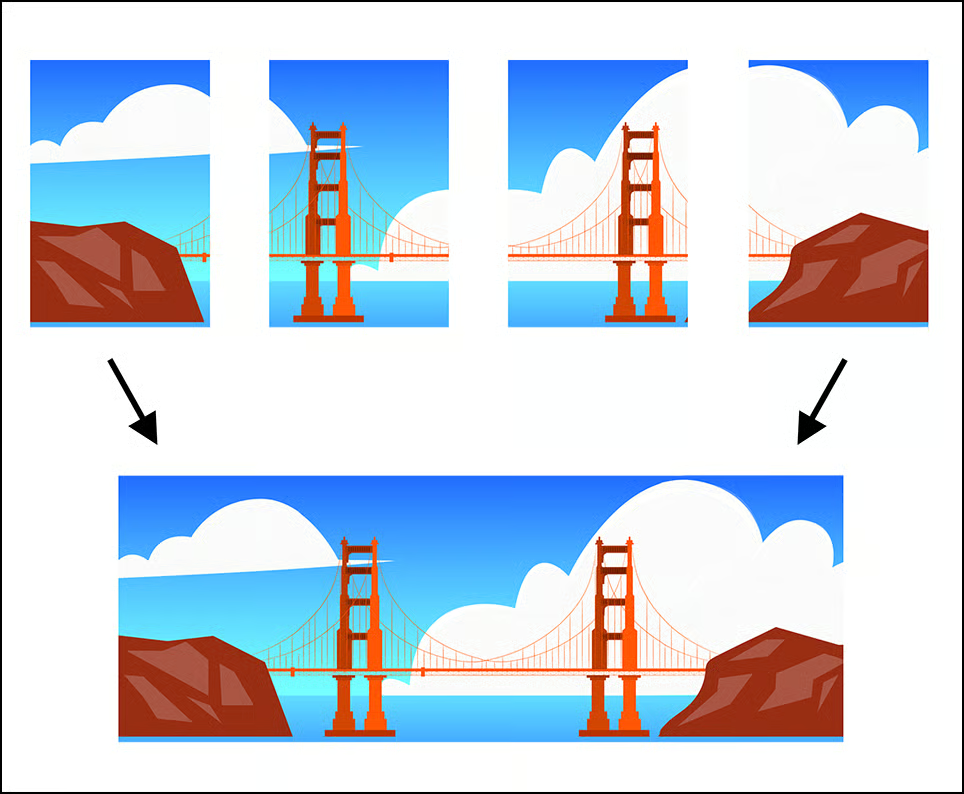
Import RAWs and color-correct brackets (if any) consistently. For stitching, PTGui and Hugin are excellent: designate lens type as fisheye and, if available, set it to “circular fisheye (cropped)” to match Micro Four Thirds coverage. With a fisheye, 25–30% overlap is typical; with rectilinear lenses, aim for 20–25% but more frames are required. PTGui often auto-detects control points quickly with fisheye inputs. After stitching, output a 16-bit equirectangular TIFF for grading or a high-quality JPEG for web/VR viewers.
PTGui’s masking helps remove moving objects or tripod legs when combined with a clean nadir shot. Hugin can do the same with a bit more manual setup. When finished, level horizons by adjusting pitch/roll/yaw. Export at 2:1 equirectangular aspect ratio for VR platforms and 360 players.
Cleanup & Enhancement
- Nadir patch: Use PTGui Viewpoint Correction or export a layer to Photoshop/Affinity for cloning. AI object removal tools can speed this up.
- Chromatic aberration and flare: Apply lens profile/CA fixes and clone out flare ghosts from bright light sources if necessary.
- Noise reduction: For night scenes, denoise modestly and retain detail—fisheye edges often hide grain, but sky gradients can reveal it.
- Color consistency: Match contrast and saturation across brackets and frames for a cohesive panorama.
- Export formats: Save a master TIFF and a web-ready JPEG (e.g., 8000 × 4000 px for high quality VR). Keep originals and project files for future edits.
For deeper dives into workflow and gear setup, see a practical panoramic head tutorial and a PTGui-focused review after you’ve tried a few stitches yourself. Read a panoramic head setup tutorial. See a PTGui review and tips.
Useful Tools & Resources
Software
- PTGui panorama stitching
- Hugin (open source)
- Lightroom / Photoshop / Affinity Photo for RAW and retouching
- AI tools for tripod/nadir removal
Hardware
- Panoramic heads (Nodal Ninja, Leofoto, or similar multi-row head)
- Carbon fiber tripods with a leveling base
- Wireless remote shutters or smartphone control
- Pole extensions and car-mount systems with safety tethers
For further guidance, Meta’s official notes on DSLR/mirrorless 360 photos are a solid starting point. See DSLR/mirrorless 360 workflow from Meta.
Common Mistakes & How to Avoid Them
- Parallax error: Always align the lens’s entrance pupil over the rotation axis of the pano head. Re-check if moving to a new location.
- Exposure flicker: Manual mode, fixed ISO, and locked WB are non-negotiable for consistent stitching.
- Inconsistent overlap: Stick to a repeatable pattern (e.g., 6 around + Z + N) and use index stops on your head if available.
- Tripod shadows and footprints: Shoot a dedicated nadir and patch later; consider rotating around with a small offset for a cleaner ground frame.
- Night-time noise: Keep ISO conservative (200–800) and lengthen exposure on a tripod; denoise gently in post.
Field-Proven Case Studies
Indoor Real Estate (Bright Windows)
Setup: OM-1 on pano head, Sigma 8mm at f/8, ISO 200. Bracket ±2 EV (3–5 shots). Shoot 6 around + zenith + nadir. Keep WB at 5000–5600K to avoid shifts. In PTGui, enable exposure fusion or HDR, then balance whites and warm the scene slightly in Lightroom. Result: Clean detail in window views with neutral interiors.
Outdoor Sunset (High Contrast)
Setup: f/8, ISO 200, shutter around 1/60–1/125. Consider a mild bracket for the sun side. Shield the lens to reduce flare when the sun is at the edge of the frame. Stitch, then grad the sky and open shadows selectively. Result: Rich sky tones with controlled flare ghosts.
Crowded Plaza (Motion Management)
Setup: f/5.6–f/8, 1/200–1/250, ISO 400–800. Do two full passes; in post, mask the cleaner sections of frames to minimize ghosting. The fisheye’s wide coverage reduces the number of exposures needed, minimizing subject drift between frames.
Rooftop / Pole Shooting
Setup: Lightweight head, pole with guy lines/tether. Shutter 1/250+ to beat sway, ISO 400–800. Rotate slowly and consider 8 around for more overlap. Safety first—wind gusts can topple or flex poles; always tether and never work near edges without proper precautions.
Visual Inspiration
Frequently Asked Questions
- Can I shoot handheld panoramas with the OM-1?
Yes, for quick single-row panos outdoors. Use faster shutter (1/250+), IBIS on, and generous overlap (8–10 frames around). For precise 360s (especially interiors), a tripod and panoramic head are strongly recommended.
- Is the Sigma 8mm f/3.5 EX DG Circular Fisheye wide enough for single-row 360 on MFT?
On Micro Four Thirds, the circular image is cropped, but it still covers enough FOV that 6 around + zenith + nadir typically completes a sphere with solid overlap. If stitching struggles in tight interiors, add more around frames (e.g., 8 around).
- Do I need HDR for interiors with bright windows?
Usually yes or at least recommended. Bracket ±2 EV (3–5 frames) to recover window detail without crushing interior shadows. Keep WB fixed to avoid color shifts between brackets.
- How do I avoid parallax issues with this combo?
Calibrate the nodal point on a panoramic head: align the entrance pupil (near the fisheye’s front element) over the rotation axis. Use a near and a far vertical reference; adjust the fore-aft rail until no relative shift occurs when panning.
- What ISO range is safe on the OM-1 for low light?
For tripod-based panoramas, ISO 200–800 is the sweet spot. ISO 1600 is usable when necessary, but favor longer shutter speeds and denoise in post for the cleanest results.
- Can I set up Custom Modes to speed pano shooting?
Yes. Program C1/C2 with Manual exposure, fixed WB, IBIS off (tripod workflow), and RAW capture. Create a second custom mode for handheld with IBIS on and a higher minimum shutter speed.
- How can I reduce fisheye flare?
Avoid pointing the lens directly at strong lights, shield with your hand or a flag just outside the frame, and clean the front element religiously. In post, clone or patch small ghosts.
- What’s the best panoramic head for this setup?
Choose a compact multi-row head with precise fore-aft and lateral adjustments (e.g., Nodal Ninja or Leofoto). Add a leveling base. For pole work, a lightweight but rigid head with index stops improves repeatability.
Safety, Limitations & Trustworthy Practices
Limitations: The Sigma 8mm fisheye is prone to flare and edge CA, and on MFT you’re working with a cropped circular field that may require slightly more frames than on full-frame. The OM-1’s Micro Four Thirds sensor has great efficiency but less total headroom than larger sensors; handle high-contrast scenes with careful exposure or HDR.
Safety: Always tether gear on rooftops, poles, or car mounts. Watch wind loads on fisheye fronts. Never lean over edges or set tripods on unstable surfaces.
Backup & Integrity: Save RAWs and PTGui/Hugin project files. Export a master 16-bit TIFF along with your web deliverables. Keep a second capture pass whenever conditions are changing or clients are on the line. For a deeper dive into shooting standards for 360 images, review panoramic principles from trusted communities and documentation. Browse community techniques for 360 panoramas. Study panoramic head setup principles.