
Why This Camera & Lens Are Great for Panoramas
If you’re looking for a practical, field-proven process for how to shoot panorama with Olympus OM-1 & Sigma 14-24mm f/2.8 DG DN Art, you’re in the right place. The OM SYSTEM OM‑1 brings pro-grade speed, weather sealing, and reliable color to 360 photo work, while the Sigma 14–24mm f/2.8 DG DN Art is one of the sharpest ultra-wide rectilinear zooms in its class. The OM‑1 uses a 20.4 MP stacked BSI Micro Four Thirds sensor (approx. 3.3 μm pixel pitch), excellent IBIS, and solid dynamic range at base ISO. The Sigma 14–24mm DG DN Art, designed for full-frame mirrorless (Sony E or L-mount), delivers crisp corners, low lateral CA, and moderate geometric distortion that stitches predictably in PTGui/Hugin.
Important compatibility note: the Sigma 14–24mm f/2.8 DG DN Art cannot be natively mounted on the OM‑1 (Micro Four Thirds). There’s no simple mechanical adapter for E/L-mount to MFT. In practice, OM‑1 users do one of the following:
- Use the DSLR version, Sigma 14–24mm f/2.8 DG HSM (Canon EF), with an EF–MFT speed booster (0.71×) or straight EF–MFT adapter. Functionally, your workflow is the same as below.
- Or, replicate the same field of view with a native MFT ultra‑wide like the OM System 7–14mm f/2.8 PRO or Laowa 7.5mm f/2 and follow the same stitching approach.
This guide focuses on technique for a rectilinear ultra‑wide zoom on the OM‑1, with notes on shot counts and overlap that you can use whether you adapt the Sigma or use a native equivalent. The principles—nodal alignment, overlap, exposure consistency—are universal.
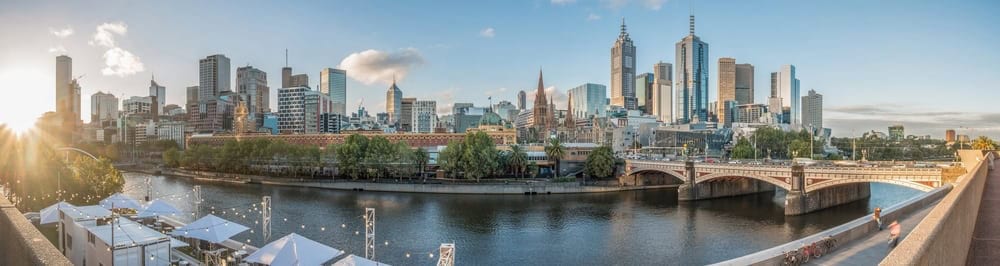
Quick Setup Overview
- Camera: Olympus OM‑1 — Micro Four Thirds (17.3×13.0 mm), 20.4 MP stacked BSI sensor; base ISO 200 (ISO LOW 80); IBIS up to ~7 stops; weather sealed (IP53 with PRO lenses).
- Lens: Sigma 14–24mm f/2.8 DG DN Art — rectilinear ultra‑wide; extremely sharp from f/4–f/8, low lateral CA, moderate barrel distortion at 14mm; bulbous front element (no front filters).
- Estimated shots & overlap (rectilinear, 30% overlap, portrait orientation):
- If you adapt to approx. 20mm FF‑equivalent (14mm with 0.71× booster on MFT): two rows around, 10 shots per row at ±30° pitch + zenith + nadir (≈22 frames).
- If you end up closer to 28–34mm FF‑equivalent (no booster or zoomed in): three rows around, 12 shots per row at ±45°/0° pitch + zenith + nadir (≈38–40 frames).
- Native 7–8mm MFT (≈14–16mm FF‑equivalent): one or two rows around, 8–10 shots per row + zenith + nadir (≈18–22 frames).
- Difficulty: Intermediate (easy with a calibrated panoramic head).
Planning & On-Site Preparation
Evaluate Shooting Environment
Scan for moving objects (people, foliage, waves), reflective surfaces (glass, polished floors), and light direction. Reflections amplify parallax errors; try to keep the camera at a consistent distance from reflective planes. If shooting through glass, place the front element as close as safely possible (1–2 cm) and shade with your hand or a flexible hood to reduce flare and double reflections. For sunset cityscapes, note the brightest highlight to determine your HDR bracket range.
Match Gear to Scene Goals
The OM‑1’s base ISO dynamic range is strong for a MFT sensor; keep ISO 200–400 for exteriors and controlled interiors. The Sigma 14–24mm’s rectilinear rendering avoids fisheye defishing artifacts, which is great for architecture. The trade‑off is you need more frames than with a circular fisheye. If you anticipate crowds or wind, the OM‑1’s IBIS helps for handheld scouting, but plan to turn IBIS off on a tripod for consistent alignment.
Pre-shoot Checklist
- Charge batteries, format fast UHS‑II cards, clean front/rear elements and the sensor.
- Level the tripod; calibrate your panoramic head to the lens’s no‑parallax point (NPP).
- Safety: weigh down tripod, tether on rooftops, beware wind loads on poles.
- Backup: capture a second full pass—especially for HDR interiors—so you can swap in clean tiles during stitching.
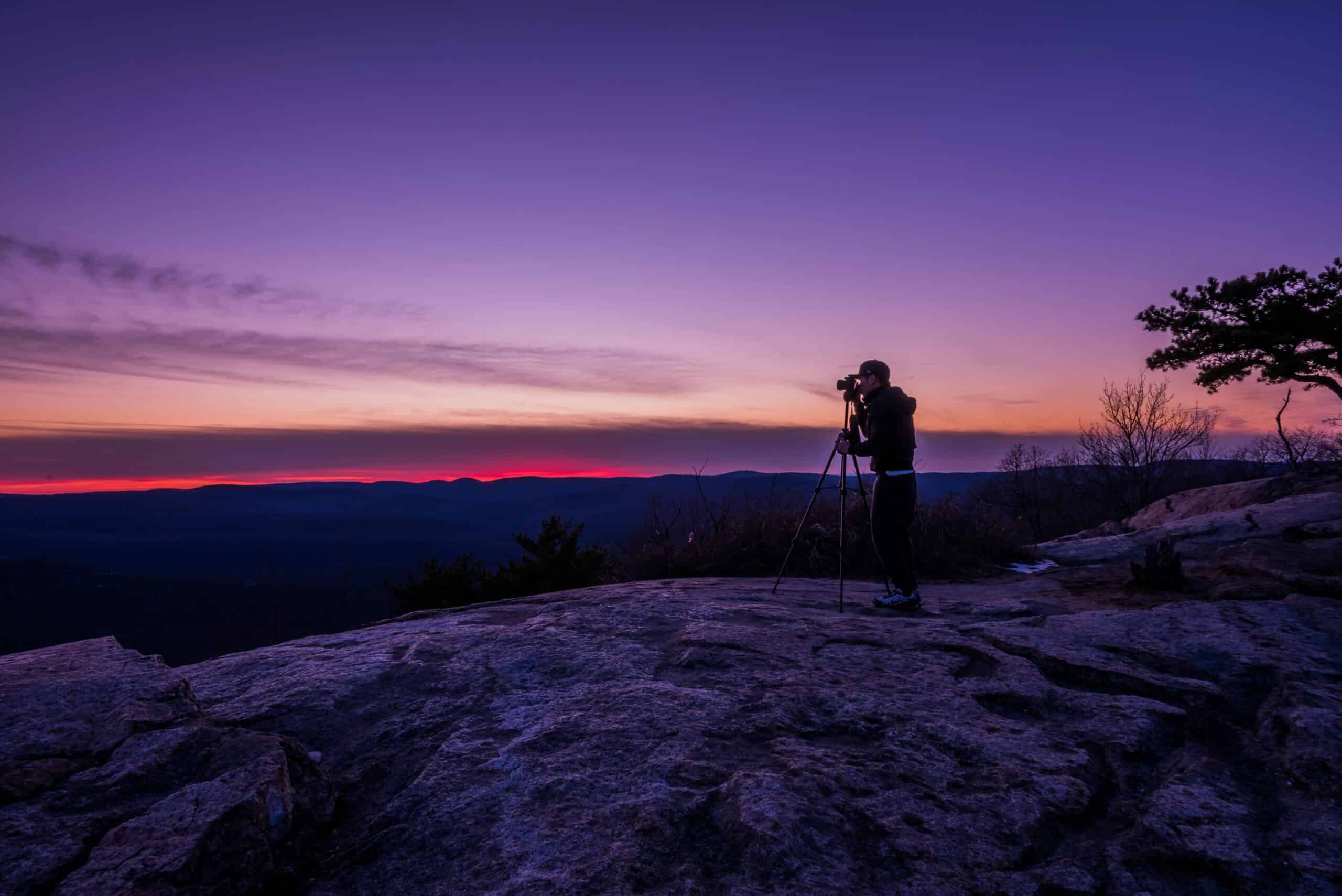
Essential Gear & Setup
Core Gear
- Panoramic head: Align the lens at its no‑parallax point so foreground and background don’t shift between frames. This is critical for clean stitches with rectilinear ultra‑wides.
- Stable tripod with leveling base: A 60–75 mm leveling bowl (or leveling base) speeds up setup and keeps rows aligned.
- Remote trigger or OM Image Share app: Prevents shake; use 2 s self-timer if you forget a remote.
Optional Add-ons
- Pole or car mount: Use a safety tether, mind wind gusts, and keep rotation slow to limit vibrations.
- Small LED panels for interiors: Lift shadows in dark corners so you can reduce HDR bracket width.
- Rain covers and microfiber cloths: The OM‑1 is well sealed, but the Sigma’s front element needs frequent care in drizzle or sea spray.
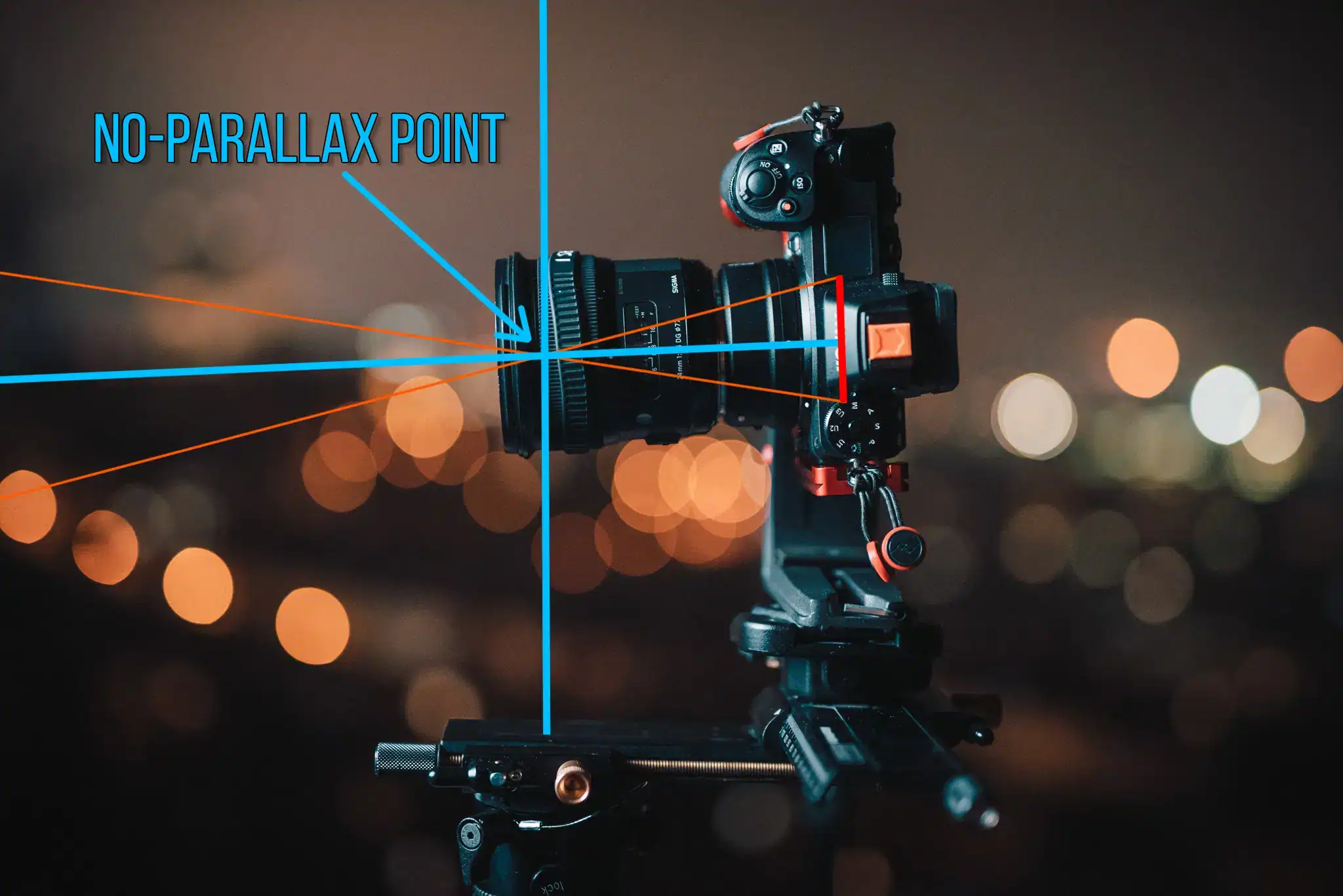
Deep dive on head setup: If you’ve never calibrated a panoramic head, this concise reference is excellent: How to set up a panoramic head for high‑end 360 photos.
Step-by-Step Shooting Guide
Standard Static Scenes
- Level the tripod and align the NPP. Use the OM‑1’s level gauge. Slide the rail until a near object and far edge line up during yaw tests.
- Switch to manual exposure and lock white balance. Set WB to Daylight (or a measured Kelvin) so each frame matches color for stitching.
- Focus manually at the hyperfocal distance. For an ultra‑wide equivalent around 14–20mm FF, f/8 with focus ≈1–1.5 m keeps most scenes sharp. Use magnified MF assist on the OM‑1.
- Shoot your rows with 25–35% overlap. Typical rectilinear plan on OM‑1 with a 7–10 mm native lens (≈14–20 mm FF eq): 8–10 frames around at +30°, repeat at −30°, add one zenith and 1–3 nadir frames.
- Take a nadir patch. Shoot one with the head offset or after lifting the tripod slightly to capture clean ground for tripod removal.
HDR / High Dynamic Range Interiors
- Bracket ±2 EV (3–5 frames). Indoors with bright windows, I often shoot 5 frames: −4, −2, 0, +2, +4 EV. The OM‑1’s bracketing is fast and consistent.
- Lock WB and aperture; vary shutter only. Aperture shifts change vignetting and DOF—bad for stitching.
- Keep ISO 200–400 for maximum latitude. Merge HDR per angle first (exposure fusion or true HDR), then stitch the merged set for best results.
Low-Light / Night Scenes
- Tripod, IBIS off, 2 s timer or remote. Use f/4–f/5.6, 4–15 s shutter, and ISO 200–800. The OM‑1 handles ISO 800 well; ISO 1600 is workable with good noise reduction.
- Capture extra overlap (35–40%). Long exposures amplify micro‑shake; more overlap gives the solver more control points.
Crowded Events
- Two passes: a “structure” pass for clean backgrounds and a second pass timing gaps in the crowd.
- Short shutters (1/200–1/500) at f/5.6–f/8 and ISO 400–800 to freeze motion. You’ll mask people in post using the cleaner pass as a base.
Special Setups (Pole / Car / Drone)
- Poles: Use a light panoramic head, tether the camera, keep shutter 1/250+ to fight sway. Consider a single-row capture with higher overlap.
- Car mounts: Park safely, turn off engine to reduce vibrations, add sandbags to the hood mount if used.
- Always plan slower rotation and redundant passes. Safety first—never deploy poles near power lines or high traffic.
Recommended Settings & Pro Tips
Exposure & Focus
| Scenario | Aperture | Shutter | ISO | Notes |
|---|---|---|---|---|
| Daylight outdoor | f/8–f/11 | 1/100–1/250 | 200 | Lock WB to Daylight; IBIS OFF on tripod |
| Low light/night | f/4–f/5.6 | 0.5–15 s | 200–800 | Remote trigger; extra overlap for solver |
| Interior HDR | f/8 | Bracket ±2 EV | 200–400 | Merge HDR per angle, then stitch |
| Moving subjects | f/5.6–f/8 | 1/200+ | 400–800 | Two passes; mask later |
Critical Tips
- Hyperfocal MF: For ≈14–20mm FF‑eq at f/8, set focus around 1–1.5 m; verify with magnified view. Turn off AF so it doesn’t jump mid‑pan.
- NPP calibration: Place a near object against a far line, yaw left/right, and slide the rail until the near object doesn’t shift relative to the background. Mark the rail for 14 mm and 24 mm positions.
- White balance lock: Mixed lighting? Set a custom Kelvin (e.g., 3400K in warm interiors) so all tiles match.
- RAW over JPEG: You’ll want RAW for exposure fusion, highlight recovery, and consistent color across frames.
- IBIS off on tripod: Stabilization can introduce micro-shifts between frames on solid support; turn it off for best alignment.
Stitching & Post-Processing
Software Workflow
For rectilinear ultra‑wide panos, PTGui is fast and robust; Hugin is a solid free alternative. My typical flow: batch-merge HDR per angle (if needed), feed merged exposures into PTGui, set lens type to rectilinear, estimate control points, optimize yaw/pitch/roll and lens parameters, set projection to equirectangular for a 360 photo, and render a 16‑bit TIFF. Fisheye lenses need fewer shots but add defishing steps; with rectilinear, plan for 25–35% overlap and possibly two rows around to cover zenith/nadir cleanly. For a deeper PTGui overview, this review is a good reality check: PTGui reviewed: fast and reliable stitching.
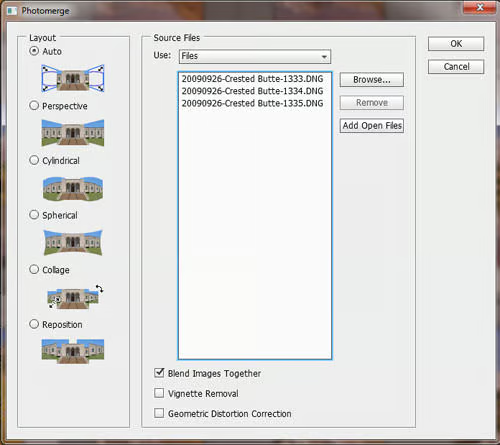
Cleanup & Enhancement
- Nadir patch: Clone/Heal in Photoshop or use AI-based patching. A dedicated nadir tile makes life much easier.
- Color and noise: Sync WB and tone curves across tiles; apply luminance NR conservatively (MFT at ISO 800–1600 benefits from extra care).
- Leveling: Use the horizon tool; set “Straighten” in PTGui or final rotation in your editor.
- Export: 16‑bit TIFF master and an 8K–16K equirectangular JPEG for platforms. For VR usage details, see Meta’s guidance: Using a mirrorless camera to shoot and stitch a 360 photo.
Reminder: Apps evolve. Check current documentation for your exact software version.
Short Video Primer
Prefer a quick visual refresher before your next shoot? This video covers essential panorama capture concepts:
Useful Tools & Resources
Software
- PTGui panorama stitching
- Hugin (open source)
- Lightroom / Photoshop for RAW, masking, and nadir patching
- AI tripod removal / inpainting tools
Hardware
- Panoramic heads: Nodal Ninja, Leofoto, and similar
- Carbon fiber tripod + leveling base
- Wireless remote shutters
- Pole extensions / car mounts (with safety tethers)
If you’re new to pano heads, this primer is a practical starting point: Panoramic head tutorial and tips.
Disclaimer: brand names above are for search reference; check official sites for specs and compatibility.
Common Mistakes & How to Avoid Them
- Parallax error: Always shoot from the no‑parallax point; mark your rail positions for 14 mm and 24 mm.
- Exposure flicker: Use full manual exposure and locked WB; avoid auto ISO for multi-tile captures.
- Tripod shadows: Shoot a separate nadir tile or move one leg between passes to make patching easier.
- Ghosting: For moving people or trees, capture two passes and mask the cleanest tiles in post.
- High ISO noise: Stay near ISO 200–400 whenever possible; at night, use longer shutters instead of pushing ISO.
Frequently Asked Questions
- Can I mount the Sigma 14–24mm f/2.8 DG DN Art directly on the OM‑1?
No. The DG DN (Sony E / L‑mount) cannot be adapted to Micro Four Thirds with a simple adapter. If you need the Sigma 14–24 on OM‑1, use the DSLR DG HSM (EF) version with an EF–MFT adapter (ideally a 0.71× speed booster), or use a native MFT ultra‑wide to replicate the FOV.
- Is the Sigma 14–24mm wide enough for a single‑row 360?
As a rectilinear lens: generally no. You’ll typically need two rows around (e.g., ±30° pitch) plus zenith and nadir. A circular fisheye can do single‑row 360s, but rectilinears require more frames and rows.
- What ISO range is safe on the OM‑1 for pano work?
For best dynamic range and color, ISO 200–400. ISO 800 remains very usable; ISO 1600 is workable with careful noise reduction. Prefer longer shutters over higher ISO for static scenes on a tripod.
- How do I avoid parallax issues with this setup?
Calibrate the no‑parallax point on your panoramic head. Slide the lens over the axis until a near object and distant line do not shift when you yaw. Record rail marks for your frequent focal lengths (e.g., 14 mm and 24 mm).
- Can I shoot handheld panoramas with the OM‑1?
For quick, non‑critical scenes: yes. Use high overlap (50%+), IBIS on, and fast shutter. But for professional 360s—especially interiors and architecture—use a tripod and pano head for reliable stitching and clean nadirs.
Practical Case Studies & Field Notes
Indoor Real Estate (Bright Windows)
On the OM‑1 with a rectilinear ultra‑wide equivalent, set f/8, ISO 200–400, bracket −2/0/+2 EV or up to five shots if window views are critical. Shoot two rows around with 30% overlap. Merge HDR per angle (exposure fusion for natural interiors), then stitch. Expect to patch the nadir; use a clean ground tile captured after lifting the tripod slightly.
Outdoor Sunset Cityscape
Lock WB around 5600–6200K. Shoot at f/8, ISO 200, with multi‑row capture to include zenith colors and skyline detail. For wind, add 35% overlap to help the solver counter minor sway. If reflections in glass cause flare, shade the front element and avoid pointing straight into the sun unless you bracket extra dark frames.
Event Crowds
Frame first at 1/250, f/5.6–f/8, ISO 400–800. Then wait for gaps and reshoot problematic angles. In post, pick the cleanest tiles using masks. A two‑pass method dramatically reduces ghosting.
Rooftop or Pole Shooting
Use the lightest panoramic head you trust, add a tether, and avoid gusty days. Rotate slowly and add overlap. If the pole flexes, raise shutter to 1/250–1/500 and take multiple passes to select the sharpest tiles.
Safety, Limitations & Workflow Insurance
- Wind + ultra‑wides = big sail area. Weigh down legs, keep the center column low, and use a tether.
- Turn off IBIS on tripod to avoid micro‑jitter between frames.
- Bulbous front element: keep the cap on until you shoot; wipe off salt spray frequently.
- Backup plan: shoot a full second pass and duplicate zenith/nadir. You’ll thank yourself later when you need a clean tile.
- Storage: Use fast UHS‑II cards and back up to a second card or a drive right after the shoot.
If you want more guidance on focal lengths and pano planning, this overview is helpful: Panoramas, focal lengths, and stitching basics.