Why This Camera & Lens Are Great for Panoramas
Looking for a lightweight, high-quality way to capture immersive 360° panoramas? Here’s how to shoot panorama with Olympus OM-1 & Pentax DA 10-17mm f/3.5-4.5 ED Fisheye—an unusual but powerful combo when you know the quirks. The OM SYSTEM OM-1 is a 20.4MP Micro Four Thirds mirrorless with a modern stacked BSI sensor, fast readout, excellent 5-axis IBIS, and strong weather sealing. It delivers clean files up to ISO 1600–3200 with usable dynamic range near base ISO (~12 EV in RAW), and the pixel pitch is about 3.3 µm—enough to retain fine texture in multi-image stitches.
The Pentax DA 10–17mm is a diagonal fisheye zoom designed for APS-C. Adapted to Micro Four Thirds, it still gives a very wide, curved perspective with an effective diagonal field of view around ~140–150° at 10mm (less than the 180° you’d expect on APS-C, but still plenty wide for spherical panoramas). The benefit: fewer shots needed, forgiving edges for control points, and compact size. Expect classic fisheye curvature, some edge CA and flare, but very good central sharpness stopped down.
Compatibility notes: you’ll need a Pentax K to Micro Four Thirds adapter. Because this DA lens has no aperture ring, pick an adapter with a mechanical aperture control lever so you can stop down to f/5.6–f/8; focus is manual only. On the OM-1, enable “Release without lens” and consider setting IBIS focal length manually for handheld work. With a calibrated panoramic head, this pairing is fully capable of professional 360° capture.
Quick Setup Overview
- Camera: Olympus OM-1 — Micro Four Thirds (17.3×13 mm), 20.4MP stacked BSI sensor, pixel pitch ~3.3 µm, excellent 5-axis IBIS.
- Lens: Pentax DA 10–17mm f/3.5–4.5 ED Fisheye — diagonal fisheye zoom; sharpest around f/5.6–f/8; some purple fringing at edges; flare-prone against strong light.
- Estimated shots & overlap (field-tested on MFT):
- At 10mm: 6 around at 60° yaw steps + 1 zenith + 1 nadir (25–30% overlap).
- At 14mm: 8 around + zenith + nadir (25–30% overlap).
- At 17mm: 10–12 around + zenith + nadir (25–30% overlap).
- Difficulty: Intermediate (requires adapter, manual aperture/focus, nodal calibration).
Planning & On-Site Preparation
Evaluate Shooting Environment
Survey light direction and contrast (sun, windows, mixed lighting), moving elements (people, traffic, trees), and reflective surfaces (glass, polished metal, water). For glass, get the front element as close as possible (or use a rubber lens hood) to minimize reflections and ghosting. Avoid strong backlight hitting the fisheye—flare is likely. If you can’t avoid it, shield the lens with your hand or body while keeping out of frame.
Match Gear to Scene Goals
The OM-1’s stacked sensor provides clean base ISO and fast readout. For interiors, ISO 200–800 keeps noise in check; ISO 1600–3200 is acceptable with noise reduction. The fisheye advantage is fewer shots, which reduces stitch seams and people-motion issues. The trade-off is distortion and a bit less ultimate edge sharpness; however, for 360 photo viewing, fisheye-based stitches are often cleaner than rectilinear alternatives. On Micro Four Thirds, the 10mm end is still wide enough for single-row spheres when combined with zenith and nadir shots.
Pre-shoot Checklist
- Charge batteries, format cards, turn on “Release without lens.”
- Clean lens front element (fisheyes see everything), check sensor, and carry a microfiber cloth.
- Level tripod quickly with a leveling base; verify panoramic head is calibrated for the lens.
- Safety: add a tether/strap on rooftops; watch wind; use a weighted bag for stability; for car mounts, double secure with safety lines.
- Backup: shoot an extra round at the same exposure, and a second round with exposure shifted by +0.7 EV if time allows.
Essential Gear & Setup
Core Gear
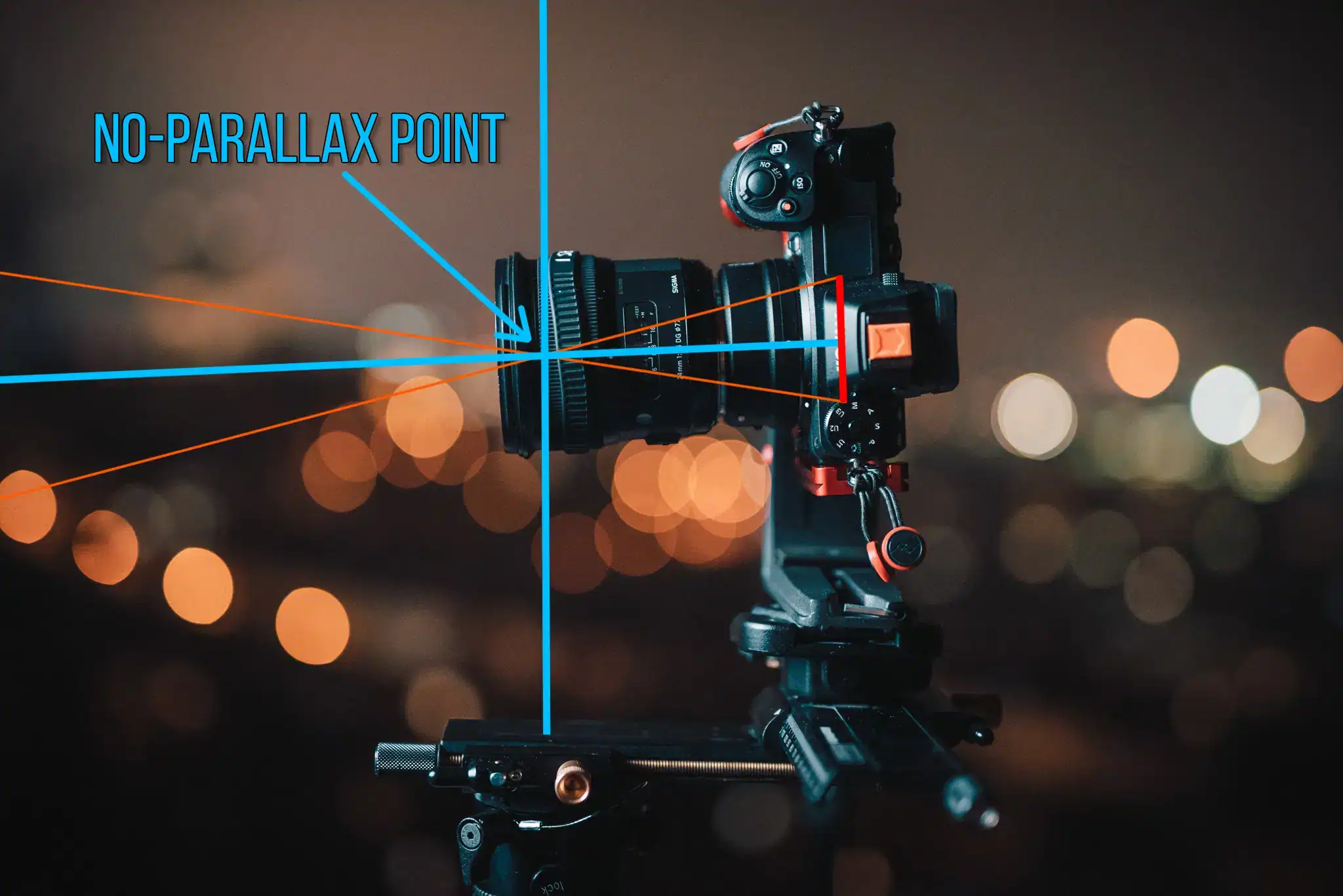
- Panoramic head: Aligns the lens’s entrance pupil (nodal point) over the rotation axis to suppress parallax. This is essential for interiors and scenes with near objects.
- Stable tripod with leveling base: A leveling base lets you find level once, then pan smoothly without re-leveling.
- Remote trigger or phone app: Use a wired remote or the OM Image Share app to fire the shutter and avoid vibrations.
Optional Add-ons
- Pole/car mount: Great for elevated or vehicle-based capture. Use a safety tether and be conservative with wind; longer poles flex, which blurs frames.
- Lighting aids: Small LED panels or bounced flashes to fill dark corners for real estate (avoid mixed WB if possible).
- Weather gear: Rain cover for the camera, microfiber cloths, and silica gel packs for humid environments.
New to pano heads and nodal alignment? A focused guide on panoramic head setup is invaluable for your first calibration session. Read this panoramic head tutorial for clear, practical steps.
Step-by-Step Shooting Guide
Standard Static Scenes
- Level the tripod and align the entrance pupil: With the camera on the panoramic head, aim at two vertical objects (near and far) that overlap in frame. Pan left/right. Adjust the fore-aft rail until their relative alignment doesn’t shift. On the DA 10–17 at 10mm, the entrance pupil is close to the front of the lens—use this as a starting point, then refine.
- Switch to Manual mode and lock white balance: Set exposure in manual so every frame matches. Lock WB to Daylight/Cloudy or a fixed Kelvin value (e.g., 5600K). Shoot RAW for maximum latitude.
- Capture the around shots: At 10mm, shoot 6 frames around at 60° yaw increments with ~25–30% overlap. If vertical coverage is tight, tilt the camera up 10–15° to increase sky coverage.
- Zenith and nadir: Tilt up 90° for the zenith. For nadir (ground), either tilt down 90° or shoot a handheld nadir frame after moving the tripod aside. Take a few extra nadir options for easy patching later.
HDR / High Dynamic Range Interiors
- Bracket ±2 EV (3 or 5 frames): The OM-1’s AE bracketing makes this easy. Keep the aperture fixed and adjust shutter speed.
- Lock WB: Consistent color across brackets reduces stitching mismatches and HDR merge shifts.
- Sequence: Shoot all brackets per angle before rotating to the next to reduce people and light changes between frames.
Low-Light / Night Scenes
- Exposure: Start around f/4–f/5.6, 1/30–1/60s, ISO 400–800 on tripod. If stars or city lights dominate, ISO 800–1600 can work with noise reduction in post.
- Stability: Use a remote and a 2s self-timer. Turn IBIS off on a tripod to avoid micro-drift; use electronic shutter or anti-shock mode.
- Focus: Use magnified MF and peaking; set focus near hyperfocal (~0.6–0.9 m at 10mm, f/8) for front-to-back sharpness.
Crowded Events
- Two passes: Make a fast first pass to secure coverage. Then wait for gaps and reshoot problem panels with fewer people in overlap zones.
- Masking: Later, blend clean areas using masks in PTGui or Photoshop to eliminate ghosting.
- Shutter speed: 1/200s+ reduces motion blur if people are close to the camera.
Special Setups (Pole / Car / Drone)
- Pole (elevated): Keep the pole vertical; rotate the camera, not the pole if possible. Shorter exposures (1/250s+) help fight sway. Always tether the rig.
- Car-mounted: Park safely; turn off engine to reduce vibration; shoot quickly between wind gusts. Use high overlap (30–40%) for stitch tolerance.
- Drone note: This lens/camera combo is not drone-friendly; use a gimbal/drone designed for 360 capture instead.
Real-World Mini Case Studies
Indoor Real Estate
Manual exposure at ISO 200–400, f/8, bracket ±2 EV to balance windows. Shoot 6-around + N/Z. Keep the camera high enough (1.4–1.6 m) to minimize furniture occlusion. Watch for mirrors and glass—stand aside and use a self-timer to stay out of reflections.
Outdoor Sunset Viewpoint
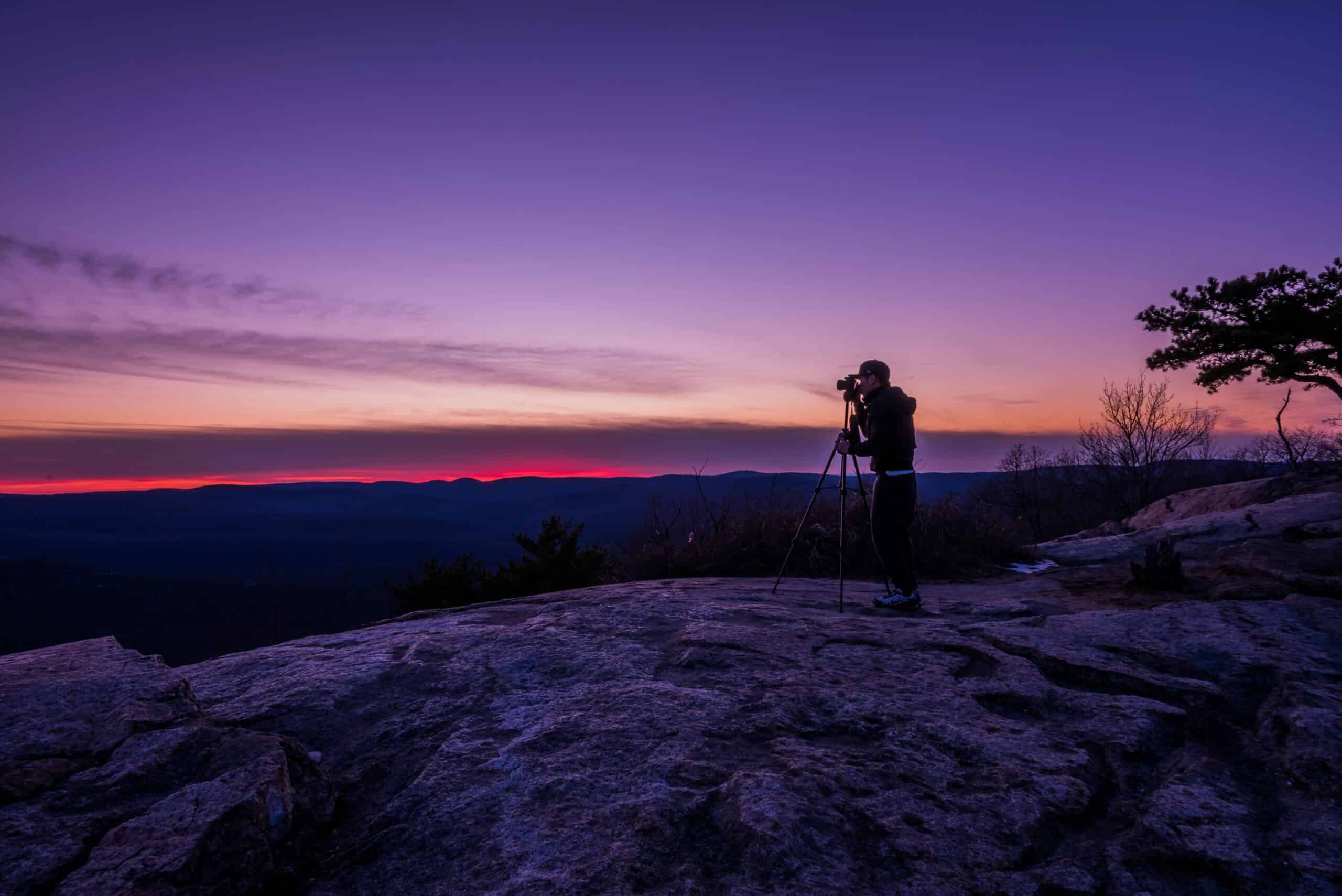
Expose for midtones; bracket if the sun is in frame. Flare control is key: shade the lens just outside the frame. ISO 200, f/8, 1/100–1/250s as a starting point. Take two zeniths: one with sun covered, one without, to patch if flare appears.
Rooftop with Wind
Lower tripod legs, add a weight bag, turn off IBIS, use 1/125–1/250s. If wind is gusty, shoot two full rounds and combine the sharpest frames in post.
Recommended Settings & Pro Tips
Exposure & Focus
| Scenario | Aperture | Shutter | ISO | Notes |
|---|---|---|---|---|
| Daylight outdoor | f/8–f/11 | 1/100–1/250 | 100–200 | Lock WB to Daylight; shoot RAW |
| Low light/night | f/4–f/5.6 | 1/30–1/60 | 400–800 | Tripod, remote, IBIS off |
| Interior HDR | f/8 | Bracket ±2 EV | 100–400 | Balance windows and lamps |
| Action / moving subjects | f/5.6–f/8 | 1/200+ | 400–800 | Freeze motion; double-pass technique |
Critical Tips
- Manual focus: Use magnification and peaking; at 10mm and f/8, set near hyperfocal (~0.6–0.9 m) to keep the scene sharp.
- Nodal point calibration: Do the near/far alignment test and mark the rail position with tape. Note the zoom position—calibration changes across 10–17mm.
- White balance lock: Mixed lighting? Choose a fixed Kelvin value and correct in post. Never use Auto WB for panos.
- RAW over JPEG: Gives more dynamic range and consistent tone mapping across frames.
- IBIS: Off on a tripod. For handheld panos, set IBIS focal length manually (10mm) since the lens is adapted with no electronic communication.
- Adapter choice: Use a K-to-MFT adapter with an aperture control lever to stop down to f/5.6–f/8; otherwise you’ll be stuck wide open.
Video: Visualizing the Pano Head Workflow
Watch a clear walkthrough on aligning a pano head and shooting the sequence. The concepts transfer directly to the OM-1 + fisheye workflow below.
Stitching & Post-Processing
Software Workflow
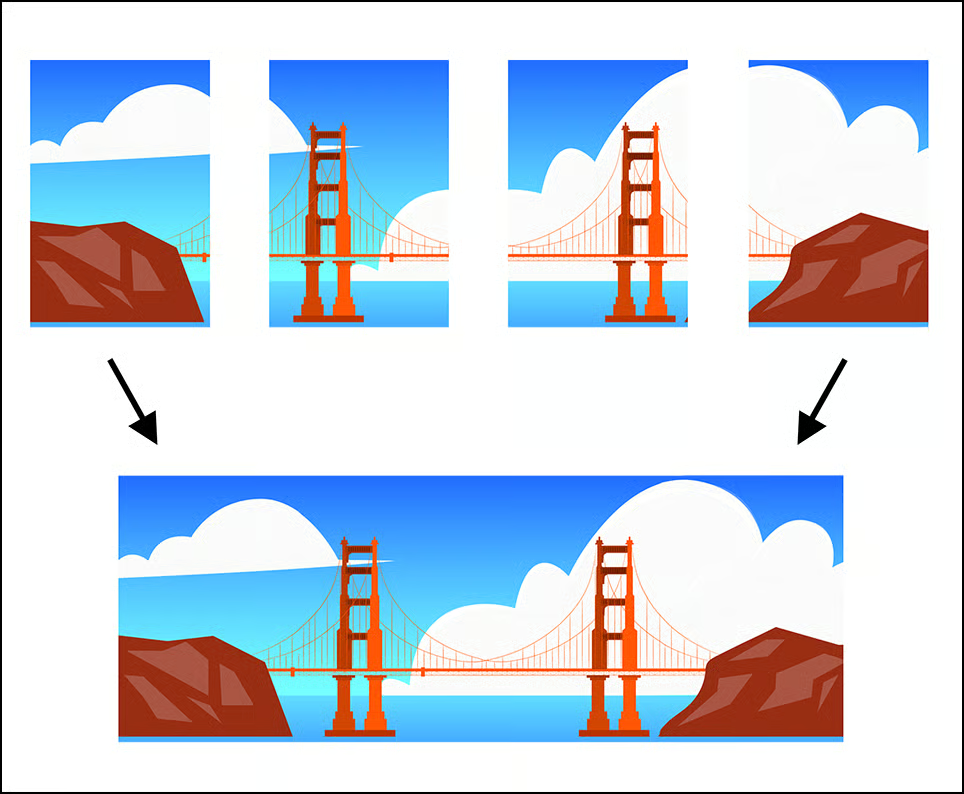
Fisheye panoramas stitch beautifully in PTGui or Hugin. Import the images, set lens type to fisheye (PTGui often detects this), and let the optimizer calculate control points. Typical overlap for fisheye is 25–30%; for rectilinear lenses, 20–25% can suffice. If you bracketed, first merge each angle’s bracket in HDR software (or PTGui’s HDR mode) before the global stitch, or use PTGui’s built-in exposure fusion workflow for speed. For professional virtual tours, PTGui remains the fastest and most robust option. See this PTGui review to understand why many pros rely on it.
Export as equirectangular at 8K (7680×3840) for lightweight web or 10–12K for higher fidelity. The OM-1’s 20MP sensor plus 6-around captures support crisp 10–12K output depending on overlap and sharpening. For VR publishing, follow platform guidelines for max resolution and JPEG quality. Oculus’s DSLR/mirrorless stitching guide is a good quick reference for VR specs.
Cleanup & Enhancement
- Nadir patch: Shoot a clean ground plate without the tripod or use AI-based removal tools or manual cloning.
- Color matching: Apply a global profile first, then local corrections. Keep sky color consistent across the zenith transition.
- Noise reduction: Apply before sharpening; for night scenes, consider a two-pass approach (luminance first, then mild chroma NR).
- Level horizon: Adjust roll/pitch/yaw so verticals are true; PTGui’s vertical lines tool helps.
- Deliverables: Export equirectangular JPEG (quality 90–95) for web or 16-bit TIFF for archival/retouching.
Note: Interfaces and features evolve—always check the latest documentation for your stitching software.
Useful Tools & Resources
Software
- PTGui panorama stitching
- Hugin (open source) for fisheye and multi-row workflows
- Lightroom / Photoshop for tone and cleanup
- AI tripod removal / object removal utilities
Hardware
- Panoramic heads (Nodal Ninja, Leofoto)
- Carbon fiber tripod + leveling base
- Wireless remote shutters / OM Image Share app
- Pole extensions and vehicle mounts with safety tethers
For foundational pano technique, see this concise primer: DSLR/virtual tour camera & lens guide.
Common Mistakes & How to Avoid Them
- Parallax error: Always align the entrance pupil using a pano head; verify with a near/far test.
- Exposure flicker: Manual exposure and locked WB only; never use Auto ISO or Auto WB for panos.
- Tripod shadows and footprints: Shoot a clean nadir or patch later.
- Ghosting in crowds: Use double-pass capture and mask the cleaner frames.
- High ISO noise at night: Use a sturdy tripod, longer shutter, and stay at ISO 200–800 when possible on the OM-1.
- Forgetting IBIS settings: Off on tripod; on for handheld, with manual focal length set to 10mm.
- Flare with fisheye: Avoid strong backlight or shade the lens carefully just outside the frame.
Frequently Asked Questions
-
Can I shoot handheld panoramas with the Olympus OM-1?
Yes for quick 360 photos outdoors. Turn IBIS on and set focal length to 10mm manually (since the lens is adapted). Use 6-around + zenith; skip a clean nadir or patch later. Expect slightly higher stitch errors versus tripod shots, especially indoors with near objects.
-
Is the Pentax DA 10–17mm wide enough on Micro Four Thirds for single-row 360?
At 10mm on MFT you won’t get a full 180° diagonal, but 6-around plus dedicated zenith and nadir frames reliably covers a sphere with comfortable overlap. At 14–17mm, plan on 8–12 around shots plus Z/N.
-
Do I need HDR for interiors with bright windows?
Usually yes. Bracket ±2 EV (3 or 5 frames) to retain window detail and clean shadow tones. Merge per angle first, then stitch, or use PTGui’s exposure fusion for speed.
-
How do I avoid parallax issues with this adapted fisheye?
Use a panoramic head and calibrate the entrance pupil at the exact zoom used. With the DA 10–17, the EP is near the front element at 10mm—dial fore-aft until near/far objects stay aligned while panning. Mark the rail so you can repeat it.
-
What ISO range is safe on the OM-1 in low light?
ISO 200–800 is very clean; ISO 1600–3200 is usable with NR; 6400 is last resort. On a tripod, prefer longer shutter over high ISO to maximize quality.
-
Can I set up Custom Shooting Modes for pano on the OM-1?
Yes—save a “Pano” preset (e.g., Manual exposure, fixed WB, MF with peaking, IBIS off, 2s timer) to a custom slot (C1–C4) for one-dial recall at jobs.
-
Which tripod head is best for this setup?
A compact, dual-rail panoramic head that allows fore-aft and vertical adjustment. Look for clear mm markings, a rotator with 60° detents, and a leveling base. Nodal Ninja and Leofoto models are popular and travel-friendly.