Why This Camera & Lens Are Great for Panoramas
The Olympus OM-1 paired with the Peleng 8mm f/3.5 creates a compact, rugged, and highly capable 360° panorama rig. The OM-1’s 20.4MP stacked BSI Micro Four Thirds sensor (approx. 17.3×13.0 mm, ~3.3 μm pixel pitch) delivers clean files with excellent color, strong weather sealing (IP53, when paired with sealed lenses), and class-leading in-body image stabilization (IBIS) for handheld or emergency handheld pano passes. In panorama workflows, the OM-1’s quick sensor readout helps when scenes include motion, while the mechanical shutter with anti-shock options keeps vibrations low on a tripod.
The Peleng 8mm f/3.5 is a manual, ultra-wide fisheye for DSLR mounts (commonly Nikon F/Canon EF) that adapts easily to Micro Four Thirds. On MFT, it projects a circular fisheye image with a ~180° field of view across the circle. This is a major benefit for 360 photography: you need fewer shots around to complete a full sphere, speeding capture and reducing stitching seams. Expect classic fisheye curvature, moderate chromatic aberration, and noticeable flare if the sun or bright lamps enter the frame—nothing a good hood angle, careful framing, and modern software can’t tame.
In practice, this combo shines in fast-moving environments (events, streets), tight interiors (real estate, cars), and travel scenarios where small size and reliability matter. The OM-1’s base ISO (200, with “Low” 100 available) offers solid dynamic range around 12 EV at base for a MFT body, and workable noise performance up to ISO 800–1600 for most 360 use cases. The manual-only Peleng forces best practices—manual focus and aperture—yielding consistent exposures and sharpness across the set.
Quick Setup Overview
- Camera: Olympus OM-1 — Micro Four Thirds, 20.4MP stacked BSI CMOS, strong weather sealing, excellent IBIS (turn off on tripod), 14-bit RAW in mechanical shutter.
- Lens: Peleng 8mm f/3.5 — circular fisheye (manual focus/aperture), sharpest around f/5.6–f/8, moderate CA, can flare with strong point light sources; adapted via Nikon F/EF to MFT.
- Estimated shots & overlap (field-tested):
- 4 shots around (yaw 90°) at 0° pitch + 1 zenith + 1 nadir (safe, clean seams).
- 3 shots around (yaw 120°) + 1 zenith (works outdoors with clear sky and low-detail nadir patch).
- For difficult textures or interiors: 6 around (yaw 60°) to increase overlap for robust stitching.
- Difficulty: Easy–Moderate (manual lens, but few frames to capture; requires nodal alignment).
Planning & On-Site Preparation
Evaluate Shooting Environment
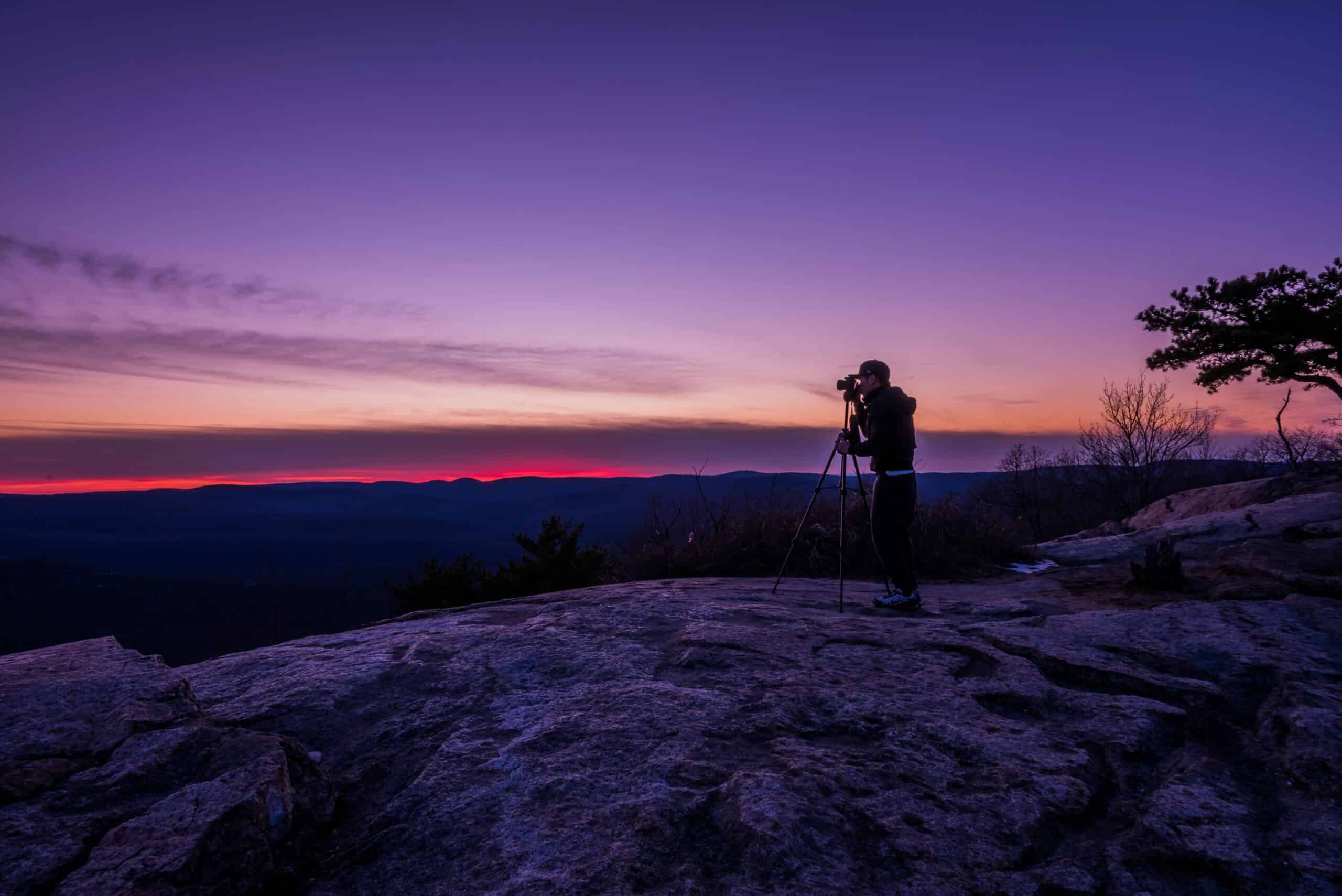
Look for moving subjects, flickering LED lights, reflections (glass, polished floors), and strong backlight sources. If shooting through glass, press your lens hood gently against the pane and keep the hood clean; the closer you are to the glass, the less internal reflections you’ll see. Avoid mixed lighting if possible; otherwise, you must lock white balance and correct color in post. In windy locations (bridges, rooftops), choose a wider stance for the tripod and keep your center column low for stability.
Match Gear to Scene Goals
The Olympus OM-1 & Peleng 8mm combo excels when you need speed and compactness. The OM-1’s dynamic range is sufficient for most outdoor scenes at base ISO; for interiors with bright windows, bracket exposures instead of raising ISO. Safe low-light ranges on the OM-1 are typically ISO 100–400 on a tripod for optimum quality, with clean results up to 800–1600 if shutter speeds must be kept short. The fisheye’s advantage is fewer shots and fast capture—ideal around crowds—but it introduces fisheye distortion that will be corrected by the stitching software. For critical architectural lines, ensure careful leveling and generous overlap.
Pre-shoot Checklist
- Charge batteries, ample storage; clean lens front element and the sensor.
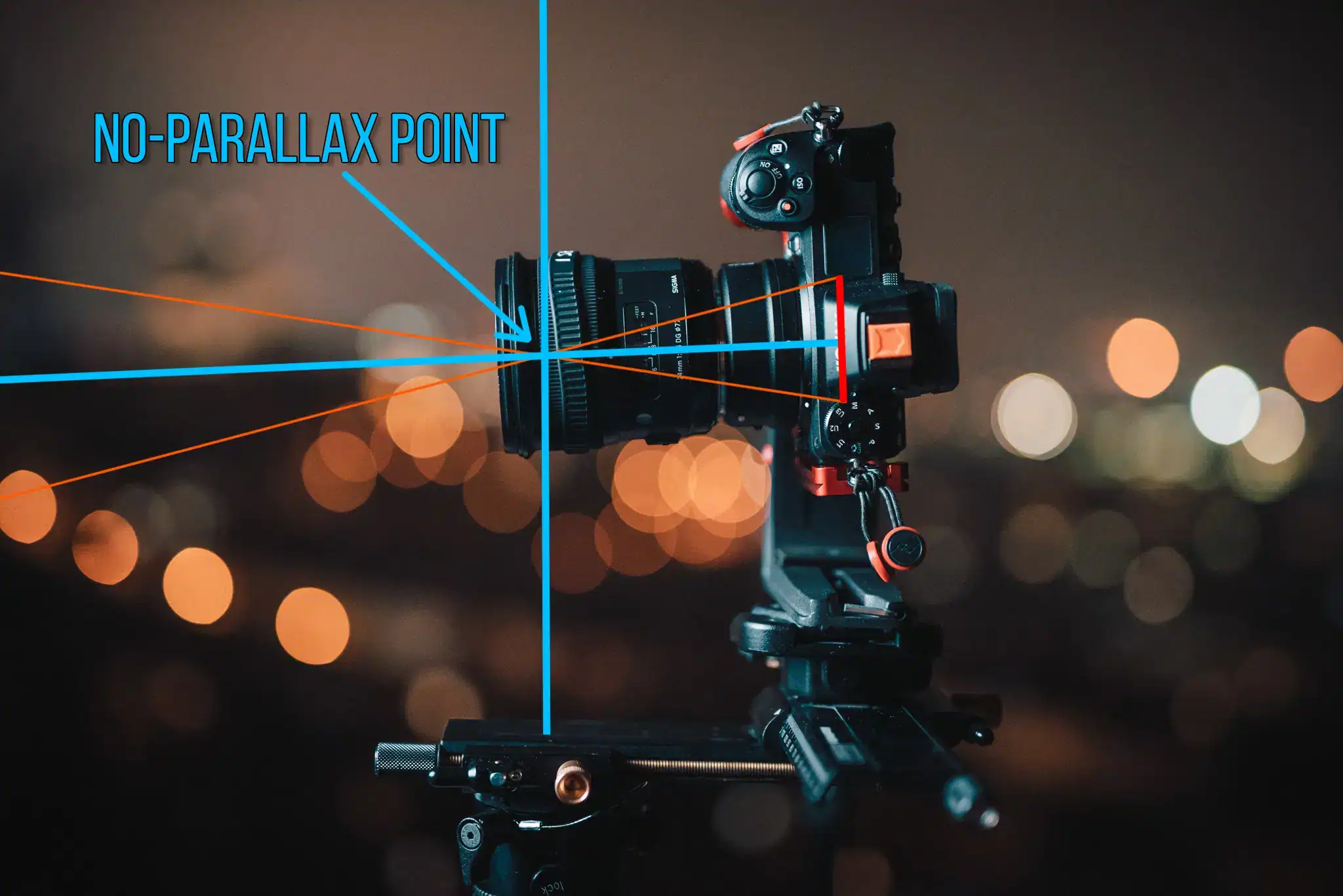
- Level the tripod, calibrate your panoramic head for the lens’s entrance pupil (no-parallax point).
- Safety: test stability in wind, use a safety tether on rooftops/poles, check traffic if car-mounted.
- Backup workflow: capture at least one extra round (and a backup nadir shot) before tearing down.
Essential Gear & Setup
Core Gear
- Panoramic head: Lets you rotate the camera around the lens’s entrance pupil, minimizing parallax between foreground and background so frames stitch cleanly.
- Stable tripod with leveling base: A levelling base speeds setup and keeps your horizon consistent, reducing roll correction later.
- Remote trigger or app: Use a cable release or the OM System app for vibration-free exposures and to avoid touching the camera.
Optional Add-ons
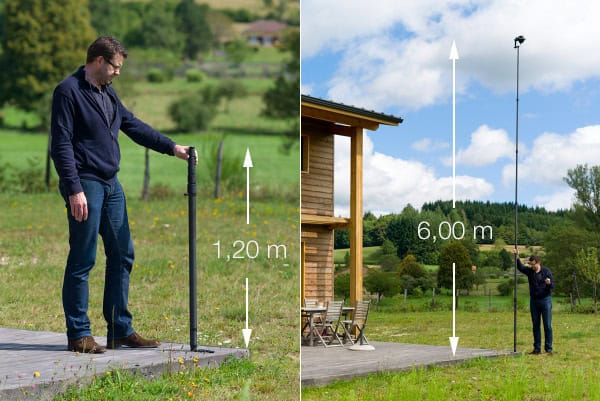
- Pole or car mount: Use a guy line and tether; consider wind load and vibration. Keep rotation smooth and slow.
- Lighting aids: Small LED panels for interior fill; avoid mixing color temperatures—set and lock white balance.
- Weather protection: Rain covers, silica gel packs, and a microfiber cloth for the fisheye’s exposed front element.
For a deeper primer on panoramic heads and alignment, see this panoramic head setup guide for structured best practices. Panoramic head tutorial
Step-by-Step Shooting Guide
Standard Static Scenes
- Level tripod & align nodal point: Mount the OM-1 + Peleng on your pano head. Slide the camera on the fore-aft rail until a near object and far object (overlapping the frame edge) maintain alignment as you pan left/right. Mark this position on the rail for speed next time.
- Manual exposure & white balance: Meter the brightest part of the scene you want detail in (e.g., sky). Set Manual mode; typical daylight baseline is 1/125s, f/8, ISO 200. Lock white balance (Daylight/Cloudy) to prevent color shifts between frames.
- Capture with consistent overlap: With the Peleng 8mm on MFT, shoot 4 frames around (90° yaw increments) at 0° pitch for a stable stitch. Keep overlap near 30%. Add 1 zenith (tilt up ~60–90°) and 1 nadir (tilt down ~60–90°) if you want perfect coverage.
- Nadir shot: If your pano head allows it, offset the camera for a clean nadir image. Otherwise, shoot a handheld nadir and patch later in post.
HDR / High Dynamic Range Interiors
- Bracket exposures: Use ±2 EV (3 or 5 frames) to balance bright windows and deep interior shadows. The OM-1’s auto bracketing works well; just keep all other settings manual and identical across frames.
- Lock white balance: Keep WB fixed for all exposures in the set. Mixed lighting benefits from a custom WB (shoot a gray card if possible).
- Mechanical shutter: To avoid flicker or LED banding, use the mechanical shutter; avoid silent/electronic under problematic lighting.
Low-Light / Night Scenes
- Tripod, IBIS off: On a solid tripod, disable IBIS so the sensor doesn’t try to “correct” motion. Use a remote trigger or 2s self-timer.
- Exposure strategy: f/4–f/5.6, 1/30–1/60s, ISO 400–800 is a good starting range. If star points matter, keep shutter short and accept ISO 1600; the OM-1 handles it decently with noise reduction later.
- Dark-frame subtraction: Consider in-camera long exposure NR for hot pixel control on exposures longer than ~1s.
Crowded Events
- Two passes: First pass for composition, second pass for “clean plates” when people move out of key overlap regions.
- High shutter speed: 1/200s or faster at f/5.6–f/8, ISO 800–1600 as needed, to freeze motion and reduce ghosting during stitching.
- Mask in post: In PTGui or similar, use masking to remove duplicates/ghosts and keep one consistent subject per area.
Special Setups (Pole / Car / Rooftop)
- Secure gear: Use a pole rated for your load, a strong clamp, and a safety tether. Balance the pole and avoid sudden swings.
- Wind awareness: Keep exposures short (raise ISO if necessary) and rotate slower to reduce motion blur between frames.
- Vehicle mounting: Only in safe, controlled environments; ensure all mounts are rated and checked. Plan routes to limit stop-and-go vibrations.
Recommended Settings & Pro Tips
Exposure & Focus
| Scenario | Aperture | Shutter | ISO | Notes |
|---|---|---|---|---|
| Daylight outdoor | f/8–f/11 | 1/100–1/250 | 100–200 | Lock WB (Daylight); mechanical shutter |
| Low light/night | f/4–f/5.6 | 1/30–1/60 | 400–800 (up to 1600 if needed) | Tripod & remote; IBIS off on tripod |
| Interior HDR | f/8 | Bracket ±2 EV | 100–400 | Balance windows & lamps; lock WB |
| Action / moving subjects | f/5.6–f/8 | 1/200+ | 400–800 | Freeze motion; consider two-pass capture |
Critical Tips
- Manual focus at hyperfocal: For 8mm on MFT at f/8, hyperfocal is roughly ~0.5–0.6 m. Set focus around 0.6 m to keep everything from ~0.3 m to infinity acceptably sharp.
- Nodal calibration: Calibrate once with near/far objects; mark the rail position for this OM-1 + Peleng combo so you can return to it instantly.
- White balance lock: Avoid mixing Auto WB across frames; a fixed Kelvin or preset (Daylight/Tungsten) stitches cleaner.
- RAW capture: Shoot RAW for maximum dynamic range and better CA/flare correction. JPEG is fine for quick drafts but limits correction latitude.
- IBIS & shutter: Turn IBIS off on a tripod; use anti-shock (0s or short delay) or 2s timer to avoid vibrations. Mechanical shutter prevents LED banding.
- Hi-Res mode: Not recommended for multi-shot panos; micro-movements and blending can complicate stitching.
Stitching & Post-Processing
Import your RAWs into your preferred editor to apply base corrections (lens CA, chromatic aberration, color balance) before stitching. With fisheye lenses like the Peleng 8mm, software such as PTGui and Hugin handles fisheye projections natively, making alignment straightforward with fewer images. Keep overlap ~25–30% for fisheye captures to ensure robust control point generation; rectilinear lenses typically need 20–25% overlap but many more shots. For a practical overview of professional pano workflows, see this guide from the Oculus team on DSLR/mirrorless 360 capture. Using a DSLR or mirrorless camera to shoot and stitch a 360 photo
Software Workflow
- Stitching: In PTGui, set lens type to “Fisheye” and approximate FOV to 180°. Load all frames, let the optimizer generate control points, then check the control point spread and outliers.
- Projection & horizon: Switch to equirectangular projection for 360 output. Use the horizon tool to level pitch/roll; check verticals near the center to reduce distortion.
- Masking: Use masks to remove your tripod, ghosts from moving subjects, and flare artifacts; PTGui’s mask brushes make this quick.
- Output: Export a 16-bit TIFF for finishing, and a high-quality JPEG (e.g., 8K–12K width) for web/VR publishing.
PTGui remains a gold-standard tool for speed and control; this review offers a succinct overview of strengths and workflow. PTGui: one of the best tools for creating incredible panoramas
Cleanup & Enhancement
- Tripod/nadir patch: Export a nadir tile, retouch in Photoshop or use AI-based tripod removal, then patch back. Alternatively, use a logo patch.
- Color and noise: Apply gentle noise reduction for ISO 800–1600 shots; match contrast and saturation across the sphere for consistency.
- Level horizon: Re-check at the end—small horizon errors are very noticeable in 360 viewers.
- Export formats: Equirectangular JPEG/PNG for web; 16-bit TIFF archive for future regrades; keep a stitched master before heavy edits.
For more background on expected pano resolution from different lens/body combos, this reference is handy for planning deliverable sizes. Panotools: DSLR spherical resolution
Useful Tools & Resources
Software
- PTGui panorama stitching (fast, robust fisheye handling)
- Hugin (open source, advanced control for power users)
- Lightroom / Photoshop / Affinity Photo (RAW prep and retouching)
- AI tripod removal tools (content-aware fill, generative tools)
Hardware
- Panoramic heads: Nodal Ninja, Leofoto
- Carbon fiber tripods with leveling base
- Wireless remotes or camera apps
- Pole extensions, vehicle mounts, safety tethers
Disclaimer: product names are for reference; check official documentation and specs for compatibility and safe use.
Field-Proven Scenarios
1) Indoor Real Estate
Use a tripod, 4-around + zenith, and a clean nadir. Bracket ±2 EV to tame bright windows, set WB to a neutral preset, and use mechanical shutter. Keep the camera height consistent (typically 1.4–1.6 m). The Peleng’s circular fisheye minimizes the number of shots, speeding your workflow across multiple rooms.
2) Outdoor Sunset
Meter for the sky highlights and slightly underexpose to protect color. Single exposure may be enough if the foreground is simple; otherwise, bracket 3 shots per angle. Lock focus at ~0.6 m at f/8, and keep the sun near the edge of a frame if flare becomes problematic. A lens hood angle or your hand as a flag can help; just remove it from overlapping frames later.
3) Event Crowds
Two fast passes: one “structure” pass to capture architecture and scene, a second to fill gaps without people blocking seams. The OM-1’s fast readout helps minimize subject displacement between frames. Prefer 4-around for cleaner overlaps.
4) Rooftop / Windy Locations
Use a wider tripod stance, lower the center column, and consider sandbags. Keep exposures short (1/125s+). If using a pole, never extend above safe wind limits—vibration will destroy stitch quality and risks damaging your gear.
5) Car-Mounted Capture
Mount only on rated suction/vibration-dampening systems. Plan your route with consistent speed to reduce frame-to-frame motion changes. Shoot bursts (e.g., 3-around) when stopped or moving slowly; avoid busy traffic scenes that make overlaps inconsistent.
For more foundational advice across camera/lens options for virtual tours, this guide is a solid reference. DSLR/virtual tour camera & lens considerations
Safety, Reliability & Backup Workflow
Always secure your setup—especially with poles or vehicle mounts—and avoid shooting in hazardous conditions. The OM-1’s weather sealing helps, but the Peleng’s large front element is exposed; carry a microfiber cloth and avoid rain spots. Keep a spare battery and card, and maintain a redundant capture plan (shoot a second 4-around set) in case of stitching surprises. In post, archive RAWs, stitched master TIFFs, and exported equirectangular JPEGs to at least two locations.
Inspiration & Visuals
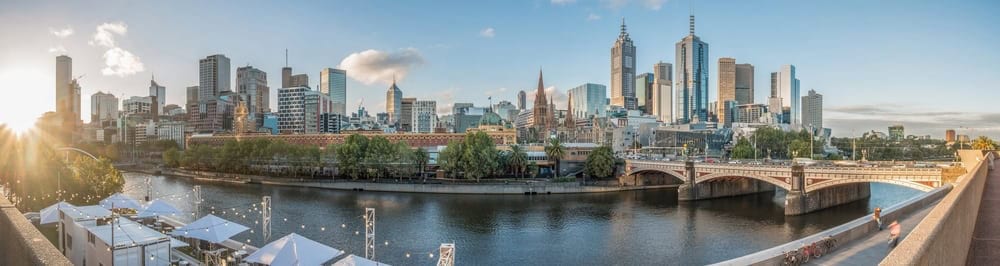
Common Mistakes & How to Avoid Them
- Parallax error: Not aligned with the entrance pupil. Solution: Calibrate and mark your rail position for the OM-1 + Peleng.
- Exposure flicker: Auto exposure or Auto WB changes across frames. Solution: Manual exposure and locked white balance.
- Tripod shadows and footprints: Plan a nadir shot and patch later; move your feet between frames if necessary.
- Ghosting from moving subjects: Two-pass strategy; mask in PTGui/Hugin during stitching.
- Night noise and blur: Use a stable mount, longer exposures with low ISO; if you must raise ISO, keep it within 800–1600 and denoise in post.
Frequently Asked Questions
- Can I shoot handheld panoramas with the OM-1?
Yes, but expect more stitching cleanup. IBIS helps stabilize single frames, but parallax rises when you rotate by hand instead of around the nodal point. Keep shutter speeds high (1/250s+), use 6–8 frames around for more overlap, and be ready to mask seams. For critical work, stick to a pano head.
- Is the Peleng 8mm f/3.5 wide enough for single-row 360?
Yes. On Micro Four Thirds it produces a circular fisheye image covering ~180° across. Typically 4-around + zenith + nadir is clean and reliable; in forgiving outdoor scenes, 3-around + zenith can work with a patched nadir.
- Do I need HDR for interiors with bright windows?
Often yes. Bracket ±2 EV (3–5 frames) at each angle to preserve window detail and interior shadows. Keep WB locked and use mechanical shutter to avoid flicker when lights are present.
- How do I avoid parallax issues with this setup?
Use a proper panoramic head. Calibrate by aligning near/far objects at the frame edge while panning; adjust fore-aft until the alignment doesn’t shift. Mark that position so you can repeat it every time with the OM-1 + Peleng.
- What ISO range is safe on the OM-1 for low light?
For tripod panos, keep ISO 100–400 for best quality; 800–1600 is usable if you need shorter shutter speeds. For very dark scenes, prioritize stability and stack noise reduction in post rather than pushing ISO too high.
- Can I set up Custom Modes for pano on the OM-1?
Yes. Save Manual exposure, WB preset, RAW, IBIS Off (for tripod), and 2s self-timer to a Custom mode (e.g., C1). Set a second custom mode (C2) for HDR bracketing to switch fast on interiors.
Further Learning
For a structured walkthrough on setting and using a panoramic head, this training covers best practices from calibration to capture. Set up a panoramic head to shoot high-end 360 photos