
Why This Camera & Lens Are Great for Panoramas
If you’re searching for how to shoot panorama with Olympus OM-1 & Nikon Z 20mm f/1.8 S, you’re probably after a sharp, low-distortion look with strong low-light capability. The OM System OM-1 is a rugged, weather-sealed Micro Four Thirds mirrorless camera with a 20.4MP stacked BSI sensor (approx. 17.3×13 mm; pixel pitch ~3.3 μm). It offers excellent IBIS, fast operation, and reliable color. The Nikon Z 20mm f/1.8 S is a full-frame rectilinear prime known for high edge-to-edge sharpness, low coma, and controlled chromatic aberration—fantastic traits for stitching clean panoramic images.
Important compatibility note: the Nikon Z 20mm f/1.8 S cannot be natively adapted to the OM-1 due to the Z-mount’s shorter flange distance. There is no practical mechanical adapter for native infinity focus from Nikon Z to Micro Four Thirds. To achieve a near-identical field of view on the OM-1, use a Micro Four Thirds rectilinear lens around 10mm (which is a 20mm full-frame equivalent). Good substitutes include the M.Zuiko 8-25mm f/4 PRO at 10mm, M.Zuiko 10-25mm f/1.7 PRO at 10mm, Laowa 10mm f/2, or Panasonic 10-25mm f/1.7 at 10mm. If you must use the Nikon Z 20mm f/1.8 S itself, pair it with a Nikon Z body. In this guide, all framing/shot-count recommendations assume a 20mm full-frame equivalent rectilinear field of view applied to the OM-1 using a native MFT lens around 10mm.
Why this approach is great: a rectilinear 20mm-eq gives a natural, straight-line perspective with minimal distortion—ideal for architecture, interiors, and scenes where straight edges matter. The OM-1’s dynamic range at base ISO is around 12 stops, which, combined with RAW capture and HDR bracketing, yields clean 360 photos in challenging contrast. Autofocus is fast, but for panoramas you’ll often switch to manual focus at a set hyperfocal distance for consistency.
Quick Setup Overview
- Camera: Olympus OM-1 — Micro Four Thirds (17.3×13 mm), 20.4MP stacked BSI Live MOS; excellent IBIS; base ISO 200; DR ~12 stops at base.
- Lens: Nikon Z 20mm f/1.8 S (reference FOV) — full-frame rectilinear prime, very sharp from f/2.8–f/8, low coma and CA, 77mm filter thread. On OM-1, use an MFT 10mm rectilinear to match this FOV.
- Estimated shots & overlap (20mm FF equivalent rectilinear for full 360×180):
- Three rows + zenith + nadir (safe): 8 shots at -45°, 8 shots at 0°, 8 shots at +45°, plus 1 zenith and 1–3 nadir cleanup shots. Total ≈ 26–28 frames.
- For cylindrical (single row, ~120–180° FOV): 6–8 shots around with 25–30% overlap.
- Difficulty: Moderate (precise nodal alignment and methodical capture required).
Planning & On-Site Preparation
Evaluate Shooting Environment
Survey light, reflections, and motion. For interiors, note glass, mirrors, and glossy tiles—anything reflective increases the chance of stitching artifacts. If shooting through windows, keep the front element close (2–5 cm) to reduce reflections; use a rubber hood and shoot perpendicular to the glass. Outdoors, watch the sun’s position to prevent harsh flare and shadow seams. Wind can shake poles or tripods and introduce blur in long exposures—use sandbags or a weight hook.
Match Gear to Scene Goals
With the OM-1, ISO 200–800 yields clean files; ISO 1600 is usable with conservative noise reduction. For interiors with bright windows, bracket for HDR. A rectilinear 20mm-eq requires more frames than a fisheye but preserves straight lines—ideal for real estate and architecture. The Nikon Z 20mm f/1.8 S is optically superb; on the OM-1, use a 10mm rectilinear MFT lens to match its look and coverage.
Pre-shoot Checklist
- Charge batteries; bring spares. Use high-speed, high-capacity UHS-II cards.
- Clean lens and sensor; a single dust spot becomes 30+ clone jobs in a pano.
- Level tripod; verify panoramic head calibration and nodal alignment.
- Safety: check wind forecasts for rooftop/pole work; tether camera on poles and cars.
- Backup workflow: shoot a second full round at the same settings; you’ll appreciate redundancy if one frame is soft or blocked.
Essential Gear & Setup
Core Gear
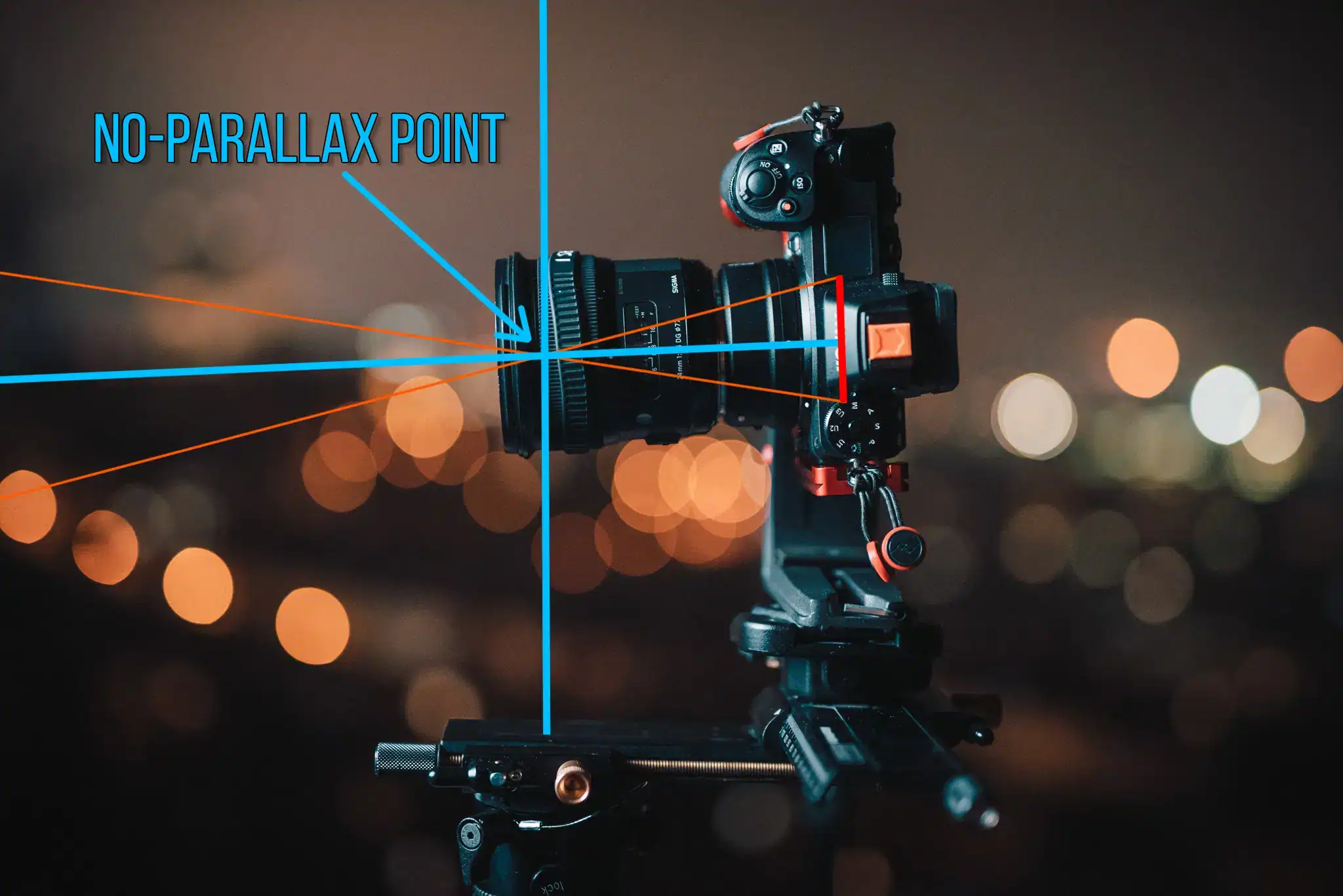
- Panoramic head: Controls rotation around the lens’s no-parallax (entrance pupil) point to prevent parallax. Calibrate for your body/lens combo so foreground and background elements don’t shift between frames.
- Stable tripod with a leveling base: Leveling speeds up rotation consistency and reduces stitching correction later.
- Remote trigger or camera app: Use a cable release or the OM System app to fire the shutter without touching the camera. This minimizes vibrations.
Optional Add-ons
- Pole or car mount: Amazing vantage points, but always use safety tethers and consider wind load. Avoid long exposures in gusty conditions.
- Lighting aids: Small LED panels for interiors to fill dark corners subtly; avoid changing the scene’s light balance between frames.
- Weather protection: Rain covers, silica packs, and a microfiber kit if shooting in misty or coastal locations.
Step-by-Step Shooting Guide
Standard Static Scenes
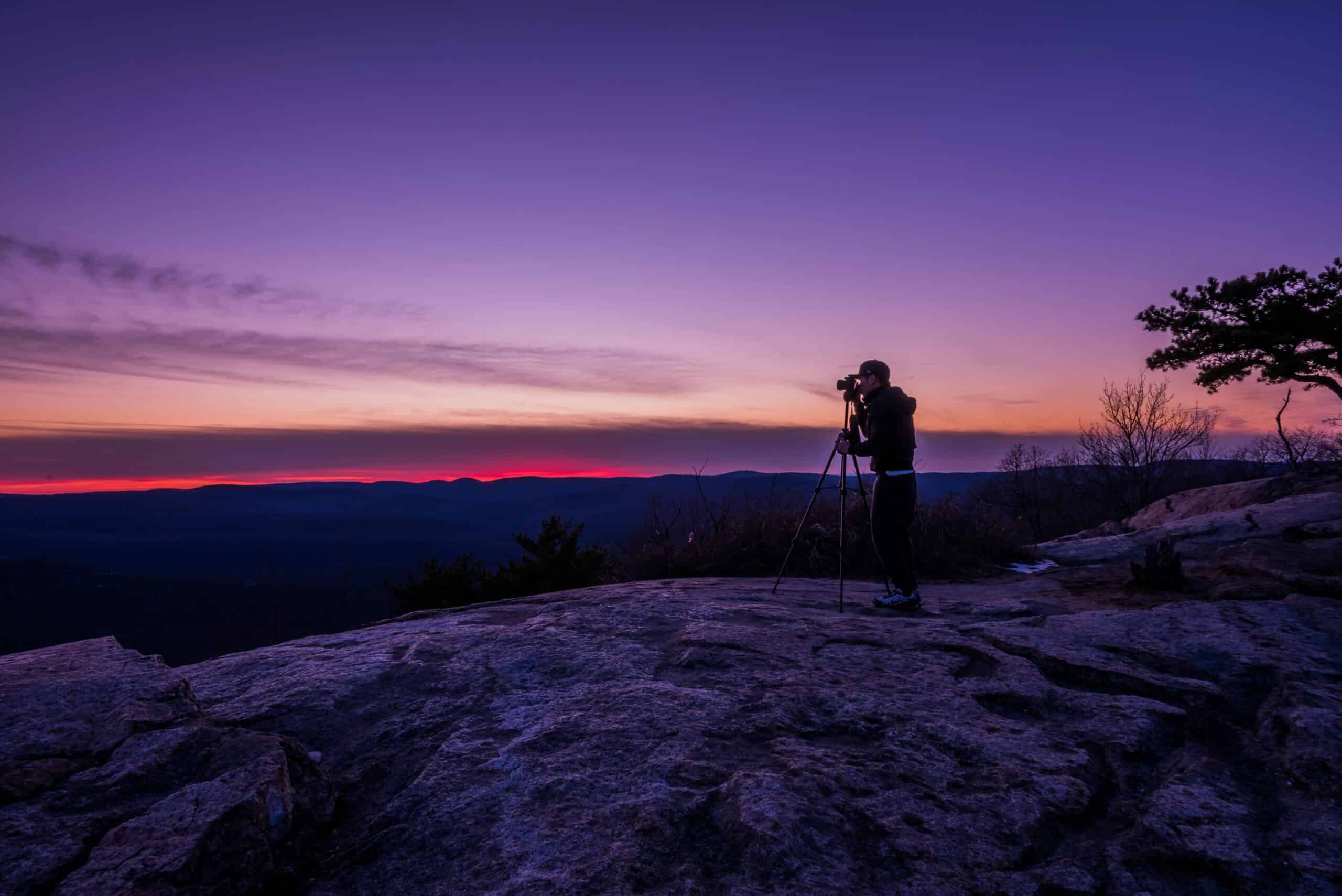
- Level and lock: Level the tripod using the base or leveling bowl. A level start equals easier stitches.
- Align the nodal point: On your pano head, adjust the fore-aft rail so that when you pan, near and far objects stay aligned at the frame edges. Make a pencil mark on your rail for this camera/lens combo to speed up future setups.
- Manual exposure and white balance: Set M mode. Meter the brightest part you want to preserve, then expose to retain highlight detail. Lock WB (e.g., Daylight/Tungsten) to prevent color shifts across frames.
- Manual focus: Set focus slightly beyond hyperfocal for maximum depth at f/8–f/11. Use magnified live view to confirm.
- Capture pattern (20mm FF-eq): For full 360×180, shoot:
- +45° pitch: 8 frames around (45° yaw increments).
- 0° pitch (horizon): 8 frames around.
- -45° pitch: 8 frames around.
- Zenith: 1–2 frames tilting up 90°.
- Nadir: 1–3 frames, move the tripod or shoot an off-center handheld frame to patch the ground.
- Check coverage: Quickly scan the thumbnails to ensure there are no gaps, blinks, or motion-induced blur.
HDR / High Dynamic Range Interiors
- Bracket exposures: Use ±2 EV (3–5 frames) or ±2 EV with 5–7 frames if windows are extremely bright. The OM-1’s bracketing and self-timer help automate this.
- Maintain consistency: Keep WB locked; don’t change lighting mid-sequence. Use the same bracket set for every camera position.
- Silence the scene: Ask people to pause while you complete a bracket at each angle to avoid ghosting.
Low-Light / Night Scenes
- Exposure strategy: Start at f/4–f/5.6, ISO 200–800, and adjust shutter for proper exposure. Use longer exposures rather than pushing ISO above 1600 on OM-1 unless necessary.
- Stability: Turn IBIS off on a locked tripod to avoid micro-corrections. Use a remote release. Enable electronic first curtain or full electronic shutter to reduce vibration.
- Beware light trails: If moving cars or people are present, either embrace the trails for effect or time shots between traffic waves.
Crowded Events
- Two-pass method: First pass for coverage, second pass to capture cleaner backgrounds when crowds open momentarily.
- Mask in post: Use PTGui or Photoshop masks to blend frames with the fewest moving subjects.
- Shorter shutter: Aim for 1/200 s+ if you need to freeze motion; raise ISO modestly (up to 800–1600) and open aperture if required.
Special Setups (Pole / Car / Drone)
- Secure everything: Tether the camera and use safety lines. A dropped rig is unsafe and ruins the project.
- Slow rotation: On poles and moving platforms, rotate slower and shoot at faster shutters to reduce motion blur.
- Vibration control: Add vibration-damping mounts and avoid windy days with long poles.
Recommended Settings & Pro Tips
Exposure & Focus
| Scenario | Aperture | Shutter | ISO | Notes |
|---|---|---|---|---|
| Daylight outdoor | f/8–f/11 | 1/100–1/250 | 100–200 | Lock WB (Daylight); manual focus near hyperfocal |
| Low light/night | f/4–f/5.6 | 1/30–multi-sec | 200–800 (1600 max) | Tripod + remote; IBIS off on tripod |
| Interior HDR | f/8 | Bracket ±2 EV (5–7 frames) | 200–400 | Balance windows and lamps; keep WB fixed |
| Action / moving subjects | f/5.6–f/8 | 1/200+ | 400–800 | Two-pass method; mask later |
Critical Tips
- Manual focus at hyperfocal: For a 10mm MFT rectilinear at f/8, focusing a few feet/meters out renders most of the scene sharp.
- Nodal point calibration: Place two vertical objects (one close, one far) near the frame edge. Pan the camera. If they shift relative to each other, adjust the fore-aft rail until the shift disappears. Mark the rail for repeatability.
- White balance lock: Keeps color consistent across all frames—vital for clean stitches and natural lighting.
- RAW over JPEG: Maximizes dynamic range and color depth, especially important for HDR interiors and dusk scenes.
- IBIS on/off: Handheld panos can benefit from IBIS; for tripod-mounted panos, turn it off to prevent micro-movements.
Stitching & Post-Processing
Software Workflow
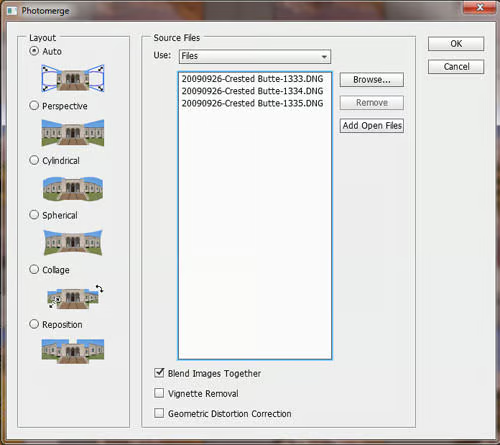
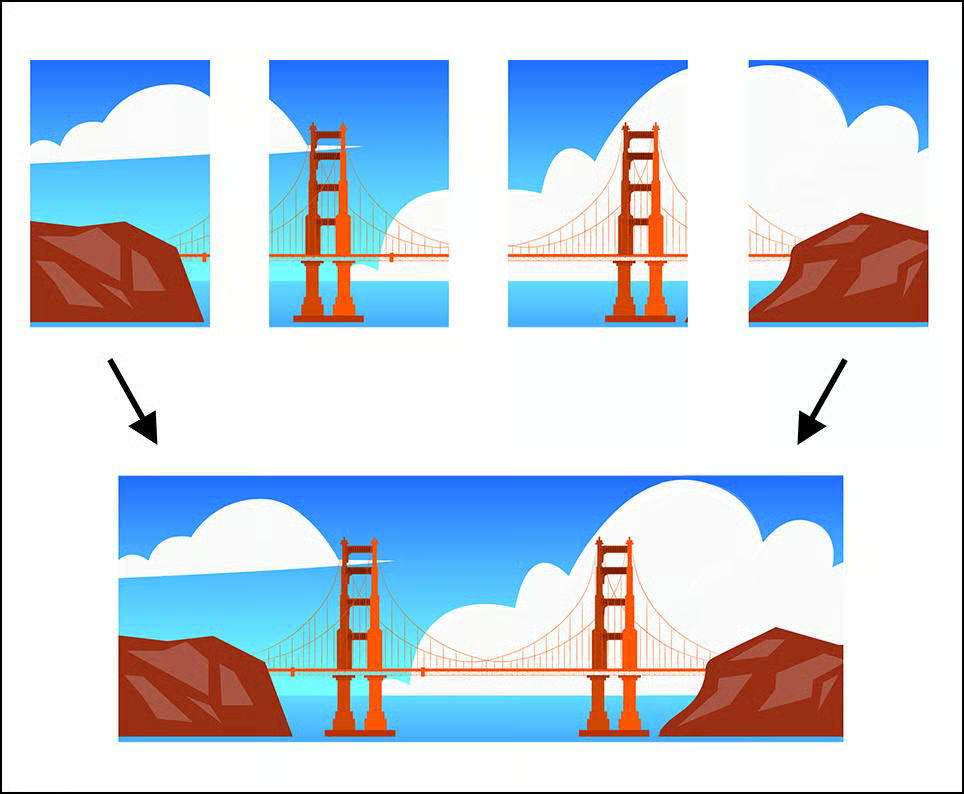
Import RAWs into Lightroom, Capture One, or OM Workspace for base adjustments (lens corrections off for pano work, unless your stitcher handles them consistently). Export 16-bit TIFFs or feed RAWs directly into PTGui/Hugin. For rectilinear lenses, keep 20–25% overlap minimum; with fisheyes 25–30% is typical. PTGui excels with complex multi-row panos and masking moving subjects. Hugin is a robust open-source alternative. For VR output, export an equirectangular 2:1 image (e.g., 12,000×6,000 for 72MP) and validate seams in a 360 viewer.
For a deeper dive on setting up and using a high-end panoramic head, see the Oculus creator guide on panoramic head setup. Set up a panoramic head to shoot perfect high‑end 360 photos
PTGui is a favorite among professionals for speed and control point management; Fstoppers’ review covers why it’s a top choice. PTGui: one of the best tools for creating incredible panoramas
Cleanup & Enhancement
- Nadir patching: Shoot a separate clean floor plate (move tripod aside) and patch in Photoshop, or use AI-based tripod removal tools.
- Color and noise: Balance color across rows, reduce noise in shadows for night/HDR shots, and apply sharpening after resizing.
- Leveling: Use the horizon/vertical guides in PTGui/Hugin or in Photoshop to correct roll/pitch/yaw.
- Export: Save a high-quality JPEG (quality 10–12) for web or a 16-bit TIFF master for archival/print. For VR platforms, export an equirectangular JPEG with embedded metadata if required.
If you’re new to panoramic heads and no-parallax alignment, this concise tutorial from 360 Rumors is a solid reference. Panoramic head tutorial
Disclaimer: Always check the latest software documentation; interfaces and features evolve.
Useful Tools & Resources
Software
- PTGui (advanced stitching, HDR, masking)
- Hugin (open-source stitching)
- Lightroom / Photoshop (RAW development, cleanup, nadir patches)
- AI tripod removal and content-aware fill tools
Hardware
- Panoramic heads: Nodal Ninja, Leofoto, Sunwayfoto
- Carbon fiber tripods with leveling bases
- Wireless remote shutters and intervalometers
- Pole extensions and vehicle mounts with safety tethers
Disclaimer: Brand names are for search reference only—verify specs and compatibility on official product pages.
Common Mistakes & How to Avoid Them
- Parallax errors: Always rotate around the lens’s no-parallax point using a calibrated pano head.
- Exposure flicker: Shoot full manual exposure and lock white balance.
- Insufficient overlap: Maintain 25–30% overlap; it’s better to overshoot than to leave gaps.
- Tripod in the nadir: Shoot a clean floor plate or plan a patch in post.
- High ISO noise at night: Keep ISO as low as practical and lengthen shutter on a solid tripod.
- Inconsistent focus: Use manual focus and don’t touch the ring once set.
Field-Proven Scenarios
Indoor Real Estate
Mount your OM-1 on a panoramic head and use a 10mm MFT rectilinear lens to emulate the Nikon Z 20mm FOV. Shoot at f/8, ISO 200–400, and bracket ±2 EV (5 frames) to balance windows and interior lighting. Take your time with nodal alignment—straight walls and door frames reveal even tiny errors. A three-row capture (±45°, 0°) ensures ceiling and floor coverage without stretching the edges excessively.
Outdoor Sunset
Expose for the highlights and bracket two extra exposures to recover shadows. For the OM-1, ISO 200 at f/8 is a good starting point. Be mindful of flare; use your hand or a flag to shade the lens if the sun is just outside the frame. Consider shooting the sun position last, so you can quickly grab a second pass if clouds shift.
Crowded Event
Adopt the two-pass method with faster shutters (1/200 s) and ISO 400–800. Mark your pano head positions so you can return to exact yaw angles for the second pass. In post, mask in whichever frame has the cleanest people placement for each sector.
Rooftop or Pole Capture
Use a compact, lightweight 10mm lens for better balance. Keep exposures short (1/125–1/250 s) and capture extra overlap in case a gust moves the rig. Safety tethers and a second person spotting are mandatory for urban environments.
Frequently Asked Questions
-
Can I mount the Nikon Z 20mm f/1.8 S on the Olympus OM-1?
Not practically. The Z-mount’s shorter flange distance means there’s no simple adapter to achieve infinity focus on Micro Four Thirds. To match its FOV, use a native MFT 10mm rectilinear lens on the OM-1, or use the Nikon lens on a Nikon Z body.
-
Is a 20mm full-frame equivalent wide enough for single-row 360 photos?
It’s fine for cylindrical panoramas, but for full spherical 360×180 you’ll need multiple rows. Expect around 3 rows of 6–8 shots each, plus zenith and nadir frames, to ensure full coverage and clean stitching.
-
Do I need HDR for interiors with bright windows?
Usually yes. Bracket ±2 EV (5–7 frames) to preserve both window views and interior details. Merge in your stitcher (PTGui) or pre-merge to HDR TIFFs before stitching, keeping WB consistent.
-
What ISO range is safe on the OM-1 in low light?
ISO 200–800 is very clean. ISO 1600 is workable with noise reduction. Prefer longer shutter speeds on a sturdy tripod instead of pushing ISO too high.
-
How do I avoid parallax issues with this setup?
Use a calibrated panoramic head and align the camera to rotate around the lens’s entrance pupil. Mark your rail position for the OM-1 with your chosen 10mm MFT lens so it’s repeatable every shoot. For fundamentals, see this panoramic head tutorial. Understanding and setting the no‑parallax point