Why This Camera & Lens Are Great for Panoramas
If you’re wondering how to shoot panorama with Olympus OM-1 & Nikon Z 14-24mm f/2.8 S, here’s the short answer: both are top-tier tools for panoramic work, but they are not natively compatible with each other. The Olympus OM-1 is a Micro Four Thirds mirrorless body with a 20.4MP stacked BSI sensor (17.3 × 13.0 mm, roughly 3.3 µm pixel pitch), outstanding weather sealing, and class-leading IBIS. The Nikon Z 14-24mm f/2.8 S is a full-frame, rectilinear ultra-wide zoom renowned for sharpness and low distortion—excellent traits for seamless stitching. However, due to flange distance differences, there is no standard adapter that allows a Nikon Z lens to mount to a Micro Four Thirds camera while maintaining infinity focus.
Practical paths forward:
- Use the OM-1 with a Micro Four Thirds ultra-wide lens that matches the 14–24mm full-frame field of view (e.g., Olympus M.Zuiko 7–14mm f/2.8 PRO). The shooting workflow below applies directly.
- If you must use the Nikon Z 14–24mm f/2.8 S specifically, pair it with a Nikon Z body. The capture principles, overlap percentages, and stitching workflow in this guide remain valid.
Why this combo conceptually shines for panoramas: the OM-1’s rugged build and IBIS let you shoot in wind, rain, and low light, while an ultra-wide rectilinear zoom (whether 7–14mm on OM-1 or 14–24mm on full-frame) produces low-distortion tiles that stitch predictably. Compared with fisheye options, rectilinear lenses require more shots but offer more natural perspective (especially for architecture and real estate), with reduced fisheye stretching near the edges.
Quick Setup Overview
- Camera: Olympus OM-1 — Micro Four Thirds, 20.4MP stacked BSI sensor, strong weather sealing, excellent IBIS, robust battery life for long multi-row sessions.
- Lens: Nikon Z 14-24mm f/2.8 S — rectilinear ultra-wide zoom, exceptional corner-to-corner sharpness, low coma/CA, hood supports 112mm front filters and a rear gel holder (when used on Nikon Z bodies). Note: not mountable on OM-1; use a 7–14mm MFT lens to match FOV.
- Estimated shots & overlap (rectilinear):
- On OM-1 at 7mm (≈14mm FF equiv): three rows of 8 shots each (−45°, 0°, +45°), plus 1 zenith and 2 nadir shots. Total ≈ 27–30 images (30–35% horizontal overlap).
- On OM-1 at 10–12mm (≈20–24mm FF equiv): three rows of 10–12 per row, plus zenith/nadir (≈ 35–42 images).
- On full-frame at 14mm: often 8–10 per row across three rows, plus zenith/nadir.
- Difficulty: Intermediate to Advanced (rectilinear lenses need multi-row capture and precise nodal point alignment).
Planning & On-Site Preparation
Evaluate Shooting Environment
Start by reading the light and the space. For interiors, identify mixed lighting sources (daylight and tungsten/LED) and reflective surfaces (glass, polished stone) that can cause flare and ghosting. For exterior panoramas, note wind, direct sun angles, and moving elements like crowds, cars, or foliage. When shooting through glass, get the front element close to the glass (1–2 cm), shade the lens with your hand or a rubber hood, and shoot at a slight angle to minimize reflections.
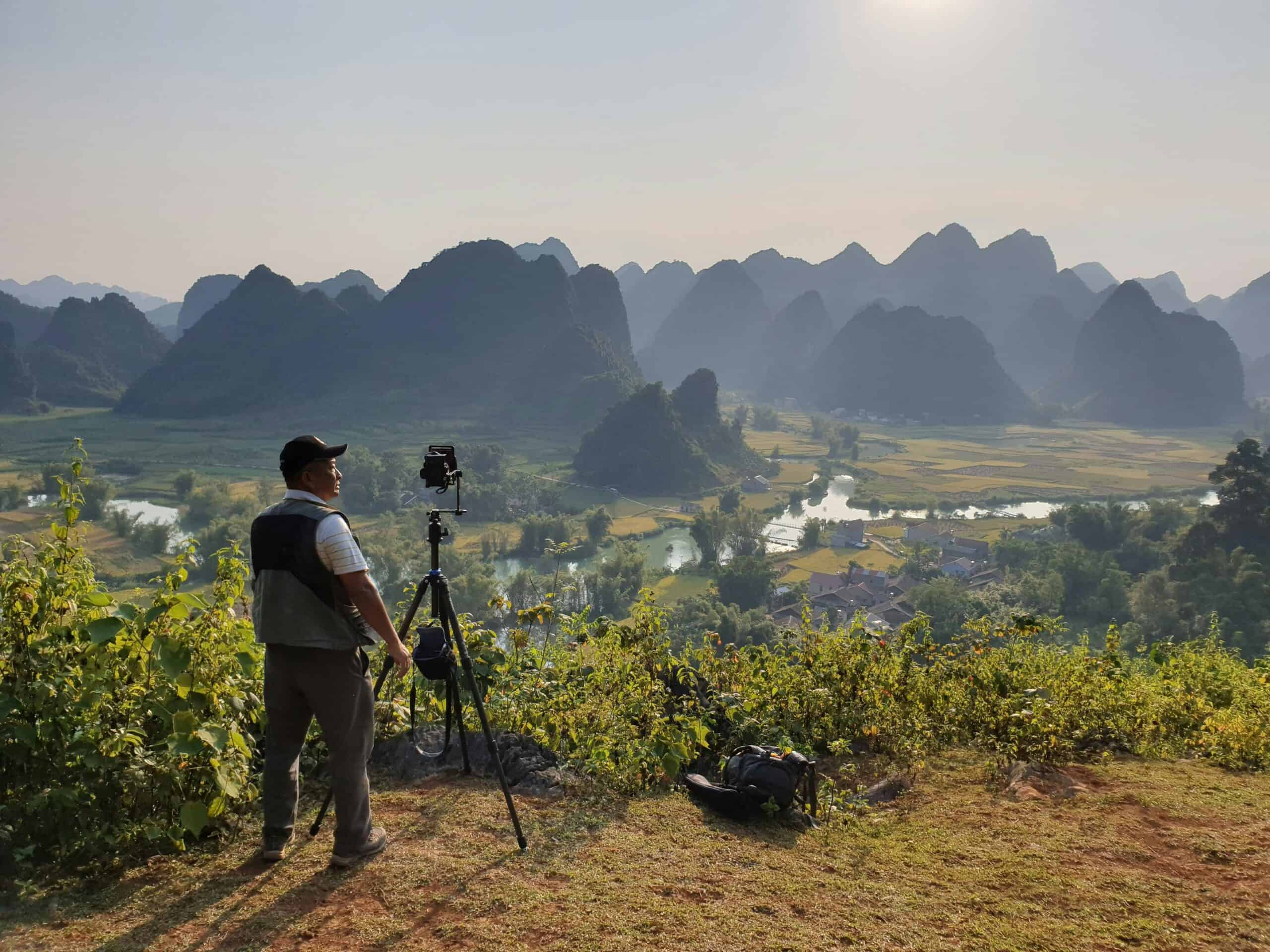
Match Gear to Scene Goals
For the OM-1, expect clean results at ISO 200–800; ISO 1600 remains usable with careful exposure and noise reduction. The sensor’s dynamic range is roughly 12 EV at base ISO, so for high-contrast interiors, plan for HDR bracketing. Rectilinear ultra-wide lenses (7–14mm on OM-1 or 14–24mm on FF) are ideal for architecture and virtual tours where straight lines must stay straight. If speed matters (e.g., windy rooftops or fast-moving crowds), a fisheye lens reduces shot count but introduces edge stretching that may look unnatural in some scenes.
Pre-shoot Checklist
- Fully charged batteries, ample storage (multi-row + bracketing consumes space fast).
- Clean front/rear elements and sensor; bring microfiber cloth and rocket blower.
- Tripod leveled; panoramic head calibrated for the lens’s no-parallax (entrance pupil) point.
- Safety: assess wind, railings, rooftops, and any car mount or pole attachment points; use tethers and sandbags.
- Backup workflow: shoot an extra full round if time permits; verify a critical frame at 100% on-camera or via tethering.
Essential Gear & Setup
Core Gear
- Panoramic head: Lets the camera rotate around the lens’s entrance pupil to eliminate parallax. Multi-row heads (e.g., Nodal Ninja, Leofoto) allow precise yaw/pitch stepping and repeatable zenith/nadir shots.
- Stable tripod with leveling base: A leveling base speeds setup and maintains level across rows, reducing stitching stress.
- Remote trigger or smartphone app: Prevents vibration and allows timed sequences or bracket bursts without touching the camera.
Optional Add-ons
- Pole or car mount: Use safety tethers, tighten clamps, and beware of wind loads; avoid overhanging traffic or unstable edges.
- Lighting aids: Portable LED panels or bounced flash for dark interiors (use sparingly to maintain consistency across frames).
- Weather gear: Rain covers and lens hoods; the OM-1 is weather-sealed, but water on the front element still ruins stitches.
For a deeper primer on panoramic heads and alignment basics, see this panoramic head tutorial. Panoramic head tutorial (360 Rumors)
Step-by-Step Shooting Guide
Standard Static Scenes
- Level and align: Level your tripod using a leveling base or the head’s bubble level. Mount the OM-1 and set the panoramic head so the rotation is perfectly level.
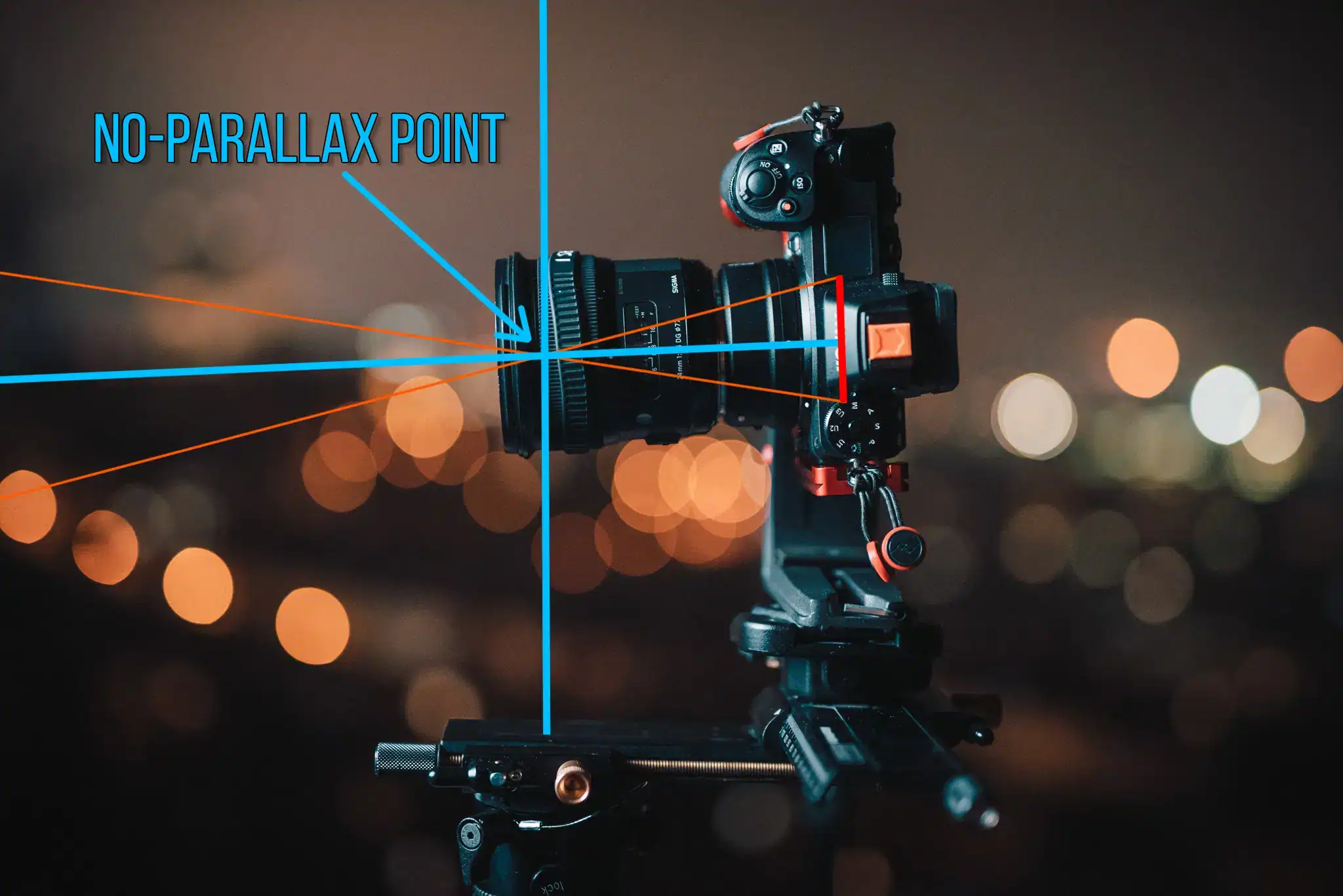
- Calibrate the nodal point: Use two vertical markers (one near, one far). Rotate the camera; if the near object shifts relative to the far object, adjust the fore-aft slider until the shift disappears. Zooms have entrance pupils that move as you zoom; mark positions for 7mm, 9mm, and 12mm on MFT (or 14/18/24mm if you’re practicing on a Nikon Z body with the 14–24mm).
- Manual exposure, WB, and focus: Switch to manual exposure; meter for midtones (or the HDR midpoint). Lock white balance (e.g., Daylight for sun, custom Kelvin indoors). Use manual focus and set near hyperfocal; magnified Live View helps nail sharpness. Turn IBIS off on tripod to prevent micro-drift.
- Capture with overlap: For 7mm (≈14mm FF), shoot three rows of 8 frames each at −45°, 0°, and +45°, rotating 45° per frame. Add one zenith shot (tilt straight up) and 2 nadir shots (tilt down, then offset to patch tripod). For cylindrical single-row panoramas, shoot 10–12 frames around at 7–10mm with 30% overlap, staying level at 0° pitch.
HDR / High Dynamic Range Interiors
- Bracket ±2 EV (3–5 frames): In high-contrast rooms with bright windows, bracket 3–5 exposures. Keep ISO low (100–400) and aperture at f/8 for crisp edges.
- Consistency: Lock WB and focus. Use a 2–3 second self-timer or remote. Engage exposure delay or electronic front-curtain (if available) to reduce shutter shock. Merge brackets to 32-bit HDR per view in PTGui or Lightroom, then stitch.
Low-Light / Night Scenes
- Exposure strategy: Open to f/4–f/5.6 if needed; use shutter speeds 1/10–1/60 on tripod. On OM-1, ISO 200–800 is the sweet spot; 1600 is workable with noise reduction in post.
- Stability: Disable IBIS on tripod, use a remote, and shield the setup from wind. For skyline zenith frames, take an extra safety exposure because star fields can make alignment sensitive.
Crowded Events
- Two-pass method: First pass at standard rotation speed; second pass, wait for gaps and capture frames where you had moving subjects. In post, mask the cleaner areas between passes.
- Fast shutter: Use 1/200s or faster to freeze motion if light allows; bump ISO as needed (OM-1 ISO 800–1600 can be cleaned up well).
Special Setups (Pole / Car / Drone)
- Pole: Keep the rig balanced and tethered. Use higher shutter speeds (1/250s+) and slightly higher ISO to combat sway. Pre-mark yaw increments on the rotator for speed.
- Car-mounted: Safety first—short routes at low speed; avoid vibration-prone roads. Increase overlap to 35–40% to account for micro shifts.
- Drone: If using an OM-1 on a heavy-lift platform, plan conservative maneuvers and lock exposure/WB for each row.
For a structured walkthrough on perfect nodal alignment and high-end 360 techniques, this step-by-step guide is excellent. Panoramic head setup (Meta/Oculus Creator)
Recommended Settings & Pro Tips
Exposure & Focus
| Scenario | Aperture | Shutter | ISO | Notes |
|---|---|---|---|---|
| Daylight outdoor | f/8–f/11 | 1/100–1/250 | 100–200 | Lock WB (Daylight); turn IBIS off on tripod |
| Low light/night | f/4–f/5.6 | 1/30–1/60 | 400–800 | Remote release; use exposure delay to reduce vibration |
| Interior HDR | f/8 | Bracket ±2 EV (3–5 frames) | 100–400 | Balance windows and lamps; consistent WB |
| Action / moving subjects | f/5.6–f/8 | 1/200+ | 400–800 | Freeze motion; consider two-pass method |
Critical Tips
- Manual focus at or near hyperfocal distance; confirm with magnified Live View.
- Nodal point calibration: Zooms shift the entrance pupil; mark your slider for common focal lengths (7/9/12mm on MFT, 14/18/24mm on FF).
- White balance lock: Prevent color shifts that cause visible seams.
- RAW capture: Preserve dynamic range and color latitude for consistent multi-frame blending.
- IBIS: Off on tripod. If you must handhold in a pinch, IBIS helps, but expect more stitching cleanup.
- Shutter mode: Prefer mechanical or EFCS to avoid banding under artificial lights; use silent/electronic cautiously indoors.
Stitching & Post-Processing
Software Workflow
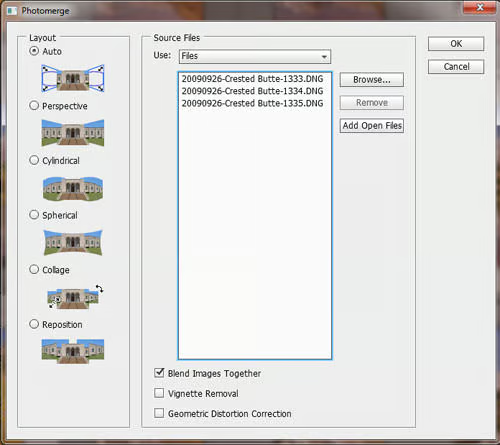
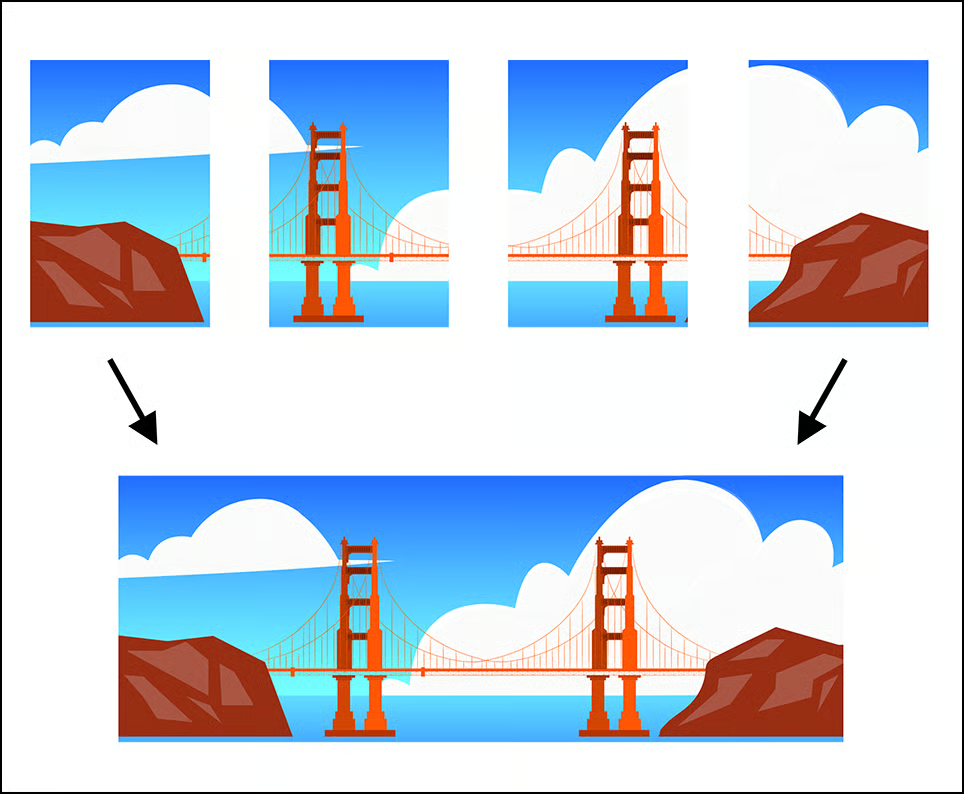
Import all frames into your preferred stitcher. For industry-standard control and speed, PTGui is a favorite; Hugin is an excellent open-source alternative. Rectilinear ultra-wide tiles stitch well with 25–35% overlap; fisheye projects often need 30%+ overlap and careful defishing before layout corrections. If you bracketed exposure, create HDR merges per view first, then stitch those HDR tiles for best tonal consistency.
Review parallax-sensitive seams at close objects and verticals; add manual control points where needed. When satisfied, render a high-resolution equirectangular image (2:1 aspect) for 360 viewers. PTGui review and workflow insights (Fstoppers)
Cleanup & Enhancement
- Nadir patch: Use a captured offset nadir tile or AI-based tripod removal, then clone or patch to taste.
- Color consistency: Correct mixed lighting with local WB adjustments; apply global profiles after stitching.
- Noise reduction: Apply luminance NR on low-light brackets; avoid over-smoothing detailed textures.
- Leveling: Ensure horizon is level; correct yaw/pitch/roll so verticals are vertical in VR viewers.
- Export: Equirectangular JPEG/TIFF for web/VR; keep a layered PSD or project file for revisions.
For a deeper technical background on resolution versus focal length and coverage for spherical panoramas, Panotools’ guide is helpful. Spherical resolution basics (PanoTools Wiki)
Useful Tools & Resources
Software
- PTGui panorama stitching
- Hugin open source
- Lightroom / Photoshop
- AI tripod removal tools
Hardware
- Panoramic heads (Nodal Ninja, Leofoto)
- Carbon fiber tripods
- Leveling bases
- Wireless remote shutters
- Pole extensions / car mounts
Disclaimer: software/hardware names provided for search reference; check official sites for details. For focal length choices and their panorama impact, this overview is a good read. Panoramas, focal lengths, and stitching (B&H Explora)
Common Mistakes & How to Avoid Them
- Parallax error: Not aligning the entrance pupil causes misaligned near objects. Calibrate for your focal length before real jobs.
- Exposure flicker: Auto exposure or auto WB between frames introduces seams. Lock both in manual.
- Tripod intrusion: Forgetting nadir frames leads to messy patches. Plan and shoot offset nadirs.
- Underlap: Too little overlap makes stitching fragile. Target 25–35% overlap; more overlap in wind or crowds.
- Night noise: Pushing ISO too far on MFT. Favor longer exposures and keep ISO to 800–1600; denoise in post.
- IBIS drift: Leaving IBIS on while on tripod can blur micro detail. Turn it off.
Frequently Asked Questions
- Can I mount the Nikon Z 14–24mm f/2.8 S on the Olympus OM-1?
No. The flange distance and mount are incompatible, and there is no standard adapter that preserves infinity focus. For the OM-1, use a native MFT ultra-wide like the M.Zuiko 7–14mm f/2.8 PRO to match the 14–24mm full-frame field of view.
- Is 7mm on OM-1 (≈14mm FF) wide enough for single-row 360°?
For a full 360×180 spherical, single-row with a rectilinear lens is not sufficient. Plan multi-row: typically 3 rows of 8 shots each (−45°, 0°, +45°), plus zenith and nadir frames.
- Do I need HDR for interiors with bright windows?
Often yes. The OM-1 has solid dynamic range, but high-contrast interiors exceed it. Bracket ±2 EV (3–5 frames) for each camera position and merge to HDR before stitching for the cleanest results.
- What ISO range is safe on the OM-1 for low light?
ISO 200–800 is the sweet spot. ISO 1600 is workable with careful exposure and modern denoising. Prefer longer exposures on a tripod rather than pushing ISO past 1600.
- How do I avoid parallax issues with rectilinear ultra-wide lenses?
Use a panoramic head and align the entrance pupil. For zooms, calibrate and mark the rail for each focal length you intend to use (e.g., 7/9/12mm). Re-check if you change focus distance significantly.
- Can I shoot handheld panoramas with the OM-1?
Yes for quick cylindrical panoramas in good light; IBIS helps. For 360×180 with multi-row capture, a tripod and pano head are strongly recommended to ensure consistent overlap and level horizons.
- What’s the ideal tripod head for this setup?
A multi-row panoramic head with precise, repeatable click-stops (e.g., Nodal Ninja or similar) and a leveling base. Make sure it supports your camera’s weight and offers fine fore-aft adjustment for entrance pupil alignment.
- Any benefit to using the Nikon Z 14–24mm on a Nikon Z body instead?
Yes—if you own a Z body, the 14–24mm’s optical excellence, low distortion, and bright f/2.8 aperture make it fantastic for low-light and architectural panoramas. The capture workflow (overlap, rows, nodal alignment) remains the same.
Field-Proven Scenarios
Indoor Real Estate
On OM-1 + 7–14mm at 7–9mm, shoot 3 rows of 8 frames plus Z/N. Bracket ±2 EV. Keep WB locked at a custom Kelvin value (e.g., 4200–4800 K) to balance daylight and warm fixtures, and correct mixed lighting via local adjustments after stitching.
Outdoor Sunset Overlook
Work near base ISO, f/8–f/11 for edge-to-edge sharpness. Expose for highlights and capture a second pass for shadows if needed. Windy? Increase overlap to 35% and take an extra safety round in case of vibrations.
Event Crowds
Use a faster shutter (1/200s+), ISO 800–1600, and shoot two passes to mask moving subjects. If a subject blocks a key seam, wait a beat and reshoot that frame.
Rooftop or Pole Shooting
Secure everything with tethers. Use higher shutter speeds and more overlap. In PTGui, expect to add control points manually on nearby structures to tighten alignment.
For broader background on DSLR/mirrorless 360 workflows and lens/body choices, this guide is a strong complement. DSLR/mirrorless 360 guide (360 Rumors)
Safety, Reliability, and Backup Workflow
Always use a sturdy tripod with a leveling base; add weight or sandbags in wind. On rooftops or balconies, secure tethers from camera and head to the tripod and railing. Rain and sea spray demand a hood and frequent front-element checks. Build a redundant workflow: when time allows, capture a second full rotation and verify a critical frame at 100% magnification on-site. For commercial jobs, maintain two cards (RAW to card 1, JPEG preview to card 2) and back up immediately after the shoot.
Visual Inspiration and Setup