Why This Camera & Lens Are Great for Panoramas
The Olympus OM-D E‑M1 Mark III paired with a fast fisheye is a powerhouse for 360° panoramas. The E‑M1 Mark III’s 20.4MP Micro Four Thirds sensor (approx. 17.4 × 13.0 mm) with a pixel pitch around 3.3 µm delivers crisp detail at low ISO, strong color, and dependable stabilization for handheld scouting. The Sigma 15mm f/1.4 DG DN Diagonal Fisheye Art is a modern, optically excellent diagonal fisheye designed for mirrorless full-frame (Sony E / L-mount) with a 180° diagonal field of view, high coma correction (great for night skies), and excellent sharpness stopped down—ideal attributes for robust pano stitching.
Important compatibility note: the Sigma 15mm f/1.4 DG DN Fisheye is not natively mountable on Micro Four Thirds bodies, including the E‑M1 Mark III. Due to registration distance differences, there’s no practical passive adapter path from Sony E or L‑mount to Micro Four Thirds. If you must use this exact Sigma lens, pair it with a full-frame E or L-mount body. If you’re committed to the E‑M1 Mark III (great choice), use a native diagonal fisheye with similar coverage—such as the Olympus M.Zuiko 8mm f/1.8 PRO or the Samyang 7.5mm F3.5 fisheye. The capture workflow, nodal alignment, exposure discipline, and stitching process in this guide apply the same.
Why the combo concept still rocks: diagonal fisheyes need fewer shots than rectilinear wides, overlap more reliably, and stitch faster in PTGui/Hugin. The E‑M1 Mark III offers very good dynamic range near base ISO (roughly ~12 EV at ISO 200), 121‑point phase detect AF for quick setup, and robust weather sealing—perfect for outdoor panos and real‑world gigs.
Quick Setup Overview
- Camera: Olympus OM‑D E‑M1 Mark III — Micro Four Thirds, 20.4MP Live MOS, base ISO 200 (extended Low), approx. ~12 EV DR at base, 5‑axis IBIS (up to ~7 stops).
- Lens: Sigma 15mm f/1.4 DG DN Diagonal Fisheye Art — diagonal fisheye for full-frame (E / L mount); excellent coma control, high sharpness by f/5.6–f/8, typical low lateral CA for a modern fisheye.
- Compatibility: Not natively mountable to Micro Four Thirds. Use native MFT fisheye (e.g., Olympus 8mm f/1.8 PRO) on the E‑M1 Mark III, or use the Sigma 15mm on a compatible full-frame body.
- Estimated shots & overlap (tested recipes):
- On full‑frame with Sigma 15mm diagonal fisheye: 6 shots around at 60° yaw with ~30% overlap + 1 zenith + 1 nadir (8 total). For extra safety, 8 around at 45° + Z + N (10 total).
- On E‑M1 Mark III with a native 8mm diagonal fisheye: 6 around at 60° + Z + N (8 total). Indoors, consider 8 around at 45° for feature‑poor walls.
- Difficulty: Moderate. With a calibrated panoramic head, stitching becomes easy and consistent.
Planning & On-Site Preparation
Evaluate Shooting Environment
Walk the scene and check light direction, moving elements (people, trees, vehicles), and reflective surfaces (glass, polished floors, mirrors). If shooting through glass, keep the front element as close as safely possible (1–3 cm) to reduce reflections. Watch for strong backlight sources that can flare a fisheye—slight reframing or shielding with your hand/hood can save a panorama. For outdoor golden hour, anticipate dynamic range swings; indoors, note mixed color temperatures and plan a custom white balance.
Match Gear to Scene Goals
For the E‑M1 Mark III, aim to keep ISO at 200–400 for maximum dynamic range and color fidelity; ISO 800–1600 is workable for night with careful denoising. A diagonal fisheye means fewer frames and usually faster gigs—perfect for real estate, architecture, and events. The Sigma 15mm fisheye on full-frame gives a 180° diagonal FOV (roughly ~147° horizontal, ~94° vertical), so you can finish a full 360×180 quickly with secure overlap; a native 8mm fisheye on MFT achieves comparable efficiency.
Pre-shoot Checklist
- Charge batteries and carry spares; format fast UHS‑II cards.
- Clean front/rear elements and your sensor to avoid flare and cloning work.
- Level your tripod and pre-calibrate the panoramic head for the exact camera+lens combo.
- Safety: tether gear on rooftops/poles, mind wind gusts, avoid crowds behind you; use reflective vest when near roads.
- Backup workflow: shoot a second pass when possible—especially indoors or when elements are moving.
Essential Gear & Setup
Core Gear
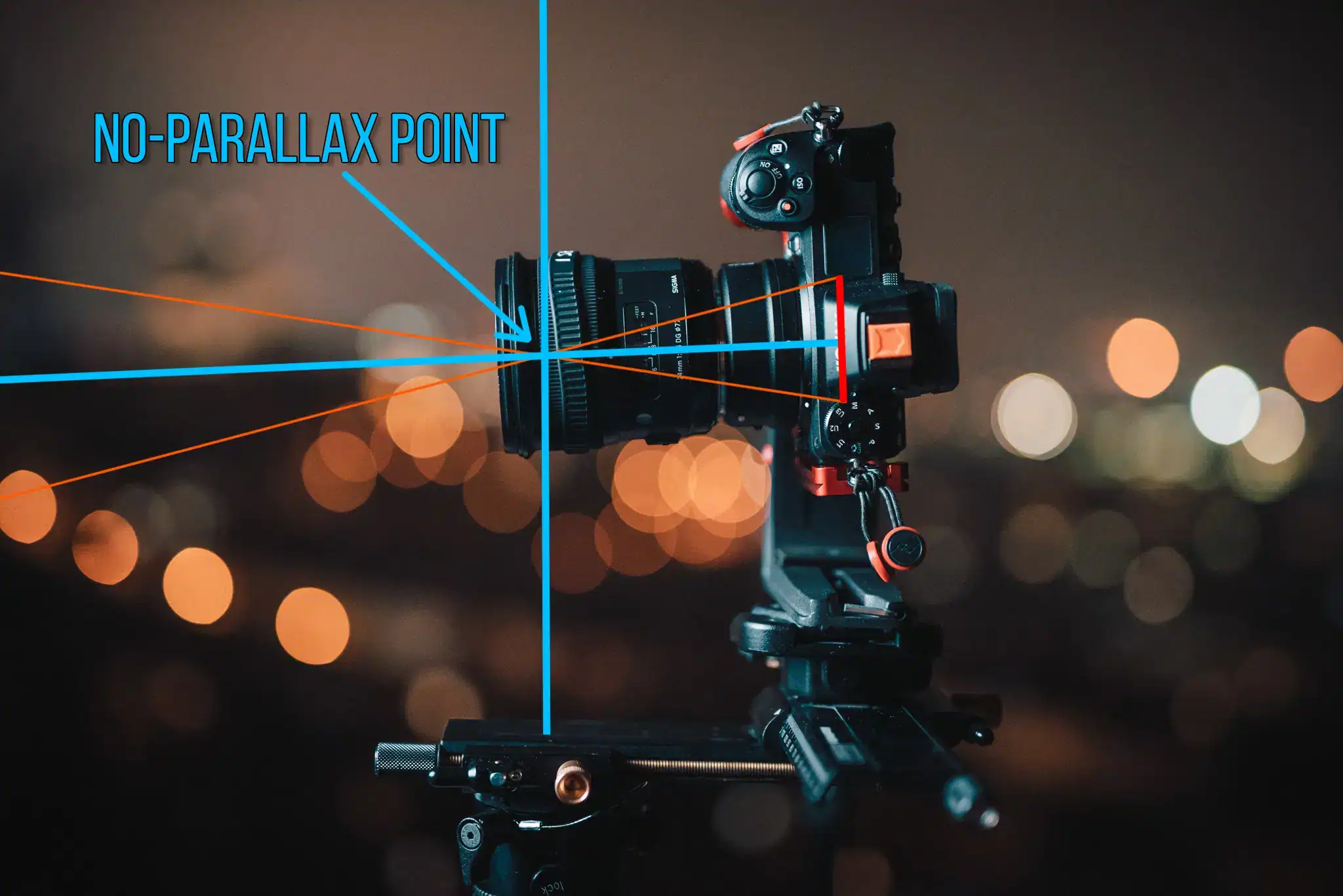
- Panoramic head: Ensures rotation around the lens’s entrance pupil (nodal point) to eliminate parallax. Calibrate fore‑aft and vertical offsets so near/far lines stay aligned frame to frame.
- Stable tripod with leveling base: Faster level setup and less stitch warp. A compact carbon tripod is ideal for travel jobs.
- Remote trigger/mobile app: Prevents camera shake and speeds consistent cadence, especially for HDR brackets.
Optional Add-ons
- Pole or car mount: Great perspectives but risky. Use safety tethers, check torque on clamps, and avoid high winds. Increase overlap to compensate for micro‑vibrations.
- Portable LED panels or flash: Lift shadows in dark corners for interiors; keep lighting consistent across frames.
- Weather protection: Rain covers, microfiber cloths, and silica gel packs keep you shooting in adverse conditions.
If you’re new to panoramic heads and nodal alignment, this visual primer is excellent. Nodal alignment and panoramic head tutorial
Step-by-Step Shooting Guide
Standard Static Scenes
- Level tripod & align nodal point. Place a near object and a far object along the frame edges. Rotate the camera; adjust the rail until the near/far alignment doesn’t shift. Mark the rail positions for your camera + fisheye combo for future jobs.
- Manual exposure & locked white balance. Meter for midtones and protect highlights; lock WB (e.g., Daylight or custom Kelvin) to avoid color mismatch in stitching.
- Capture with consistent overlap. For a diagonal fisheye: 6 around at 60° yaw usually suffices; shoot zenith by tilting up 90°, then nadir by tilting down 90° (or take a tripod‑removal plate while offsetting the rig).
- Take a clean nadir. After the main set, move the tripod slightly and shoot the ground plate for a patch that hides your tripod in post.
HDR / High Dynamic Range Interiors
- Bracket ±2 EV (3 or 5 frames). Balance bright windows and dim interiors while keeping ISO low.
- Lock WB and exposure brackets across the entire pano. Consistency prevents HDR seams during stitching.
- Use a remote to trigger brackets quickly, minimizing subject movement between bracketed frames.
Low-Light / Night Scenes
- Use tripod, IBIS OFF, and longer shutter speeds. On the E‑M1 Mark III, keep ISO at 200–800 when possible, going to 1600 if needed; rely on a sturdy support to avoid star trails or light trails unless intentional.
- Focus manually at hyperfocal distance. With a fisheye at f/5.6–f/8, near to infinity will be sharp.
- Use a 2-sec timer or remote trigger to avoid micro‑shake.
Crowded Events
- Shoot two passes. First for safety, second waiting for gaps in the crowd or better postures.
- Use slightly faster shutter (1/200–1/320) and ISO 400–800 to freeze motion.
- In post, mask overlapped areas to remove ghosted people between frames.
Special Setups (Pole / Car / Drone)
- Secure everything with redundant tethers. Check every knob before lifting the pole overhead or driving.
- Increase overlap and shoot more frames. Vibration and flex can reduce alignment accuracy—more shots give software more control points.
- For car mounts, plan locations with low traffic and avoid high speeds; prioritize safety over the shot.
Video guide: setting up for reliable 360° capture. Pair with the nodal workflow described above.
Recommended Settings & Pro Tips
Exposure & Focus
| Scenario | Aperture | Shutter | ISO | Notes |
|---|---|---|---|---|
| Daylight outdoor | f/8–f/11 | 1/100–1/250 | 100–200 | Lock WB (Daylight/5500K). Watch for sun flare with fisheye. |
| Low light/night | f/4–f/5.6 | 1/30–1/60 (or longer on tripod) | 200–800 (max 1600 if needed) | IBIS OFF on tripod; remote trigger; denoise in post. |
| Interior HDR | f/8 | Bracket ±2 EV | 100–400 | Expose for midtones and window highlight retention. |
| Action / moving subjects | f/5.6–f/8 | 1/200+ | 400–800 | Two-pass method; mask in post. |
Critical Tips
- Manual focus at hyperfocal distance. With a fisheye at f/8, everything from ~0.5–1 m to infinity is typically sharp. Use magnified live view to confirm.
- Nodal point calibration. Use near/far alignment tests. Mark your fore‑aft rail and vertical offset once; keep a phone photo of your head setup for quick replication.
- White balance lock. Mixed lighting kills consistency—use a custom Kelvin or gray card reading and stick to it.
- Shoot RAW. You’ll preserve dynamic range, fix WB, and denoise better. JPEG is fine for previews but not for final 360s.
- IBIS OFF on tripod. Prevents micro‑jitter blur from stabilization trying to “correct” a static view.
Stitching & Post-Processing
Software Workflow
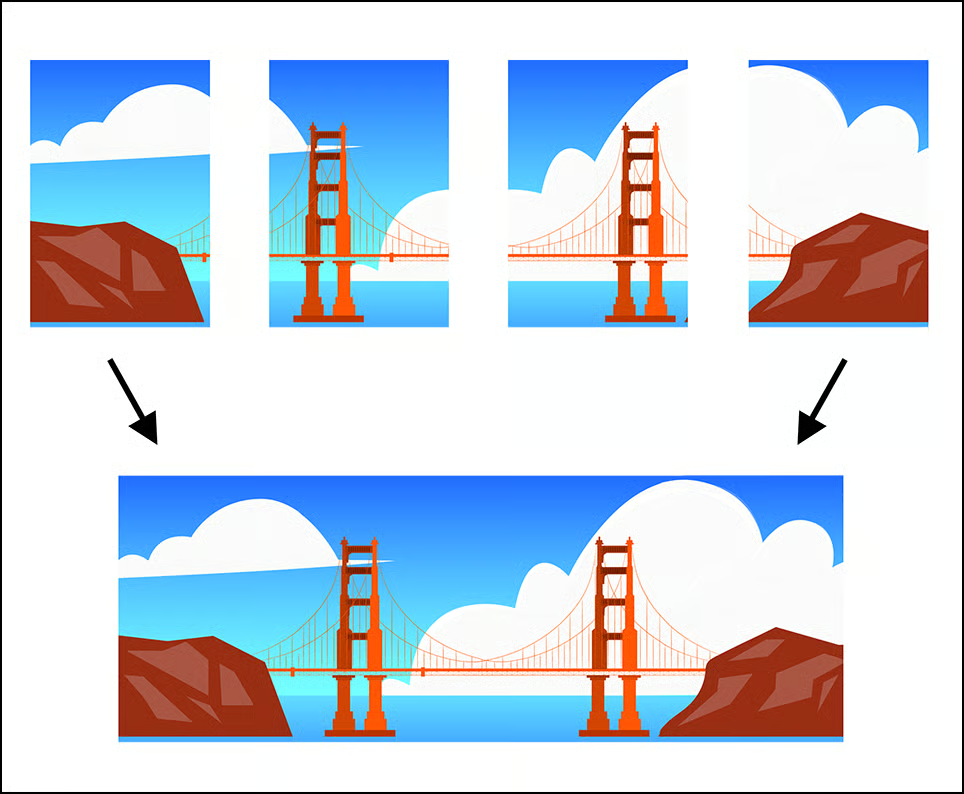
Import RAWs into your editor (Lightroom/Adobe Camera Raw), apply global WB and lens profile corrections (avoid defishing first—let the stitcher read the native fisheye projection). Export 16‑bit TIFFs or send RAWs directly to PTGui/Hugin. Fisheye shots stitch easily with fewer frames; rectilinear lenses need more images and can suffer more edge distortion. Use ~25–35% overlap for fisheyes and ~20–25% for rectilinear lenses. PTGui’s lens database and control point optimizer accelerate clean stitches, while Hugin is a solid open-source alternative. Why many pros rely on PTGui for complex panoramas
Cleanup & Enhancement
- Nadir patch. Use a dedicated clean ground shot or AI removal tools to hide your tripod.
- Color and noise. Balance color casts between frames; run mild denoise on low‑light sets.
- Level and straighten. Correct yaw/pitch/roll and set a logical horizon (especially important for VR viewers).
- Export. Save an equirectangular 2:1 JPEG (8–12k wide for web/VR) or 16‑bit TIFF for archiving.
Want an end‑to‑end 360 DSLR workflow reference? This guide from Meta’s Creator resources is concise and practical. Using a mirrorless camera to shoot and stitch a 360 photo
Field-Proven Scenarios
Indoor Real Estate
Use a native MFT fisheye on the E‑M1 Mark III. Shoot ISO 200–400, f/8, bracket ±2 EV, and 6–8 around depending on room texture. Lock WB to a fixed Kelvin (e.g., 4000K for LEDs, 3200K for tungsten) so walls remain consistent. If there are mirrors, position yourself to avoid ghosting and shoot an extra frame if needed to patch reflections.
Outdoor Sunset
Meter the sky to protect highlights—expose to avoid clipping clouds. Consider a 5‑frame bracket (−4, −2, 0, +2, +4 EV) if the sun is in the frame. Keep overlap generous (~35%) since the dynamic range can reduce contrast for control points.
Event Crowds
Use two quick passes with the same settings. Between passes, wait for gaps. Run a slightly higher shutter (1/200–1/320), ISO 400–800, f/5.6–f/8. In PTGui, mask in the “best” people positions or remove duplicates with selective blending.
Rooftop / Pole
For the E‑M1 Mark III with a lightweight fisheye, a carbon pole works well. Keep the rig under wind thresholds; add a safety leash and avoid sudden rotations. Increase frames (8 around) and overlap (35–40%) to compensate for any flex.
Car-Mounted Capture
Mount low and forward of the roofline. Keep shutter speed up (1/500+) if moving; consider stopping to shoot static sets when safe. Vibration can blur—use extra overlap and run a careful control point cleanup in the stitcher.
For more on spherical resolution versus focal length and shot count planning, bookmark this reference. Panotools: DSLR spherical resolution
Useful Tools & Resources
Software
- PTGui for advanced fisheye stitching and masking.
- Hugin (open source) for flexible control point work.
- Lightroom / Photoshop for RAW prep and retouching.
- AI tripod removal tools for quick nadir patches.
Hardware
- Panoramic heads: Nodal Ninja, Leofoto, or similar two‑axis heads.
- Carbon fiber tripod with a leveling base for fast setup.
- Wireless remote shutters and intervalometers.
- Pole extensions and car mounts with safety tethers.
Disclaimer: product names are for reference; check official sites and manuals for compatibility and latest features.
If you want a broader buying guide and practical FAQs, this overview is a great companion read. 360 camera/lens guide for virtual tours
Common Mistakes & How to Avoid Them
- Parallax errors → Always rotate around the nodal point; verify with a near/far alignment test.
- Exposure flicker → Manual exposure and locked WB across every frame and bracket.
- Tripod shadows and footprints → Shoot a clean nadir and patch it in post.
- Ghosting from motion → Use the two‑pass method and mask selectively.
- High ISO noise → Keep ISO low; use a tripod, longer exposures, and denoise carefully in post.
- Flare with fisheye → Shield the sun, adjust angle a few degrees, or reshoot the affected frame for blending.
Frequently Asked Questions
- Can I shoot handheld panoramas with the Olympus E‑M1 Mark III?
Yes for simple single-row panos, but for full 360×180 you’ll get more consistent results with a tripod and panoramic head. Handheld introduces parallax and overlap inconsistency; use fast shutter speeds and higher overlap if you must go handheld.
- Is the Sigma 15mm f/1.4 DG DN Fisheye wide enough for single-row 360?
On full-frame: yes, in many cases 6 around + Z + N works. For feature‑poor interiors, consider 8 around for extra control points. On the E‑M1 Mark III, the lens is not mountable; use a native MFT fisheye (e.g., Olympus 8mm) for similar coverage.
- Do I need HDR for interiors with bright windows?
Usually yes. A ±2 EV bracket (3 or 5 frames) balances bright windows and dark corners. Keep WB locked and aperture consistent to avoid stitching seams.
- How do I avoid parallax issues with this setup?
Use a calibrated panoramic head. Align the fore‑aft rail so a near object and far background stay aligned while panning. Mark the rail positions for your camera + lens and reuse them.
- What ISO range is safe on the E‑M1 Mark III in low light?
For tripod work, ISO 200–800 is a safe zone; 1600 is workable with denoising. Keep IBIS OFF on a tripod and use longer shutter speeds when possible to minimize noise.
- Can I set up custom shooting modes for pano?
Absolutely. Save a “Pano” mode with Manual exposure, manual focus at hyperfocal, fixed WB, single shot or bracketed HDR, and a 2‑sec timer or remote enabled. It speeds setups onsite.
- How do I reduce flare with a fisheye?
Avoid direct sun just outside the frame; slight reframing (2–5°), shading with your hand, or reshooting a single flared frame can help. Stop to f/8 and clean the front element thoroughly.
- What panoramic head works best?
A two‑axis head with a leveling base and clear, repeatable scale markings. Nodal Ninja and Leofoto models are popular; ensure it supports your camera’s weight and has fine fore‑aft adjustment.
Compatibility & Practical Alternatives
Because the Sigma 15mm f/1.4 DG DN Diagonal Fisheye Art is made for Sony E / L‑mount full‑frame bodies, it cannot be adapted to Micro Four Thirds (E‑M1 Mark III) without optical relays that don’t exist for this use. If your project demands this exact Sigma lens, pair it with a compatible full‑frame camera and follow the capture recipe above (6–8 around + Z + N). If you want to stay on the E‑M1 Mark III, use a native MFT diagonal fisheye—Olympus M.Zuiko 8mm f/1.8 PRO is a top choice; Samyang 7.5mm is a cost‑effective alternative. The shooting and stitching principles in this guide apply 1:1.
If you’re setting up your first panoramic head with a fisheye, this step‑by‑step resource is well worth a read after you practice a few indoor tests. Set up a panoramic head for high‑end 360 photos
Safety, Data Integrity & Backup
On rooftops or poles, always tether your rig. Keep people clear of your swing radius. In crowds, stay aware of your surroundings; use a compact footprint and avoid sudden pans. Protect gear with rain covers and avoid salt spray without proper protection. For data integrity, write to dual cards if available; if not, back up to a portable SSD at breaks and maintain two copies before leaving the site. Consider shooting a second complete pass as a safety net—especially for paid real estate and commercial gigs.
Further Reading
For additional techniques, comparison tests, and community insights, these resources are useful at different stages of your learning curve:
Best techniques to take 360 panoramas (community Q&A).