Why This Camera & Lens Are Great for Panoramas
The Olympus OM-D E-M1 Mark III paired with the M.Zuiko 8mm f/1.8 PRO Fisheye is a compact, rock-solid kit for 360° panoramas and virtual tours. The E-M1 Mark III uses a 20.4MP Micro Four Thirds Live MOS sensor (approx. 3.3 µm pixel pitch) with roughly 12 EV of usable dynamic range at base ISO, giving clean files with excellent color. Its 5-axis IBIS is class-leading for handheld work, while the built-in level gauge, live histogram, and customizable buttons make it quick to set and forget for pano sequences. The camera’s Handheld High Res Shot is useful for static scenes, but for spherical panoramas you’ll typically stick to standard RAW frames for consistent stitching.
The M.Zuiko 8mm f/1.8 PRO is a diagonal fisheye covering 180° across the diagonal on Micro Four Thirds. That ultra-wide field of view means you can complete a full 360×180 capture with relatively few frames, reducing stitch seams and speeding up your workflow. The lens is sharp by f/4–f/5.6, controls CA well, focuses extremely close, and is robustly sealed. As a fisheye, it introduces intentional geometric distortion, but modern stitchers (PTGui/Hugin) model fisheye projection precisely, so you get a clean equirectangular pano without manual “defish” steps.
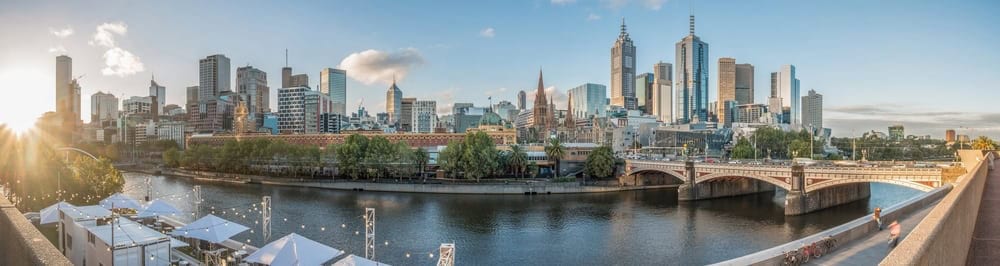
If you’ve searched for how to shoot panorama with Olympus E-M1 Mark III & Olympus 8mm f/1.8 PRO Fisheye, you’re in the right place. Below is a field-tested, SEO-friendly guide built for creators who want repeatable results.
Quick Setup Overview
- Camera: Olympus OM-D E-M1 Mark III — Micro Four Thirds sensor, 20.4MP RAW (5184×3888), ~12 EV DR at ISO 200, excellent ergonomics, 5-axis IBIS (turn OFF on tripod).
- Lens: M.Zuiko Digital ED 8mm f/1.8 Fisheye PRO — diagonal fisheye (180° on diagonal), very sharp by f/5.6–f/8, good flare/CA control for a fisheye.
- Estimated shots & overlap (tested):
- Safe: 6 around at 60° yaw increments (level), + 1 zenith + 1 nadir (25–35% overlap).
- Minimal: 4 around (pitch +10°), + zenith + nadir if you’re precise with overlap and nodal alignment.
- Difficulty: Easy–Intermediate (fast capture, careful nodal setup).
Planning & On-Site Preparation
Evaluate Shooting Environment
Assess light, reflectivity, and motion. Interiors with windows require HDR to balance bright exteriors. Glass walls and polished floors amplify reflections—keep the lens clean and angle the camera slightly to avoid direct reflections where possible. If shooting through glass, place the hood close to the surface (2–3 cm) and shoot perpendicular to reduce glare. Outdoors, note sun position to control flare; a slight rotation or body blocking can tame a hot spot in a fisheye.
Match Gear to Scene Goals
The E-M1 Mark III offers clean ISO 200–800 for panoramas. Indoors, ISO 400–800 is a safe range; in very low light use a tripod and longer exposures at ISO 200–400 to maintain quality. The 8mm fisheye reduces the number of shots required, which helps in busy scenes and on rooftops or poles. For architectural work, the fisheye’s geometric distortion is not a problem as the stitcher handles it; the bigger risk is parallax from misaligned rotation—solved with a calibrated panoramic head.
Pre-shoot Checklist
- Charge batteries; format high-speed SD cards; clean lens and sensor.
- Calibrate your panoramic head for the 8mm fisheye; lock your leveling base.
- Safety: check wind, verify tripod stance, tether gear on rooftops or poles, and avoid pedestrian hazards during rotation.
- Backup: shoot one extra pass; if crowd-heavy, shoot a second pass at different timing to aid de-ghosting.
Essential Gear & Setup
Core Gear
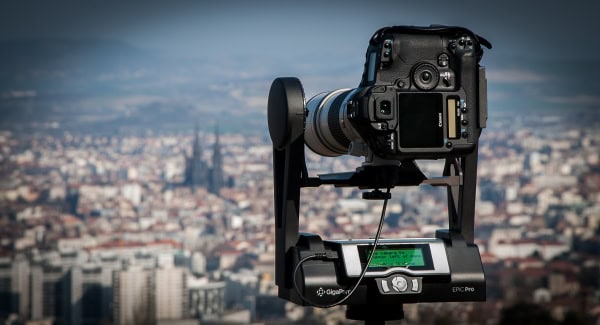
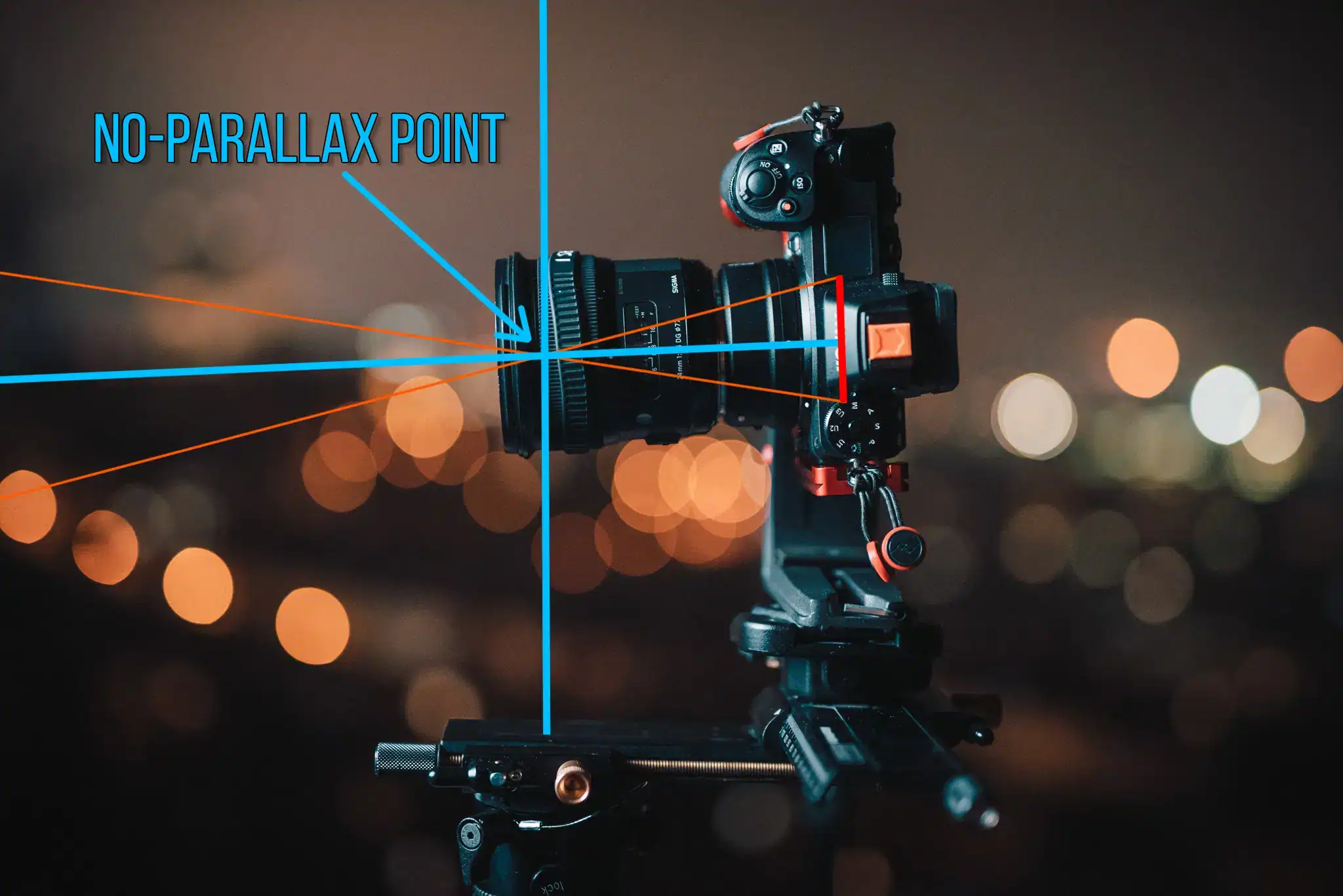
- Panoramic head: Align the rotation around the lens’ entrance pupil (often called the nodal point) to eliminate parallax between near and far objects. This is vital for clean stitches.
- Stable tripod with a leveling base: Leveling allows level rotations and consistent coverage. The E-M1 III’s electronic level helps confirm balance.
- Remote trigger or Olympus Image Share app: Avoid vibration. On tripod, disable IBIS and consider Anti-Shock/0s delay.
Optional Add-ons
- Pole or car mount: Use safety tethers, watch wind loads, and keep shutter speeds higher to reduce motion blur.
- LED panels or bounced flash for interiors: Balanced lighting reduces HDR complexity.
- Rain cover, lens cloths, and gaffer tape: Keep optics dry and secure accessories.
For an illustrated primer on panoramic heads and technique, see this panoramic head tutorial for additional visuals and methods. Panoramic head fundamentals
Step-by-Step Shooting Guide
Standard Static Scenes
- Level and align nodal point: Level the tripod. Set your panoramic head so the rotation axis passes through the lens’ entrance pupil. As a starting point for the 8mm f/1.8 on Micro Four Thirds, many shooters land near 55–60 mm forward from the sensor plane mark, but calibrate precisely yourself (see tips below). Even a few millimeters off can cause parallax with nearby objects.
- Manual exposure and white balance: Set Manual mode. Typical daylight starting point: f/8, 1/125 s, ISO 200. Lock WB (Daylight for sun, Cloudy for overcast). Disable Auto ISO and exposure bracketing unless intentionally doing HDR.
- Capture sequence with overlap:
- Safe method: 6 around at 60° yaw intervals, lens level, then 1 zenith and 1 nadir. Aim for 25–35% overlap between frames.
- Minimal method: 4 around at 90° with the lens pitched up ~10°, then add a nadir. Verify overlap in live view; the fisheye’s edges can be thin on coverage otherwise.
- Take a nadir shot: After the around sequence and zenith, tilt down to capture the ground/tripod area for patching. Some panographers lift the camera and rotate above the tripod for a cleaner nadir plate.
HDR / High Dynamic Range Interiors
- Bracket exposures: Use 3–5 shots at ±2 EV to balance bright windows against interior shadows. On the E-M1 III, AEB is easy to assign to a Fn button. Keep aperture constant (e.g., f/8) and vary shutter speed.
- Lock WB and focus: Use a fixed WB and manual focus so color and sharpness remain consistent across brackets and frames.
- Capture order: For each yaw angle, fire the bracket set; then rotate. This keeps exposure stacks aligned per position for batching in PTGui.
Low-Light / Night Scenes
- Stability first: Use tripod, turn IBIS OFF, enable Anti-Shock (0s delay) or remote. Start around f/4–f/5.6, 2–8 s, ISO 200–400. Avoid pushing ISO above 1600 if you need large 360 outputs; longer exposures are cleaner.
- Minimize flare: Shield the fisheye from direct streetlights when possible; a small change in camera angle can reduce sensor reflections.
Crowded Events
- Two passes: Do a quick first pass to guarantee coverage, then a second pass waiting for gaps in traffic. You can mask clean areas from either pass during stitching.
- Faster shutter: Use 1/200 s or faster at f/5.6–f/8 with ISO 400–800 to freeze motion. Expect some ghosting; plan to paint masks in post.
Special Setups (Pole / Car / Drone)
- Pole work: Keep the camera light and centered; add a safety tether. Use 4 around + zenith to reduce time aloft. Increase shutter speed (1/250–1/500 s) to minimize sway blur.
- Car mount: Avoid rough roads; pre-visualize the route and plan a single, quick rotation at a controlled stop. Watch for rolling shutter with electronic shutter—prefer mechanical at 1/250 s or faster.
Recommended Settings & Pro Tips
Exposure & Focus
| Scenario | Aperture | Shutter | ISO | Notes |
|---|---|---|---|---|
| Daylight outdoor | f/8–f/11 | 1/100–1/250 | 200 | Lock WB (Daylight); disable IBIS on tripod |
| Low light/night | f/4–f/5.6 | 1/30–8 s | 200–400 | Tripod + remote; Anti-Shock; long exposure over high ISO |
| Interior HDR | f/8 | Bracket ±2 EV | 200–400 | Keep aperture constant; batch process in PTGui/HDR Merge |
| Action / moving subjects | f/5.6–f/8 | 1/200+ | 400–800 | Double pass to reduce ghosting |
Critical Tips
- Manual focus and hyperfocal: With an 8mm on Micro Four Thirds, hyperfocal at f/8 is around 0.54 m. Set MF near 0.6 m; everything from ~0.3 m to infinity stays acceptably sharp.
- Nodal point calibration (quick method): Place a light stand 0.5–1 m from the lens and a vertical line far behind it. Rotate the camera on the pano head and adjust the rail so the near object doesn’t shift relative to the far line. Mark your rail once dialed in for the 8mm.
- White balance lock: Mixed lighting can vary across frames. Lock WB to one preset and correct globally in RAW processing.
- RAW over JPEG: The E-M1 Mark III’s 12-bit RAW holds more highlight and shadow detail—crucial for HDR panoramas.
- IBIS OFF on tripod: In-body stabilization can introduce micro-blur on long exposures when mounted. Turn it back ON for handheld scouting shots.
Stitching & Post-Processing
Software Workflow
Import RAWs into Lightroom or your editor of choice; apply a consistent profile and global WB. For stitching, PTGui is industry-standard for fisheye workflows, with automatic lens parameter detection and robust masking. Hugin is a capable open-source alternative. With fisheye sources, fewer shots mean fewer seams, but you must respect overlap: aim for ~25–35% to give the optimizer enough data. Export equirectangular projections for virtual tour platforms (2:1 aspect, e.g., 12000×6000 or 16384×8192 if your detail supports it). For a professional comparison of stitching options, see this review of PTGui’s panorama tools. PTGui: pro-grade stitching
Cleanup & Enhancement
- Nadir patch: Use PTGui’s Viewpoint correction or export to Photoshop for clone/patch. AI content-aware tools expedite tripod removal.
- HDR tone mapping: If you bracketed, merge per position before stitching or use PTGui’s Exposure Fusion. Keep contrast natural; avoid crunchy halos.
- Noise reduction: At ISO 800 and above, apply modest luminance NR and preserve detail in midtones.
- Leveling and orientation: Use the stitcher’s horizon tool; set North and correct roll/pitch for a comfortable viewer experience.
- Export formats: Equirectangular JPEG (quality 10–12) for web; 16-bit TIFF for archival edits; keep file names consistent for tour software.
For platform-specific best practices (metadata, file sizes, stereo vs mono), Oculus’ guide to using a DSLR or mirrorless for 360 photos is a concise reference. DSLR/mirrorless 360 workflow
If you want a deeper dive into the principles of setting up pano heads and capture strategy, Meta’s step-by-step tutorial on high-end 360 photos is also helpful. Set up a panoramic head (principles)
Video Walkthrough
Prefer learning by watching? This video explains capture-to-stitch concepts that pair well with the E-M1 Mark III + 8mm fisheye workflow:
Useful Tools & Resources
Software
- PTGui panorama stitching
- Hugin (open-source) panoramic stitcher
- Lightroom / Photoshop for RAW and retouch
- AI tools for tripod/nadir removal
Hardware
- Panoramic heads (Nodal Ninja, Leofoto, Bushman)
- Carbon fiber tripods with leveling base
- Wireless remote shutters or camera apps
- Pole extensions and secured car mounts
Disclaimer: software/hardware names provided for search convenience; verify specs and compatibility on official sites.
Common Mistakes & How to Avoid Them
- Parallax error: Calibrate the entrance pupil and keep nearby objects from intersecting seams.
- Exposure flicker: Use full manual exposure and locked white balance.
- Tripod shadows or photographer reflections: Capture a clean nadir and plan patches; step out of reflective lines of sight.
- Ghosting from movement: Shoot a second pass and paint masks in PTGui.
- High-ISO noise at night: Prefer longer exposures at ISO 200–400; turn off IBIS on tripod.
- Flare with fisheye: Slightly rotate angle to move light sources off-axis; clean the front element frequently.
Field Case Studies
Indoor Real Estate (Bright Windows)
On an open-plan living room, set f/8, ISO 200, and bracket ±2 EV across 5 frames to protect exterior highlights while preserving interior shadows. Use 6-around with the 8mm for generous overlap and fewer seam conflicts with furniture edges. Stitch with PTGui using HDR merge before optimization; apply Viewpoint correction for the nadir.
Outdoor Sunset (High Contrast)
At blue hour, you can often avoid bracketing if you expose for the sky and lift shadows in RAW. Try f/8, ISO 200, 1/30–1/2 s on tripod. The E-M1 Mark III files handle modest shadow recovery well at base ISO; keep IBIS off and use Anti-Shock to eliminate micro-vibrations.
Event Crowds (Fast Coverage)
When the crowd is fluid, capture a quick 4-around sequence pitched up 10° and then shoot a second 4-around pass for patch options. Use f/5.6, 1/250 s, ISO 400–800. Later, mask the cleanest bodies/poses per sector in PTGui’s mask tab.
Rooftop or Pole Shooting
Use a carbon pole with a minimal head and your 8mm fisheye. Shoot 4 around + zenith to shorten time in the air. Increase shutter to 1/500 s and use ISO 400–800 as needed. Always tie a safety tether and mind wind gusts.
Car-Mounted Capture
Mount at a stop or slow roll in a safe, controlled area. Use mechanical shutter at 1/250–1/500 s to reduce rolling shutter artifacts. Expect to reshoot sectors if cars move into your overlap region; plan extra frames for masking.
Frequently Asked Questions
- Can I shoot handheld panoramas with the E-M1 Mark III?
Yes, but tripod shots stitch more reliably. If handheld, enable IBIS, use 1/250 s or faster, lock exposure/WB, and capture extra overlap (e.g., 8–10 frames around). Expect more time masking in post.
- Is the M.Zuiko 8mm f/1.8 wide enough for single-row 360?
Absolutely. With a diagonal 180° FOV, 6-around plus zenith/nadir is rock solid. Skilled shooters can do 4-around + zenith + nadir with careful overlap and nodal alignment.
- Do I need HDR for interiors with bright windows?
Usually, yes. Bracket ±2 EV (3–5 frames) at each yaw position to retain window detail and clean interiors. Merge before stitching or use a stitcher with exposure fusion.
- How do I avoid parallax issues with this combo?
Use a panoramic head and calibrate the entrance pupil. For the 8mm, a starting rail position is around the high-50s mm forward from the sensor plane, but fine-tune via near/far alignment tests and mark your rail.
- What ISO range is safe on the E-M1 Mark III for low light panos?
For high-quality 360 outputs, ISO 200–400 is ideal on tripod; ISO 800 is usable with good noise reduction. Avoid very high ISO if you plan large equirectangular exports.
- Can I set up Custom Modes for pano?
Yes. Assign a Custom Mode with Manual exposure, WB fixed, IBIS OFF, Anti-Shock ON, single AF to set focus then switch to MF. This speeds up consistent capture on location.
- How can I reduce flare with this fisheye?
Avoid direct strong backlight; shift the rotation a few degrees, block the sun with your body temporarily, and keep the front element spotless. Consider blending a clean frame for the flare-prone sector.
- What panoramic head should I choose?
Look for a compact, rigid head with marked rails and a leveling base. Nodal Ninja and Leofoto kits are popular for Micro Four Thirds; ensure it supports precise fore-aft adjustment for the 8mm.
Safety, Data Integrity & Trust Tips
Always tether your camera on rooftops, balconies, and poles. Keep hands off the setup during exposures; use a remote or 0s Anti-Shock. Carry a microfiber cloth for the fisheye’s large front element, which can pick up flare and smudges. For data safety, shoot a second pass when critical, back up to a second card or phone via USB-C where possible, and maintain a simple folder structure per location to avoid mixing frames. For a broader perspective on DSLR/mirrorless pano capture best practices, see this community-sourced Q&A on panorama techniques. Panorama techniques Q&A