
Why This Camera & Lens Are Great for Panoramas
The Olympus E‑M1 Mark III is a rugged, travel‑friendly Micro Four Thirds mirrorless body with a 20.4MP Live MOS sensor (17.3 × 13 mm), excellent 5‑axis in‑body stabilization, weather sealing, and fast, reliable controls—all ideal for panoramic and 360 photo work in the field. Its pixel pitch is approximately 3.3 µm with real‑world dynamic range around 12–12.7 EV at base ISO (200), giving you flexible exposure latitude for HDR panoramas and low‑noise daylight stitches.
The Fujifilm XF 10–24mm f/4 OIS WR is an ultra‑wide rectilinear zoom known for even sharpness, moderate distortion at the wide end (mostly corrected in software), and very usable corners stopped down to f/5.6–f/8. Its focal range (10–24mm on APS‑C) covers expansive fields of view that reduce the number of shots needed compared to longer lenses, while keeping straight lines straight (unlike fisheyes). For architectural and real estate 360 photos, that’s a big plus.
Important compatibility note: the Fujifilm XF 10–24mm is X‑mount and does not physically or electronically mount to the Olympus E‑M1 Mark III (Micro Four Thirds). If your goal is to shoot 360 panoramas with the E‑M1 Mark III today, use a Micro Four Thirds ultra‑wide of comparable coverage (e.g., M.Zuiko 7–14mm f/2.8 PRO, Panasonic 8–18mm f/2.8–4, or Laowa 7.5mm). The shooting technique, overlap, and stitching workflow below are the same for a rectilinear 10–12mm APS‑C lens and a 7–8mm MFT lens. If you already own the Fuji 10–24mm, use it on a Fujifilm X‑mount body and apply the same steps.
Quick Setup Overview
- Camera: Olympus E‑M1 Mark III — Micro Four Thirds (17.3 × 13 mm), 20.4MP; typical DR ~12–12.7 EV at ISO 200; strong 5‑axis IBIS; Handheld High Res (50MP) and Tripod High Res (up to 80MP) modes for static scenes.
- Lens: Fujifilm XF 10–24mm f/4 OIS WR (rectilinear ultra‑wide). On Fujifilm APS‑C, it’s sharpest around f/5.6–f/8; moderate barrel distortion at 10mm; controlled CA and good flare resistance with care. On Micro Four Thirds, use a native 7–8mm rectilinear to match the field of view.
- Estimated shots & overlap (rectilinear UWA, ~30% overlap):
- At 10mm (APS‑C): 6–8 shots per ring; 3 rings (+45°, 0°, −45°) + zenith + nadir → about 20–26 images.
- At 24mm (APS‑C): ~12–14 shots per ring; 3 rings + zenith + nadir → ~38–44 images.
- At 7–8mm (Micro Four Thirds): similar to 10–12mm APS‑C above.
- Difficulty: Moderate for single‑row panoramas; Moderate–Advanced for full 360×180° multi‑row stitches.
Planning & On-Site Preparation
Evaluate Shooting Environment
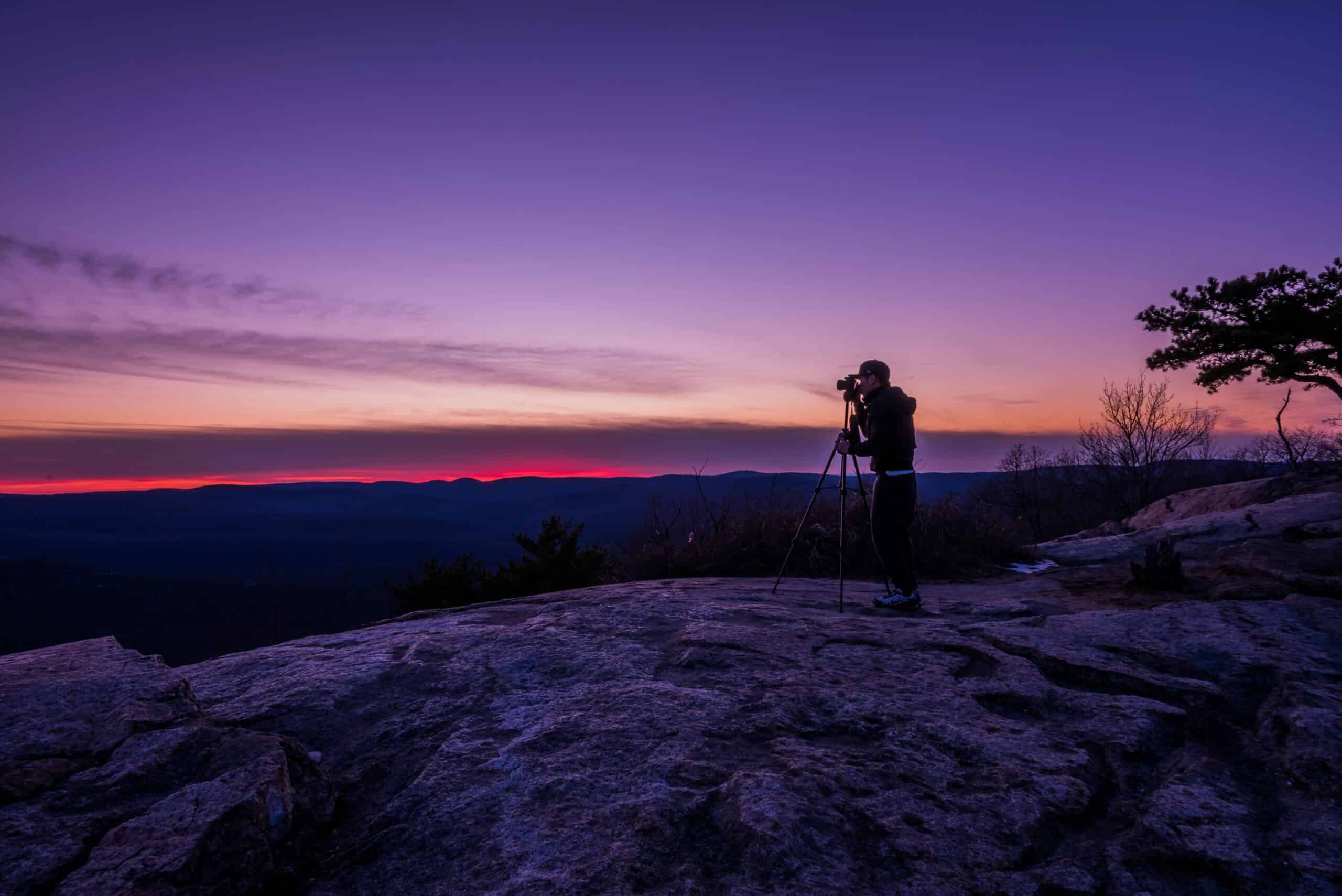
Before you set the tripod down, study the scene. Note sun direction, moving elements (people, trees, traffic), reflective surfaces (windows, polished floors), and potential flare sources. If shooting through glass, place the front element as close as safely possible (1–3 cm) and shade it with your hand or a rubber lens hood to reduce reflections. In interiors, watch mixed lighting (tungsten + daylight) and plan a white balance strategy to avoid stitching mismatches.
Match Gear to Scene Goals
The E‑M1 Mark III offers clean results from ISO 200–800; ISO 1600 is usable with modern denoise, ISO 3200 is possible if you protect highlights. For real estate or architecture, a rectilinear ultra‑wide (Fuji 10–24mm on a Fuji body, or a 7–8mm native on MFT) minimizes straight‑line bending and makes stitching precise. Fisheyes need fewer frames but demand more careful de‑fisheye handling and can exaggerate lines; rectilinears need more shots but produce natural perspective—ideal for client work.
Pre-shoot Checklist
- Charge batteries, clear fast cards; bring spares.
- Clean lens front/rear and camera sensor; dust is amplified in sky and walls.
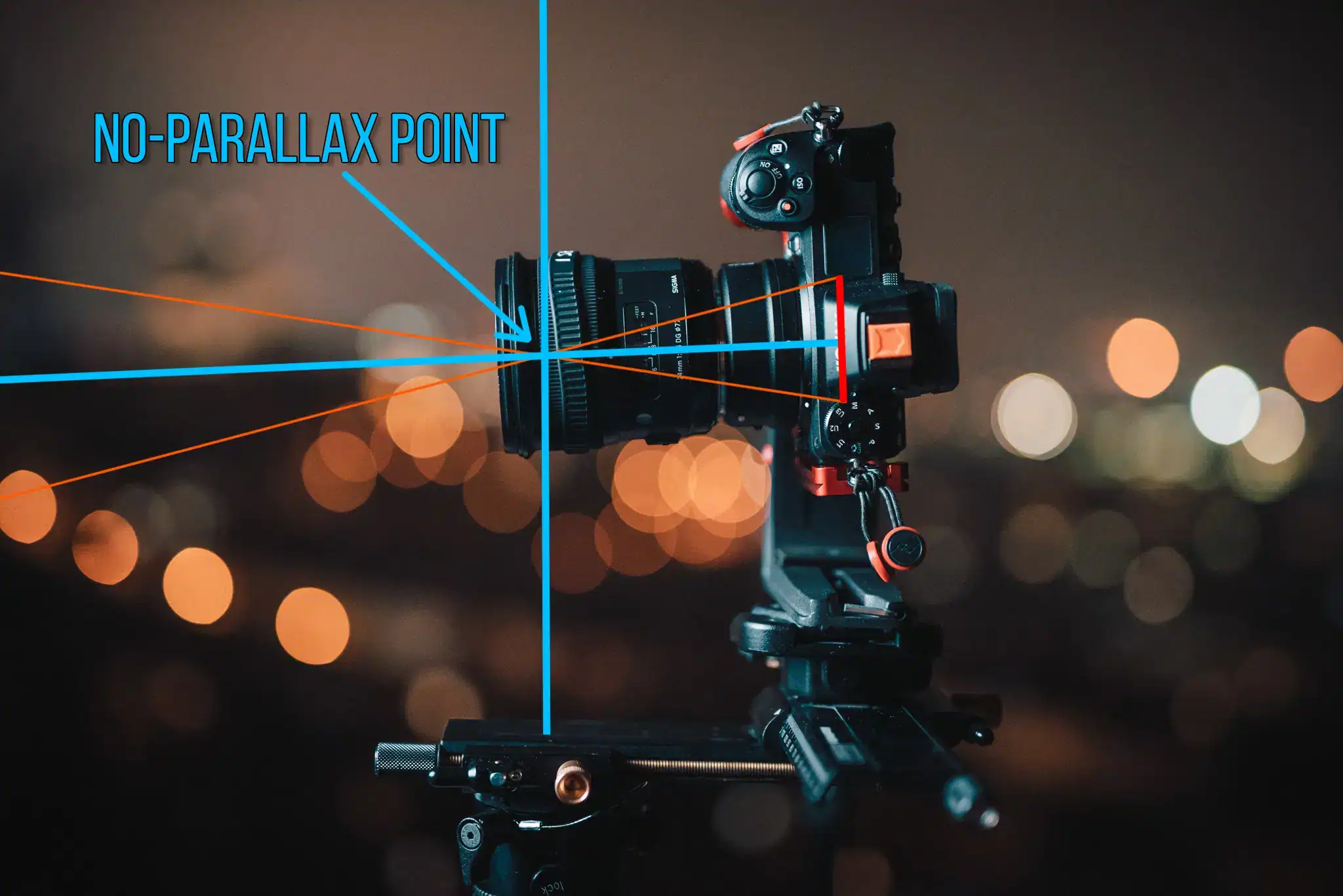
- Level the tripod, calibrate pano head to the lens’s no‑parallax point.
- Safety: secure on rooftops; use a sandbag in wind; tether gear on poles or car mounts.
- Backup workflow: shoot a second complete round in case of motion/ghosting; bracket if unsure about exposure.
Essential Gear & Setup
Core Gear
- Panoramic head: Lets you rotate around the lens’s entrance pupil (nodal point) to eliminate parallax between near and far objects—critical for clean stitches indoors.
- Stable tripod + leveling base: A leveling base speeds multi‑row capture and keeps camera rotation true to the horizon.
- Remote trigger or app: Use Olympus OI.Share or a cable release for vibration‑free frames.
Optional Add-ons
- Pole or car mount: Great for elevated or vehicle panoramas. Always tether gear, avoid high winds, and keep speed low to minimize vibration.
- Small LED panels or flash: For dim interiors, balance bright windows and dark corners.
- Weather covers: Both the E‑M1 Mark III and many MFT lenses are weather‑sealed, but rain covers add safety during long shots.
Want a visual walkthrough of setting up a panoramic head? This short video is a good primer.
Step-by-Step Shooting Guide
Standard Static Scenes
- Level tripod and align nodal point. On your panoramic head, slide the camera fore/aft until foreground and background alignment stays constant while panning. Mark the rail position for each focal length you use.
- Manual exposure + locked white balance. Meter for mid‑tones, then lock exposure and WB (e.g., Daylight or a custom Kelvin). This prevents flicker and color shifts across frames.
- Capture with proper overlap. For rectilinear UWA, aim for ~30% overlap horizontally and 25–30% vertically. Example: at 10mm (APS‑C) or 7–8mm (MFT), shoot 6–8 frames per row, three rows (+45°, 0°, −45°), then a dedicated zenith and nadir.
- Take a nadir (ground) shot. After the main ring(s), move the tripod slightly or use a monopod trick to shoot a clean floor plate you can patch later.
HDR / High Dynamic Range Interiors
- Bracket ±2 EV (3–5 frames). The E‑M1 Mark III offers extensive bracketing options; for bright windows, ±2 EV across 5 frames is a robust starting point.
- Lock WB and focus. Keep color and focus constant so stitched brackets blend seamlessly.
- Workflow tip: Either merge brackets per angle first (to HDR DNG/TIFF) then stitch, or stitch first with bracket sets and do exposure fusion in PTGui. Both methods work; try both to see which handles your scene better.
Low-Light / Night Scenes
- Tripod, longer exposures, low ISO. Start at ISO 200–400, f/4–f/5.6, adjust shutter as needed. The E‑M1 Mark III’s long exposure noise reduction helps for very long shutters.
- Use a remote and anti‑shock. Enable a 0–2 s delay or silent electronic shutter to prevent micro‑vibrations.
- Disable IBIS on tripod. While Olympus IBIS can detect tripod use, turning stabilization off avoids possible micro‑blur during long exposures.
Crowded Events
- Two passes strategy. First pass for coverage, second pass waiting for gaps or moving people to different positions. Later, blend the clean sections.
- Short shutter times. Use 1/200 s or faster at f/5.6–f/8 and ISO 400–800 to freeze motion.
- Masking in post. PTGui and Photoshop layer masks handle moving subjects well.
Special Setups (Pole / Car / Drone)
- Secure everything. Use tethers, safety lines, and double‑check clamps. Avoid strong winds with poles.
- Slower rotations. Allow vibrations to settle before each shot.
- Remote control. The Olympus OI.Share app is great for triggering when the camera is out of reach.
Recommended Settings & Pro Tips
Exposure & Focus
| Scenario | Aperture | Shutter | ISO | Notes |
|---|---|---|---|---|
| Daylight outdoor | f/8–f/11 | 1/100–1/250 | ISO 200 | Lock WB to Daylight; lowest ISO for max DR |
| Low light / night | f/4–f/5.6 | 1/30–multi‑sec | ISO 200–800 | Tripod + remote; turn off IBIS on tripod |
| Interior HDR | f/8 | Bracket ±2 EV | ISO 200–400 | Balance windows and lamps; merge before or after stitching |
| Moving subjects | f/5.6–f/8 | 1/200+ | ISO 400–800 | Double pass, mask later for ghost‑free result |
Critical Tips
- Manual focus at hyperfocal. For 7–10mm, set focus a bit past 1 m at f/8 to keep near‑to‑far sharp. Tape the focus ring if needed.
- Nodal point calibration. Use two vertical objects (near/far). Pan and adjust the rail until the objects do not shift relative to each other. Mark the rail for each focal length you use.
- White balance lock. Mixed WB across frames is hard to fix; set Kelvin or custom WB per scene.
- RAW capture. Shoot RAW for maximum latitude in highlight recovery and color consistency.
- Stabilization choices. On tripod, disable IBIS and lens OIS. Handheld panos? Keep IBIS on; use short shutter speeds.
- High Res Shot. For static scenes on a tripod, the E‑M1 Mark III’s Tripod High Res mode can reduce moiré and increase detail in your source frames, but lock down movement and wind.
Stitching & Post-Processing
Software Workflow
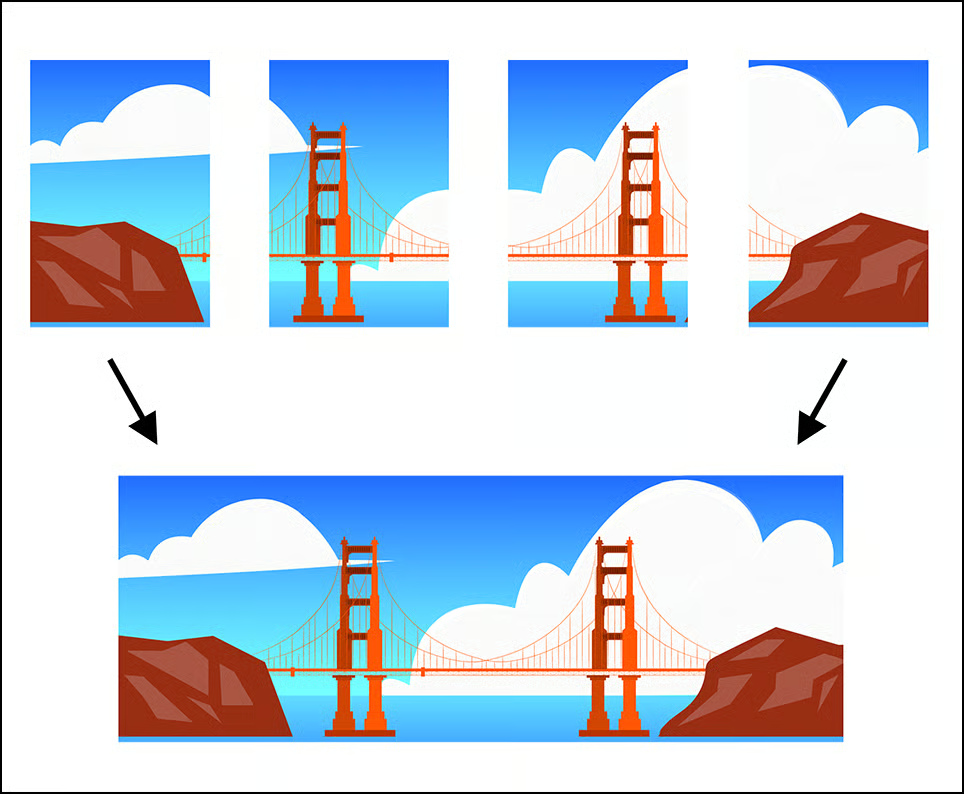
Import and organize your frames, group by row or by bracket set, then stitch with a dedicated panorama tool. PTGui remains an industry favorite for control point generation, masking, HDR fusion, and precise horizon leveling. Hugin is a capable open‑source alternative. Lightroom/Photoshop can handle simple single‑row panos; for full 360×180°, PTGui or Hugin is recommended. For rectilinear lenses, use ~25–30% overlap horizontally and vertically; fisheyes can get away with fewer images but may need de‑fisheye steps. For a pro overview of PTGui, see this review after you try a test stitch. PTGui review and why it’s a top choice for complex panoramas.
Cleanup & Enhancement
- Tripod/nadir patch. Shoot a clean floor plate and patch it with PTGui’s Viewpoint correction or clone/heal in Photoshop. Many now use AI content‑aware tools for fast plate cleanup.
- Color and noise. Match color across brackets, apply gentle denoise for MFT at ISO 800–1600, and avoid over‑sharpening sky or flat walls.
- Level horizon. Use line constraints (PTGui: Vertical/Horizon) to straighten architecture and remove pitch/roll drift.
- Export formats. For web and VR, export 8‑ or 16‑bit equirectangular JPEG/TIFF at 8k–12k width depending on use. For Meta Quest or WebVR specifics, see this guide. Using a mirrorless camera to shoot and stitch a 360 photo (Meta).
New to panoramic heads and technique? This primer explains best practices from setup through capture. Panoramic head setup tutorial and tips.
Useful Tools & Resources
Software
- PTGui (Windows/macOS) — fast, robust stitching and masking
- Hugin — open‑source panorama maker
- Lightroom / Photoshop — RAW workflow and finishing
- AI tripod removal / content‑aware fill — quick nadir patching
Hardware
- Panoramic heads (e.g., Nodal Ninja, Leofoto)
- Carbon fiber tripods with leveling bases
- Wireless remote shutters or phone apps
- Pole extensions and car mounts with safety tethers
Disclaimer: brand names are for search/reference only—check manufacturer sites for current specs and compatibility.
Common Mistakes & How to Avoid Them
- Parallax errors: Always align the no‑parallax point and keep the camera perfectly level.
- Exposure flicker: Use full manual exposure and locked white balance across every frame.
- Tripod shadows and footprints: Shoot a separate nadir plate or plan to patch in post.
- Ghosting from movement: Take two passes and mask in PTGui/Photoshop for clean composites.
- High ISO noise: Use a tripod, keep ISO ≤ 800 where possible on MFT, and employ denoise sparingly.
- Rushing overlap: Err on the side of 30% or more overlap, especially in low‑detail areas (blue sky, blank walls).
Frequently Asked Questions
-
Can I shoot handheld panoramas with the E‑M1 Mark III?
Yes for simple single‑row panoramas—use IBIS on, fast shutter (≥1/250 s), and ~30–40% overlap. For full 360×180° or interiors with close foregrounds, a tripod and panoramic head are strongly recommended to avoid parallax.
-
Is the Fujifilm XF 10–24mm f/4 wide enough for a single‑row 360?
Not for a full spherical (top to bottom). At 10mm APS‑C, you can cover a wide horizontal sweep with 6–8 frames, but you’ll still need additional rows and dedicated zenith/nadir frames for a complete sphere. Consider 3 rows (+45°, 0°, −45°) + zenith + nadir.
-
Do I need HDR for interiors with bright windows?
Often yes. Bracket ±2 EV (3–5 frames) to protect window highlights and lift deep shadows. Merge HDR per angle first or use exposure fusion in PTGui—whichever gives cleaner edges and fewer halos for your scene.
-
How do I avoid parallax issues with this setup?
Use a panoramic head and align the lens’s entrance pupil (no‑parallax point). Slide the camera on the rail while panning so near/far objects stay aligned. Mark your rail setting for each focal length (e.g., 7mm on MFT, 10mm on APS‑C) for repeatability.
-
What ISO range is safe on the E‑M1 Mark III in low light?
ISO 200–800 is the sweet spot for clean results. ISO 1600 is workable with good exposure and modern denoise; ISO 3200 is possible but expect visible noise in flat areas and shadows.
-
Can I save custom panorama settings on the E‑M1 Mark III?
Yes. Assign a Custom Mode (C1–C3) with manual exposure, fixed WB, RAW, IBIS off (for tripod), 2 s anti‑shock, and your preferred bracketing sequence. This speeds setup on location.
-
How can I reduce flare at ultra‑wide angles?
Avoid strong backlight in the frame junctions, shade the lens with your hand or a flag, and clean the front element thoroughly. Slightly adjust your rotation so the sun sits consistently in one frame, then blend carefully in post.
-
What’s the best tripod head for this camera and lens style?
A two‑axis panoramic head (e.g., Nodal Ninja, Leofoto) with fore/aft and vertical rail adjustment is ideal. It should allow precise entrance‑pupil alignment and easy, repeatable angle stops for multi‑row capture.
-
Can I actually mount the Fujifilm 10–24mm on the E‑M1 Mark III?
No—Fujifilm X‑mount is not physically/electronically compatible with Micro Four Thirds. Use a native MFT ultra‑wide of similar FOV for this Olympus body, or use the Fuji lens on a Fujifilm X‑mount camera and follow the same technique.
Practical Case Studies
Indoor Real Estate (Bright Windows)
Lens equivalent: Rectilinear 7–8mm on MFT (10–12mm APS‑C). Tripod, pano head, ISO 200, f/8. Bracket 5 frames at ±2 EV. Three rows of 8 frames each, plus zenith and nadir. Merge HDR per angle, stitch in PTGui with vertical line constraints to keep door frames straight. Patch floor with a clean nadir shot.
Outdoor Sunset Overlook
ISO 200, f/8, 1/100–1/250 s. Lock WB to Daylight. Use 6–8 frames per ring to minimize sky banding. Consider a second pass just after the sun sets to blend a clean, lower‑contrast sky into the horizon for a smoother graduate.
Event With Crowds
ISO 400–800, f/5.6–f/8, 1/200 s. Two passes around: the first fast for coverage, the second waiting for gaps. In PTGui, use masks to choose the cleaner body positions in overlapping frames. You’ll spend more time in post, but the result will be ghost‑free.
Rooftop or Pole Work
On a pole, keep the camera as small/light as possible, tether with a safety line, and avoid winds over ~15–20 km/h. Use the phone app to trigger and a slower, deliberate rotation. Add an extra overlap frame in each direction (e.g., 8 → 9 frames per ring) to hedge against slight sway.
Visual Inspiration
Wrap-Up
Learning how to shoot panorama with Olympus E‑M1 Mark III & Fujifilm XF 10–24mm f/4 OIS WR comes down to three pillars: stable capture, consistent settings, and smart stitching. While the Fuji lens doesn’t mount to the Olympus body, you can pair a native MFT ultra‑wide of similar FOV and follow the exact same capture and stitching workflow. Calibrate your nodal point once, lock your exposure and WB, keep overlap generous, and you’ll produce clean, high‑resolution 360 photos for web, VR, and print.
For more perspective and best practices from pros, the following resources are excellent next steps: Techniques to take 360 panoramas (StackExchange) and a step‑by‑step panoramic head setup guide. Set up a panoramic head for high‑end 360 photos.