Why This Camera & Lens Are Great for Panoramas
If you want to learn how to shoot panorama with Olympus E-M1 Mark III & Canon EF 8-15mm f/4L Fisheye USM, you’re pairing a rugged, pro-grade Micro Four Thirds body with one of the cleanest fisheye zooms ever made. The E‑M1 Mark III brings a 20.4 MP Live MOS sensor (17.4 × 13.0 mm), class-leading 5‑axis IBIS rated up to ~7 stops, weather sealing, and a compact form factor that’s perfect for long tripod sessions or pole work. Its practical dynamic range is around 12.5 EV at base ISO (ISO 200), and the pixel pitch (~3.3 µm) rewards good exposure discipline and clean ISO choices.
The Canon EF 8–15mm f/4L Fisheye USM provides razor-sharp diagonal fisheye coverage with minimal lateral CA and excellent coatings for flare resistance. On Micro Four Thirds, you’ll use an EF–MFT adapter. Two adapter paths change how many shots your panorama needs:
- Standard EF→MFT adapter (no optics): at 8 mm the diagonal FOV is wide but under 180°; expect ~150° diagonal coverage. You’ll usually shoot 6 around + zenith + nadir.
- 0.71× Speed Booster: at 8 mm effective focal length ~5.7 mm; you’ll achieve near-diagonal 180° coverage on MFT. This enables 4 around + zenith + nadir with solid overlap.
Compared with rectilinear lenses, a fisheye significantly reduces shot count and stitching time—ideal for real estate, event coverage, and quick outdoor 360 photos. The Olympus’s reliable manual controls, rock-solid IBIS (switch it off on a tripod), and the Canon’s predictable fisheye projection make this combo fast, accurate, and field-ready.
Quick Setup Overview
- Camera: Olympus OM‑D E‑M1 Mark III — Micro Four Thirds (17.4 × 13.0 mm), 20.4 MP; ~12.5 EV DR at base ISO; 5‑axis IBIS up to ~7 EV.
- Lens: Canon EF 8–15mm f/4L Fisheye USM — Diagonal/circular fisheye (on full frame); on MFT via adapter it becomes a diagonal fisheye with very wide FOV; best sharpness from f/5.6–f/8; low CA for a fisheye, excellent flare control.
- Estimated shots & overlap (tested ranges):
- With 0.71× Speed Booster at 8 mm: 4 around (90° yaw) + 1 zenith + 1 nadir; 25–35% overlap.
- With standard EF→MFT adapter at 8 mm: 6 around (60° yaw) + zenith + nadir; 30% overlap recommended.
- At 12–15 mm (standard adapter): 8 around + zenith + nadir, 25–30% overlap.
- Difficulty: Moderate (fisheye simplifies shot count but requires careful nodal alignment and WB/exposure locking).
Planning & On-Site Preparation
Evaluate Shooting Environment
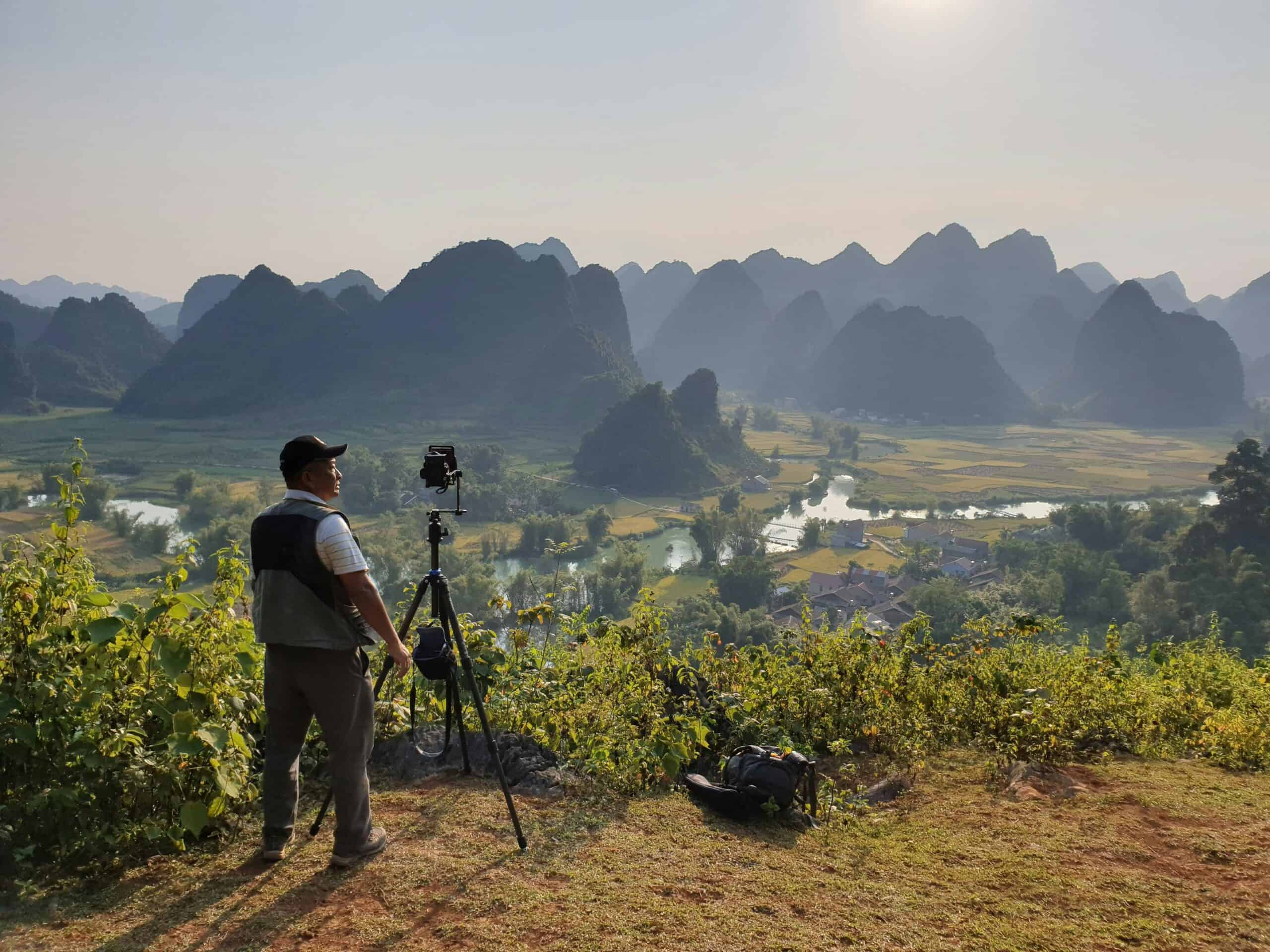
Walk the scene before you set up. Look for reflective surfaces (glass, polished floors), objects close to the lens that can cause parallax issues, and moving elements (people, cars, trees in wind). For glass, back off 1–1.5 m to reduce flare and ghosting; use a lens hood when you’re not chasing a full 180° diagonal, and shade the front element with your hand when the sun skims the glass.
Match Gear to Scene Goals
The E‑M1 Mark III’s strong IBIS and weather sealing make it a great outdoor 360 photo partner. In interiors or low light, keep ISO at 200–800 for clean files; ISO Low (64) on Olympus is a pulled setting—use base ISO 200 if you need maximum highlight headroom. The fisheye lens means fewer frames and fast stitching, but mind the curvilinear rendering: straight lines will bow, which is normal and correctable where necessary when you present a rectilinear view from your equirectangular output.
Pre-shoot Checklist
- Power & storage: at least two batteries; fast UHS‑II SD card(s). Clean the lens and sensor.
- Tripod & head: level the tripod; verify your panoramic head’s nodal alignment marks.
- Safety: assess wind loads (especially on rooftops or poles), add a safety tether, and avoid public walkways with unattended tripods.
- Backup workflow: shoot a second full rotation in case of movement or stitching errors; name sequences clearly for batching.
Essential Gear & Setup
Core Gear
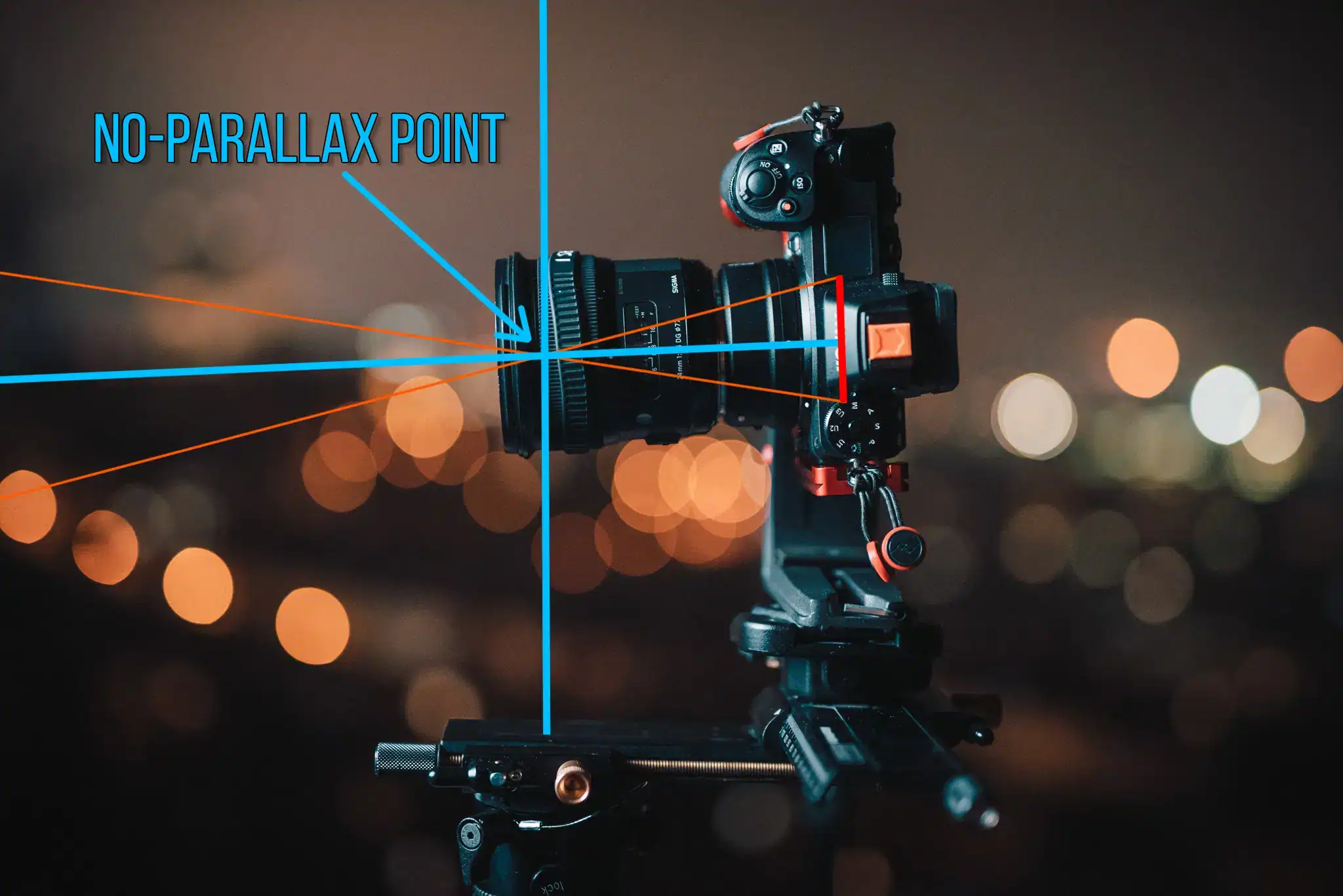
- Panoramic head: Align the lens’s entrance pupil (no-parallax point) over the vertical and rotational axes. This eliminates parallax when foreground and background overlap between frames.
- Stable tripod with leveling base: Leveling keeps rows even and simplifies stitching, especially for single-row fisheye capture.
- Remote trigger or the OI.Share app: Fire shots without touching the camera; a 2 s self-timer works in a pinch.
Optional Add-ons
- Pole or car mount: Use a safety line, beware of wind torque, and avoid crowded areas. On moving vehicles, increase shutter speed and turn off IBIS to prevent sensor warp from vibration.
- Lighting aids: Small LEDs for interiors help balance dark corners; avoid mixed color temperatures if possible.
- Weather protection: Rain covers and microfiber cloths; keep the fisheye front element spotless to prevent flare halos.
Step-by-Step Shooting Guide
Standard Static Scenes
- Level and align: Level the tripod. On the pano head, align the lens so the entrance pupil sits exactly above the rotation axis. Practical method: place two light stands (one near, one far) and rotate; adjust fore–aft rail until the near stand doesn’t shift relative to the far stand.
- Manual everything: Set Manual exposure and lock your white balance (Daylight or a Kelvin value like 5200 K). Turn off IBIS on the tripod (S‑IS Off). Use mechanical shutter with Anti‑Shock/0 s to avoid electronic banding under artificial lights.
- Capture sequence:
- Speed Booster, 8 mm: 4 shots around at 90° yaw increments, then 1 zenith and 1 nadir. Aim for 25–35% overlap.
- Standard EF→MFT adapter, 8 mm: 6 shots around at 60° yaw, plus zenith and nadir.
- Nadir shot: Tilt up the camera slightly or shift the tripod to capture a clean floor plate for tripod removal. Mark the spot with gaffer tape to reposition precisely.
HDR / High Dynamic Range Interiors
- Bracket ±2 EV (e.g., 3–5 frames): Windows vs. interior shadows often require 12–14 stops of range. The E‑M1 III’s base ISO 200 preserves highlights better than ISO Low 64 in mixed light.
- Lock WB and focus: Keep WB fixed across brackets to avoid stitching color shifts. Use manual focus and don’t refocus between exposures.
- Workflow tip: Shoot the same bracket pattern for each yaw position to batch-stitch HDR panoramas later.
Low-Light / Night Scenes
- Exposure: Start around f/4–f/5.6, ISO 200–800, lengthen shutter as needed. The IBIS is excellent handheld, but on a tripod switch it off.
- Triggering: Remote release or 2 s timer to eliminate vibrations. Avoid electronic shutter under flickering LED/fluorescent lighting.
- Starry skies: Use f/4–f/5.6, 15–25 s at ISO 800–1600 for the sky, but consider dual exposures (one for sky, one for foreground) to keep noise down.
Crowded Events
- Two passes: First pass quickly for coverage; second pass wait for gaps. Mask moving subjects during stitching.
- Fast shutter: 1/200 s or faster to freeze people; raise ISO to 400–800 if needed.
- Shot discipline: Keep your yaw increments exact—crowd scenes are less forgiving to alignment slop.
Special Setups (Pole / Car / Drone)
- Pole: Use a carbon-fiber pole, guy lines, and a remote trigger. Rotate slowly and keep the pole vertical; wind amplifies sway with a fisheye.
- Car mount: Use a suction rig with safety tethers. Shutter at 1/500 s or faster; disable IBIS to avoid smear; shoot when the vehicle is completely stationary.
- Drone carry: If you sling the rig (not generally recommended), balance carefully and obey local laws. Typically a 360 camera is safer than a bodied rig.
Watch a panorama head setup in action
Seeing a live setup helps. This video demonstrates core principles that map 1:1 to this Olympus + fisheye workflow.
Recommended Settings & Pro Tips
Exposure & Focus
| Scenario | Aperture | Shutter | ISO | Notes |
|---|---|---|---|---|
| Daylight outdoor | f/8–f/11 | 1/100–1/250 | 200 | Lock WB (Daylight/Kelvin 5200–5600) |
| Low light / night | f/4–f/5.6 | 1/30–long | 200–800 | Tripod, IBIS off; avoid electronic shutter under LEDs |
| Interior HDR | f/8 | Bracket ±2 EV | 200–400 | Balance windows and lamps; consistent bracket pattern |
| Moving subjects | f/5.6–f/8 | 1/200+ | 400–800 | Double pass for masking; keep increments precise |
Critical Tips
- Manual focus and hyperfocal: At 8 mm and f/8 on MFT, hyperfocal is ~0.5 m. Focus ~0.5–0.6 m, then disable AF. Use focus peaking + magnification.
- Nodal calibration: Mark your fore–aft and vertical rails once dialed in. Adapter thickness changes the entrance pupil position—recheck when swapping adapters.
- White balance lock: Use Kelvin WB for consistent color across frames; mixed lighting creates stitching seams.
- RAW capture: The E‑M1 III’s 12+ EV DR at base ISO gives room for shadow recovery and CA/defringe corrections from the fisheye.
- IBIS strategy: Handheld panos? IBIS helps. On a tripod, turn IBIS off to prevent micro‑drift during exposures.
Stitching & Post-Processing
Software Workflow
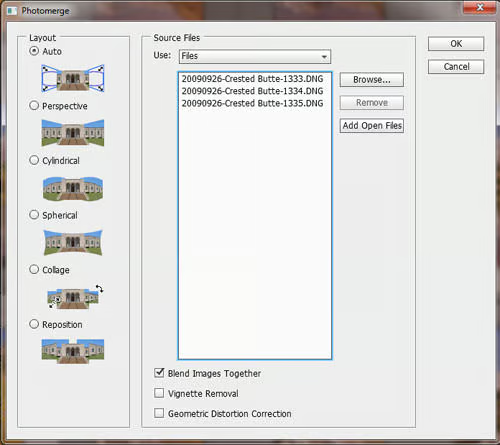
PTGui is the industry workhorse for fisheye 360 photos. Import your RAWs into Lightroom for basic white balance and exposure matching, export as 16‑bit TIFF, then stitch in PTGui. Set lens type to “Fisheye,” enter focal length and sensor size (account for Speed Booster if used), and let the optimizer run. Typical overlap targets: ~25–30% for fisheye, ~20–25% for rectilinear. Hugin is a robust open-source alternative if you prefer free tools. For a primer on end‑to‑end DSLR/mirrorless 360 workflows, the Meta/Oculus creator guide is a solid overview. PTGui review: why pros choose it · DSLR/mirrorless 360 photo workflow (Meta/Oculus)
Cleanup & Enhancement
- Tripod/nadir patch: Export a nadir view, clone/heal in Photoshop, or use AI nadir patching tools to remove the tripod.
- Color & noise: Apply lens-profile defringe for fisheye CA, unify WB across the set, and denoise low-light brackets before stitching if needed.
- Level horizon: Use PTGui’s vertical control points or the “Level the panorama” tool to correct roll/pitch.
- Export: For VR players, export an equirectangular 2:1 JPEG/TIFF at 100–200 MP if your computer can handle it. Keep a layered master for future edits.
For deeper technique on panoramic heads, this practical guide explains alignment details that prevent parallax headaches. Panoramic head setup essentials
Useful Tools & Resources
Software
- PTGui panorama stitching
- Hugin (open source)
- Lightroom / Photoshop for RAW and retouch
- AI tripod removal tools for nadir patching
Hardware
- Panoramic heads (Nodal Ninja, Leofoto)
- Carbon fiber tripods with leveling bases
- Wireless remotes (or OI.Share mobile app)
- Pole extensions / car suction mounts (with safety tethers)
Disclaimer: product names are for search reference; verify specs on official sites. For spherical resolution planning by sensor/lens combo, see this reference chart: PanoTools spherical resolution.
Field-Tested Scenarios
Indoor Real Estate (Bright Windows)
- Adapter: Speed Booster for fewer shots; 4 around + Z + N, bracket ±2 EV.
- Settings: ISO 200–400, f/8, shutter set for mid exposure; lock WB ~4000–5000 K.
- Tip: Turn off overhead LEDs if they flicker with electronic shutter; use mechanical with Anti‑Shock.
Outdoor Sunset
- Adapter: Either is fine; consider 6 around (standard adapter) for safer overlap near the sun.
- Settings: ISO 200, f/8, bracket 5 shots ±2 EV; shield the sun with your hand to reduce flare in key frames.
- Tip: Do a fast base sweep, then a careful HDR sweep—the sky changes rapidly.
Event Crowds
- Approach: Two passes; prioritize people flow. 1/250 s, f/5.6–f/8, ISO 400–800.
- Post: Mask/clone people who shift between frames; consider allowing some motion for authenticity.
Rooftop / Pole Shooting
- Safety: Always tether the rig; check wind gusts. Use faster shutter (1/200 s+) to freeze sway at the top of a pole.
- Workflow: Prefocus/manual, lock exposure, and rotate slowly with firm stops.
Car-Mounted Capture
- Setup: Multiple suction cups + safety lines. Shoot when stationary; if rolling, use 1/500–1/1000 s and accept lower ISO noise.
- IBIS: Off. Vibration can cause sensor stabilization artifacts.
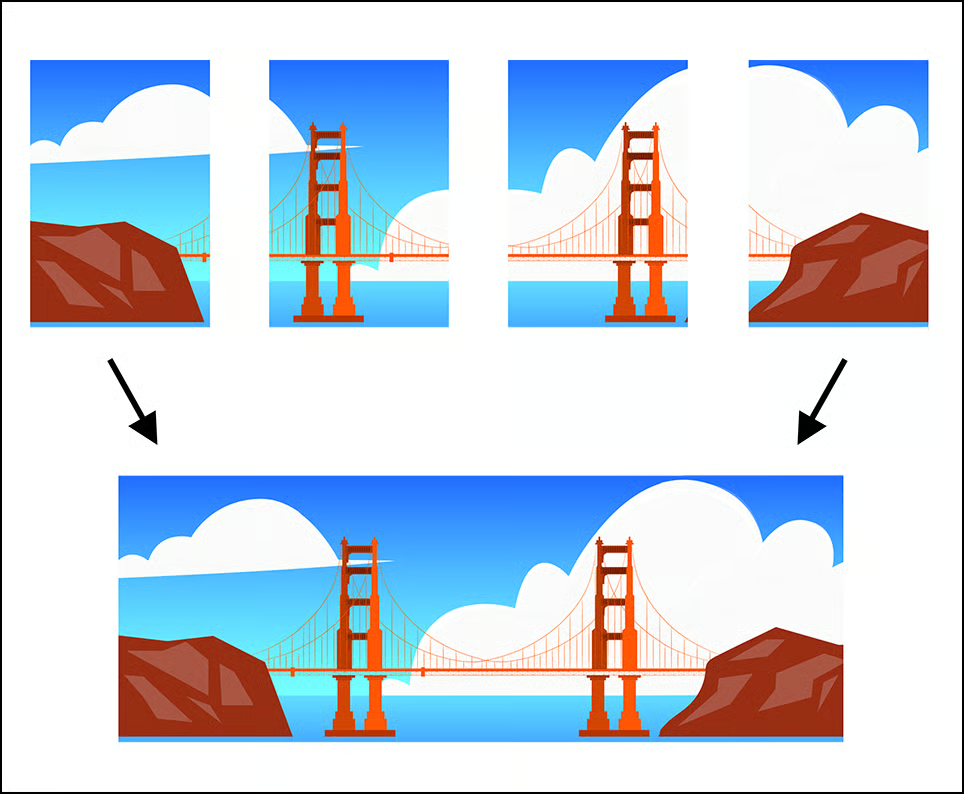
For a broader overview of camera/lens choices and virtual-tour workflows, this deep dive is useful, especially when comparing fisheye vs. rectilinear tradeoffs. DSLR virtual tour camera & lens guide
Common Mistakes & How to Avoid Them
- Parallax error → Align the entrance pupil; recheck after changing adapters.
- Exposure flicker → Manual exposure and locked WB/Kelvin; don’t mix Auto modes mid-sequence.
- Tripod shadows/rig in frame → Capture a nadir tile for patching; be mindful of sun angle.
- Ghosting from movement → Shoot a second pass; use masks in PTGui/Photoshop to blend clean areas.
- Night noise → Keep ISO ≤ 800 where possible; extend shutter on tripod rather than pushing ISO high.
- Fisheye flare → Shade the front element; clean often and avoid direct strong backlight when possible.
Frequently Asked Questions
-
Can I shoot handheld panoramas with the E‑M1 Mark III?
Yes for partial or casual 360s, but a tripod + pano head is strongly recommended for true 360×180 VR output. Handheld, use IBIS on, 1/250 s or faster, and shoot extra overlap. Expect more stitching cleanup.
-
Is the Canon EF 8–15mm wide enough for single‑row 360 on MFT?
With a 0.71× Speed Booster at 8 mm, yes—4 around + Z + N works well. With a standard EF→MFT adapter, 8 mm is typically not a full 180° diagonal, so plan for 6 around + Z + N.
-
Do I need HDR for interiors with bright windows?
Usually, yes. Bracket ±2 EV (3–5 frames). The E‑M1 III has good DR but windows easily exceed it; HDR keeps window detail and clean shadows.
-
How do I avoid parallax issues with this lens and adapters?
Calibrate the entrance pupil each time you change adapters. Use the near/far object test and mark your pano head rails. Tiny fore–aft changes make a big difference with a fisheye.
-
What ISO range is safe on this camera in low light?
For clean professional output, ISO 200–800 is the sweet spot. ISO 1600 is usable in a pinch; expose to the right and denoise in post. Prefer longer shutter on tripod over pushing ISO.
Safety, Protection, and Backup
Fisheyes have bulbous front elements—use the cap/hood whenever you’re not shooting. On rooftops or poles, tether the rig, and keep bystanders clear. Avoid leaving tripods unattended. In rain, use a cover and dry the front element frequently. For data safety, dual-card redundancy isn’t available here, so back up to a phone or portable SSD after each location. Keep a spare battery—cold or long HDR sessions drain faster than you think.
Wrapping Up
With careful nodal alignment, locked exposure and WB, and the right overlap strategy, the Olympus E‑M1 Mark III plus Canon EF 8–15mm f/4L Fisheye USM (via EF→MFT adapter or Speed Booster) delivers fast, reliable 360° panoramas. Master the workflow once, mark your pano head settings, and you’ll produce repeatable, professional results whether you’re shooting real estate interiors, golden-hour cityscapes, or crowd-heavy events.