Why This Camera & Lens Are Great for Panoramas
If you want to learn how to shoot panorama with Olympus E-M1 Mark III & AstrHori 12mm f/2.8 Fisheye, you’ve picked a compact, rugged, and highly capable combo. The E-M1 Mark III uses a 20.4MP Micro Four Thirds (17.4×13.0 mm) Live MOS sensor with a practical base ISO of 200 (extended “LOW” down to ~ISO 64), strong in-body image stabilization (up to around 7 EV; more with Sync IS lenses), dual UHS-II card slots, and excellent ergonomics. It’s weather-sealed, reliable in the field, and has responsive controls that make pano workflow fast. The pixel pitch is roughly 3.3 µm, which means clean detail at base ISO and usable results up to ISO 800–1600 when handled carefully.
The AstrHori 12mm f/2.8 Fisheye is a manual-focus, manual-aperture fisheye with a bulbous front element and very wide coverage. On Micro Four Thirds, the effective diagonal field of view is narrower than on full frame, but it still delivers a dramatic perspective and requires fewer shots than a rectilinear wide-angle. Fisheye distortion is expected, but modern stitching apps model fisheye projection well, often resulting in easier control-point alignment compared to rectilinear ultrawides with wavy edges. This combo is lightweight, travel-friendly, and cost-effective for 360 photo and panoramic work.
Quick Setup Overview
- Camera: Olympus OM-D E-M1 Mark III — Micro Four Thirds (20.4MP). Base ISO 200, extended LOW, robust IBIS, dual UHS-II slots.
- Lens: AstrHori 12mm f/2.8 Fisheye — manual focus, fisheye projection, bulbous front element (no front filters), good center sharpness stopped down, typical fisheye CA toward edges.
- Estimated shots & overlap:
- Full 360×180 (safe multi-row): 8 shots around at +15°, 8 shots around at −15°, plus 1 zenith and 1 nadir (total ~18). ~25–30% overlap.
- Full 360×180 (minimal): 10–12 around at 0° pitch + zenith + nadir. Better outdoors where sky can close the zenith.
- Cylindrical (single-row horizon pano): ~12–16 shots around with ~25–30% overlap.
- Difficulty: Moderate. Fisheye keeps shot count reasonable, but multi-row and nodal alignment are required for perfect results.
Planning & On-Site Preparation
Evaluate Shooting Environment
Assess light direction, brightness range (windows vs interior), reflective surfaces (glass, mirrors, polished floors), and moving elements (people, cars, trees). If you must shoot near glass, get as close as possible (within a few centimeters) to reduce reflections and ghosting; use a rubber lens hood if available and shade unwanted light sources with your hand or a flag.
Match Gear to Scene Goals
The E-M1 Mark III offers approximately 12 EV of usable dynamic range at base ISO in RAW, which is excellent for daytime panoramas. Indoors, try to stay within ISO 200–800 for clean files; ISO 1600 is workable with careful exposure and noise reduction. The AstrHori 12mm fisheye’s wide view reduces the number of frames compared to a rectilinear 12mm; that makes it faster for 360 photo capture, though you’ll need multi-row shooting to fully cover zenith/nadir on Micro Four Thirds. Fisheye projection also helps stitching software find control points reliably.
Pre-shoot Checklist
- Power & storage: Fully charged BLH-1 batteries; configure dual RAW write to both SD cards for redundancy.
- Clean glass: Carefully clean the fisheye element (avoid scratches), and use a blower on the sensor.
- Tripod & head: Leveling base for speed; panoramic head calibrated to the lens’s entrance pupil.
- Safety: For rooftops or car mounts, tether the camera, monitor wind gusts, and stay clear of edges.
- Backup workflow: When in doubt, shoot a second safety round; review histograms and a few magnified frames on-site.
Essential Gear & Setup
Core Gear
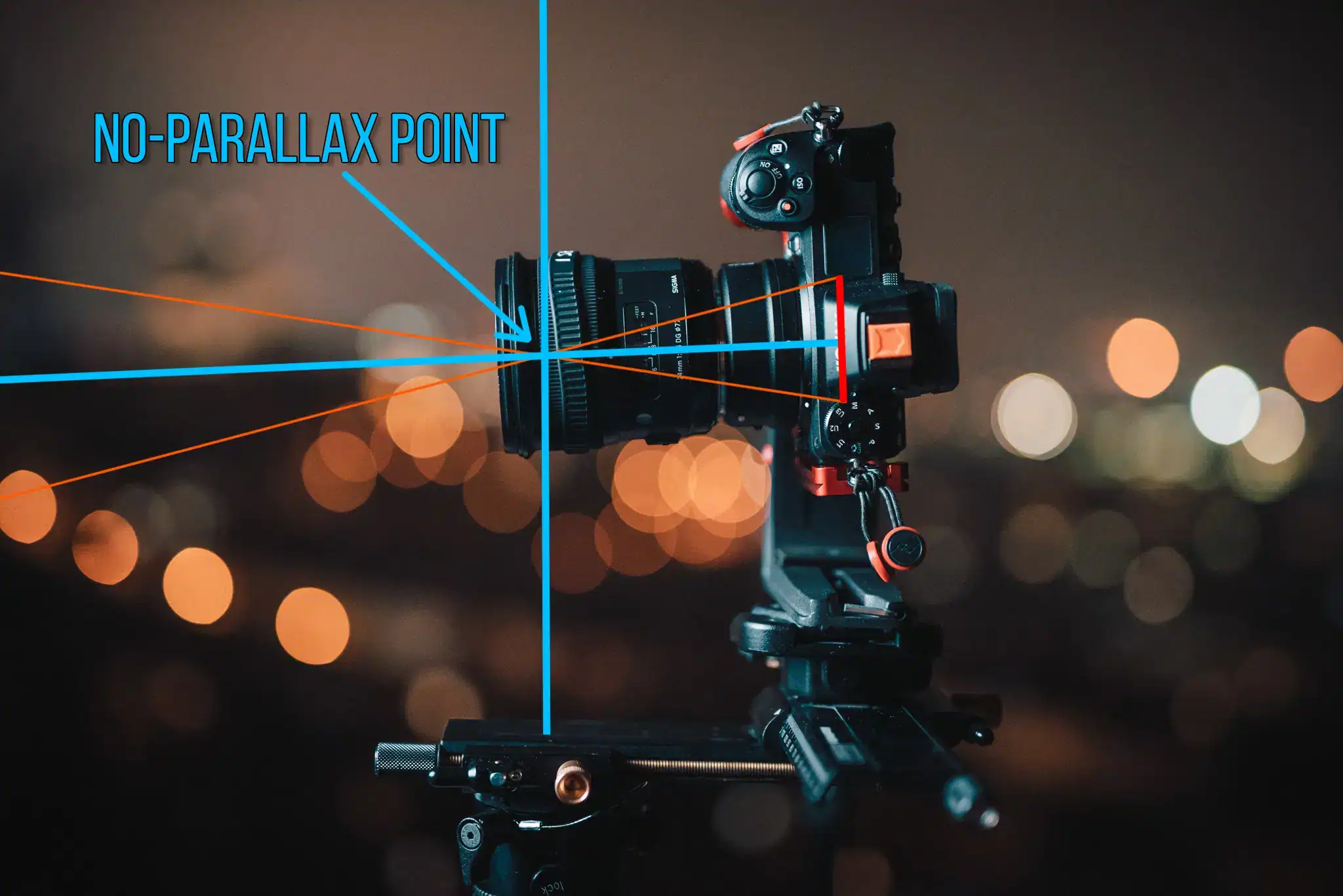
- Panoramic head: Enables rotation around the lens’s entrance pupil (nodal point) and allows multi-row capture. Correct alignment eliminates parallax between near/far objects and produces seamless stitches.
- Stable tripod with leveling base: A leveling base speeds setup; aim for a perfectly level panning axis so your rings of images are consistent.
- Remote trigger/OI.Share app: Fire the shutter without touching the camera to avoid vibrations. Use the E-M1 Mark III’s Anti-Shock (0s) or a 2s timer if needed.
Optional Add-ons
- Pole or car mount: Great for elevated or vehicle-based perspectives. Always tether, use safety lines, and avoid high winds or high speeds. Expect more shots due to possible sway.
- Lighting aids: Small LED or flash for dim corners in interiors; avoid mixed color temperatures when possible.
- Weather protection: Rain covers and microfiber cloths; the E-M1 Mark III is weather-sealed, but the fisheye front element is exposed.
Step-by-Step Shooting Guide
Standard Static Scenes
- Level tripod & align nodal point: Mount the panoramic head and level it. Slide the camera on the rail so the rotation occurs around the lens’s entrance pupil. Start with a rough offset and fine-tune (details below).
- Manual exposure & white balance lock: Meter the brightest area you need detail in (e.g., near a window), then set manual exposure to protect highlights while maintaining adequate shadows (expose-to-the-right without clipping). Lock WB to a preset (Daylight/Tungsten) to prevent color shifts across frames.
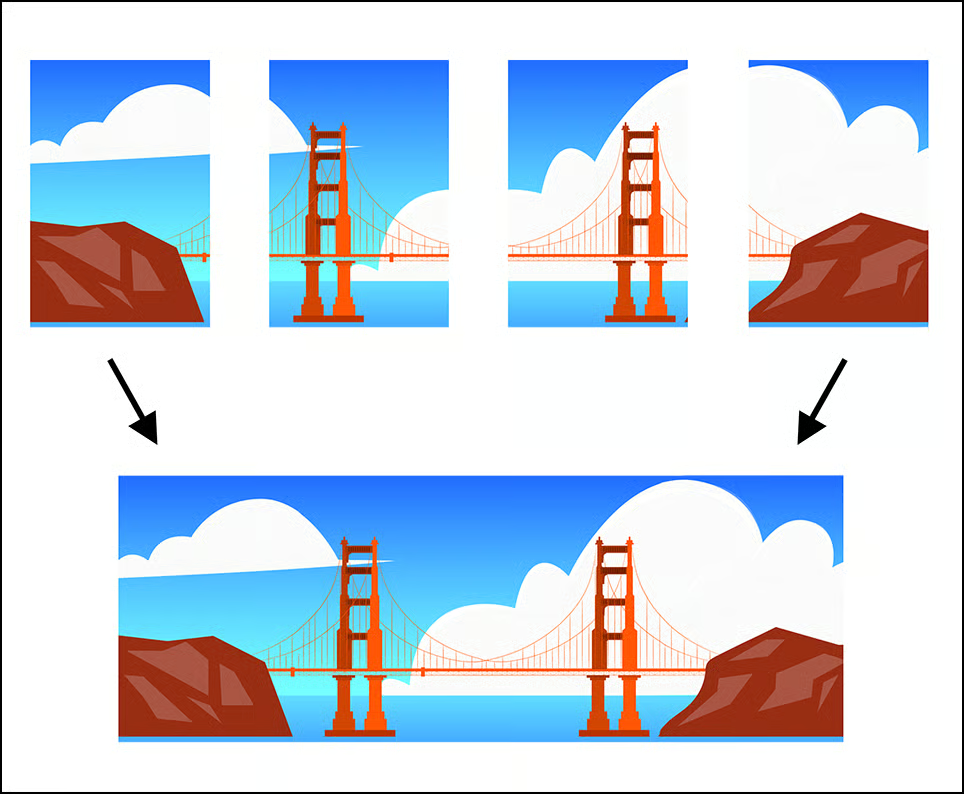
- Capture sequence with overlap: For a safe 360 with this combo on MFT, shoot two rings—8 around at +15° pitch, 8 around at −15°, then one zenith and one nadir. Use ~25–30% overlap between adjacent frames.
- Nadir (ground) shot: After the main sequence, remove the camera/tripod (if possible) or offset the rig to capture a clean ground plate for tripod removal during post.
HDR / High Dynamic Range Interiors
- Bracket ±2 EV: Use 3–5 brackets (e.g., −2/0/+2 or −4/−2/0/+2/+4) at each camera position to balance bright windows and interior shadows. Keep the aperture fixed.
- Lock WB and focus: Don’t let WB or focus change across brackets—set manual focus and a fixed WB preset to maintain consistency throughout the pano.
Low-Light / Night Scenes
- Longer exposure, steady platform: Use the tripod; disable IBIS on a tripod to avoid micro-jitter. The E-M1 Mark III’s mechanical shutter with Anti-Shock (0s) minimizes vibration.
- ISO ranges: Aim for ISO 200–400 for best quality; ISO 800 is fine; ISO 1600 usable with extra noise reduction. Prefer longer shutter times over high ISO when the scene allows.
- Remote release or app: Prevent shake. If there are LED lights, prefer mechanical shutter to avoid banding.
Crowded Events
- Two passes: First, capture the full sequence quickly. Second, wait for gaps in traffic and reshoot frames with the worst overlaps. You’ll mask the clean frames over the busy ones during stitching.
- Faster shutter: Use 1/200s+ if you want to freeze moving subjects, even if that means raising ISO slightly.
Special Setups (Pole / Car / Drone)
- Pole: Secure the pole and tether the camera. Use faster shutter speeds (1/250–1/500s) and increase overlap since sway introduces alignment challenges.
- Car: Only operate from safe, stationary positions. If shooting from a moving car, expect ghosting; capture multiple passes and mask later.
- Drone: The E-M1 Mark III isn’t a drone payload, but you can mount on a mast or crane. Always prioritize safety and balance.
Case Studies (What Works in the Field)
Indoor Real Estate
Tripod, two rings of 8 plus zenith/nadir, f/8, ISO 200, and 5-shot HDR brackets. Lock WB to “Tungsten” in warm interiors to avoid mixed color shifts. Mask moving curtains or ceiling fans later.
Outdoor Sunset Overlook
Single exposure per position if the contrast is modest; if the sun’s still in frame, bracket ±2 EV. Stop down to f/8–f/11 to maximize corner sharpness and flare resistance. Use the lens hood if supplied and angle slightly to avoid direct flare streaks.
Event Crowds
Two-pass approach. First pass covers the entire pano; second pass captures frames with fewer moving people. Choose 1/250s, f/5.6–f/8, ISO 400–800.
Rooftop on a Breezy Day
Add weight to your tripod. Use a lower profile head, shortest leg sections extended, and faster shutter speeds. Consider shooting more overlap (30–40%) to increase stitch reliability.
Recommended Settings & Pro Tips
Exposure & Focus
| Scenario | Aperture | Shutter | ISO | Notes |
|---|---|---|---|---|
| Daylight outdoor | f/8–f/11 | 1/100–1/250 | 200 | Lock WB (Daylight). Watch for flare |
| Low light/night | f/4–f/5.6 | 1/30–1/60 (or longer on tripod) | 200–800 | IBIS off on tripod; prefer longer shutter over high ISO |
| Interior HDR | f/8 | Bracket ±2 EV | 200–400 | Balance windows and lamps; consistent WB |
| Action / moving subjects | f/5.6–f/8 | 1/200+ | 400–800 | Freeze motion; shoot a second pass for masking |
Critical Tips
- Manual focus at hyperfocal: At 12mm and f/8 on Micro Four Thirds, hyperfocal is around 1.2 m; set focus there and you’ll cover from ~0.6 m to infinity.
- Nodal point calibration: Start with the camera mounted so the sensor mark sits roughly over the rotation axis, then slide the rail until foreground/background alignment doesn’t shift while panning. Expect the entrance pupil to sit a few centimeters in front of the mount; fine-tune and mark your rail for repeatable setup.
- White balance lock: Choose a preset (Daylight/Tungsten) or a measured Kelvin value. Avoid Auto WB across the sequence.
- RAW capture: Shoot RAW for maximum dynamic range and color latitude; the E-M1 Mark III files grade well at base ISO.
- Stabilization: Turn IBIS off on a tripod; it can introduce sub-pixel shifts that hurt stitching. Use Anti-Shock (0s) or a short self-timer to suppress vibrations.
- Shutter mode: Prefer mechanical shutter under LED lighting to avoid banding; silent electronic is fine outdoors.
For a deeper primer on panoramic head setup and the no-parallax technique, see this panoramic head guide. How to set up a panoramic head (Oculus Creator)
Stitching & Post-Processing
Software Workflow
Import and organize your RAWs (Lightroom, Capture One, or OM Workspace). For stitching, PTGui is widely regarded for robust fisheye handling, control-point generation, masking, and horizon tools. Hugin is a powerful open-source alternative. Set lens type to fisheye and projection to Spherical (equirectangular), HFOV 360°, VFOV 180°, and let the optimizer work. Aim for 25–30% overlap for fisheye, which balances coverage and stitch reliability. Why PTGui remains a top stitching tool (Fstoppers review)
Cleanup & Enhancement
- Nadir patch: Use PTGui’s Viewpoint correction, a dedicated nadir shot, or clone tools in Photoshop/Affinity. AI-based retouching can speed up tripod removal.
- Color & noise: Match color across rings, reduce noise for high-ISO night shots, and add a bit of clarity/sharpening. Beware of over-sharpening near the stitch seams.
- Level horizon: Use vertical line guides or auto-horizon tools to correct roll, yaw, and pitch.
- Export: For VR platforms, export equirectangular 2:1 JPEG (quality 90–95) or 16-bit TIFF for archival. Typical final widths with this workflow range ~12k–16k pixels depending on overlap and scene detail.
If you’re new to 360 photo workflows with mirrorless cameras, this overview is a solid starting point. Using a mirrorless camera to shoot and stitch a 360 photo (Oculus Creator)
For a practical background on panoramic shooting best practices and control points, this write-up is helpful. Best techniques to shoot 360 panoramas (Photo StackExchange)
Disclaimer: software and versions change; always confirm the latest instructions in each tool’s documentation.
Useful Tools & Resources
Software
- PTGui panorama stitching
- Hugin (open source)
- Lightroom / Photoshop / Affinity Photo
- AI tripod/nadir removal tools
Hardware
- Panoramic heads (Nodal Ninja, Leofoto, Sunwayfoto)
- Carbon fiber tripods with leveling bases
- Wireless remote shutters
- Pole extensions / car mounts with safety tethers
Disclaimer: brand names are for search reference; check official sites for specs and compatibility.
Common Mistakes & How to Avoid Them
- Parallax error → Calibrate the entrance pupil carefully and keep the camera level.
- Exposure flicker → Use full manual exposure and locked WB; don’t mix Auto ISO with manual exposure across frames.
- Tripod shadows/footprints → Capture a dedicated nadir plate and patch in post.
- Ghosting from moving subjects → Shoot two passes and mask the clean frames over the busy ones.
- Night noise → Favor longer shutter times at lower ISO; apply targeted noise reduction.
- Flare on fisheye → Shield the front element from direct light; slightly adjust the yaw so the sun is between frames when possible.
Frequently Asked Questions
- Can I shoot handheld panoramas with the E-M1 Mark III?
Yes, for quick cylindrical panoramas in bright light, especially with IBIS and fast shutter speeds. For full 360×180 with close foregrounds, use a tripod and panoramic head to avoid parallax and to maintain precise overlap.
- Is the AstrHori 12mm f/2.8 Fisheye wide enough for single-row 360 on Micro Four Thirds?
Not reliably. On MFT, you’ll usually need a multi-row approach to cover zenith and nadir cleanly. Safe plan: 8 around at +15°, 8 around at −15°, plus zenith and nadir. Outdoors, you might manage 10–12 around at 0° with extra overlap, then shoot separate zenith/nadir frames.
- Do I need HDR for interiors with bright windows?
Often yes. Bracket ±2 EV (3–5 frames) at each camera position. Keep aperture and WB fixed, and merge HDR stacks before stitching or let PTGui handle bracketed stacks per view.
- How do I avoid parallax issues?
Calibrate the entrance pupil on a panoramic head so the camera rotates around it. Use near/far alignment tests and mark the rail position for this lens. Keep the tripod level and don’t touch the setup during capture. Panoramic head and no-parallax tutorial
- What ISO range is safe on this camera in low light?
For cleanest results, ISO 200–400. ISO 800 still good; ISO 1600 usable with thoughtful exposure and noise reduction. Prefer longer shutter times on a tripod over pushing ISO.
- Can I set up Custom Modes for pano on the E-M1 Mark III?
Yes. Save Manual exposure, WB preset, RAW only, IBIS off, Anti-Shock (0s), and your preferred bracketing settings to a Custom Mode (C1/C2) so you can recall your pano setup instantly.
- How do I reduce flare with a fisheye?
Shade the front element, avoid placing the sun just inside the frame, stop down to f/8–f/11, and slightly adjust your start angle so the sun falls between two frames rather than near the edge.
- What tripod head should I choose?
A two-axis panoramic head with vertical and horizontal rails (e.g., Nodal Ninja, Leofoto) allows multi-row capture and precise entrance-pupil positioning. Add a leveling base for speed.
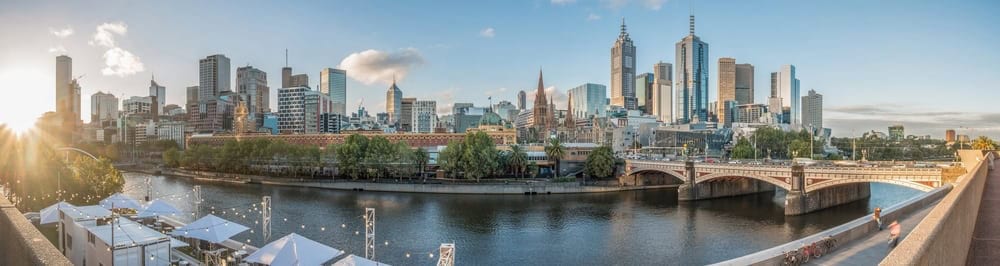
Visual Inspiration
Safety, Care & Limitations
The AstrHori 12mm’s bulbous front element is vulnerable—use the cap whenever you’re not shooting and avoid touching glass surfaces. The E-M1 Mark III is weather-sealed, but a fisheye facing rain collects drops fast; bring a microfiber cloth. On rooftops or with poles, tether your gear, watch the wind, and keep the center of gravity over the tripod. In cars, never compromise safety for a shot—mount only when parked in safe, legal locations. For critical work, back up to both SD card slots and run a second capture pass before leaving the scene.