
Why This Camera & Lens Are Great for Panoramas
If you’re wondering how to shoot panorama with Nikon Zf & Tamron 17-28mm f/2.8 Di III RXD, you’ve picked a strong, lightweight, and flexible combo for both single-row and multi-row 360° work. The Nikon Zf is a 24.5 MP full-frame mirrorless body with a modern EXPEED 7 processor, clean high-ISO performance, and 5-axis in-body stabilization (IBIS). Its large 35.9×23.9 mm sensor offers roughly 14+ stops of dynamic range at base ISO and a pixel pitch around 5.9 µm—meaning plenty of detail and forgiving shadows when you need to lift exposure without banding. The Zf’s focus peaking, magnified live view, and tactile dials make manual control fast and precise—perfect for panorama workflows where consistency is king.
The Tamron 17-28mm f/2.8 Di III RXD (Z-mount version) is an ultra-wide, rectilinear zoom—so straight lines stay straight (as opposed to fisheye lenses). At 17mm you’ll cover a generous field of view while avoiding the heavy curvature you’d get from fisheyes, making interiors and architecture look natural. It’s sharp from about f/4–f/8, has low lateral chromatic aberration when profiled, and uses a quick, quiet RXD focus motor. With a constant f/2.8 aperture and light weight (~420 g), this lens is ideal for handheld scouting and tripod-mounted multi-row panos alike.
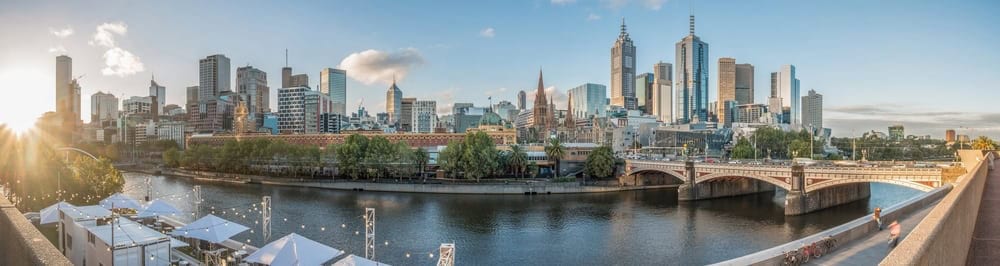
Quick Setup Overview
- Camera: Nikon Zf — Full-frame (35.9×23.9 mm), 24.5 MP BSI CMOS, EXPEED 7, strong DR at ISO 100, clean ISO up to 1600 in most scenes.
- Lens: Tamron 17-28mm f/2.8 Di III RXD — Ultra-wide rectilinear zoom; sharpest around f/4–f/8; minimal CA when profiled; no optical stabilization (rely on IBIS when handheld).
- Estimated shots & overlap (spherical 360×180):
- At 17mm (portrait on pano head): 10–12 shots at 0°, 8 at +45°, 8 at −45°, plus 2–3 zenith and 2–3 nadir. Overlap ~25–30%.
- At 24–28mm (portrait): 12–16 at 0°, 10–12 at +45°, 10–12 at −45°, plus 3–4 zenith and 3–4 nadir. Overlap ~25–30%.
- Single-row cylindrical (not full 360×180): 17mm: 8–12 around. 28mm: 12–18 around.
- Difficulty: Moderate — rectilinear requires more frames than fisheye, but gives natural straight lines for interiors and architecture.
Planning & On-Site Preparation
Evaluate Shooting Environment
Start by reading the light and motion in your scene. For interiors, look for windows and mixed lighting (tungsten + daylight); plan HDR bracketing to retain highlight detail. For exteriors, note where the sun is—direct backlight can cause flare. In reflective environments (glass, glossy floors, cars), expect stitching challenges; shoot with extra overlap and watch your own reflections. If shooting through glass, keep the front element close (1–3 cm) and perpendicular to the glass to reduce glare and ghosting.
Match Gear to Scene Goals
The Nikon Zf’s strong base ISO dynamic range and dependable high-ISO performance make it a great choice for low-light interiors and twilight cityscapes. Use ISO 100–400 for maximum DR; ISO 800–1600 is still very usable if you need shutter speed. The Tamron 17-28’s rectilinear rendering is ideal when you want straight walls and non-distorted architecture. It does require more shots than a fisheye, but rewards you with cleaner lines and less stretching of people near the edges.
Pre-shoot Checklist
- Power & storage: Fully charged batteries; dual high-speed cards. The Zf’s RAW files are moderate in size, but multi-row HDR can add up fast.
- Clean optics: Inspect your lens and sensor. Spots become very visible in skies and bright walls.
- Tripod & head: Level the tripod, confirm your panoramic head is calibrated to the lens’s no-parallax (entrance pupil) point.
- Safety: On rooftops or windy locations, lower your tripod, spread legs wide, and tether your rig. For car mounts, double-secure with safety lanyards.
- Backup coverage: Shoot an extra pass around. If one frame is soft or blocked by motion, you’ll be glad you did.
Essential Gear & Setup
Core Gear
- Panoramic head: A proper pano head lets you rotate around the lens’s entrance pupil, eliminating parallax so near/far objects stitch cleanly. Fine fore-aft and left-right adjustments are key.
- Stable tripod with leveling base: A leveling base saves time; you can keep the head level while adjusting legs on uneven ground.
- Remote trigger/app: Use a wired remote, Bluetooth app, or self-timer. Reducing touch vibration is vital in low light.
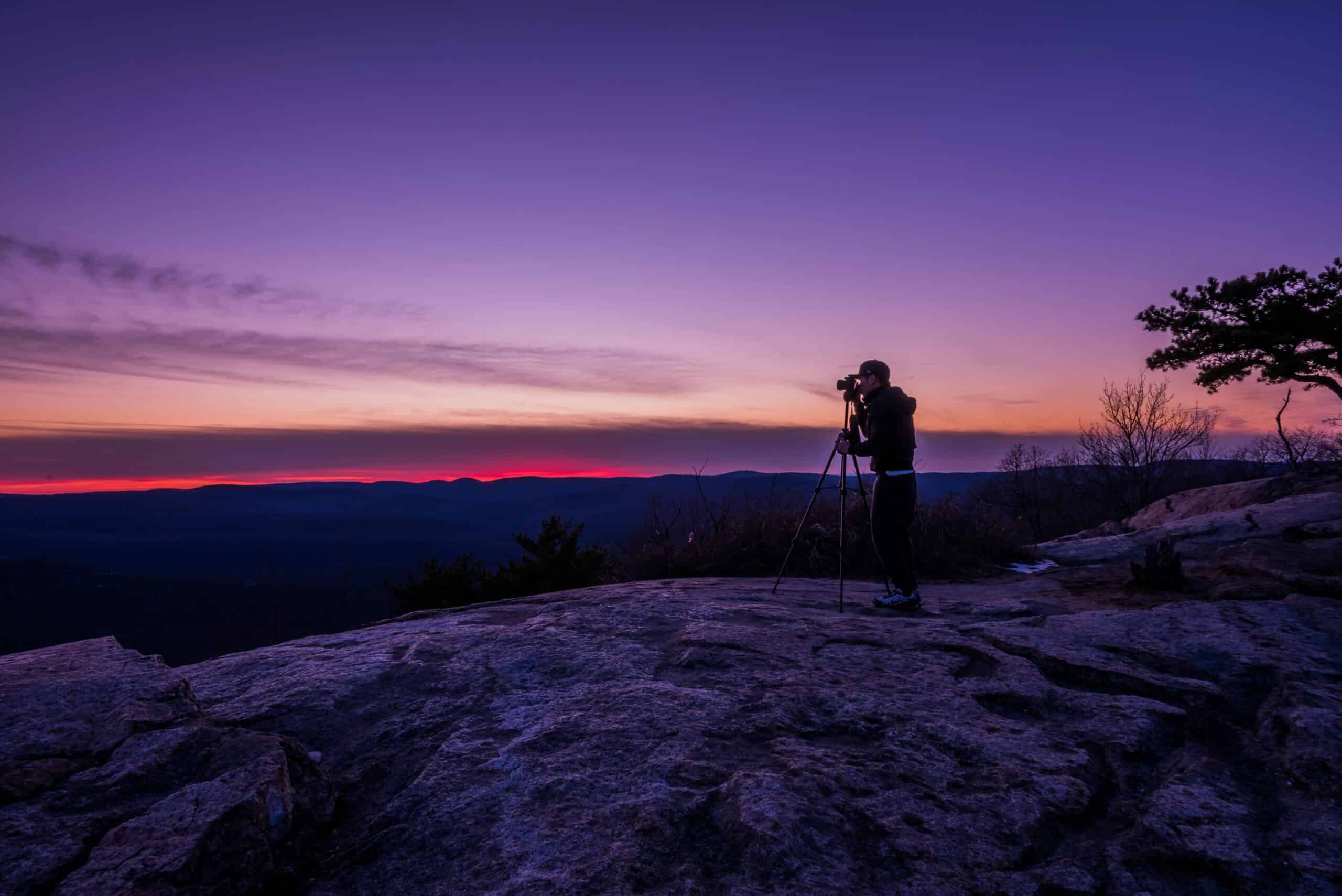
Optional Add-ons
- Pole or car mount: Great for elevated or moving perspectives. Beware wind and vibration; keep speeds low and rotations slower, and always tether.
- Lighting aids: Portable LED panels or bounced flash for dim interiors (avoid mixed color temperatures; gel if needed).
- Weather protection: Rain cover, lens hood, microfiber cloths. The 17-28 is compact—hood on, it’s still nimble in tight spaces.
Nodal (Entrance Pupil) Alignment Basics
Parallax errors occur when you rotate around the camera body instead of the lens’s entrance pupil. With the 17-28 at 17mm, the entrance pupil sits toward the front of the lens. As a starting point, expect roughly 80–95 mm forward from the sensor plane at 17mm, shifting slightly with zoom and focus distance. Always verify on your own head: align two vertical objects (one near, one far) and rotate the camera. Adjust fore-aft until the relative alignment does not shift.
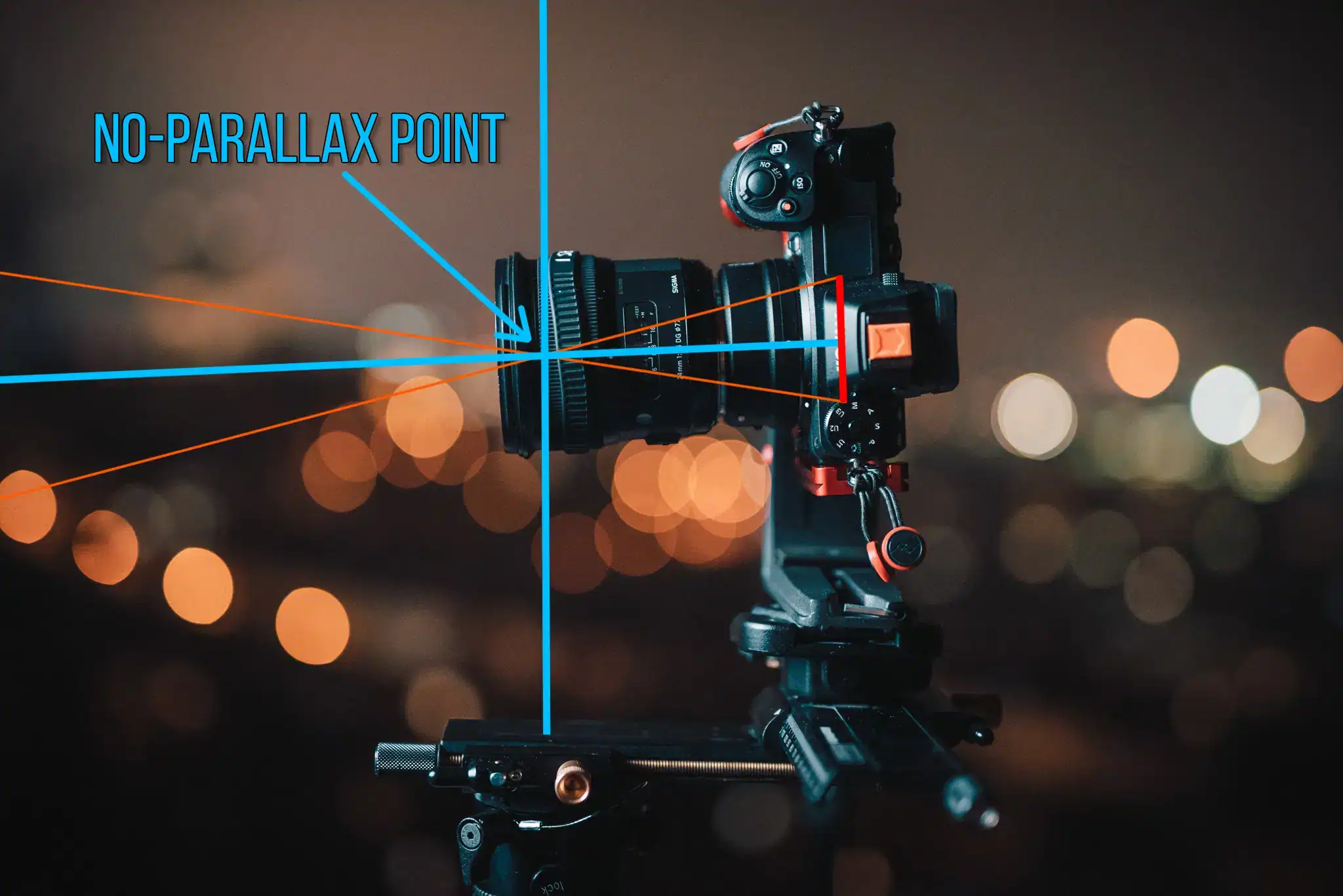
For a thorough primer on pano heads and nodal alignment, see this panoramic head tutorial. Panoramic head setup guide
Step-by-Step Shooting Guide
Standard Static Scenes
- Level and align: Level the tripod and pano head. Set the camera to portrait orientation for better vertical coverage. Align the entrance pupil carefully to prevent parallax.
- Manual exposure and WB: Meter the brightest area you need detail in (e.g., sky or window). Switch to manual exposure and lock white balance (Daylight/Tungsten/Custom) to keep color uniform across frames.
- Focus and IBIS: Use manual focus with magnified live view and focus peaking; set focus near the hyperfocal distance (e.g., around 1–1.5 m at 17mm/f8 for deep DoF). Turn IBIS off on a tripod to avoid micro-blur from sensor movement.
- Shoot with overlap: At 17mm, aim for 25–30% overlap. For a full spherical 360×180, capture multi-row as outlined in the Quick Setup Overview. Keep a consistent rotation cadence (e.g., every 30°) so PTGui/Hugin can auto-detect control points easily.
- Nadir capture: After the main rows, raise the camera or offset the tripod slightly and take a dedicated ground shot for patching the tripod later.
HDR / High Dynamic Range Interiors
- Bracket ±2 EV: Use 3- or 5-shot brackets depending on window brightness. The Zf supports auto bracketing; keep WB locked.
- Sequence discipline: Fire all brackets for one view before rotating to the next index on your pano head. This keeps motion differences minimal.
- Shutter strategy: Enable exposure delay or a 2 s self-timer to let vibrations settle before each bracket sequence.
Low-Light / Night Scenes
- Stability first: Use a solid tripod, weight the center column if needed. With no optical stabilization on the Tamron, IBIS can help handheld scouting, but switch it off on a tripod.
- Exposure: Aim for f/4–f/5.6, shutter 1/10–1/60 depending on wind and motion, ISO 100–800 (1600 if needed). The Zf handles ISO 1600 well; ISO 3200 is usable but expect more noise and reduced DR.
- Remote control: Trigger with a remote or app; avoid touching the camera between frames.
Crowded Events
- Two passes: First pass for coverage; second pass to catch clean gaps as people move. This gives you replacement frames for masking.
- Faster shutter: Use 1/200+ if you need to freeze motion, bumping ISO to 800–1600 if required.
- Mask in post: Plan to blend people to reduce ghosts; extra overlap helps.
Special Setups (Pole / Car / Elevated)
- Secure everything: Tether the camera, check clamps, and pre-rotate slowly to feel for flex. Wind increases torque dramatically on poles.
- Over-shoot: Take more overlap (30–40%) to compensate for vibration-induced misalignment. Use higher shutter speeds (1/250–1/500) to fight motion blur.
- Safety first: Keep bystanders clear and avoid overhanging traffic or power lines.
Recommended Settings & Pro Tips
Exposure & Focus
| Scenario | Aperture | Shutter | ISO | Notes |
|---|---|---|---|---|
| Daylight outdoor | f/8–f/11 | 1/100–1/250 | 100–200 | Lock WB to Daylight; maintain 25–30% overlap |
| Low light/night | f/4–f/5.6 | 1/10–1/60 | 100–800 (1600 if needed) | Tripod + remote; turn IBIS off on tripod |
| Interior HDR | f/8 | Bracket ±2 EV | 100–400 | Balance bright windows vs. shadows |
| Action / moving subjects | f/5.6–f/8 | 1/200+ | 400–800 | Do double pass and blend in post |
Critical Tips
- Manual focus near hyperfocal: At 17mm and f/8, set focus around 1–1.5 m; check with magnified live view.
- Entrance pupil calibration: Mark your pano rail positions for 17mm and 24–28mm; recheck if your focus distance changes significantly.
- White balance lock: Use Kelvin or a custom preset to avoid color shifts across frames and brackets.
- RAW over JPEG: RAW keeps more DR for highlight recovery and consistent color across mixed lighting.
- IBIS usage: On tripod, VR/IBIS off. Handheld scouting or pole work may benefit from IBIS—test for best results.
- Use evenly spaced yaw marks: A click-stop rotator at 30° or 22.5° increments speeds up consistent coverage.
Field-Proven Capture Sets
- Full 360×180 at 17mm (portrait): 10–12 around at 0°, 8 at +45°, 8 at −45°, 2–3 zenith, 2–3 nadir. Extra overlap is your friend indoors.
- Real estate single-row (cylindrical): 17–20mm, 10–12 frames around with 30% overlap, no zenith/nadir if ceilings/floors are not required.
- Gigapixel approach at 28mm: Multi-row with 12–16 around per row, three rows at −40°, 0°, +40°, plus zenith/nadir for a super-detailed equirectangular.
Stitching & Post-Processing
Software Workflow
Import RAW files into Lightroom or your preferred RAW processor. Apply a consistent white balance and profile corrections (enable lens profile for the Tamron 17-28 to reduce vignetting and distortion). Export as 16-bit TIFFs to a stitching tool such as PTGui or Hugin. Rectilinear lenses need a bit more care with control points than fisheyes, but reward you with straight geometry. For most ultra-wides, use 25–30% overlap to help automatic control-point generation.
If you’re new to stitching, PTGui’s interface makes complex multi-row stitches approachable and supports bracket fusion (HDR) and viewpoint correction for nadir patching. Hugin is an excellent open-source alternative once you’re comfortable with control points and optimization. For a helpful review and orientation, see this PTGui overview. PTGui review and tips
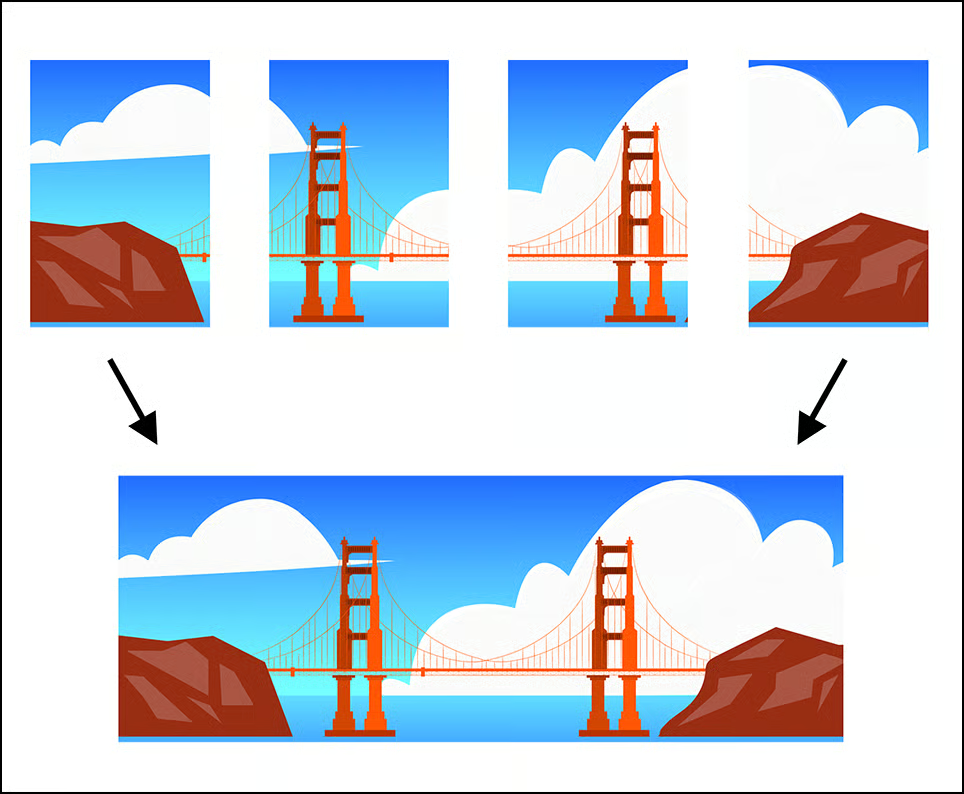
Cleanup & Enhancement
- Nadir patch: Use PTGui’s Viewpoint correction with a dedicated nadir shot or patch with Photoshop/Generative Fill/clone tools.
- Color and noise: Apply uniform color correction. For low-light frames at ISO 1600–3200, use moderate noise reduction then add a touch of texture/sharpening.
- Leveling: In the stitcher, set horizon, yaw, and pitch; use straight lines to correct residual roll.
- Export: For VR use, export 16k or 8k equirectangular JPEGs/PNG or TIFF masters for archival. Keep a layered PSD/PSB if you do heavy masking.
For an end-to-end DSLR/mirrorless 360° tutorial that complements this workflow, see Meta’s creator guide. Using a mirrorless camera to shoot and stitch a 360 photo
Video: Pano Head Setup & Stitching Walkthrough
Prefer learning by watching? This video explains practical setup and stitching steps you can adapt to the Zf + 17–28 workflow:
Useful Tools & Resources
Software
- PTGui panorama stitching (excellent control point tools, HDR fusion)
- Hugin open source (powerful and free)
- Lightroom / Photoshop (RAW prep, masking, nadir cleanup)
- AI-based tripod removal (generative fill, content-aware for nadirs)
Hardware
- Panoramic heads: Nodal Ninja, Leofoto, and similar multi-row heads
- Carbon fiber tripods with a leveling base
- Rotators with 30°/22.5° detents for consistent spacing
- Wireless remote shutters or intervalometers
- Pole extensions and car suction mounts (with safety tethers)
Disclaimer: product names are provided for research; check official sites for compatibility and current specs. For a wider look at DSLR/virtual tour gear selection, this guide is a helpful companion: DSLR virtual tour camera & lens guide
Common Mistakes & How to Avoid Them
- Parallax error: Not rotating around the entrance pupil causes stitching seams—use a pano head and calibrate fore-aft.
- Exposure flicker: Auto exposure or auto WB can ruin blends—lock both and use manual exposure.
- Insufficient overlap: Thin overlap leads to weak control points—use at least 25% for rectilinear ultra-wides.
- Tripod shadows/reflections: Capture a proper nadir and plan to patch; watch for reflections in glass and cars.
- High-ISO noise: At night, keep ISO at 100–800 when possible and use longer shutter with a stable base.
- IBIS on tripod: Disable IBIS to prevent micro-jitter blur while locked down.
Real-World Scenarios & Settings
Indoor Real Estate
At 17–20mm, shoot multi-row for full ceiling and floor coverage. Use f/8 for corner-to-corner sharpness. Bracket ±2 EV to hold window views. Keep WB at a custom Kelvin to avoid mixed-light color shifts. Use extra overlap (30%) near glass and mirrors so you can mask out reflections or stitching anomalies.
Outdoor Sunset
Expose for the sky to protect highlights; plan a second bracket for shadows. Shoot quickly as light changes every minute around golden hour. The Zf handles ISO 400–800 well—use it to keep shutter near 1/100–1/200 if there’s wind.
Event Crowds
Use 1/200+ and ISO 800–1600 as needed. Do two passes and be ready to mask moving subjects. At 17mm, be mindful of edge stretching; keep people closer to the center of the frame when possible.
Rooftop or Pole Shooting
Use a safety tether, avoid gusty conditions, and overshoot by 30–40% overlap. Lock WB and exposure; higher shutter (1/250–1/500) helps fight vibration. Consider shooting a fast additional pass in case of motion blur.
Car-Mounted Capture
Only at low speeds in controlled areas. Use rigid mounts, double safety lines, and short intervals between frames. Expect to fix parallax from ground-level elements that move between shots; increase overlap and consider shooting bursts at each index position.
Frequently Asked Questions
- Can I shoot handheld panoramas with the Nikon Zf?
Yes, for single-row or short panos. Use 17–20mm, IBIS on, 1/250+ shutter, and aim for 30% overlap. For precise 360×180 work, a tripod and pano head are strongly recommended to avoid parallax and stitching errors.
- Is the Tamron 17-28mm wide enough for single-row 360?
Not for a full spherical 360×180. At 17mm rectilinear, you’ll need multi-row to capture zenith and nadir. Single-row is fine for cylindrical panos or narrow vertical FOV scenes.
- Do I need HDR for interiors with bright windows?
Usually, yes. Bracket ±2 EV (3 or 5 frames) to retain window detail without crushing interiors. Merge HDR per view or use your stitcher’s built-in HDR fusion.
- How do I avoid parallax issues with this lens?
Use a pano head and align the entrance pupil. Start around 80–95 mm forward of the sensor at 17mm, then fine-tune with the near/far object method. Mark the rail for repeatability.
- What ISO range is safe on the Zf in low light?
Base ISO 100 delivers maximum DR. ISO 400–800 remains very clean; ISO 1600 is still good; ISO 3200 is usable with careful noise reduction. For tripod shots, prefer longer shutter over pushing ISO.
- Can I store pano settings in Custom Modes?
Yes. Save manual exposure, WB, manual focus, drive mode, bracketing, and IBIS Off to U1/U2 (or your preferred custom mode) to speed up field setup.
- How do I reduce flare with ultra-wide rectilinear lenses?
Use the lens hood, shade the lens with your hand, and avoid strong off-axis light sources. Slightly adjust yaw to keep the sun near a frame edge you can later mask.
- Best tripod head for this setup?
A multi-row panoramic head with fine fore-aft adjustments (e.g., Nodal Ninja or Leofoto) and a detent rotator. Ensure it supports portrait orientation and entrance pupil alignment at 17–28mm.
Safety, Data Integrity, and Backup Workflow
Always prioritize safety in elevated or windy setups. Use tethers and avoid overextending poles. In crowded spaces, keep a safe perimeter and never block exits.
For data integrity, shoot RAW to dual cards if possible, or back up to a phone/tablet in the field. Keep a “safety pass” around your pano in case a frame is soft or obstructed. Maintain a clear folder structure (Location_Date_Scene_Row) so HDR brackets and rows are easy to batch and stitch later.
For more on setting up a pano head for professional-grade results, this step-by-step guide is excellent. Set up a panoramic head for high-end 360 photos