
Why This Camera & Lens Are Great for Panoramas
If you want to learn how to shoot panorama with Nikon Zf & Sony FE 12-24mm f/4 G, this guide walks you through a proven workflow from planning to stitching. The Nikon Zf is a full-frame, 24.5MP mirrorless camera with a modern BSI sensor, EXPEED 7 processing, and excellent 5-axis IBIS. Its sensor delivers roughly 14 stops of dynamic range at base ISO, clean files through ISO 1600, and robust 14-bit RAW—ideal for HDR panoramas and low-light interiors. Pixel pitch is approximately 5.9 µm, which helps with low-noise shadows and fine texture retention.
The Sony FE 12-24mm f/4 G is a rectilinear ultra-wide zoom that is tack-sharp stopped down, with well-controlled distortion for its class, and a relatively light weight for field work. At 12mm, it offers ~112° horizontal and ~90° vertical field of view on full frame, making it an efficient single- or multi-row choice for high-resolution 360 photos compared to longer rectilinears. Because it’s a rectilinear lens (not a fisheye), you’ll shoot more frames than a fisheye but get straighter lines—great for architecture and interiors.
Mount compatibility note: You’ll need a reliable Sony E-to-Nikon Z electronic adapter (e.g., Techart TZE series) to use the Sony FE 12-24mm on the Nikon Zf. Ensure the adapter’s firmware is up to date for aperture control and AF reliability. If the adapter doesn’t pass focal length for IBIS, set the focal length manually in the Zf’s Non-CPU lens data or VR menu for optimal stabilization. On a tripod, turn IBIS off to prevent micro-drift during long exposures and stitching.
Quick Setup Overview
- Camera: Nikon Zf — Full Frame (FX), ~24.5MP BSI CMOS, 14-bit RAW, strong DR (~14 EV at ISO 100), excellent color depth.
- Lens: Sony FE 12-24mm f/4 G — rectilinear ultra-wide zoom; sharp center to edge at f/8–f/11; moderate vignetting at 12mm (correct in post); low lateral CA, correctable.
- Estimated shots & overlap (tested):
- At 12mm, portrait orientation: 6 shots around at 0° pitch + 6 shots at +45° + 6 shots at −45° + 1–2 zenith + 1 nadir (≈20–21 frames). 25–35% overlap.
- At 14–16mm, portrait: 8 around per row, 3 rows (+ zenith/nadir) for higher resolution.
- Single-row 360 at 12mm is possible (6 around + zenith/nadir) but less safe coverage at zenith/nadir; multi-row recommended.
- Difficulty: Moderate — rectilinear multi-row requires a calibrated panoramic head and careful overlap; easier than tele-rectilinear, harder than fisheye.
Planning & On-Site Preparation
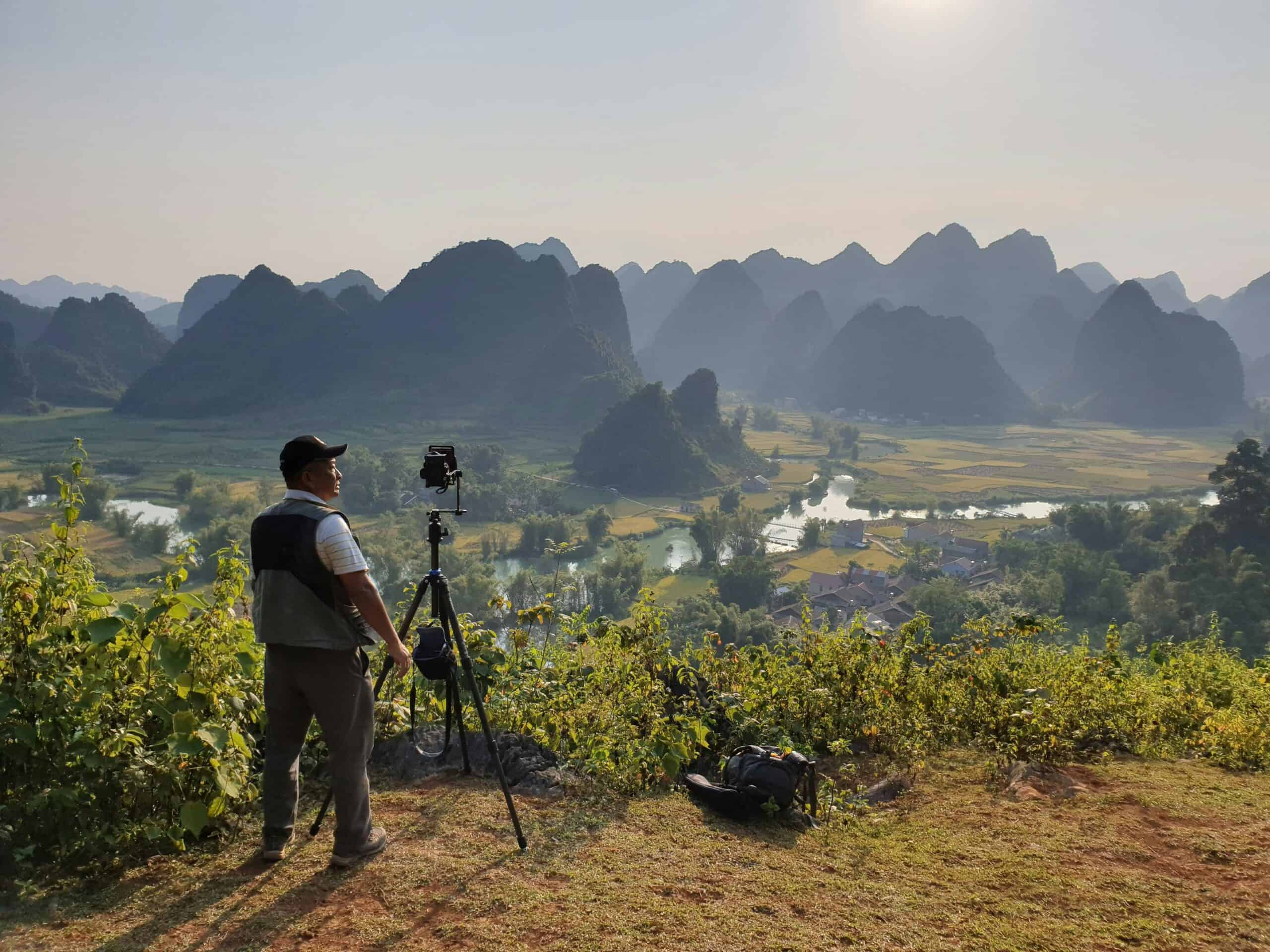
Evaluate Shooting Environment
Assess the light, movement, and reflective surfaces before you deploy the tripod. For interiors with glass or mirrors, control reflections with careful positioning and avoid putting bright sources directly on the edge of the frame to minimize flare. When shooting near glass, pull back 30–60 cm if possible and keep the lens axis perpendicular to reduce ghosting. Outdoors, watch the sun’s position—rectilinear ultra-wides can pick up veiling flare at 12mm if the sun grazes the frame edge.
Match Gear to Scene Goals
The Nikon Zf’s dynamic range and clean ISO performance pair nicely with the Sony 12-24mm for architecture and real estate. For indoor HDR, bracket ±2 EV at ISO 100–200 and blend—Zf RAW files handle window highlights well. For dusk/twilight exteriors, the Zf remains clean through ISO 800–1600 if you need to keep shutter speeds practical for people or foliage. The 12mm end reduces the total number of images required compared to 24mm, while keeping straight lines straight—key for real estate and VR tours where fisheye curvature is undesirable.
Pre-shoot Checklist
- Charge batteries, carry spares; format fast UHS-II or CFexpress card; clean front element and sensor.
- Level your tripod, verify panoramic head scales; pre-mark nodal alignment for 12mm on your rail.
- Adapter check: confirm aperture control and AF with your TZE adapter; bring a small hex wrench/tape.
- Safety: test wind stability, add a sandbag; on rooftops, use tethers; with car mounts, inspect suction and use safety lines.
- Backup workflow: shoot an extra full round at the end as insurance against a missed frame.
Essential Gear & Setup
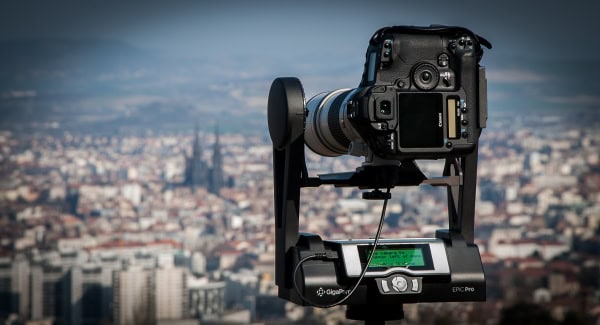
Core Gear
- Panoramic head: This is crucial for aligning the nodal (no-parallax) point, so foreground and background align as you rotate. Use an L-bracket to shoot portrait orientation and a rail to set fore-aft offset.
- Stable tripod with leveling base: A half-ball or leveling base speeds leveling; a level tripod means consistent pitch across the sweep.
- Remote trigger or SnapBridge app: Prevents vibration and allows timed captures for HDR brackets.
Optional Add-ons
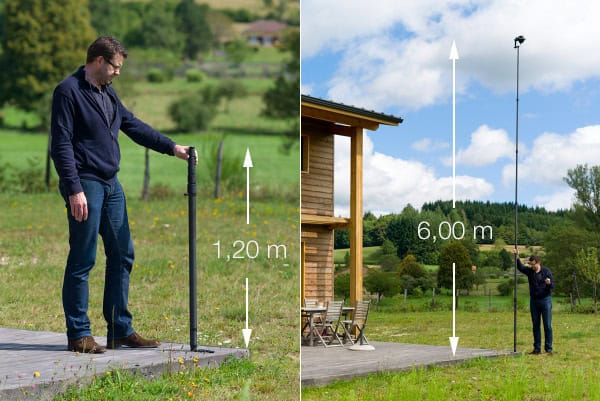
- Pole or car mount: Great for elevated or vehicle-based capture. Use guy lines, wind breaks, and tethers. Keep speeds low and avoid gusty conditions.
- Lighting aids: Small LED panels or bounced flash for dark interiors—turn off between frames if light spills into the shot.
- Weather protection: Rain cover, microfiber cloths, and a lens hood (even a simple flag) to reduce flare and aerosolized moisture.
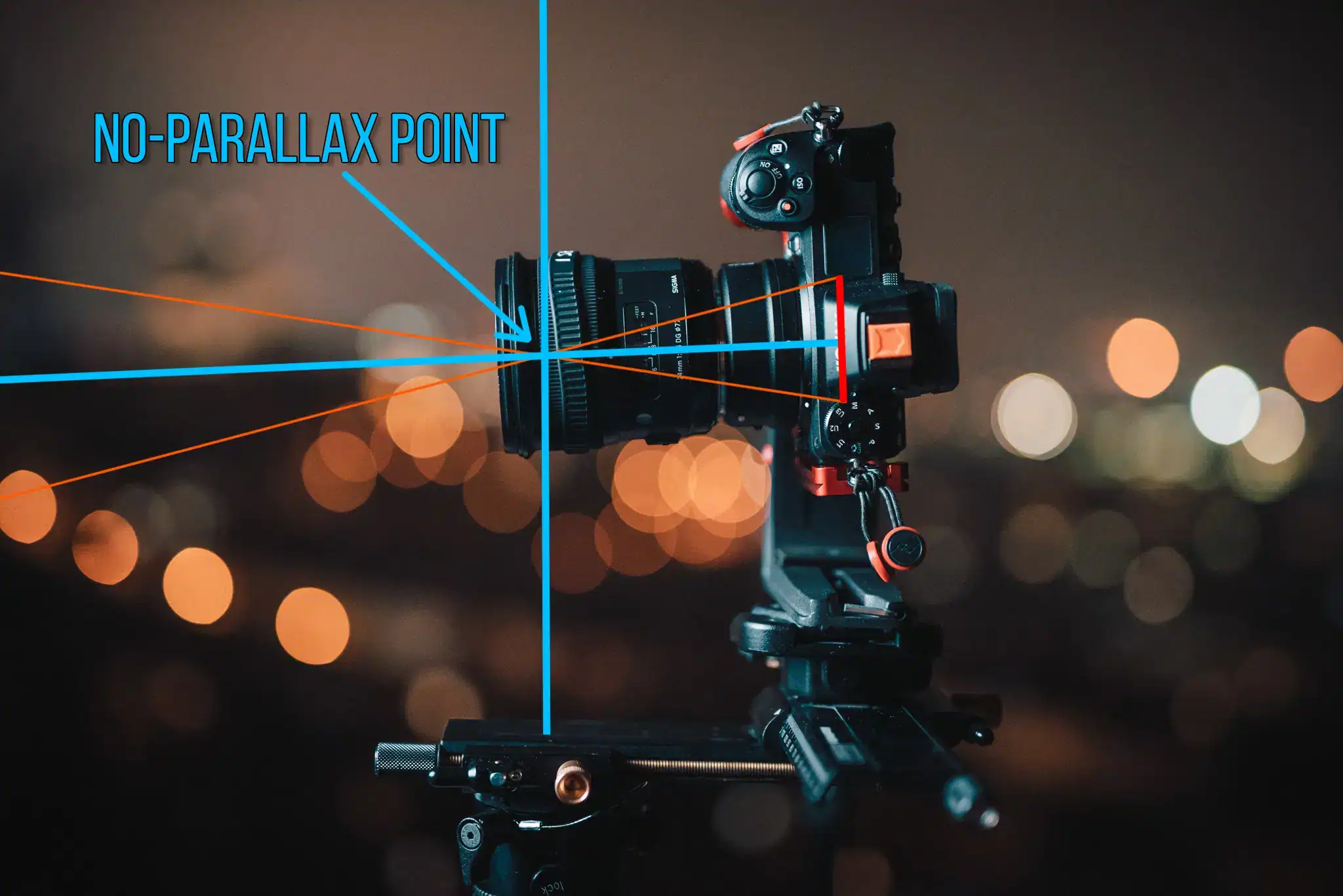
Finding the No-Parallax Point
Mount the Zf in portrait orientation on your panoramic head. Place two alignment objects (one close, one far) along the frame edge. Adjust the fore-aft rail until rotating the camera keeps the foreground and background edges aligned—no relative shift. Mark this rail position for 12mm and 16mm on tape. Expect the entrance pupil to sit somewhat forward on this zoom at 12mm. Recheck if you change focus distance; small shifts can matter at ultra-wide.
Step-by-Step Shooting Guide
Standard Static Scenes
- Level tripod and align nodal point: Verify bubble levels and your rail mark for 12mm. Lock all axes except yaw before you start the sweep.
- Manual exposure and locked white balance: Meter the midtones; set Manual mode. Use Daylight/Tungsten WB as appropriate. Disable Auto ISO. Turn off IBIS on tripod.
- Capture with overlap: At 12mm portrait, shoot 6 around at 0°, then tilt +45° and shoot 6 around, then −45° and shoot 6 around. Add 1–2 zenith shots and one nadir frame. Aim for 25–35% overlap.
- Nadir shot: After the main sweep, tilt down and take a dedicated ground shot for tripod removal. A slight offset around the tripod can help with patching.
HDR / High Dynamic Range Interiors
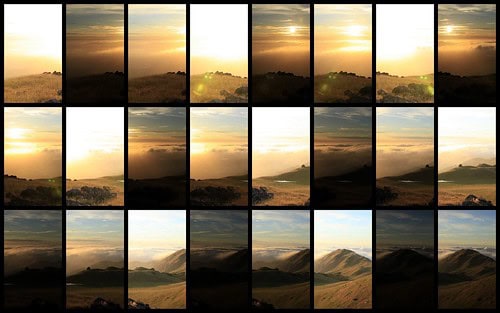
- Bracket ±2 EV: Use AEB (3–5 shots) to balance windows and interior shadows. Keep WB locked and focus locked to avoid bracket-to-bracket shifts.
- Consistent cadence: Fire in a steady rhythm (e.g., 0.7 s between brackets) so moving objects fall into predictable positions for masking.
Low-Light / Night Scenes
- Long exposure: Shoot f/4–f/5.6, ISO 100–400 when possible; extend shutter to 1–10 seconds. The Zf files remain clean; if subjects move, consider ISO 800–1600 to keep shutter under 1s.
- Stability first: Turn off IBIS on tripod, use a remote release, and enable exposure delay to prevent micro-shake.
Crowded Events
- Two passes: First, shoot a complete, fast sweep. Second, wait for gaps and reshoot problem sectors. In post, mask people to reduce ghosting.
- Faster shutter: Use 1/200–1/250 at f/5.6–f/8, ISO 400–800 to freeze motion while maintaining overlap.
Special Setups (Pole / Car / Drone)
- Secure gear: Use a safety tether on pole/cars. For poles, extend gradually and rotate slower to reduce sway. Avoid winds above 20–25 km/h.
- Vibration: In vehicles, plan smoother routes and use high-shutter/low-ISO trade-offs to avoid blur. Always prioritize safety over the shot.
Recommended Settings & Pro Tips
Exposure & Focus
| Scenario | Aperture | Shutter | ISO | Notes |
|---|---|---|---|---|
| Daylight outdoor | f/8–f/11 | 1/100–1/250 | 100–200 | Lock WB (Daylight); avoid clipping clouds |
| Low light/night | f/4–f/5.6 | 1/30–1/60 (people) or multi-sec (static) | 400–1600 | Tripod & remote; turn IBIS off on tripod |
| Interior HDR | f/8 | Bracket ±2 EV (3–5 frames) | 100–400 | Balance windows & lamps; 14-bit RAW |
| Action / moving subjects | f/5.6–f/8 | 1/200+ | 400–800 | Freeze motion; consider two-pass capture |
Critical Tips
- Manual focus: Set focus near the hyperfocal distance. At 12mm f/8 on full frame, hyperfocal ≈ 0.6–0.8 m; focusing ~1 m yields near-to-infinity sharpness.
- Nodal calibration: Use two alignment objects to find the no-parallax point; mark the rail for 12mm and 16mm to switch quickly in the field.
- White balance: Lock WB to avoid color shifts across frames; mixed lighting? Choose a neutral WB and correct in RAW.
- RAW vs JPEG: Shoot 14-bit RAW. It preserves highlight detail for better HDR merging and cleaner gradients in skies.
- IBIS: On tripod, disable IBIS/VR. If handholding, enable IBIS and use faster shutter speeds; at 12mm, 1/125 is a safe target for people scenes.
- Adapter firmware: Keep your Sony E-to-Nikon Z adapter firmware updated for reliable aperture control and EXIF (helps with IBIS and stitching metadata).
Stitching & Post-Processing
Software Workflow
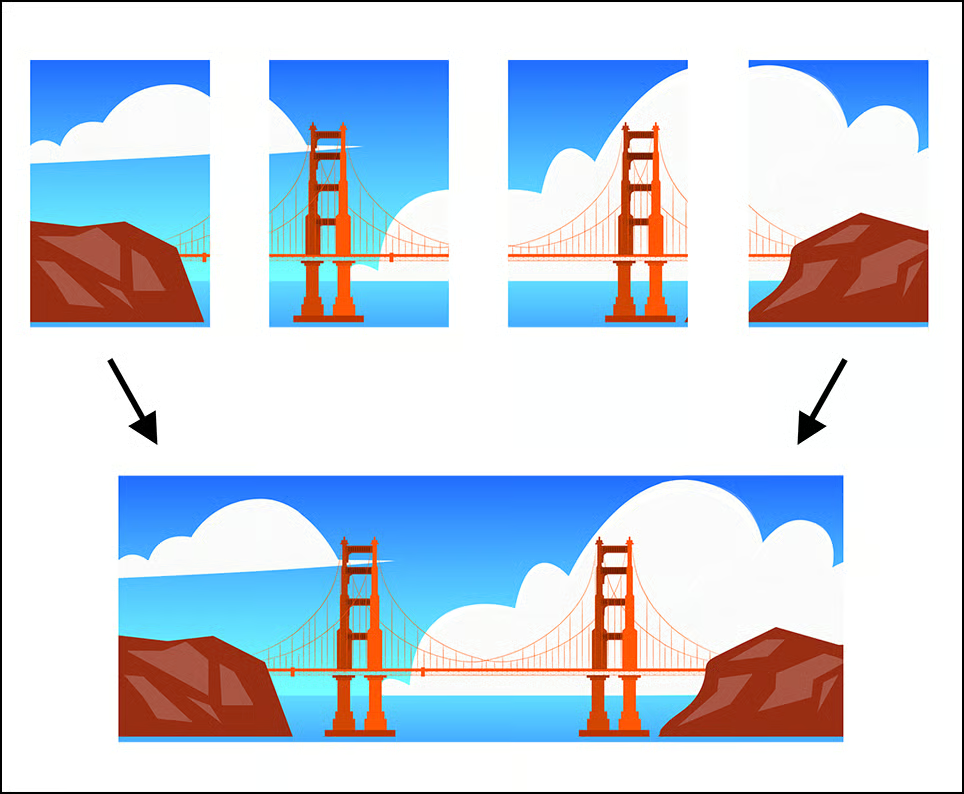
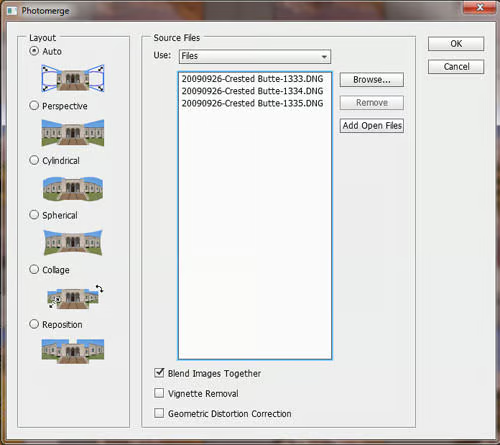
For best results, merge HDR brackets first (if used), then stitch. PTGui is widely regarded for stability, control points, and masking; Hugin is a solid open-source alternative. Rectilinear lenses typically need 20–25% overlap, but 30–35% makes control points easier at 12mm. The Sony 12-24 G’s low distortion helps, but you should still apply distortion/vignetting corrections in RAW before stitching if your workflow supports it. After stitching, export as equirectangular 2:1 for VR. For more on tool choices, see this PTGui review on Fstoppers. PTGui review and why it excels for complex panos.
Cleanup & Enhancement
- Nadir patch: Capture a clean ground plate and patch manually, or use AI tools to remove the tripod cleanly.
- Color consistency: Use the Zf’s 14-bit RAW to balance shadows and highlight roll-off; apply uniform WB and tone curves across the set.
- Geometry: Level horizon, and correct yaw/pitch/roll. Use vertical line constraints for interiors to keep walls true.
- Noise and sharpening: Apply moderate luminance noise reduction on high-ISO night panos, and mask sharpening away from skies.
- Export: 8–16k equirectangular JPEG/TIFF depending on your delivery; VR platforms expect 2:1 aspect ratio. For platform-specific guidance, see the Oculus creator docs. Oculus guide to shooting and stitching DSLR 360 photos.
If you’re new to panoramic heads, this step-by-step tutorial is also helpful. Panoramic head setup tutorial and best practices.
Useful Tools & Resources
Software
- PTGui panorama stitching
- Hugin open-source panorama stitcher
- Adobe Lightroom Classic / Photoshop for RAW, HDR and cleanup
- AI tools for tripod/nadir removal
Hardware
- Panoramic heads (Nodal Ninja, Leofoto, Sunwayfoto)
- Carbon fiber tripods with leveling base
- Wireless remote shutters or intervalometers
- Pole extensions / car suction mounts with safety tethers
Disclaimer: brand names are provided for research; verify specs and compatibility with your adapter and Nikon Zf body before purchase.
Common Mistakes & How to Avoid Them
- Parallax error: Always rotate around the no-parallax point; mark your rail for the Sony 12-24 at 12mm.
- Exposure flicker: Use full Manual exposure and lock WB; avoid Auto ISO.
- Tripod shadows or nadir mess: Plan a separate nadir shot and patch in post.
- Ghosting from moving subjects: Time your shots; shoot two passes and mask selectively.
- High-ISO noise at night: Prioritize longer shutter on tripod over pushing ISO; apply gentle NR in post.
- Adapter surprises: Update adapter firmware; test aperture and EXIF before critical shoots.
Frequently Asked Questions
- Can I shoot handheld panoramas with the Nikon Zf?
Yes, but for 360 spheres with a rectilinear 12mm, a tripod and panoramic head are strongly recommended. Handheld single-row panos of landscapes are feasible—enable IBIS, use 1/125 or faster, and keep overlap generous (35–40%). Expect more stitching cleanup vs. tripod use.
- Is the Sony FE 12-24mm f/4 G wide enough for single-row 360?
At 12mm in portrait, a single row of 6 around plus zenith/nadir can cover a full sphere, but coverage at the poles is tight. For reliability, use a 3-row approach (−45°, 0°, +45°) with 6 around per row, plus zenith and nadir.
- Do I need HDR for interiors with bright windows?
Usually, yes. Bracket ±2 EV (3–5 shots) at ISO 100–200. Merge to 32-bit or layered HDR before stitching. The Zf’s dynamic range is excellent, but windows in full sun exceed a single exposure’s latitude.
- How do I avoid parallax issues with this setup?
Use a calibrated panoramic head, rotate around the entrance pupil, and lock down focus/zoom. Mark the rail position for 12mm and recheck if you change focus distance significantly. A short practice session saves hours in post.
- What ISO range is safe on the Nikon Zf in low light?
For tripod-based panos, aim for ISO 100–400 and lengthen shutter. If you must freeze motion, ISO 800–1600 remains very usable on the Zf; beyond ISO 2000, apply more noise reduction and expect reduced shadow color fidelity.
- Can I store pano settings on the Nikon Zf?
Yes. Use U1/U2/U3 custom modes to save a pano preset (Manual exposure, ISO, WB, IBIS off, bracketing setup). It speeds up field work and keeps consistency between rows.
- Any tips to reduce flare at 12mm?
Shield the lens with your hand or a small flag just outside the frame, avoid placing the sun at the edge, and consider slightly stopping down (f/8–f/11) for contrast. Watch for internal reflections when shooting near bright lamps indoors.
- What tripod head should I choose?
A two-axis panoramic head with a fore-aft rail (e.g., Nodal Ninja or Leofoto) is ideal. Ensure it supports portrait orientation, has clear angle detents, and enough rail travel to position the entrance pupil at 12mm.
Field-Proven Scenarios
Indoor Real Estate
Shoot at 12mm, f/8, ISO 100–200. Bracket ±2 EV. Use a three-row sweep with 6 around per row. Keep the camera perfectly level; lock focus around 1 m. Correct verticals in post and use mild clarity. Avoid placing bright fixtures on frame edges to prevent flare streaks.
Outdoor Sunset
Start 10–15 minutes before golden hour, expose for midtones to protect highlights, and consider a two-pass exposure (one for sky, one for foreground) if you prefer manual exposure blending. Windy? Add a sandbag and increase shutter to 1/125; ISO 200–400 still looks great on the Zf.
Event Crowds
Work fast at f/5.6–f/8, 1/200–1/250, ISO 400–800. Capture overlapping frames quickly, then shoot a second pass when people clear each sector. In PTGui, use masking to select the cleaner areas from each pass for minimal ghosting.
Rooftop or Pole Shooting
Use a lightweight panoramic head and carbon pole. At 12mm, you can reduce the number of shots; however, vibrations are amplified, so rotate slower and shoot an extra insurance round. Always tether the pole and wear a safety harness on rooftops.
For additional reading on DSLR/mirrorless 360 workflows and camera/lens choices, this guide is a useful overview. DSLR/virtual tour FAQs and gear recommendations.
Safety, Reliability, and Data Hygiene
- Wind management: Use a hook weight/sandbag. If gusts exceed safe limits, stop—don’t risk a fall.
- Adapter fit: Check that the lens and adapter lock securely; avoid twisting torque on the mount. Keep a spare adapter if this is mission-critical work.
- Weather: Wipe the front element frequently. Use desiccant packs to prevent condensation when moving from cold to warm environments.
- Redundancy: Shoot a full extra round after your master set. Back up to dual cards or immediately offload to a second device.
If you’re new to panoramic heads, a structured setup process improves results and reduces error rates. Step-by-step panoramic head setup principles.