
Why This Camera & Lens Are Great for Panoramas
The Nikon Zf paired with the Peleng 8mm f/3.5 is a surprisingly powerful combo for creating fast, reliable 360° panoramas. The Zf’s 24.5MP full-frame sensor (FX, ~6000×4000px) delivers excellent dynamic range near base ISO (around 14 EV) and very usable noise performance thanks to its EXPEED 7 processor and large ~6 μm pixel pitch. That gives you clean skies, deep shadow detail, and flexible files when you need to push exposure in post—especially important for HDR panoramas and low-light interiors.
The Peleng 8mm f/3.5 is a manual, circular fisheye lens with ~180° field of view across the diagonal on full frame. Its biggest advantage for 360 capture is speed: it covers a massive field-of-view, so you need fewer shots to complete a full sphere. Fewer shots means fewer chances of motion mismatch, and faster workflows on rooftops, at events, or when you’re shooting from a pole. Expect some CA and flare with this classic fisheye, and peak sharpness around f/5.6–f/8—acceptable trade-offs given the speed and coverage you gain.
Mount compatibility is straightforward: most Peleng 8mm copies come in Nikon F or M42 mount. On the Zf, use the FTZ / FTZ II or an M42–Z adapter. Set Non-CPU Lens Data to 8mm so IBIS knows the focal length. Remember: this lens is fully manual—use focus peaking, magnified view, and manual aperture control on-lens. For critical tripod work, turn off IBIS to avoid micro-vibrations; for handheld insurance shots, IBIS helps.
Quick Setup Overview
- Camera: Nikon Zf — full-frame (FX) 24.5MP BSI CMOS, EXPEED 7, native ISO 100–64,000 (expandable), strong DR at base ISO, 5-axis IBIS.
- Lens: Peleng 8mm f/3.5 — circular fisheye, fully manual focus/aperture, ~180° FOV, sharpest around f/5.6–f/8, moderate CA and flare sensitivity.
- Estimated shots & overlap for full 360:
- 4 around at 90° yaw increments (+5° tilt), plus 1 nadir (safe, quick).
- 3 around at 120° (+10° tilt), plus zenith and nadir (fastest, risk of tiny gaps if alignment isn’t perfect).
- 6 around for maximum stitch security in complex interiors (more overlap, slower).
- Difficulty: Easy–Intermediate (manual lens + nodal alignment required; stitching is straightforward with fisheye-aware software).
Planning & On-Site Preparation
Evaluate Shooting Environment
Walk the scene and note light direction, reflective surfaces (glass, glossy tiles, polished cars), and moving subjects. Aim to minimize visible flare by avoiding direct sun into the fisheye. For glass shooting (observation decks), get as close as safely possible (2–5 cm) to reduce reflections and ghosting; use a rubber lens shade if available. Wind can topple light tripods—add weight or use a wider stance. For interiors, identify mixed lighting sources (daylight, tungsten, LED) to plan a consistent white balance strategy.
Match Gear to Scene Goals
The Zf’s DR and low ISO noise make it excellent for HDR panoramas in interiors and at sunset. On this body, ISO 100–400 is ideal; ISO 800–1600 is workable with conservative noise reduction. The Peleng 8mm lets you finish a full 360 with as few as 4–5 images, reducing the chance of people moving across frames in event or street scenes. The trade-off is fisheye distortion and some edge softness—both acceptable for equirectangular outputs and virtual tours, especially after proper stitching.
Pre-shoot Checklist
- Power & storage: fully charged batteries and a high-speed card. The Zf’s RAWs are light enough for fast burst bracketing.
- Clean optics: fisheyes show everything—clean front element, sensor, and EVF.
- Tripod leveling: use a leveling base for quick zeroing; calibrate your panoramic head for the Peleng’s entrance pupil.
- Safety: check wind loads, rooftop rails, and car mounts. Use a safety tether for pole or car work.
- Backup workflow: shoot at least one extra safety round (especially in crowds or when the light is changing).
Essential Gear & Setup
Core Gear
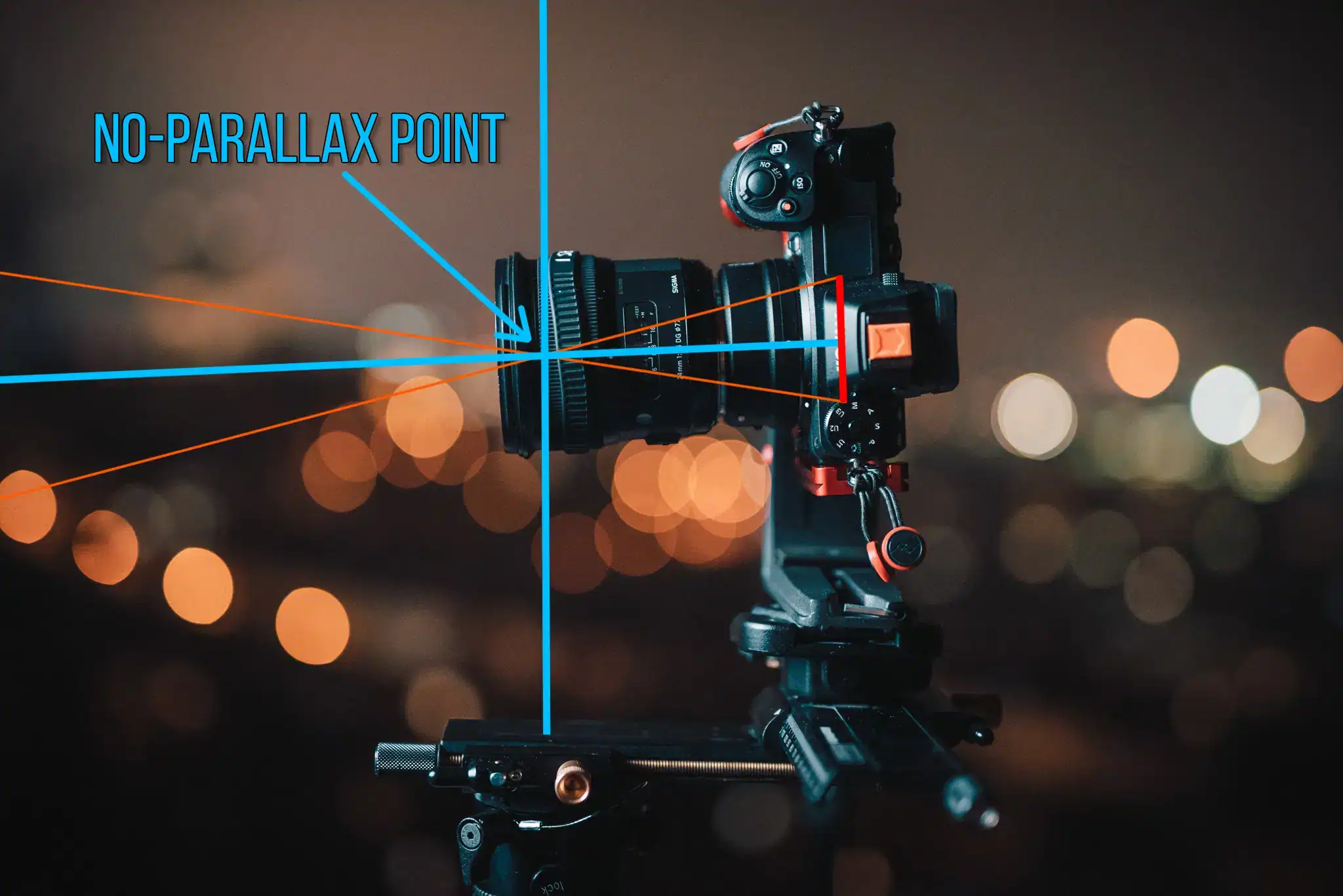
- Panoramic head: A rotator and rail system to place the lens’s entrance pupil over the yaw axis, eliminating parallax. This is the single most important step for clean stitches, especially around near objects.
- Stable tripod with leveling base: Leveling keeps rows aligned and prevents stitch drift. Carbon fiber reduces vibration on rooftops and in wind.
- Remote trigger or app: Use Nikon SnapBridge or a wired remote to avoid shake; a 2–5s self-timer also works.
Optional Add-ons
- Pole or car mount: Excellent for vantage points, but use a safety tether. Watch wind gusts; rotate slower to prevent sway.
- Lighting aids: Small LED panels or bounced flash for dark interiors (avoid mixing color temps if possible).
- Weather protection: Rain covers and silica packets. The Zf is reasonably sealed, but protect the manual Peleng lens.
Step-by-Step Shooting Guide
Standard Static Scenes
- Level and align: Level your tripod, then adjust the panoramic head so the Peleng’s entrance pupil sits over the yaw axis. To calibrate, place two light stands (one close, one far) and rotate—adjust the rail until there’s no relative shift.
- Set manual exposure: Switch the Zf to M mode. Meter the brightest part you need to preserve (e.g., sky or window highlight), then set a compromise exposure. Lock white balance (Daylight, Cloudy, or a custom Kelvin) to prevent color shifts during stitching.
- Focus and aperture: Use manual focus magnification; set focus ~0.5 m at f/8 for near-hyperfocal sharpness with an 8mm. Turn focus peaking on to confirm.
- Capture sequence:
- 4-around at 0° yaw, 90° apart; tilt up +5° to secure zenith coverage, then shoot a nadir frame.
- Use a consistent rotation click-stop on the rotator for even overlap (30–40% is safe with circular fisheyes).
- Nadir shot: Point down and capture the ground/tripod area for tripod removal or patching later.
HDR / High Dynamic Range Interiors
- Bracket ±2 EV (3–5 frames) to balance bright windows and interior shadows. The Zf’s bracketing and quiet shutter make it fast and precise.
- Lock WB to a single Kelvin value (e.g., 4000–5000 K for mixed indoor light), and keep aperture constant to avoid depth-of-field shifts.
- Use the self-timer or remote; avoid touching the camera. Review histograms—don’t clip window highlights; you can lift shadows later.
Low-Light / Night Scenes
- Raise ISO modestly: ISO 400–800 is a safe working range on the Zf; 1600–3200 is usable with smart noise reduction. Prefer longer exposures over extreme ISO pushes when on tripod.
- Shutter and IBIS: On tripod, turn IBIS off and use exposure delay (2s) or remote. If handheld in a pinch, turn IBIS on and raise shutter to 1/60–1/125s.
- Watch for light sources: Avoid direct bright lamps into the fisheye to reduce flare; shield with your hand (keep it out of frame) between shots if needed.
Crowded Events
- Two passes: Do a fast first pass for coverage, then a second pass waiting for gaps to reduce ghosting. Use 4-around to minimize people moving between frames.
- Mask in post: In PTGui or Hugin, use masks to choose the cleanest pass for each sector. The fisheye’s overlap gives you room to blend.
Special Setups (Pole / Car / Drone)
- Pole work: Keep exposures short; use a faster shutter (1/200–1/500) and higher ISO if needed. Always tether the pole and avoid crowds below.
- Car mount: Use strong suction mounts on clean glass/metal, safety cables, and avoid highways. Shoot 4-around quickly at stops.
- Stability: Rotate slowly; vibrations cause micro-blur that’s obvious at 100% in the stitched pano.
Recommended Settings & Pro Tips
Exposure & Focus
| Scenario | Aperture | Shutter | ISO | Notes |
|---|---|---|---|---|
| Daylight outdoor | f/8–f/11 | 1/100–1/250 | 100–200 | Lock WB (Daylight); shield sun to avoid flare |
| Low light/night | f/4–f/5.6 | 1/30–1/60 (tripod) / 1/125 (handheld) | 400–1600 | Tripod & remote; IBIS off on tripod, on if handheld |
| Interior HDR | f/8 | Bracket ±2 EV (3–5 shots) | 100–400 | Expose for highlights, blend shadows in post |
| Action / moving subjects | f/5.6–f/8 | 1/200+ | 400–800 | Freeze motion; consider 3-around + zenith/nadir for speed |
Critical Tips
- Manual focus near hyperfocal: With 8mm at f/8, focusing ~0.5 m keeps near-to-infinity acceptably sharp.
- Nodal calibration: Use near/far alignment tests; mark your rail position for the Peleng on tape so you can return to it quickly.
- White balance lock: Don’t mix WB between frames—stitchers hate it. Use Kelvin or a custom preset.
- RAW workflow: Shoot RAW for maximum DR and consistent color tuning across brackets.
- Stabilization: Turn IBIS off on tripod; leave it on for handheld or pole work. Set Non-CPU Lens Data to 8mm so IBIS behaves correctly.
- Zf shortcuts: Map “Zoom on/off” to a function button for instant MF magnification; assign bracketing to a custom button for HDR speed.
Stitching & Post-Processing
Software Workflow
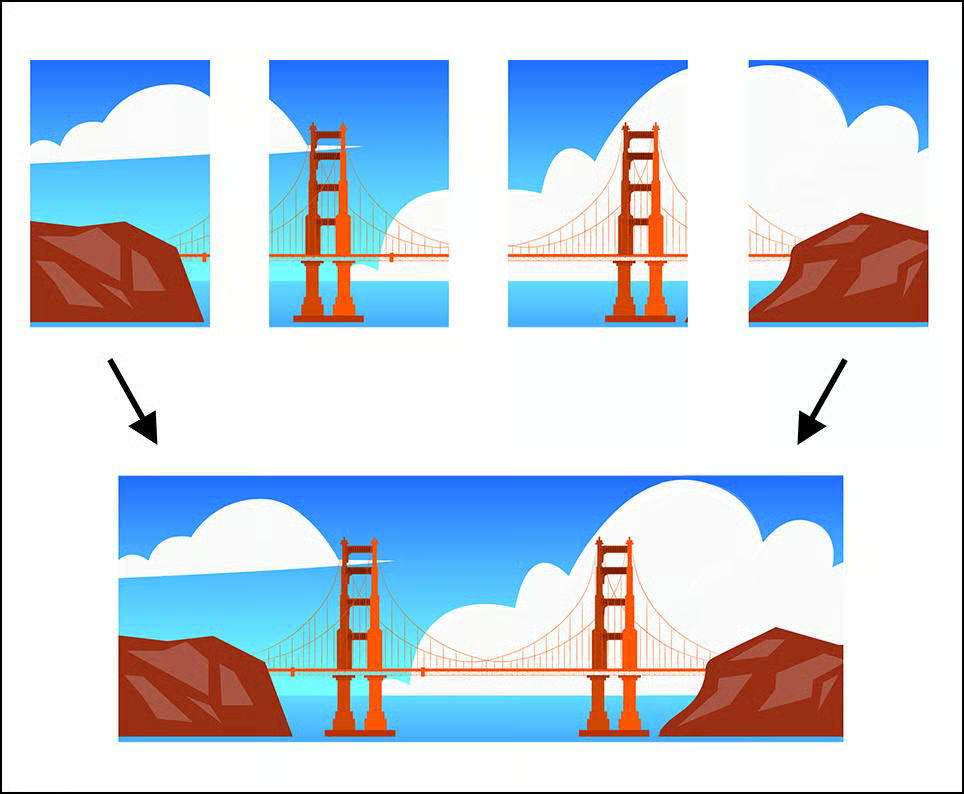
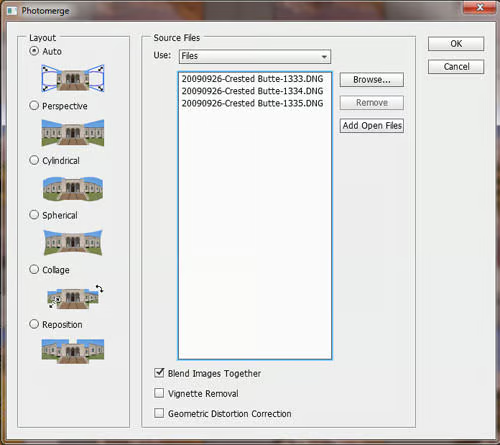
Fisheye panoramas are straightforward in tools like PTGui, Hugin, and other fisheye-aware stitchers. Import your images, set the lens type to “circular fisheye,” and specify ~180° HFOV. For bracketed sets, either preprocess HDR merges (Photomatix/Lightroom) or use PTGui’s built-in HDR fusion before stitching. Industry norms suggest ~25–35% overlap for fisheyes, which your 3–4-around sets easily meet. Rectilinear lenses require more shots and precise leveling; the Peleng’s wide coverage keeps it simple at the cost of some optical distortion (which stitchers handle well in equirectangular outputs). For an overview of PTGui’s strengths in pro pano work, see this PTGui review and workflow guide. PTGui: Fstoppers reviews
Cleanup & Enhancement
- Nadir patch: Shoot an extra handheld nadir or clone/AI-patch the tripod area after stitching.
- Color & noise: Synchronize color adjustments across all frames; apply moderate noise reduction for ISO 800–1600 shots.
- Level & straighten: Use the horizon/verticals tools to correct yaw/pitch/roll so the pano feels natural in VR viewers.
- Export: For web/VR, export 8–12K equirectangular JPEG; keep a 16-bit TIFF master if you plan heavy retouching later.
If you’re new to precision pano head setup, this tutorial is a solid foundation. Set up a panoramic head for high-end 360 photos
Video: End-to-End Panorama Basics
Prefer to learn visually? Here’s a clear, practical walkthrough that pairs well with this guide:
For broader gear considerations and lens choices for virtual tours, this reference is also helpful. DSLR/mirrorless virtual tour camera & lens guide
Disclaimer: software evolves quickly—check each tool’s current documentation for the latest features and best practices.
Useful Tools & Resources
Software
- PTGui (Windows/macOS): industry-standard fisheye pano stitcher with HDR/masking tools.
- Hugin (open source): capable and free, supports fisheye and multi-row workflows.
- Lightroom / Photoshop: RAW development, HDR pre-merge, retouching and nadir patching.
- AI tools: Generative fill or content-aware clone for tripod removal and seam cleanup.
Hardware
- Panoramic heads: Nodal Ninja, Leofoto—look for precise rails and click-stop rotators.
- Tripods: Stiff carbon fiber legs; a leveling base saves time in the field.
- Remotes: Wired or Bluetooth triggers; Nikon SnapBridge as a fallback.
- Pole/vehicle mounts: Use rated clamps/suction mounts and always add a safety tether.
Disclaimer: Brand names are for search reference—verify specs on official sites and choose based on your load and use case.
Common Mistakes & How to Avoid Them
- Parallax error: Not aligning the entrance pupil causes near objects to shift. Calibrate your pano head once and mark the rail positions.
- Exposure flicker: Auto exposure or auto WB between frames leads to visible seams. Use manual exposure and locked WB.
- Tripod shadows/footprints: Always shoot a nadir or plan a patch in post.
- Ghosting from movement: Do a second pass and use masking in PTGui/Hugin to select the cleanest areas.
- Night noise: Keep ISO conservative on tripod, extend shutter instead, and use exposure delay to avoid shake.
Field-Proven Scenarios with the Nikon Zf & Peleng 8mm
Indoor Real Estate
Use 4-around + nadir. Shoot bracketed ±2 EV at f/8, ISO 100–200. Lock WB to a Kelvin value that suits the dominant lighting, then correct global color later. The Zf’s files handle window recovery well when you protect highlights. Keep the tripod close to room center to minimize edge distortions in key features (countertops, door frames).
Outdoor Sunset
Use 4-around + zenith if there are interesting clouds. Meter for the sky, ISO 100, f/8, then consider a two-stop bracket to protect highlights. A rubber hood or hand-blocking helps tame flare; stitch with lens flare removal where necessary.
Event Crowds
Go 3-around + zenith/nadir to finish quickly. Use 1/200s minimum, ISO 400–800, f/5.6–f/8. Do a second lap to catch people gaps. In post, mask the less crowded frames for each sector. Fewer frames from the Peleng reduce continuity errors between shots.
Rooftop/Pole Shooting
Wind is your main enemy. Keep shutter fast (1/200–1/500), ISO 400–800, f/5.6–f/8. Hold the pole steady with a chest brace or belt, rotate slowly, and shoot 4-around only. Always use a safety tether and stay away from power lines.
Car-Mounted Capture
Park safely and shoot while stationary. Strong suction cups plus safety cables are mandatory. Level the mount and mark your rotation angles. Keep exposure short and consistent; avoid direct sun into the fisheye to reduce sensor reflections.
Visual Aids for This Workflow
Frequently Asked Questions
- Can I shoot handheld panoramas with the Nikon Zf?
Yes, in a pinch. Turn IBIS on, use 1/125s or faster, and shoot 3–4-around as quickly as possible with consistent manual exposure and WB. Expect small alignment errors down low; a pano head on a tripod still produces the cleanest stitches.
- Is the Peleng 8mm f/3.5 wide enough for a single-row full 360?
Yes. With a circular fisheye on full-frame, you can complete a sphere with 3–4 shots around plus a nadir (and sometimes a zenith). For safety in complex interiors, use 4-around + zenith + nadir for stronger overlap.
- Do I need HDR for interiors with bright windows?
Usually, yes. Bracket ±2 EV (3–5 frames) at f/8 and low ISO. Merge to HDR per view before stitching, or let PTGui handle HDR and stitching in one go. You’ll retain window detail without muddy shadows.
- How do I avoid parallax issues with this setup?
Align the entrance pupil on a panoramic head. Calibrate once with near/far objects, then mark the rail position for the Peleng. Keep your rotation level and use click-stops for even overlap.
- What ISO range is safe on the Zf in low light?
On tripod, prefer ISO 100–400 and lengthen shutter. Handheld or on a pole, ISO 800–1600 is very usable; 3200 is workable with careful noise reduction. Always expose to protect highlights—shadow lifting is clean at base ISO.
Safety, Limitations & Trustworthy Practice
The Peleng 8mm is manual and unchipped—remember to set Non-CPU Lens Data to 8mm for proper IBIS behavior and metadata. Fisheyes are flare-prone; shield direct sun and clean the front element often. The Zf’s IBIS can introduce micro-blur on tripod—turn it off for long exposures. When using poles, rooftops, or car mounts, always double up safety with tethers and check all clamps before lifting. Back up in the field by shooting a second pass or a safety set at slightly different exposure, and maintain redundant cards when possible. For more on panoramic-head techniques from a trusted source, this tutorial is a great companion read. Panoramic head tutorial and best practices