Why This Camera & Lens Are Great for Panoramas
The Nikon Zf paired with the Nikon AF-S 8–15mm f/3.5–4.5E ED Fisheye (via the FTZ/FTZ II adapter) is a compact, highly capable 360° panorama rig. The Zf’s 24.5MP full-frame BSI sensor delivers excellent dynamic range at base ISO, detailed color, and low pattern noise—ideal for multi-frame stitching and HDR. Autofocus is modern and accurate, but for panoramas you’ll typically work in manual focus for consistency. The fisheye zoom gives you two useful behaviors on full frame: a circular fisheye at 8mm (a circular image in the frame) for ultra-fast spherical capture with very few shoots, and a diagonal fisheye at 15mm for higher resolution spherical or cylindrical panos with more frames and smoother edges.
Compared to rectilinear ultrawides, fisheye coverage greatly reduces the number of shots required, which speeds up capture and lowers stitching errors in busy scenes. The trade-off is heavier distortion that must be accounted for in stitching, as well as stronger flare risk with the sun in frame. The Zf’s in‑body stabilization is amazing for general photography, but for tripod-based panoramas you’ll turn it off to avoid micro-shifts between frames. Overall, if you want a fast, travel‑friendly 360° workflow with professional results, the Zf + AF‑S 8–15mm fisheye is a proven combination.
Quick Setup Overview
- Camera: Nikon Zf — full-frame 24.5MP BSI CMOS; excellent base ISO dynamic range (~14 stops); strong low-light performance; mechanical and electronic shutters available; IBIS included.
- Lens: Nikon AF-S 8–15mm f/3.5–4.5E ED Fisheye — F-mount fisheye zoom (use FTZ/FTZ II); sharp stopped to f/5.6–f/8; typical fisheye CA and flare to manage; 180° diagonal FOV at 15mm; circular projection at 8mm on full-frame.
- Estimated shots & overlap (tested starting points):
- At 8mm (circular fisheye): 4 around at 90° yaw, slight tilt up (+5°) to help cover zenith, plus a nadir shot. For safer overlap: 6 around at 60°.
- At 12mm (between circular and diagonal): 5–6 around, add zenith and nadir.
- At 15mm (diagonal fisheye): 6–8 around + zenith + nadir, 30% overlap.
- Difficulty: Moderate (easy capture with fisheye; nodal alignment and HDR add complexity).
Planning & On-Site Preparation
Evaluate Shooting Environment
Scan the scene for lighting contrast, reflections, moving people and vehicles, and reflective or refractive surfaces (glass, polished floors, water). For glass, keep the lens as close as safely possible (1–3 cm) to minimize reflections and ghosting, and use a lens skirt or hood with your hand as a flag to block stray light. Mind the sun with a fisheye: even just outside the frame, it can introduce flare and veiling glare that reduce contrast.
Match Gear to Scene Goals
The Nikon Zf’s base ISO image quality is superb for dynamic range and color fidelity, giving you robust RAW files for stitching and HDR tonemapping. Indoors, ISO 200–800 is safe with clean results; for very dark scenes, ISO 1600–3200 is still workable if you plan for careful noise reduction. The AF‑S 8–15mm fisheye’s advantage is speed—fewer frames, faster rotation, fewer stitching seams. In return, you accept fisheye distortion that must be handled in software. For real estate or interiors where resolution counts, use 12–15mm with more frames; for fast outdoor 360s (events, tourism), use 8–10mm with 4–6 frames around.
Pre-shoot Checklist
- Batteries charged; dual cards or high-capacity UHS-II; sensor and lens front element clean (fisheye front elements attract flare and dust).
- Tripod leveled; panoramic head calibrated for the no‑parallax point; FTZ adapter firmly seated.
- Safety checks: wind on rooftops, tether lines on poles, verify tripod stability on floors and uneven ground; mechanical shutter for LED lighting to avoid banding.
- Backup workflow: capture an extra pass at the same yaw positions (especially for crowds or complex parallax scenes) and consider a second nadir.
Essential Gear & Setup
Core Gear
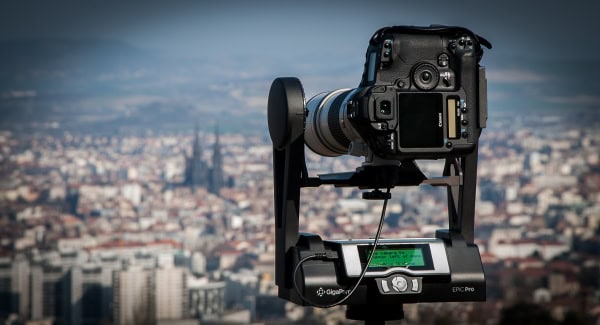
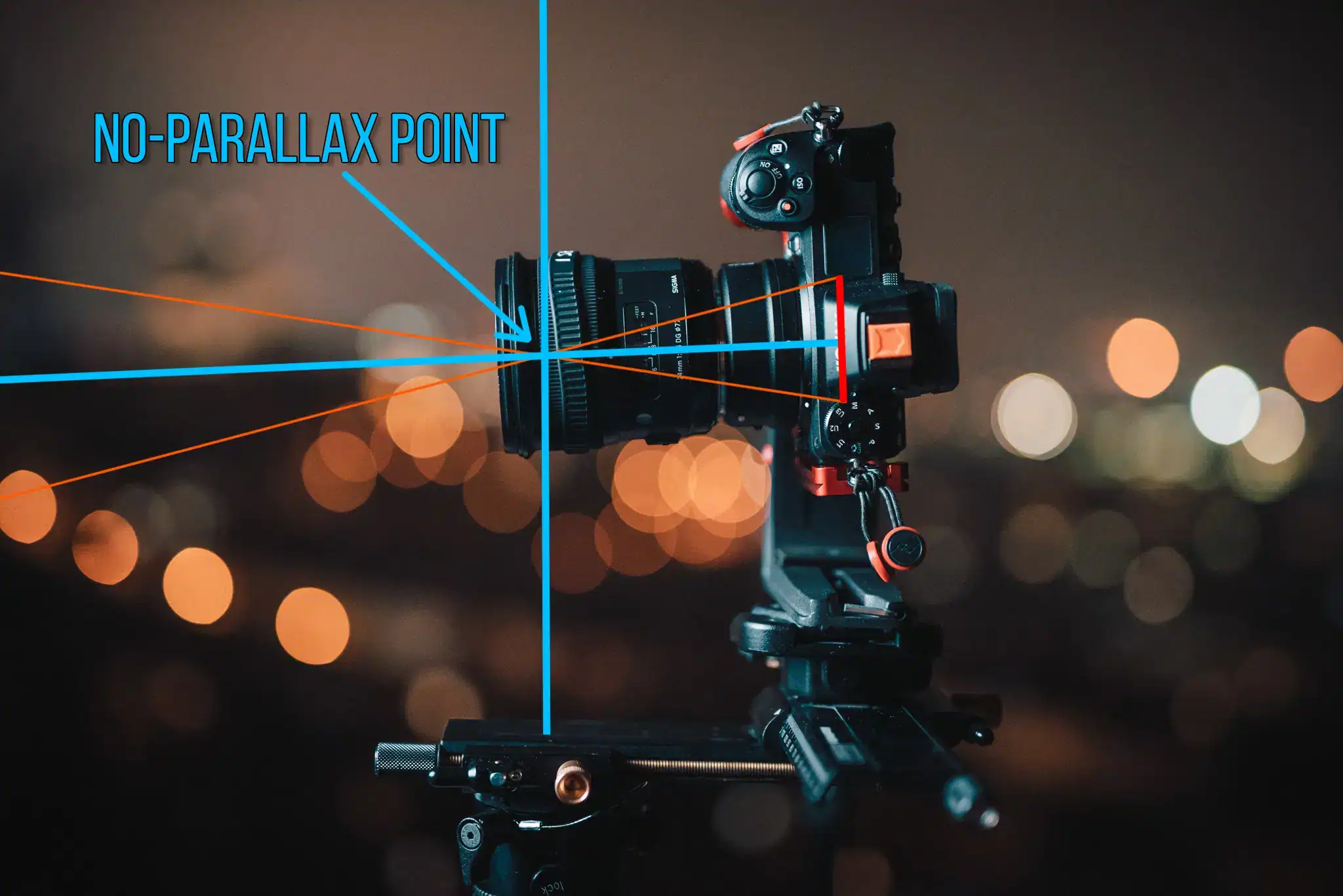
- Panoramic head: Enables rotation around the lens’s entrance pupil (no‑parallax point). Proper alignment minimizes stitching errors in near-field subjects.
- Stable tripod with a leveling base: Leveling ensures your yaw increments remain consistent; a half-ball or 3-way leveling base speeds setup.
- Remote trigger or SnapBridge app: Prevents vibration and allows bracketing without touching the camera.
Optional Add-ons
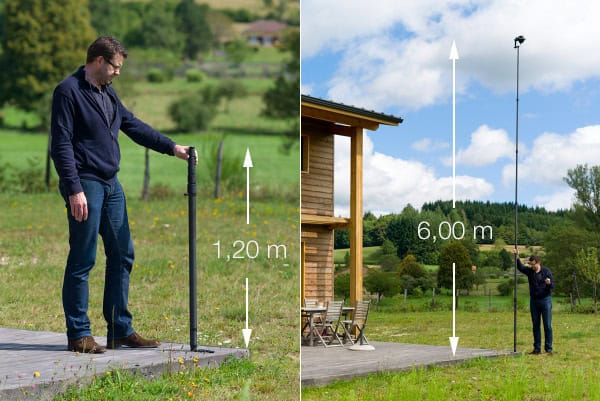
- Pole or car mount: Great for elevated vantage points or vehicle-based tours. Always use guy lines or safety tethers; watch wind speeds and vibration.
- Lighting aids: LED panels or bounced flashes to balance interior lighting for HDR efficiency.
- Protective covers/weather gear: Rain covers for the Zf, microfiber cloths, and a collapsible lens hood or flag for the fisheye.
Step-by-Step Shooting Guide
Standard Static Scenes
- Level and align: Level your tripod. On the pano head, adjust fore–aft so rotation occurs around the lens’s no‑parallax point. Use a near vertical reference (lamp post or window frame) crossing in front of a far background to fine-tune.
- Lock exposure and white balance: Switch to Manual (M). Set ISO 100–200 for daylight, pick f/8–f/11, and adjust shutter to center the histogram without clipping highlights. Set white balance to Daylight or a fixed Kelvin to prevent color shifts across frames.
- Focus: Use manual focus. For 8–10mm at f/8, set focus just short of infinity (around the hyperfocal). For 15mm at f/8, focus near 1–1.5 m for interiors, or to hyperfocal for landscapes. Use magnified live view and focus peaking.
- Capture sequence: Rotate in equal yaw increments with 25–35% overlap. For 8mm, 4 around at +5° tilt is a fast baseline; add a zenith if needed and a dedicated nadir for tripod removal.
- Nadir shot: After the around shots, tilt down and capture a clean ground plate. If possible, shift the rig laterally using a nadir adapter to reduce footprint in the nadir patch.
HDR / High Dynamic Range Interiors
- Bracket exposures: Use ±2 EV (3 or 5 frames depending on contrast). Keep aperture fixed at f/8 and ISO 100–400; vary shutter speed only.
- Color consistency: Keep WB locked. Mixed lighting? Choose a neutral Kelvin (e.g., 4500–5000K) and correct globally in post.
- Sequence discipline: Shoot the same bracket order for every yaw position; this makes batch HDR processing and stitching more reliable.
Low-Light / Night Scenes
- Stability first: Turn off IBIS (Zf VR), use a sturdy tripod, and a remote release. Long exposures of 1–8 seconds are common; ISO 200–800 preserves dynamic range.
- Shutter mode: Prefer mechanical shutter under fluorescent/LED lighting to avoid banding. Enable Exposure Delay or use self-timer if you don’t have a remote.
- Noise control: Aim for ISO ≤ 1600 when possible; prioritize clean shadows over fast capture because stitching accentuates noise differences.
Crowded Events
- Two-pass approach: First pass quickly captures the panorama. Second pass re-shoots frames with fewer people or better spacing.
- Overlap generously: 35–45% overlap helps the stitcher handle moving subjects and allows you to mask people cleanly.
- Mask in post: In PTGui or similar, use masking to pick the cleanest subject positions across passes.
Special Setups (Pole / Car / Elevated)
- Safety & balance: Use a lightweight pano head and keep the rig’s center of gravity over the pole. Guy lines recommended over 3 m. Always tether the camera.
- Vibration: Use faster shutter speeds (1/250–1/500) and higher ISO if needed. Minimize pole oscillation; wait between frames for the rig to settle.
- Rotation plan: Fewer shots (e.g., 4–6 around at 8–10mm) reduce time aloft and lower risk.
Recommended Settings & Pro Tips
Exposure & Focus
| Scenario | Aperture | Shutter | ISO | Notes |
|---|---|---|---|---|
| Daylight outdoor | f/8–f/11 | 1/100–1/250 | 100–200 | Lock WB (Daylight or 5200K), use manual exposure |
| Low light/night | f/4–f/5.6 | 1/4–1/30 (tripod) | 200–800 | IBIS off on tripod; prefer slower shutter over pushing ISO |
| Interior HDR | f/8 | Bracket ±2 EV | 100–400 | Balance windows vs. shadows; vary shutter only |
| Action / crowds | f/5.6–f/8 | 1/200+ | 400–800 | Faster shutter to reduce motion blur; double pass |
Critical Tips
- Manual focus at hyperfocal: At 8–10mm and f/8, setting just short of infinity keeps everything sharp. At 15mm, consider ~1–1.5 m focus for interiors.
- Nodal calibration: With the AF‑S 8–15mm, start with the lens entrance pupil slightly forward of the tripod axis; refine by aligning a near object with a far line while panning. Mark your rail positions for 8mm and 15mm to speed future setups.
- White balance lock: Mixed lighting? Pick a mid Kelvin (4500–5000K) and correct globally later. Avoid Auto WB to keep color consistent across frames.
- RAW capture: Use 14-bit NEF for maximum latitude in HDR and color correction. JPEG only if speed is critical and lighting is consistent.
- IBIS/VR: Turn off in-body VR and lens VR on a tripod to avoid micro-shifts that complicate stitching.
- Shutter mode: Prefer mechanical shutter under artificial light to avoid rolling bands; electronic/shutter can be fine outdoors.
Stitching & Post-Processing
Software Workflow
For spherical 360s, PTGui and Hugin are industry standards. With a fisheye lens, specify the correct projection (fisheye), focal length, and sensor size. Fisheye capture usually requires fewer images, and modern stitchers can handle circular fisheyes from 8mm with ease. Maintain 25–35% overlap. Rectilinear lenses demand more frames, but fisheyes demand more careful handling of flare and edges. After stitching, you’ll output an equirectangular panorama (2:1) for web/VR display. For a guided overview of high-end capture principles, see this panoramic head setup guide from Meta’s Creator resources at the end of this paragraph. Set up a panoramic head for perfect 360 photos.
Cleanup & Enhancement
- Nadir patch: Export a layered panorama or use nadir patching tools. You can photograph a clean ground plate or use AI content fill for small footprints.
- Color and noise: Apply consistent white balance and tone mapping. Use luminance noise reduction in the sky and shadows, especially for ISO 800+ captures.
- Leveling: Use your stitcher’s horizon and vertical alignment tools. Correct yaw/pitch/roll to ensure a level horizon and true verticals for interior tours.
- Export: For VR platforms, export equirectangular at 8K–12K for high-res viewers; JPEG quality ~90–95. Keep a master 16-bit TIFF for archival and future edits.
For more on tools and stitching strategies, this PTGui review provides a practical perspective on pro workflows. Fstoppers: PTGui review.
Video: Panorama shooting and stitching fundamentals
Useful Tools & Resources
Software
- PTGui panorama stitching
- Hugin (open source)
- Adobe Lightroom / Photoshop for RAW and retouch
- AI tripod/nadir removal tools (e.g., generative fill)
Hardware
- Panoramic heads (Nodal Ninja, Leofoto, Sunwayfoto)
- Carbon fiber tripods with leveling bases
- Wireless remote shutters or SnapBridge
- Pole extensions and car mounts (with safety tethers)
Want deeper background on tripod heads and technique? This panoramic head tutorial is a solid reference. Panoramic head tutorial.
Disclaimer: product names are for search reference; verify specs and compatibility on official sites.
Common Mistakes & How to Avoid Them
- Parallax error: Calibrate the no‑parallax point and lock all rails before shooting.
- Exposure flicker: Manual mode, fixed ISO and aperture; vary only shutter. Lock white balance.
- Tripod shadows/footprints: Capture a dedicated nadir or plan to patch in post with a clean plate.
- Ghosting from movement: Use higher overlap, shoot multiple passes, and mask in the stitcher.
- Flare with fisheyes: Shade the front element, avoid direct sun where possible, and shoot an extra frame to blend if needed.
- Stabilization on tripod: Turn off IBIS and lens VR to prevent frame-to-frame shifts.
Field-tested Scenarios & Settings
Indoor Real Estate (Bright Windows)
Mount the Nikon Zf on a leveled pano head. Set the AF‑S 8–15mm to 12–15mm for higher resolution. Manual exposure at f/8, ISO 100–200, bracket ±2 EV (5 shots if windows are very bright). Use 6–8 around plus zenith and nadir with ~30% overlap. In PTGui, batch-merge HDR first or enable HDR fusion during stitching. Keep verticals upright in post using the optimizer and vertical line constraints.
Outdoor Sunset 360
At 8–10mm for speed, shoot 4–6 around at f/8, ISO 100–200. Take an extra set with 1-stop darker exposure to protect highlights at the horizon and blend later. Slightly tilt up (+5°) to reduce the need for a dedicated zenith. Use a nadir shot after the main pass. Keep flare in check by shading the lens when the sun is near frame edges, and capture an extra flare-free shot to patch if needed. For panoramic planning background, see this focal length primer. Panoramas, focal lengths, and Photoshop.
Event Crowds
Use 8–10mm for fewer shots and faster rotation. ISO 400–800 with 1/200–1/500 if handheld for scouting; for final capture, tripod plus remote. Do two passes: one quick, one slow for clean gaps. In the stitcher, mask people to the best position from either pass.
Rooftop / Pole Shooting
On a pole, keep the lens at 8–10mm and rotate fewer frames (4–6) to reduce time in wind. Use 1/250–1/500 at ISO 400–800 to freeze pole oscillation. Tether the rig to your body or a railing, wear gloves, and never extend over crowded areas. Always perform a pull test on all clamps before lifting.
Car-Mounted Capture
For moving platforms, lock shutter speeds to 1/500+ and ISO 800–1600 as needed. Use suction mounts with safety lines; avoid public roads unless safely permitted. Expect more stitching issues with parallax, so increase overlap and plan to mask heavily in post.
Frequently Asked Questions
- Can I shoot handheld panoramas with the Nikon Zf?
Yes for quick outdoor scenes, especially at 8–10mm with 35–40% overlap. However, without a pano head you’ll get parallax in near objects. For professional results (interiors, products), use a tripod and calibrated panoramic head.
- Is the AF‑S 8–15mm fisheye wide enough for single‑row 360?
Absolutely. At 8mm (circular fisheye) you can complete a sphere with 4 around plus a nadir (and sometimes no separate zenith if you tilt up slightly). At 15mm (diagonal fisheye), plan 6–8 around plus zenith and nadir for higher resolution.
- Do I need HDR for interiors with bright windows?
Usually yes. Bracketing ±2 EV (3 or 5 frames) preserves window highlights and interior shadow detail. Merge to HDR before or during stitching for natural results.
- How do I avoid parallax issues with this lens?
Calibrate the no‑parallax point using a pano head with fore–aft adjustment. Align a near vertical object against a distant line and rotate; adjust until there’s no relative shift. Mark separate positions for 8mm and 15mm on your rails for repeatability.
- What ISO range is safe on the Nikon Zf in low light?
For tripod panoramas, target ISO 100–400 to maximize dynamic range; ISO 800 remains clean with careful processing. If handholding or on a pole, ISO 1600–3200 is usable with noise reduction, but expect some shadow grain.
- Can I set custom modes for pano on the Zf?
Yes. Program a custom mode with Manual exposure, fixed WB, IBIS off, RAW 14‑bit, and your bracketing preferences. This speeds consistent setup on location.
- How do I reduce flare with a fisheye?
Avoid placing the sun just outside the frame. Use your free hand, a black card, or a small flag to shade the lens (keep it consistent across frames) and capture an extra clean frame to patch if needed.
- What’s the best tripod head for this setup?
Any robust panoramic head with fore–aft rail adjustment and click-stops works. For 8–15mm fisheye, a compact multi-row head or a single-row head with vertical tilt is sufficient. Ensure it supports your camera + FTZ + lens weight with margin.
Safety, Limitations & Data Integrity
The Zf is well-sealed, but fisheye front elements are exposed. Use a lens cap or rain cover between takes in dusty/windy environments. On rooftops and poles, always prioritize tethers and personal safety over getting the shot. For data integrity, use two cards or frequent backups to a phone/tablet via SnapBridge, and consider a second complete pano pass whenever time permits.
For additional DSLR/mirrorless 360 capture fundamentals and gear compatibility considerations, this overview is helpful. Using a DSLR or mirrorless to shoot and stitch a 360 photo.
Technical Notes Specific to This Combo
- Mounting: The AF‑S 8–15mm is F‑mount; use the FTZ/FTZ II adapter on the Zf. Aperture control and AF work; for panos, switch to MF.
- Sensor & pixel pitch: 24.5MP full-frame (~5.9 µm pixels) gives strong per-pixel SNR and deep shadow recovery at base ISO.
- Dynamic range: Expect excellent highlight preservation at ISO 100–200; for HDR, keep ISO low and bracket shutter.
- Shots per 360:
- 8mm circular: 4 around (+5° tilt), optional zenith, plus nadir.
- 12mm: 5–6 around, zenith + nadir.
- 15mm diagonal: 6–8 around, zenith + nadir.
- Overlap: 25–35% for fisheye; increase to 35–45% in complex scenes or crowds.
- Best apertures: f/5.6–f/8 (sweet spot for sharpness vs. diffraction).
Field Inspiration
Further Reading
Curious about lens choices and virtual tour workflows? This DSLR/virtual-tour guide discusses practical body and lens combinations and trade-offs. DSLR virtual tour FAQ and lens guide.