
Why This Camera & Lens Are Great for Panoramas
If you want to shoot fast, immersive 360° panoramas with minimal frames, the Nikon Zf paired with the Laowa 4mm f/2.8 Circular Fisheye is a compact, high‑impact combo. The Zf’s 24.5 MP full‑frame BSI CMOS sensor delivers excellent color and dynamic range (around ~14 stops at base ISO 100), a robust EXPEED 7 processor, and very good high‑ISO performance. Its 5‑axis in‑body image stabilization (IBIS) is rated up to 8 stops for stills, and while you’ll keep IBIS off on a tripod, it’s handy for monopod/pole work. The pixel pitch is approximately 5.9 µm, which contributes to clean files and smooth tonal transitions for HDR panoramas.
The Laowa 4mm f/2.8 is an ultra‑wide circular fisheye (approximately 210° angle of view) that produces a round image in the frame. On the Nikon Zf (full‑frame), it’s available in Nikon Z mount; it’s originally designed for smaller sensors, but you can mount it on the Zf and disable Auto DX crop in the camera to capture the full circular image within the full‑frame—this maximizes raw data and flexibility in post. Circular fisheyes are a panorama powerhouse: they reduce the number of shots needed to cover the sphere, speed up capture in changing light or crowds, and simplify stitching because the overlap is generous. The trade‑offs are predictable fisheye distortion (handled well by stitching software) and lower effective resolution because only the circle is used; in practice, output around 8K equirectangular is very attainable and clean. The Laowa is compact, manual focus, and surprisingly sharp by f/5.6–f/8 with manageable chromatic aberration at the periphery.
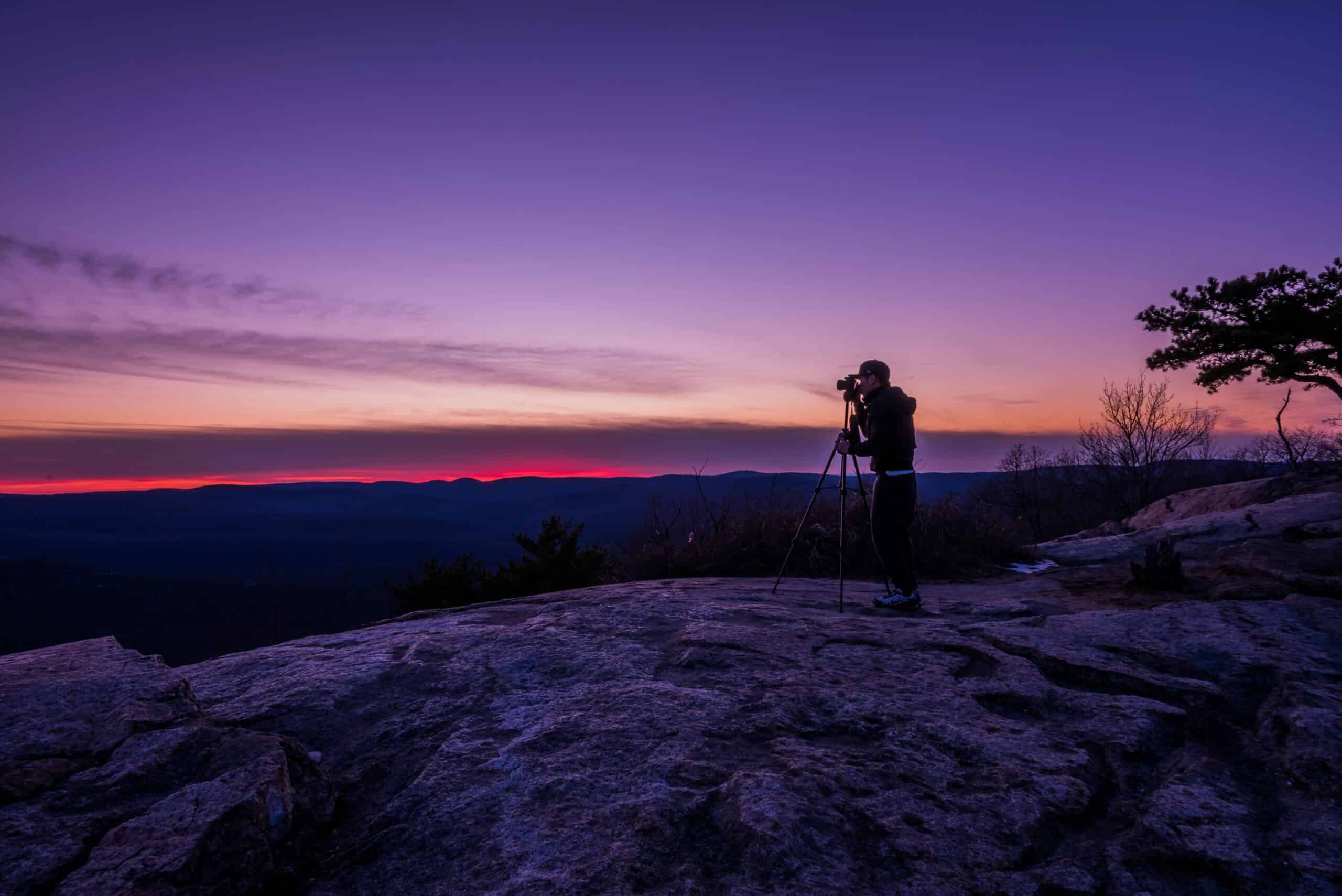
Quick Setup Overview
- Camera: Nikon Zf — Full‑frame (36×24 mm), 24.5 MP BSI sensor, EXPEED 7, ~14 EV dynamic range at ISO 100, excellent at ISO 100–1600.
- Lens: Laowa 4mm f/2.8 Circular Fisheye — ~210° AoV circular fisheye, manual focus, sharp from f/5.6–f/8, minor CA toward the edge, very compact.
- Estimated shots & overlap:
- Tripod/pano head: 3 shots around at 120° yaw spacing (slight tilt −5°) + nadir; add 1 zenith if you need a perfect ceiling/sky.
- Handheld or in crowds: 4 around at 90° is safer against parallax/tilt errors.
- Overlap target: 30–40% with this circular fisheye (industry baseline for fisheye is ~25–30%).
- Difficulty: Easy–Intermediate (fewer shots, but requires careful nodal alignment and disciplined exposure/WB).
Planning & On-Site Preparation
Evaluate Shooting Environment
Scan for high‑contrast lighting (bright windows vs. dark interiors), reflective surfaces (glass, polished floors), and moving subjects. For glass, set the tripod at least 50–100 cm away and shoot perpendicular to minimize flare/ghosting; cup your hand or a black card near the lens edge if needed, but keep it out of the circular image. Watch for the sun in outdoor scenes—at 210° AoV it’s surprisingly easy to include; plan your yaw angles to keep the sun near a seam if possible.
Match Gear to Scene Goals
The Nikon Zf & Laowa 4mm f/2.8 shines when speed is critical: golden hour cityscapes before the light goes, events with foot traffic, or rooftops where wind dictates short shooting windows. The Zf’s DR lets you push shadows and recover highlights cleanly; for indoor real estate, bracketed HDR ensures clean windows without plugging shadows. With this fisheye, you’ll shoot far fewer frames than with a rectilinear lens, dramatically reducing stitch complexity and time. Just remember effective resolution is limited by the circular image—great for web/VR and most client needs up to ~8K equirectangular; for ultra‑large gigapixel walls, use a longer focal length on a full spherical head.
Pre-shoot Checklist
- Power & storage: fully charged battery, spare battery, fast UHS‑II card(s). The Zf’s raw files are modest, but HDR bracketing multiplies frames.
- Optics clean: gently clean the Laowa’s front element (it protrudes) and the Zf sensor if needed; dust is very visible in skies.
- Tripod level: use a leveling base and verify bubble/virtual level in camera.
- Pano head calibration: ensure nodal point alignment is dialed for this lens (details below).
- Safety checks: rooftop edges, wind gusts, pedestrian flow; add a safety tether when using a pole or near ledges.
- Backup workflow: shoot a second, faster pass in case of stitching issues or moving subjects.
Essential Gear & Setup
Core Gear
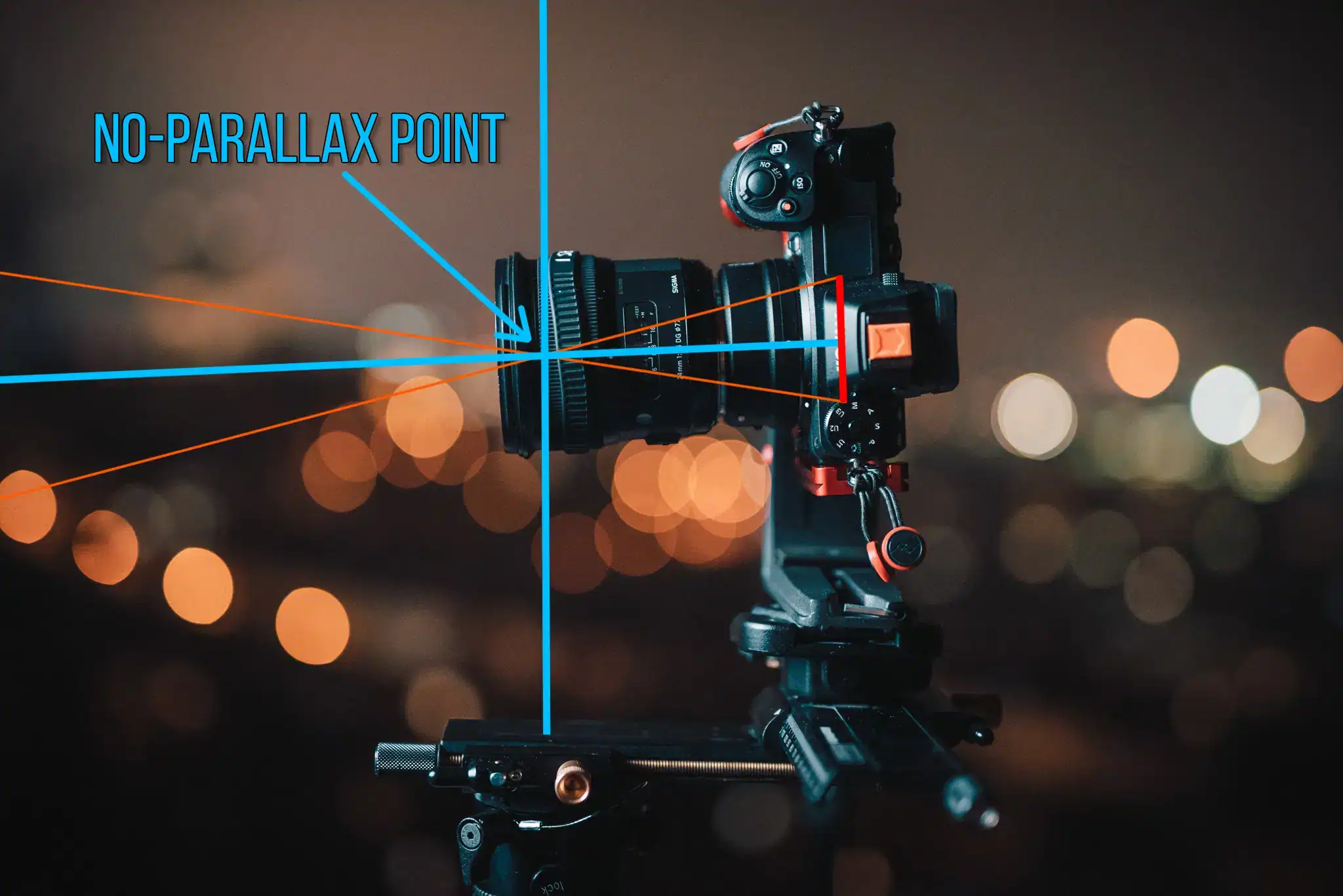
- Panoramic head: Use a compact spherical head or a single‑row rotator with a fore‑aft rail. Aligning the entrance pupil (nodal point) eliminates parallax so overlaps stitch cleanly across the entire 210° frame.
- Stable tripod + leveling base: Leveling makes your set consistent and reduces roll/pitch correction in post. Carbon fiber helps in wind.
- Remote trigger or app: Trigger via self‑timer, ML‑L7 remote, or SnapBridge app to prevent vibrations. With electronic shutter or EFC, you’ll get crisp frames.
Optional Add-ons
- Pole or car mount: Great for unique perspectives. Use a guy line or tether; watch wind loads. Keep shutter speeds higher (1/200–1/500) to fight vibrations.
- Lighting aids: Small LED panels help balance dark interiors. Keep them out of frame—remember, 210° sees almost everything.
- Weather protection: A compact rain cover and microfiber cloth. Droplets on a fisheye are very obvious and hard to clone out.
Step-by-Step Shooting Guide
Standard Static Scenes
- Level tripod and mount the pano head. Confirm the camera’s virtual horizon reads level. A leveling base speeds this step.
- Align the nodal point (no‑parallax point). With the Laowa 4mm f/2.8, start by placing the lens so the rotation axis passes through the approximate entrance pupil (typically near the aperture location on small fisheyes). Do the classic parallax test: place two vertical objects at different distances and rotate the camera. Adjust the rail until foreground and background align without shifting between yaw angles. Mark your rail for repeatability on the Zf + Laowa combo.
- Set manual exposure and white balance. Meter for the midtones (spot or matrix), then lock exposure in full Manual mode. Lock WB (Daylight outdoors, custom Kelvin indoors) to prevent color inconsistency across frames.
- Focus: Switch the Laowa to manual focus. At f/8 the hyperfocal distance is only a few inches; a practical approach is to focus a bit shy of infinity (or around 0.3 m) and stop down to f/8–f/11 for crisp results front to back.
- Capture sequence:
- 3 around at 120° yaw spacing with a slight −5° tilt to ensure clean ground coverage.
- Add 1 nadir (straight down) for tripod removal; rotate the head so a clean overlap avoids your feet.
- Add 1 zenith (straight up) only if the ceiling/sky has detailed geometry that matters (domes, grid ceilings). Often 3 around + nadir suffices.
- Keep overlap ~30–40%. With 210° AoV, the software will have generous control points, but avoid too little overlap at seams.
- Review magnified: Check for motion blur and flare. Re‑shoot any compromised frame—fixing in post is slower than re‑taking a photo.
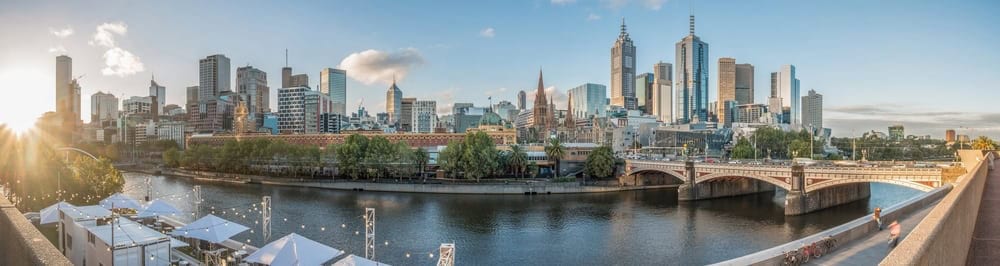
HDR / High Dynamic Range Interiors
- Bracket ±2 EV around your base exposure. The Zf’s clean low ISO makes HDR blending natural. Set auto‑bracket for 3–5 frames.
- Lock white balance; changing WB across brackets causes color shifts in the stitch.
- Shoot all yaws in one exposure set before changing exposure again to avoid flicker across seams.
- Use a 2 s self‑timer or remote to eliminate micro‑shake between brackets.
Low-Light / Night Scenes
- Use a stable tripod and turn IBIS off. On a pole or monopod, you can leave IBIS on, but keep shutter times short (1/60–1/200) to minimize subject and operator motion.
- Recommended ranges on the Zf: ISO 100–800 for best DR; ISO 1600–3200 still very good with mild noise reduction; above 6400 expect more visible noise and reduced DR.
- Open to f/4–f/5.6 and use 1/30–1/60 s if the scene allows. Trigger with a remote to prevent blur.
Crowded Events
- Shoot two passes: first for coverage, second waiting for gaps. This gives alternate frames to mask people in motion.
- Use 4 around at 90° if handheld; extra redundancy helps stitching when subjects move across seams.
- Aim for faster shutter (1/200+) and ISO 400–800 to freeze motion.
Special Setups (Pole / Car / Drone)
- Pole: Add a safety tether and keep the pole as vertical as possible. Use 3 around at 120°, 1/250+ shutter, and consider using IBIS.
- Car: Use suction mounts on clean glass/metal and a safety line. Stop frequently to capture sets safely off traffic. Vibrations require faster shutter and more overlap.
- Drone: The Laowa 4mm isn’t a drone lens; use native drone pano modes, but apply the same exposure/WB discipline.
Recommended Settings & Pro Tips
Exposure & Focus
| Scenario | Aperture | Shutter | ISO | Notes |
|---|---|---|---|---|
| Daylight outdoor | f/8–f/11 | 1/100–1/250 | 100–200 | Lock WB (Daylight), avoid sun directly in frame if possible |
| Low light/night | f/4–f/5.6 | 1/30–1/60 | 400–800 (up to 1600–3200 if needed) | Tripod & remote; IBIS off on tripod |
| Interior HDR | f/8 | Bracket ±2 EV | 100–400 | Balance windows & lamps, merge HDR before stitching or use PTGui HDR |
| Action / moving subjects | f/5.6–f/8 | 1/200+ | 400–800 | Freeze motion, shoot two passes |
Critical Tips
- Manual focus at or just shy of infinity; stop to f/8 for edge‑to‑edge sharpness.
- Nodal point calibration: mark your rail once tuned. Re‑check if you change quick‑release plates or rail positions.
- White balance lock: Daylight outdoors; custom Kelvin indoors (e.g., 3500–4500K for mixed LED/tungsten). Consistency beats “correctness.”
- Shoot RAW: Nikon NEF gives headroom for highlight recovery and color consistency—crucial for HDR panorama work.
- IBIS off on tripod: Prevents micro “IBIS chatter.” Use Electronic Front‑Curtain or Electronic shutter to reduce shutter shock.
- Disable Auto DX crop: Keep full‑frame NEFs even with the circular image so you retain maximum raw data for the circle.
Stitching & Post-Processing
Software Workflow
Import your RAW files and make global exposure/WB tweaks first, keeping each set consistent. For HDR, either pre‑merge brackets per view (Lightroom/Photoshop/Affinity) or feed brackets directly into PTGui and let it merge HDR during stitching. In PTGui or Hugin, set Lens Type to Circular Fisheye, focal length to 4 mm, and start with an FoV around 210°. Let the optimizer find control points; a circular fisheye usually yields robust matches with 30–40% overlap. Industry guidance suggests ~25–30% for fisheyes and ~20–25% for rectilinear lenses. After optimizing, check verticals/horizon and use masks to resolve moving subjects and tripod occlusion. For a clean nadir, shoot and stitch a dedicated nadir frame or use a viewpoint correction and patch.
Export an equirectangular JPEG/TIFF (typically 8000×4000 px or higher). Given the effective resolution of a circular fisheye on 24 MP, 8K equirectangular is a realistic sweet spot. For higher output, consider a multi‑row approach or a less extreme fisheye (e.g., 7.5–8 mm circular on FF) to use more pixels.
For deeper reading and tool choices, see Fstoppers’ PTGui review for a practical look at pro features, and Oculus’ guide to DSLR/mirrorless 360 workflows for VR publishing guidelines. PTGui in professional panorama workflows. Using a mirrorless camera to shoot and stitch a 360 photo.
Cleanup & Enhancement
- Nadir patch: Use clone/heal or AI content‑aware fill. PTGui’s Viewpoint feature can seamlessly insert a handheld nadir shot.
- Color & noise: Apply mild noise reduction for ISO 1600–3200 files from the Zf; add local contrast and gentle dehaze to interiors.
- Leveling: Correct roll/yaw/pitch so horizons are neutral and verticals are straight in the equirectangular preview.
- Output: Save a master 16‑bit TIFF and a web‑ready JPEG. Maintain EXIF where possible for tour platforms.
For a primer on panoramic heads and alignment, 360 Rumors maintains a solid tutorial that complements the workflow above. Panoramic head setup and tips.
Video: Panorama Head Setup & Stitching Principles
Prefer to see it in action? This video walks through essential steps you can adapt to the Nikon Zf + Laowa 4mm workflow.
Useful Tools & Resources
Software
- PTGui panorama stitching
- Hugin (open source)
- Lightroom / Photoshop / Affinity Photo
- AI tripod/nadir removal tools
Hardware
- Panoramic heads: Nodal Ninja, Leofoto
- Carbon fiber tripods with leveling bases
- Wireless remote shutters
- Pole extensions and car mounts with safety tethers
Disclaimer: product names are for search/reference; verify specifications on official sites.
Common Mistakes & How to Avoid Them
- Parallax error: Fix with precise nodal alignment and consistent camera height.
- Exposure flicker: Always use Manual exposure and lock WB.
- Tripod shadows/feet: Shoot a dedicated nadir and patch in post.
- Ghosting from moving subjects: Do a second pass and use masks in PTGui/Hugin.
- Noise at night: Keep ISO low, use a tripod, and extend shutter instead of pushing ISO excessively.
- Flare: Shield the lens edge with care; plan yaw angles to avoid harsh backlight on seams.
- IBIS artifacts on tripod: Turn IBIS off when mounted; use EFC/electronic shutter.
Field-Tested Scenarios with the Zf + 4mm Circular Fisheye
Indoor Real Estate
Use 3 around + nadir with ±2 EV bracketing at f/8, ISO 100–200. Keep the camera near room center to reduce perspective distortion on walls. Lock WB to a custom Kelvin (e.g., 4000K) in mixed light. Merge HDR first for each yaw, then stitch. Result: clean window detail and consistent wall color without banding.
Outdoor Sunset Rooftop
Time is short. Shoot 3 around at 120° and an optional zenith if skylines have structures. Expose for highlights (protect the sun area) at ISO 100–200; you can lift shadows later thanks to the Zf’s DR. Use a lens cloth between frames if wind carries haze onto the front element.
Crowded Event
Handheld with 4 around at 90° is safer. Choose 1/250 s, f/5.6, ISO 400–800. Do two passes and mask crowds in post. The circular fisheye’s overlap makes matching easy even with motion.
Pole Capture Over a Plaza
Use a lightweight pole and tether. 3 around at 120°, 1/500 s, f/5.6, ISO 400–800. Keep the pole as vertical as possible and rotate slowly between shots. Expect minor parallax from sway—mask seams where needed.
Frequently Asked Questions
- Can I shoot handheld panoramas with the Nikon Zf?
Yes. With the Laowa 4mm circular fisheye, use 4 around at 90° and faster shutter speeds (1/200+). Lock exposure/WB and keep the camera rotating around as close to the lens’ entrance pupil as you can. A monopod helps stability.
- Is the Laowa 4mm f/2.8 wide enough for single-row 360?
Absolutely. Its ~210° circular coverage lets you do 3 around + nadir, and often no zenith shot is needed. For perfect ceilings/skies, add a zenith frame.
- Do I need HDR for interiors with bright windows?
Often yes. Bracket ±2 EV (3–5 frames) to preserve window highlights and shadow detail. Keep WB locked and either pre‑merge HDR or let PTGui handle HDR during stitching.
- How do I avoid parallax issues with this combo?
Use a pano head with a fore‑aft rail, perform the two‑stick parallax test, and mark your rail once dialed. Re‑check after any plate/rail change or if focus distance changes significantly.
- What ISO range is safe on the Zf for low light?
ISO 100–800 is ideal for maximum DR. ISO 1600–3200 remains very usable with light noise reduction. Above that, expect more visible noise and compressed highlights.
- Can I create a custom pano preset on the Zf?
Yes. Save Manual exposure, manual WB, IBIS OFF (tripod), RAW, and your bracketing settings to a custom mode (U1/U2 via Shooting Menu banks), so you’re ready in seconds on location.
- How can I reduce flare with a circular fisheye?
Avoid pointing directly at strong light sources when possible, and plan yaw so the sun lands near a seam. Use your body or a flag to shade the lens edge—take care to keep it outside the 210° field.
- What panoramic head works best here?
A compact spherical head (e.g., Nodal Ninja) with a fore‑aft rail is ideal. Even a single‑row rotator with an adjustable rail can work due to the fisheye’s coverage.
Further Reading
For a broader perspective on lens/body choices for virtual tours and practical capture tips, see this excellent guide. DSLR/Mirrorless virtual tour camera & lens guide.