
Why This Camera & Lens Are Great for Panoramas
If you want to know how to shoot panorama with Nikon Zf & Canon RF 15-35mm f/2.8L IS USM, you’re looking at a powerful full-frame body paired with an optically excellent ultra-wide, rectilinear zoom. The Nikon Zf is a 24.5MP full-frame mirrorless camera with a modern BSI CMOS sensor and EXPEED 7 processing. It delivers roughly 14 EV of dynamic range at base ISO, clean files from ISO 100–800, and strong color depth—exactly what you want for stitching seamless panoramas and 360 photos. The Canon RF 15-35mm f/2.8L IS USM is a pro-grade lens: very sharp from f/4–f/8, fast and constant f/2.8 for low light, well-controlled CA, and robust weather sealing.
Important compatibility note: Canon RF lenses do not natively mount or electronically adapt to Nikon Z bodies as of this writing. There is no reliable RF-to-Z electronic adapter on the market. Practically, you have two routes to apply the guidance in this article:
- Use a Nikon Z-mount ultra-wide equivalent on the Zf (e.g., NIKKOR Z 14-30mm f/4 S, Z 17-28mm f/2.8, or Z 14-24mm f/2.8 S). All settings and techniques below apply 1:1 to a rectilinear UWA on Zf.
- If you must use the Canon RF 15-35mm f/2.8L, pair it with a Canon RF-mount body for capture, then follow the same stitching workflow.
Why rectilinear? Unlike fisheyes, rectilinear ultra-wides produce straight lines and natural architecture—great for real estate and landscapes—though they require more frames for full 360° coverage. With careful nodal point alignment on a panoramic head, the Zf’s clean RAWs and the 15–35mm’s edge-to-edge sharpness yield high-resolution, low-distortion panoramas.
Quick Setup Overview
- Camera: Nikon Zf — full-frame 24.5MP BSI CMOS (approx. 5.9 µm pixel pitch), 14-bit RAW, strong DR at ISO 100, excellent color fidelity.
- Lens: Canon RF 15-35mm f/2.8L IS USM — rectilinear ultra-wide zoom; sharpest around f/4–f/8; minor vignetting at 15mm wide-open; very low lateral CA; weather-sealed.
- Estimated shots & overlap (full spherical, 25–30% overlap):
- 15mm: 2 rows × 10 shots (20 around) + 1–2 zenith + 2–3 nadir cleanup (total ~24–25)
- 24mm: 3 rows × 12 shots (36) + 1–2 zenith + 2–3 nadir (total ~40–41)
- 35mm: 4–5 rows × 14–16 shots (56–80) + zenith/nadir (use only when you need ultra-high gigapixel detail)
For a simple cylindrical panorama: 15mm needs ~10–12 shots around with 25–30% overlap.
- Difficulty: Intermediate (requires nodal point alignment and multi-row technique for 360°).
Planning & On-Site Preparation
Evaluate Shooting Environment
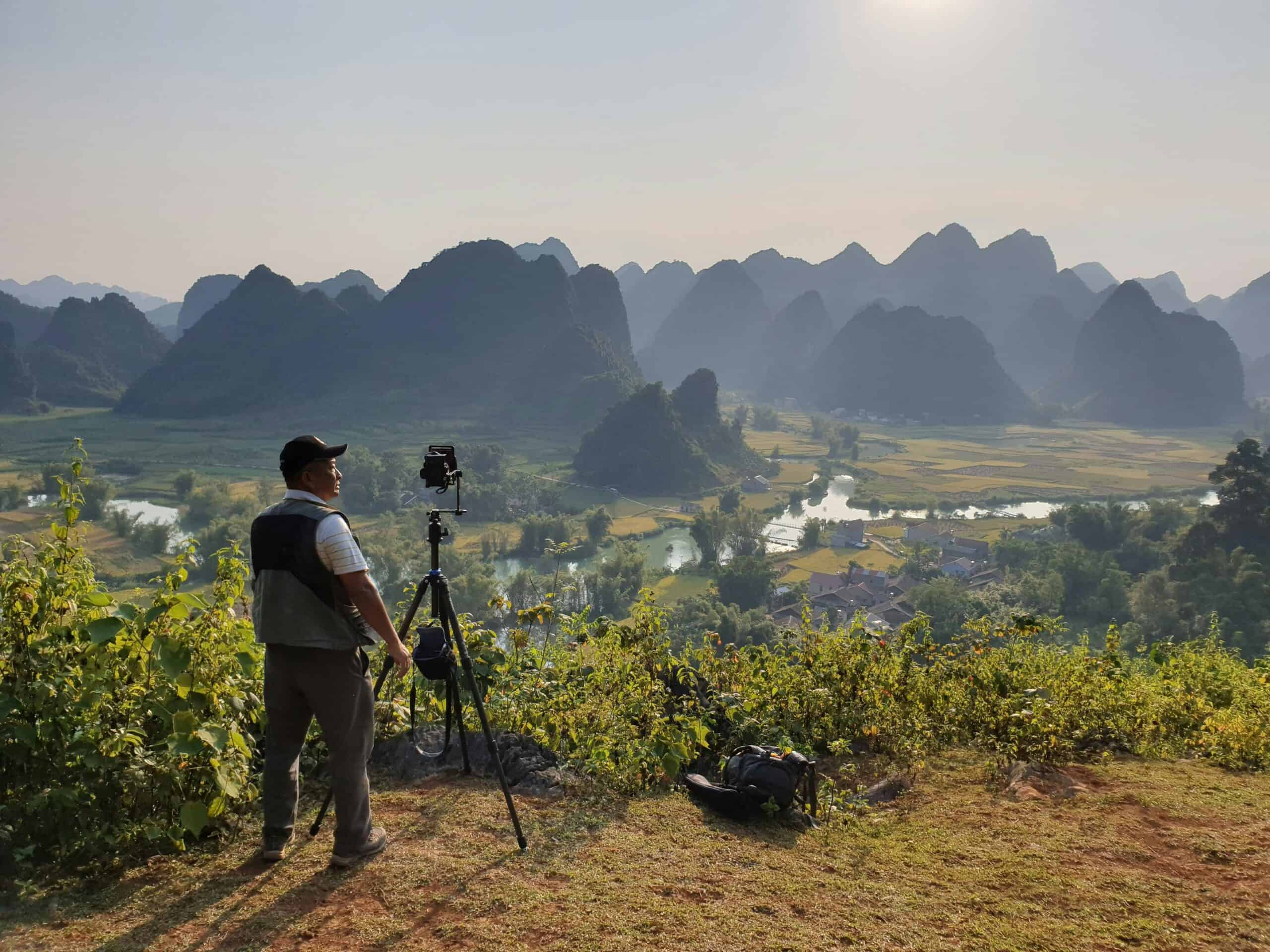
Assess light direction and range (sun, bright windows, deep shadows), reflective surfaces (glass, polished floors), and moving elements (people, traffic, leaves). For scenes with glass, keep the front element close (2–5 cm) and shoot slightly off-axis to reduce flare and reflections. Avoid mixed lighting when possible; if unavoidable, plan on locking white balance and color-correcting during post.
Match Gear to Scene Goals
The Nikon Zf’s base ISO files are extremely clean and gradeable, making it ideal for HDR panoramas and high-contrast scenes. Indoors, plan on ISO 100–400 with bracketing; at dusk/night, ISO 400–1600 is still usable with careful exposure and noise reduction. A rectilinear lens like the Canon RF 15-35mm f/2.8L delivers straight lines for architecture but will need more frames than a fisheye. For fast-moving environments, favor wider focal lengths (15–20mm) to reduce total shot count.
Pre-shoot Checklist
- Charge batteries; carry spares. Format fast UHS-II cards; plan 2–3x the storage you think you need.
- Clean sensor and front/rear elements; pack a blower and microfiber cloth.
- Level the tripod. Calibrate your panoramic head for the lens focal length (nodal point alignment).
- Check wind, rooftop edges, and any vehicle mounting points. Use tethers and safety lines for poles/car rigs.
- Backup strategy: capture a second full round of frames; if people or cars are moving, do a “clean plate” pass.
Essential Gear & Setup
Core Gear
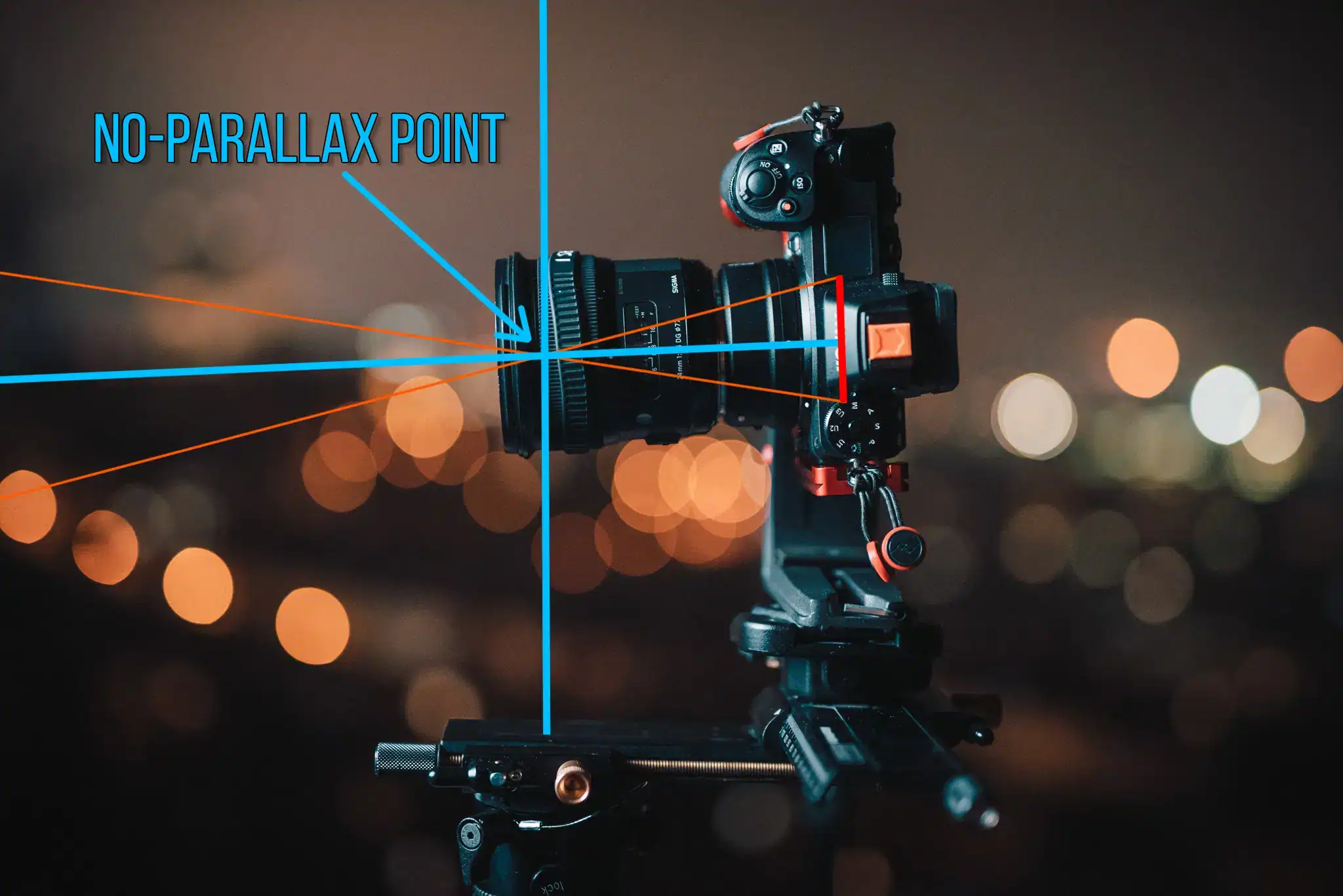
- Panoramic head: Allows rotating precisely around the lens’s entrance pupil (nodal point) to eliminate parallax. This is critical for stitching straight lines and close objects.
- Stable tripod with a leveling base: A leveling base speeds up setup and keeps rows consistent.
- Remote trigger or camera app: Prevents vibration and maintains cadence when bracketing and shooting multi-rows.
Optional Add-ons
- Pole or car mount: Use safety tethers, double clamps, and verify wind load. Keep exposures short to reduce motion blur from vibrations.
- Lighting aids: Portable LED panels or bounced flash for interior balance; be careful with reflections.
- Weather protection: Rain cover, silica gel packs, and lens hoods help prevent flare and moisture issues.
For a quick primer on panoramic head principles and common setups, see this panoramic head tutorial by 360 Rumors at the end of this section. Panoramic head basics and setup walk-through
Step-by-Step Shooting Guide
Standard Static Scenes
- Level and lock: Level the tripod via the leveling base. Confirm bubble level at each row height.
- Nodal calibration in practice: Place two vertical objects (e.g., light stands) at different distances. Rotate the camera and adjust the fore-aft slider until their relative alignment doesn’t shift in the frame. Mark the slider position for 15mm, 20mm, 24mm, 35mm on tape for repeatability.
- Manual exposure and WB: Use M mode. Meter the brightest part you must keep; set aperture to f/8 for best edge sharpness, shutter to maintain safe exposure, ISO 100–200. Lock white balance (Daylight for sun, preset Kelvin for interiors) to avoid color jumps.
- Focus: Switch to manual focus and set near the hyperfocal distance (at 15mm and f/8 on full frame, ~1 m is a good start). Use magnified Live View to confirm.
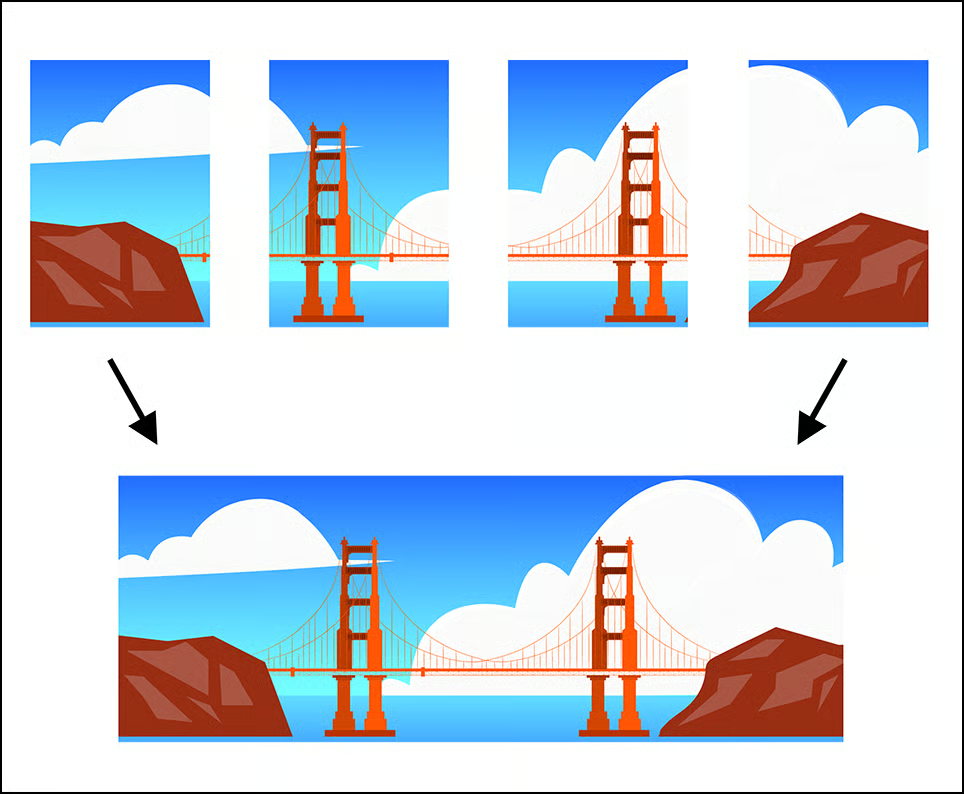
- Shoot with overlap: At 15mm, shoot 2 rows. Start at -30° pitch (down), rotate in 30–36° yaw increments for ~10 frames. Move to +30° pitch (up), repeat another ~10 frames. Add a zenith shot straight up and 2–3 nadir shots around the tripod for clean patching.
- Nadir capture: Tilt down for a dedicated ground shot after moving the tripod slightly or use an offset arm to reduce tripod footprint in the nadir image.
HDR / High Dynamic Range Interiors
- Bracket ±2 EV (3–5 frames): Windows and bright fixtures often exceed the sensor’s DR; bracketing preserves highlight detail.
- Lock WB and focus: Consistency across brackets is key. Shoot RAW for maximum latitude.
- Shoot a full round quickly: Keep the scene consistent (avoid light switching, moving curtains). If people are present, ask for a brief pause.
Low-Light / Night Scenes
- Exposure: f/4–f/5.6, ISO 400–800 (up to 1600 if necessary on the Zf), and shutter as slow as your environment allows on tripod. Use a 2–5 s delay or remote release.
- Stabilization: Turn off in-body and lens stabilization on a tripod to prevent micro-blur from sensor/lens corrections hunting.
- Wind and vibration: Hang a small weight from the tripod. Shorten center column. In gusts, capture multiple frames per view and pick the sharpest later.
Crowded Events
- Two-pass method: First pass for coverage, second pass for “clean plates” when people clear a region. Use masks in post to remove overlaps of moving subjects.
- Wider is better: Stick to 15–18mm to reduce total frames and stitch errors from moving crowds.
Special Setups (Pole / Car / Drone)
- Pole: Use a carbon pole with a small panoramic head. Secure with a leash. Keep shutter speeds high (1/250–1/500) to fight sway; increase ISO if needed.
- Car: Rigid suction mounts on clean metal/glass, plus safety tether. Avoid long exposures; shoot on smooth surfaces and low speeds. Plan route to minimize vibration.
Recommended Settings & Pro Tips
Exposure & Focus
| Scenario | Aperture | Shutter | ISO | Notes |
|---|---|---|---|---|
| Daylight outdoor | f/8–f/11 | 1/100–1/250 | 100–200 | Lock WB (Daylight). Aim for 25–30% overlap. |
| Low light/night | f/4–f/5.6 | 1/10–1/60 (tripod) | 400–800 (up to 1600) | Use remote; turn off IBIS/IS on tripod; consider multi-shot averaging. |
| Interior HDR | f/8 | Bracket ±2 EV | 100–400 | Preserve window highlights; keep WB locked. |
| Action / moving subjects | f/5.6–f/8 | 1/200+ | 400–800 | Shorten the rotation step and shoot fast. |
Critical Tips
- Manual focus and hyperfocal: At 15mm and f/8, focusing near 1 m keeps most of the scene sharp to infinity.
- Nodal point calibration: Start with the camera plate so the lens pivot is roughly under the front element; refine using the two-stand test. Mark slider positions for 15/20/24/35mm on tape.
- White balance lock: Use Kelvin values (e.g., 5600K daylight, 3200–3800K tungsten) to avoid stitch seams from WB drift.
- Shooting RAW: Gives you more DR and color flexibility, especially for HDR and mixed lighting.
- Stabilization on tripod: Disable IBIS in the Zf menu and lens IS to prevent micro-movements. Re-enable when shooting handheld.
Stitching & Post-Processing
Software Workflow
Import your RAW files into Lightroom or Capture One for a basic balance (lens profile, white balance check, noise reduction for high ISO). Export to a stitching tool like PTGui or Hugin. Rectilinear ultra-wides generally need 20–30% overlap per frame; multi-row coverage is necessary for full 360×180. PTGui’s control point generator handles rectilinear images well, and its masking tools are excellent for crowds and ghosting. Hugin is a robust open-source alternative with a bit more learning curve. For a quick overview of why PTGui excels on complex sets, see the Fstoppers review linked below. Why PTGui is a top choice for stitching complex panoramas
Cleanup & Enhancement
- Nadir patch: Capture extra ground shots to replace the tripod footprint. Use PTGui Viewpoint Correction or clone in Photoshop; AI-based patching tools can save time.
- Color balance: Match color and brightness across rows; gradients reveal seams. Use a graduated filter or curves to smooth the sky.
- Noise reduction: On Zf night shots, a modest luminance NR and color NR tame shadow noise while keeping detail.
- Level horizon: In the panorama editor, adjust pitch/roll/yaw so verticals are straight and horizon is true.
- Export: For VR, export an equirectangular 2:1 JPEG or 16-bit TIFF. Common outputs include 8K (7680×3840) to 16K+ depending on your frame count and focal length.
Want a platform-agnostic walkthrough from capture to VR publishing? The Meta/Oculus creator guide is a solid reference. End-to-end DSLR/Mirrorless 360 photo workflow
Video: Panoramic Head Setup (Recommended Viewing)
Watching a real setup helps make sense of nodal alignment, overlap, and cadence. This video complements the steps above.
For additional context on camera/lens choices and virtual tour workflows, see this DSLR virtual tour FAQ. DSLR/Mirrorless virtual tour camera & lens guidance
Useful Tools & Resources
Software
- PTGui panorama stitching
- Hugin (open-source alternative)
- Adobe Lightroom / Photoshop for RAW prep and retouch
- AI tripod removal and sky cleanup tools
Hardware
- Panoramic heads: Nodal Ninja, Leofoto, Really Right Stuff
- Carbon fiber tripods with leveling bases
- Wireless remote shutters or camera app control
- Pole extensions and vehicle mounts with tethers
Disclaimer: Brand names are for reference; check official sites for the latest specs and compatibility.
Common Mistakes & How to Avoid Them
- Parallax error: Always align the entrance pupil for the focal length you’re using; never rotate around the tripod screw.
- Exposure flicker: Shoot in full manual with fixed ISO, aperture, shutter, and locked WB.
- Tripod shadows/footprints: Plan a nadir patch; shoot additional offset ground frames.
- Ghosting from movement: Use masks in PTGui/Hugin and shoot a second pass for clean plates.
- High-ISO noise at night: Favor longer exposures on a rigid tripod over cranking ISO. Use averaging or HDR if practical.
Field-Tested Scenarios
Indoor Real Estate (Mixed Light)
Set 15–20mm at f/8, ISO 100–200, bracket ±2 EV. Lock WB to a Kelvin value that favors interior lighting (e.g., 3600–4200K), then correct windows later. Use two rows plus zenith and a careful nadir. Turn off ceiling fans and ask occupants to pause walking to prevent ghosting.
Outdoor Sunset Landscape
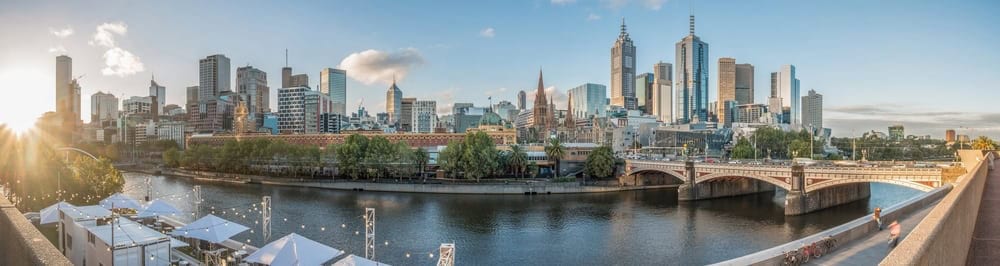
At 15mm, shoot two rows with 30–36° yaw increments. Expose for highlights or bracket if the sun is in frame. Use ISO 100 and f/8; shutter will vary with light. A graduated filter in post helps blend the sky gradient and foreground detail.
Rooftop/Pole Shooting
Safety first: Use a tether, examine wind gusts, and keep exposures short (1/250–1/500) with ISO 400–800. Slightly over-shoot overlap (30–35%) to accommodate small swings. Shoot a plain ground or rooftop texture patch separately for the nadir.
Car-Mounted Capture
Use multiple suction cups and a safety strap. Drive slowly on smooth pavement. Favor 15–18mm to reduce total frames; faster shutter speeds (1/500–1/1000) help combat vibrations. Expect to replace several frames due to motion blur—overshoot each position.
Frequently Asked Questions
- Can I shoot handheld panoramas with the Nikon Zf?
Yes, for simple cylindrical panos. Use 15–20mm, high shutter speeds (1/250+), and at least 30% overlap. For full 360×180, a tripod and panoramic head are strongly recommended to avoid parallax and stitching errors.
- Is the Canon RF 15-35mm wide enough for single-row 360?
No. As a rectilinear lens, it needs multiple rows to cover zenith and nadir. At 15mm, plan on two rows plus dedicated zenith and nadir shots for full spherical coverage.
- Do I need HDR for interiors with bright windows?
Usually yes. Bracketing ±2 EV preserves window highlights while maintaining interior detail. The Zf’s DR is strong, but HDR gives more flexibility and cleaner results in high-contrast rooms.
- How do I avoid parallax issues?
Use a panoramic head and align the rotation around the entrance pupil. Perform the two-stand alignment test and mark the fore-aft slider positions for each focal length you use.
- What ISO range is safe on the Zf in low light?
ISO 100–400 is ideal. ISO 800–1600 is still very usable on a tripod with careful exposure and noise reduction. Avoid very high ISO if maximum detail and clean skies are a priority; extend shutter time instead when possible.
- Can I save pano settings to custom modes?
Yes. Create a custom mode with manual exposure, manual focus, IBIS off, RAW, fixed WB, self-timer or remote enabled. It speeds up on-site setup and ensures consistency across shoots.
Compatibility Clarification and Practical Alternatives
Because Canon RF lenses are not electronically adaptable to Nikon Z, most photographers will either:
- Use a comparable Nikon Z ultra-wide zoom (14–30mm f/4, 17–28mm f/2.8, or 14–24mm f/2.8 S) on the Nikon Zf, or
- Use the Canon RF 15-35mm f/2.8L on a Canon RF-mount body and follow this same panoramic workflow.
Everything in this guide—nodal alignment, multi-row strategy, bracketing, overlap, and stitching—translates directly to those equivalent setups.
Further Reading
For deeper dives into technique and software choices, these resources are helpful: