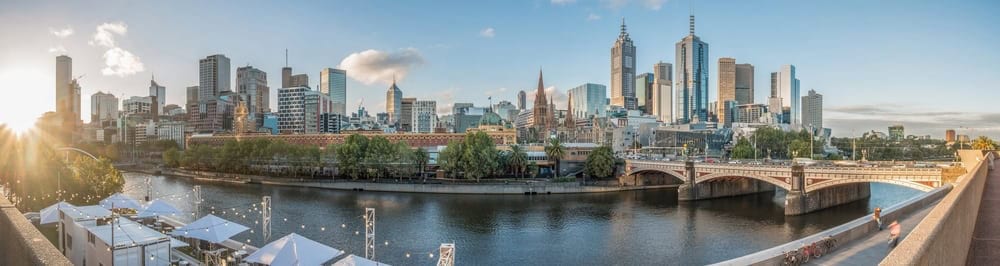
Why This Camera & Lens Are Great for Panoramas
If you’re wondering how to shoot panorama with Nikon Z9 & Tokina ATX-i 11-20mm f/2.8, this pairing delivers a reliable, high-resolution workflow that scales from quick outdoor 360 photos to multi-row, exhibition-grade virtual tours. The Nikon Z9 is a 45.7MP full-frame mirrorless body with a stacked CMOS sensor, outstanding base ISO 64 dynamic range (~14 stops), and robust weather sealing. Its pixel pitch is about 4.35 μm, which balances detail with low-light performance. For panoramas, the Z9’s fully electronic shutter eliminates shutter shock, while its big battery and pro ergonomics make long sessions easy.
The Tokina ATX-i 11–20mm f/2.8 is a rectilinear ultra-wide zoom originally designed for APS-C (DX) format. Mounted on the Z9 via an FTZ/FTZ II adapter, the camera automatically switches to DX crop, yielding roughly 19.5MP per frame—perfectly fine for 360 photos when you shoot multi-row. The lens is sharpest around f/5.6–f/8 with some barrel distortion and lateral CA at 11mm that stitchers can correct easily. Because it’s rectilinear (not fisheye), you’ll need more frames than a fisheye, but verticals stay straight—great for real estate and architecture.
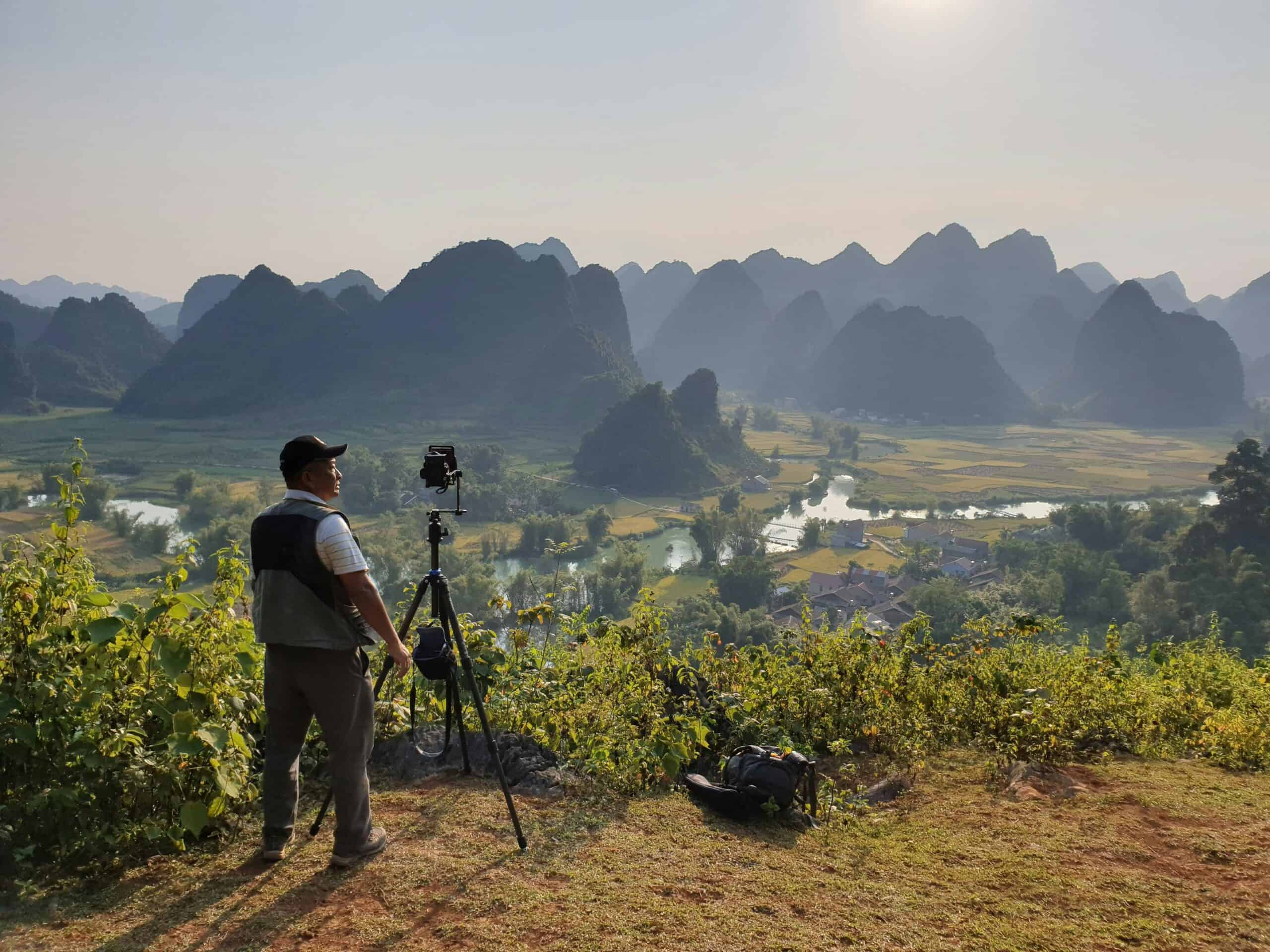
Quick Setup Overview
- Camera: Nikon Z9 — full-frame (FX) 45.7MP stacked CMOS; base ISO 64; ~14 EV dynamic range at base; excellent battery life; IBIS (5-axis). In DX crop with this lens: ~19.5MP effective.
- Lens: Tokina ATX-i 11–20mm f/2.8 (rectilinear, APS-C/DX) — constant f/2.8, quick manual focus, best sharpness f/5.6–f/8, mild distortion/CA at 11mm easily corrected in post.
- Estimated shots & overlap (tested ranges, DX crop on Z9):
- At 11mm: 3-row workflow: 8 shots at +45°, 8 at 0°, 8 at −45° (24), plus 1 zenith and 1–2 nadir patches → 26–27 frames. Aim 30–35% overlap.
- At 14mm: 3-row: 10 shots per row (30) + zenith + nadir → 32–33 frames.
- At 20mm: 3-row: 12 shots per row (36) + zenith + nadir → 38–40 frames; use 30–35% overlap.
- Difficulty: Moderate. Rectilinear UWA requires careful nodal alignment and multi-row technique for full 360×180° coverage.
For planning resolution vs. coverage, see the industry overview of spherical resolution vs. focal length (useful when choosing rows and overlap). Reference: PanoTools spherical resolution
Planning & On-Site Preparation
Evaluate Shooting Environment
Before you set up, scan the scene for strong backlight, reflective glass, moving crowds, or objects near the camera. Close foregrounds can amplify parallax error if your nodal point is off; give yourself extra overlap when objects are within 1–2 meters. For glass interiors, shoot with the lens a few centimeters away from the pane to reduce reflections and ghosting, and avoid having the sun or bright lights cross stitch seams.
Match Gear to Scene Goals
The Z9’s base ISO 64 is superb when dynamic range matters (windows + interior shadows). Indoors, ISO 100–400 maintains color depth; ISO 800–1600 is still very usable when exposure time is constrained. The Tokina’s f/2.8 helps in low light, but for panoramas you’ll typically stop down to f/5.6–f/8 for corner sharpness. Because this lens is rectilinear, you’ll shoot more frames than a fisheye. The payoff: straighter lines and more natural architecture rendering. For fast outdoor 360s, set the lens at 11–13mm to reduce the total frames; for ultra-high-res gigs (art galleries, product exhibits), zoom toward 16–20mm and add rows for a gigapixel feel.
For an end-to-end high-level guide to capturing and stitching DSLR/MILC 360 photos, this platform overview is helpful. Reference: DSLR/Mirrorless 360 workflow
Pre-shoot Checklist
- Power & storage: Fully charge Z9 batteries; bring spares. Use fast, large CFexpress cards; high frame counts add up quickly.
- Optics clean: Keep lens and filter spotless; any dust moves across frames and magnifies in the stitch.
- Tripod & panoramic head: Level your tripod (use a leveling base) and confirm nodal alignment marks for 11mm, 14mm, and 20mm.
- Adapter: Use Nikon FTZ/FTZ II adapter; check secure mounting and no play.
- Safety: On rooftops or windy areas, strap/tether the rig. For car mounts, double up suction cups and safety lines. Don’t stand under the pole when elevated.
- Backup: Shoot an extra safety round. If crowds are moving, do a second pass to capture empty patches for later masking.
Essential Gear & Setup
Core Gear
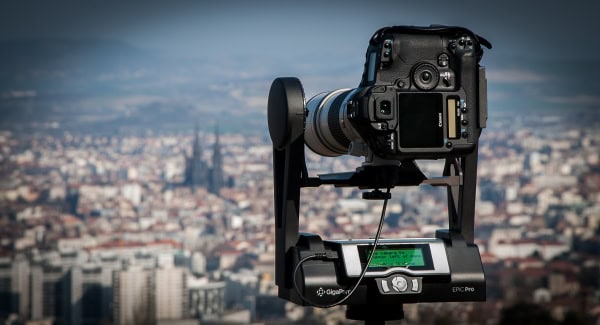
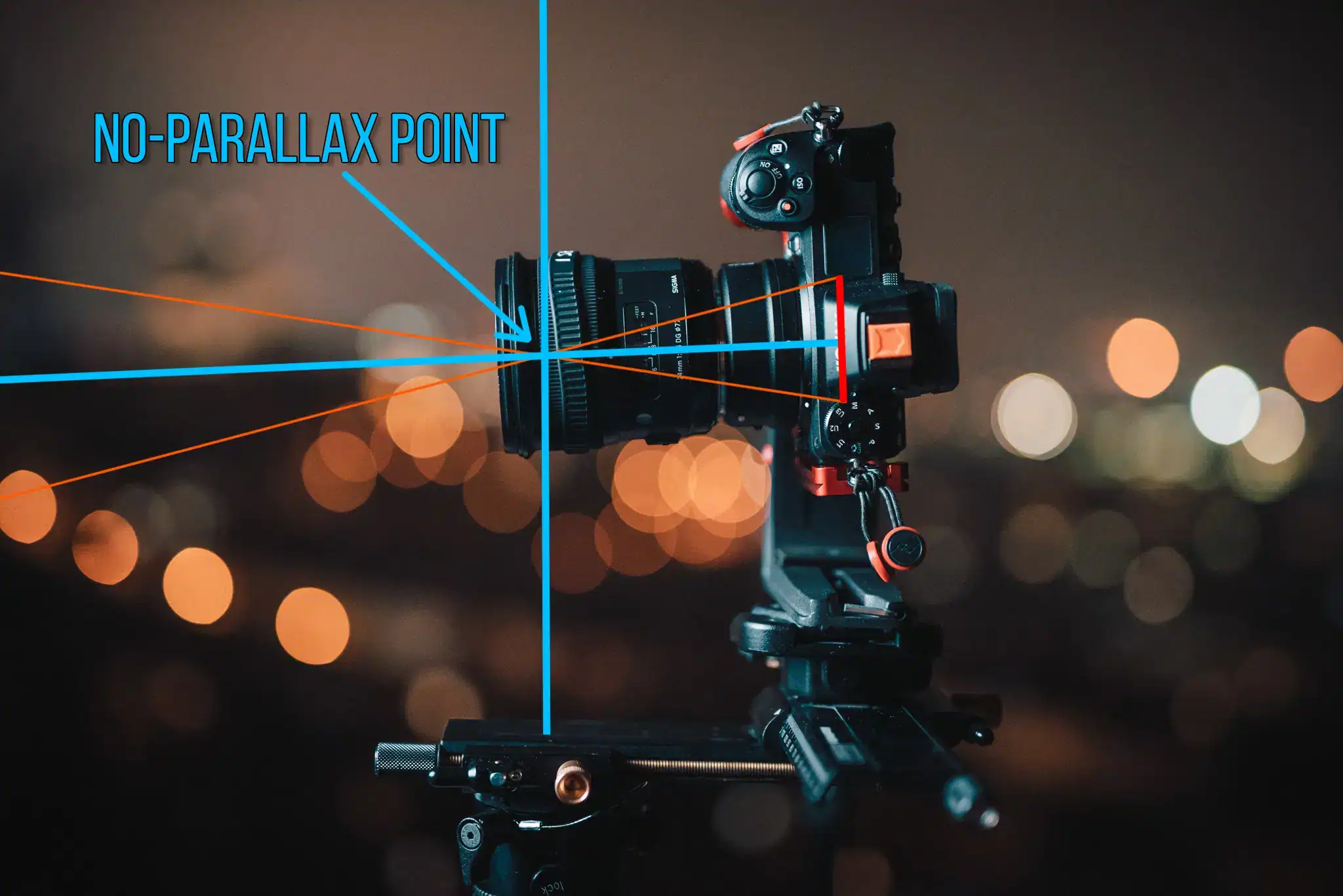
- Panoramic head: A two-axis pano head lets you place the lens’s entrance pupil (no-parallax point) over the yaw axis to eliminate parallax. This is crucial for indoor work or any scene with close objects.
- Stable tripod with leveling base: Leveling makes your rows straight and speeds up post-processing. Carbon fiber is lighter for travel; aluminum handles wind well.
- Remote trigger or SnapBridge app: Use a wired/remote trigger or the app to avoid vibration and keep your hands off the camera.
Optional Add-ons
- Pole or car mount: Use a guy wire or tether, watch wind loading, and keep rotation smooth. Increase shutter speed to tame vibration.
- Lighting aids: For interior HDR, small LED panels can lift shadows, but use consistently across frames to avoid stitch mismatches.
- Weather protection: Rain covers for the Z9 and gaffer tape to seal the FTZ adapter in dust/sand storms.
For a primer on panoramic heads, alignment, and technique, this walkthrough is excellent. Panoramic head alignment tutorial
Step-by-Step Shooting Guide
Standard Static Scenes
- Level & align: Level the tripod via the leveling base. On your panoramic head, set your pre-marked rail distances for the Tokina at your chosen focal length (e.g., 11mm). Fine-tune the entrance pupil by aligning two vertical objects (near and far) and adjusting until there’s no relative movement when panning.
- Manual exposure and white balance: Set M mode, meter from the midtones, then lock exposure. Use a fixed WB (Daylight/Tungsten/Custom). This prevents flicker and color shifts between frames.
- Focus: Switch AF off after acquiring focus. Use manual focus at or near hyperfocal distance (e.g., at 11mm, f/8, focus around 1–1.2 m for near-to-infinity sharpness). Confirm with magnified live view.
- Capture sequence: For 11mm DX, shoot 8 around at −45°, then 8 at 0°, then 8 at +45°. Finish with 1 zenith. Take 1–2 nadirs after tilting up the tripod or using a handheld offset for clean floor coverage.
- Keep hands clear: Use a remote or 2s self-timer. Turn IBIS off on tripod to avoid micro-shifts during exposures.
HDR / High Dynamic Range Interiors
- Bracketing: Use the Z9’s auto bracketing for ±2 EV (3 to 5 frames per angle). Keep WB locked.
- Exposure: Base ISO 64–100 if possible. Shutter lengths will vary per bracket; that’s fine on a tripod.
- Consistency: Do not change aperture across frames or rows. Aperture shifts alter vignetting and depth of field, complicating the stitch.
- Windows: If highlights still clip, add a third “windows-only” pass at −3/−4 EV to recover exterior detail.
Low-Light / Night Scenes
- ISO: The Z9 is clean to ISO 800–1600. Start at ISO 100–400 on a tripod; only raise if wind or motion demands faster shutter speeds.
- Shutter & stability: Use longer exposures (1–10s) as needed; weigh down the tripod and shield from wind. Turn IBIS off on tripod. Consider electronic front-curtain style behavior—Z9’s e-shutter is already vibration-free.
- Flicker: Under LED/fluorescent lighting, enable Anti-flicker to stabilize exposure color per frame.
Crowded Events
- Two passes: First pass frames the entire panorama; second pass waits for gaps in movement at problem angles (entrances, walkways).
- Shutter speed: Use 1/200–1/500 to freeze people. Raise ISO to 800–1600 if needed.
- Masking later: Plan to blend “clean” areas from the second pass into the stitched master.
Special Setups (Pole / Car / Drone)
- Pole: Use a safety tether and keep people clear. Rotate more slowly to reduce oscillation. Use faster shutter speeds (1/250+) and slightly higher ISO to fight vibration.
- Car mount: Double suction with safety lines. Avoid rough roads; keep shutter fast (1/500+) and overlap higher (35–40%).
- Drone: If adapting technique for drones with bigger cameras, prioritize weight/CG and ensure gimbal can pitch for multi-row coverage.
Recommended Settings & Pro Tips
Exposure & Focus
| Scenario | Aperture | Shutter | ISO | Notes |
|---|---|---|---|---|
| Daylight outdoor | f/8–f/11 | 1/100–1/250 | 64–200 | Lock WB to Daylight; keep IBIS off on tripod |
| Low light / night | f/4–f/5.6 | 1/30–10s | 100–800 (up to 1600) | Remote trigger; weigh tripod; anti-flicker for LED |
| Interior HDR | f/8 | Bracket ±2 EV (3–5 frames) | 64–400 | Keep aperture and WB fixed across brackets |
| Action / crowds | f/5.6–f/8 | 1/200+ | 400–1600 | Short exposures reduce ghosting; do two passes |
Critical Tips
- Manual focus at hyperfocal: At 11mm and f/8 in DX, ~1–1.2 m works for near-to-infinity sharpness. Confirm with live view magnification.
- Nodal calibration: Mark your rail once dialed in for 11mm, 14mm, and 20mm. Re-check if you change the FTZ adapter or QR plate.
- White balance lock: Use a fixed preset or custom Kelvin value. Mixed light? Consider a custom WB target shot.
- RAW over JPEG: The Z9’s 14-bit RAW retains highlight headroom, lets you color-match across frames, and eases HDR blending.
- IBIS and tripod: Turn stabilization OFF on a tripod. For handheld panos, IBIS ON can help—but keep overlap high (40–50%).
- Menu banks: Save a “PANO” bank with M mode, fixed WB, single-shot drive, bracketing on (for HDR), and IBIS off.
Stitching & Post-Processing
Software Workflow
PTGui is the industry workhorse for 360 panoramas: feed it your multi-row set, specify lens type as rectilinear, and let it auto-detect control points. Hugin is a capable open-source alternative. Lightroom/Photoshop can stitch single-row pano sets, but for full 360×180°, use PTGui or Hugin for robust control. With a rectilinear UWA, plan for 25–35% overlap horizontally and vertically. Export your panorama as a 2:1 equirectangular TIFF/JPEG for web or VR players; common outputs are 12k–16k pixels wide for virtual tours, higher for gigapixel work. For an independent review of PTGui’s strengths, see this evaluation. PTGui stitching review
Watch a practical walkthrough of panorama capture/stitch concepts:
To go deeper on setting up a panoramic head and achieving high-end 360 results, this step-by-step guide is useful to compare against your own workflow. Set up a panoramic head: principles
Cleanup & Enhancement
- Nadir patch: After stitching, export a zenith/nadir-layered panorama and patch the tripod using content-aware fill or a logo tile. Some AI tools can automate this convincingly.
- Color consistency: Match tone and color across rows. Use synchronized RAW adjustments before stitching or PTGui’s exposure/horizon tools after.
- Noise reduction: For night scenes, apply targeted NR to shadows, then sharpen globally. Avoid over-sharpening seam areas.
- Level & horizon: Use the stitcher’s optimizer to correct roll/yaw/pitch so the horizon is straight in the equirectangular.
- Output: Export at 8k–16k width for tours. For heavy scenes (complex interiors), a 16k equirect keeps details crisp in VR viewers.
Disclaimer: Always check the latest PTGui/Hugin documentation; interfaces and features evolve with new versions.
Useful Tools & Resources
Software
- PTGui panorama stitching
- Hugin (open-source)
- Lightroom / Photoshop for RAW and finishing
- AI tripod/nadir removal tools
Hardware
- Panoramic heads: Nodal Ninja, Leofoto, Sunwayfoto multi-row heads
- Carbon fiber tripods with a leveling base
- Wireless/wired remote shutters
- Pole extensions and car suction mounts with safety tethers
Disclaimer: Product names are search references. Verify compatibility and specifications on the manufacturer’s site.
Common Mistakes & How to Avoid Them
- Parallax error → Calibrate the entrance pupil and use your marked rail settings for 11/14/20mm.
- Exposure flicker → Shoot in full Manual with fixed WB and disabled Auto ISO.
- Tripod shadows → Rotate your body away from the sun, take a separate nadir, and patch it later.
- Ghosting from movement → Do a second pass and mask moving people/vehicles in post.
- Night noise → Keep ISO as low as practical, use longer shutter speeds, and apply selective NR in post.
- Wind shake → Weigh the tripod, lower center column, and raise shutter speed; consider a wind block.
Frequently Asked Questions
- Can I shoot handheld panoramas with the Nikon Z9?
Yes for simple single-row panos, but for full 360×180° with nearby objects, use a tripod and panoramic head. If you must go handheld, enable IBIS, use high overlap (40–50%), and keep shutter speed fast (1/250+). Expect more time fixing seams.
- Is the Tokina ATX-i 11–20mm f/2.8 wide enough for a single-row 360?
No. As a rectilinear UWA on DX, it needs multi-row coverage for the zenith and nadir. At 11mm, a three-row set (−45°, 0°, +45°) plus zenith/nadir is a solid starting point.
- Do I need HDR for interiors with bright windows?
Usually yes. Bracket ±2 EV (3–5 frames) to capture window detail and interior shadows, then fuse or HDR-merge before or during stitching. The Z9’s base ISO 64 preserves highlights nicely.
- How do I avoid parallax issues with this combo?
Use a panoramic head and align the lens’s entrance pupil over the yaw axis. Mark your rail for 11mm, 14mm, and 20mm once calibrated. Keep foreground objects a bit farther when possible and increase overlap near close objects.
- What ISO range is safe on the Z9 in low light?
ISO 100–800 is very clean; 1600 is still strong. For critical commercial work, try to stay at ISO 64–400 on a tripod and use longer shutter speeds instead of pushing ISO.
Field-Proven Scenarios
Indoor Real Estate (Bright Windows)
Set the Tokina to 13–14mm to keep edges straighter and minimize wall bowing. Use a three-row approach with ±2 EV bracketing at f/8, ISO 64–200. Lock WB to a custom Kelvin matching interior lights (e.g., 3200–4000K). Keep the camera level to preserve verticals, and use the Z9’s live horizon for alignment. In PTGui, apply vertical line constraints on door frames and corners before optimizing.
Outdoor Sunset Overlook
Shoot at 11mm for fewer frames. Meter for the sky midtones at ISO 64–100; take a bracketed set if the sun is in frame. Place the sun between frames to reduce flare along seams. Stop down to f/8. If wind picks up, raise shutter to 1/200 and ISO to 200–400. Consider a second pass for moving foliage.
Event Crowds
Use 1/250–1/500 at f/5.6–f/8, ISO 800–1600. Take two passes—one fast, one waiting for gaps—to create clean seam plates. Mask in the clean tiles at stitch time. Keep your rig compact; the Z9’s silent e-shutter avoids drawing attention.
Rooftop or Pole Capture
On a pole, keep the lens at 11mm, shoot a single row at 0° and an extra row at +45° if needed. Overlap 35% to cover for sway. Use a safety tether and gloves, and don’t extend over pedestrian areas. Pre-focus at hyperfocal and tape the focus ring.
Visual Sampler
Below are two representative visuals that match the techniques discussed—one showing a multi-row head for high-res work and another explaining the no-parallax alignment concept.