Why This Camera & Lens Are Great for Panoramas
The Nikon Z9 paired with the Sigma 15mm f/1.4 DG DN Diagonal Fisheye Art is a powerhouse for 360° and wide-field panoramas. The Z9’s 45.7MP full-frame stacked CMOS sensor (approx. 8256×5504 pixels, ~4.35µm pixel pitch) delivers excellent detail, while base ISO 64 provides top-tier dynamic range (around 14+ stops in independent tests). That headroom helps you hold window highlights and deep shadows in one scene—critical for HDR panoramas and complex interiors.
The Sigma 15mm f/1.4 DG DN is a diagonal fisheye that covers 180° on the diagonal of a full-frame sensor. Compared to a rectilinear ultra-wide, a fisheye needs fewer frames to complete a full sphere, which speeds capture and reduces stitching seams. At the same time, it’s optically sharp across the frame, with Art-series build quality, a fast f/1.4 for night and astro work, and excellent control over lateral chromatic aberration. Expect classic fisheye geometry (barrel distortion by design), which stitching software understands and corrects for spherical output.
Autofocus and manual focus control are refined on both the Z9 and Sigma Art lens. In practice, you’ll typically switch to manual focus and lock focus at or near the hyperfocal distance to keep the entire scene sharp. Compatibility note: use the native Nikon Z-mount version of the lens if available in your region. If you’re using older F-mount fisheyes via FTZ, that’s also a viable route; however, DG DN (mirrorless) mounts are not adaptable to Z via FTZ.
Quick Setup Overview
- Camera: Nikon Z9 — Full-frame 45.7MP stacked CMOS, base ISO 64, excellent DR, robust IBIS (in-body stabilization), pro build.
- Lens: Sigma 15mm f/1.4 DG DN Diagonal Fisheye Art — diagonal fisheye, very sharp stopped down, f/1.4 for night work; well-controlled CA for an ultra-wide fisheye; bulbous front element with integrated hood (no normal front filters).
- Estimated shots & overlap (tested): 6 around at 60° yaw spacing + 1 zenith + 1 nadir (8 total) with ~30% overlap. For interiors or safety: 8 around + zenith + nadir (10 total).
- Difficulty: 2/5 when using a panoramic head and tripod; 3/5 for pole or car-mounted work.
Planning & On-Site Preparation
Evaluate Shooting Environment
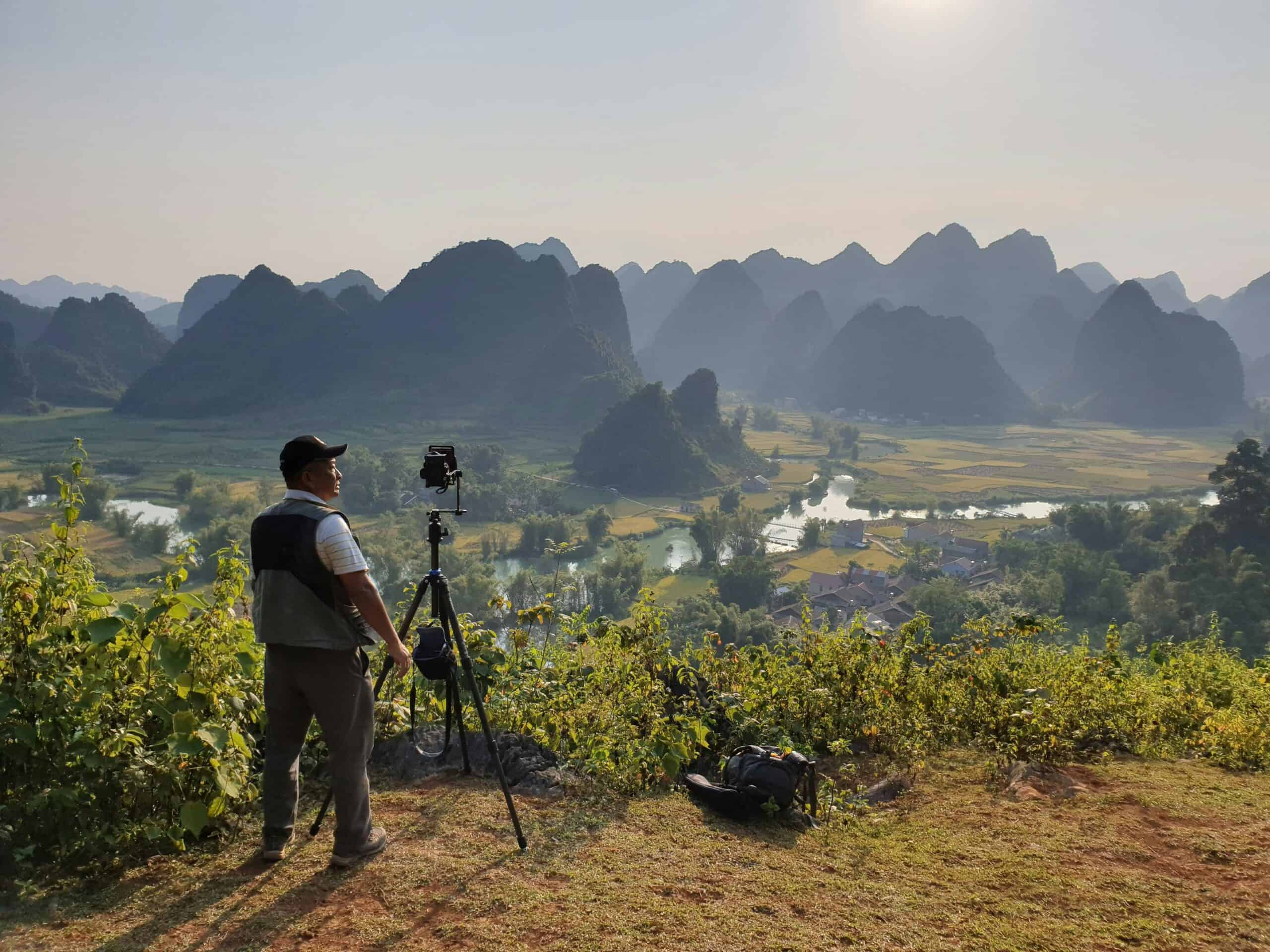
Start by reading the light and the space. For interiors, note bright windows, mixed color temperatures (tungsten, LED, daylight), and reflective surfaces (glass, polished floors). If you must shoot through glass, get the lens close to the glass (1–3 cm) and shade it to reduce reflections and ghosting. Outdoors, watch the sun’s position to avoid flare; a fisheye sees almost everything in front of it, so even a sliver of sun can cause streaks. Consider wind for tripod stability—vibration is the enemy of sharp stitches.
Match Gear to Scene Goals
The Z9’s base ISO 64 and broad dynamic range excel for high-contrast scenes; for interiors, you’ll often bracket and merge to HDR at ISO 100–200. For low-light urban or astro panoramas, the Z9 remains clean up to ISO 1600–3200 with careful exposure and noise reduction. The Sigma 15mm fisheye keeps the frame count low and stitches reliably, especially beneficial in crowds or changing light. The tradeoff is fisheye geometry; rely on your stitcher to project spherical output, and avoid placing key straight architectural lines near the extreme frame edges when possible.
Pre-shoot Checklist
- Charge batteries and bring spares; the Z9 is power-hungry for long HDR or time-consuming shoots.
- Format fast cards; shoot 14-bit RAW (NEF) for maximum post flexibility.
- Clean the lens front element; fisheyes see everything, including smudges and dust.
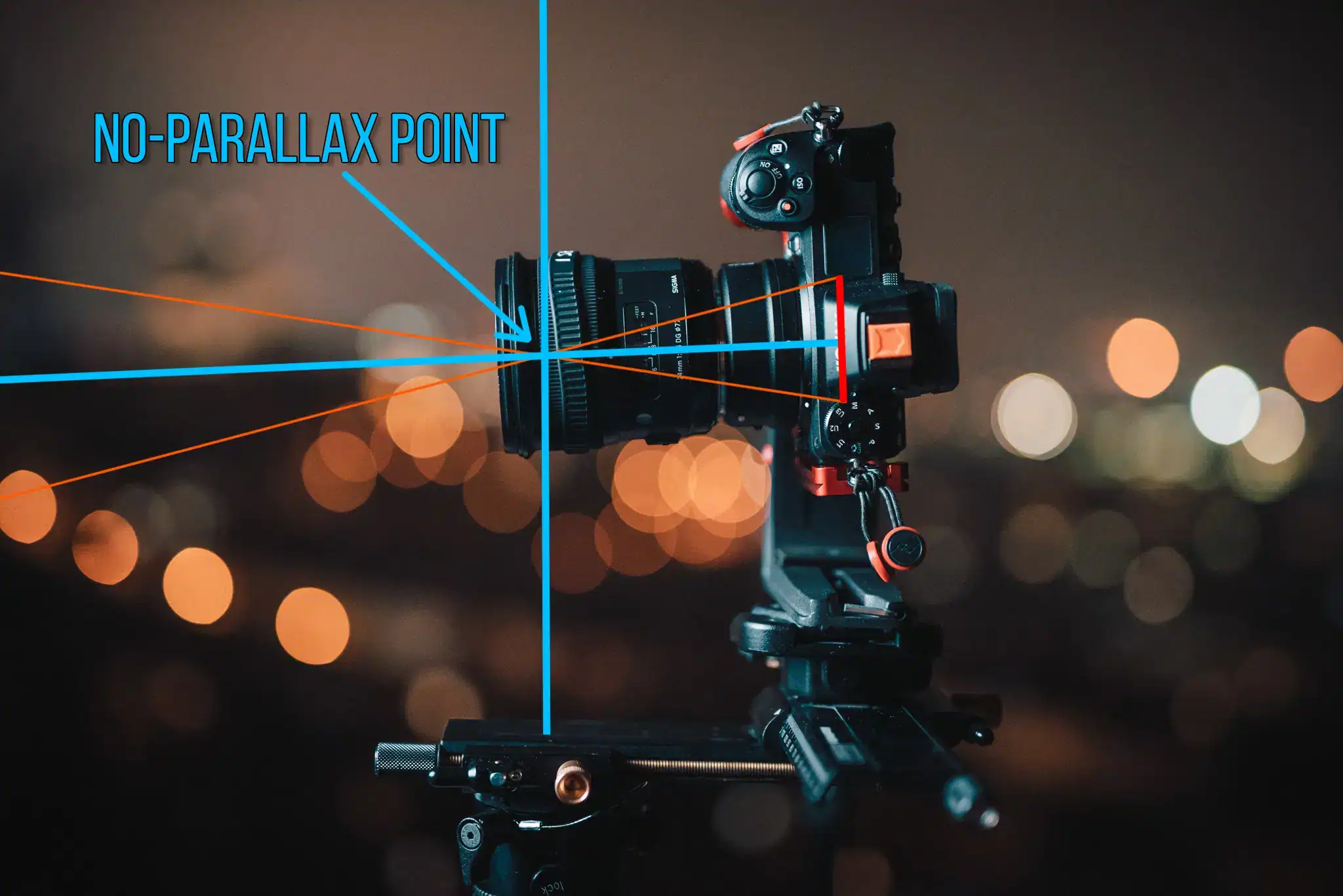
- Level your tripod and verify panoramic head calibration for the lens’ entrance pupil (nodal point).
- Safety: tether on rooftops and poles; check wind; inspect clamps on car mounts; mind bystanders.
- Backup workflow: shoot an extra safety round (or a second zenith/nadir) in case of moving people or stitching artifacts.
Essential Gear & Setup
Core Gear
- Panoramic head: A two-axis pano head lets you place the lens’ entrance pupil over the rotation pivot to eliminate parallax. This is key for stitching cleanly, especially with near objects.
- Stable tripod with leveling base: A leveling base saves time—level once and rotate quickly without re-leveling.
- Remote trigger or smartphone app: Use Nikon SnapBridge or a wired release to minimize vibration and maintain a steady cadence for brackets.
Optional Add-ons
- Pole or car mount: Use safety tethers; secure all knobs; pre-test for vibrations. A fisheye on a pole is efficient but demands caution in wind.
- Lighting aids: Small LED panels or flash for deep interiors; keep lighting consistent across frames.
- Weather protection: Rain covers for camera/lens, microfiber cloths for mist; the fisheye’s front element is exposed.
For a deeper primer on panoramic head setup, see this panoramic head tutorial by 360 Rumors. Learn panoramic head fundamentals
Step-by-Step Shooting Guide
Standard Static Scenes
- Level tripod and align the nodal point: Using a near/far alignment test, slide the lens on the pano rail until foreground and background objects do not shift relative to each other during yaw rotation. Record your rail readings for this lens and keep them taped on the head.
- Manual exposure and white balance: Meter the scene, set Manual mode, and lock white balance (e.g., Daylight ~5500K outdoors, 3200–4000K for warm interiors). Consistency avoids exposure flicker and color shifts across frames.
- Capture sequence: With the Sigma 15mm fisheye, shoot 6 frames around the horizon at 60° increments (overlap about 30%). Then capture a zenith shot pitched up ~60–90°, and a nadir shot pitched down (or offset the tripod and shoot a patch frame for later replacement).
- Nadir capture: If the tripod blocks the ground, take a handheld offset shot aligned over the same ground area, keeping rotation around the entrance pupil as best as possible; this will patch the tripod footprint.
HDR / High Dynamic Range Interiors
- Bracket exposure: Use the Z9’s auto bracketing to capture 3–5 frames at ±2 EV per position. This holds window highlights while revealing shadow detail.
- Lock WB and turn off auto ISO: Keep color and exposure consistent across all brackets and positions to help your stitcher align and blend HDRs reliably.
- Workflow: Either pre-merge brackets to 32-bit HDR per angle before stitching, or use exposure fusion in PTGui. Keep it consistent across the set.
Low-Light / Night Scenes
- Exposure: Use f/4–f/5.6 where possible; aim for 1/30–1/60s with a stable tripod; ISO 400–1600 on Z9 is generally clean. For astro, you may open to f/1.4–f/2 and raise ISO 1600–3200, but maintain consistent exposure across frames.
- Stability: Use a remote release or SnapBridge and consider electronic shutter to minimize vibration. Disable IBIS (VR) on a locked tripod to prevent micro-blur.
Crowded Events
- Two-pass method: First pass fast for coverage, second pass waiting for gaps. Mark the starting direction to keep your sequence consistent.
- Masking later: In post, use masks to replace frames with fewer people or blend moving elements cleanly.
Special Setups (Pole / Car / Drone)
- Pole: Balance the rig carefully; keep the pole vertical; reduce yaw speed to minimize sway. Use a faster shutter (1/250s+) to avoid motion blur when hand-holding a pole.
- Car mount: Mount low-vibration suction rigs; add safety tethers. Avoid long exposures; shoot at 1/250–1/500s and ISO 400–1600 as needed.
- Safety: Never extend a pole near power lines and respect no-fly/no-stick zones. Get permits when required.
If you’re new to 360 capture flow, the Oculus Creator guide to shooting and stitching DSLR 360s provides a clear, platform-agnostic overview. DSLR/Mirrorless 360 capture guide
Recommended Settings & Pro Tips
Exposure & Focus
| Scenario | Aperture | Shutter | ISO | Notes |
|---|---|---|---|---|
| Daylight outdoor | f/8–f/11 | 1/100–1/250 | 100–200 | Lock WB (daylight). Z9 base ISO 64 for max DR if shutters allow. |
| Low light/night | f/4–f/5.6 | 1/30–1/60 | 400–1600 | Tripod & remote; disable IBIS on tripod. |
| Interior HDR | f/8 | Bracket ±2 EV | 100–400 | Balance windows & lamps; consistent WB. |
| Action / moving subjects | f/5.6–f/8 | 1/200+ | 400–800 | Freeze motion, do two passes for masking. |
Critical Tips
- Manual focus at hyperfocal: For a 15mm on full-frame at f/8, hyperfocal is roughly ~0.9–1.0 m. Set focus slightly beyond 1 m for edge-to-edge sharpness.
- Nodal calibration: Use a near object (0.5–1 m) and a far object aligned in the frame. Rotate the camera; slide the rail until they don’t shift relative to each other. Record your fore/aft and vertical arm settings.
- White balance lock: Use Kelvin or a fixed preset. Mixed lighting? Choose the dominant source; fine-tune in RAW.
- RAW over JPEG: 14-bit NEF maximizes DR and color accuracy; essential for HDR pano work.
- IBIS (VR): On tripod, turn it off. Handheld or on a pole, it can help mitigate small shakes; test your results.
- Electronic shutter: The Z9’s e-shutter prevents shutter shock—ideal for bracketed sequences on a tripod.
Stitching & Post-Processing
Software Workflow
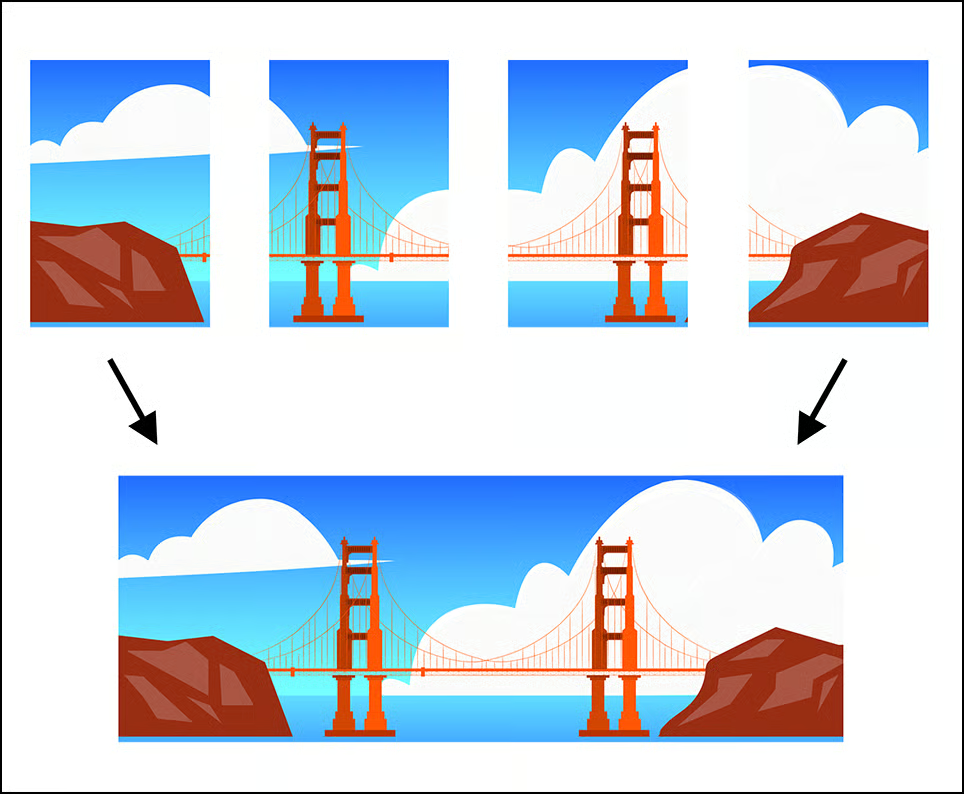
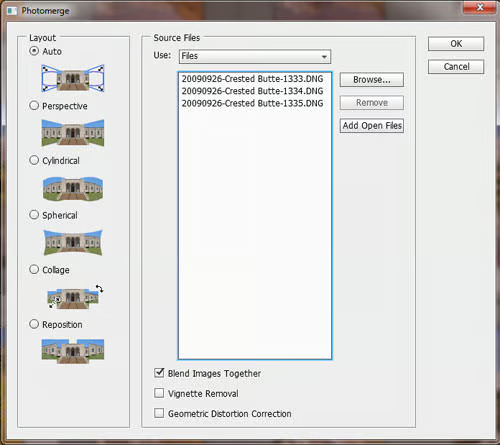
PTGui, Hugin, and other modern stitchers understand fisheye geometry, making the Sigma 15mm straightforward to stitch with fewer frames than rectilinear lenses. Aim for 25–35% overlap. For the sequence 6-around + zenith + nadir, PTGui typically finds control points automatically; just confirm horizon leveling and optimize. Expect equirectangular output widths of ~12K–16K pixels from a well-exposed 8–10 image set on the Z9. For a deeper dive into PTGui’s strengths for pro panoramas, see this review from Fstoppers. PTGui for professional panoramas
Cleanup & Enhancement
- Nadir patch: Use content-aware fill or clone brush; AI tripod removal tools can speed this up.
- Color and noise: Apply global white balance tweaks, then local color corrections. Use luminance noise reduction for high-ISO night frames.
- Leveling: Ensure horizons are level; adjust pitch, roll, and yaw parameters in the stitcher’s panorama editor.
- Export: Save 16-bit TIFF master and deliver an equirectangular JPEG (8K–12K width) for VR and web viewers. Maintain an organized folder structure for RAWs, brackets, and project files.
For spherical resolution planning by lens and frame count, the Panotools wiki remains a helpful reference. DSLR spherical resolution reference
Video: Visualizing the Process
Seeing a full panorama workflow helps connect the dots from setup to stitch. The following video offers practical tips and visual demos you can adapt to the Z9 + 15mm fisheye combo.
Useful Tools & Resources
Software
- PTGui panorama stitching
- Hugin (open-source)
- Lightroom / Photoshop for RAW and retouching
- AI tripod removal tools (content-aware, generative fill)
Hardware
- Panoramic heads (Nodal Ninja, Leofoto, Sunwayfoto)
- Carbon fiber tripods with leveling bases
- Wireless remote shutters or SnapBridge
- Pole extensions and certified car mounts with safety tethers
Disclaimer: software/hardware names provided for search reference; verify latest specs and compatibility on official sites.
Common Mistakes & How to Avoid Them
- Parallax error: Always align the entrance pupil and avoid moving the tripod between frames.
- Exposure flicker: Use Manual exposure, fixed WB, and fixed ISO for each sequence.
- Tripod shadows or feet: Shoot a nadir patch and fix in post.
- Ghosting from moving subjects: Do a second pass and mask replacements in post.
- High-ISO noise at night: Favor longer exposures on a tripod over cranking ISO; Z9 is clean to ISO 1600–3200 with careful processing.
- Flare: Shade the lens with your body or a flag; avoid having the sun just outside the frame, which can still cause artifacts on a fisheye.
Real-World Use Cases with the Z9 + 15mm Fisheye
Indoor Real Estate
Bracket at ISO 100–200, f/8, and use 6-around + zenith + nadir. Keep the tripod central in the room to equalize distances to walls. Turn off any flickering lights (some LEDs vary between shots). Consider a second zenith if ceilings have strong patterns or lights to ensure clean stitching.
Outdoor Sunset Cityscape
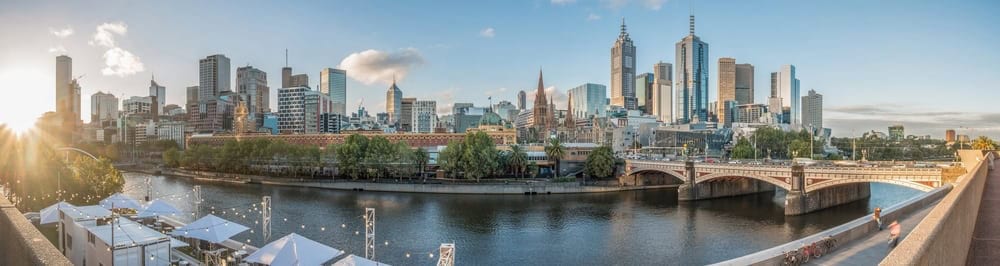
Expose for highlights at base ISO 64–100; bracket ±2 EV to capture shadow detail. Watch for flare as the sun drops; a slight body block or timing the sun behind a structure can reduce artifacts. The fisheye’s coverage lets you work quickly as the light changes.
Event Crowds
Use a monopod or compact tripod. Keep shutter at 1/200s+ and ISO 400–800. The 15mm fisheye minimizes frame count and the time people have to move between angles, resulting in fewer ghosting issues.
Rooftop or Pole Shooting
Balance the rig; tether everything. Use 1/250s+ and lock your elbows when rotating a pole. The Z9’s fast e-shutter and burst options help when timing around wind gusts.
Car-Mounted Drive-Bys
Only shoot on private/closed roads with proper permissions. Secure a multi-cup mount with tethers, aim for 1/500s, and plan 6 quick frames per stop. Motion blur is often unacceptable for stitching; shoot static (parked) when possible for best results.
For broader virtual tour gear considerations (camera-lens combos and techniques), this DSLR virtual tour guide can help you compare approaches. Virtual tour gear and method overview
Frequently Asked Questions
- Can I shoot handheld panoramas with the Nikon Z9?
Yes, for quick 360s outdoors or in bright light. Use high shutter speeds (1/250s+), enable IBIS, and keep a consistent rotation around your body as a pivot. Expect more stitching cleanup than with a tripod and pano head, especially near objects.
- Is the Sigma 15mm f/1.4 DG DN wide enough for single-row 360?
Yes. On full frame, 6-around plus a zenith and nadir usually cover the full sphere with sufficient overlap. For interiors or safety, shoot 8-around to increase overlap on complex textures.
- Do I need HDR for interiors with bright windows?
Usually. Bracketing ±2 EV (3–5 frames) preserves highlight detail in windows while maintaining clean midtones and shadows. Merge brackets consistently either before or during stitching.
- How do I avoid parallax issues with this fisheye?
Calibrate the entrance pupil using a near/far object test and a pano rail. Keep the rotation axis fixed and avoid shifting the tripod between frames. Mark your rail readings for the Sigma 15mm so setup is repeatable on future shoots.
- What ISO range is safe on the Z9 for low light panoramas?
ISO 100–400 is ideal; ISO 800–1600 remains very clean; ISO 3200 is usable with careful noise reduction. Prefer longer tripod exposures over pushing ISO whenever feasible.
- Can I save a custom pano setup on the Z9?
Yes. Use the Z9’s Custom Settings and My Menu to store key options (Manual exposure, WB preset, IBIS Off, bracketing parameters). This speeds repeatable pano setups.
- How can I reduce flare with a fisheye?
Shade the lens with your body or a small flag just outside the frame, avoid half-in/half-out sun placements, and time captures when strong sources are blocked by architecture or trees.
- What panoramic head should I choose for this combo?
Look for a sturdy, two-axis head with precise fore/aft and vertical adjustments, clear scales, and a leveling base. Models from Nodal Ninja, Leofoto, and Sunwayfoto are proven platforms.
Safety, Care, and Data Integrity
The Sigma fisheye’s front element is exposed—use the cap when not shooting and avoid sandy or rainy gusts. Don’t wipe grit; blow it off first. In wind, lower the tripod, add weight to the center column hook, and shield the rig during long exposures. Back up your NEFs in the field; the Z9’s dual card setup (CFexpress + SD or dual CFexpress depending on configuration) helps build redundancy. After each location, review frames for gaps or stitching risks and, if in doubt, shoot a quick safety pass.
For a structured, step-by-step pano head setup walkthrough that complements this article, see this visual guide. Set up a panoramic head for high-end 360 photos