
Why This Camera & Lens Are Great for Panoramas
If you’re wondering how to shoot panorama with Nikon Z9 & Peleng 8mm f/3.5, you’re pairing a flagship full-frame body with a classic circular fisheye that can cover the entire sphere in very few shots. The Nikon Z9’s 45.7MP stacked CMOS sensor (full frame 35.9×23.9mm, ~4.35µm pixel pitch) delivers excellent dynamic range at base ISO 64 (about 14 stops), robust color depth, and virtually zero shutter shock thanks to its all-electronic shutter design. The Peleng 8mm f/3.5 is a manual, circular fisheye lens that projects roughly a 180° field of view onto a circular image on the full-frame sensor—ideal for 360 photo capture because it reduces the number of frames required while keeping overlap manageable for stitching.
The combo’s strengths: high resolution for clean equirectangular outputs, superb DR for HDR panoramas, and a fisheye that significantly reduces shooting time (especially useful in changing light or crowded scenes). On the practical side, the Peleng is fully manual and typically adapted to Z-mount via Nikon’s FTZ II adapter (or an M42–Z adapter depending on your copy). Manual aperture and focus are straightforward on the Z9 thanks to magnified live view and focus peaking. Expect characteristic fisheye distortion (which stitching software handles natively), some edge softness, and possible chromatic aberration—both easily mitigated in post.
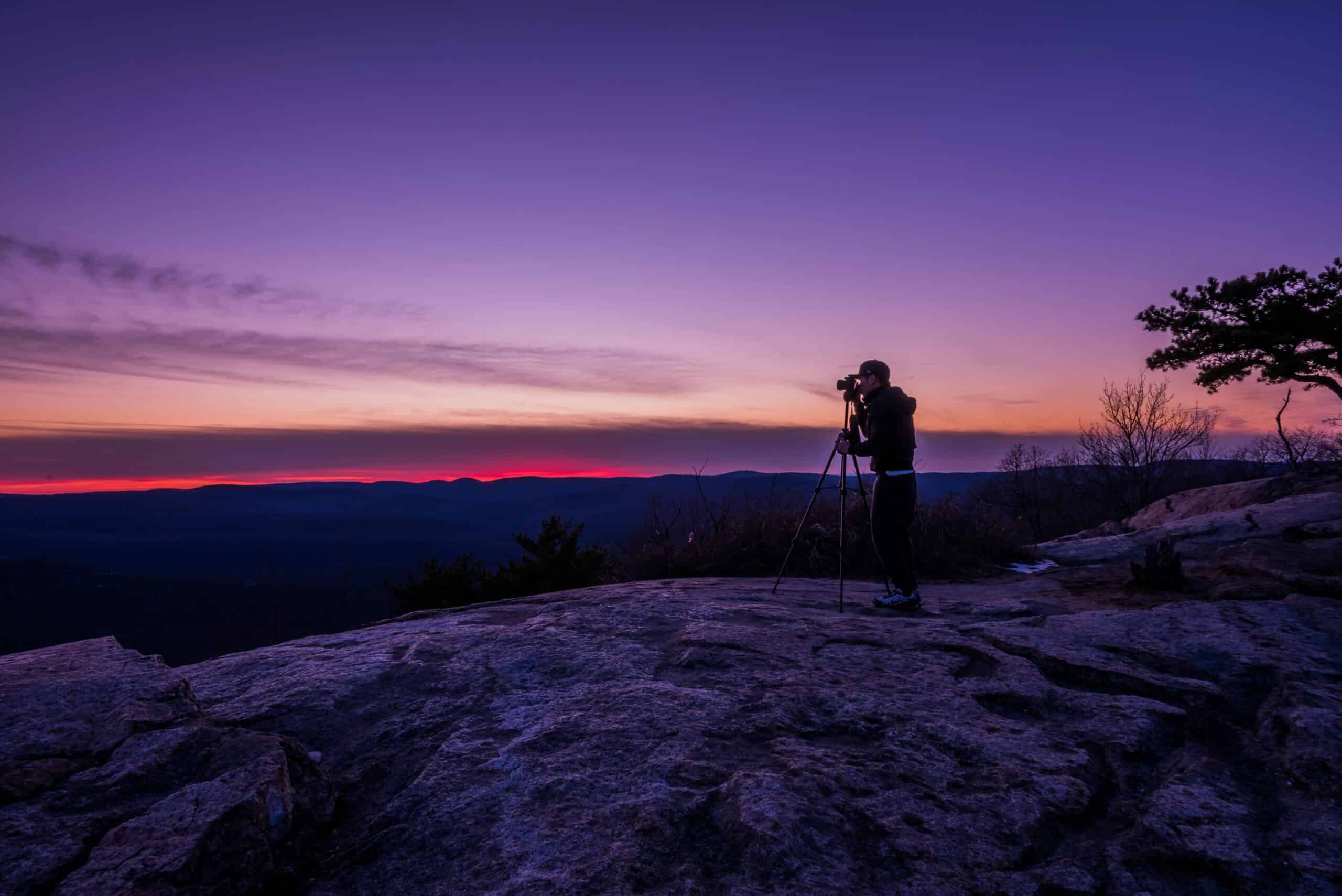
Quick Setup Overview
- Camera: Nikon Z9 — Full Frame, 45.7MP stacked CMOS, base ISO 64–25600 (expandable), ~14EV DR at ISO 64, all-electronic shutter (use anti-flicker in LED-lit interiors).
- Lens: Peleng 8mm f/3.5 — Manual, circular fisheye; very wide FOV (≈180°); best sharpness stopped to f/5.6–f/8; moderate CA toward edges.
- Estimated shots & overlap:
- Safe pattern: 4 around at 0° tilt (90° yaw steps) + 1 zenith + 1 nadir (≈25–35% overlap).
- Speed pattern: 3 around (120° yaw steps) + zenith + nadir if your circle coverage is generous and alignment is precise.
- Difficulty: Moderate (easy capture, but nodal alignment and clean nadir patching require some practice).
Planning & On-Site Preparation
Evaluate Shooting Environment
Scan the scene for reflective glass, bright point lights, moving crowds, and wind. For interiors with windows, plan for HDR bracketing to balance highlights and shadows. If shooting near glass, get the lens as close as safely possible (a few centimeters) and angle slightly to reduce reflections and flare. Outdoors, identify the sun’s position and consider using your body or a flag to shield the front element during frames aimed into the sun.
Match Gear to Scene Goals
The Nikon Z9’s deep dynamic range and strong high-ISO performance make it a flexible choice for both low-light interiors and golden-hour outdoor panoramas. For real estate or architectural interiors, work at ISO 64–200 and bracket ±2EV for a clean HDR panorama. For events, ISO 400–1600 is generally safe on the Z9; you can freeze moderate movement at 1/200–1/250s. The Peleng 8mm fisheye reduces the number of shots needed, minimizing subject movement between frames—ideal in crowds or changing light—but remember you’ll correct the strong fisheye projection during stitching.
Pre-shoot Checklist
- Charge two batteries and carry ample fast cards; the Z9’s 45.7MP files add up quickly.
- Clean the front element carefully—fisheyes are prone to flare and smudges.
- Level your tripod; check your panoramic head’s nodal alignment for this lens.
- Set Non-CPU Lens Data on the Z9 to 8mm so EXIF and IBIS know the focal length (then turn stabilization off on tripod).
- Safety: On rooftops, in wind, or on car mounts, tether your camera and verify clamps. Avoid power lines with poles; inspect mount points before each run.
- Backup strategy: When possible, shoot a second safety round or a backup nadir plate.
Essential Gear & Setup
Core Gear
- Panoramic head: Lets you rotate around the lens’s entrance pupil (nodal point) to eliminate parallax. For a circular fisheye, a compact multi-row head or a dedicated rotator with precise detents (90°/120°) speeds up shooting.
- Stable tripod with leveling base: A leveling base is faster than adjusting three legs and keeps your yaw axis perfectly vertical.
- Remote trigger or app: Use Nikon SnapBridge or a wired remote to avoid touching the camera. With the Z9’s electronic shutter, even slight vibrations can blur long exposures.
Optional Add-ons
- Pole or car mount: On a pole, keep exposures short and use a guy line; on car rigs, use multi-suction with a safety tether and drive slow to reduce vibration.
- Lighting aids: Small LED panels for interior fill; beware of LED flicker—enable anti-flicker and test shutter speeds.
- Weather protection: A rain cover and a lens hood ring protector to shield the fisheye’s bulbous front element.
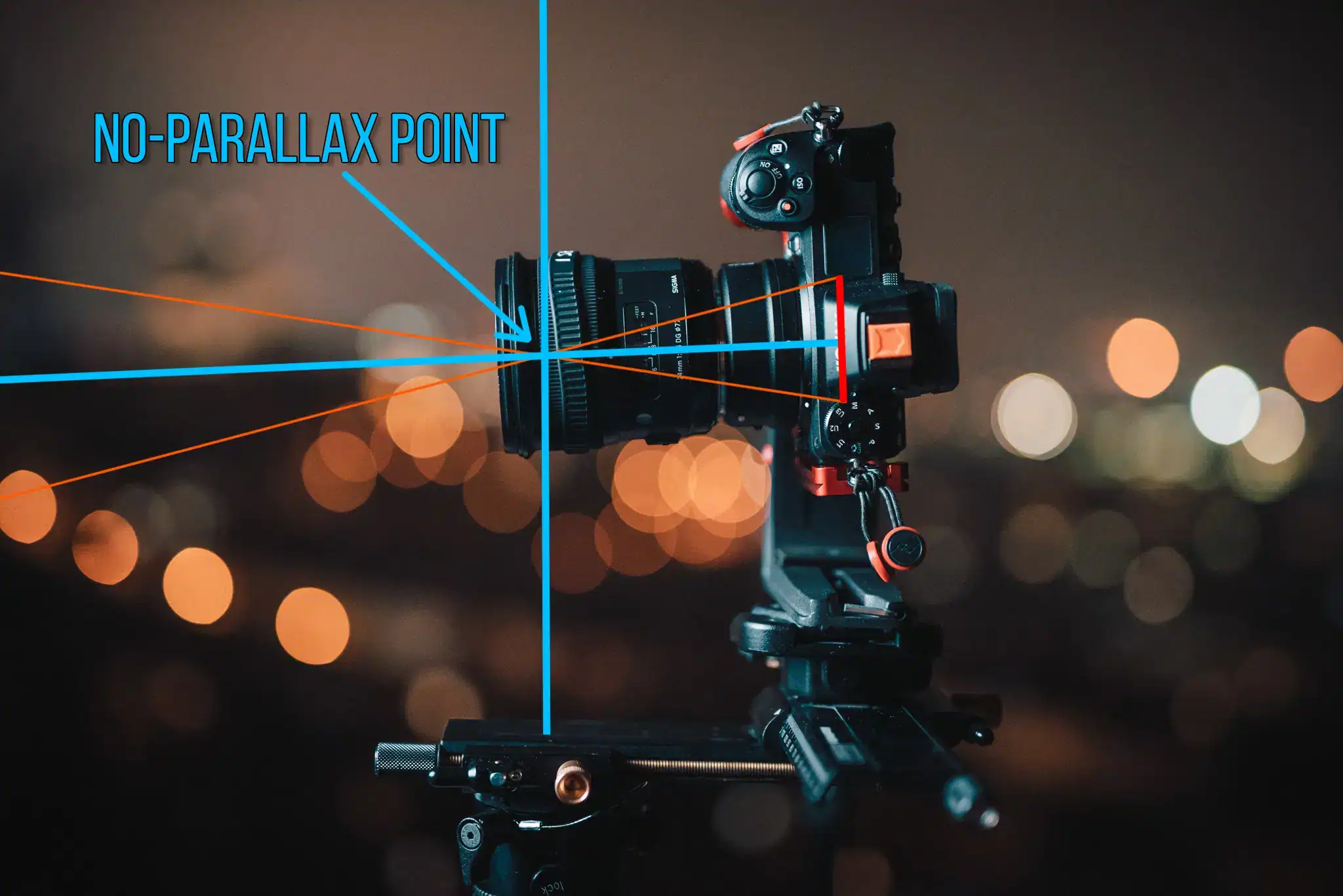
For a deep dive into panoramic heads and alignment, see this panoramic head tutorial. Guide to panoramic heads and alignment principles
Step-by-Step Shooting Guide
Standard Static Scenes
- Level tripod and align nodal point: Place a light stand close to the lens and a vertical object far away. Rotate the camera left-right. Adjust the fore-aft position on your pano head until the near and far objects don’t shift relative to each other.
- Manual exposure and white balance: Set the Z9 to M mode and lock WB (Daylight for sun, Tungsten for warm interiors, or a custom Kelvin). This prevents flicker and color shifts between frames.
- Capture sequence:
- 4-around at 0° tilt (90° yaw steps) for robust overlap; or 3-around (120° steps) if you’re experienced and your circular coverage is large.
- Add 1 zenith shot (tilt +90°) and 1 nadir shot (tilt −90° or lens pointing straight down).
- Take an extra nadir: If you plan to patch the tripod, shoot a handheld nadir with the camera offset to replace the tripod footprint using “viewpoint correction” in PTGui or Hugin.
HDR / High Dynamic Range Interiors
- Bracket ±2EV (3–5 frames): At ISO 64–200 and f/8, use shutter speed bracketing. The Z9 can do auto-bracket in M mode; keep WB locked.
- Keep the sequence consistent: For each yaw angle, shoot all brackets before rotating to the next shot to simplify batching in post.
Low-Light / Night Scenes
- Open to f/4–f/5.6 if needed; use ISO 100–800 for the cleanest files. The Z9 remains very usable at ISO 1600 when exposure is nailed.
- Enable exposure delay or use a remote; turn off IBIS (VR) on tripod to avoid sensor micro-movements. Watch for LED banding; enable flicker reduction and test shutter speeds.
- Wind management: Lower the center column, use a weight hook, and shorten exposure times if your setup catches wind.
Crowded Events
- Two passes: Do a fast base pass for coverage, then a second pass waiting for gaps so you can mask moving people later.
- Prioritize backgrounds: Get clean background plates; moving subjects can be masked in, but busy seams on walls are harder to fix.
Special Setups (Pole / Car / Drone)
- Pole: Use a lightweight rotator atop the pole, keep shutter speeds fast (1/250s+), and tether gear. Avoid power lines; check local regulations.
- Car: Use triple-suction mounts on clean panels and a safety tether. Drive slowly on smooth surfaces; keep rotation deliberate to reduce relative motion.
Recommended Settings & Pro Tips
Exposure & Focus
| Scenario | Aperture | Shutter | ISO | Notes |
|---|---|---|---|---|
| Daylight outdoor | f/8–f/11 | 1/100–1/250 | 64–200 | Lock WB (Daylight); block sun to reduce flare |
| Low light/night | f/4–f/5.6 | 1/30–1/60 | 200–800 (1600 if needed) | Tripod & remote; IBIS off; use anti-flicker |
| Interior HDR | f/8 | Bracket ±2EV | 64–400 | Balance windows and lamps; keep WB fixed |
| Action / moving subjects | f/5.6–f/8 | 1/200+ | 400–1600 | Fewer frames (3-around) to reduce motion between shots |
Critical Tips
- Manual focus at hyperfocal: At 8mm and f/8, hyperfocal is ≈0.27 m; set focus slightly under 0.3 m to keep everything sharp to infinity.
- Nodal point calibration: Mark your pano rail position for the Peleng 8mm on your head once dialed in; this saves time on location.
- White balance lock: Prevent color shifts between frames—essential for clean stitches and consistent HDR merges.
- RAW over JPEG: 14-bit RAW from the Z9 maximizes DR and color latitude, vital for HDR panorama blending and seam masking.
- IBIS/VR use: On tripod, turn VR off. Handheld panos are possible but risky with a circular fisheye due to parallax—use a head whenever critical.
- Z9 flicker tools: In LED-lit environments, set Flicker reduction and test shutter speeds to avoid banding with its electronic shutter.
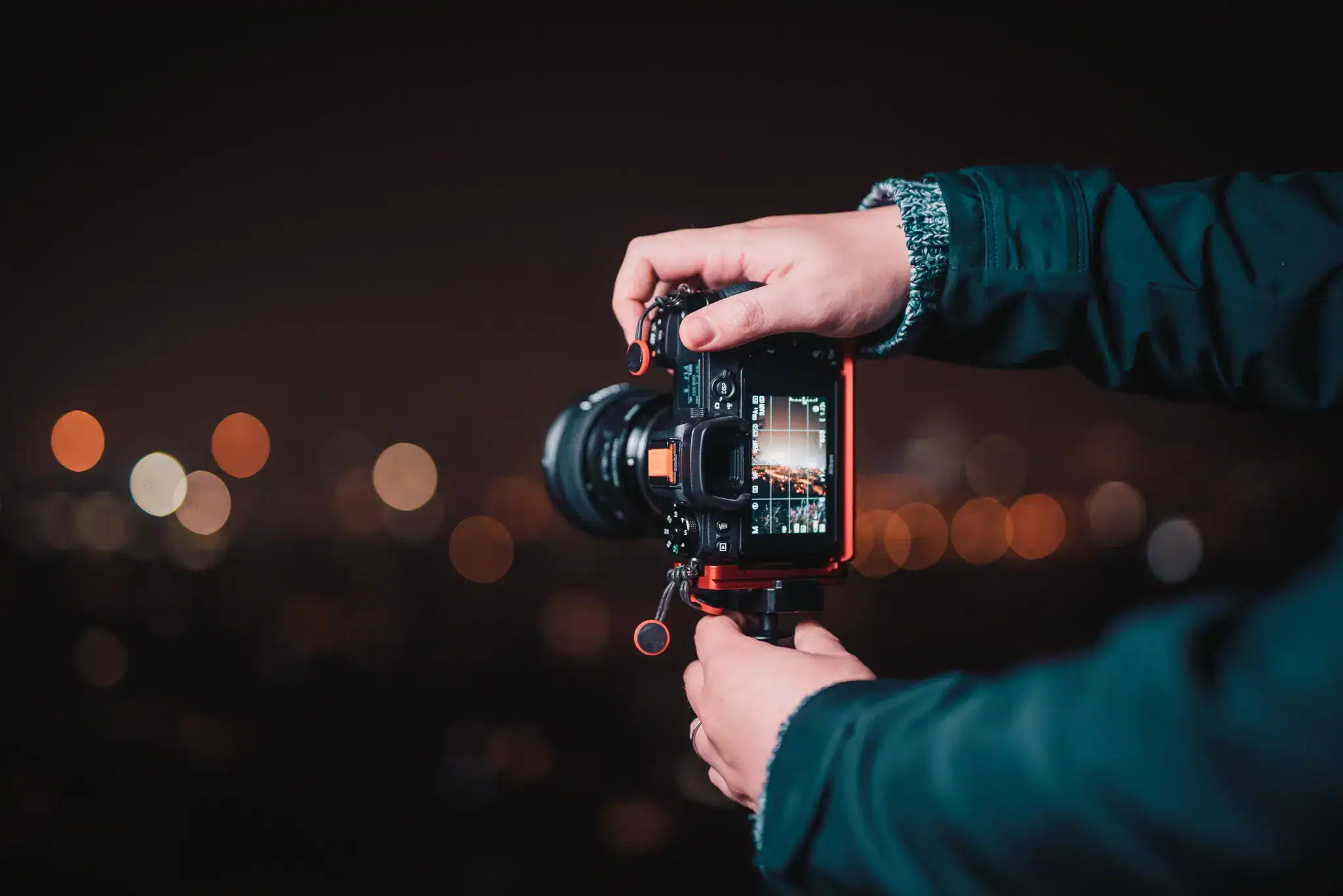
Stitching & Post-Processing
Software Workflow
Use PTGui or Hugin for stitching circular fisheye imagery. In PTGui, set Lens Type to circular fisheye, focal length 8 mm, and sensor crop 1.0 (full frame). Define the circular crop automatically or by drawing the circle to exclude the black frame. Add control points across overlaps, favoring verticals and high-contrast edges. For the Peleng 8mm, a generous overlap (25–35%) makes the optimizer’s job easier. Output an equirectangular 2:1 projection; with the Z9’s resolution, 12,000–16,000 px wide is realistic for 4-around+Z+N. After stitching, finish in Lightroom/Photoshop: color correction, CA fixes, and denoise as needed. For a review of why PTGui remains a top-tier tool, see this PTGui overview. Why PTGui is ideal for complex panoramas
Cleanup & Enhancement
- Nadir patch: Use a handheld nadir shot and “Viewpoint Correction” in PTGui, or clone/AI-erase the tripod.
- Color and noise: Apply uniform white balance and profile corrections; denoise only as needed to preserve detail.
- Leveling: Fix pitch/roll with horizon controls; make verticals vertical in architectural scenes.
- Export: For web/VR, export equirectangular JPEG at 90–95 quality. For high-end editing, export 16-bit TIFF.
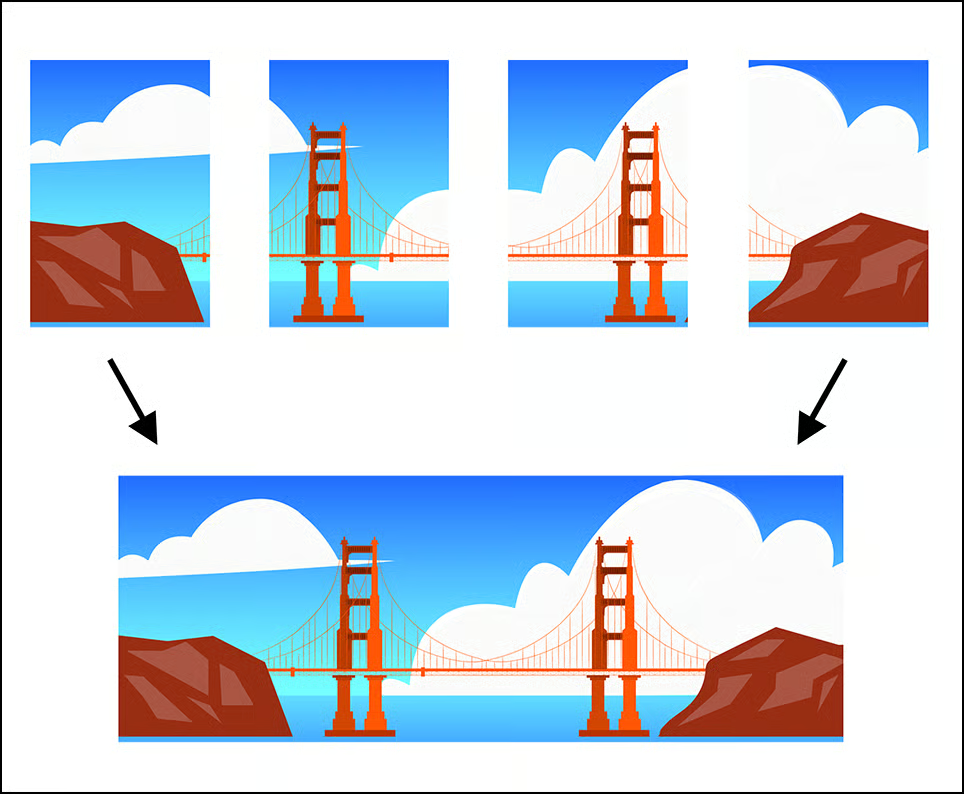
Curious how capture choices affect output resolution? The PanoTools wiki breaks down spherical resolution and coverage math by lens type. Spherical resolution reference
Useful Tools & Resources
Software
- PTGui panorama stitching
- Hugin (open source)
- Lightroom / Photoshop for toning, CA correction, and nadir cloning
- AI tripod removal tools for fast nadir patches
Hardware
- Panoramic heads: Nodal Ninja, Leofoto, or similar compact multi-row systems
- Carbon fiber tripod + leveling base
- Wireless remote shutters or SnapBridge app
- Pole extensions and car mounts with safety tethers
Disclaimer: software/hardware names provided for search reference; check official sites for specs and updates.
If you’re new to high-end 360 photo workflows, Oculus’s DSLR/mirrorless guide neatly summarizes the capture-to-stitch pipeline. DSLR/mirrorless 360 photo workflow basics
Common Mistakes & How to Avoid Them
- Parallax error: Always rotate around the entrance pupil; verify with a near/far alignment test before the main shoot.
- Exposure flicker: Lock manual exposure and white balance; don’t mix auto WB with bracketing.
- Tripod shadows and footprints: Shoot a proper nadir or plan a patch in post.
- Ghosting from movement: Use masking/blending; do a second pass to capture clean background plates.
- Night noise: Keep ISO low, expose to the right without clipping, and stabilize the rig.
- LED banding with Z9: Enable flicker reduction and test shutter speeds; adjust to the frequency of the lights.
Frequently Asked Questions
- Can I shoot handheld panoramas with the Nikon Z9?
It’s possible in bright light, but with a circular fisheye you’re very sensitive to parallax if you don’t rotate around the entrance pupil. For reliable stitches—especially indoors—use a panoramic head and tripod. If you must go handheld, use 3-around only, shoot fast shutter speeds, and keep your rotation as centered as possible around the lens.
- Is the Peleng 8mm f/3.5 wide enough for a single-row 360?
Yes. A circular 8mm on full frame easily covers a full 360×180 with 4-around + zenith + nadir and often 3-around + zenith + nadir if overlaps are generous. The reduced shot count is the key advantage of this lens for 360 photos.
- Do I need HDR for interiors with bright windows?
Usually, yes. The Z9’s DR is excellent, but mixed interior lighting and bright windows often exceed a single exposure. Bracket ±2EV (3–5 frames) at each yaw position with WB locked, then fuse in your stitcher or HDR app before stitching.
- How do I avoid parallax issues with this combo?
Mount the Peleng on a panoramic head and calibrate the entrance pupil. Mark the fore-aft rail position once found. Keep the camera level and ensure each yaw click returns to the same optical center. Avoid moving the tripod between frames.
- What ISO range is safe on the Z9 in low light?
For critical quality, ISO 64–800 is excellent. ISO 1600 remains very usable with proper exposure. If you’re bracketing for HDR, stay at the low end and let shutter speed do the work—as long as the rig is stable and wind is controlled.
- Can I set custom modes for fast pano work on the Z9?
Yes—use U1/U2/U3 to store a “Pano” setup: M mode, fixed WB, single-point AF or manual focus with peaking, IBIS off, bracketing on (if needed), self-timer or remote trigger, and your preferred file format (14-bit RAW).
- How can I reduce flare with a fisheye?
Plan your yaw so the sun falls across frame boundaries you can easily mask, shade the lens with your hand/body just outside the frame, and clean the front element thoroughly. In post, use gradient masks and clone tools to tame residual ghosts.
- What’s the best tripod head for this setup?
A compact, precise panoramic head with detents at 90° and 120° works great for circular fisheye workflows. Ensure it has adjustable fore-aft rails to dial in the entrance pupil and a rigid vertical post to maintain calibration.
For a broader overview of camera/lens combos and practical FAQs for virtual tour work, this guide is a helpful reference. DSLR/mirrorless virtual tour FAQ