Why This Camera & Lens Are Great for Panoramas
The Nikon Z9 paired with the Nikon AF-S 8–15mm f/3.5–4.5E ED Fisheye is a powerful combo for fast, high-quality 360° panoramas. The Z9’s 45.7MP stacked full-frame sensor (FX, ~4.35 µm pixel pitch) delivers excellent detail and class-leading dynamic range at base ISO 64 (around 14+ stops), which is ideal when you need to recover both shadows and highlights in a single stitched sphere. Its robust body, deep buffer, and reliable battery life mean you can concentrate on the pano without worrying about missed frames.
The 8–15mm fisheye is particularly well-suited to virtual tour work because it gives you extreme coverage with fewer shots. On full-frame, 8mm yields a circular fisheye image (180° in all directions inside the circle) that enables fast 4-around captures, while 15mm provides a diagonal fisheye that’s easier to frame for interiors with straight lines, typically requiring 6–8 shots around for higher resolution. On the Z9, this F-mount lens requires the FTZ II adapter; autofocus and electronic diaphragm work well, and the camera’s focus peaking and magnified view make manual focus simple. Expect some fisheye-specific distortion and lateral CA toward the edges; both are well controlled in good copies and easy to manage during stitching.
Bottom line: this setup balances speed (fewer frames with a fisheye) and image quality (high-resolution sensor with excellent DR). It’s rugged for field use, flexible across interior/exterior scenes, and compatible with the panoramic heads favored by industry pros.
Quick Setup Overview
- Camera: Nikon Z9 — Full-frame (FX) 45.7MP stacked CMOS, base ISO 64, excellent DR, IBIS (5-axis), electronic shutter only (very low rolling shutter).
- Lens: Nikon AF-S 8–15mm f/3.5–4.5E ED Fisheye — F-mount fisheye zoom; circular at ~8mm on FX, diagonal fisheye at 15mm; sharpest around f/5.6–f/8; some edge CA and flare possible against strong light.
- Estimated shots & overlap (tested patterns):
- 8mm (circular): 4 around at 90° + 1 zenith + 1 nadir (30–40% overlap between images).
- 10–12mm: 6 around at 60° + zenith + nadir (25–30% overlap).
- 15mm (diagonal fisheye): safer 8 around at 45°; advanced 6 around + zenith + nadir (25–30% overlap).
- Difficulty: Moderate — Easy capture count, but precise nodal alignment and careful exposure/WB management are required for clean stitches.
Tip: Shot count vs resolution is a trade-off. Fewer frames at 8–10mm are fast for crowds and pole work; more frames at 12–15mm deliver higher equirectangular resolution for professional real estate and architectural work. For context on spherical output and pixel math, see the Panotools spherical resolution notes. Read more about spherical resolution.
Planning & On-Site Preparation
Evaluate Shooting Environment
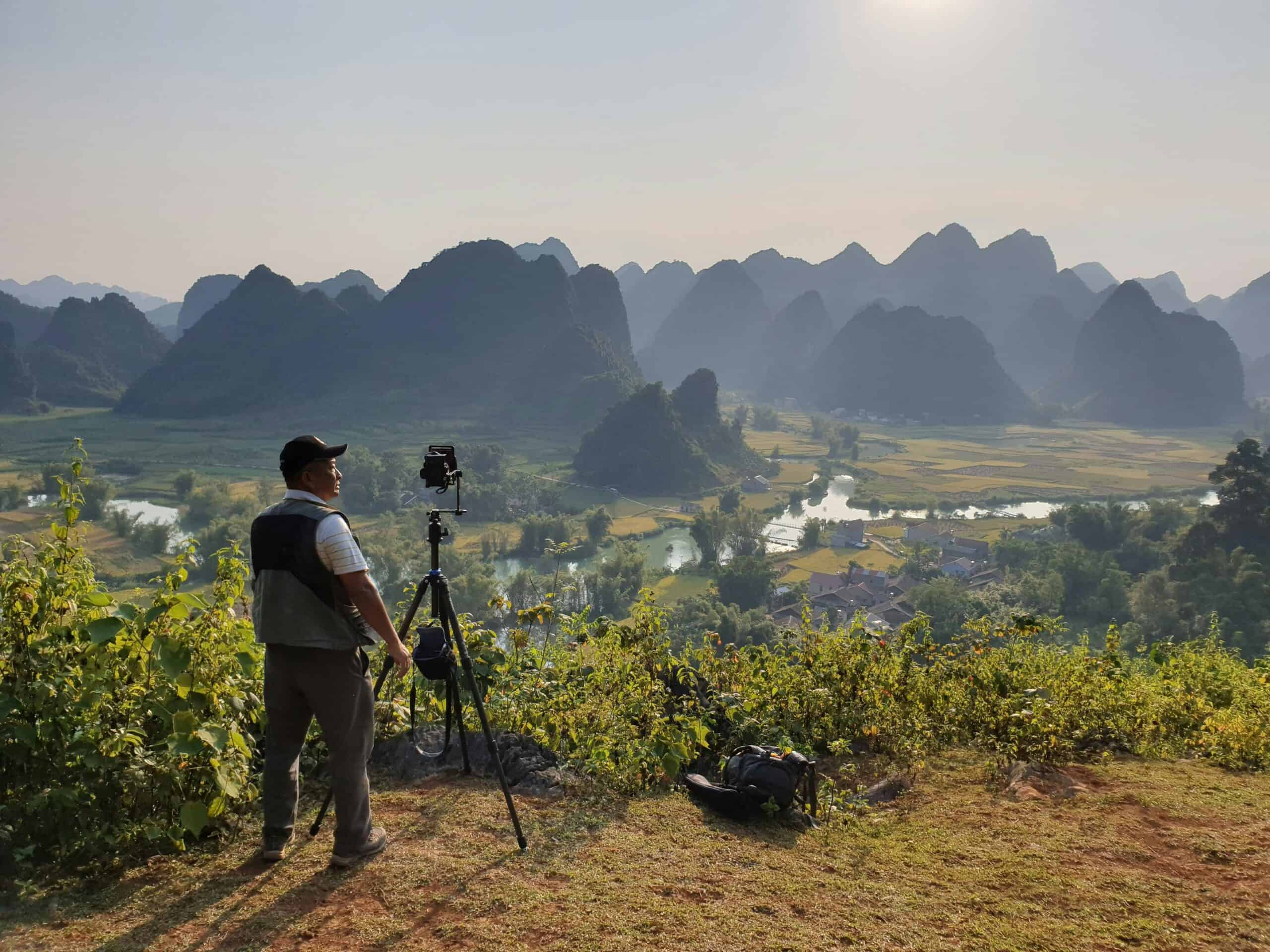
Walk the space before setting up. Note lighting extremes (bright windows, deep shadows), reflective surfaces (glass, polished floors), and moving elements (people, foliage, traffic). If shooting through glass, place the lens as close as safe to the glass (1–3 cm) and use a rubber hood or shade with the camera angled slightly to reduce reflections. Check for wind on rooftops or open viewpoints; it dictates whether to use higher shutter speeds or postpone pole work.
Match Gear to Scene Goals
The Z9’s base ISO 64 is a gift for high DR exteriors and reflective interiors. Indoors, the Z9 stays very clean through ISO 800–1600; 3200 is usable with careful exposure, and 6400 is a last resort. The fisheye zoom lets you choose speed or resolution: at 8–10mm, you’ll finish a full 360 quickly (4–6 frames around), which is perfect for crowds or pole work; at 12–15mm, you collect more pixels and straighter lines, great for real estate and architecture, with 6–8 frames around plus zenith/nadir.
Pre-shoot Checklist
- Power and storage: fully charge EN-EL18d batteries; carry spares. Use large/fast CFexpress cards.
- Optics clean: wipe the fisheye carefully (front element bulges); check sensor for dust.
- Level and calibrate: verify your leveling base and panoramic head zero marks; confirm nodal/entrance pupil settings for 8mm and 15mm.
- Safety: test tripod stability; tether on rooftops; use safety lines for pole/car-mount captures; respect local regulations.
- Backup workflow: shoot a second full round if time allows, especially for client work and HDR interiors.
Essential Gear & Setup
Core Gear
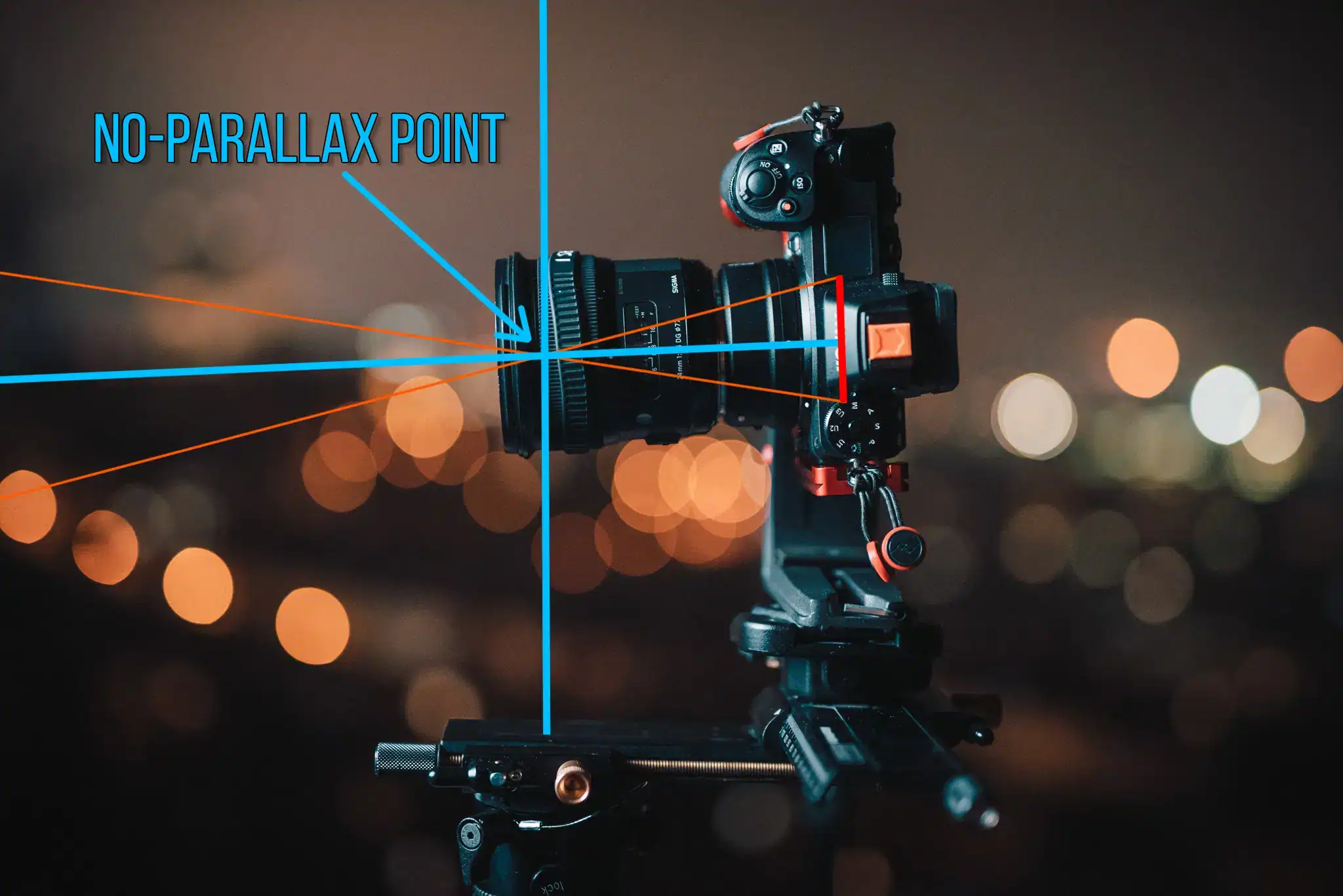
- Panoramic head: A proper pano head aligns the lens’s entrance pupil (nodal point) with the rotation axis to eliminate parallax. This is critical when foreground objects are within a few meters.
- Stable tripod with leveling base: A leveling base lets you level once and rotate true horizontally, avoiding tilted horizons and saving time in post.
- Remote trigger or app: Use the Nikon app or a wired remote to avoid touching the camera during each frame.
Optional Add-ons
- Pole or car mount: Great for crowds and tight spaces, but require tethers and impeccable safety practices due to wind/vibration.
- Lighting aids: Small LED panels or bounced flash for interiors where HDR alone can’t handle mixed light.
- Weather protection: Rain covers and microfiber cloths; the Z9 is robustly sealed, but the fisheye’s front element is exposed.
For a deeper dive into panoramic heads, alignment, and technique, this illustrated tutorial is excellent. Panoramic head setup guide.
Step-by-Step Shooting Guide
Standard Static Scenes
- Level tripod and align nodal point: On a multi-row head, set your known offsets for the 8–15mm. As a starting point, expect the entrance pupil to sit closer to the front element at 8mm and shift slightly rearward as you zoom. Confirm with a quick parallax test: place two objects (near/far) in the overlap and rotate—adjust fore-aft until the relative alignment no longer shifts.
- Set manual exposure and lock white balance: Use M mode and a fixed WB (Daylight, Tungsten, or a custom Kelvin). This prevents exposure/WB mismatches across frames that cause visible seams.
- Focus: Switch to manual focus; use magnified live view and focus peaking. At 8mm and f/8, set near hyperfocal (~0.28–0.3 m) to keep everything sharp; at 15mm and f/8, a focus around 0.6–0.8 m works well for most interiors.
- Shoot your round with the tested overlap:
- 8mm: 4 around at 90° increments; add zenith and nadir frames.
- 12–15mm: 6 around at 60° increments; add zenith/nadir. For maximum quality at 15mm, capture 8 around.
- Take the nadir: Tilt up the camera column or offset the tripod to get a clean ground shot for tripod removal. A handheld nadir at the same position works if you mark the spot and keep the lens over the rotation point.
HDR / High Dynamic Range Interiors
- Bracket ±2 EV (3–5 frames): The Z9 bracketing menu makes this quick. For bright windows, use 5 frames at 2 EV steps to cover everything cleanly.
- Keep WB locked and use the same bracket at every position so exposures align perfectly during batch stitching/merging.
- Consider setting a 2-second self-timer or use a remote to minimize vibration.
Low-Light / Night Scenes
- Use longer exposures with low ISO. On tripod, shoot ISO 64–200 when possible; for moderate wind or slight movement, ISO 400–800 is still very clean on the Z9. Avoid 6400+ unless necessary.
- Turn IBIS off on a tripod to prevent microscopic drift between frames; leave it on only if you must handhold in a pinch.
- Enable exposure delay or use a remote; consider mirror-up-like delay (Z9 uses only electronic shutter, but delaying still helps settle vibrations).
Crowded Events
- Use a fast pattern: 8–10mm with 4–6 frames around minimizes time and reduces ghosting.
- Shoot two passes: one immediately, another while waiting for gaps. Blend in post to remove crowded overlaps.
- Keep shutter speeds above 1/200 to freeze people if light allows; otherwise, accept some motion and plan to mask.
Special Setups (Pole / Car)
- Secure everything: use a safety tether, lock clamps, and check balance. Wind pressure increases with pole height; keep exposures shorter (1/250–1/500) and use the 4-around 8mm method.
- Car-mounted: only on private property or where legal; use vibration-damping mounts and higher shutter speeds (1/500+). Consider shooting bursts at each angle and pick the sharpest frame.
If you’re new to DSLR/MILC 360 capture and stitching, this step-by-step platform guide is a solid overview. How to shoot and stitch a 360 photo with a DSLR/mirrorless.
Recommended Settings & Pro Tips
Exposure & Focus
| Scenario | Aperture | Shutter | ISO | Notes |
|---|---|---|---|---|
| Daylight outdoor | f/8–f/11 | 1/100–1/250 | 64–200 | Lock WB (Daylight). Shield lens from sun to reduce flare. |
| Low light/night | f/4–f/5.6 | 1/30–1/60 (tripod) | 200–800 | IBIS off on tripod; use remote or delay. |
| Interior HDR | f/8 | Bracket ±2 EV (3–5 frames) | 64–400 | Fix WB; consistent bracketing across all angles. |
| Action / moving subjects | f/5.6–f/8 | 1/200+ | 400–1600 | Do a quick second pass to patch movement later. |
Critical Tips
- Manual focus at hyperfocal: At 8mm f/8, set ~0.28–0.3 m; at 15mm f/8, ~0.6–0.8 m. Confirm with magnified live view.
- Nodal point: Mark your pano head rails for 8mm and 15mm positions after a careful parallax test; keep a laminated cheat sheet in your bag.
- White balance: Lock it. Mixed WB across frames causes stitching seams that are hard to fix.
- RAW over JPEG: The Z9’s 14-bit RAW files preserve DR for HDR merging and window recovery.
- IBIS: Off on a tripod to avoid micro-shifts; on only for handheld emergencies or mild pole vibration (test overlap carefully if left on).
- Flare and CA: Use your body or a flag to shade the fisheye from the sun; correct lateral CA during stitching for crisp edges.
Stitching & Post-Processing
Software Workflow
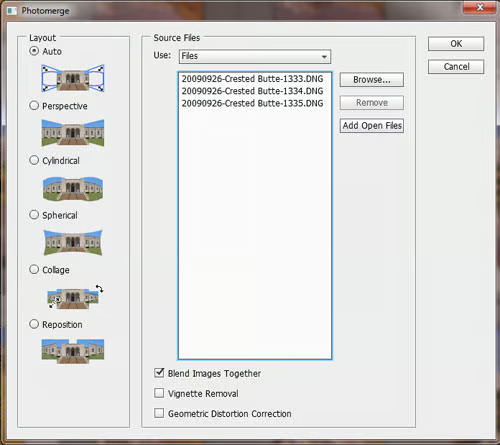
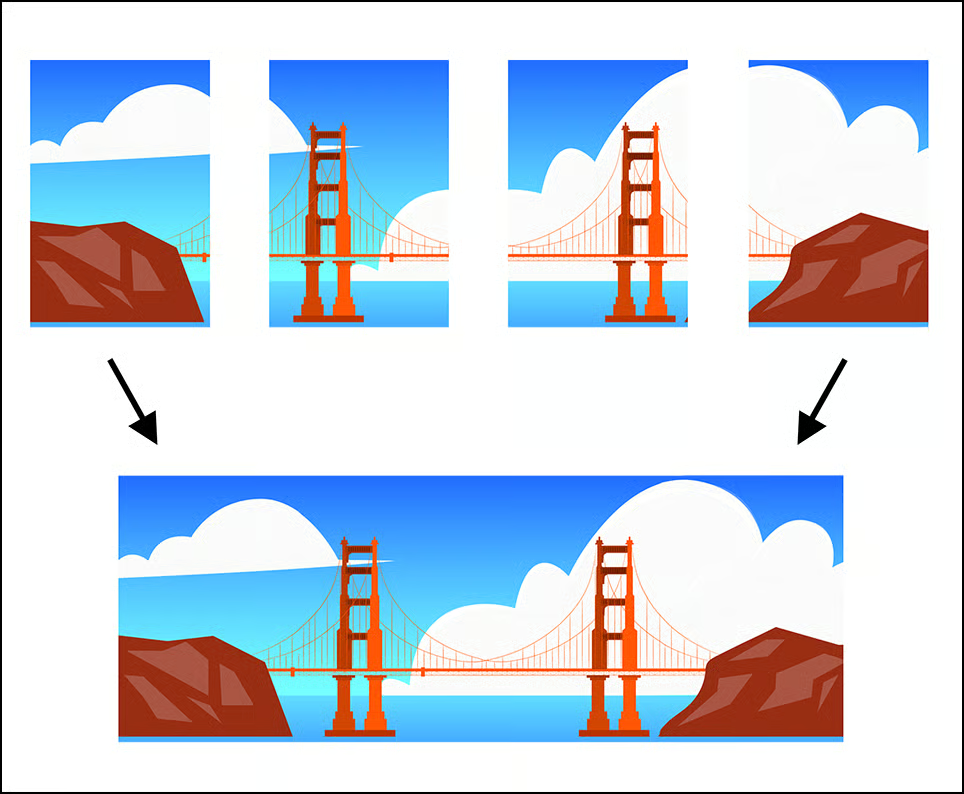
Import and organize by scene. If you shot HDR brackets, merge to HDR first (either in PTGui during stitch, or pre-merge in Lightroom/Camera Raw). For fisheye inputs, PTGui and Hugin excel at reading lens models and minimizing distortions. Typical overlap guidance: ~25–30% for fisheye inputs and ~20–25% for rectilinear. With the 8–15mm, stick to fisheye workflows and let the software estimate lens parameters, then refine control points where needed. Batch templates speed up real estate jobs and ensure consistency across rooms. For a pro review of PTGui’s strengths, see this overview. Why PTGui is a top panorama tool.
Cleanup & Enhancement
- Nadir/tripod removal: Export a nadir patch and clone in Photoshop, or use AI-based tripod removal tools for speed.
- Color and noise: Match white balance across scenes; use masks to balance windows vs interior tones; apply gentle noise reduction for ISO 1600–3200 shots.
- Horizon leveling: Use the stitching software’s horizon tool to correct roll/yaw/pitch. Verify straight verticals for real estate.
- Export: For web/VR, export 16-bit TIFF master and an equirectangular JPEG (8–12k wide depending on capture); embed correct metadata for players.
Tip: Keep both the stitched master and source RAWs. Client revisions and new delivery specs are common months later.
Field-Proven Setups and Case Studies
Indoor Real Estate (Bright Windows)
Set 12–15mm for more resolution and gentler distortion. Use a leveled tripod and pano head, shoot 6 around + zenith + nadir with 5-shot ±2 EV bracketing. Lock WB (e.g., 5000–5500K) and ISO 64–200. Merge to HDR in PTGui or pre-merge in Lightroom, then stitch. Patch the nadir, straighten verticals, and deliver a 10–12k equirectangular.
Outdoor Sunset Vistas
Use 8–10mm for speed if the light is changing fast: 4–6 around + Z/N. Meter for the mid-tones, bracket if the sun is in frame. Shade the lens from flare; consider two exposures for the sun zone and mask in post for a clean gradient.
Events with Crowds
Go fast at 8–10mm: 4–6 frames around at 1/200–1/500, ISO 400–800, f/5.6–f/8. Make a second pass when the crowd opens up in critical directions; mask moving subjects later. The Z9’s AF helps if you must shoot AF, but manual focus at hyperfocal is still safer for frame-to-frame consistency.
Rooftop or Pole Shooting
Use 8mm 4-around to reduce time aloft. Keep the pole vertical, tether gear, and avoid gusty conditions. Use 1/250–1/500 and ISO 400–800 if needed. Shoot a replacement ground/nadir later for a clean patch.
Car-Mounted Capture (Static or Slow Roll)
Only where legal and safe. Use vibration-dampened mounts; faster shutters (1/500+); 8–10mm for minimal frames. Consider capturing multiple bursts per angle and selecting the sharpest. Expect to fix some parallax if the car moves; the safest results come from fully static shooting.
Useful Tools & Resources
Software
- PTGui panorama stitching
- Hugin (open source stitching)
- Lightroom / Photoshop (RAW development and retouching)
- AI tripod removal and sky clean-up tools
Hardware
- Panoramic heads: Nodal Ninja, Leofoto, or similar multi-row heads
- Carbon fiber tripod with leveling base
- Wireless remote shutters
- Pole extensions and car mounts (with tethers)
Disclaimer: brand names are provided for search reference; always verify compatibility and safety before use.
Common Mistakes & How to Avoid Them
- Parallax error → Align the entrance pupil precisely; re-test after any lens zoom change.
- Exposure flicker → Use full manual exposure and locked WB; avoid auto-ISO for stitched work.
- Tripod shadows and missing ground → Capture a clean nadir and patch it in post.
- Ghosting from moving people/trees → Use quicker patterns and a second pass; mask in post.
- Night noise and blur → Keep ISO low, use a solid tripod, IBIS off, remote trigger, and exposure delay.
- Flare with fisheye → Shade the lens with a hand/flag, reposition, or bracket to blend a flare-free frame.
Frequently Asked Questions
- Can I shoot handheld panoramas with the Nikon Z9?
Yes, in bright light. Use 8–10mm, high shutter speed (1/250+), and generous overlap (40%+). However, without a panoramic head you’ll see parallax with nearby objects, so handheld is best for distant scenes or quick social content—not for precision real estate work.
- Is the AF-S 8–15mm fisheye wide enough for a single-row 360?
Absolutely. At 8mm you can do 4 around + zenith + nadir. At 12–15mm, use 6–8 around + zenith + nadir for more resolution and cleaner edges. The zoom gives you speed or quality depending on the job.
- Do I need HDR for interiors with bright windows?
Usually yes. Bracket ±2 EV (3–5 shots) at each position to preserve window detail and clean shadows. The Z9’s base ISO 64 maximizes dynamic range, making HDR merges exceptionally clean.
- How do I avoid parallax issues with this setup?
Use a calibrated panoramic head and align the lens’s entrance pupil with the rotation axis. Mark your rail positions for 8mm and 15mm after a careful parallax test and re-check if you change focal length.
- What ISO range is safe on the Z9 in low light?
On tripod, aim for ISO 64–200 whenever you can. ISO 400–800 is very clean; ISO 1600–3200 is usable with good exposure and noise reduction; ISO 6400 is a last resort.
- What tripod head should I choose for the Z9 and this fisheye?
A sturdy multi-row panoramic head with clear fore–aft and lateral adjustments (e.g., Nodal Ninja, Leofoto) is ideal. Add a leveling base to simplify setup. For pole work, choose lighter, rigid components and practice safe tethers.
Safety, Quality, and Backup Practices
The Z9 + 8–15mm is a pro-grade combo—treat it like one. Don’t extend poles in high winds; use tethers on rooftops; follow local regulations for car-mounted work. Protect the fisheye’s exposed front element with a cap when not shooting. Maintain a redundant storage plan: dual card slots set to backup, and clone cards to two drives after each shoot. For deeper instruction on setting up a panoramic head and shooting high-end 360s, this guide is helpful. Set up a panoramic head for high-end 360 photos.
Media & Visual References