
Why This Camera & Lens Are Great for Panoramas
If you want to know how to shoot panorama with Nikon Z8 & Pentax DA 10-17mm f/3.5-4.5 ED Fisheye, you’re pairing a modern, high-resolution full-frame mirrorless body with a compact fisheye zoom that can deliver fast 360° coverage. The Nikon Z8’s 45.7MP stacked BSI sensor (approx. 4.35 µm pixel pitch) offers excellent detail, low noise, and around 14 stops of dynamic range at base ISO 64—ideal for clean skies, deep shadows, and HDR interiors. It adds reliable tools for pano work: focus peaking, magnified live view for precise manual focus, 5-axis in-body stabilization (turn it off on a tripod), and robust 14-bit NEF files. Its electronic shutter eliminates shutter shock and is essentially silent, which helps when shooting in quiet interiors.
The Pentax DA 10–17mm is an APS-C diagonal fisheye zoom. At 10mm on APS-C, it reaches approximately 180° diagonal FOV, which is perfect for reducing the number of frames needed for a full spherical panorama. On the full-frame Z8, you’ll want to enable DX crop to avoid heavy vignetting; that still yields a ~19MP pano pass—more than enough for virtual tours and web delivery, and you can always shoot multi-row passes for more resolution. Expect characteristic fisheye distortion (which pano software understands), some purple/green fringing at the edges (defringe easily in post), and best sharpness around f/8.
Compatibility notes: This lens is Pentax K mount. Use a K-to-Z adapter that includes a mechanical aperture control lever (DA lenses lack an aperture ring; a “dumb” adapter without a lever will lock you wide open). Adapters from reputable brands (e.g., Fotodiox, K&F) preserve infinity focus without optics. Because it’s a manual setup on Nikon, you’ll set aperture using the adapter ring, manual focus on the lens, and exposure in-camera. That’s normal for pano work and actually desirable for consistency.
Quick Setup Overview
- Camera: Nikon Z8 — Full-frame 45.7MP stacked BSI sensor, base ISO 64, excellent DR (~14 stops), 14-bit NEF, 5-axis IBIS (disable on tripod).
- Lens: Pentax DA 10–17mm f/3.5–4.5 ED Fisheye — APS-C diagonal fisheye zoom, ~180° diagonal FOV at 10mm, best sharpness around f/8, edge CA that’s easily defringed in post. Requires a K-to-Z adapter with aperture control.
- Estimated shots & overlap (DX crop on Z8 recommended):
- 10mm: 6 around (60° yaw steps) + 1 zenith + 1 nadir (≈25–30% overlap).
- 12–14mm: 8 around + zenith + nadir (≈30% overlap, cleaner edges).
- 17mm: 10–12 around + zenith + nadir if you want extra resolution or safer overlap in crowds.
- Difficulty: Intermediate — simple if you already have a calibrated pano head.
Planning & On-Site Preparation
Evaluate Shooting Environment
Survey light, movement, and reflectivity. The Z8 can hold highlight detail well at base ISO, but backlit windows or sunsets still benefit from HDR bracketing. Watch for moving elements (people, trees, traffic) that can cause stitching ghosts. Around glass, keep the lens 30–50 cm away and shoot slightly angled to reduce reflections; a dark cloth behind the camera can help tame flare. For outdoor wind, stabilize your tripod legs wider, hang a bag from the center column hook, and use a remote trigger.
Match Gear to Scene Goals
This combo excels when you need to minimize the number of shots—the fisheye’s huge FOV means faster capture and fewer stitching seams. The Z8’s sensor keeps noise low and dynamic range high; safe ISO ranges for quality panos are ISO 64–200 for critical work, 400–800 when needed, and 1600 still usable if you expose well (prefer HDR bracketing over pushing ISO). Indoors, fisheye reduces the frame count, which helps when subjects move; just remember that strong lines near the frame edge will look curved until stitched.
Pre-shoot Checklist
- Battery topped up; formatted high-speed cards; lens/sensor cleaned.
- Tripod leveled; pano head calibrated for the lens’s no-parallax (nodal) point.
- Safety: evaluate wind loads, rooftop edges, and car mounts; use tethers and wrist straps.
- Workflow insurance: shoot an extra safety pass (especially zenith/nadir) in case of stitching surprises.
Essential Gear & Setup
Core Gear
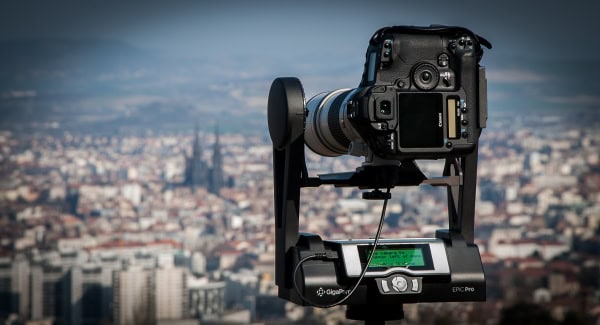
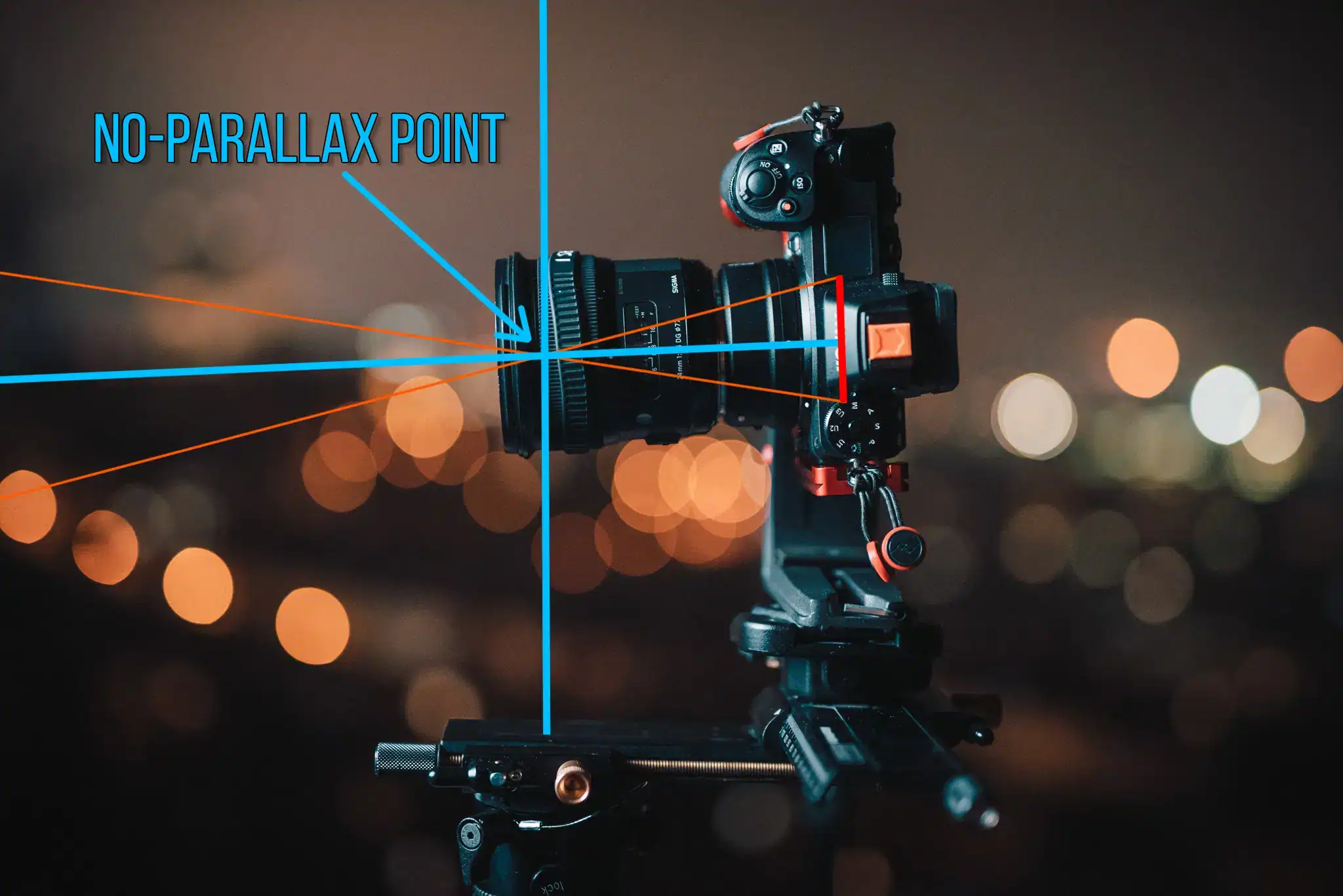
- Panoramic head: Lets you rotate around the lens’s no-parallax point to eliminate foreground/background shifts (parallax), which is vital for clean stitches.
- Stable tripod with a leveling base: Rapid leveling saves time and ensures consistent horizon.
- Remote trigger or SnapBridge app: Fire shots without touching the camera; enable exposure delay if needed.
Optional Add-ons
- Pole or car mount: Great for elevated or moving shots. Use safety tethers, check fasteners, and reduce speed/rotation to avoid vibrations.
- Lighting aids: Small LEDs or bounced flash can lift dark interiors; keep lighting consistent between frames.
- Weather protection: Rain covers and microfiber cloths; wipe the fisheye frequently—its bulbous front element is a drop magnet.
Step-by-Step Shooting Guide
Standard Static Scenes
- Level and align: Level your tripod with the base, then set the panoramic head to rotate around the lens’s no-parallax point. On the Z8, use the horizon display to confirm level.
- Manual exposure and WB: Set manual exposure to keep consistency frame-to-frame. Lock white balance (daylight/tungsten/custom gray card) to avoid color shifts that complicate stitching.
- Focus: Switch to manual focus, use magnified live view and peaking. At 10mm in DX and f/8, hyperfocal is roughly 0.6–0.7 m; set focus just under 1 m and you’re sharp to infinity.
- Capture sequence: For 10mm DX, shoot 6 frames around at 60° yaw increments. Then add a zenith shot tilted up about +60° and a nadir shot down about −60°. If the nadir is blocked by your tripod, shoot a handheld patch after moving the tripod or plan to patch later.
- Overlap: Aim for 25–30% overlap with fisheye; increase to 35% in complex interiors or with moving subjects.
HDR / High Dynamic Range Interiors
- Bracket exposures: Use the Z8’s bracketing to capture 3–5 frames at ±2 EV (or 7 frames for extreme contrasts). Keep shutter the changing variable (manual exposure, fixed aperture/ISO).
- Lock WB: Stay on a fixed WB to keep color continuity across brackets and frames.
- Workflow: Either fuse HDR first per angle and then stitch, or stitch bracketed sets in PTGui and let it blend. The fisheye simplifies the number of HDR groups.
Low-Light / Night Scenes
- Long exposures: Use f/4–f/5.6, ISO 100–400, and longer shutter speeds rather than pushing ISO. The Z8 stays clean, but long exposure plus tripod equals cleaner results.
- Stability: Turn off IBIS on tripod to avoid micro-blur from stabilization corrections. Use a remote trigger and the Z8’s exposure delay.
- Check star trails: Keep an eye on shutter length if stars are visible; capture multiple shorter frames instead of one very long one.
Crowded Events
- Two passes: First pass to capture structure; second pass waiting for gaps in people flow.
- Masking: In post, mask to keep clean areas from each pass and reduce ghosting. Increase overlap (8 around) at 12–14mm for extra stitching flexibility.
Special Setups (Pole / Car / Drone)
- Pole: Use a lightweight pano head and keep the pole vertical. Tether the camera and rotate slower to minimize flex. Consider 8 around for redundancy.
- Car mount: Drive slowly on smooth surfaces, use high shutter speeds (1/200–1/500), and shoot during brief stops if possible.
- Safety: Always double-check clamps and tethers. Elevated gear is a hazard if dropped.
Recommended Settings & Pro Tips
Exposure & Focus
| Scenario | Aperture | Shutter | ISO | Notes |
|---|---|---|---|---|
| Daylight outdoor | f/8–f/11 | 1/100–1/250 | 100–200 | Lock WB (daylight) |
| Low light/night | f/4–f/5.6 | 1/30–1/60 | 400–800 | Tripod & remote; prefer longer shutter over high ISO |
| Interior HDR | f/8 | Bracket ±2 EV | 100–400 | Balance windows and lamps via bracketing |
| Action / moving subjects | f/5.6–f/8 | 1/200+ | 400–800 | Freeze motion, shoot two passes for masking |
Critical Tips
- Manual focus at hyperfocal: At 10mm (DX) and f/8, set ~0.6–0.7 m; confirm with magnified view and peaking on the Z8.
- Nodal calibration: Slide the camera along the rail while aligning near/far objects; adjust until there’s no relative shift when yawing. Mark the rail position for 10, 12, and 14mm—your most-used focal lengths.
- White balance lock: Avoid mixed WB across frames—use a preset or custom WB from a gray card.
- RAW vs JPEG: Shoot 14-bit NEF for max DR and clean HDR merging. JPEGs limit latitude and can add banding across gradients.
- IBIS: Turn off on tripod; enable only for handheld panos or pole shots where micro-vibrations exist.
Video: Panoramic Head Setup Basics
Visual learners will benefit from a concise walkthrough on aligning the no-parallax point and shooting a clean 360 sequence.
Stitching & Post-Processing
Software Workflow
PTGui and Hugin both understand fisheye projections well. With a diagonal fisheye like the Pentax 10–17mm, you’ll generally need fewer shots; the tradeoff is more extreme edge distortion and CA to clean later. Industry guidance: ~25–30% overlap for fisheye, 20–25% for rectilinear. Load your frames, set lens type to “Fisheye,” choose equirectangular output, and let the software detect control points. Manually add points on low-texture areas if needed. PTGui’s optimizer and masking tools are excellent when you must handle moving subjects or tricky zenith/nadir. For a primer on pano heads and alignment, see this panoramic head tutorial from 360 Rumors at the end of this paragraph. Panoramic head basics (360 Rumors)
For tool comparisons and why PTGui remains a top choice for control, speed, and masking, this review is useful. Why PTGui is a powerhouse for stitching (Fstoppers)
If your goal is viewing in VR or publishing a 360 photo, follow platform guidelines for equirectangular 2:1 exports and metadata. Oculus provides clear recommendations for DSLR/mirrorless workflows and stitching practices. DSLR/mirrorless 360 workflow (Meta/Oculus)
Cleanup & Enhancement
- Nadir patch: Capture a handheld ground shot after moving the tripod, then patch in PTGui or Photoshop. AI content-aware fill can save time.
- Defringe & CA: The 10–17mm can show purple/green fringing at edges. Use Defringe sliders in Lightroom/ACR; PTGui also supports vignetting and chromatic correction.
- Noise reduction: For low-light frames, apply moderate noise reduction and retain detail; don’t over-smooth sky gradients.
- Leveling: Use the panorama editor to correct roll/yaw/pitch and set a pleasing center view.
- Export: 16-bit TIFF master for archival; JPEG (equirectangular 2:1) for web/VR. Maintain ICC profiles and appropriate compression for fast loading.
Disclaimer: Software evolves—verify current features and best practices in the latest manuals and docs.
Useful Tools & Resources
Software
- PTGui panorama stitching
- Hugin (open source)
- Adobe Lightroom / Photoshop
- AI-based nadir/tripod removal tools
Hardware
- Panoramic heads (Nodal Ninja, Leofoto, Sunwayfoto, Really Right Stuff)
- Carbon fiber tripods with leveling bases
- Wireless remote shutters
- Pole extensions and car suction mounts (with tethers)
Disclaimer: Product names are for search reference only; check official sources for specifications and safety guidance.
Field Case Studies
Indoor Real Estate (Mixed Light)
Switch the Z8 to ISO 100–200, f/8 at 10mm DX, and bracket ±2 EV (3–5 frames). Lock WB to a custom value (shoot a gray card in the space if possible). Shoot 6 around + zenith + nadir from a leveled tripod. Use PTGui’s HDR merge and defringe tools. Patch the nadir using your handheld patch frame. This produces clean windows and neutral color in a tough lighting mix.
Outdoor Sunset (High DR, Wind)
Use f/8, ISO 64–100, and bracket ±2 EV. Increase overlap to ~30%. Hang a small weight bag from your tripod to damp wind. Consider shooting a second pass focused more on the bright sky for backup. In post, use exposure fusion or tone mapping to keep skies clean and noise minimal.
Event Crowd (Motion Management)
At 12–14mm DX, do 8 around for redundancy. Shoot a first pass for architecture, a second pass waiting for gaps. In PTGui, mask people to select the cleanest pass per area. Use faster shutter (1/200–1/320) at ISO 400–800 to freeze motion while keeping image quality high.
Rooftop or Pole Shot (Safety and Stability)
Use a pole with a lightweight pano head, wrist tether, and rotate slowly. At 10mm, 6 around is still fine, but consider 8 around if wind causes flex or rotation inconsistency. Inspect clamps every few minutes and avoid overhanging areas without safety rails.
Common Mistakes & How to Avoid Them
- Parallax error: Always shoot around the no-parallax point—calibrate and mark your rail.
- Exposure flicker: Manual exposure and locked WB prevent visible seams and color shifts.
- Tripod shadows or footprints: Capture a nadir patch and fix in post.
- Ghosting from movement: Shoot multiple passes and mask in PTGui.
- High ISO noise: Prefer longer exposures or HDR bracketing to excessive ISO.
- Adapter pitfalls: Use a K-to-Z adapter with an aperture lever; DA lenses need it to stop down.
Frequently Asked Questions
- Can I shoot handheld panoramas with the Nikon Z8?
Yes, the Z8’s IBIS and high-resolution sensor help, but expect more stitching errors from parallax. Keep shutter speeds high (1/200+), lock exposure and WB, and maintain consistent rotation around your body’s center. For critical work, use a tripod and pano head.
- Is the Pentax DA 10–17mm wide enough for single-row 360?
In DX crop at 10mm, yes—6 around + zenith + nadir typically covers a full 360×180. If you want extra overlap or sharper edges, zoom to 12–14mm and shoot 8 around.
- Do I need HDR for interiors with bright windows?
Usually yes. The Z8 has strong dynamic range, but ±2 EV bracketing (3–5 frames) gives clean window detail and reduces noise in shadows. Merge in PTGui or pre-merge per angle, then stitch.
- How do I avoid parallax issues with this lens?
Calibrate the no-parallax point on your pano head. Position near/far verticals in your frame, rotate, and adjust the fore-aft rail until there’s no relative shift. Mark rail positions for 10, 12, and 14mm for repeatability.
- What ISO range is safe on the Z8 for panos?
ISO 64–200 for the cleanest results; 400–800 is still excellent; 1600 is usable when needed. Prefer bracketing or longer exposure over pushing ISO beyond 1600, especially for large prints.
- Can I set up custom modes for panorama shooting?
Yes. Save a pano preset with manual exposure, fixed WB, manual focus, IBIS off (for tripod), and your preferred bracketing. This speeds up setup on location.
- How do I reduce flare with a fisheye?
Avoid direct strong light sources near the frame edge. Shade the lens with your hand just out of frame, keep the front element spotless, and adjust your yaw so the sun falls between frames if possible.
- What panoramic head should I choose?
Look for an Arca-compatible, two-axis head with fore-aft and lateral adjustment for precise nodal alignment, clear detents (e.g., 60°), and a compact build for field work. Nodal Ninja, Leofoto, RRS, and Sunwayfoto offer reliable options.
More Visual Inspiration and References
For a broader panorama primer (technique, focal lengths, and stitching strategy), this overview from B&H is handy reading. Panoramas, focal lengths, and stitching (B&H Explora)