
Why This Camera & Lens Are Great for Panoramas
If you want a fast, reliable way to make fully spherical 360° images with serious resolution, the Nikon Z8 paired with the Peleng 8mm f/3.5 is a compelling combo. This guide explains how to shoot panorama with Nikon Z8 & Peleng 8mm f/3.5 in real-world conditions, from indoor real estate to windy rooftops and crowds. The Z8’s 45.7MP full‑frame stacked BSI sensor (8256 × 5504 pixels; pixel pitch ~4.35 µm) delivers excellent detail and around 14 stops of dynamic range at base ISO 64, while the Peleng 8mm provides a 180° circular fisheye view on full frame, meaning you need far fewer shots per panorama—great for speed and for minimizing subject movement between frames.
The Peleng is a fully manual, vintage-style circular fisheye. Expect strong fisheye distortion (which is desirable here), some susceptibility to flare, and better edge performance when stopped down to f/8–f/11. On the Z8 you’ll likely mount it via a Nikon F → Z (FTZ) adapter or an M42 → Z adapter depending on your lens version; either way, it’s a natural fit because you don’t need AF for panoramas. The Z8’s in-body tools (magnified live view, focus peaking, horizon level, exposure/flicker info, and a sensor shield when powered off) make the manual workflow faster and safer in the field.
Key advantages of this pair:
- Full-frame resolution and DR: detailed equirectangular outputs (commonly 10k–14k pixels width with a circular 8mm on 45.7MP).
- Few shots required: 3–4 frames around the horizon plus a nadir/zenith if needed minimize parallax-mismatch risk.
- Manual control: predictable exposure, locked white balance, and manual focus for consistent stitching.
- Mount compatibility: Peleng comes in multiple mounts; the Z mount is adaptable and robust. The Z8’s sensor shield helps reduce dust while swapping adapters and lenses outdoors.
Quick Setup Overview
- Camera: Nikon Z8 — Full Frame (FX), 45.7MP stacked BSI CMOS, base ISO 64, excellent DR (~14 EV), very low rolling shutter for stills, 5-axis IBIS.
- Lens: Peleng 8mm f/3.5 — circular fisheye on full frame (180° FOV), fully manual, best at f/8–f/11, moderate CA and flare; focus and aperture rings are mechanical.
- Estimated shots & overlap (field-tested):
- Fast method: 3 shots around at 120° yaw + 1 zenith + 1 nadir (≈25–30% overlap).
- Safer method: 4 shots around at 90° yaw (slight upward pitch, e.g., +5–10°) to avoid separate zenith, plus 1 nadir.
- Handheld backup: 6 around if you’re worried about alignment in tight spaces.
- Difficulty: Easy–Intermediate (simple capture, but nodal alignment and flare control matter).
Planning & On-Site Preparation
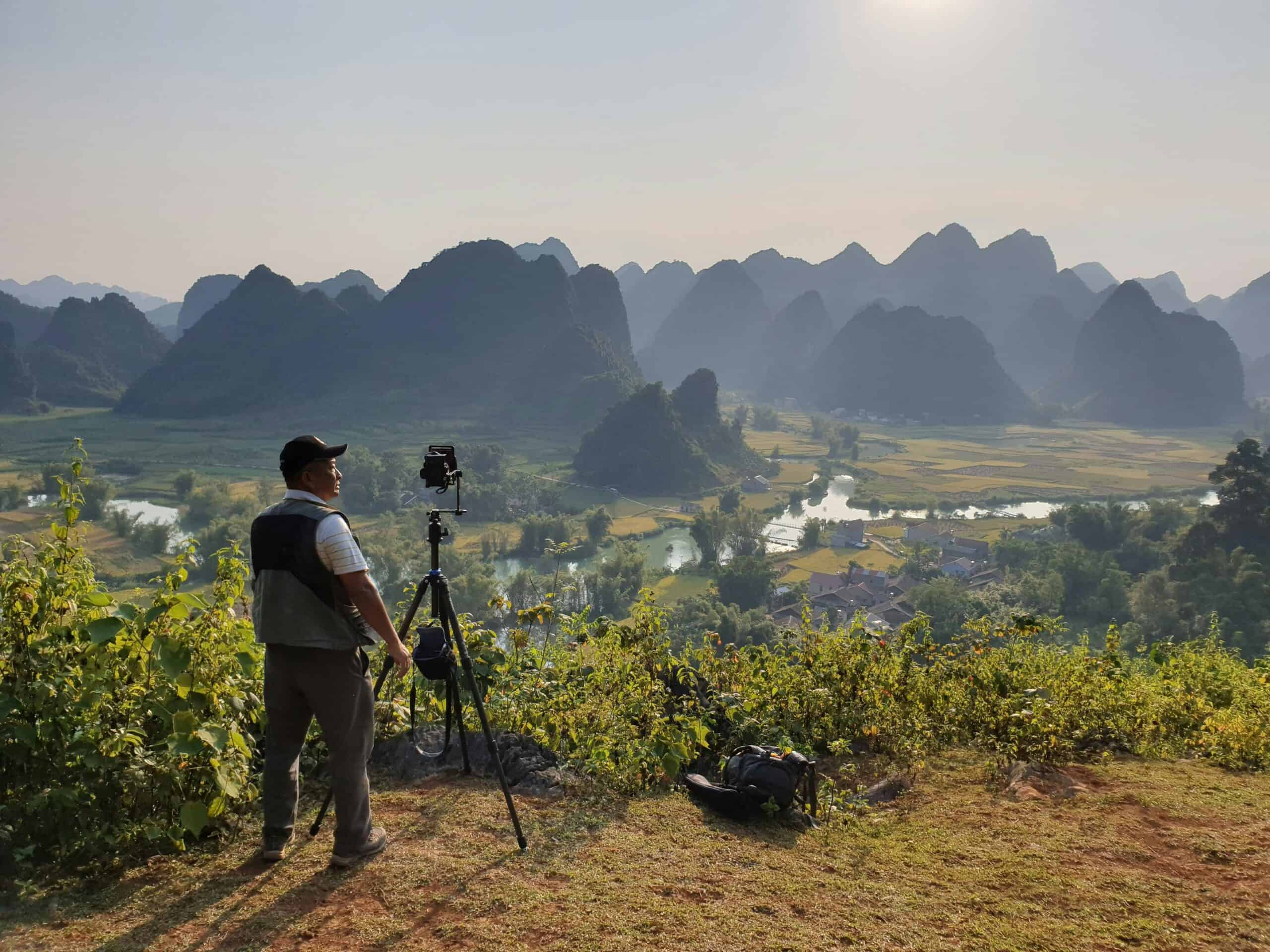
Evaluate Shooting Environment
Look for fast-changing light, moving people, cars, or trees, and reflective surfaces such as glass or polished floors. With a circular fisheye, the sun or strong lights often end up near the edge of the circle where flare is more likely; try to compose your rotation so the sun hits a shot where you can easily mask or where a sunstar looks pleasing. If shooting through glass, back off 10–30 cm and place the lens as perpendicular as possible; use a black cloth around the lens to reduce reflections. Avoid touching the glass with the lens or hood.
Match Gear to Scene Goals
The Nikon Z8 & Peleng 8mm combo excels when you need speed and coverage. The Z8’s base ISO 64 gives super-clean shadows; ISO 100–400 is effectively noise-free for most outputs, and ISO 800–1600 remains very usable when you need faster shutter speeds in events. A circular fisheye minimizes the shot count and reduces the chance of parallax issues, but remember the extreme projection: straight lines near the edges will bend; that’s fine for 360 delivery but consider viewpoint placement carefully in architectural scenes.
Pre-shoot Checklist
- Power & storage: at least 1–2 spare batteries; format high-speed cards. Z8 has one CFexpress Type B and one UHS‑II SD slot—use simultaneous backup if possible.
- Optics clean: front element of the Peleng shows in every frame; a tiny smear can ruin a sky. Clean sensor and rear element too.
- Tripod & head: bring a leveling base and a panoramic head calibrated for the Peleng’s entrance pupil.
- Safety: check wind loads on rooftops; tether gear when using poles or car mounts; keep bystanders clear of your rotation path.
- Backup workflow: after your first set, shoot a second full round, ideally at a slightly different exposure in case of flicker or motion.
Practical Case Studies
Indoor Real Estate
Work away from near objects (keep 1.5–2 m from walls/furniture) to minimize parallax stress. Level your head precisely so walls remain vertical after stitching. Plan HDR brackets (±2 EV or more) to balance windows and interior lighting.
Outdoor Sunset
Base ISO 64–100, f/8–f/11, and bracket 3–5 frames to protect highlights. Position your rotation so the sun appears in a single frame you can manage in post—use your hand or a flag just outside the frame to shade the front element if needed.
Event Crowds
Use 1/200–1/500 s and ISO 400–1600. Shoot two passes: one fast round for body positions, and a second round where you wait for gaps. You’ll blend/mask people later.
Rooftop/Pole Shooting
Wind is the enemy. Use a sturdy carbon tripod or a properly rated pole with a tether. Keep shutter speed ≥1/250 s. If gusts exceed safe limits, don’t elevate the pole.
Car-Mounted Capture
Only capture when fully stopped and safe. Use vibration-damping mounts and tether the rig. If you must capture in motion, shutter speeds >1/1000 s and high ISO can help, but expect alignment compromises.
Essential Gear & Setup
Core Gear
- Panoramic head: A rotator and two-axis head let you place the lens’s entrance pupil (nodal point) over the rotation axis to prevent parallax—crucial when objects are close.
- Stable tripod with leveling base: A leveling base speeds setup and keeps your rotation perfectly horizontal, reducing roll corrections later.
- Remote trigger/app: Use the Nikon app or a cable release. For bracketed HDR, use continuous low burst to capture each bracket set quickly.
Optional Add-ons
- Pole or car mount: Always tether; watch wind and vibration; don’t overextend beyond manufacturer ratings.
- Lighting aids: Small LED panels or bounced flash (for non-360 deliverables) can lift shadows. For full 360 delivery, be mindful that fixtures will be visible.
- Weather protection: Rain cover and a microfiber cloth. The Peleng’s bulbous front element needs frequent cleaning in mist or sea spray.
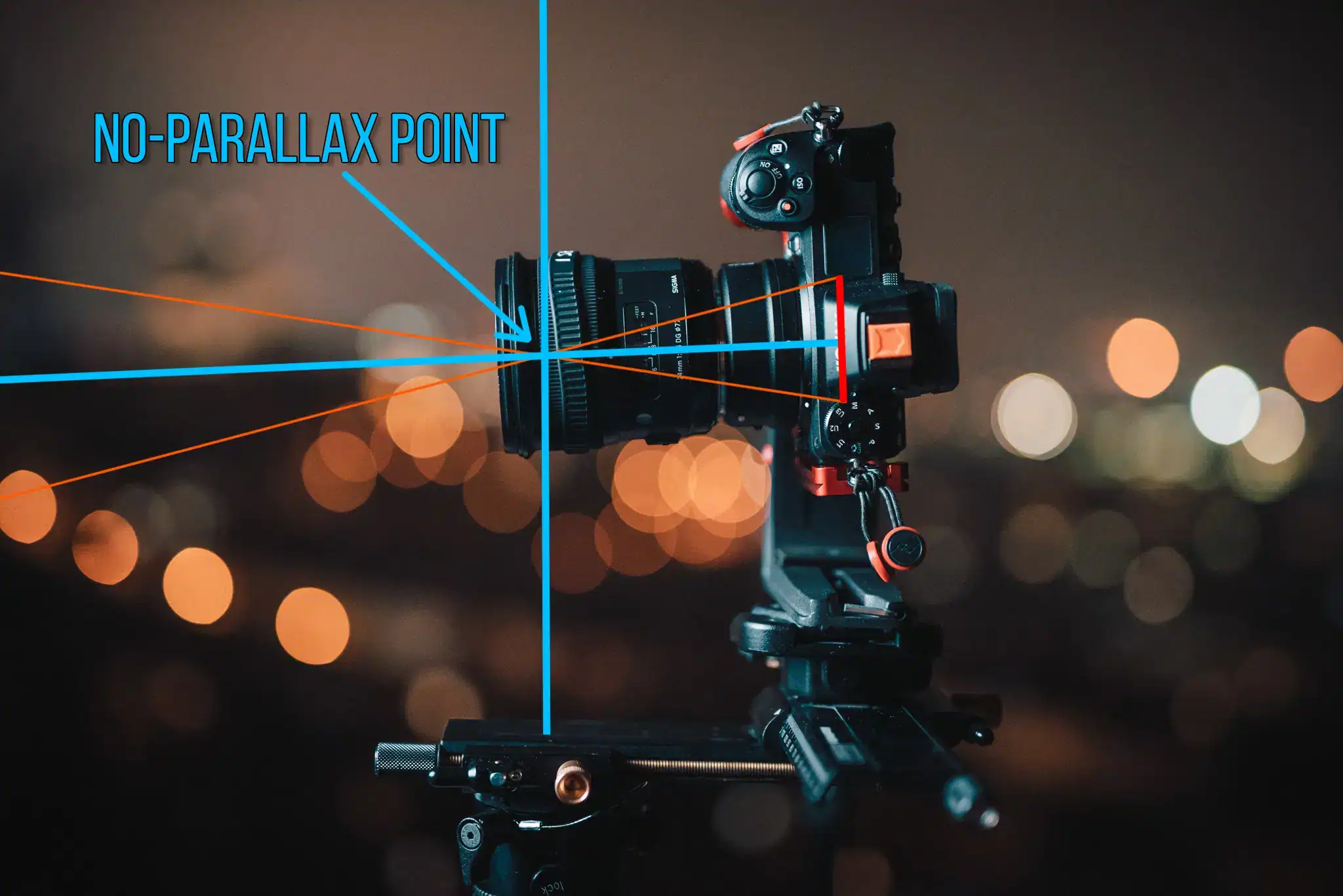
New to nodal alignment? This step-by-step panoramic head tutorial is an excellent deep dive into entrance pupil calibration and rig setup. Panoramic head alignment tutorial
Step-by-Step Shooting Guide
Standard Static Scenes
- Level and align: Level the tripod, then align the Peleng’s entrance pupil over the rotator axis. With a circular fisheye, the entrance pupil is typically close to the front element; confirm by the classic near/far object test and mark the rail for this combo.
- Manual everything: Set Manual exposure and lock White Balance (Daylight outdoors; a measured Custom WB indoors). Disable Auto ISO. On tripod, turn off IBIS to avoid micro-shifts. Set the Z8 to base ISO if possible (64–100).
- Capture sequence:
- 3-around method: yaw 0°, 120°, 240°, plus zenith and nadir if ceiling/floor need clean coverage.
- 4-around method: yaw every 90° with a slight upward pitch (+5–10°) to close the zenith, then shoot a separate nadir.
Use a consistent rotation direction to prevent skipping frames. Check the histogram and keep exposure uniform across all shots.
- Nadir shot: Either shoot a blank floor frame after lifting the rig or use a quick handheld plate to move the tripod aside and shoot the ground from the same entrance pupil position.
HDR / High Dynamic Range Interiors
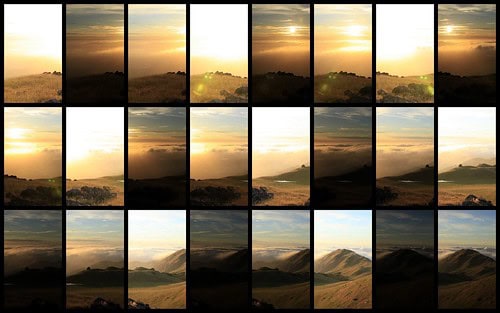
- Bracket ±2 EV (3–5 frames): Start with 3-frame ±2 EV. For extreme contrast (bright windows), capture 5–7 frames up to ±4 EV total range.
- Lock WB and exposure per angle: Keep settings fixed while rotating. Avoid auto anything to eliminate flicker and color shifts across brackets.
- Shutter strategy: On Z8, Continuous Low and Auto Bracketing make quick, steady sequences. Use a 2 s exposure delay if you see any vibration.
Low-Light / Night Scenes
- Exposure: f/4–f/5.6, 1/30–1/60 s on tripod, ISO 400–1600. The Z8 stays clean to ISO 800; ISO 1600 is still very usable for 360 outputs. If star fields are visible, keep shutter short enough to avoid trails.
- Stability: IBIS off on tripod; remote trigger; consider Mirror-up equivalent delay (the Z8 uses electronic shutter, but the delay helps stabilize any tripod movement).
- Flicker: For LED/fluorescent interiors, enable flicker reduction to 50/60 Hz to avoid banding with the Z8’s electronic shutter.
Crowded Events
- Two-pass method: First pass fast at 1/200–1/500 s to freeze motion. Second pass, wait for gaps in the crowd. You’ll mask and blend for a cleaner floor and fewer duplicates.
- Mind your footprint: Keep the tripod tucked in. With a circular fisheye you’ll see your tripod and legs—plan a clean nadir shot for easy patching.
Special Setups (Pole / Car / Drone)
- Pole: Tether everything. Limit extension in wind. Use 1/250–1/500 s and ISO 400–1600 to keep frames sharp.
- Car: Only capture when parked safely. If capturing at low speed for a special effect, increase shutter to 1/1000 s and expect more stitching work.
- Drone: The Z8 is heavy—only for specialized rigs. Consider a lighter mirrorless or native 360 cam for aerials.
Recommended Settings & Pro Tips
Exposure & Focus
| Scenario | Aperture | Shutter | ISO | Notes |
|---|---|---|---|---|
| Daylight outdoor | f/8–f/11 | 1/100–1/250 | 64–200 | Lock WB (Daylight). Stop down for edge sharpness. |
| Low light/night | f/4–f/5.6 | 1/30–1/60 (tripod) | 400–800 (up to 1600) | IBIS off on tripod; use remote; watch LED flicker. |
| Interior HDR | f/8 | Bracket ±2 EV (3–5 frames) | 100–400 | Balance windows and lamps; keep WB fixed. |
| Action / crowds | f/5.6–f/8 | 1/200+ | 400–1600 | Freeze motion; consider two-pass capture. |
Critical Tips
- Focus: Manual focus slightly before infinity or set the hyperfocal distance at f/8. Use magnified live view + peaking on the Z8 to confirm mid-distance sharpness.
- Nodal calibration: With the Peleng 8mm, expect the entrance pupil to sit near the front element. Use near/far alignment tests and mark your rail for repeatable setup.
- White balance: Lock it. AWB changes between frames cause color banding after stitching, especially at dusk or under mixed lighting.
- RAW vs JPEG: Shoot RAW for maximum DR and clean HDR merges. JPEG previews can help judge exposure, but don’t rely on in-camera processing for final output.
- IBIS and electronic shutter: Turn off IBIS on a tripod. The Z8’s electronic shutter is silent and shock-free; enable flicker reduction around problematic lighting.
- Z8 backups: Use dual slot backup (RAW to CFexpress, JPEG to SD, for example). Consider making an additional safety rotation at a different exposure.
Stitching & Post-Processing
Software Workflow
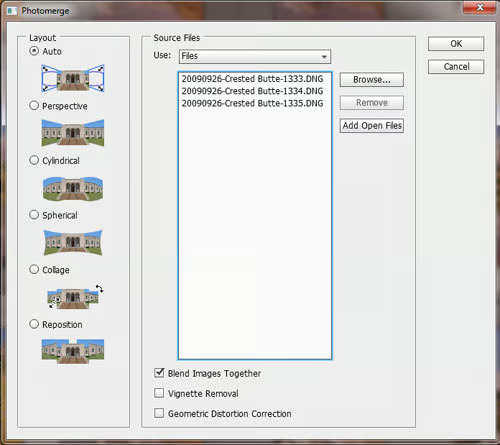
For a circular fisheye, stitching is straightforward in PTGui or Hugin. In PTGui, set Lens Type = Circular Fisheye and FOV ≈ 180°. Load your images (or bracketed stacks), check that yaw angles are roughly correct (0/120/240 or 0/90/180/270), and run Align Images. For HDR, either pre-merge brackets in your RAW tool or feed stacks directly to PTGui’s HDR workflow. Typical overlaps for fisheye: ~25–30%. For rectilinear lenses you’d need more frames and ~20–25% overlap; the Peleng saves you time here. For a review of PTGui’s strengths and why pros use it, see this overview. PTGui professional review
Cleanup & Enhancement
- Nadir patch: Use PTGui’s Viewpoint correction if you shot an offset nadir. Otherwise patch with Photoshop/AI content-aware tools after export.
- Color and noise: Apply consistent white balance and contrast. Use luminance NR sparingly; the Z8 files handle it well even at ISO 1600.
- Leveling: Correct roll/yaw/pitch so the horizon is neutral. Ensure verticals are straight in architectural tours.
- Export: For VR platforms, export equirectangular JPEG/PNG (usually 8000–12000 px width). Keep a master .ptgui/.pto file for later edits.
If you’re new to DSLR/mirrorless 360 workflows, this step-by-step guide from Meta/Oculus explains the overall capture-to-stitch pipeline clearly. DSLR/Mirrorless 360 photo workflow
Video: Watch a Full Pano Head & Stitching Walkthrough
Sometimes seeing the process is easiest. The following video covers key setup and stitching concepts you’ll use with the Z8 + Peleng workflow.
For broader buying and setup considerations (pano heads, lenses, bodies), this high-level guide is also useful. Virtual tour gear & workflow FAQ
Disclaimer: interfaces and features change; check each software’s latest documentation.
Useful Tools & Resources
Software
- PTGui panorama stitching
- Hugin (open source)
- Adobe Lightroom / Photoshop
- AI tripod/nadir removal tools (Content-Aware Fill, generative fill)
Hardware
- Panoramic heads: Nodal Ninja, Leofoto, and similar two-axis systems
- Carbon fiber tripods with leveling bases
- Wireless remote shutters
- Pole extensions and rated car mounts with safety tethers
Disclaimer: product names provided for search convenience; confirm specs and compatibility with official sources.
Common Mistakes & How to Avoid Them
- Parallax error: The most common cause of stitching seams. Align the entrance pupil precisely and avoid nearby objects when possible.
- Exposure flicker: Shooting in auto exposure or auto WB. Use Manual exposure and locked white balance.
- Tripod shadows/gear in frame: Always plan a nadir capture and patch later.
- Ghosting from moving subjects: Shoot faster shutters and use masking/blending in post.
- Flare and veiling contrast: Shade the front element, avoid direct light sources near the lens edge when possible, and bracket to protect highlights.
- High ISO noise at night: Keep ISO ≤1600 when you can, and favor longer shutter on a stable tripod.
Frequently Asked Questions
-
Can I shoot handheld panoramas with the Nikon Z8?
Yes, but expect more stitching cleanup. Use the 4-around method at 1/200–1/500 s and ISO 400–1600. Keep elbows in, rotate your body around the lens as much as possible, and shoot a backup pass. A leveled tripod with a pano head is still the best practice for critical work.
-
Is the Peleng 8mm f/3.5 wide enough for single-row 360s?
Absolutely. It’s a circular fisheye on full frame (≈180° FOV). You can do 3-around + zenith + nadir, or 4-around with a slight up-tilt and a separate nadir. That’s a very low shot count compared to rectilinear lenses.
-
Do I need HDR for interiors with bright windows?
Usually, yes. Even with the Z8’s strong dynamic range, interiors with sunlit windows exceed a single exposure. Bracket ±2 EV (3–5 frames) so you can recover viewable exteriors and clean interior shadows.
-
How do I avoid parallax issues with this lens?
Calibrate the entrance pupil on your pano head: align a near object against a far object and slide the rail until there’s no relative shift during rotation. Mark that rail position and reuse it. Keep at least 1.5 m distance to near objects when possible.
-
What ISO range is safe on the Z8 in low light?
For tripod-based panoramas, aim for ISO 64–400. If you need speed (crowds, wind, pole use), ISO 800–1600 still produces clean 360 outputs. Expose to protect highlights and reduce shadow lift noise.
-
Can I save a pano setup as a custom mode?
The Z8 supports custom banks. Save a “Pano” bank with Manual exposure, AWB off (fixed WB), Auto ISO off, IBIS off, and your typical aperture/shutter—this speeds up field setup dramatically.
-
How can I reduce flare with a circular fisheye?
Shade the lens with your hand or a small flag just outside the circular frame. Slightly adjust rotation so the sun falls into a single frame you can mask. Keep the front element spotless.
-
What panoramic head should I use?
Any solid two-axis head with fore–aft and left–right rail adjustments works. Look for click-stop rotators (90°/120°), an Arca-compatible system, and a leveling base. Nodal Ninja and Leofoto kits are popular and reliable.
Safety, Limitations & Honest Notes
The Peleng 8mm is an older optical design: sample variation, purple fringing, and flare can appear. Stopping down to f/8–f/11 helps. The Z8 uses an electronic shutter only; under certain LED/fluorescent lights you can see banding—use flicker reduction (50/60 Hz) and test a short bracket before committing. On rooftops and poles, wind can topple gear—tether everything, weigh down the tripod, and abandon the shot if conditions become unsafe. Finally, use the Z8’s dual slots for immediate in-camera backup, and consider a second full capture round as insurance.
What a Finished 360 Can Look Like
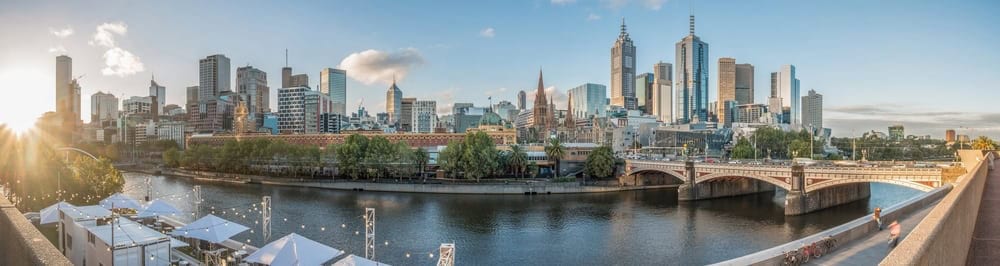
Want to perfect head setup, capture technique, and leveling for “seamless” results? This practical primer covers the fundamentals many pros use daily. Panoramic head setup principles