
Why This Camera & Lens Are Great for Panoramas
If you want to learn how to shoot panorama with Nikon Z8 & Canon RF 15-35mm f/2.8L IS USM, you’re pairing a pro-grade full-frame body with a world-class ultra-wide rectilinear zoom. The Nikon Z8 delivers a 45.7MP stacked BSI sensor (approx. 4.35 µm pixel pitch), exceptional dynamic range at base ISO 64, and fast, silent all-electronic shutter—ideal traits for high-resolution 360 photos. The Canon RF 15-35mm f/2.8L is known for crisp central sharpness, excellent contrast, and consistent performance across the zoom range, making it a strong rectilinear choice for multi-row panoramas.
- Use the Nikon Z8 with a comparable Nikon Z-mount lens (e.g., NIKKOR Z 14-24mm f/2.8 S or Z 14-30mm f/4 S).
- Use the Canon RF 15-35mm on a Canon RF-mount body for the capture, then stitch files as usual.
All technique and settings below apply directly to a full-frame rectilinear 15–35mm workflow; just adapt to the lens you can mount on your Z8.
Rectilinear ultra-wides like a 15–35mm require more frames than a fisheye but yield straighter lines and more natural architecture rendering—ideal for real estate, interiors, and cityscapes. Combined with a properly calibrated panoramic head, the Z8’s high resolution gives you seamless gigapixel results and plenty of cropping latitude for virtual tours.
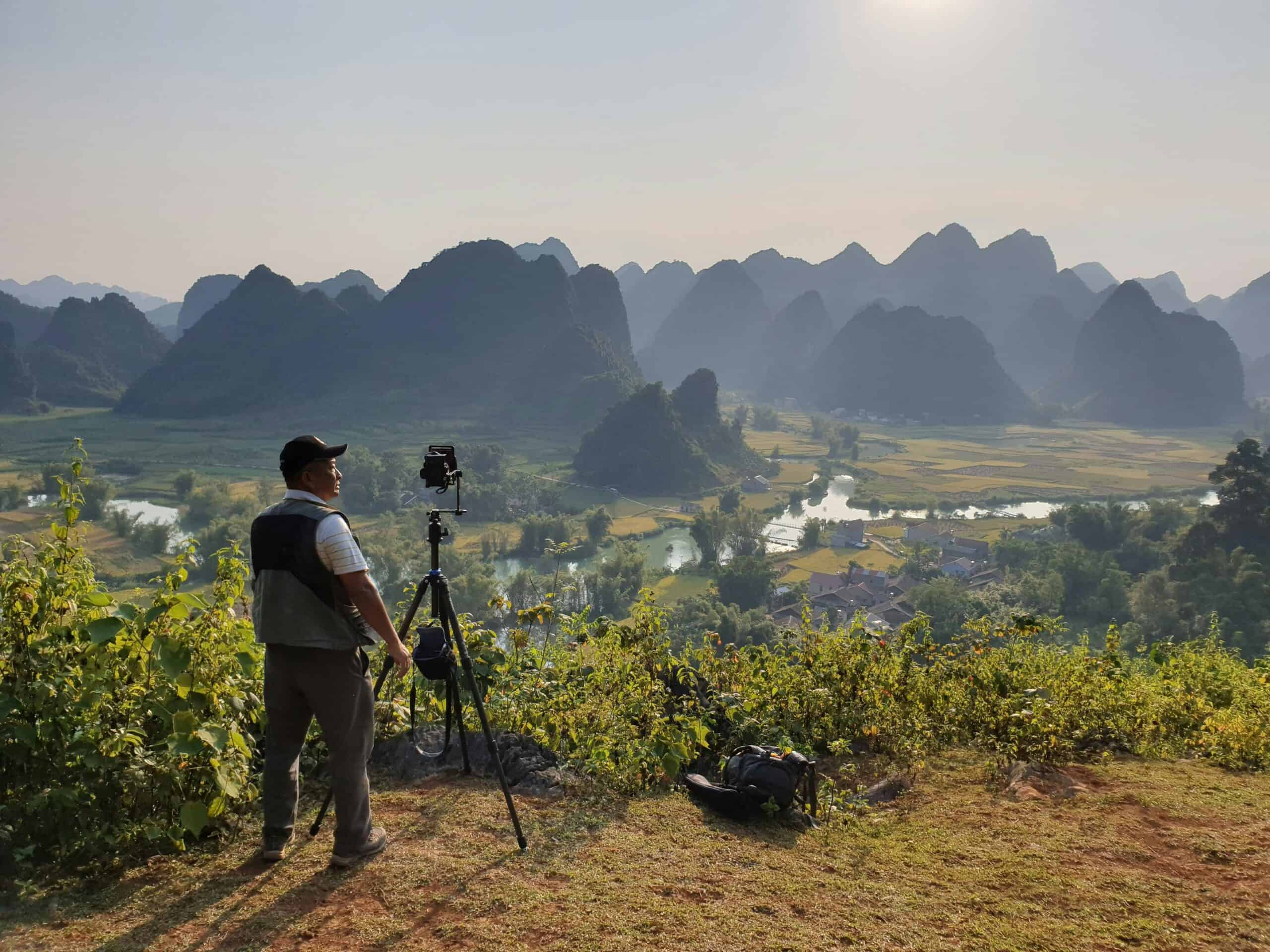
Quick Setup Overview
- Camera: Nikon Z8 — Full-frame 45.7MP stacked BSI CMOS, base ISO 64, excellent DR (~14+ stops at base), 5-axis IBIS, electronic shutter only (minimal rolling shutter, great for silent pano work).
- Lens: Canon RF 15-35mm f/2.8L IS USM — Rectilinear UWA zoom; sharpest around f/5.6–f/8; mild barrel distortion and vignetting at 15mm (correct easily in post). Note: not mountable on Z8; use equivalent Z-mount glass for a similar field of view.
- Estimated shots & overlap (full 360×180, rectilinear, ~30% overlap):
- At 15mm FF: 6 around at +30°, 6 around at 0°, 6 around at −30° + zenith + nadir ≈ 20 frames.
- At 24mm FF: 8–10 around at +35°, 8–10 around at 0°, 8–10 around at −35° + zenith + nadir ≈ 28–32 frames.
- At 35mm FF: 12–16 around per row x 3–4 rows + zenith + nadir ≈ 50–66 frames (for gigapixel detail).
- Difficulty: Intermediate (rectilinear multi-row panos require careful nodal alignment and consistent exposure).
Planning & On-Site Preparation
Evaluate Shooting Environment
Before you deploy the tripod, study light direction, cloud speed, and sources of flicker (LED signs, office lighting). For interiors with glass and mirrors, keep the camera well-centered and square to reduce perspective distortion, and watch for reflections of your tripod. If shooting through glass, put the lens close (1–2 cm) to reduce reflections and flare. For sunsets and cityscapes, plan to bracket for HDR if the scene exceeds dynamic range.
Match Gear to Scene Goals
The Nikon Z8’s base ISO 64 and strong dynamic range give clean shadows for interior HDR and dusk scenes. It handles ISO 100–400 effortlessly; ISO 800–1600 remains very usable for night panoramas on a tripod. A rectilinear 15–35mm helps you preserve straight architectural lines, but you’ll shoot more frames than with a fisheye. If time is limited or wind is strong, zoom toward 15–20mm to reduce the number of rows while maintaining quality. For fast-moving events, consider a shorter sequence (single-row cylindrical) to minimize ghosting.
Pre-shoot Checklist
- Charge batteries and carry spares; high-MP cameras drain faster when bracketing.
- Use fast, high-capacity cards; 45.7MP RAW + brackets adds up quickly.
- Clean lens and sensor; dust becomes very visible across stitched seams.
- Level the tripod and confirm pano head calibration for the lens focal length.
- Safety: if on rooftops or near traffic, use a safety tether; avoid overextending center columns in wind.
- Backup plan: shoot a second full pass—small insurance against stitching gaps or accidental bumps.
Essential Gear & Setup
Core Gear
- Panoramic head: A proper pano head lets you rotate around the lens’s no-parallax point (entrance pupil) to eliminate parallax errors. Calibrate once per focal length and mark the rail scales for quick field setup. This is critical for rectilinear ultra-wides and interior work with nearby objects.
- Stable tripod with leveling base: A leveling base speeds setup and keeps rows aligned, saving time in post.
- Remote trigger/app: Use Nikon’s app or a wired remote. Set a short self-timer or exposure delay to prevent micro-shake.
Optional Add-ons
- Pole or car mount: For elevated or vehicle-mounted panoramas, use safety tethers and ensure all clamps are rated for dynamic loads. Avoid high winds; the leverage on poles can be dangerous.
- Lighting aids: Small LED panels for interiors to fill shadows (avoid mixed CCTs). Always lock white balance when you add lights.
- Weather protection: Rain covers, lens hoods, and microfiber cloths for drizzle or sea spray.
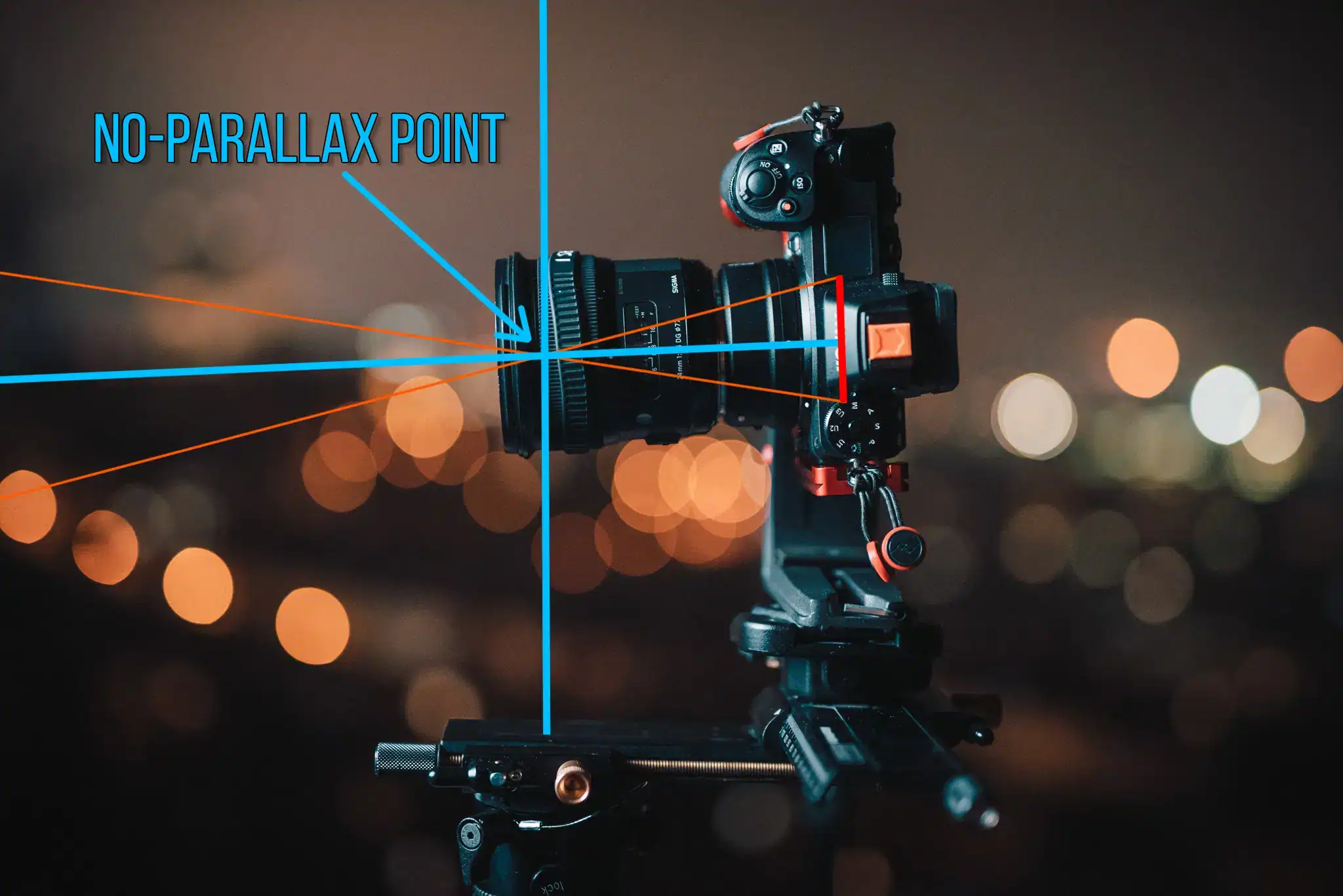
For a deeper dive into pano head setup and alignment, see this practical tutorial on panoramic head technique. Panoramic head setup guide
Step-by-Step Shooting Guide
Standard Static Scenes
- Level and align: Level your tripod, then align the pano head’s vertical axis. Set the rail positions you previously calibrated for your focal length (e.g., 15mm).
- Manual exposure and WB: Set Manual mode. Meter for midtones and protect highlights; lock white balance (Daylight for sun, Tungsten for warm interiors) to avoid color shifts between frames.
- Focus and stabilize: Use manual focus. Focus at or near the hyperfocal distance for your focal length/aperture. On a tripod, turn off IBIS and lens IS to avoid micro-jitters.
- Capture sequence: Shoot your planned rows with 25–35% overlap. Keep cadence consistent (e.g., every 60° for 6-around). Avoid bumping the rig.
- Nadir frame: After finishing, tilt down and take a clean nadir shot for tripod/footprint patching.
HDR / High Dynamic Range Interiors
- Bracket per view: Use ±2 EV (3 to 5 frames) to cover bright windows and dark corners. Keep aperture constant; vary shutter speed.
- Consistency: Lock WB and focus; use identical bracket settings across all positions for painless stitching.
- Silent shutter and flicker: The Z8’s electronic shutter is quiet; enable anti-flicker if you notice banding with LEDs.
Low-Light / Night Scenes
- Exposure strategy: Use f/4–f/5.6, longer shutter (1–4 s on tripod), and keep ISO at 100–400 for maximum quality. If wind is strong, raise ISO to 800–1600 and shorten shutter to reduce blur.
- Vibration control: Use exposure delay or a 2–5 s timer. A weight on the tripod hook helps in wind.
- Color cast control: Lock WB (e.g., 3200–4000K for mixed city lights) to keep colors consistent across frames.
Crowded Events
- Double pass: First pass for base coverage; second pass to catch gaps in movement. You’ll mask people in post.
- Faster shutter: Use 1/200+ with ISO 400–800 to freeze motion. Accept a slight noise increase for cleaner edges.
- Masking plan: In PTGui or similar, mark moving people as “exclusive” to one frame to prevent ghosting.
Special Setups (Pole / Car / Drone)
- Safety first: Use redundant clamps and a tether. Never extend a pole near power lines. Balance your rig and test slowly.
- Wind and vibration: Shorten exposure times; use higher ISO (400–1600) and shoot fewer frames at a wider focal length (e.g., 15–18mm) to reduce rotation time.
- Car-mounted: Park safely, engine off to reduce vibration, and avoid long exposures on flexible mounts.
Recommended Settings & Pro Tips
Exposure & Focus
| Scenario | Aperture | Shutter | ISO | Notes |
|---|---|---|---|---|
| Daylight outdoor | f/8–f/11 | 1/100–1/250 | 100–200 | Lock WB (Daylight); prioritize edge-to-edge sharpness |
| Low light/night | f/4–f/5.6 | 1/30–4 s (tripod) | 100–800 (up to 1600) | Use exposure delay or remote; minimize wind effects |
| Interior HDR | f/8 | Bracket ±2 EV | 100–400 | Keep WB locked and aperture constant across brackets |
| Action / moving subjects | f/5.6–f/8 | 1/200+ | 400–800 | Shorter shutter to freeze motion; plan to mask |
Critical Tips
- Manual focus at hyperfocal: At 15–20mm, f/8 usually covers from ~1 m to infinity on full-frame. Use focus peaking to confirm.
- Nodal alignment matters: Calibrate the entrance pupil for each focal length on your pano head. Mark rails once done to speed field setup.
- Lock white balance: Avoid Auto WB—mixed lighting will shift hue across frames and complicate stitching.
- Shoot RAW: Maximum latitude for HDR merges, color correction, and vignette/distortion fixes.
- Stabilization off on tripod: Disable IBIS and lens IS; they can introduce tiny shifts between frames.
- Z8 silent advantages: Use electronic shutter and exposure delay for vibration-free captures; enable anti-flicker under problematic LEDs.
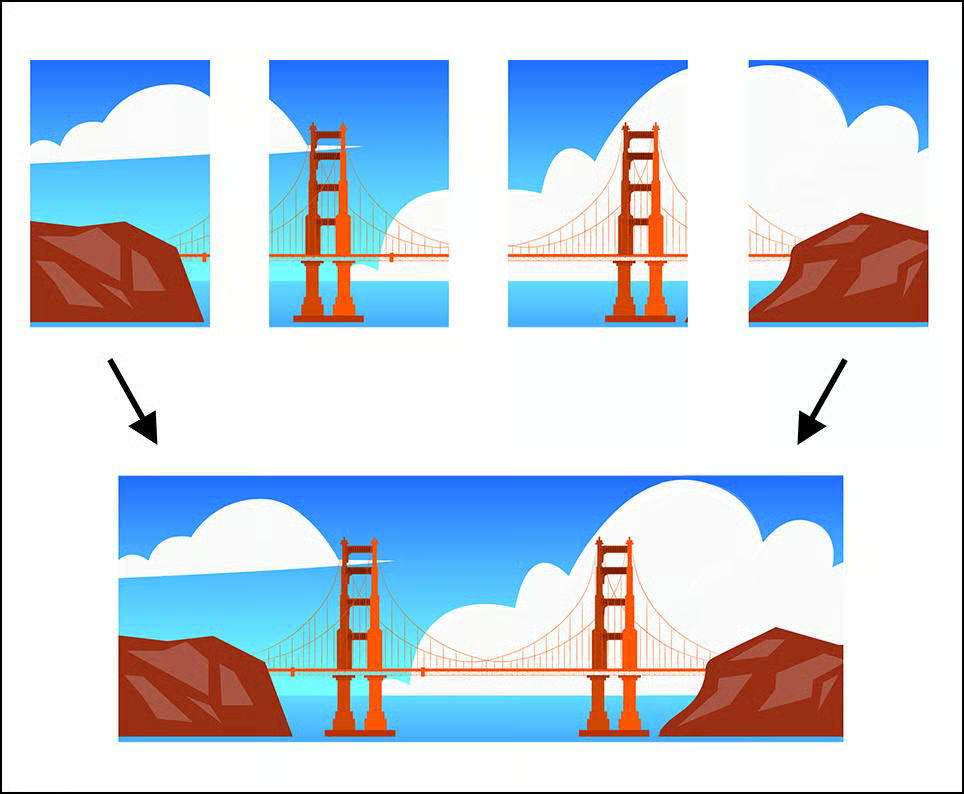
Stitching & Post-Processing
Software Workflow
Import RAWs into your editor to apply global white balance, lens correction, and basic tone adjustments consistently. Export 16-bit TIFFs (or stitch from RAW where supported), then assemble in PTGui, Hugin, or similar. Rectilinear UWA sequences need careful optimization (especially multi-row) but reward you with straight lines and natural geometry. Aim for ~25–35% overlap. For reference and advanced control-point workflows, PTGui is widely regarded among professionals. Why PTGui excels for complex panoramas
Cleanup & Enhancement
- Nadir patch: Use a dedicated nadir shot to replace tripod footprints. Many pano tools support viewpoint correction; otherwise patch in Photoshop or AI-based tools.
- Color harmony: Match the look across rows; apply gentle HSL tweaks. Remove color casts from mixed lighting with selective WB adjustments.
- Noise reduction: Night panos benefit from masked noise reduction (preserve texture on buildings and foliage).
- Horizon leveling: Use vertical lines and horizon tools to correct roll/yaw/pitch; set a strong rectification prior to export.
- Export for VR: Save as 2:1 equirectangular JPEG/TIFF. Common sizes: 12,000×6,000 (12K) or 16,384×8,192 (16K) for high-quality tours.
For general 360 photo stitching principles with mirrorless/DSLR rigs, this guide is a solid overview. DSLR/Mirrorless 360 workflow overview
Useful Tools & Resources
Software
- PTGui panorama stitching
- Hugin (open-source)
- Adobe Lightroom / Photoshop
- AI tripod/nadir removal tools
Hardware
- Panoramic heads (Nodal Ninja, Leofoto)
- Carbon fiber tripods and leveling bases
- Wireless remote shutters
- Pole extensions / vehicle mounts (with tethers)
Disclaimer: Brands above are examples. Always verify specifications and compatibility on official pages.
If you’re planning super-high-resolution spherical output, check this reference on angular resolution and coverage to optimize your shot count per focal length. DSLR spherical resolution guidelines
Common Mistakes & How to Avoid Them
- Parallax error: Always rotate around the no-parallax point. Calibrate and mark rail positions for each focal length.
- Exposure flicker: Use Manual mode with locked WB. Don’t let auto ISO or Auto WB vary across frames.
- Insufficient overlap: Maintain 25–35% overlap. In wind, add a bit more to help the stitcher.
- Tripod shadows or footprints: Capture a dedicated nadir shot and patch in post.
- Noise at night: Keep ISO modest (100–800, up to 1600) and favor longer exposures on stable support.
- Rushing rows: Missed frames are painful. Shoot a second pass as a safety net before you pack up.
Real-World Scenarios & Field Advice
Indoor Real Estate
Use 15–18mm for fewer frames and straighter walls. Level the rig carefully and bracket ±2 EV. Turn off ceiling fans and ask people to pause. Lock WB (e.g., 4000K) to prevent mixed-light color shifts. Shoot a second sequence in case a bracket is missed.
Outdoor Sunset Cityscape
Begin as the sun touches the horizon. Shoot one baseline pass, then a second pass a few minutes later for the sky. Blend the sky from one pass with the city from the other to control dynamic range and reduce movement in lights and traffic.
Event Crowds
Pre-visualize seams away from key subjects. Use faster shutter (1/200–1/400) with ISO 400–800. Do two passes; mask people later. Keep gear tight—rotational play causes alignment headaches.
Rooftop / Pole Shooting
Attach a tether to the pole/tripod and your belt or railing. Keep exposures short to beat sway. Use wider focal lengths (15–20mm) and fewer frames per row to reduce time aloft. Never shoot near edges without proper safety measures.
Car-Mounted Capture
Park in a safe area. Turn off the engine. Use a low-profile mount and keep shutter times short. Expect to clean up small vibrations in post; consider deghosting features during stitching.
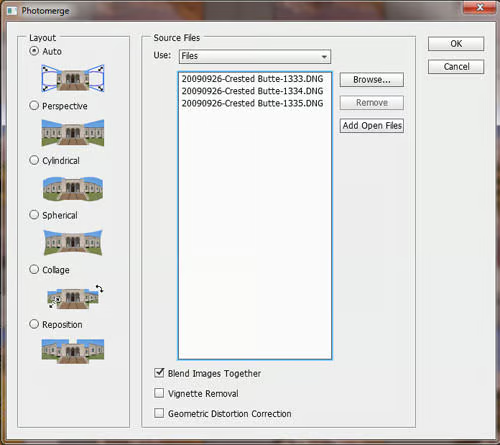
For more practical Q&A on DSLR/virtual tour lenses and techniques, this resource is helpful. DSLR virtual tour lens and workflow Q&A
Frequently Asked Questions
- Can I shoot handheld panoramas with the Nikon Z8?
Yes, for simple single-row cylindrical panos, especially outdoors with fast shutter speeds. For full 360×180 or interiors with nearby objects, use a tripod and panoramic head to avoid parallax and stitching artifacts.
- Is the Canon RF 15-35mm f/2.8L wide enough for single-row 360?
For a full spherical 360×180, a single row at 15mm rectilinear typically won’t cover zenith and nadir cleanly. You’ll need multi-row (e.g., +30°, 0°, −30°) plus dedicated zenith and nadir shots. For cylindrical panos (no vertical coverage), 6–8 frames around at 15–18mm can work.
- Do I need HDR for interiors with bright windows?
Often yes. Bracket ±2 EV (3–5 frames) to preserve window highlights and interior shadows. Keep WB and aperture locked across the entire sequence for consistent stitching.
- How do I avoid parallax issues with an ultra-wide zoom?
Use a calibrated panoramic head. Find the entrance pupil for each focal length you use and mark the rail settings. Keep your subject distance consistent and avoid moving the tripod between rows.
- What ISO range is safe on the Z8 in low light?
On a tripod, aim for ISO 100–400 whenever possible. For wind or people, ISO 800–1600 is still quite clean. Above ISO 3200, noise increases; bracket and blend rather than pushing ISO too high.
- Can I store pano settings as a custom mode?
Yes. Assign a custom bank with Manual exposure, fixed WB, RAW, IBIS off (for tripod), and your preferred focus and drive settings. You’ll get up and running faster on location.
- What’s the best tripod head for this setup?
A dedicated panoramic head with fore–aft and lateral rail adjustment (e.g., Nodal Ninja, Leofoto) offers precise entrance pupil alignment. For multi-row, choose a rotator with click-stops and a vertical arm to tilt between rows.
- Can I actually mount the RF 15-35 on my Z8?
No. As of 2025 there’s no functional RF-to-Z adapter that preserves electronic control. Use a Nikon Z-mount UWA (like Z 14-24/2.8 S) on the Z8, or use the RF 15-35 with a Canon RF body.
Further Learning
Best practices evolve. For additional perspectives on technique and tool choice, see this community discussion of 360 panorama methods. Techniques to take 360 panoramas