Why This Camera & Lens Are Great for Panoramas
If you’re learning how to shoot panorama with Nikon Z8 & 7Artisans 10mm f/2.8 II Fish-Eye, you’ve picked a capable full-frame combo that balances speed, resolution, and a super-wide field of view. The Nikon Z8 uses a 45.7MP stacked full-frame sensor (8256 × 5504), delivering over 14 stops of dynamic range at base ISO 64 and excellent highlight headroom—ideal for high-contrast skies and window-lit interiors. The stacked sensor architecture and fast readout also reduce rolling shutter when panning and provide crisp 14-bit RAW files for smooth tonal blending in HDR panoramas.
The 7Artisans 10mm f/2.8 II Fish-Eye is a manual-focus, diagonal fisheye designed for full-frame mirrorless with Z-mount availability. On full-frame, it covers roughly a 180° diagonal field of view, which means fewer shots per 360° capture compared to rectilinear lenses. That saves time on location and lowers the chance of stitch errors in dynamic scenes. Expect strong but predictable fisheye distortion (easily handled by modern stitchers) and good sharpness stopped down to f/5.6–f/8. Chromatic aberration is present toward the edges but manageable in post. Because this lens is fully manual (no electronic contacts), you’ll set aperture and focus directly on the lens and should tell the Z8’s IBIS what focal length you’re using for best stabilization performance.
Quick Setup Overview
- Camera: Nikon Z8 — Full-frame 45.7MP stacked CMOS; base ISO 64; 14-bit RAW; 5-axis IBIS; electronic shutter only.
- Lens: 7Artisans 10mm f/2.8 II Fish-Eye — diagonal fisheye; manual focus and aperture; best sharpness around f/5.6–f/8; minor edge CA.
- Estimated shots & overlap: With a 10mm diagonal fisheye on full-frame, plan 6 shots around (60° yaw steps) + 1 zenith + 1 nadir at ~25–30% overlap. Advanced users can sometimes get by with 5 around in open scenes, but 6 around is safer.
- Difficulty: Easy–Medium (manual focus and nodal point alignment required; fewer shots than rectilinear setups).
Planning & On-Site Preparation
Evaluate Shooting Environment
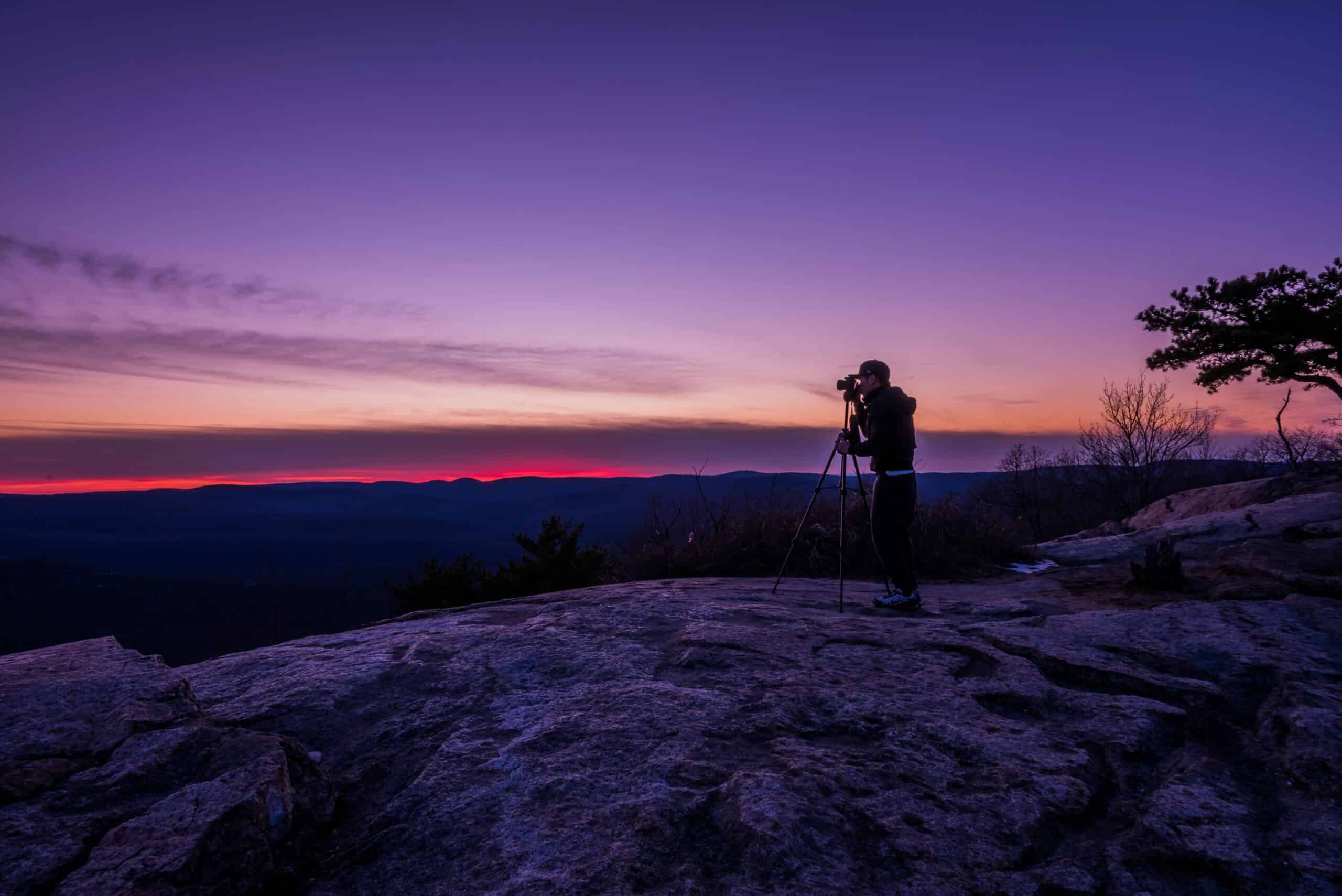
Survey the scene before you deploy the tripod. Look for bright windows, backlit clouds, moving people or vehicles, and reflective surfaces like glass and polished metal that can produce flare and ghosting. If shooting through glass, get the front element as close as safely possible (1–3 cm) to minimize reflections; use a rubber lens hood if available. Outdoors, note wind speed and potential tripod vibration—especially important if you plan to mount on a pole or elevated platform. Avoid pointing the fisheye directly at the sun when possible; recompose slightly and mask later if needed.
Match Gear to Scene Goals
The Z8’s wide dynamic range helps retain highlight detail in skies and recover shadows in interiors. For indoor real estate, the Z8 cleanly supports ISO 64–800, with ISO 1600 still very usable for pano after noise reduction. The 7Artisans fisheye reduces the number of frames—great for busy environments where people and cars move. Distortion is expected, but panorama software handles fisheye projections well. When you need perfectly straight lines (e.g., architecture marketing shots), consider a rectilinear lens and more frames, but for 360 photos and virtual tours, this fisheye is fast and reliable.
Pre-shoot Checklist
- Power & storage: Fully charged battery; fast UHS-II/CFexpress cards; format in-camera.
- Optics & sensor: Clean front element and sensor; keep a microfiber and blower handy.
- Support & head: Level the tripod; verify panoramic head is calibrated to the lens’s nodal point.
- Camera setup: Manual exposure; RAW; fixed white balance; manual focus; IBIS off on tripod.
- Safety: Tether gear on rooftops; weigh down the tripod in wind; avoid pedestrian pathways; be mindful of car mounts and vibrations.
- Backup workflow: Shoot a second full rotation as a safety pass, especially when crowds or wind are factors.
Essential Gear & Setup
Core Gear
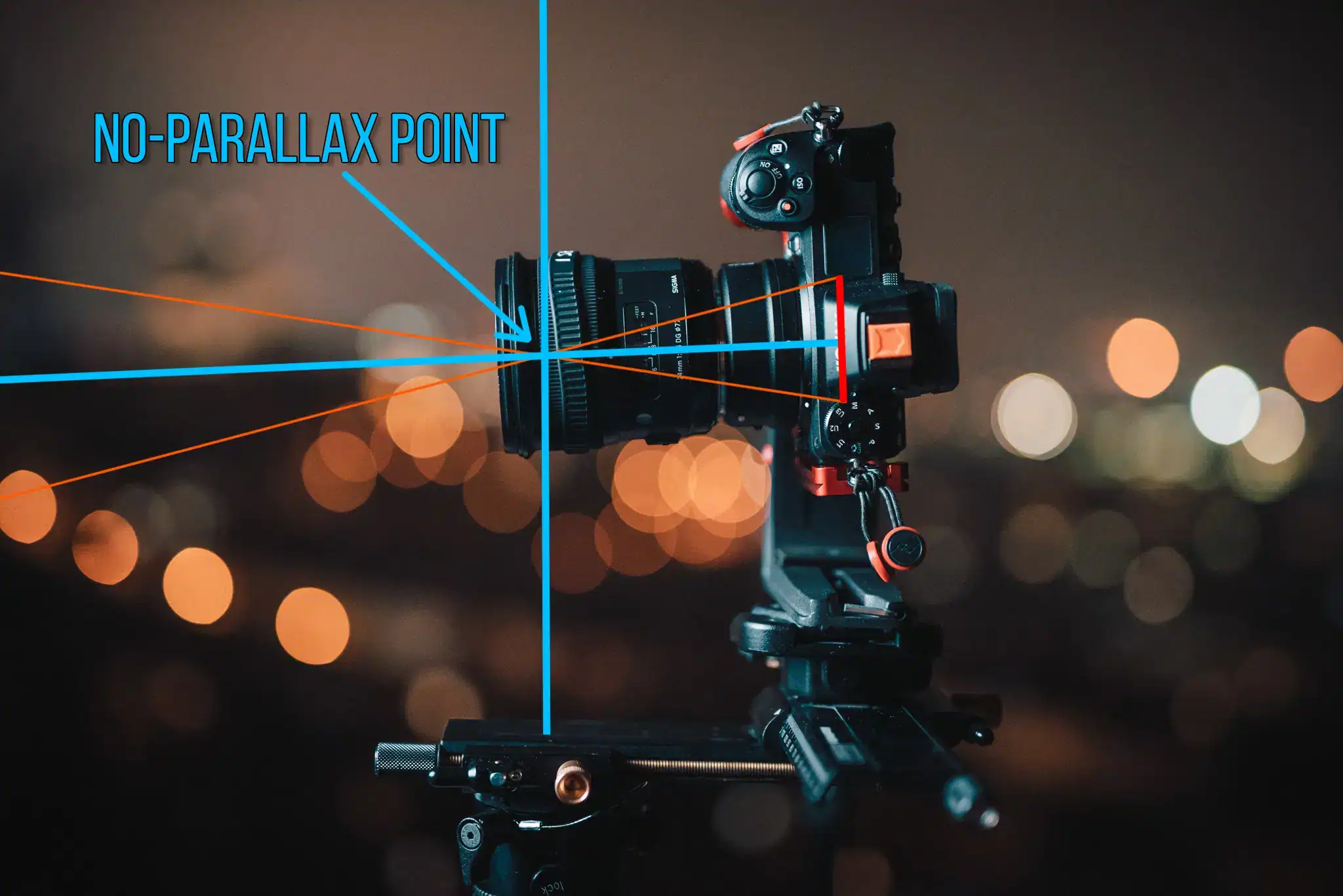
- Panoramic head: A calibrated panoramic head aligns the lens’s entrance pupil (nodal point) over the rotation axes to eliminate parallax. This is critical for stitching near objects (furniture, railings, trees).
- Stable tripod with leveling base: A leveling base ensures your rotation stays level. The fewer corrections your stitcher must make, the sharper the final pano.
- Remote trigger or SnapBridge app: Trigger without touching the camera. The Z8’s electronic shutter is vibration-free, but a hands-off trigger still prevents tripod wobble.
Optional Add-ons
- Pole or car mount: Great for elevated or car-top viewpoints. Use safety tethers, monitor wind loads, and keep speeds low to avoid vibration and loss of gear.
- Lighting aids: Small LED panels or bounced flash for dark interiors—use with care to avoid hotspots.
- Weather protection: Rain covers and silica packs; lens hood to reduce flare when shooting toward strong light sources.
Video: Panoramic Head Setup
Watching a precise pano head setup once can save hours of trial and error. This video demonstrates the alignment basics that apply directly to the Z8 + fisheye workflow.
Step-by-Step Shooting Guide
Standard Static Scenes
- Level and align: Level the tripod and panoramic head. Align the lens’s entrance pupil over both the horizontal and vertical rotation axes. With the 7Artisans 10mm, a practical starting offset is roughly 55 mm forward of the sensor plane—fine-tune using a pair of vertical reference objects at different distances and rotate to check for shift.
- Set exposure and WB: Switch to full Manual mode. Meter for highlights if outdoors (protect the sky), or expose mid-tones and consider bracketing indoors. Lock white balance (Daylight outside; a custom Kelvin value or preset for interiors). Shoot RAW.
- Focus and aperture: Use manual focus. At 10mm, the hyperfocal distance at f/8 is around 0.4–0.5 m; set focus there to keep everything from ~0.25 m to infinity acceptably sharp. Aperture f/5.6–f/8 is the sweet spot for sharpness and manageable diffraction.
- Capture sequence: For full spherical coverage with this lens, capture 6 shots around at 60° yaw intervals. Add a zenith shot (+90°) and a nadir shot (−90°). If the head can’t tilt +90°, shoot an extra upper row at +45–60° (3–4 frames) to cover the zenith.
- Nadir for tripod removal: After the main set, move the tripod slightly and shoot a clean ground plate to patch the tripod area during post.
HDR / High Dynamic Range Interiors
- Bracket exposures: Use 5-frame brackets at ±2 EV (−4, −2, 0, +2, +4) at each position to balance bright windows and interior shadows. The Z8’s 14-bit RAWs blend smoothly without banding.
- Consistency: Keep aperture, focus, and white balance fixed across the entire rotation so HDR merges and stitching remain consistent across images.
- Workflow tip: For speed, shoot the full rotation at the base exposure, then repeat at +2 and −2 if your head doesn’t allow bracket bursts easily without rotation errors.
Low-Light / Night Scenes
- Stability first: Use tripod, IBIS off, remote release, and the Z8’s electronic shutter. Start around f/4–f/5.6, 1/30–1/60 s, ISO 400–1600 depending on ambient light and motion. The Z8 is clean to ~ISO 1600, with ISO 3200 acceptable if you expose to the right and denoise in post.
- Avoid LED banding: Because the Z8 is electronic shutter only, under some LED lighting you may see banding. Enable flicker reduction, try slower shutter speeds (1/50–1/60 s), or slightly adjust frequency-sensitive settings to minimize artifacts.
Crowded Events
- Two-pass strategy: Shoot one fast pass for structure, then wait for gaps in people and reshoot problematic frames. You can mask and blend clean areas in post.
- Faster sequences: The fisheye minimizes frame count—stick to 6 around for a quick capture and fewer ghosting issues.
Special Setups (Pole / Car / Elevated)
- Safety and tethers: Always use safety lines and check all clamps. Limit pole height in strong wind. On car mounts, drive very slowly on smooth surfaces to avoid vibration blur and keep bystanders safe.
- Rotation control: Rotate slower and pause fully at each frame to let vibrations die down before triggering the shot.
Recommended Settings & Pro Tips
Exposure & Focus
| Scenario | Aperture | Shutter | ISO | Notes |
|---|---|---|---|---|
| Daylight outdoor | f/8–f/11 | 1/100–1/250 | ISO 64–200 | Lock WB to Daylight; protect highlights in clouds |
| Low light / night | f/4–f/5.6 | 1/30–1/60 | ISO 400–1600 | IBIS off on tripod; use remote; watch for LED banding |
| Interior HDR | f/8 | Bracket ±2 EV (5 frames) | ISO 64–400 | Balance windows and lamps; keep WB fixed |
| Action / moving subjects | f/5.6–f/8 | 1/200+ | ISO 400–800 | Freeze motion; consider two-pass capture for masking |
Critical Tips
- Manual focus at hyperfocal: At 10mm and f/8, set focus ~0.4–0.5 m for edge-to-edge sharpness.
- Nodal calibration: Start with ~55 mm forward offset from the sensor plane; refine by rotating against near/far verticals until parallax disappears. Mark your rail for quick repeats.
- White balance lock: Avoid auto WB shifts across frames—use Daylight outside or a custom Kelvin indoors.
- RAW over JPEG: 14-bit RAW from the Z8 preserves dynamic range and color for HDR blending and seamless stitching.
- IBIS and focal length: Turn IBIS off on tripod. If you must handhold, set the non-CPU lens focal length to 10 mm so stabilization behaves correctly.
- Electronic shutter care: Under flicker-prone lighting, test a frame for banding and adjust shutter speed or flicker settings.
Stitching & Post-Processing
Software Workflow
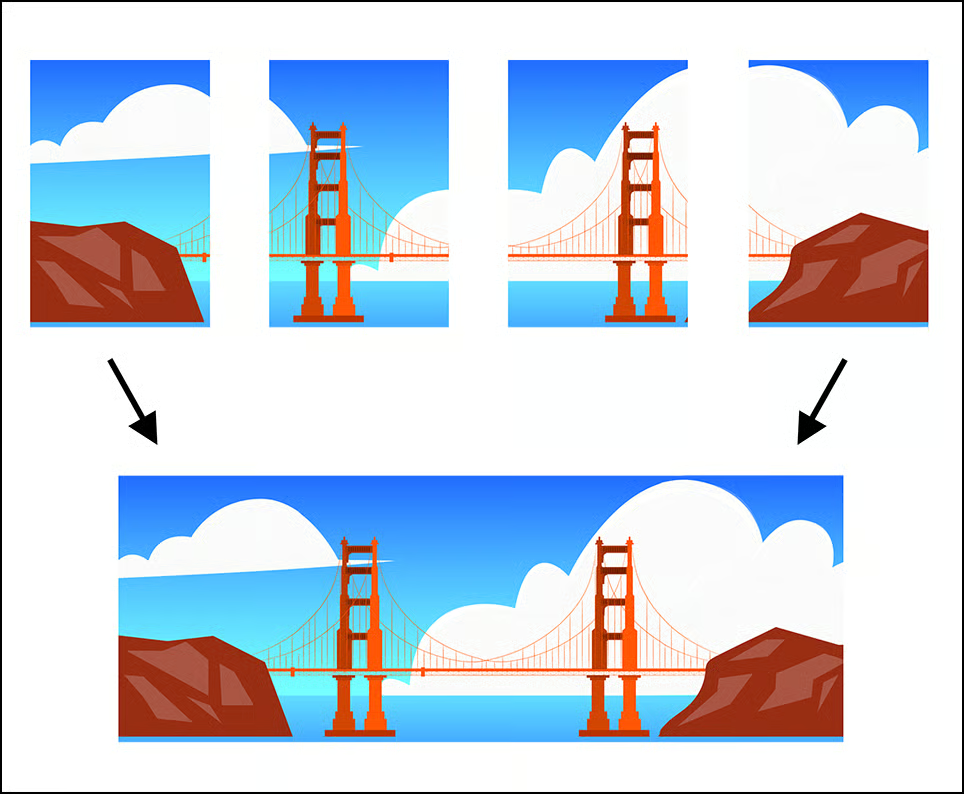
Popular choices include PTGui, Hugin, Lightroom/Photoshop, and Affinity Photo. For diagonal fisheye sets, PTGui in particular excels—its fisheye lens model, control point optimizer, and masking tools make complex stitches easy. With a 10mm fisheye on full-frame, use about 25–30% overlap (6 around + zenith + nadir). Rectilinear lenses often need 20–25% overlap but far more shots. Always review the optimizer’s control points and mask people/objects that move between frames. For a deeper look at PTGui’s strengths, see this hands-on review. PTGui reviewed for professional panoramas
Cleanup & Enhancement
- Nadir patching: Use a clean ground plate shot to patch the tripod. Most stitchers and photo editors let you blend that frame or retouch manually; AI-based tools can help for complex floors.
- Color and noise: Match color across frames, fix CA and vignetting if needed, and denoise ISO 1600–3200 shots carefully to keep textures natural.
- Leveling: Straighten horizon and align roll/pitch/yaw so the viewer’s horizon feels neutral in VR players.
- Export formats: For VR, export equirectangular 2:1 (e.g., 12000×6000 or 16384×8192) as JPEG or 16-bit TIFF for further grading. Follow platform guidelines for maximum resolution and file size.
If you’re new to VR publishing, these platform guidelines explain the DSLR-to-VR workflow with practical file specs. Using a DSLR/mirrorless to shoot and stitch a 360 photo
Useful Tools & Resources
Software
- PTGui panorama stitching and masking
- Hugin open-source panorama suite
- Lightroom / Photoshop for RAW and retouch
- AI tripod removal or content-aware fill for nadirs
Hardware
- Panoramic heads (Nodal Ninja, Leofoto) with precise fore/aft rails
- Carbon fiber tripods for rigidity and portability
- Leveling bases and rotators with clear degree markings
- Wireless remote shutters or phone apps
- Pole extensions/car mounts with safety tethers
For a clear, visual walkthrough of nodal alignment and best practices, this tutorial is an excellent supplement. Panoramic head setup tutorial
Disclaimer: software/hardware names provided for search reference; check official sites for the latest features and documentation.
Common Mistakes & How to Avoid Them
- Parallax error: Always align the entrance pupil; verify with near/far object tests before the real shoot.
- Exposure flicker: Manual exposure and WB across all frames; avoid Auto WB and Auto ISO.
- Tripod shadows and “foot”: Shoot a nadir and patch later; consider shifting the tripod and snapping a clean floor plate.
- Ghosting from movement: Use faster sequences; shoot two passes and mask people and cars in post.
- Noise at night: Keep ISO in check (ideally ≤1600 on the Z8), expose to the right, and use a sturdy support with remote triggering.
- LED banding: Adjust shutter speed and enable flicker reduction on the Z8 when under artificial lighting.
Real-World Case Studies
Indoor Real Estate (Mixed Light)
Set the Z8 to ISO 64–200, f/8, and bracket ±2 EV in 5 frames for each yaw angle. Lock WB to 4000–4500K if warm LEDs dominate, or set a custom Kelvin reading. Use 6 around + zenith + nadir. The fisheye’s fewer frames reduce the chance people walk into a shot. Mask bright windows in PTGui with HDR fusion to preserve view detail.
Outdoor Sunset (High DR)
Sunset scenes demand highlight control. Expose a base frame to keep the sky’s bright edge safe (blinkies off) at ISO 64–100, f/8, then bracket ±2 EV. Rotate quickly during peak color to keep light consistent. The Z8’s 14+ stops of DR at ISO 64 give you clean shadows after merging.
Event Crowds (Speed Over Perfection)
When people are moving everywhere, prioritize speed: 6 quick frames around with the fisheye and one zenith. Skip the nadir initially; come back later for a clean floor plate. In post, mask duplicate people and align masks along edges where overlap is strongest.
Rooftop / Pole Shooting
On a windy rooftop, the fisheye minimizes exposure count. Use ISO 200–400 and 1/125 s or faster to freeze slight pole sway. Keep rotations gentle, and capture a second set as a safety pass. Always tether the rig and stay clear of roof edges.
Car-Mounted Capture
Secure a low-vibration mount and shoot when the car is stationary. Use self-timer or remote to avoid touching the rig. Avoid busy streets; even slight car movement introduces parallax with nearby objects. The fisheye’s broad FOV reduces frame count and time exposed to risk.
Frequently Asked Questions
-
Can I shoot handheld panoramas with the Nikon Z8?
Yes, but expect more stitching corrections, especially near objects. Use the 7Artisans 10mm, IBIS on (set focal length to 10 mm), fast shutter speeds (1/200+), and aim for 8 around for extra overlap. A tripod and pano head still yields far cleaner results.
-
Is the 7Artisans 10mm f/2.8 II wide enough for a single-row 360?
For a full spherical panorama, plan 6 around plus a zenith and nadir. The lens is a diagonal fisheye (not circular), so you still need separate top and bottom coverage. In open scenes, skilled users sometimes complete coverage with 5 around + zenith + nadir, but 6 around is safer.
-
Do I need HDR for interiors with bright windows?
Usually yes. Bracketing ±2 EV over 5 frames per angle captures window detail and interior shadows. The Z8’s 14-bit files blend smoothly with minimal artifacts.
-
How do I avoid parallax issues with this lens?
Calibrate the nodal point on your panoramic head. Start with ~55 mm forward from the sensor plane and fine-tune against near/far verticals until no relative shift appears during rotation. Mark the rail for repeatability.
-
What ISO range is safe on the Z8 in low light?
ISO 64–400 is ideal for maximum DR; ISO 800–1600 remains clean for panoramas. ISO 3200 can work with careful exposure and modern denoising, but bracket when possible to keep ISO low.
-
Can I set up custom modes on the Z8 for pano?
Yes—save a “Pano” mode to U1 with Manual exposure, RAW, fixed WB, manual focus, and IBIS off (for tripod). Save an “HDR Pano” to U2 with auto bracketing ±2 EV and a suitable shutter base for interiors.
-
How do I reduce flare with a fisheye?
Avoid placing intense light sources near the frame edge; shade the lens with your hand (keep it out of frame); slightly recompose and blend later. Clean the front element—smudges amplify flare.
-
Best panoramic head for this setup?
Choose a head with precise fore-aft and vertical rails, degree-marked rotator, and solid clamps. Nodal Ninja and Leofoto offer reliable, travel-friendly options. A leveling base dramatically speeds setup. For fundamentals and pro standards, review this guide. Virtual tour gear guide and best practices
Standards and Further Reading
If you’re refining technique or training a team, these resources reinforce industry-standard techniques for high-end 360 photography and panoramic head setup. Set up a panoramic head for high-end 360 photos