Why This Camera & Lens Are Great for Panoramas
If you’re wondering how to shoot panorama with Nikon Z7 II & Sony FE 12-24mm f/4 G, you’re looking at a high-resolution, low-noise, ultra–wide-angle combo that can deliver professional 360 photos and multi-row panoramas—provided you mount the Sony lens via a reliable adapter. The Nikon Z7 II’s 45.7MP full-frame BSI CMOS sensor (approx. 36 × 24 mm, ~4.35 µm pixel pitch) offers exceptional detail and dynamic range (notably strong at base ISO 64), which is ideal for panorama stitching where micro-detail and tonal latitude really matter. With 5-axis in-body stabilization (IBIS), a robust weather-sealed build, and responsive controls, the Z7 II is a dependable field camera for both tripod-based and run-and-gun pano work.
The Sony FE 12–24mm f/4 G is a rectilinear ultra-wide zoom that covers an expansive 122° diagonal field of view at 12mm (approx. 97° horizontal, 74° vertical on full frame). Unlike fisheye lenses, its rectilinear projection keeps lines straight—helpful for architecture and interiors—but it does require more shots than a fisheye to cover a full 360×180 sphere. Optically, it’s sharp across most of the frame stopped down, with manageable distortion and vignetting. Flare control is good for an ultra-wide, though avoid strong backlight sweeping across the front element when possible.
Mount compatibility: you can pair the Sony FE 12–24mm f/4 G with the Nikon Z7 II using a thin electronic adapter (e.g., Techart TZE-01/TZE-02). AF may work depending on firmware, but for panoramas you’ll typically use manual focus and manual exposure anyway. IBIS will function; confirm focal length recognition via the adapter or set it manually in-camera. Always check adapter firmware compatibility before critical jobs.
Quick Setup Overview
- Camera: Nikon Z7 II — Full-frame 45.7MP BSI CMOS, base ISO 64, ~14+ EV dynamic range at base, ~4.35 µm pixel pitch, 5-axis IBIS.
- Lens: Sony FE 12–24mm f/4 G — rectilinear ultra-wide zoom; best sharpness around f/8–f/11; mild lateral CA, good flare control; requires Sony E-to-Nikon Z adapter.
- Estimated shots & overlap:
- At 12mm: 3 rows × 6 shots each (pitch +45°, 0°, −45°) with ~30% overlap, plus zenith (1–2 shots) and nadir (1–3 shots).
- At 16mm: 3 rows × 8 shots each, plus zenith + nadir.
- At 24mm: 4 rows × 8–10 shots each, plus zenith + nadir (for high-detail architecture/gigapixels).
- Difficulty: Moderate (requires nodal point alignment and multi-row capture discipline).
Planning & On-Site Preparation
Evaluate Shooting Environment
Look for moving subjects (people, trees, traffic), reflective surfaces (windows, glossy floors), and lighting extremes (bright windows vs. dark interiors). If shooting through glass, get the lens as close as possible (1–2 cm) to reduce internal reflections and flare. For outdoor sunsets, prepare for high dynamic range and rapidly changing light—commit to one exposure plan and move quickly around your rotation.
Match Gear to Scene Goals
The Nikon Z7 II excels in dynamic range—use base ISO 64–100 for landscapes or interiors with static subjects whenever possible. For interior real estate with bright windows, HDR bracketing is your friend. The Sony 12–24mm at 12–16mm gives you fewer shots than longer focal lengths while keeping straight lines straight (unlike a fisheye), which is valuable for architectural accuracy. Safe ISO ranges on the Z7 II are typically ISO 64–400 for critical quality; ISO 800–1600 is usable in low light if you must raise sensitivity, but always prioritize tripod stability and longer shutters over high ISO noise.
Pre-shoot Checklist
- Power and storage: fully charged batteries, high-speed UHS-II/XQD/CFexpress cards, and spares.
- Optics: clean the front element; carry a microfiber cloth and blower for dust on the sensor/lens.
- Support: level your tripod; verify panoramic head calibration marks for this camera–lens–adapter stack.
- Safety checks: weigh down tripod in wind; use tethers on rooftops or over balconies; secure car/pole mounts with safety lines.
- Backup workflow: shoot a second safety round (especially zenith and nadir) to simplify patching later.
Essential Gear & Setup
Core Gear
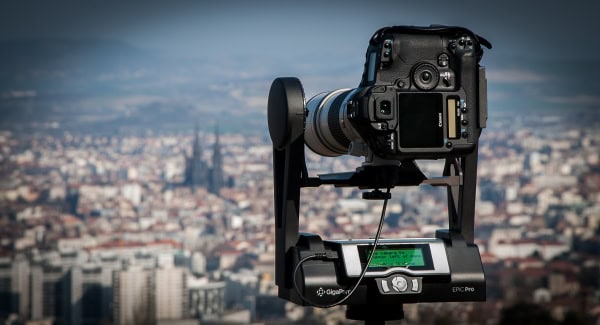
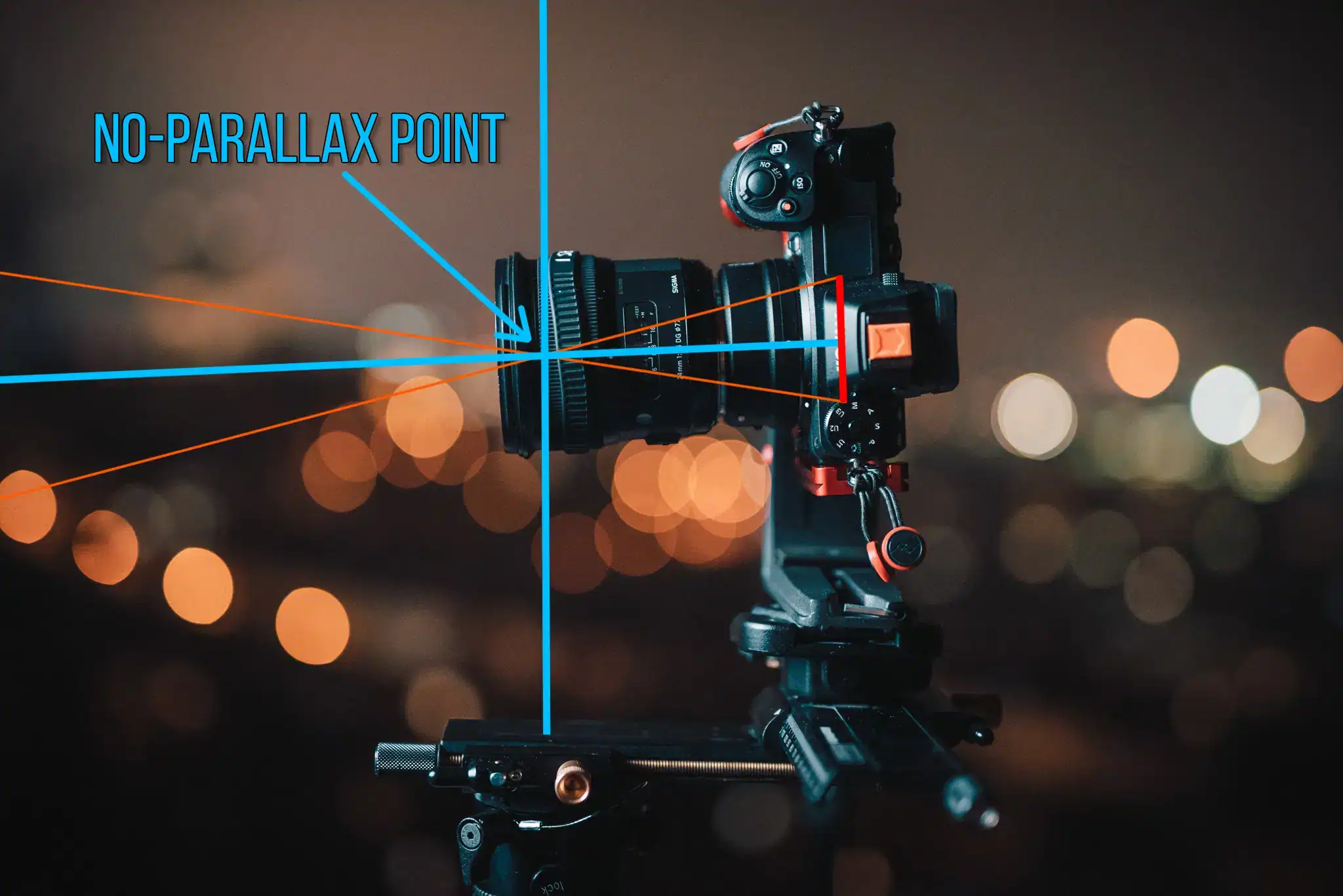
- Panoramic head: enables rotation around the lens’s entrance pupil (nodal point) to eliminate parallax between foreground and background. Mark your rails once calibrated for this combo.
- Stable tripod with a leveling base: fast, accurate leveling prevents horizon roll and reduces stitching errors.
- Remote trigger or app: reduce vibrations; use exposure delay mode if you don’t have a remote.
Optional Add-ons
- Pole or car mount: great for elevated or moving perspectives; beware of wind loads, flex, and vibration; always tether gear.
- Lighting aids: small LED panels for dim interiors; balance color temperatures to avoid WB contamination.
- Weather protection: rain covers, microfiber cloths, lens hood to fight spray or drizzle.
Step-by-Step Shooting Guide
Standard Static Scenes
- Level and align: Level your tripod using the leveling base. Mount the Z7 II and set the panoramic head so the rotation axis is perfectly vertical. Adjust fore–aft and left–right rails to align the lens’s entrance pupil over the rotation axis.
- Manual exposure and WB: Set manual mode. Choose an exposure that preserves highlights (especially sky/windows). Lock white balance (Daylight/Incandescent/Custom) to keep color consistent across frames. Disable Auto ISO.
- Focus: Switch to manual focus. At 12mm, a good starting point is hyperfocal at f/8–f/11 (roughly 0.6–1.0 m). Zoom in in live view and check edges for field curvature; fine-tune as needed.
- IBIS: On a tripod, turn IBIS off to avoid micro-jitter. Use a remote or the Z7 II’s exposure delay (e.g., 1–3s) to eliminate vibrations.
- Capture plan at 12mm: Shoot 3 rows of 6 images each with 60° yaw increments:
- Row 1: pitch +45° (6 shots)
- Row 2: pitch 0° (6 shots)
- Row 3: pitch −45° (6 shots)
- Zenith: 1–2 shots at +90°; Nadir: 1–3 shots at −90° (use a nodal offset trick or move the tripod slightly and mask)
This provides ~25–35% overlap and reliable stitch margins.
HDR / High Dynamic Range Interiors
- Bracket ±2 EV (3 or 5 frames): The Z7 II’s base ISO 64–100 with bracketing recovers bright windows while keeping shadows clean. Shoot brackets for each pano position before rotating.
- Lock WB and focus across all brackets and frames. Use a quiet shutter mode or electronic shutter to minimize vibration.
- Optional: If windows are extremely bright, add a special “window pass” at faster shutter speeds just for the window panels and mask in post.
Low-Light / Night Scenes
- Use longer exposures at ISO 64–400 whenever possible; if necessary, push to ISO 800–1600 on the Z7 II but prioritize tripod stability for cleaner files.
- Open to f/4–f/5.6 if needed; avoid too wide open if edge sharpness matters for stitching alignment.
- Use the remote or exposure delay; shield the lens from stray lights to reduce flare and ghosting.
Crowded Events
- Two-pass method: First pass for composition and coverage; second pass as people move to fill gaps. In post, mask in the cleanest regions from each pass.
- Use faster shutter speeds (1/200+) at ISO 400–800 to reduce subject blur if capturing motion you intend to keep.
Special Setups (Pole / Car / Elevated)
- Secure gear: Use a safety tether, balanced counterweights, and minimize rotation speed to reduce flex and vibration. Test your nodal alignment at the working height.
- Wind and vibration: In strong wind, increase overlap, reduce row count, or switch to a shorter shutter with higher ISO. Always prioritize safety.
Recommended Settings & Pro Tips
Exposure & Focus
| Scenario | Aperture | Shutter | ISO | Notes |
|---|---|---|---|---|
| Daylight outdoor | f/8–f/11 | 1/100–1/250 | 64–200 | Lock WB (Daylight); prioritize base ISO for dynamic range |
| Low light/night | f/4–f/5.6 | 1/30–several sec | 100–800 (up to 1600 if needed) | Tripod + remote; try long exposure before raising ISO |
| Interior HDR | f/8 | Bracket ±2 EV | 64–400 | One bracket set per yaw stop |
| Action / moving subjects | f/5.6–f/8 | 1/200+ | 400–800 | Double-pass and mask moving people later |
Critical Tips
- Manual focus and hyperfocal: At 12mm and f/8, hyperfocal is roughly 0.6–0.8 m. Check edges in magnified live view and adjust for field curvature.
- Nodal calibration: Place a near object and a distant object along the same sightline. Adjust the fore–aft rail until there’s no relative shift during yaw rotation. Mark your rail position with tape for the 12–24mm at 12mm and 16mm.
- White balance lock: Use a fixed WB; mixed lighting can be corrected globally in RAW, but inconsistent WB between frames creates stitching seams.
- RAW capture: Shoot 14-bit RAW for maximum dynamic range and color latitude. The Z7 II’s base ISO files tolerate strong highlight recovery.
- IBIS and VR: Turn off IBIS on the tripod to avoid sensor drift. If handholding a quick pano, IBIS can help—but stitching accuracy will suffer vs. a tripod.
Stitching & Post-Processing
Software Workflow
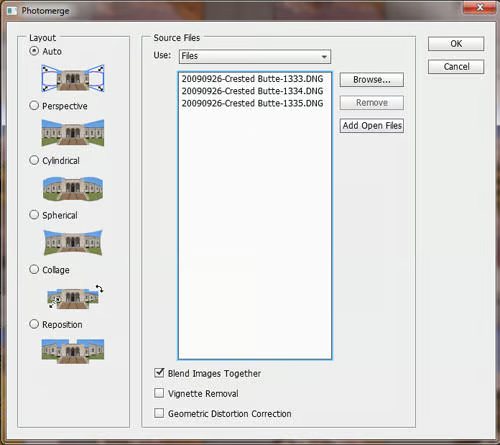
Import RAWs into Lightroom or your favorite converter; apply consistent WB, lens profile corrections (if recognized via adapter), and basic noise reduction. For HDR projects, merge brackets first (Lightroom HDR Merge or exposure fusion in PTGui) before stitching. PTGui is a gold standard for professional panorama stitching thanks to robust control-point generation, mask tools, and exposure fusion. Hugin is an excellent open-source alternative with advanced control. For 12–24mm rectilinear panoramas, use approximately 25–30% overlap; the software will appreciate consistent coverage across rows. For end-to-end VR publishing guidance, the Meta/Oculus creator docs offer clear stitching principles and export recommendations.
Learn more about PTGui’s strengths in this review: PTGui for incredible panoramas (Fstoppers review). For a step-by-step panoramic head setup, see this guide: Panoramic head tutorial (360Rumors). To understand DSLR/mirrorless workflows for 360 publishing, see Meta’s creator notes: Using a DSLR or mirrorless to shoot and stitch a 360 photo.
Cleanup & Enhancement
- Nadir patch: Capture a dedicated nadir frame and use PTGui’s Viewpoint Correction or clone/heal in Photoshop. AI-based content-aware fill works well on simple floors.
- Color and noise: Apply global color balance; use gentle noise reduction for shadow areas, especially if some frames were at ISO 800–1600.
- Leveling: Use horizon/vertical line tools to fix roll/yaw/pitch. Align the verticals for architectural work.
- Export: Save equirectangular JPEG/TIFF in 2:1 aspect ratio for VR viewers. Typical outputs: 12000×6000 for the Z7 II’s resolution sweet spot; bigger for gigapixel projects if your machine can handle it.
Want a visual walkthrough of core panorama techniques? This video provides a practical overview:
Useful Tools & Resources
Software
- PTGui panorama stitching
- Hugin (open source)
- Lightroom / Photoshop for RAW development and retouching
- AI-based tripod/nadir removal tools
Hardware
- Panoramic heads (Nodal Ninja, Leofoto, Sunwayfoto)
- Carbon fiber tripods with leveling bases
- Wireless remote shutters or camera apps
- Pole extensions / car mounts with tethers
- Sony E-to-Nikon Z adapter (e.g., Techart TZE-01/TZE-02) for the FE 12–24mm f/4 G
Disclaimer: product names are provided for search reference; check official sites for current specs and compatibility.
Common Mistakes & How to Avoid Them
- Parallax error: Always align the lens entrance pupil over the rotation axis; recalibrate after changing focal length or adding/removing the adapter.
- Exposure flicker: Use manual exposure and locked WB; don’t change settings mid-panorama.
- Insufficient overlap: Aim for 25–35% overlap; at 12mm, 6 shots per row is a safe minimum for smooth stitches.
- Tripod in the frame: Shoot dedicated nadir frames and patch in post.
- Noise and banding at night: Favor longer exposures at lower ISO on a stable tripod rather than pushing ISO too high.
- Adapter assumptions: Not all E-to-Z adapters support every lens function; verify AF/Iris/EXIF behavior and update firmware.
Real-World Use Cases
Indoor Real Estate
At 12–14mm, use 3 rows × 6 frames with HDR bracketing ±2 EV. Keep ISO at 64–200 for rich shadows. Lock WB to a fixed preset and add a small LED fill if needed. The rectilinear rendering keeps walls straight, reducing post corrections compared to fisheye captures.
Outdoor Sunset
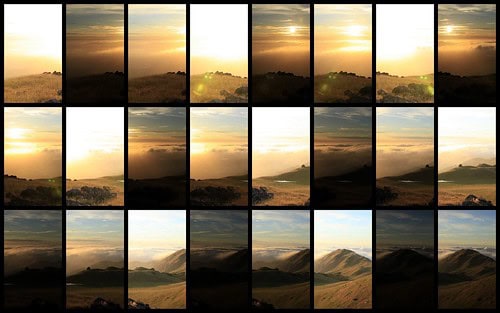
Shoot a single exposure set near base ISO. Meter highlights to protect the sky, then lift shadows in post—the Z7 II’s dynamic range makes this feasible. Capture faster to minimize changing light discrepancies between frames.
Event Crowds
Use a faster shutter (1/200–1/320) and ISO 400–800. Complete two passes to mask moving people later. If crowd density is high, increase overlap to 35–40% for more cut options during masking.
Rooftop / Pole Shooting
Secure the pole or tripod with tethers and weights. Wind will flex gear; use shorter exposures or higher ISO (up to 800–1600) to maintain sharpness. Consider fewer rows with higher overlap to keep stitching robust under motion.
Frequently Asked Questions
- Can I shoot handheld panoramas with the Nikon Z7 II?
Yes, if you keep overlap high (35–50%) and use fast shutter speeds. However, for flawless 360 photos—especially indoors or with close foregrounds—use a tripod and a calibrated panoramic head to eliminate parallax.
- Is the Sony FE 12–24mm f/4 G wide enough for a single-row 360?
No. At 12mm (rectilinear), the vertical coverage isn’t enough to capture the zenith and nadir in a single row. Use at least three rows (+45°, 0°, −45°) plus dedicated zenith/nadir shots for full 360×180 coverage.
- Do I need HDR for interiors with bright windows?
Usually, yes. Bracket ±2 EV (3 or 5 frames) at each yaw position. The Z7 II’s base ISO files blend well, preserving window detail without noisy shadows.
- How do I avoid parallax issues with this combo?
Calibrate the entrance pupil at your chosen focal length (e.g., 12mm). Align a near and far target, rotate the head, and adjust the fore–aft rail until there’s no relative shift. Mark the rail for repeatable setup—re-check after changing zoom or adding/removing accessories.
- What ISO range is safe on the Z7 II in low light?
For critical quality, aim for ISO 64–400 on a tripod. ISO 800–1600 remains usable if shutter speeds must be kept short, but expect more noise and reduce it in post.
- Can I create Custom Shooting Modes to speed pano work?
Yes. Store manual exposure, manual focus, IBIS off, WB preset, and bracketing settings in U1/U2/U3. This makes it faster to switch between daylight, HDR interior, and night configurations.
- Any adapter caveats with the Sony FE 12–24mm on a Nikon Z7 II?
Use a proven E-to-Z adapter (e.g., Techart TZE series). Update firmware to improve aperture reporting and AF behavior. For panoramas, rely on manual focus and manual exposure to avoid surprises.
- Best tripod head choice for this setup?
A dual-rail panoramic head with precise fore–aft adjustments (e.g., Nodal Ninja, Leofoto) enables accurate nodal alignment and repeatable multi-row shooting.
For additional fundamentals and community-tested tips, see: Best techniques to take 360 panoramas (Photo StackExchange).
Safety, Limitations & Reliable Workflow
Wind and elevation are the biggest risks. Always tether your camera and tripod on rooftops, near cliffs, or over railings. For pole work, attach a safety line and avoid crowded spaces. When using a car mount, secure all connections, add redundancy, and check local regulations. The Z7 II is weather-sealed, but treat the adapter/lens junction carefully in rain; keep a rain cover handy and wipe the front element often to avoid water spots that complicate stitching.
Limitations: Rectilinear lenses at 12mm require more frames than a fisheye for full coverage, and the front element is large—flare and fingerprints are common hazards. Adapters can introduce communication quirks; test before client jobs. To protect the project, shoot a second safety round and keep redundant storage (dual card slots or frequent backups). For professional deliverables, maintain a consistent post-processing pipeline and export in a standard equirectangular format for viewers and virtual tour platforms.
For an end-to-end panoramic head setup primer, also see: Set up a panoramic head for high-end 360 photos (Meta).