
Why This Camera & Lens Are Great for Panoramas
If you’re wondering how to shoot panorama with Nikon Z7 II & Samyang 12mm f/2.8 ED AS NCS Fish-Eye, you’re pairing a high-resolution full-frame mirrorless body with a fast, ultra-wide diagonal fisheye. The Nikon Z7 II features a 45.7MP BSI CMOS sensor (8256×5504) with excellent base ISO 64 dynamic range (≈14.5–14.7 EV at ISO 64), 14-bit RAW, and 5-axis in-body stabilization. Pixel pitch is approximately 4.35 µm, which helps maintain fine detail for large equirectangular outputs. In practice, this means clean shadows, highlight headroom, and sufficient per-frame detail to support large 360° deliverables and virtual tours.
The Samyang 12mm f/2.8 is a manual-focus, diagonal fisheye designed for full-frame, offering a diagonal 180° field of view (approx. 150° horizontal, ~95–100° vertical). As a fisheye, it delivers robust coverage with fewer frames compared to rectilinear lenses, which speeds capture and improves stitch reliability—especially valuable for interiors or on-location gigs where time is limited. Stop the lens to f/5.6–f/8 for optimal edge-to-edge sharpness and reduced chromatic aberrations. On the Z7 II, you’ll adapt the Nikon F mount version with the FTZ or FTZ II adapter; the body’s focus peaking and magnified live view make manual focusing straightforward.
Expect typical fisheye distortion in the raw frames, but modern stitching software models fisheye projection well, making alignment easier than with rectilinear glass at similar coverage. The net effect: fewer shots to stitch, faster workflow, and high-quality panoramas with detailed textures and clean tones.
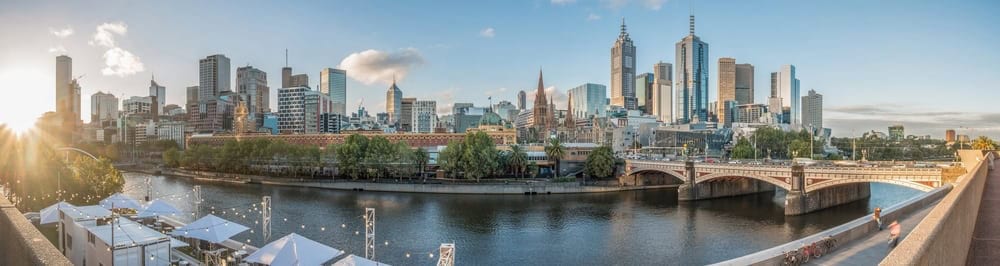
Quick Setup Overview
- Camera: Nikon Z7 II — Full Frame (35.9×23.9 mm) BSI CMOS, 45.7MP, base ISO 64, 14-bit RAW, excellent DR.
- Lens: Samyang 12mm f/2.8 ED AS NCS Fish-Eye — diagonal fisheye for Nikon F (adapt via FTZ/FTZ II). Best at f/5.6–f/8; CA controlled but visible wide open; flare control decent with care.
- Estimated shots & overlap: With 12mm diagonal fisheye on full-frame, plan 6 shots around at 60° yaw spacing + 1 zenith + 1 nadir (≈30% overlap). For critical interiors or tight spaces, do 8 around for extra safety.
- Difficulty: Moderate — simple once nodal point is set; manual focus and exposure discipline required.
Planning & On-Site Preparation
Evaluate Shooting Environment
Assess light, movement, and reflective surfaces before you mount up. Glass walls, polished floors, and mirrors increase flare/ghosting risk and amplify parallax if your nodal alignment is off. Keep any glass at a slight angle to the lens to avoid direct reflections and place the lens a few centimeters away from glass to reduce ghosting. In outdoor scenes, note sun position—backlight can cause flare with fisheye optics; plan your rotation to minimize the sun hitting the front element directly.
Match Gear to Scene Goals
The Z7 II’s dynamic range and clean base ISO mean you can balance bright windows against interior shadows, especially when bracketing. Indoors, ISO 100–400 keeps noise low; outdoors, ISO 64–200 is ideal. The Samyang 12mm fisheye’s wide FOV reduces shot count and speeds capture, which is crucial for real estate, events, or rooftop work where time is tight. The tradeoff is fisheye distortion, which is fine because stitching software handles fisheye projections well for 360 photos.
Pre-shoot Checklist
- Power & storage: Fully charged batteries; dual cards in the Z7 II for redundancy. Format and verify.
- Clean optics & sensor: Dust shows up everywhere in skies and walls; clean the front element and run a sensor check.
- Tripod & level: Use a leveling base; ensure your panoramic head is calibrated for no-parallax rotation.
- Safety: On rooftops or windy locations, tether the tripod; avoid overextending poles in gusts.
- Backup workflow: If time allows, shoot a second full round (or at least two extra overlapping frames) as insurance.
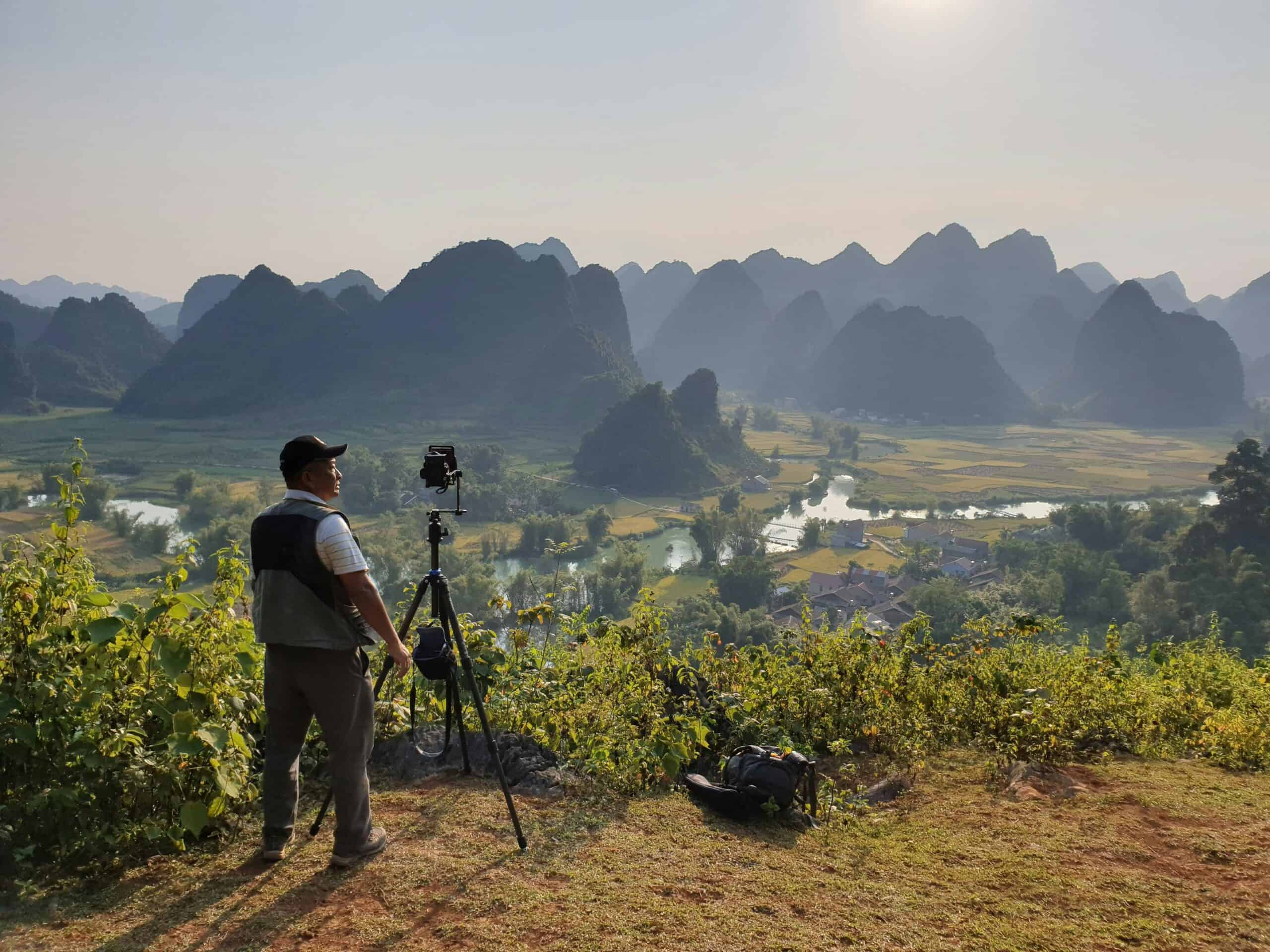
Essential Gear & Setup
Core Gear
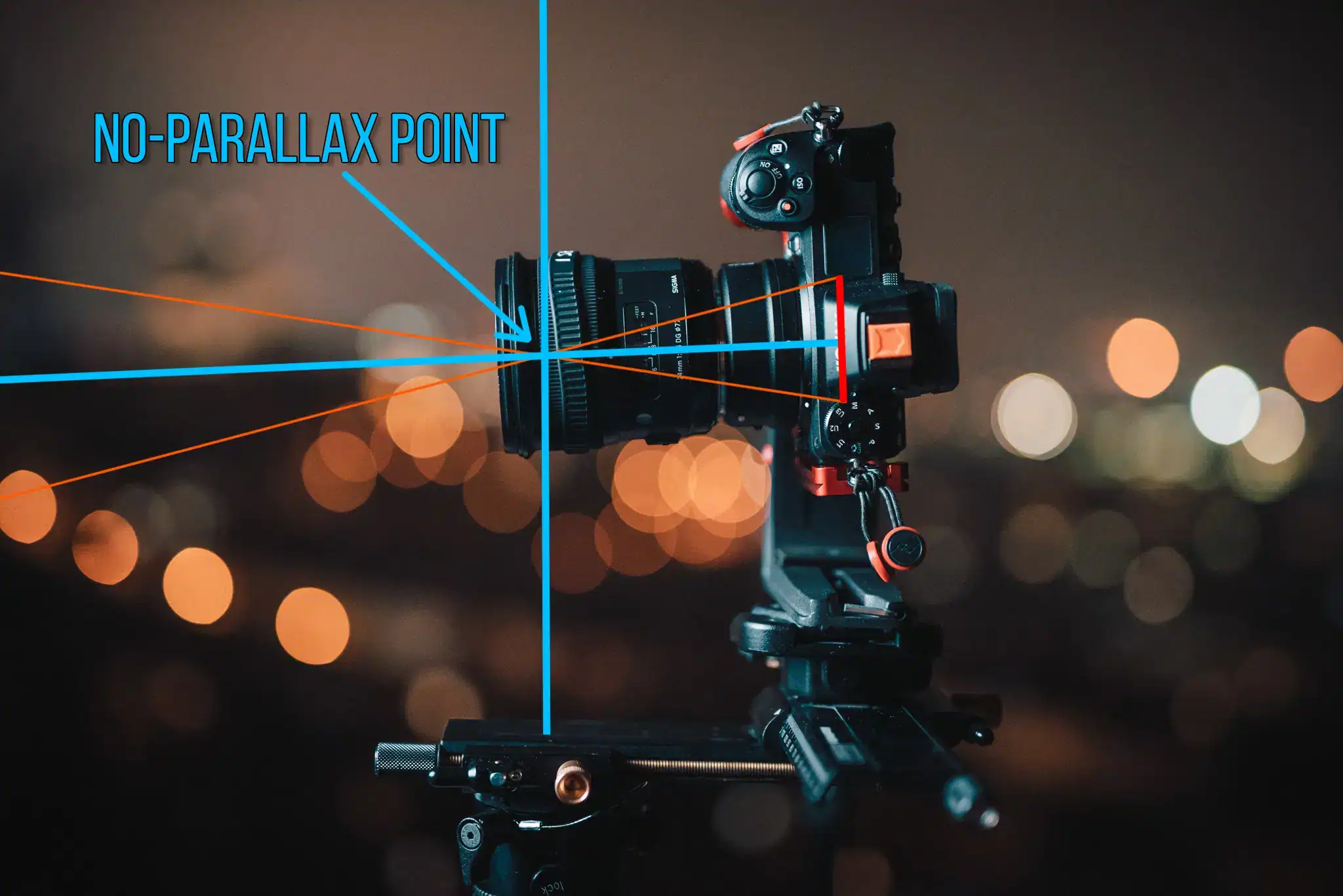
- Panoramic head: Critical to align the lens’s entrance pupil (nodal point) over the axis of rotation, eliminating parallax between near and far objects. This is the foundation of clean stitches.
- Stable tripod with leveling base: A leveled platform ensures consistent pitch and reduces stitch corrections later.
- Remote trigger or SnapBridge app: Prevents shake and allows hands-off shooting. Use a 2s timer if you don’t have a remote.
Optional Add-ons
- Pole or car mount: Great for elevated viewpoints or vehicle-based captures. Always tether gear; watch wind loads and vibration.
- Lighting aids: Small LED panels help lift shadows in dark interiors when HDR is insufficient or forbidden.
- Weather protection: Rain covers and lens hoods reduce flare and protect the Samyang’s bulbous front element.
Step-by-Step Shooting Guide
Standard Static Scenes
- Level the tripod & align nodal point: Mount your panoramic head, level it, and adjust the fore-aft rail so the lens’s entrance pupil sits exactly over the yaw axis. Use a near object (~50–100 cm) and a far object; rotate the camera 30–45° and fine-tune until relative positions don’t shift. Note your rail marks for the Z7 II + FTZ + Samyang combo.
- Manual exposure & white balance: Set Mode M. Meter the brightest frame you’ll face (usually toward windows or the sun) and keep settings fixed for the whole sequence. Lock white balance (Daylight for sun, Tungsten for warm interiors) to avoid color mismatches.
- Capture sequence with overlap: For the 12mm fisheye, shoot 6 frames around at 60° yaw increments with ~30% overlap. Add one zenith (tilt up) and one nadir (tilt down) shot. If objects are very close to the camera (under 1 m), consider 8 around to increase overlap for safer stitching.
- Take a nadir patch base: After the main sphere, move the tripod slightly and shoot a clean ground plate for patching the tripod later.
HDR / High Dynamic Range Interiors
- Bracket exposures: Use ±2 EV or ±3 EV (3–5 frames total) at each position to balance bright windows and dark corners. Keep ISO at 64–200 for maximum DR.
- Lock WB & keep aperture fixed: Use f/8 for best sharpness; only change shutter speed between brackets. This keeps depth of field and vignetting consistent across the set.
Low-Light / Night Scenes
- Use longer shutter speeds on a solid tripod: Start at f/4–f/5.6, 1/15–1/60 s, ISO 100–400. The Z7 II’s base ISO 64 is superb, but at night ISO 200–800 is still very clean; avoid going above ISO 3200 unless necessary.
- Eliminate vibrations: Turn OFF IBIS (VR) on tripod to prevent micro-blur, and use electronic front-curtain shutter. Trigger with remote or 2s timer.
Crowded Events
- Two-pass capture: First pass at normal speed, second pass patiently waiting for gaps. You’ll mask between passes during stitching to remove duplicates and ghosting.
- Faster shutter: For moving subjects, keep shutter at 1/200 s+ when possible; raise ISO to 400–800 to freeze motion if lighting permits.
Special Setups (Pole / Car / Drone)
- Secure everything: Use safety tethers and clamp checks. For poles, don’t exceed safe extension in wind; rotate slower to reduce flex-induced misalignment.
- Mind vibrations: In car mounts, add vibration damping and shoot at faster shutter speeds (1/250–1/500). Consider shooting more overlap to help the stitcher.
Field-tested Case Studies
Indoor Real Estate
Set ISO 100–200, f/8, and bracket ±2 EV. Capture 6 around + Z + N. Watch for mirrors—move slightly to keep yourself out of reflections. The Z7 II’s base ISO gives clean shadows after HDR merge.
Outdoor Sunset Overlook
Expose for the highlights facing the sun; consider a 5-shot HDR bracket. Keep ISO 64–100 to maximize DR. Shield the Samyang’s front element with your hand just out of frame to reduce flare; remove any artifacts in post.
Crowded Street Festival
Use 1/250 s at f/5.6–f/8, ISO 400–800. Do two passes, then mask moving people in PTGui. The fisheye’s wide FOV minimizes shot count while crowds move.
Rooftop or Pole Panos
Tether the tripod. If using a pole, pre-focus at the hyperfocal distance, lock exposure, and rotate slowly. Take an extra round with more overlap (8 around) to compensate for minor flex.
Recommended Settings & Pro Tips
Exposure & Focus
| Scenario | Aperture | Shutter | ISO | Notes |
|---|---|---|---|---|
| Daylight outdoor | f/8–f/11 | 1/100–1/250 | 64–200 | Lock WB (Daylight). Maximize DR at ISO 64 when possible. |
| Low light/night | f/4–f/5.6 | 1/15–1/60 | 200–800 | Tripod, remote, IBIS off on tripod, EFCS on. |
| Interior HDR | f/8 | Bracket ±2 EV | 64–200 | Balance windows & lamps; keep aperture fixed. |
| Action / moving subjects | f/5.6–f/8 | 1/200+ | 400–800 | Freeze motion; consider two-pass capture for masking. |
Critical Tips
- Manual focus at hyperfocal: On the 12mm at f/8, set focus around 1 m to keep everything from about 0.5 m to infinity acceptably sharp. Use Z7 II focus peaking and magnified view to confirm.
- Nodal calibration: Mark your fore-aft rail position for “Z7 II + FTZ + Samyang 12mm.” Start with the entrance pupil roughly a few centimeters behind the front element, then fine-tune using near/far alignment checks.
- White balance lock: Avoid Auto WB; pick a fixed preset or custom Kelvin so frames match perfectly when stitching.
- RAW capture: Shoot 14-bit RAW for maximum dynamic range and color latitude—especially for HDR panoramas.
- IBIS/VR handling: Turn off IBIS on tripod to prevent micro-blur. Use electronic front-curtain shutter to minimize shutter shock.
Stitching & Post-Processing
Software Workflow
For this fisheye setup, PTGui and Hugin handle fisheye projections very well. Import your RAW files (after basic color and exposure harmonization), set lens type to “fisheye,” and use about 25–35% overlap. Fisheye lenses typically need fewer shots and are easier to stitch than rectilinear lenses, though you’ll correct for fisheye projection during stitching. With a 45.7MP sensor and a 6+2 capture, you can output detailed 12K–16K equirectangulars depending on overlap and content. For an in-depth software overview, see this PTGui review that many professionals reference at the end of their learning curve. Fstoppers review: PTGui for advanced panoramas
Cleanup & Enhancement
- Nadir patch: Use a clean ground shot or content-aware fill/clone stamping. Many virtual tour platforms also support nadir logo patches.
- Color & noise: Apply consistent white balance across all frames. Use noise reduction only as needed; the Z7 II files are clean at low ISO.
- Level the horizon: Use the horizon tool; correct roll/yaw/pitch until verticals are straight in architectural work.
- Export: Deliver equirectangular JPEG or TIFF (e.g., 12000×6000 or higher) for VR platforms and tour software. Check platform limits.
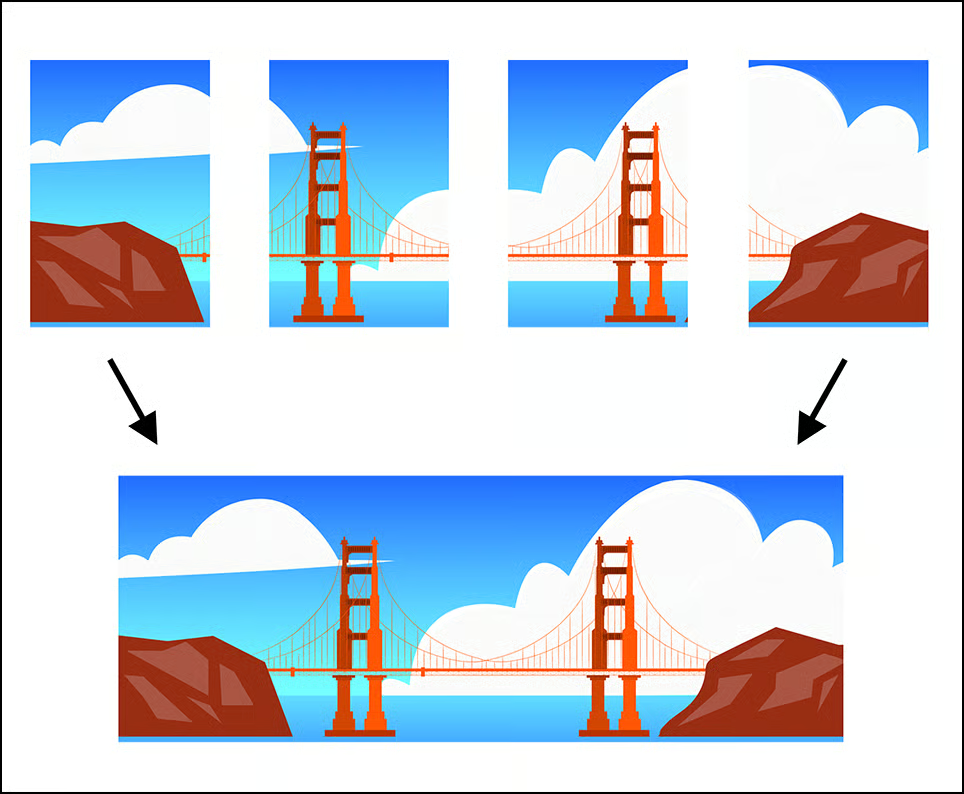
For a primer on panoramic head setup that complements the workflow above, this tutorial provides practical, up-to-date techniques. Panoramic head setup tutorial (360 Rumors)
Video primer: shooting and stitching 360 photos with interchangeable-lens cameras.
To understand output resolution tradeoffs for spherical panoramas, the Panotools wiki is a good reference. Panotools: DSLR spherical resolution
Useful Tools & Resources
Software
- PTGui panorama stitching (fast, robust control points, masking, HDR merge)
- Hugin (open source alternative with fisheye support)
- Lightroom / Photoshop (pre/post color work, nadir patching)
- AI tripod removal tools (content-aware fill, generative cleanup)
Hardware
- Panoramic heads (e.g., Nodal Ninja, Leofoto) with fore-aft and vertical rails
- Carbon fiber tripods (high stiffness, low weight)
- Leveling bases (fast and precise leveling)
- Wireless remote shutters
- Pole extensions / car mounts (tethered, with anti-vibration precautions)
Disclaimer: software/hardware names provided for search reference; confirm compatibility and current versions on official sites.
For a broader overview of DSLR/mirrorless 360 capture best practices, including platform requirements for VR, see this concise guide. Using a DSLR or mirrorless to shoot and stitch a 360 photo (Meta/Oculus)
Common Mistakes & How to Avoid Them
- Parallax error from poor nodal alignment → Carefully calibrate the entrance pupil; mark your rail positions for the Z7 II + FTZ + Samyang combo.
- Exposure flicker → Use Manual exposure and lock WB; avoid Auto ISO and Auto WB.
- Tripod shadows or operator in frame → Shoot a dedicated nadir and patch; change stance between frames to avoid appearing multiple times.
- Ghosting from movement → Use two-pass shooting and mask in PTGui/Hugin.
- Nighttime noise → Keep ISO low and extend shutter on tripod; disable IBIS and use EFCS for maximum sharpness.
- Lens flare with fisheye → Shade the front element when possible and plan your rotation relative to the sun.
Frequently Asked Questions
- Can I shoot handheld panoramas with the Nikon Z7 II?
Yes for partial panos, but for full 360×180 with close foregrounds, a panoramic head is strongly recommended to prevent parallax. If you must go handheld, keep the camera rotating around the same point, shoot extra overlap, and avoid near objects.
- Is the Samyang 12mm f/2.8 wide enough for single-row 360s?
Yes—use 6 shots around + zenith + nadir. In tight interiors or with very near objects, increase to 8 around for better overlap and cleaner seams.
- Do I need HDR for interiors with bright windows?
Often yes. Bracket ±2 to ±3 EV at each position to capture highlight detail in windows while maintaining clean interior shadows. Merge in PTGui or pre-merge in Lightroom.
- How do I avoid parallax issues with this combo?
Use a panoramic head, align the entrance pupil over the yaw axis, and lock that fore-aft rail position. Perform a near/far alignment test and save your rail marks for the Z7 II + FTZ + Samyang 12mm.
- What ISO range is safe on the Z7 II in low light?
For static tripod work, aim for ISO 64–400 whenever possible; ISO 800 remains very usable. Reserve ISO 1600–3200 for faster shutter needs (events, wind on poles) and expect a bit more noise.
Safety, Quality & Backup Practices
Always tether your tripod in wind or on rooftops—fisheye elements are exposed and expensive to repair. Use a lens hood or your hand to shield from direct light just outside the frame. Keep a microfiber cloth ready; a smudge on a 12mm fisheye is visible across many frames. For data integrity, shoot to dual cards when possible, and adopt a 3-2-1 backup rule after the shoot. If the job is mission-critical, shoot a second full sphere; it costs minutes and can save the project if a frame is corrupted or blurred.
Advanced Notes Specific to Z7 II + Samyang 12mm
- Adapter: Use FTZ or FTZ II; set aperture on-lens. The Z7 II’s focus peaking (customizable color/sensitivity) helps confirm focus at f/2.8; then stop down to your working aperture.
- Custom Controls: Assign LV magnification and virtual horizon to function buttons for faster tripod setup.
- Shutter Mode: Enable electronic front-curtain shutter to minimize vibration. Use silent shutter cautiously under artificial light to avoid banding.
- Lens Profile: In PTGui/Hugin, set lens type to “fisheye.” If needed, run lens parameter optimization on a test set for the cleanest model fit.