Why This Camera & Lens Are Great for Panoramas
The Nikon Z7 II and Olympus 8mm f/1.8 PRO Fisheye are both exceptional pieces of kit for 360° photography, but they come from different ecosystems. The Z7 II is a 45.7MP full-frame mirrorless camera with excellent dynamic range (about 14.5 EV at base ISO) and a fine pixel pitch (~4.35 µm), which yields superb detail and tonal headroom in panoramic workflows. The Olympus 8mm f/1.8 PRO is a fast, professional-grade fisheye lens designed for Micro Four Thirds, offering a diagonal 180° field of view, weather sealing, and impressive edge-to-edge sharpness stopped down slightly. Together, these attributes are exactly what you want when building high-resolution, low-noise 360 photos with consistent overlap and minimal stitching artifacts.
Compatibility reality check: the Olympus 8mm f/1.8 PRO is a Micro Four Thirds lens and is not natively compatible with Nikon Z mount. There is no common electronic adapter that provides aperture and focus control, and the lens’s image circle is sized for Micro Four Thirds—not full frame. Practically speaking, you have two paths to get the look and efficiency this lens provides:
- Use your Nikon Z7 II with a native or adapted fisheye that covers full frame (e.g., NIKKOR 8–15mm f/3.5–4.5E via FTZ, or a third-party full-frame fisheye). The capture and stitching steps are identical to what’s described below.
- If you already own the Olympus 8mm f/1.8 PRO, pair it with a Micro Four Thirds body for capture. The shooting math (number of frames and overlap) in this guide applies directly.
In this article I’ll explain how to shoot a 360 photo and HDR panoramas with the Nikon Z7 II and an 8mm fisheye workflow, highlighting the unique strengths of the Olympus 8mm f/1.8 PRO where relevant. The techniques, exposure strategies, nodal-point alignment, and post-processing steps are the same regardless of whether you use a native Z-mount fisheye or the Olympus lens on a Micro Four Thirds body.
Quick Setup Overview
- Camera: Nikon Z7 II — 35mm full-frame, 45.7MP (8256 × 5504), ~4.35 µm pixel pitch, base ISO 64, excellent dynamic range and low-light performance with 5-axis IBIS.
- Lens: Olympus M.Zuiko 8mm f/1.8 PRO Fisheye — diagonal fisheye (180° on Micro Four Thirds), equisolid-angle projection, very sharp by f/2.8–f/4, good CA control, weather-sealed. Note: designed for Micro Four Thirds; not natively usable on Nikon Z7 II.
- Estimated shots & overlap:
- Full-frame with 8mm circular fisheye: 3 shots around (120° yaw) + zenith + nadir, ~30–35% overlap.
- Micro Four Thirds with 8mm diagonal fisheye: 6 shots around (60° yaw) + zenith + nadir, ~30% overlap.
- At 12–15mm diagonal fisheye on full-frame: typically 6 around + Z + N.
- Difficulty: Moderate — easy capture, but precise nodal alignment and careful exposure locking are required for flawless stitches.
Planning & On-Site Preparation
Evaluate Shooting Environment
Survey lighting and movement before you set up. For interiors, note the brightness difference between windows and interior walls; this determines whether you’ll need bracketed HDR. Watch for reflective glass, mirrors, and glossy floors—these can exaggerate stitching errors if you don’t nail the nodal point. If shooting through glass, work as close as possible (2–3 cm away) and keep the lens perpendicular to reduce flare and ghosting. For outdoor scenes, consider the sun’s position to minimize lens flare, especially with a fisheye’s huge field of view.
Match Gear to Scene Goals
The Nikon Z7 II’s high resolution and wide dynamic range make it excellent for high-end virtual tours and large equirectangular exports. Indoors, you can keep ISO low (64–400) for clean files; outdoors, the base ISO 64 yields maximum DR and color depth. The Olympus 8mm f/1.8 PRO’s key advantage is speed: at f/1.8–f/2.8, you can shorten shutter times for night scenes or dim interiors with less motion blur. On a full-frame Z7 II, use an equivalent fast fisheye to replicate that advantage; on Micro Four Thirds with the Olympus 8mm, expect 6 around + Z + N for full 360 coverage.
Pre-shoot Checklist
- Power & storage: fully charged batteries, ample card space; the Z7 II’s 45MP files add up quickly when bracketing.
- Optics clean: remove dust on the fisheye’s front element; fisheyes show everything, including smudges.
- Tripod & pano head: level the base; confirm your nodal point marks for this camera/lens position.
- Safety: in wind, add weight to tripod; use a tether on rooftops and when using a pole or car mount.
- Backup: shoot an extra safety round at the end, even if you think you’ve nailed it. It costs seconds and can save the job.
Essential Gear & Setup
Core Gear
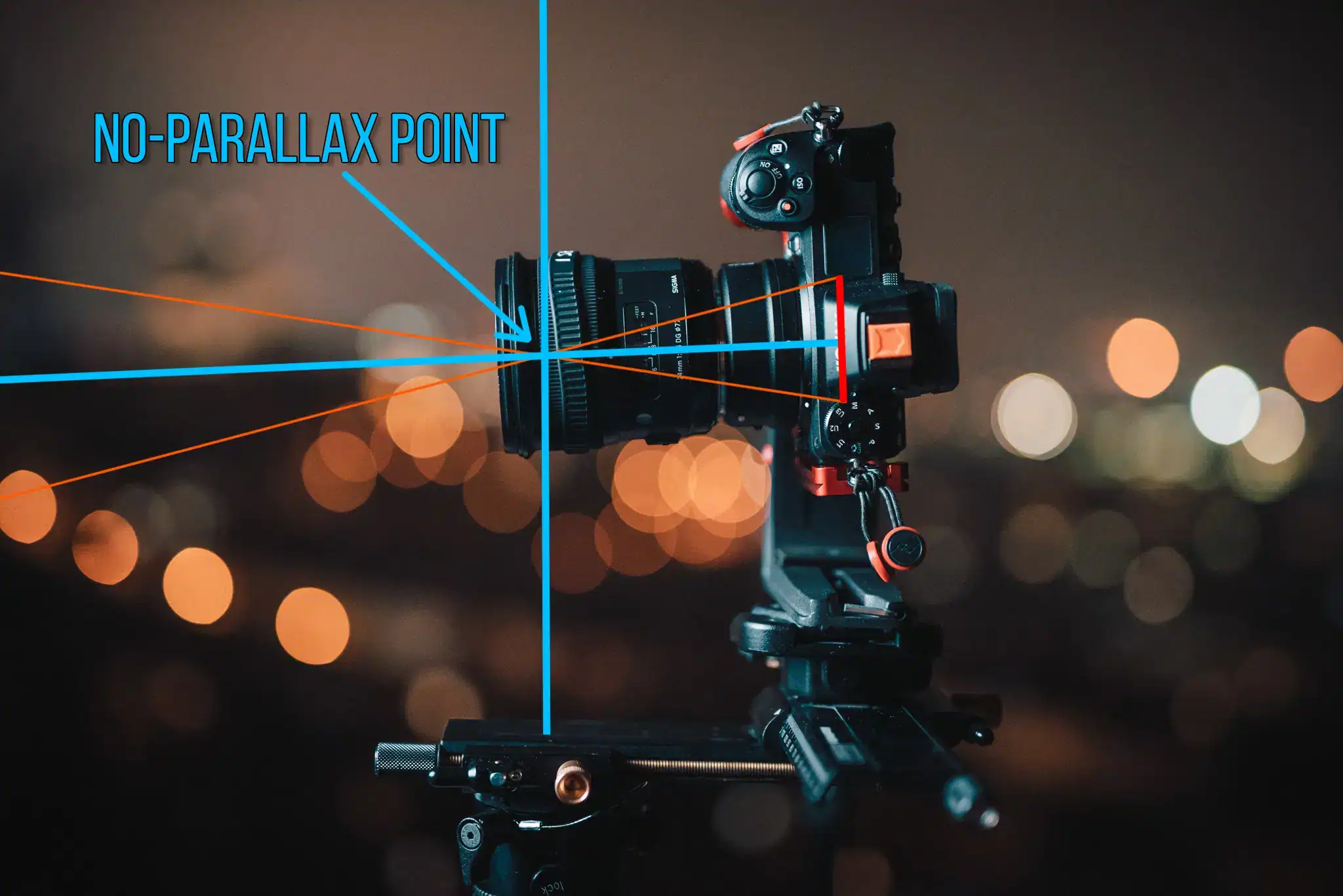
- Panoramic head: This is non-negotiable for pro results. Align the lens’s entrance pupil (nodal point) over the yaw axis to eliminate parallax between near and far objects. A two-axis head (vertical and horizontal rails) lets you fine-tune the nodal point for this lens and camera.
- Stable tripod with leveling base: Level once on the base; it keeps the horizon consistent as you rotate.
- Remote trigger or app: Use a wired remote, SnapBridge app, or a short self-timer to avoid vibration and keep a consistent cadence.
Optional Add-ons
- Pole or car mount: Great for elevated or dynamic views. Always tether the camera, use a safety line, avoid overhead lines, and reduce speed to control vibration.
- Lighting: Constant LED or bounced flash can lift dark corners in interior scenes, but keep it consistent across the set or be ready to mask in post.
- Weather covers: Fisheyes expose a big glass dome—use a lens hood or rain cover to protect from drizzle and spray.
Step-by-Step Shooting Guide
Standard Static Scenes
- Level and lock: Level the tripod via a leveling base. Lock all non-rotating axes so only the pano head’s indexed ring rotates.
- Nodal alignment: Slide the camera along the rail until near/far objects stay registered as you pan left/right. Mark the rail position for the Z7 II + your fisheye combo; keep a note on your phone.
- Manual settings: Switch to full manual exposure. Set white balance to a fixed preset (Daylight, Tungsten, or a custom Kelvin) to avoid color shifts frame-to-frame. Turn off Auto ISO.
- Focus: Set manual focus near the hyperfocal distance. With fisheyes, f/5.6–f/8 usually yields “focus everywhere.” Always disable IBIS on a tripod to prevent micro drift.
- Capture sequence and overlap:
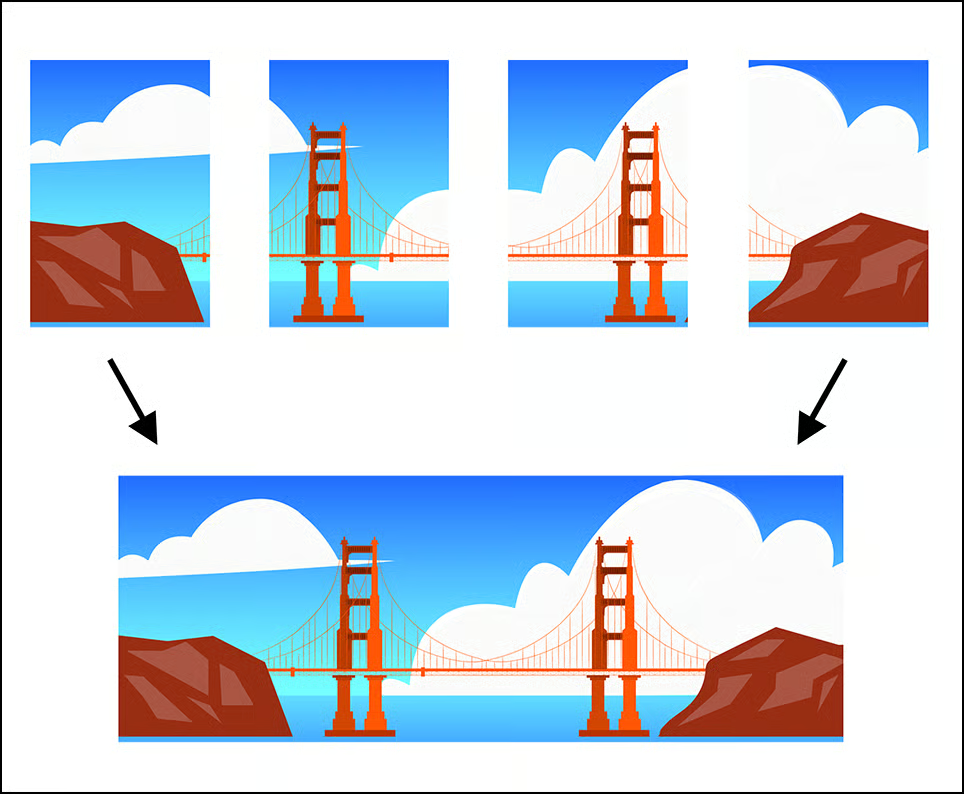
- Full-frame + 8mm circular fisheye: 3 around at 120° yaw, then zenith, then nadir. Shoot in a consistent rotation order to help batch naming and auto-stitching.
- Micro Four Thirds + Olympus 8mm: 6 around at 60°, then zenith and nadir. Aim for ~30% overlap.
- Nadir trick: After the main set, move the tripod slightly and shoot a clean floor patch for easy tripod removal during post.
HDR / High Dynamic Range Interiors
- Bracketing: Use ±2 EV (3 or 5 frames depending on window brightness). The Z7 II handles 5-frame brackets effortlessly; keep your cadence consistent around the circle.
- White balance lock: Keep WB fixed across brackets to prevent color banding when merging HDR.
- Shutter strategy: If people might move, prefer fewer but wider brackets (e.g., 3 frames at ±2 EV) to reduce motion between exposures.
Low-Light / Night Scenes
- Exposure: Start around f/4–f/5.6 and ISO 100–400 on tripod; let shutter time float to 1–8 seconds as needed. The Z7 II’s base ISO 64 produces pristine night skies if your tripod is solid.
- Remote trigger: Use a 2-second delay or remote to eliminate vibrations. Turn off IBIS on tripod.
- Noise control: Keep ISO ≤800 for gallery-grade output; ISO 1600 is fine for web and events, especially if you will downscale the final equirectangular.
Crowded Events
- Two-pass approach: First pass for full coverage; second pass to catch “gaps” when people move, giving you clean patches for masking.
- Fast shutter preference: If hand movement is unavoidable, use f/5.6–f/8, 1/200+, ISO 400–800 for crisper mid-action frames.
Special Setups (Pole / Car / Drone)
- Pole: Use a light body/lens and a compact panoramic rotator. Keep the pole vertical; add a dropdown line for stability in wind. Always tether the rig.
- Car: Use vibration-damped mounts, drive slowly, and plan a short capture sequence (e.g., 3 around + zenith) at safe stops. Mind traffic and legality.
Recommended Settings & Pro Tips
Exposure & Focus
| Scenario | Aperture | Shutter | ISO | Notes |
|---|---|---|---|---|
| Daylight outdoor | f/8–f/11 | 1/100–1/250 | 64–200 | Lock WB (Daylight). Z7 II at ISO 64 maximizes DR. |
| Low light/night | f/4–f/5.6 | 1/2–8s | 64–400 | Tripod + remote; IBIS OFF on tripod. |
| Interior HDR | f/8 | Bracket ±2 EV | 64–400 | Balance windows and lamps; keep WB fixed. |
| Action / moving subjects | f/5.6–f/8 | 1/200+ | 400–800 | Freeze motion; consider two-pass capture. |
Critical Tips
- Manual focus and hyperfocal: With a fisheye at f/8, focus a few feet out and you’re sharp to infinity. Zoom in via magnified live view to confirm.
- Nodal point calibration: Place a close object and a far object in line; pan left/right. Adjust fore/aft on the rail until their relative position doesn’t shift.
- White balance: Fix it. Mixed lighting causes color seams; better to correct a single WB in post than 8 different ones.
- RAW over JPEG: RAW preserves highlight and shadow detail crucial for clean blends and halo-free HDR.
- IBIS on/off: Handheld single-row panos benefit from IBIS; on tripod, switch IBIS OFF to avoid micro drift during long exposures.
Stitching & Post-Processing
Software Workflow
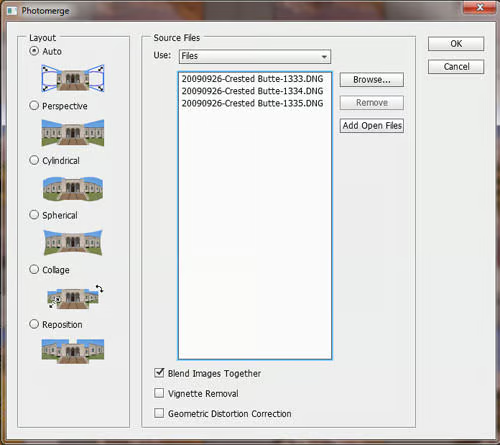
Import and organize by yaw order. If you bracketed, merge HDR first (per angle) or use PTGui’s built-in HDR merge for seamless exposure fusion. Fisheye images are easy for modern stitchers—PTGui, Hugin, Photoshop, and Affinity Photo can all handle fisheye projections and equirectangular output. Industry overlap recommendations: about 25–35% for fisheye, 20–25% for rectilinear. PTGui remains a gold standard for speed and control of control points, masks, and nadir patching. See a thorough PTGui review that explains why many professionals rely on it at the end of this section. Why PTGui is a pro favorite for panorama stitching.
Cleanup & Enhancement
- Nadir patch: Export a layered panorama or use PTGui’s Viewpoint correction to replace the tripod area with your clean floor shot. You can also clone in Photoshop.
- Color & noise: Correct WB once, then refine with HSL. Apply subtle noise reduction to the shadows in low-light frames.
- Leveling: Use horizon leveling tools to correct roll/yaw/pitch. Always verify verticals in interiors.
- Export: Deliver an 8K–12K equirectangular JPEG/PNG for web tours, or full-res TIFF for archival. For VR platforms, follow the platform’s file size and compression guidelines. A good overview of DSLR-to-360 workflows for VR publishing is available here: Using a mirrorless/DSLR to shoot and stitch a 360 photo.
Disclaimer: software evolves quickly—always check the latest docs for your preferred stitcher.
Useful Tools & Resources
Software
- PTGui (Pro-grade stitching, HDR merge, masking)
- Hugin (Open-source stitching)
- Lightroom / Photoshop (RAW processing and cleanup)
- AI tripod removal tools (for fast nadir patching)
Hardware
- Panoramic heads (Nodal Ninja, Leofoto, Really Right Stuff)
- Carbon fiber tripods with leveling base
- Wireless remotes or intervalometers
- Pole extensions / car mounts with safety tethers
For a deep primer on setting up a panoramic head and eliminating parallax, this tutorial is concise and practical: Panoramic head setup guide.
Prefer video? This walkthrough reinforces nodal alignment and exposure locking tips for clean stitches.
Common Mistakes & How to Avoid Them
- Parallax error: Always align the entrance pupil over the rotation axis. Even tiny misalignment causes stitching ghosts near furniture or railings.
- Exposure flicker: Manual exposure and fixed WB are essential. Don’t use Auto ISO or AWB for multi-frame panos.
- Tripod shadows or footprints: Shoot a separate nadir patch or plan your position relative to the sun.
- Ghosting from movement: Use masks in PTGui/Hugin and shoot two passes in busy scenes.
- High ISO noise: The Z7 II is clean up to ISO 800–1600 for web; for print-level quality, stay ≤800 and let shutter times increase on a tripod.
Field-Tested Scenarios
Indoor Real Estate (Bright Windows)
Use the Z7 II at ISO 64–100, f/8, and bracket ±2 EV (3–5 frames). Capture 6 around with a diagonal fisheye or 3 around with a circular fisheye if using a full-frame 8mm option. Keep WB fixed to “Daylight” or custom Kelvin matching interior lighting. Stitch with HDR fusion enabled to prevent haloing around windows.
Outdoor Sunset Overlook
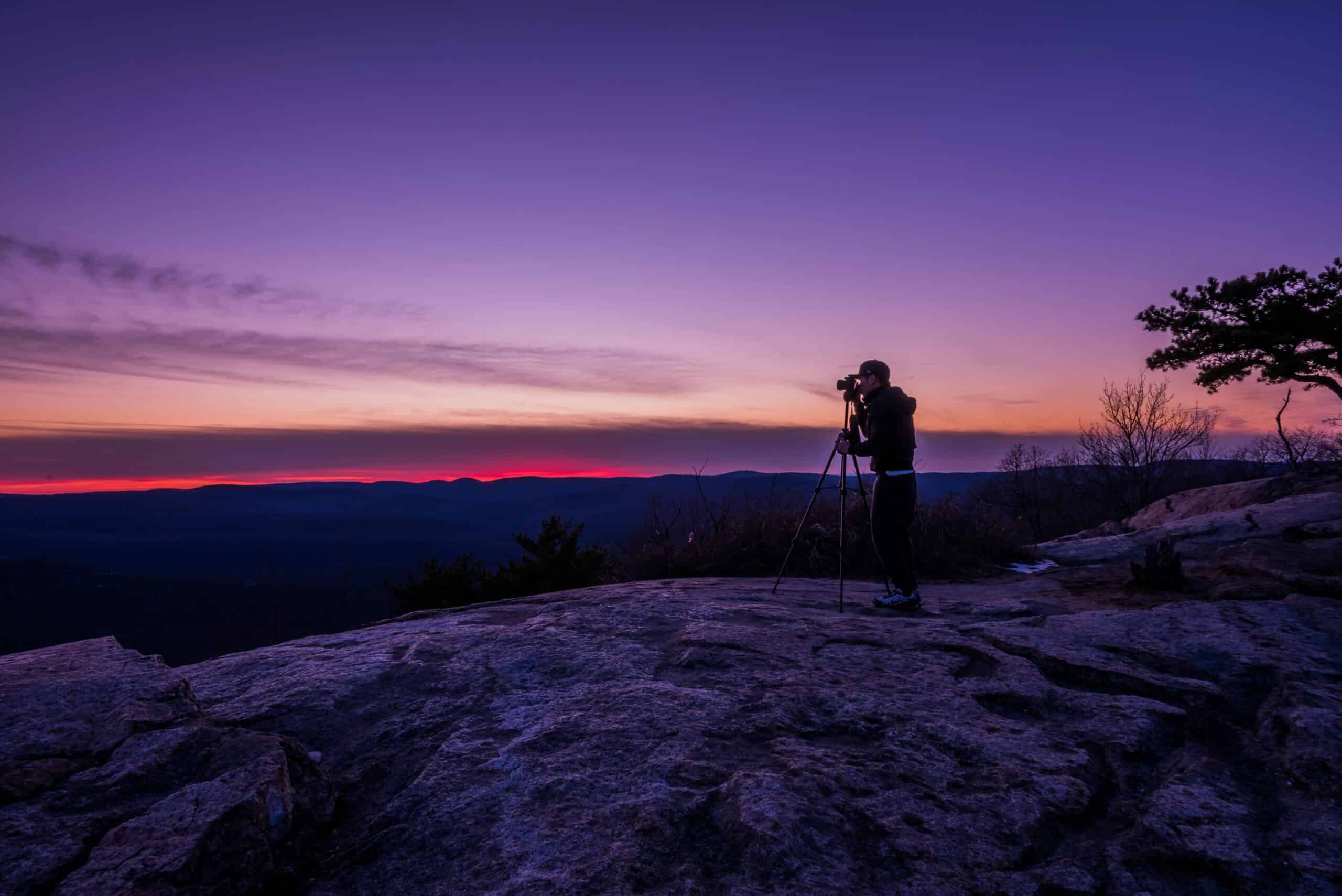
Shoot at base ISO and f/8–f/11 for maximum microcontrast. If the sun is in frame, shade the lens between frames when possible (but be careful not to introduce shadows). Consider a second pass after the sun dips for a softer sky to blend later.
Event Crowds
Prioritize shutter speed: f/5.6–f/8, 1/200+, ISO 400–800. Shoot two rotations: one fast for clean people positions and another slower for sky or static architecture. Blend in post where needed.
Rooftop or Pole Capture
Use a light setup, keep wind in mind, and tether everything. Short capture sets (e.g., 3 around + Z + N with a circular fisheye) reduce time aloft. Add a small safety line to your camera plate.
For more context on lens choice, capture math, and resolution outcomes per focal length, this reference is a classic: DSLR spherical resolution explained.
Important Compatibility Note for Nikon Z7 II & Olympus 8mm f/1.8 PRO
While the main keyword is how to shoot panorama with Nikon Z7 II & Olympus 8mm f/1.8 PRO Fisheye, this exact pairing is not plug-and-play. The Olympus lens is Micro Four Thirds (electronic aperture and focus) and is not supported by a practical MFT-to-Z adapter that preserves aperture/focus control, and its image circle does not cover full-frame. To achieve the same shooting flow on the Z7 II, use a full-frame fisheye (e.g., NIKKOR 8–15mm via FTZ). If you own the Olympus 8mm, use a Micro Four Thirds body for capture; all shooting and stitching techniques in this guide still apply directly.
If you are new to panoramic heads and want an end-to-end tutorial, this resource covers best practices and setup details you can follow regardless of camera brand: Set up a panoramic head to shoot high-end 360 photos.
Safety, Care, and Data Integrity
- Wind and edges: Weight your tripod, keep a hand on a leg between shots, and never lean over railings with a pole without a tether.
- Lens protection: Fisheyes are vulnerable; always use caps and a soft pouch when moving between locations.
- Redundancy: Use dual card slots (if available) or backup to a portable SSD right after each location. A second capture pass can save you when a single frame has blur or a flare.
Frequently Asked Questions
- Can I shoot handheld panoramas with the Nikon Z7 II?
Yes, for single-row partial panos. For 360 photos, you can try handheld with an 8mm circular fisheye and IBIS ON, but expect more stitching errors. A tripod with a panoramic head remains the standard for professional results.
- Is the Olympus 8mm f/1.8 PRO wide enough for a single-row 360?
On Micro Four Thirds, it’s a diagonal fisheye—plan for 6 shots around + zenith + nadir. On full-frame, use an 8mm circular fisheye (e.g., NIKKOR 8–15 at 8mm) for 3 around + Z + N.
- Do I need HDR for interiors with bright windows?
Usually yes. Bracket ±2 EV (3–5 frames) for each angle. Merge HDR before or during stitching to retain window detail and clean shadows.
- How do I avoid parallax issues in tight spaces?
Use a calibrated panoramic head and place the lens’s entrance pupil over the rotation axis. Mark your rail positions for the Z7 II + fisheye combo and verify with a quick near/far parallax test before serious shooting.
- What ISO range is safe on the Z7 II in low light?
For print-grade panos, keep ISO ≤800 and favor longer shutters on a tripod. For event or web output, ISO 1600 is acceptable with careful noise reduction.
Expert Notes and Further Reading
If you want a broader comparison of camera and lens options for virtual tours, this evergreen guide is helpful for prioritizing image quality, speed, and cost tradeoffs: DSLR/Mirrorless camera & lens guide for virtual tours.