
Why This Camera & Lens Are Great for Panoramas
If you want to know how to shoot panorama with Nikon Z7 II & Nikon Z 20mm f/1.8 S, you’ve picked a powerful, detail-rich combo. The Z7 II’s 45.7MP full-frame BSI sensor (approx. 36×24 mm) captures very fine textures for seamless stitching and clean upscales, while its base ISO 64 and ~14.5 EV dynamic range at base give you extra highlight headroom for sunlit skies and bright windows. The pixel pitch is roughly 4.35 µm, which balances resolving power with good noise control for low-ISO panoramas. Meanwhile, the Nikon Z 20mm f/1.8 S is a rectilinear ultra‑wide prime with excellent corner sharpness when stopped down, minimal lateral CA, low coma, and well-controlled distortion—ideal traits when you need consistent frames that stitch without surprises.
Because the 20mm is rectilinear (not fisheye), you’ll shoot more images than you would with a fisheye, but you’ll avoid fisheye defishing compromises and maintain straight architectural lines. The Z7 II’s 5‑axis IBIS is great handheld, but for tripod panoramas you can switch it off to prevent micro-shifts between frames. Finally, Z-mount tolerances and the S-line optical quality give predictable edge performance—critical when you rely on overlap consistency across rows.
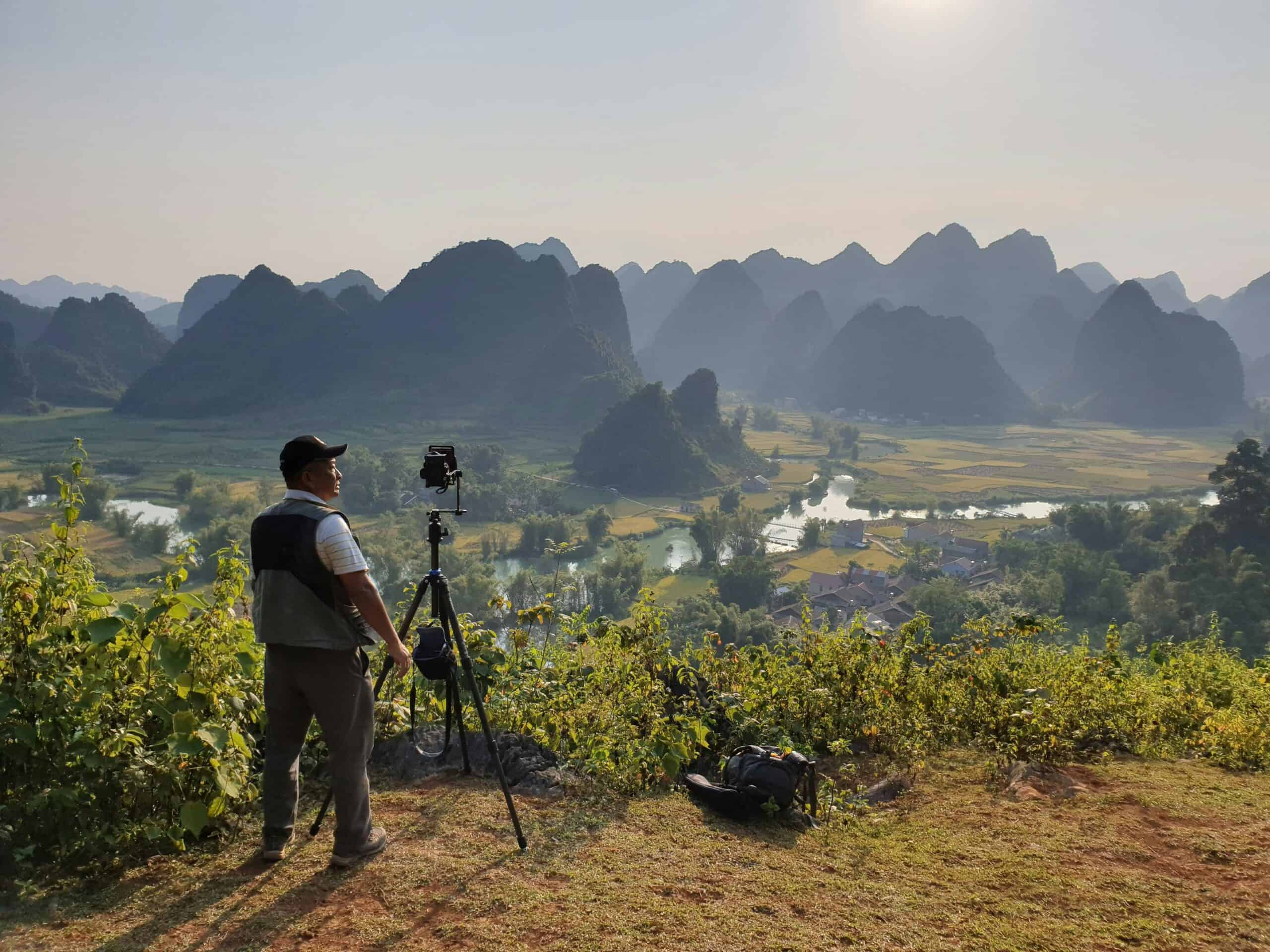
Quick Setup Overview
- Camera: Nikon Z7 II — Full-frame (FX), 45.7MP, base ISO 64, ~14.5 EV DR at base, dual EXPEED 6.
- Lens: Nikon Z 20mm f/1.8 S — Rectilinear ultra‑wide, very sharp by f/5.6–f/8, low CA and flare well-controlled with hood.
- Estimated shots & overlap (tested guides):
- Single-row 360°: not sufficient with 20mm rectilinear; you’ll need multi-row.
- Safe multi-row set A (quality-first): 8 around at +35°, 8 around at −35°, + 1 zenith, 1–2 nadir (18–19 frames).
- Faster multi-row set B (efficient): 6 around at 0°, 6 around at +60°, + 1 zenith, 1–2 nadir (14–15 frames).
- Overlap: ~25% horizontally; ~30% vertically for reliable control points.
- Difficulty: Intermediate (requires nodal alignment and multi-row workflow).
Planning & On-Site Preparation
Evaluate Shooting Environment
Start by reading light and movement. For interiors, note mixed lighting (daylight through windows, warm lamps) and reflective surfaces (glass, polished floors). Avoid pressing the lens too close to glass; keep a slight angle and a few centimeters of distance to reduce flare and ghosting. Outdoors, watch the sun’s position to prevent flare streaks across multiple frames. In crowded scenes, anticipate moving subjects—shoot two passes so you have options to mask ghosting.
Match Gear to Scene Goals
The Z7 II’s base ISO 64 and strong dynamic range help retain highlights in sunsets and window views. Indoors, ISO 100–400 remains very clean; ISO 800–1600 is still usable with modest noise reduction. The 20mm’s rectilinear rendering protects straight lines in architecture and real estate. If you need fewer shots (e.g., rushed events), consider a fisheye; but with the 20mm you’ll get more natural edges and better straight lines, which often means faster editing for client-facing work.
Pre-shoot Checklist
- Power & storage: Fully charged batteries, dual card slots enabled, shoot RAW.
- Optics clean: Wipe front/rear elements and sensor; dust shows in skies.
- Tripod leveling: Use a leveling base or bubble; calibrate pano head beforehand.
- Safety checks: Wind on rooftops, tether on poles, vehicle mounting rated for speed and vibration.
- Backup workflow: If time allows, shoot a second safety round (same settings) to replace any soft or disturbed frame.
Essential Gear & Setup
Core Gear
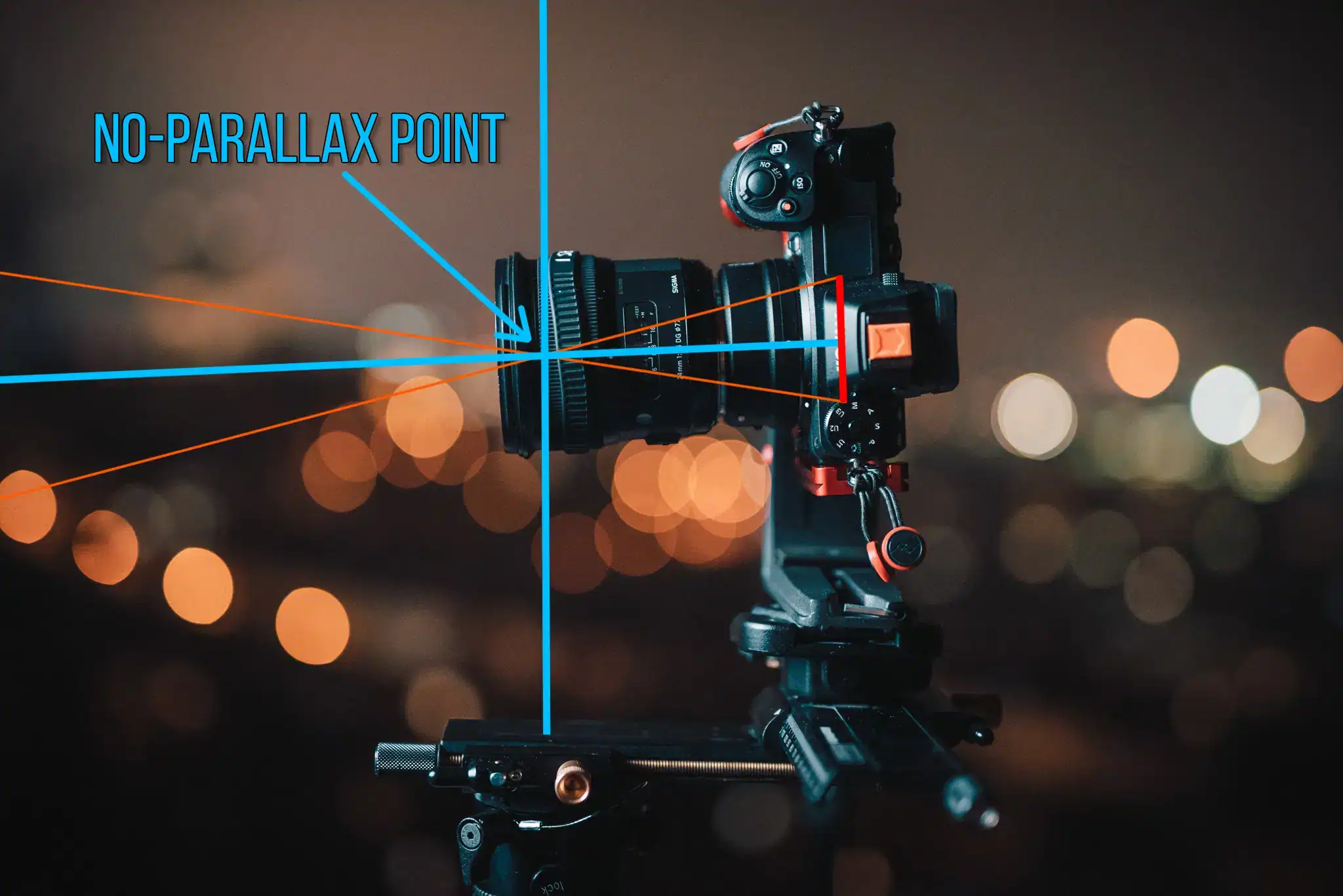
- Panoramic head: Allows rotating around the lens’s entrance pupil (nodal point) to eliminate parallax. This is mandatory for clean stitches in close quarters.
- Stable tripod with leveling base: A leveled platform makes row-to-row alignment predictable and reduces stitching corrections.
- Remote trigger or SnapBridge app: Fires the shutter without touching the camera, minimizing vibration, especially at slower speeds.
Optional Add-ons
- Pole or car mount: Use a safety tether, check load ratings, and mind the wind. Slow your rotation when elevated to reduce flex.
- Lighting aids: Small LEDs or bounced flash for dark interiors, but keep lighting consistent across frames.
- Weather protection: Rain covers and lens hood to manage drizzle and flare.
Video: Calibrate Your Panoramic Head
Seeing the nodal workflow helps. This video walks through panoramic head setup and technique in a practical way.
For more on panoramic heads and parallax control, see this panoramic head tutorial for an additional deep dive. Panoramic head tutorial
Step-by-Step Shooting Guide
Standard Static Scenes
- Level and nodal align: Level the tripod with a leveling base. Align the pano head so rotation passes through the entrance pupil. With the Z 20mm, a good starting point is to position the camera so the rotation point sits roughly 70–75 mm forward of the sensor plane mark (Ø symbol on the Z7 II’s top). Fine-tune with the near/far parallax test.
- Lock exposure and white balance: Use M mode. Meter a mid-tone and set exposure for the brightest frame you expect to shoot, favoring highlight protection on the Z7 II (base ISO 64–100 when possible). Lock white balance (Daylight, Cloudy, or a custom Kelvin) to keep color consistent across frames.
- Focus once: Switch to manual focus and use magnified live view. For deep scenes, set around the hyperfocal distance at f/8. For 20mm on full-frame at f/8, hyperfocal is roughly 1.7 m; you’ll be sharp from about 0.85 m to infinity.
- Capture with consistent overlap: For the 20mm rectilinear, shoot a multi‑row. Example Set A: 8 around at +35°, 8 around at −35°, plus 1 zenith and 1–2 nadir. Rotate evenly using degree marks on your head.
- Nadir shot: After your main rows, tilt down to capture a clean floor/ground frame for tripod removal during post.
HDR / High Dynamic Range Interiors
- Bracket ±2 EV (3 or 5 frames): For rooms with bright windows, bracket each view (e.g., −2/0/+2) before rotating to the next yaw position.
- Keep WB locked: A fixed Kelvin or preset prevents color shifts between brackets and across frames, making stitching more reliable.
- Shutter first, then rotate: Use a remote or 2 s timer to avoid shake. Keep the camera stationary until all brackets are done.
Low-Light / Night Scenes
- Long exposures on a solid base: Start at ISO 64–200 for the cleanest files. The Z7 II performs well up to ISO 800–1600 if you need to shorten shutter speeds for breeze or subtle movement.
- Turn IBIS off on tripod: Prevents micro‑drift between frames. Use a remote trigger and the electronic first-curtain shutter to minimize vibration.
- Mind light sources: Slightly underexpose to protect highlights from streetlamps and neon; lift shadows in post using RAW.
Crowded Events
- Two passes strategy: Shoot a complete pass quickly to ensure coverage. Then wait for people to clear key sectors and reshoot those frames.
- Mask in post: Use the cleaner pass to replace moving subjects and remove ghosts during stitching/masking.
Special Setups (Pole / Car / Elevated)
- Secure everything: Use a rated clamp, safety tether, and check all knobs. Wind pressure increases with elevation.
- Slow rotation, faster shutter: To fight vibrations, reduce rotation speed and keep shutter times short (raise ISO modestly if needed).
- Take an extra full round: Elevated rigs are more prone to micro‑movement; redundancy saves rescues later.
Real-World Case Notes
- Indoor real estate: ISO 100–400, f/8, HDR ±2 EV. Multi-row Set A for full ceilings/floors with clean straight lines.
- Outdoor sunset: Base ISO 64–100, expose for sky highlights. Consider an additional darker bracket for the sun disc.
- Event crowds: 1/200+ shutter, ISO 400–800, f/5.6–f/8. Two‑pass method to reduce ghosting.
- Rooftop/pole: Wind is the enemy—short shutters, tight overlap (~30%), and an extra ring for safety.
Recommended Settings & Pro Tips
Exposure & Focus
| Scenario | Aperture | Shutter | ISO | Notes |
|---|---|---|---|---|
| Daylight outdoor | f/8–f/11 | 1/100–1/250 | 64–200 | Lock WB (Daylight). Protect highlights; Z7 II shines at base ISO. |
| Low light/night | f/4–f/5.6 | 1/30–1/60 (or longer on tripod) | 100–800 (1600 if needed) | Tripod + remote. IBIS off on tripod. |
| Interior HDR | f/8 | Bracket ±2 EV | 100–400 | Even lighting per frame, process merges before stitching or in PTGui. |
| Action / moving subjects | f/5.6–f/8 | 1/200+ | 400–800 | Freeze motion. Consider two-pass strategy. |
Critical Tips
- Manual focus once: Use magnified live view; set near hyperfocal at f/8 for maximum depth.
- Nodal point calibration: Start around 70–75 mm forward of the sensor plane for the Z 20mm; verify by aligning a near object against a far object and rotating—no relative motion means you’re good.
- White balance lock: Avoid mixed WB across rows; a fixed Kelvin prevents banding or seams in gradients.
- RAW shooting: Maximizes DR and color latitude—essential for seamless skies and indoor window recovery.
- IBIS: Great handheld, but switch off on tripod to avoid tiny inter‑frame shifts.
Stitching & Post-Processing
Software Workflow
For multi‑row 360°, PTGui is a favorite for speed and control-point reliability; Hugin is a solid open-source alternative. Rectilinear 20mm frames need a bit more overlap than fisheye sets, but they reward you with straighter edges and natural-looking interiors. As a rule of thumb: 25–30% overlap for fisheye, 20–30% for rectilinear—err slightly higher if you have moving subjects. Build HDR either before stitching (merge to 32‑bit frames first) or let PTGui handle bracketed merges per viewpoint. Why many pros prefer PTGui for complex panoramas
Cleanup & Enhancement
- Nadir patch: Clone/heal in Photoshop, or use AI-based tripod removal tools to speed up the process.
- Color balance: If a row looks cooler/warmer, sync WB and tint before restitching. Apply gentle NR to shadow bands if ISO >800.
- Leveling: Correct pitch/roll; use vertical lines in architecture to judge level. Set horizon via anchor points in PTGui.
- Export: Deliver an equirectangular 2:1 image (JPEG or TIFF). For VR publishing, keep a master TIFF; export JPEG at the platform’s guidelines. Oculus guide: DSLR/Mirrorless 360 photo pipeline
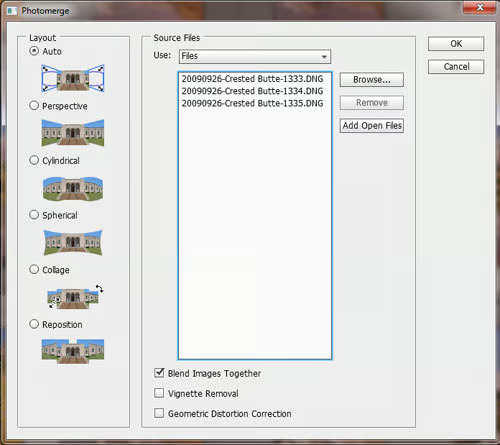
Note: Desired spherical resolution depends on sensor MP and lens FOV. For planning output sizes, see this reference overview of DSLR spherical resolution. Panotools: DSLR spherical resolution
Disclaimer: Always check your software’s current documentation; features evolve, and recommended steps can change with updates.
Useful Tools & Resources
Software
- PTGui panorama stitching
- Hugin (open source)
- Lightroom / Photoshop for RAW control and cleanup
- AI tools for tripod/nadir patching
Hardware
- Panoramic heads (Nodal Ninja, Leofoto, or similar)
- Carbon fiber tripod with a leveling base
- Wireless remote shutter or intervalometer
- Pole extensions and safe car mounts with tethers
Disclaimer: Brand names are for search reference; confirm specs and compatibility on official sites.
Common Mistakes & How to Avoid Them
- Parallax error: Always align the nodal point; test near/far object alignment before a critical shoot.
- Exposure flicker: Manual mode, fixed ISO, and locked white balance prevent visible seams.
- Tripod shadows and footprints: Capture a dedicated nadir and patch it later.
- Ghosting from movement: Shoot two passes; mask in post using the cleaner frames.
- Night noise: Prioritize low ISO on tripod; lengthen shutter and use remote release.
Frequently Asked Questions
- Can I shoot handheld panoramas with the Nikon Z7 II?
Yes for simple cylindrical panos, but for 360×180° spheres—especially indoors—handheld introduces parallax. The Z7 II’s IBIS helps keep frames steady, but for professional results use a tripod and a panoramic head.
- Is the Nikon Z 20mm f/1.8 S wide enough for a single-row 360?
No. As a rectilinear 20mm, it needs multi‑row capture to cover the zenith and nadir with proper overlap. Plan on at least two rows plus zenith/nadir, often three in tight spaces.
- Do I need HDR for interiors with bright windows?
Usually yes. Bracket ±2 EV for each viewpoint to preserve exterior window detail and interior shadows. Merge bracketed frames consistently before or during stitching.
- How do I avoid parallax issues with this combo?
Mount the Z7 II on a panoramic head and align the rotation around the lens’s entrance pupil. Start with the camera’s rotation point ~70–75 mm forward of the sensor plane and refine by checking near/far object alignment as you yaw the camera.
- What ISO range is safe on the Z7 II in low light?
For tripod-based panoramas, ISO 64–400 is ideal; 800–1600 is still solid if you need shorter shutter times. Above ISO 1600, noise increases—treat with careful noise reduction in RAW processing.