
Why This Camera & Lens Are Great for Panoramas
If you want to move fast and still deliver a seamless 360 photo, learning how to shoot panorama with Nikon Z7 II & Laowa 4mm f/2.8 Circular Fisheye is a smart path. The Z7 II is a 45.7MP full-frame mirrorless with a backside-illuminated sensor (approx. 8256×5504 px, ~4.35 µm pixel pitch). It offers class-leading base ISO 64 dynamic range (about 14 stops at base), 14-bit RAW, and in-body image stabilization (IBIS) up to about 5 stops for handheld work. The body is weather-sealed, has a robust magnesium frame, and supports key features helpful for panoramas (Electronic Front-Curtain Shutter, customizable buttons, and reliable live-view autofocus for prefocus).
The Laowa 4mm f/2.8 Circular Fisheye is an ultra-compact, fully manual, circular fisheye lens with an extremely wide field of view (~210°). On the Z7 II’s full-frame sensor, it produces a circular image and can capture an entire 360° panorama with as few as two frames. That makes it fantastic for time-critical scenes (crowded events, windy pole work, or car-mounted shots). The trade-off is resolution: because the circle occupies only part of the frame, the stitched equirectangular will be lower resolution than panoramas shot with larger image-circle fisheyes (e.g., 7.5–8mm) or rectilinear lenses requiring more frames. For many web/VR uses (6K–8K output), this combo is still excellent, as long as you accept the speed-versus-resolution balance.
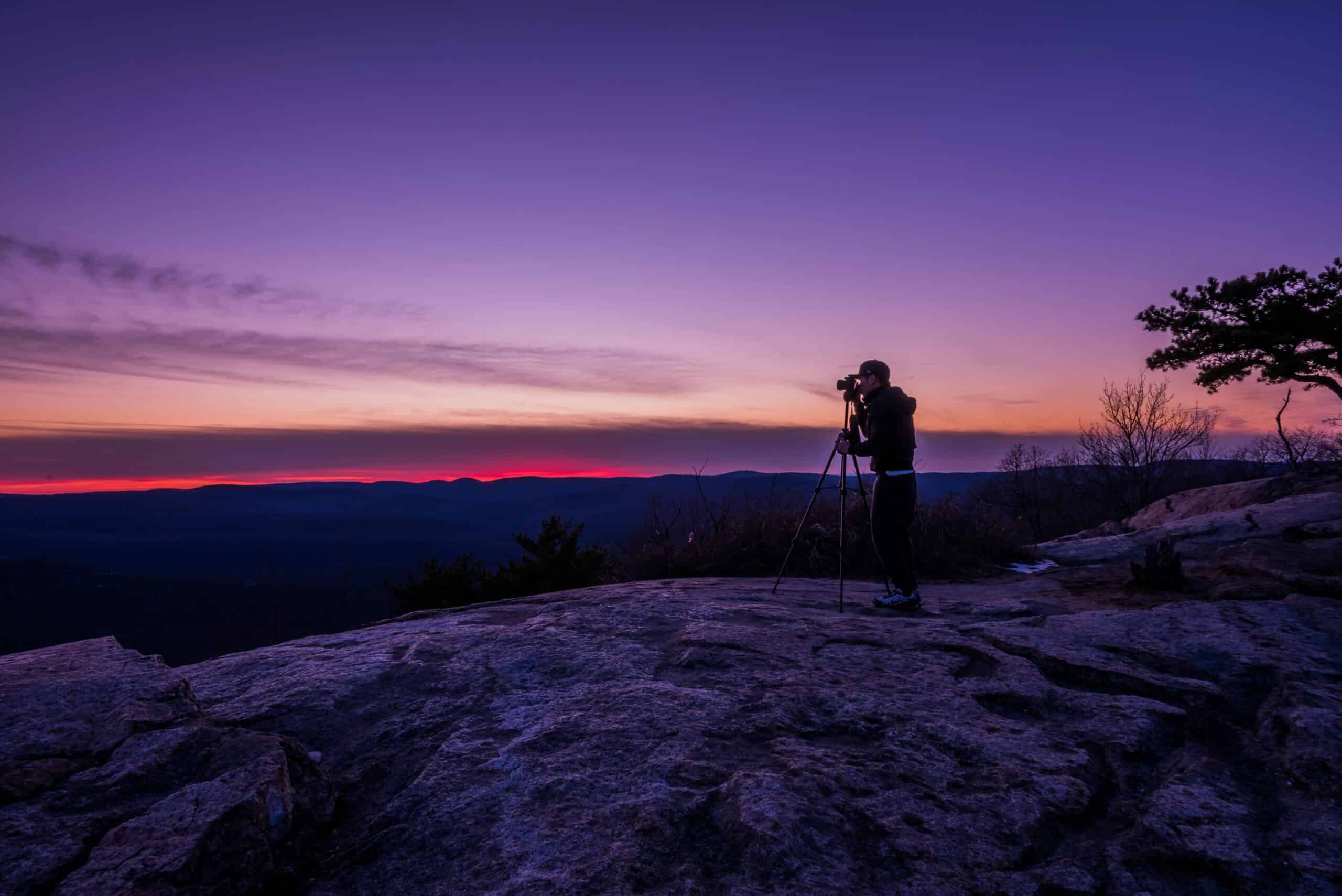
Quick Setup Overview
- Camera: Nikon Z7 II — Full-frame (35.9×23.9 mm), 45.7MP BSI CMOS, base ISO 64, 14-bit RAW, 5-axis IBIS.
- Lens: Laowa 4mm f/2.8 Circular Fisheye — fully manual, circular fisheye (~210° FOV), compact, f/2.8–f/16, moderate CA, best stopped to f/5.6–f/8 for edge quality.
- Estimated shots & overlap:
- Fastest: 2 shots around at 180° yaw (0° tilt) + optional nadir patch. Overlap target: 25–35%.
- Safer/higher quality: 3 shots around at 120° + nadir patch for clean floor removal.
- Difficulty: Easy on tripod (2/5). Moderate on pole/car mount (3–4/5) due to wind/vibration.
Planning & On-Site Preparation
Evaluate Shooting Environment
Scan for moving subjects (people, trees in wind), reflective surfaces (glass, polished floors), and bright light sources (sun, spotlights). For windows and glass walls, keep the lens perpendicular to the glass and shoot from 30–60 cm away to reduce flare and ghosting. If sun is in frame, shield the lens during exposure to reduce veiling flare—your hand just outside the frame can help with a circular fisheye.
Match Gear to Scene Goals
The Z7 II’s base ISO 64 and wide dynamic range excel at high-contrast scenes (sunset exteriors, interiors with bright windows). Indoors, ISO 200–800 is a safe working range with clean detail when tripod-mounted; if you need speed, the Z7 II remains usable through ISO 1600–3200 with careful noise reduction. The Laowa 4mm’s circular fisheye view means fewer shots (2–3) and less time between frames—ideal for crowds or windy poles—at the cost of resolution compared to an 8mm circular on full-frame. If your priority is speed and coverage, this combo shines; if the priority is ultra-high gigapixel output, consider a rectilinear lens and more frames.
Pre-shoot Checklist
- Charge batteries; bring a spare. Format a fast card; shoot RAW.
- Clean the front element (fisheye lenses show every speck) and check your sensor.
- Calibrate your panoramic head for the Laowa 4mm; mark your rail positions.
- Level the tripod, verify no Auto DX crop is enabled (use full FX to maximize circle diameter), and disable IBIS for tripod work.
- Safety: on rooftops or poles, use a safety tether and assess wind. On car mounts, triple-check suction cups/straps.
- Backup workflow: shoot a second full round if time allows; redundancy prevents later headaches.
Essential Gear & Setup
Core Gear
- Panoramic head: Enables rotation around the lens’s no-parallax (entrance) pupil, minimizing parallax and easing stitching. For a circular fisheye, a compact single-row head or a slim rotator is sufficient. Calibrate once, then mark the rail for repeatability.
- Stable tripod with leveling base: A leveling base or half-ball makes horizon leveling fast and accurate.
- Remote trigger or app: Use the Nikon app or a remote release to avoid touching the camera. Enable EFCS (Electronic Front-Curtain Shutter) to limit vibration. Avoid full electronic shutter under flickering lights (banding risk).
Optional Add-ons
- Pole or car mount: Excellent for elevated or dynamic vantage points. Use guy lines on poles in wind, and keep rotation slow and deliberate.
- Lighting aids: Small LED panels or bounced flash for dim interiors—balance carefully to avoid harsh hotspots.
- Weather gear: Rain cover, lens cloths, and silica packets for humid environments.
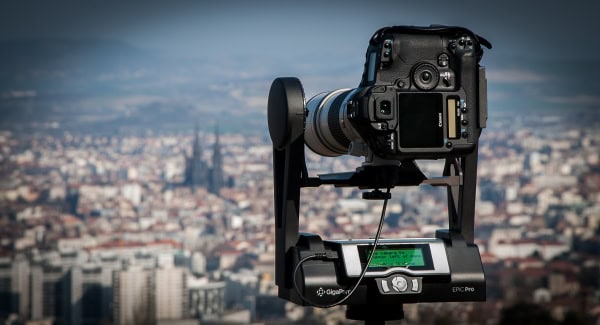
Want a deeper dive on panoramic heads and alignment philosophy? See this panoramic head tutorial that covers alignment, parallax, and rotation best practices. Learn more about panoramic head setup.
Step-by-Step Shooting Guide
Standard Static Scenes
- Level tripod & align nodal point: On your pano head, adjust fore-aft until foreground/background objects do not shift relative to each other as you pan. Mark this rail position for the Laowa 4mm.
- Manual exposure & white balance: Set M mode. Meter for mid-tones, then lock exposure. Set white balance to a fixed value (Daylight outdoors, 4000–5000K indoors) so color doesn’t fluctuate across frames.
- Focus and aperture: Manual focus 1–1.5 m and stop down to f/5.6–f/8. This yields deep DoF and improves edge sharpness. Use focus magnification to confirm.
- Capture sequence:
- Fast 2-shot method: Take one frame; rotate 180°; take the second. Optional: tilt slightly upward on one frame if you need extra zenith coverage.
- Safe 3-shot method: Take frames at yaw 0°, 120°, 240° for more overlap and higher stitched detail.
- Nadir (ground) shot: If the tripod is visible, capture a quick nadir patch by tilting down slightly or shoot a handheld patch after moving the tripod out of the way.
HDR / High Dynamic Range Interiors
- Bracket ±2 EV (often 5 frames total) to balance bright windows and dark interiors. Use the Z7 II’s auto bracketing in M mode.
- Keep white balance locked. Shoot RAW to merge brackets cleanly in PTGui or Lightroom before stitching.
Low-Light / Night Scenes
- Use a tripod, EFCS, and a remote release. Start at f/4–f/5.6, 1/30–1/60 s, ISO 400–800. If stars or light trails are involved, lengthen shutter instead of pushing ISO too far.
- Turn off IBIS on tripod to prevent micro-drift blur during long exposures.
Crowded Events
- Use the 2-shot method to minimize subject movement between frames. Shoot a quick second pass if you expect occlusions.
- In post, mask frames to remove ghosts and blend people convincingly.
Special Setups (Pole / Car / Elevated)
- Secure gear & tether: Use a safety line from camera to pole or vehicle. Check fasteners each time you rotate.
- Wind and vibration: Keep shutter speeds at 1/125–1/250 s when possible. Rotate slowly; wait for oscillations to stop. For car mounts, pick smooth pavement and keep speed low.

Recommended Settings & Pro Tips
Exposure & Focus
| Scenario | Aperture | Shutter | ISO | Notes |
|---|---|---|---|---|
| Daylight outdoor | f/8–f/11 | 1/100–1/250 | ISO 64–200 | Lock WB (Daylight ~5200K). Use EFCS. |
| Low light/night | f/4–f/5.6 | 1/30–1/60 | ISO 400–800 | Tripod, IBIS off, remote trigger. Prefer longer shutter over higher ISO. |
| Interior HDR | f/8 | Bracket ±2 EV (3–5 frames) | ISO 64–400 | Merge brackets before stitching or let PTGui handle HDR. |
| Action / crowds | f/5.6–f/8 | 1/200+ | ISO 400–1600 | Use the 2-shot method to minimize subject movement. |
Critical Tips
- Manual focus near hyperfocal: With a 4mm fisheye, focusing 1–1.5 m and stopping down to f/5.6–f/8 keeps everything acceptably sharp.
- Entrance pupil calibration: Use a simple foreground/background alignment test and mark the fore-aft rail. This saves time on every future shoot.
- White balance lock: Avoid Auto WB. Set a Kelvin value for consistency across frames and brackets.
- RAW over JPEG: Preserve dynamic range and color latitude; fix CA and vignetting later.
- IBIS and shutter mode: Turn off IBIS on tripod. Use EFCS to reduce shutter shock. Avoid silent shutter under flickering lights.
- Nikon Z7 II specifics: Disable Auto DX crop; set FX image area to maximize the circular image diameter. Consider “Non-CPU lens data” to record focal length and assist IBIS when handheld.
Stitching & Post-Processing
Software Workflow
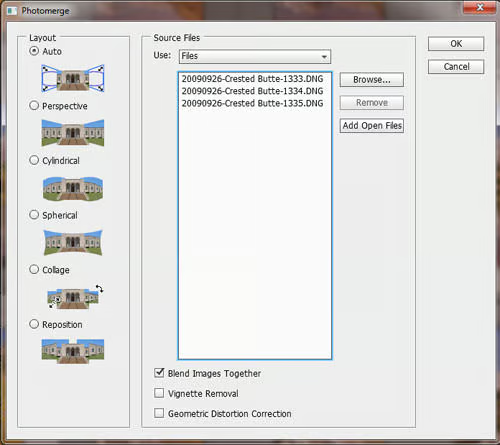
For circular fisheye stitching, PTGui is fast and very reliable; Hugin is a capable open-source alternative. A typical approach is:
- Import RAWs to Lightroom. Apply lens-neutral profile (if any), correct WB, and do basic adjustments. Optionally merge HDR brackets here first.
- Export 16-bit TIFFs. Load into PTGui/Hugin. Set lens type to circular fisheye and provide the approximate FOV (~210°). Let the software generate control points; refine if needed.
- Optimize, check the panorama editor for seams, and mask moving objects if necessary.
- Output as an equirectangular 2:1 image (JPG or 16-bit TIFF) for VR viewers.
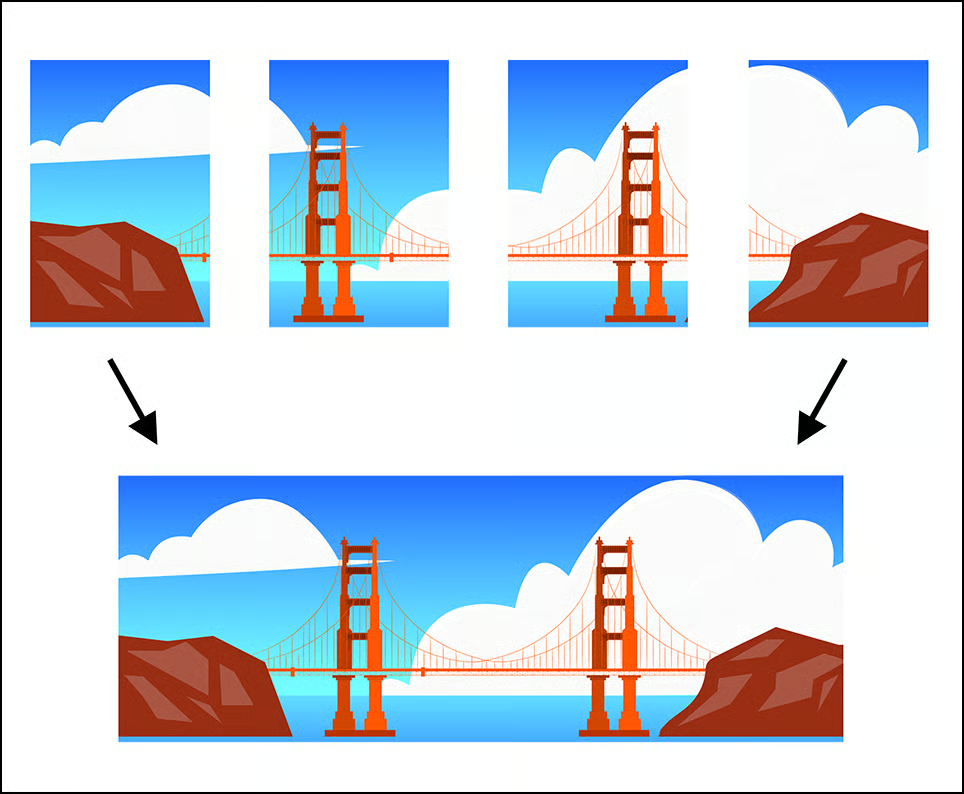
Fisheye panoramas generally need 25–35% overlap; rectilinear workflows can use a bit less (20–25%) but require many more frames. For an approachable overview of 360 capture and stitching, see this guide for DSLR/mirrorless 360 photos. How to shoot and stitch a 360 photo with a mirrorless camera.
Cleanup & Enhancement
- Tripod/nadir patch: Patch in Photoshop using a cloned plate or add a branded logo. Many AI tools can fill the tripod area convincingly.
- Color & noise: Unify color temperature between exterior/interior parts and apply moderate noise reduction for ISO 800+ shots.
- Leveling: Use the panorama editor to set horizon and correct roll/pitch. Ensure the verticals are upright for architectural scenes.
- Export: Common VR outputs are 6000–8000 px wide equirectangular JPG for web, or 10–12K if you used the 3-shot method and want extra crispness.
For a detailed look at why PTGui is favored for professional pano work, this review is a good reference. PTGui review: building incredible panoramas.
If you’re curious about panorama math and expected output resolution from different lens/sensor combos, the Panotools wiki is a classic resource. DSLR spherical resolution explained.
Useful Tools & Resources
Software
- PTGui panorama stitching
- Hugin (open source)
- Lightroom / Photoshop
- AI tripod removal and object clean-up tools
Hardware
- Panoramic heads: Nodal Ninja, Leofoto, and other compact single-row heads suit circular fisheyes well.
- Carbon fiber tripods: light, stiff, and wind-resistant.
- Leveling bases and rotators with click-stops at 120° or 180°.
- Wireless remote shutters or app control.
- Pole extensions and car mounts (with safety tethers).
Disclaimer: brand names are for search convenience—check manufacturer sites for current specs, compatibility, and availability.
Common Mistakes & How to Avoid Them
- Parallax error: Always rotate around the entrance pupil. Calibrate your pano head once and mark it.
- Exposure flicker: Use full manual exposure and a fixed white balance across all frames and brackets.
- Tripod shadows: If the sun is low, recompose or plan to patch the nadir later.
- Motion ghosting: For crowds, shoot 2 quick frames and mask in post to remove duplicates.
- Night noise and blur: Keep ISO moderate (400–800) and lengthen shutter on tripod. IBIS off, EFCS on.
- Auto crop issues: On Z7 II, disable Auto DX crop; use FX area to maximize the circular image size.
Field-Proven Scenarios with This Combo
Indoor Real Estate (Bright Windows)
Setup on a leveled tripod in the room center. Manual exposure around f/8, ISO 64–200. Use HDR bracketing ±2 EV (5 frames) at each yaw position. The 3-shot method at 120° gives extra overlap around window frames, which reduces stitching errors and keeps lines straighter. Merge HDRs first, then stitch.
Outdoor Sunset (High DR)
Shoot at base ISO 64 for maximum dynamic range, f/8, use 3-shot method for cleaner gradients in the sky. If the sun is in-frame, shade the lens during exposure to prevent flare. Bracket if the foreground is significantly darker than the sky.
Event Crowds (Speed Over Resolution)
Use the 2-shot method at ISO 400–800, f/5.6, 1/200–1/500 s. Spin quickly but smoothly between frames; capture a second pass for safety. In post, pick the cleanest people positions and mask out ghosts.
Rooftop or Long Pole
Wind is the enemy. Secure a tether, keep shutter at 1/125–1/250 s, and grab the 2-shot sequence to minimize sway time. The Z7 II’s 45.7MP helps a bit with small circle size, but expect a 6K–8K equirectangular. For marketing use on web, that’s typically sufficient.
For more fundamentals and best practices that apply regardless of gear, this Q&A thread compiles techniques from many panorama shooters. Best techniques to take 360 panoramas.
Frequently Asked Questions
- Can I shoot handheld panoramas with the Nikon Z7 II?
Yes, especially with the Laowa 4mm. Use the 2-shot method, ISO 400–800, 1/200 s or faster, and brace yourself against a stable surface. Handheld is fine for social/web use, but a tripod and pano head will yield cleaner seams and higher consistency.
- Is the Laowa 4mm f/2.8 wide enough for a single-row 360?
Yes. It’s a circular fisheye (~210° FOV) and can cover a full 360×180 with just 2–3 shots. The upside is speed; the downside is lower resolution because the circle uses only part of the Z7 II’s sensor.
- Do I need HDR for interiors with bright windows?
Often, yes. The Z7 II has strong base-ISO dynamic range, but windows can be many stops brighter than interiors. Using ±2 EV (3–5 frames) per yaw position lets you balance the scene and preserve highlight detail.
- How do I avoid parallax issues with this setup?
Mount the camera on a pano head and calibrate the entrance pupil for the Laowa 4mm. Rotate around that point. Even with a 4mm fisheye, misalignment can cause stitching errors around near objects like furniture or railings.
- What ISO range is safe on the Z7 II in low light?
For tripod work, stay at ISO 64–400 and lengthen exposure. For handheld/event speed, ISO 800–1600 is still very usable with modern noise reduction. Reserve ISO 3200+ for emergencies and expect more aggressive NR in post.
- Can I set up a custom mode for panos?
Yes. Assign a user mode with M exposure, fixed WB, EFCS on, IBIS off (for tripod), and bracketing settings saved. You can also program a custom button to toggle bracketing quickly.
- How do I reduce flare with a circular fisheye?
Avoid direct bright sources near the edge of the circle when possible. Shade the lens with your hand just outside the frame, shoot when lights aren’t aimed at the lens, and consider repositioning slightly so the light falls more centrally in one frame for easier masking.
- What panoramic head should I choose for this combo?
A lightweight single-row head (e.g., Nodal Ninja or compact Leofoto options) is sufficient. You want stable click-stops at 120°/180°, a clear way to mark the entrance pupil position, and a leveling base for fast setup.
Safety, Limitations & Trustworthy Practices
Rooftops, poles, and car mounts add risk. Always use a safety tether and consider wind load. The Laowa 4mm’s bulbous front element is exposed—use a cap between setups and keep a microfiber cloth handy. The Z7 II’s IBIS is fantastic handheld but switch it off on a tripod to avoid micro-shift. Finally, follow a redundant capture workflow: if time allows, shoot a second full round so you can patch any stitching gaps or motion ghosts later. For a deeper walk-through on high-end head setup and capture flow, this step-by-step is a solid reference. Panoramic head setup for high-end 360 photos.
