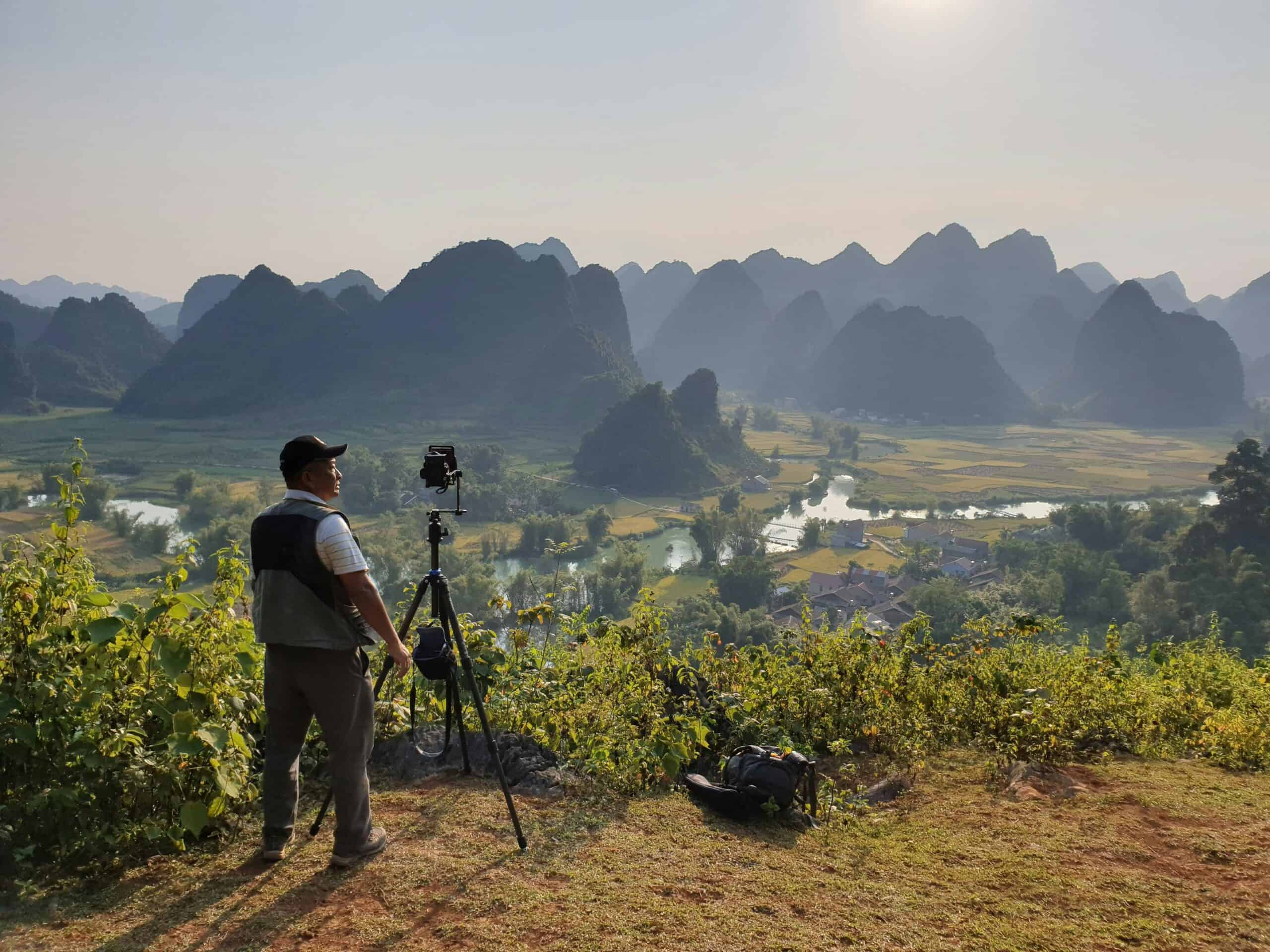
Why This Camera & Lens Are Great for Panoramas
If you’re searching for how to shoot panorama with Nikon Z7 II & Fujifilm XF 8-16mm f/2.8 R LM WR, here’s the straight talk: the Z7 II is a full-frame Nikon Z-mount mirrorless camera, while the XF 8–16mm is a Fujifilm X-mount APS-C rectilinear ultra-wide zoom. They are not directly mount-compatible, and there is no fully functional electronic adapter to pair this XF lens on a Nikon Z body while retaining infinity focus and aperture/AF control. Practically, you’ll want to either shoot the Z7 II with a native ultra-wide (e.g., NIKKOR Z 14–24mm f/2.8 S) or shoot the XF 8–16mm on a Fujifilm X body. This guide focuses on delivering top-tier panorama results with the Z7 II, while giving you equivalent shot counts if you do use the XF 8–16mm on an X body.
Why the Z7 II? Its 45.7MP full-frame BSI CMOS sensor (approx. 35.9 × 23.9 mm, ~4.35 μm pixel pitch) provides excellent detail, low noise, and broad dynamic range (around 14+ EV at base ISO 64). That’s ideal for clean skylines, interior HDR panoramas, and large-format prints or 12k equirectangular exports. The camera’s 5-axis IBIS helps when handheld, and its robust bracketing, 14-bit RAW, and exposure controls are perfect for demanding 360 photo workflows.
Why the XF 8–16mm is interesting: it’s a constant f/2.8 rectilinear zoom with a huge field of view (approx. 121° diagonal at 8 mm on APS-C), strong central sharpness from f/4–f/8, and good lateral CA control. For 360° work on APS-C, it keeps straight lines straight so interiors look natural, albeit requiring more frames than a fisheye.
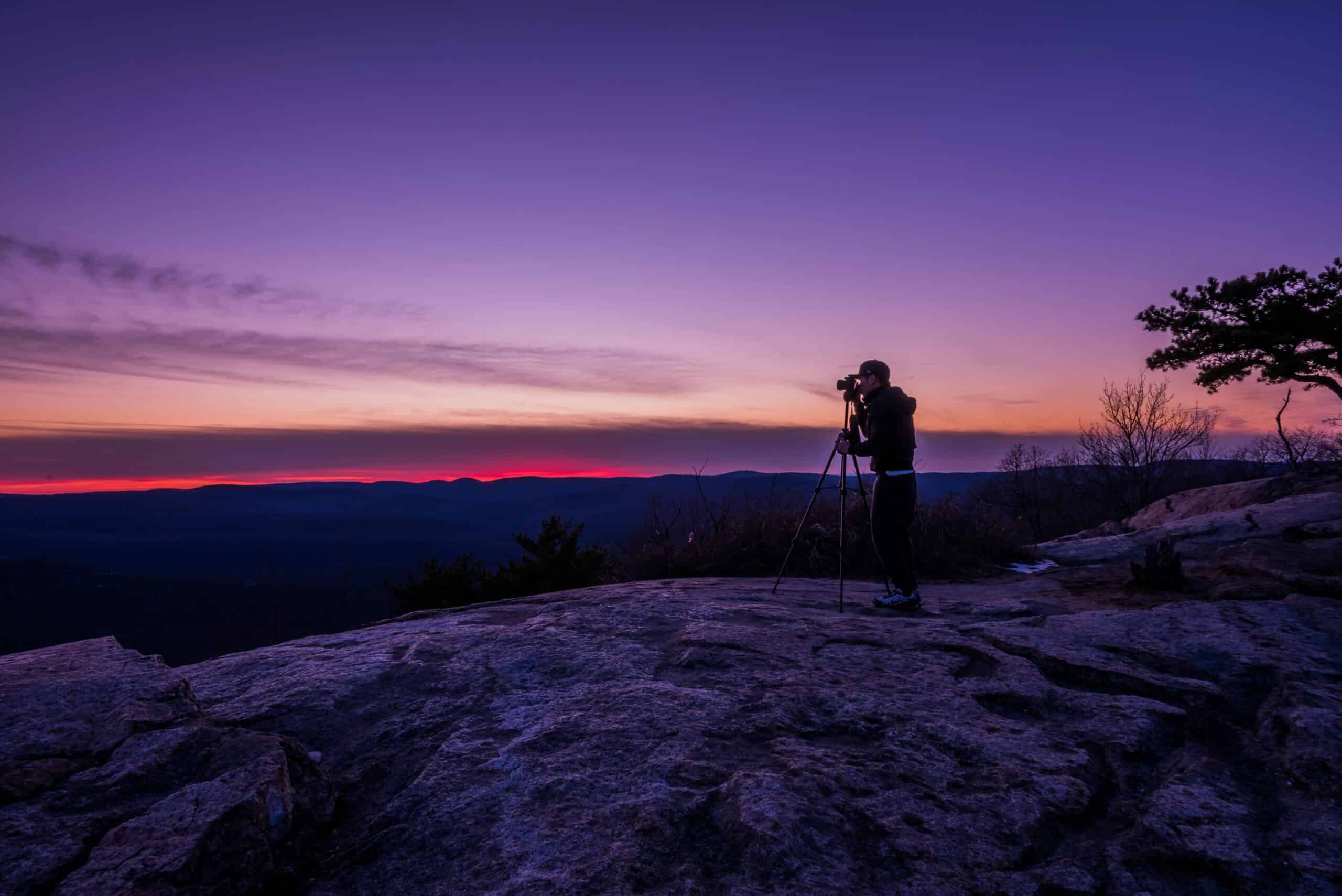
Bottom line: use your Z7 II with a native ultra-wide or fisheye for best results. If you already own the XF 8–16mm, pair it with a Fujifilm X body for a similarly capable, rectilinear workflow (we provide shot-count guidance for both paths below).
Quick Setup Overview
- Camera: Nikon Z7 II — Full-frame (FX), 45.7MP BSI CMOS; base ISO 64; excellent DR (~14+ EV at ISO 64); 14-bit RAW; 5-axis IBIS.
- Lens: Fujifilm XF 8–16mm f/2.8 R LM WR — rectilinear APS-C ultra-wide; sharp from f/5.6–f/8; constant f/2.8; no OIS; bulbous front element (no front filters); not mount-compatible with Nikon Z7 II.
- Estimated shots & overlap (Z7 II with a rectilinear UWA):
- 14 mm FF: 8 around (30–35% overlap) + 1 zenith + 1 nadir (total ~10 shots)
- 16 mm FF: 10 around + Z + N
- 24 mm FF: 16 around + Z + N (higher resolution pano)
- Estimated shots & overlap (XF 8–16 on Fujifilm APS-C for reference):
- 8 mm APS-C: 8–10 around + Z + N
- 16 mm APS-C: 12–14 around + Z + N
- Difficulty: Intermediate (easy with a calibrated panoramic head; more advanced for HDR interiors or crowded scenes).
Note: If you must stay with a single-row pano for speed, aim for the wider end (14–16 mm on FF or 8–10 mm on APS-C) and ensure at least 30% overlap for robust stitching.
Planning & On-Site Preparation
Evaluate Shooting Environment
Before setting up, scan for moving elements (people, cars, trees in strong wind), reflective surfaces (glass, polished floors), and specular highlights (sun, street lamps). For windows and glass, shoot perpendicular when possible and keep the front element several centimeters away to reduce flare and double reflections. In interiors, note mixed lighting (tungsten, daylight, LEDs). Outdoors, beware of fast-changing sky color at sunset—set your white balance once and don’t touch it until the pano is done.
Match Gear to Scene Goals
The Z7 II’s base ISO 64 and broad dynamic range make it ideal for high-contrast sunsets and HDR interiors. For indoor real estate, target ISO 64–200 when on tripod and bracket if necessary; the Z7 II remains very clean up to ISO 800 with careful exposure. A rectilinear ultra-wide (14–16 mm FF or XF 8–16 on X body) avoids fisheye curvature but requires more frames; it’s worth it for architecture. If speed matters (crowds, events), consider a fisheye on Z7 II to reduce frame count and stitching complexity.
Pre-shoot Checklist
- Batteries charged, large/fast cards, lens and sensor cleaned (dust shows up as repeated spots across frames).
- Tripod leveled; panoramic head calibrated for the lens’s no-parallax point.
- Safety: check wind gusts, rooftop railings, car-mount fastening, and use a safety tether for pole or vehicle setups.
- Backup workflow: shoot a second pass or a safety set at a different exposure for insurance, especially at sunset.
Field note: Sunset cityscape
For a rooftop skyline at blue hour, I expose at ISO 64–100, f/8, and let shutter times fall where they may (often 1–2 s). I capture one clean pass, then a second pass 0.7 EV brighter to ensure shadow lift flexibility.
Essential Gear & Setup
Core Gear
- Panoramic head: Aligns the optical entrance pupil (no-parallax point) over the rotation axis to avoid parallax. This is crucial for clean stitches around near objects (furniture, railings).
- Stable tripod with a leveling base: Level once, then rotate; speeds up capture and keeps your horizon true.
- Remote trigger / self-timer / app: Use a remote or Nikon SnapBridge to prevent vibrations. Enable Electronic Front-Curtain Shutter (EFCS) on tripod to minimize shutter shock in the 1/30–1/125 s range.
Optional Add-ons
- Pole or car mount: Use guy lines and a tether; account for wind. Shorter exposures and higher ISO are safer than letting the rig flex during long exposures.
- Lighting aids: Low-power LED panels to lift dark corners in interiors; keep lighting consistent across frames.
- Weather protection: Rain covers, microfiber cloths, and lens hood substitutes to shield the bulbous front element of ultra-wides from drizzle.
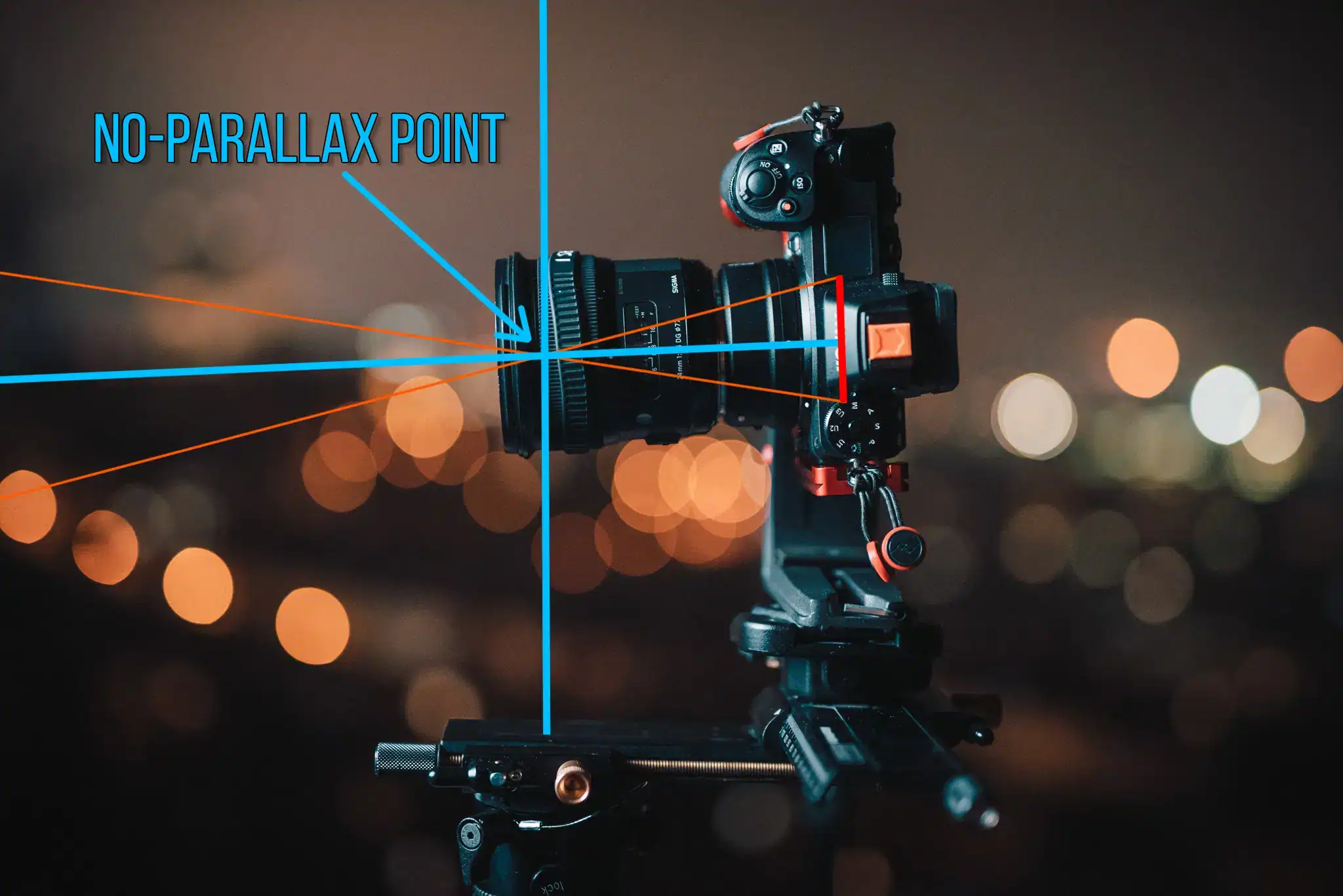
Want a deeper primer on panoramic heads and entrance pupil alignment? See this concise panoramic head tutorial that many pros recommend. Panoramic head setup guide (360Rumors)
A practical walkthrough on panorama shooting fundamentals. Consider these techniques alongside your Z7 II workflow.
Step-by-Step Shooting Guide
Standard Static Scenes
- Level and calibrate: Level the tripod via the leveling base. On the pano head, slide the camera forward/back until foreground and background points remain aligned during a small rotation—this marks your no-parallax point for the lens/focal length.
- Set manual exposure and white balance: Choose M mode and WB (Daylight, Cloudy, or a Kelvin value). Lock both so all frames match. Shoot RAW (14-bit) for best stitching latitude.
- Focus: Use manual focus at or near the hyperfocal distance. For 14 mm FF at f/8, hyperfocal is about 0.8–1.0 m; set that and verify with magnified live view.
- Capture sequence: Rotate through your planned azimuth increments (e.g., 8 frames around at 45° intervals for 14 mm on FF), then shoot a zenith (tilt up) and a nadir (tilt down). Maintain 30–35% overlap for robust control point matching.
- Record a nadir patch: After the main set, move the tripod slightly, hand-hold over the same spot, and shoot the ground to patch out the tripod later.
HDR / High Dynamic Range Interiors
- Bracket for windows vs. shadows: On Z7 II, use exposure bracketing with 5 frames at 1 EV steps (yields -2, -1, 0, +1, +2 EV). This approximates ±2 EV coverage.
- Lock WB and aperture: Keep WB fixed and aperture constant so DOF and color stay consistent across brackets.
- Avoid movement between brackets: Use a remote trigger. Let any ceiling fans rest before shooting to reduce ghosting.
Low-Light / Night Scenes
- ISO ranges: Prefer ISO 64–200 on tripod; ISO 400–800 is still clean on Z7 II with careful exposure. Push to ISO 1600 only if needed to keep shutter times practical.
- Stability: Turn IBIS OFF on tripod, use EFCS, and 2 s self-timer or remote. Consider Long Exposure NR off to keep pace; handle hot pixels in post if needed.
- Chromatic noise: Favor slightly longer exposures at lower ISO over very high ISO; the Z7 II’s sensor likes light.
Crowded Events
- Two-pass method: First pass for background, second pass when people move to fill gaps. In post, mask in clean sections.
- Shutter speed: Use 1/200 s or faster if you want to freeze people; otherwise embrace motion blur while keeping the static environment sharp.
Special Setups (Pole / Car / Drone)
- Safety first: Use a safety tether on pole/car rigs and double-check clamps. Avoid overhead lines. Don’t extend poles in high winds.
- Vibration mitigation: Use higher shutter speeds and slightly higher ISO to keep exposure times short. Rotate slower and shoot in bursts to ensure at least one tack-sharp frame per angle.
Case study: Indoor real estate
Using Z7 II + rectilinear 14–16 mm on a calibrated pano head: f/8, ISO 64–100, 5-frame 1 EV bracket. I shoot 8–10 around + Z + N. For glossy floors, I add a nadir patch and softly fill lamps with a constant LED at 5–10% power to reduce dynamic range without altering the scene look.
Recommended Settings & Pro Tips
Exposure & Focus
| Scenario | Aperture | Shutter | ISO | Notes |
|---|---|---|---|---|
| Daylight outdoor | f/8–f/11 | 1/100–1/250 | 64–200 | Lock WB (Daylight or 5600K); EFCS on tripod |
| Low light/night | f/4–f/5.6 | 1/30–2 s (tripod) | 100–800 | IBIS OFF on tripod; remote trigger; evaluate star movement if astro |
| Interior HDR | f/8 | 5 frames @ 1 EV steps | 64–400 | Balances windows vs. interior; keep WB fixed |
| Action / moving subjects | f/5.6–f/8 | 1/200+ | 400–800 | Freeze motion; consider two-pass capture |
Critical Tips
- Manual focus at hyperfocal: For 14 mm FF at f/8, set focus around 0.8–1.0 m to keep near-to-far sharp.
- Nodal (entrance pupil) calibration: Use two vertical objects (one near, one far). Rotate; if their relative alignment shifts, slide the camera until it doesn’t. Mark that rail position for future shoots.
- White balance lock: Mixed lighting wreaks havoc in stitching; choose a fixed WB or shoot a gray card and batch-sync later.
- RAW over JPEG: 14-bit RAW on Z7 II retains highlight and color fidelity crucial for HDR panoramas.
- IBIS on/off: OFF on tripod; ON only if you’re handheld and maintaining steady technique.
Low-light field note
If you’re near the “shutter shock zone” around 1/40–1/100 s, enable EFCS and wait a second after touching the camera. On the Z7 II, EFCS dramatically reduces micro-blur on tripod.
Stitching & Post-Processing
Software Workflow
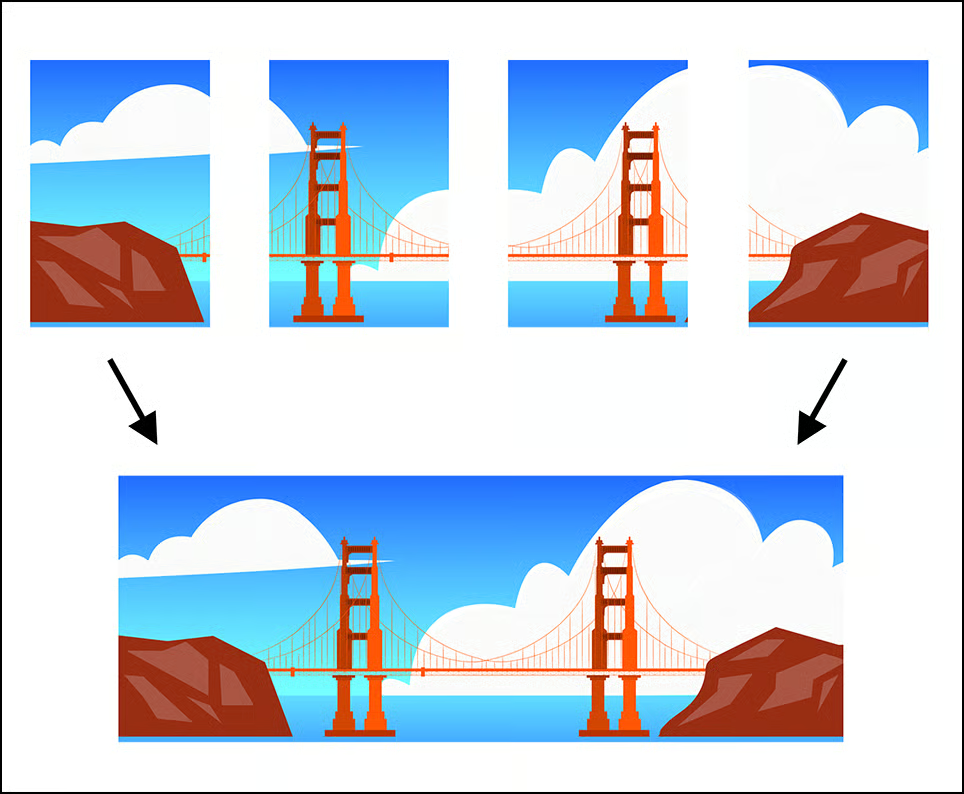
Use dedicated panorama software such as PTGui (fast, reliable optimizer with HDR support), Hugin (open-source), or Photoshop/Lightroom for simpler merges. Rectilinear lenses (like 14–16 mm FF or XF 8–16 on APS-C) require more images than fisheyes but render architecture naturally. Industry overlap guidance: about 25–30% for fisheye, and 30–35% for rectilinear to give your stitcher plenty of control points. For a deep dive on PTGui, this review covers strengths and tips for power users. PTGui review and workflow insights (Fstoppers)
Cleanup & Enhancement
- Nadir patch: Use PTGui’s Viewpoint Correction or clone/AI tools in Photoshop to remove the tripod.
- HDR merge: If you bracketed, choose exposure fusion or HDR merge before optimizing control points.
- Color and noise: Normalized WB helps; apply modest noise reduction on shadow regions and local contrast on midtones.
- Horizon and straight lines: Use vertical line constraints in PTGui/Hugin and verify yaw/pitch/roll for level output.
- Export: For VR, a 2:1 equirectangular JPEG/TIFF at 8k (8192×4096) or 12k (12000×6000) is common. Follow platform guidelines for max size and compression.
For platform-agnostic guidance on DSLR/mirrorless 360 workflows, the Oculus Creator documentation is a solid reference. DSLR/mirrorless 360 photo workflow (Oculus)
Useful Tools & Resources
Software
- PTGui panorama stitching
- Hugin open-source stitcher
- Lightroom / Photoshop (cleanup and toning)
- AI tools for tripod/nadir removal
Hardware
- Panoramic heads: Nodal Ninja, Leofoto, and other multi-row heads
- Carbon fiber tripods with leveling bases
- Wireless remotes or app triggers (Nikon SnapBridge)
- Pole extensions and vehicle mounts with safety tethers
Disclaimer: brand names are provided for search reference; verify compatibility and current specs on official sites.
Want recommendations on camera/lens choices specifically for virtual tours? This curated guide is a helpful starting point. Virtual tour camera and lens guide (360Rumors)
Common Mistakes & How to Avoid Them
- Parallax error: Calibrate the entrance pupil on a pano head; test with near/far verticals before the shoot.
- Exposure flicker: Use Manual exposure and lock WB; avoid Auto ISO for consistent frame-to-frame brightness.
- Tripod shadows and footprints: Shoot a nadir patch or plan to clone later; watch your own shadow at low sun angles.
- Ghosting from moving subjects: Use the two-pass method and mask in post or time shots between movement.
- Night noise: Keep ISO low on tripod and extend shutter; enable EFCS to avoid micro-blur that can look like noise.
Frequently Asked Questions
-
Can I shoot handheld panoramas with the Nikon Z7 II?
Yes, especially outdoors in good light. Use fast shutter speeds (1/250+), IBIS ON, and high overlap (40–50%). Expect more stitching errors near foreground objects. For critical work or interiors, use a tripod and pano head.
-
Is the Fujifilm XF 8–16mm wide enough for a single-row 360?
On APS-C it’s very wide (121° diagonal at 8 mm), but for a full 360×180 you’ll still need multiple frames: typically 8–10 around plus zenith and nadir. It’s rectilinear, so more frames than a fisheye, but architectural lines remain straight.
-
Do I need HDR for interiors with bright windows?
Often yes. On Z7 II, use 5-frame brackets at 1 EV steps (-2 to +2). This preserves window detail and clean shadows, making the final pano feel natural and professional.
-
How do I avoid parallax issues with this setup?
Use a calibrated panoramic head. Align the entrance pupil so near/far verticals stay aligned as you pan. Mark your rail positions for each focal length you use (e.g., 14, 16, 24 mm) and keep your focus distance consistent.
-
What ISO range is safe on the Z7 II in low light?
On tripod, ISO 64–200 is ideal; ISO 400–800 remains very clean. Only push to ISO 1600+ if you must shorten shutter times (e.g., wind or pole/car rigs). Expose to protect highlights and lift shadows in post.
-
Can I set custom modes for panorama on the Z7 II?
Yes. Assign a custom bank with Manual exposure, fixed WB, 14-bit RAW, bracketing mode, EFCS on, IBIS off (tripod). This speeds up on-site setup and reduces mistakes.
-
Best tripod head for this setup?
A multi-row panoramic head with precise fore-aft and lateral adjustments (e.g., Nodal Ninja, Leofoto) ensures accurate entrance pupil alignment and easy zenith/nadir capture. Look for a head with a reliable detent ring for repeatable spacing.
-
Can I mount the XF 8–16mm on the Z7 II with an adapter?
In practice, no. Due to mount differences and electronics, there is no practical adapter for full functionality or infinity focus. Use a native Nikon Z-mount ultra-wide instead, or pair the XF 8–16 with a Fujifilm X body.
Safety, Reliability & Backup Workflow
Shooting 360° often means working at edges—rooftops, balconies, traffic islands. Prioritize safety: tether your camera on poles and car rigs; keep hands off rails or unsafe ledges; check wind reports. Weather-seal where possible and carry microfiber cloths for the front element, especially with bulbous ultra-wides.
Reliability tips: After each ring of shots, quickly review thumbnails to confirm coverage (no skipped angle). Capture a backup pass if time allows. Maintain redundant storage—dual card slots or immediate offload to a backup SSD. Keep a small toolkit (allen keys, clamps) and a short lens hood substitute to shade the front element from flares.
For additional pro-level setup tips on panoramic heads and capture consistency, consult this step-by-step from Oculus. Set up a panoramic head for high-end 360 photos (Oculus)
Advanced Notes: Resolution Strategy & Shot Counts
Resolution scales with frame count and focal length. If you need a high-detail virtual tour or large prints, consider 24 mm FF and a multi-row approach (e.g., 2 rows × 16 around + zenith + nadir). Expect 34–36 frames and gigapixel-range outputs with careful technique. Keep overlap ≥30%, and avoid over-tilting rows which can reduce control point density vertically.
Lens behavior matters: rectilinear lenses maintain straight lines across the frame, but edges stretch. Keep the most important architecture out of extreme corners; stitchers do better when they have overlapping mid-frame content. For very near foregrounds, consider a second row or shift the camera back to preserve parallax-free alignment.