
Why This Camera & Lens Are Great for Panoramas
The Nikon Z7 II and Canon RF 15-35mm f/2.8L IS USM, on paper, make an attractive panorama combo: a 45.7MP full-frame sensor with excellent dynamic range paired to a razor-sharp, ultra-wide rectilinear zoom. The Z7 II’s back-illuminated 35.9×23.9 mm sensor (approx. 4.35 µm pixel pitch) provides class-leading detail and low-ISO dynamic range (about 14+ stops at ISO 64), which is ideal for stitching and for HDR work in high-contrast interiors. Meanwhile, the RF 15-35mm offers a versatile 15–35mm focal range, f/2.8 constant aperture, and strong corner sharpness for a rectilinear lens—useful when you want straight lines in architecture and real estate to stay straight.
Important compatibility note: as of 2025 there is no reliable, commercially available adapter to mount Canon RF lenses on Nikon Z bodies with full electronic control. If you own a Z7 II, use a comparable Nikon Z-mount ultra-wide (e.g., NIKKOR Z 14–24mm f/2.8 S, 14–30mm f/4 S, or 17–28mm f/2.8). If you own the Canon RF 15-35mm, the shooting method below applies equally well when used on a Canon RF body (R5/R6/R8, etc.). The panorama technique is the same; only the control dials and stabilization options differ slightly.

Quick Setup Overview
- Camera: Nikon Z7 II — full-frame (35.9×23.9 mm), 45.7MP BSI CMOS, superb low-ISO DR, ISO 64–25,600 (native). In-body 5-axis stabilization.
- Lens: Canon RF 15–35mm f/2.8L IS USM — rectilinear ultra-wide zoom, sharp from f/4–f/8, minimal CA after profile correction, optical IS, 82 mm filters. Note: not natively compatible with Nikon Z mount.
- Estimated shots & overlap (full 360×180, rectilinear, ~30% overlap):
- At 15 mm: 10–12 shots per row × 3 rows (up/mid/down) + 1–2 zenith + 1–2 nadir = ~32–40 frames.
- At 20 mm: 12 shots per row × 3 rows + zenith + nadir = ~38–40 frames.
- At 24 mm: 14–16 per row × 3 rows + zenith + nadir = ~44–50 frames.
- At 35 mm: 18 per row × 3 rows + zenith + nadir = ~56–60 frames.
For cylindrical (no zenith/nadir), you can do a single mid row: 10–16 shots depending on focal length and desired overlap.
- Difficulty: Intermediate — rectilinear ultra-wide needs multi-row capture and careful nodal alignment; stitching is straightforward in PTGui/Hugin.
Planning & On-Site Preparation
Evaluate Shooting Environment
Walk the location and note light direction, moving subjects (people, foliage, cars), reflective surfaces, and tight spaces. For glass or mirrors, shoot slightly off-axis to reduce flare and reflections. If you must shoot through glass, press a rubber lens hood gently against it and keep the front element as close as possible to reduce internal reflections and ghosting. For windy rooftops, prioritize tripod stability and tether your gear.
Match Gear to Scene Goals
The Nikon Z7 II excels in high-contrast scenes thanks to its strong base-ISO dynamic range; shoot at ISO 64–200 for critical work. Indoors, ISO 200–800 remains clean with modern denoising workflows. The Canon RF 15–35mm, used on a Canon R-series body, covers everything from tight interiors at 15 mm to more natural perspectives at 24–35 mm. For a Nikon Z7 II user, choose a native Z-mount ultra-wide: the Z 14–24mm f/2.8 S is an outstanding substitute with similar optical quality and pano behavior. Rectilinear lenses require more frames than fisheye but keep straight lines, which is crucial in architecture and real estate.
Pre-shoot Checklist
- Charge batteries and format high-speed cards; bring a spare card and battery.
- Clean the lens and sensor; dust shows up when cloning the nadir.
- Level the tripod and verify panoramic head calibration (nodal point alignment).
- Safety: tether on rooftops or poles, weigh down tripod, watch for cables and foot traffic. Avoid pole shots in strong winds.
- Backup workflow: shoot an extra full pass (same exposure) to protect against stitching gaps or moving subject conflicts.
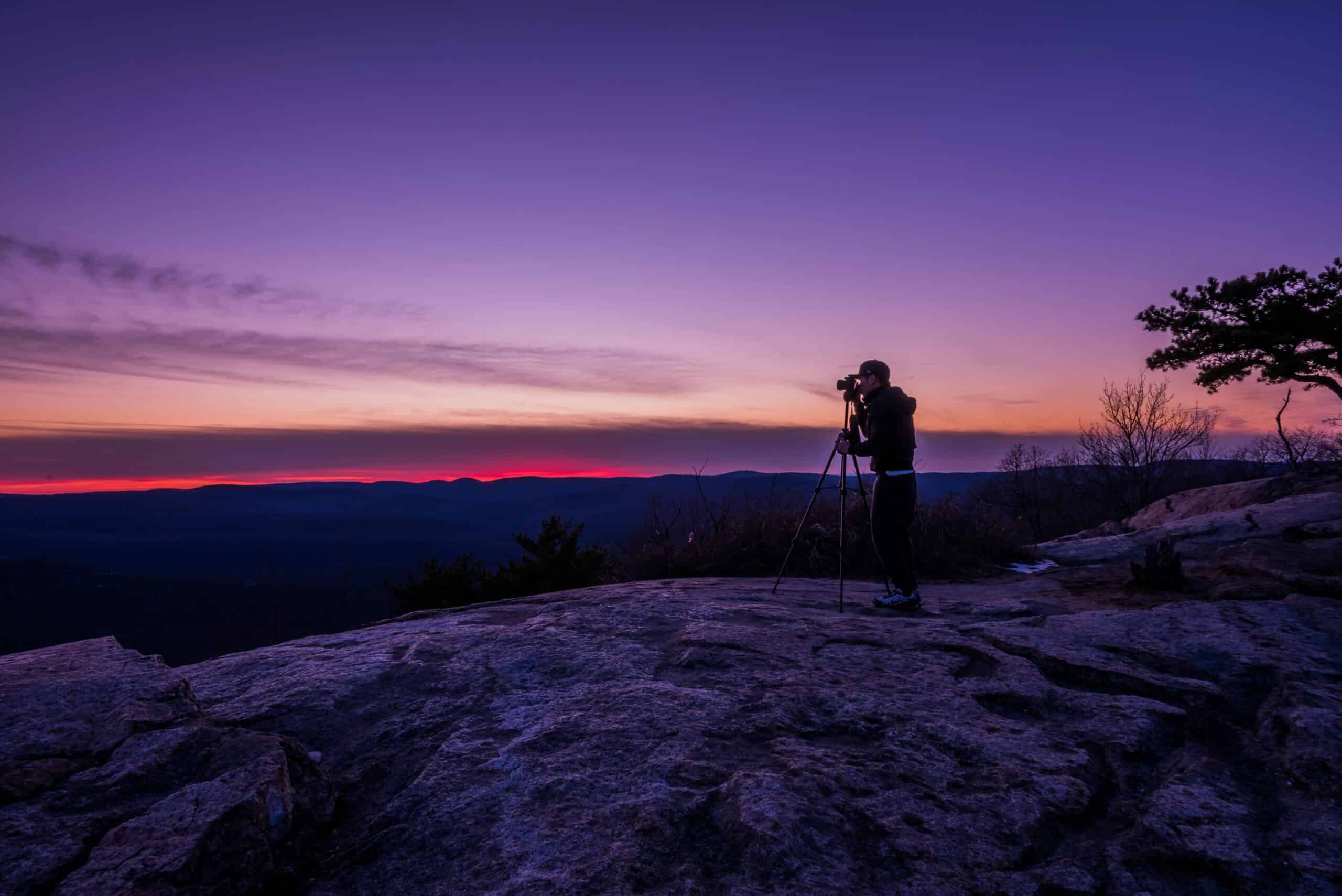
Essential Gear & Setup
Core Gear
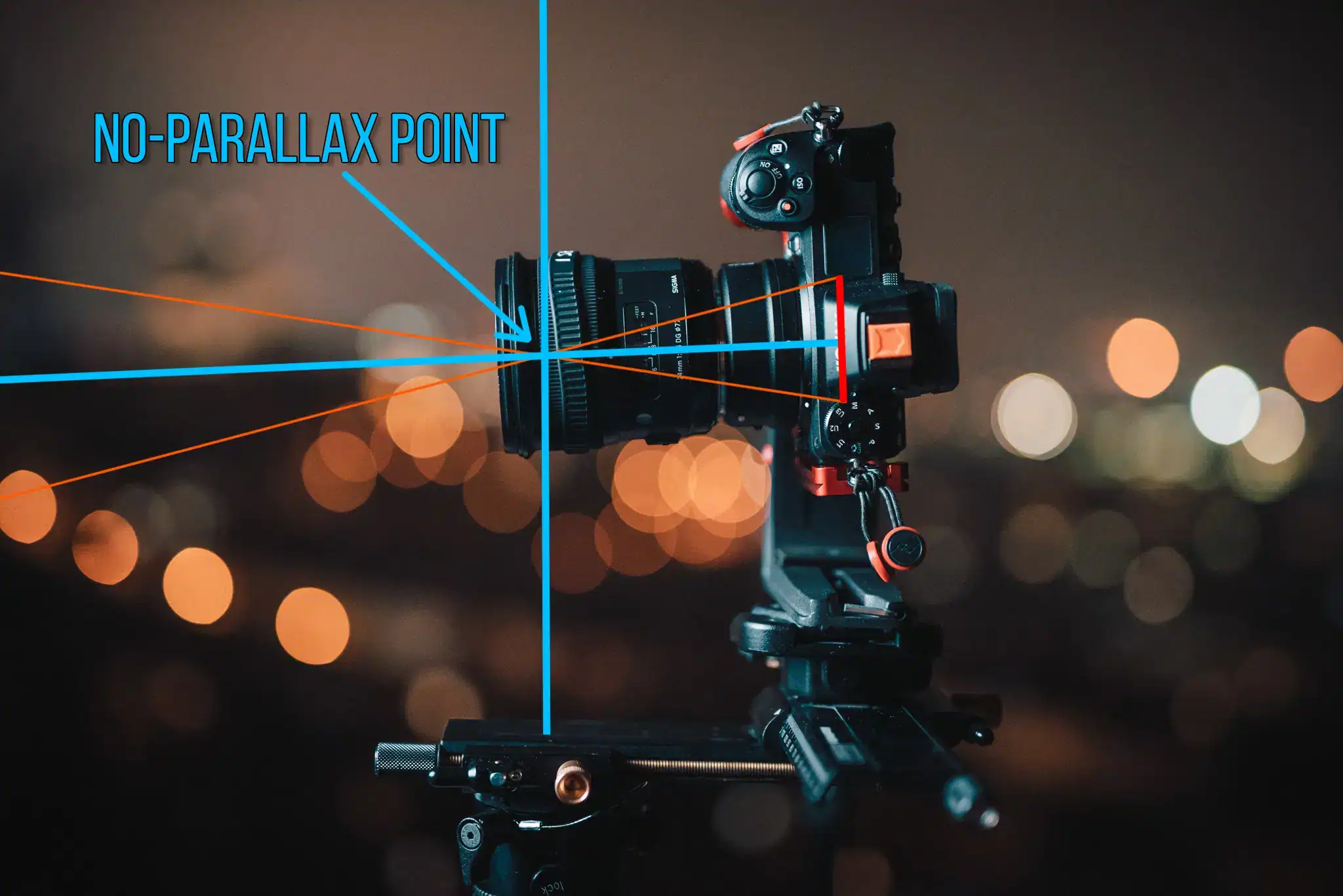
- Panoramic head: Calibrate the nodal (no-parallax) point so that near and far objects don’t shift while you pan. This prevents parallax errors and makes stitching rock-solid.
- Stable tripod with a leveling base: A flat base keeps each frame aligned and reduces roll corrections later.
- Remote trigger or companion app: Fire shots without touching the camera to avoid vibrations.
Optional Add-ons
- Pole or car mount: Only for experienced users; always tether gear and account for wind/vibration. Reduce rotation speed and shoot at faster shutter speeds.
- Lighting aids: Small LED panels or bounced flash to lift shadows in dark interiors (keep lighting constant across frames).
- Weather protection: Rain covers and microfiber cloths for lenses; stable footing in snow or sand.
Step-by-Step Shooting Guide
Standard Static Scenes
- Level the tripod and align the nodal point. Calibrate once for your camera + lens at the focal length you’ll use (15, 20, 24, or 35 mm). Note the fore/aft rail position and vertical offset, then mark it for quick repeatability.
- Switch to full Manual mode: set shutter, aperture, ISO, and lock white balance. Turn off auto-ISO. Keep settings constant across all frames so they stitch seamlessly.
- Frame sequence and overlap: For 15–24 mm rectilinear, aim for ~30% overlap horizontally and at least 25% vertically between rows. For a full 360×180, shoot upper, middle, and lower rows with consistent yaw increments.
- Nadir (ground) shot: After the main capture, move the tripod slightly and shoot a clean ground plate. You’ll patch the tripod out using this frame later.
HDR / High Dynamic Range Interiors
- Bracket ±2 EV (3–5 frames per view) to balance bright windows and interior shadows. Keep the aperture constant; vary shutter speed only.
- Keep WB locked and use RAW to maintain color consistency. Merge brackets before stitching or use PTGui’s HDR merge—test both for the cleanest results.
Low-Light / Night Scenes
- Use longer exposures with a stable mount. For the Z7 II, ISO 64–200 gives the cleanest files; ISO 400–800 remains strong, and 1600 is usable with modern denoising. On Canon R bodies, ISO 400–800 is a safe middle ground for night panoramas on tripod.
- Use a remote trigger or self-timer. Turn off stabilization on tripod (Z7 II IBIS Off; lens IS Off) to avoid micro-blur from stabilization drift.
Crowded Events
- Shoot two complete passes. On the second pass, wait for gaps to appear. You can mask moving subjects between passes during stitching.
- Favor faster shutter speeds (1/200s or faster when possible) and slightly higher ISO; prioritize sharpness over noise which can be cleaned later.
Special Setups (Pole / Car / Drone)
- Use tethers, safety cables, and rated clamps. Never mount over areas where a dropped camera could injure people or damage property.
- Expect micro-vibrations: raise shutter speed (1/250–1/1000s), use wider apertures, and increase ISO as needed to keep frames sharp.
Field-Proven Case Studies
- Indoor real estate: 15–20 mm, three rows, tripod, ±2 EV brackets. Lock WB to a custom Kelvin to avoid color shifts between mixed lighting.
- Outdoor sunset: ISO 64–100 on the Z7 II at f/8–f/11; expose for highlights and do a quick bracket set at each yaw if the dynamic range is extreme.
- Event crowds: Single mid-row plus top and bottom rows, shoot two passes for masking. Keep shutter 1/200s+ if people are close to the camera.
- Rooftop/pole: Avoid strong winds; reduce the number of rows and use a wider focal length (15–18 mm) to reduce shot count and exposure time.
- Car-mounted capture: Use the shortest possible exposure times, consider 15–18 mm for redundancy, and plan routes to avoid sudden light changes.
Recommended Settings & Pro Tips
Exposure & Focus
| Scenario | Aperture | Shutter | ISO | Notes |
|---|---|---|---|---|
| Daylight outdoor | f/8–f/11 | 1/100–1/250 | 64–200 | Lock WB (daylight); Z7 II excels at ISO 64 for max DR |
| Low light/night | f/4–f/5.6 | 1/30–1/60 (tripod) | 400–800 (up to 1600 if needed) | Remote trigger; stabilization OFF on tripod |
| Interior HDR | f/8 | Bracket ±2 EV | 100–400 | Balance windows vs lamps; merge brackets before stitch |
| Action / moving subjects | f/5.6–f/8 | 1/200+ | 400–800 | Freeze motion; consider two-pass capture |
Critical Tips
- Manual focus slightly before infinity or at the hyperfocal distance. At 15 mm and f/8 on full-frame, focusing around 1 m yields near-to-infinity sharpness in most scenes.
- Nodal point calibration: Place a close foreground object across a vertical background line, then rotate. Adjust the rail until the relative position doesn’t shift. Mark the rail for each focal length (15, 20, 24, 35 mm).
- White balance lock: Use a Kelvin value or a custom preset; avoid Auto WB to prevent shifts frame-to-frame.
- RAW over JPEG: 14-bit RAW files from the Z7 II give you superior highlight recovery and cleaner shadows—crucial for panos and HDR.
- Stabilization: On tripod, disable IBIS (Z7 II) and lens IS to avoid stabilization-induced blur. Handheld, keep them ON for steadier frames.
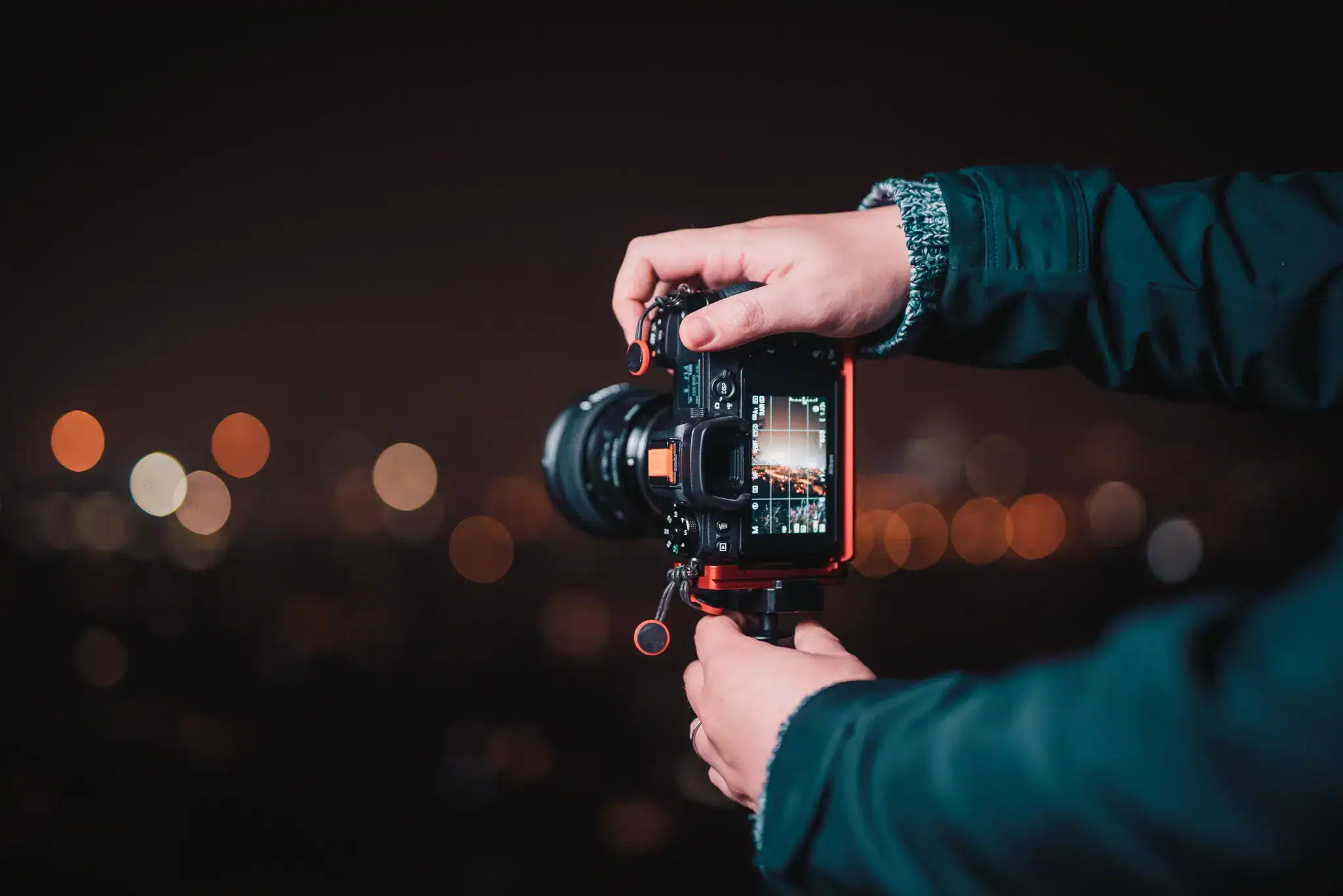
Stitching & Post-Processing
Software Workflow
Import RAW files to your editor and apply consistent base corrections (lens profile, chromatic aberration removal, conservative noise reduction). If you bracketed, merge to HDR first, then export 16-bit TIFFs for stitching. PTGui is the pano industry workhorse with robust control point optimization and 360 tools; Hugin is a strong open-source alternative. Rectilinear ultra-wide lenses require more shots than fisheye but give you straight lines—great for architectural accuracy. Keep overlap around 25–30% for rectilinear frames, and be consistent across rows for a clean stitch. For background reading on pano heads and technique, see this panoramic head tutorial. Panoramic head best practices
Cleanup & Enhancement
- Nadir patch: Use a separate ground plate shot or AI-based tripod removal tools. Clone and heal remaining seams carefully.
- Color and tone: Even out any exposure edges, fine-tune WB, and apply noise reduction for shadow areas. Keep a light touch to avoid haloing on edges.
- Leveling: Use horizon straightening and yaw/pitch/roll adjustments to align the scene. Re-optimize control points if needed.
- Export: For VR platforms, export equirectangular 2:1 JPEG/TIFF at your target resolution (e.g., 12K–16K wide). Confirm platform-specific limits and color space.
For a high-level guide to DSLR/MILC 360 capture and stitching workflows used in VR delivery, the Oculus documentation is practical and concise. Using a DSLR or Mirrorless to shoot and stitch a 360 photo
Want a deep-dive into PTGui’s capabilities and why it’s favored by professionals? This review is a helpful overview. PTGui review and workflow notes
Video: Panorama Shooting Fundamentals
Prefer to learn by watching? This video reinforces key field techniques like leveling, overlap, and avoiding parallax.
Disclaimer: software evolves quickly—verify the latest features and recommended workflows in each program’s documentation.
Useful Tools & Resources
Software
- PTGui panorama stitching
- Hugin open source
- Lightroom / Photoshop
- AI tripod/nadir removal tools
Hardware
- Panoramic heads (Nodal Ninja, Leofoto, Really Right Stuff)
- Carbon fiber tripods with leveling bases
- Wireless remote shutters / camera apps
- Pole extensions / car mounts (with tethers)
If you’re new to virtual tour gear selection and shooting checklists, this starter FAQ offers a solid overview. Virtual tour camera/lens guide
Disclaimer: brand names are provided as references; verify specifications and compatibility on official sites.
Common Mistakes & How to Avoid Them
- Parallax error → Fix the nodal point. Use a pano head and re-check alignment when changing focal length.
- Exposure flicker → Manual mode, fixed ISO, fixed WB. Do not use Auto WB or Auto ISO.
- Tripod shadows or seams → Shoot a dedicated nadir plate and patch in post.
- Ghosting from moving subjects → Capture two passes and mask in post. Favor faster shutter speeds when possible.
- Noise at night → Keep ISO lower (Z7 II shines at ISO 64–400), use longer shutter, and denoise RAW carefully.
- Poor overlap → Maintain 25–35% overlap consistently; mark yaw increments or use a click-stop rotator.
Frequently Asked Questions
-
Can I use the Canon RF 15–35mm f/2.8L IS USM on my Nikon Z7 II?
Not practically. As of 2025, there’s no reliable RF-to-Z smart adapter. Use a native Z-mount ultra-wide (e.g., 14–30mm f/4, 14–24mm f/2.8, 17–28mm f/2.8) on the Z7 II, or use the Canon RF 15–35mm on a Canon R-series body. The pano shooting technique remains the same.
-
Is 15 mm rectilinear wide enough for a single-row 360?
For a full 360×180 spherical panorama, 15 mm rectilinear typically needs multiple rows (upper, middle, lower) plus zenith and nadir. For cylindrical panoramas (no zenith/nadir), a single mid row of 10–12 shots is usually enough.
-
Do I need HDR for interiors with bright windows?
Often, yes. Bracket ±2 EV (3–5 frames), keep WB locked, and merge brackets before stitching for cleaner edges and minimized color shifts. This captures window detail and deep interior shadows gracefully.
-
How do I avoid parallax issues when rotating?
Use a proper panoramic head and align the lens’s entrance pupil over the rotation axis. Calibrate using a near object against a far background; adjust the rail until their relative position doesn’t shift when panning.
-
What ISO range is safe on the Z7 II in low light?
ISO 64–200 is optimal; 400–800 remains very clean. ISO 1600 is workable with modern denoising. Prioritize tripod stability and longer exposures over very high ISO whenever possible.
-
Can I set up custom modes for a fast pano workflow?
Yes. On Nikon, save key pano settings (Manual exposure, fixed ISO/WB, AF mode, IBIS Off on tripod) to U1/U2. For Canon RF bodies, use C1/C2/C3 similarly. This speeds up consistent capture.
-
How can I reduce flare at 15 mm?
Avoid placing strong light sources near the frame edge, use a clean protective filter (or remove it if it causes ghosts), and shade the lens with your hand or a flag when the sun is just outside the frame.
-
What’s the best tripod head for this setup?
A multi-row panoramic head with precise fore/aft and vertical adjustments (e.g., Nodal Ninja, RRS, Leofoto) lets you set the entrance pupil for each focal length. A click-stop rotator ensures consistent yaw steps.