Why This Camera & Lens Are Great for Panoramas
If your goal is to create high-quality 360° photos with minimal fuss, the Nikon Z7 II paired with the Canon EF 8–15mm f/4L Fisheye USM (via an EF-to-Nikon Z smart adapter) is a superb choice. The Z7 II’s 45.7 MP full-frame BSI sensor (approx. 35.9 × 23.9 mm) delivers excellent detail, smooth tonal transitions, and class-leading dynamic range at base ISO 64—ideal for scenes with bright windows and deep shadows. In-body stabilization (IBIS) is available for handheld use, while the high-resolution sensor provides plenty of headroom for clean stitches and robust equirectangular exports.
The Canon EF 8–15mm f/4L is a versatile fisheye zoom. At 8mm on full frame, it produces a circular fisheye image with a 180° field of view, which means you can cover a full 360×180 scene with very few shots (great for speed or when subjects move). At 15mm, it becomes a diagonal fisheye with a 180° diagonal field of view—useful when you want more peripheral detail and higher final resolution. Optically, it’s crisp from f/5.6–f/8, with manageable chromatic aberrations and predictable fisheye distortion that stitching software like PTGui or Hugin understands well.
Because the 8–15mm is an EF-mount lens with electronic aperture, use a reliable EF-to-Nikon Z smart adapter that supports electronic aperture control (and, optionally, AF). In practice, for panorama shooting you will typically focus manually at or near the hyperfocal distance, so AF is not essential. The combo’s real advantage is efficiency: a fisheye reduces the number of frames required and speeds up your capture on location without sacrificing quality.
Quick Setup Overview
- Camera: Nikon Z7 II — Full-frame 45.7 MP BSI CMOS, base ISO 64, excellent DR (~14+ stops at base), 5-axis IBIS, silent shooting option.
- Lens: Canon EF 8–15mm f/4L Fisheye USM — Fisheye zoom; circular at 8mm, diagonal at 15mm. Sharp sweet spot around f/5.6–f/8; mild lateral CA easily corrected.
- Estimated shots & overlap (tested, safe overlaps):
- 8mm (circular fisheye): 3–4 shots around (120° or 90° yaw steps) + nadir patch; optional zenith for safety.
- 10–12mm (diagonal fisheye): 4–6 around (90–60° yaw steps) + zenith + nadir.
- 15mm (diagonal fisheye): 6 around (60° steps) + zenith + nadir (beginners may prefer 8 around).
- Difficulty: Easy to Moderate (easy capture; moderate post if you’re new to fisheye geometry).
Planning & On-Site Preparation
Evaluate Shooting Environment
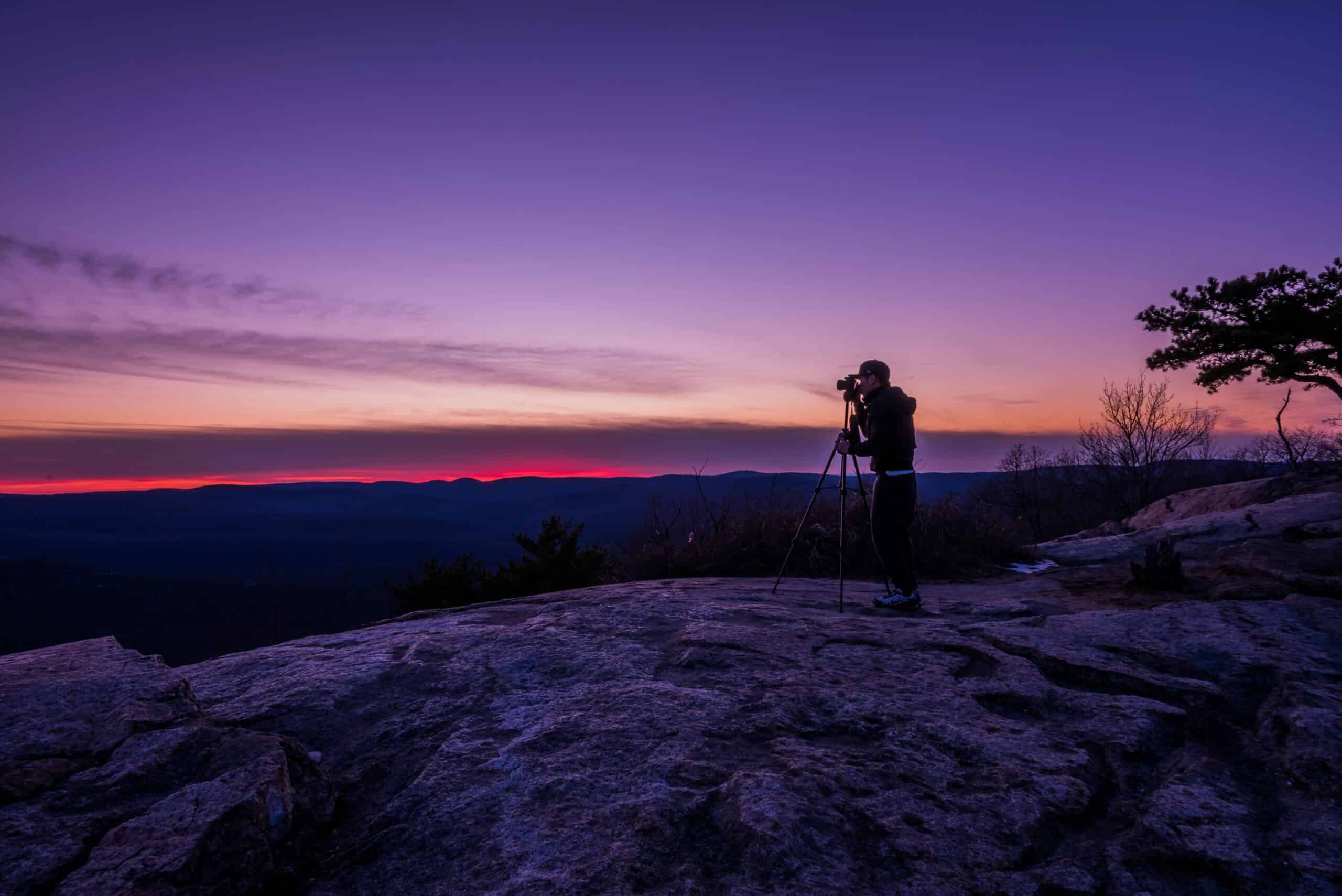
Start by reading the light. Outdoors, avoid strong backlight directly into the fisheye unless it’s part of the story, and shield the lens from flare when possible. Indoors, check mixed lighting (tungsten + daylight) and plan to lock white balance for consistent stitching. Look for reflective surfaces (glass, glossy floors, cars); for glass, shoot as close and as perpendicular as possible to reduce ghosting, and use a cloth hood or your hand to block reflections. In crowded scenes, anticipate movement: people, cars, signs, or trees can cause stitching ghosts—plan two passes to capture “clean” frames to blend later.
Match Gear to Scene Goals
The Nikon Z7 II & Canon EF 8–15mm fisheye combo is perfect when you want to minimize shot count and time. The Z7 II’s dynamic range at ISO 64–100 lets you retain window highlights and shadow detail, while the fisheye reduces the number of frames, lowering the chance of parallax and moving-object artifacts. Safe ISO for critical quality is typically ISO 64–400; push ISO 800–1600 when you need faster shutter speeds (e.g., night exteriors with wind). Use 8mm when speed is the priority (events, tight spaces), and 12–15mm when resolution is paramount (real estate, product showrooms, or scenes with fine textures).
Pre-shoot Checklist
- Power & storage: Fully charge batteries, bring at least one spare, and use fast, high-capacity cards.
- Optics: Clean both front and rear elements and the camera sensor; fisheye picks up dust and smudges easily.
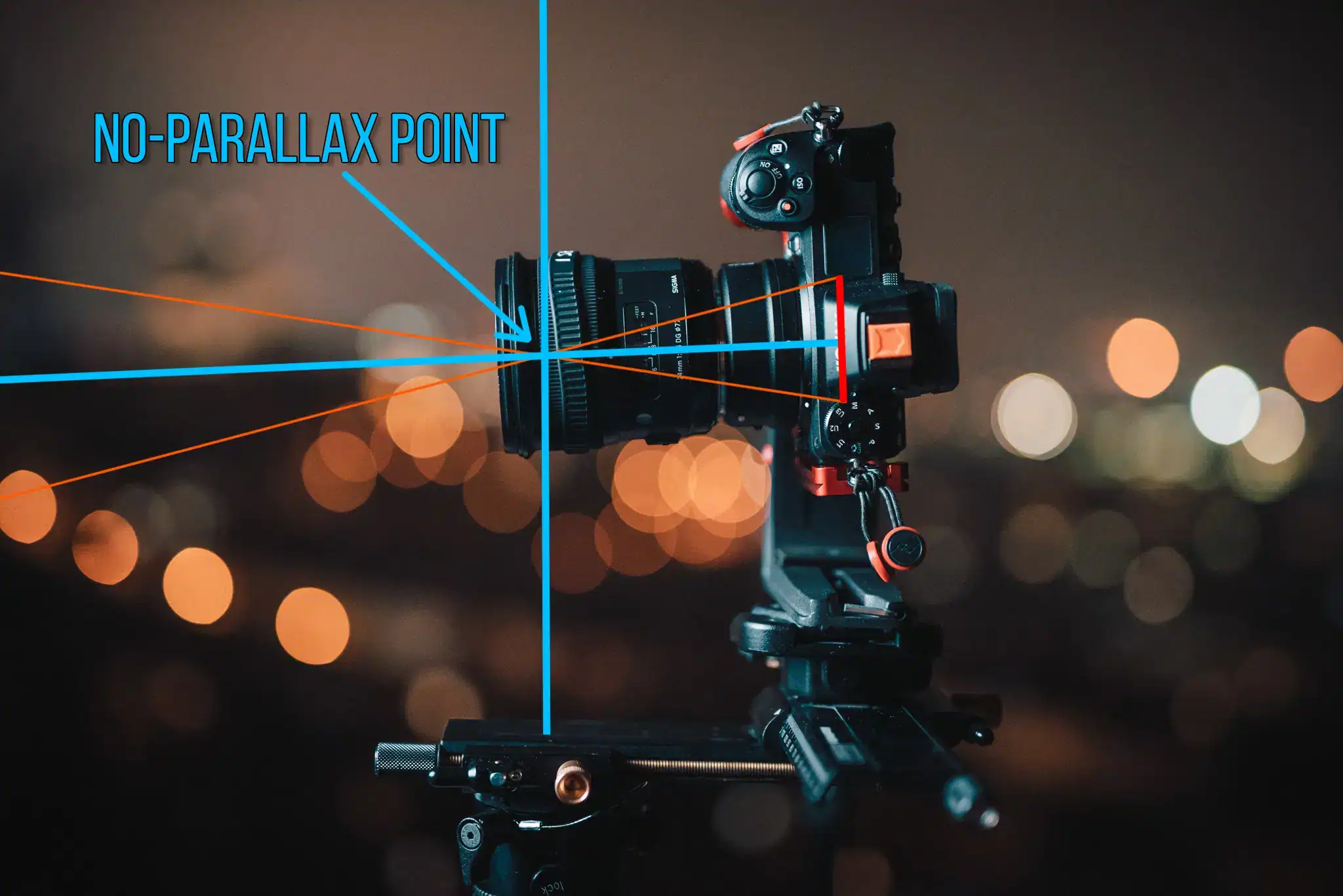
- Tripod & head: Leveling base and a calibrated panoramic head aligned to the lens’s no-parallax point.
- Safety: On rooftops or near edges, use a tether for the camera; in wind, lower the center column to stabilize.
- Backup: Shoot an extra safety round in each direction, especially for commercial jobs.
Essential Gear & Setup
Core Gear
- Panoramic head: Use a rotator with click stops and an adjustable rail system to align the lens’s entrance pupil (no-parallax point) over the rotation axis. This eliminates foreground/background shifts when rotating, crucial for interiors and tight spaces.
- Stable tripod with leveling base: A leveling base speeds alignment so your yaw increments remain consistent. It also prevents roll errors that complicate stitching.
- Remote shutter release or app: Trigger without touching the camera. The Z7 II’s SnapBridge app works for wireless control; a simple cable remote also works well.
Optional Add-ons
- Pole or car mount: For elevated or vehicle-based shots. Always tether the camera, keep rotations slower, and avoid high winds that can flex the pole and misalign frames.
- Lighting aids: Small LED panels or off-camera flash for dark interiors; keep positions consistent across frames to avoid lighting mismatches.
- Weather protection: Rain covers, microfiber cloths, and a lens hood/flare shield to protect the fisheye’s bulging front element.
Watch a Quick Panoramic Head Setup
Seeing the setup in action helps a lot. Here’s a concise walkthrough on setting up a pano head and workflow basics:
Step-by-Step Shooting Guide
Standard Static Scenes
- Level and align: Level the tripod using the leveling base. Mount the Z7 II on the panoramic head and slide the lens along the rail until the no-parallax point is over the rotation axis. Use two light stands (one near, one far) aligned in the frame; rotate left/right and adjust until there’s no relative shift.
- Manual exposure & WB: Set the Z7 II to M mode. For daylight, start at ISO 64–100, f/8, 1/125–1/250 s. Lock white balance to Daylight or a fixed Kelvin to avoid color shifts between frames.
- Focus: Switch to manual focus. With a fisheye at f/8, set focus slightly beyond 0.5 m to cover near-to-infinity. Confirm critical edges in magnified live view.
- Capture with overlap:
- 8mm: 4 shots around at 90° steps (safe overlap), then a nadir patch shot.
- 12–15mm: 6 shots around at 60° steps, plus zenith and nadir.
- Nadir capture: Tilt up slightly to shoot a clean plate for cloning or use an offset nadir shot and later patch the tripod area.
HDR / High Dynamic Range Interiors
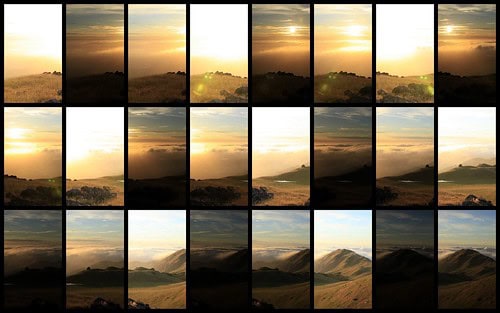
- Bracket exposures: Use ±2 EV (3 or 5 frames). Typical interior base: ISO 64–200, f/8; let shutter vary. Keep WB locked.
- Consistency: Keep the camera and head locked; do not touch the setup between brackets. Use a remote. For window-heavy rooms, consider ±3 EV if highlights still clip.
Low-Light / Night Scenes
- Stabilize: Use a sturdy tripod, turn IBIS off on tripod, and use a 2 s shutter delay or remote release to avoid vibrations.
- Exposure: Start at f/4–f/5.6, ISO 100–400, and lengthen shutter speed as needed (1/4–2 s). If motion blur is a problem, raise ISO to 800–1600—Z7 II handles this well with modest noise reduction.
Crowded Events
- Two passes: First, a quick pass to lock your coverage; second, wait for gaps and re-shoot “busy” frames. Mark frame indices so you know which to keep in post.
- Masking: In PTGui or Photoshop, blend the clean areas from multiple frames to remove ghosts and duplicates.
Special Setups (Pole / Car / Drone)
- Pole/elevated: Use a lightweight panoramic rotator on a carbon pole. Keep rotations deliberate; avoid windy conditions that bend the pole and cause parallax errors.
- Car-mounted: Use vibration-damped mounts, short exposure times (1/250+), and shoot multiple passes. Always tether gear and follow local regulations.
Recommended Settings & Pro Tips
Exposure & Focus
| Scenario | Aperture | Shutter | ISO | Notes |
|---|---|---|---|---|
| Daylight outdoor | f/8–f/11 | 1/100–1/250 | 64–200 | Lock WB to Daylight; use 8mm for speed or 12–15mm for more detail |
| Low light/night | f/4–f/5.6 | 1/4–1/60 | 100–800 (up to 1600 if needed) | Tripod, IBIS off on tripod, remote trigger or 2 s delay |
| Interior HDR | f/8 | Bracket ±2 EV | 64–400 | Balance windows and lamps; keep WB fixed |
| Action/moving subjects | f/5.6–f/8 | 1/200+ | 400–1600 | Freeze motion; shoot two passes to mask in post |
Critical Tips
- Manual focus at hyperfocal: At 8–12mm and f/8, setting focus slightly beyond 0.5 m yields near-to-infinity sharpness.
- Nodal calibration: Mark the rail position for 8mm and for 15mm on tape; keep a note on your phone. Re-check if you change adapters or filter thickness.
- White balance lock: Mixed lighting shifts are a stitch killer. Pick a Kelvin value and stick with it across all frames for each panorama.
- RAW over JPEG: The Z7 II’s 14-bit RAW files offer more latitude for highlight recovery and noise reduction—vital for interiors and night scenes.
- IBIS on/off: Handheld—IBIS on is fine. On tripod—disable IBIS to prevent micro-blur from stabilization drift during long exposures.
- Shutter mode: Use electronic first curtain shutter (EFCS) or full electronic (if banding-free) to reduce vibration.
Stitching & Post-Processing
Software Workflow
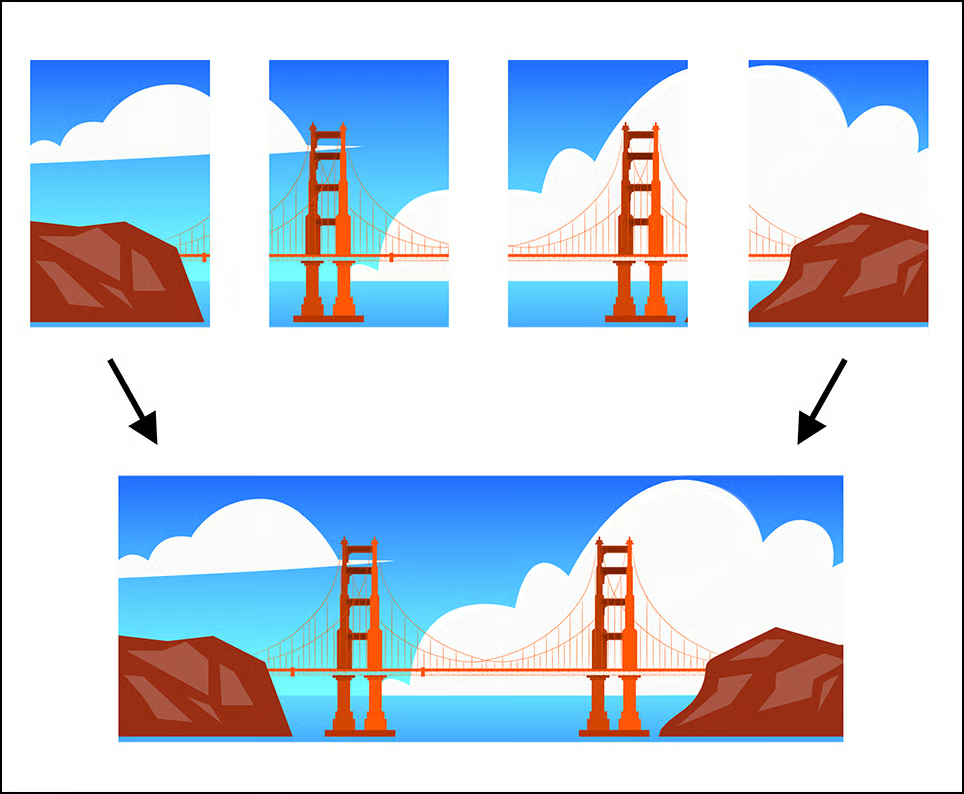
Import RAW files into Lightroom or your preferred RAW developer, sync exposure/WB settings for consistency, and export to 16-bit TIFF if you plan heavy edits. For stitching, PTGui excels with fisheye lenses and supports template-based workflows—perfect for the Canon 8–15mm across focal lengths. Hugin is a solid open-source alternative. As a rule of thumb, fisheye panoramas benefit from 25–30% overlap; rectilinear sets can work with 20–25% but usually require more frames. After stitching to equirectangular, apply finishing touches—contrast, color, and sharpening—and export in the resolution and format needed by your platform.
PTGui is widely regarded for reliability and speed on complex sets, including HDR panoramas with bracketed input. If you’re comparing tools or want deeper dives, check out a practical review of PTGui and general pano principles at the resources below.
Cleanup & Enhancement
- Nadir patch: Use a clean plate or AI/clone tools to remove the tripod. Keep a library of pre-shot floor textures for consistency across projects.
- Color and noise: Apply selective noise reduction to shadow areas if you used ISO 800–1600. Keep colors realistic by checking neutrals after HDR merges.
- Leveling: Re-level horizon and adjust yaw/pitch/roll for straight verticals, especially in architecture.
- Export: Typical 360 platforms prefer equirectangular JPEGs (8–12K on the long side). For archival, keep layered TIFFs and project files.
Helpful references: Read a well-regarded PTGui review and workflow overview, explore spherical resolution math to plan output sizes, and see a concise DSLR/mirrorless 360 photo pipeline for VR publishing.
Useful Tools & Resources
Software
- PTGui panorama stitching
- Hugin (open source)
- Lightroom / Photoshop for RAW and retouch
- AI tripod removal or content-aware fill tools
Hardware
- Panoramic heads: Nodal Ninja, Leofoto, or similar rail-based systems
- Carbon fiber tripods with leveling bases
- Wireless remote shutters or apps (SnapBridge)
- Pole extensions and car mounts with safety tethers
Disclaimer: product names are for search and compatibility guidance—check official specs for latest features and support.
Field-Tested Scenarios
Indoor Real Estate (Mixed Light, Tight Corners)
Use 12–15mm for higher detail and cleaner wall/ceiling lines. Set ISO 64–200, f/8, and bracket ±2 EV for windows. Shoot 6 around + zenith + nadir. Mind reflections in mirrors and glass; angle slightly and shoot a second frame to blend out the camera in post if needed.
Outdoor Sunset (High DR, Moving Clouds)
Shoot at 8–10mm to reduce frame count before cloud shapes change. Base ISO 64–100, f/8, bracket ±2 EV. Move quickly: 4 around + nadir is usually enough. Watch for flare; shield the sunlit side during each frame if necessary and keep your hand out of the frame.
Crowded Event (People and Motion)
Go 8mm for speed. Use 4 shots around at 90° with ISO 400–800 and 1/200 s to freeze people. Then repeat frames where people overlap awkwardly. In PTGui, mask to keep only one instance of each person in the final panorama.
Rooftop or Pole Capture (Safety First)
Use a tether on the camera and a non-slip stance. Keep shutter at 1/250 s+ if wind is present; consider 8mm to minimize frames. If using a pole, ensure the rotation is smooth and deliberate; take a second full round as a backup.
Common Mistakes & How to Avoid Them
- Parallax error: Always align the no-parallax point before shooting, especially at 12–15mm where errors are more visible.
- Exposure flicker: Manual mode, fixed WB, and consistent settings across frames prevent patchy stitches.
- Tripod shadows/footprints: Capture a nadir plate or plan to patch with a clean texture.
- Ghosting from movement: Shoot two passes and blend with masks in PTGui/Photoshop.
- High ISO noise: Prefer base ISO 64–200 on tripod and lengthen shutter; only raise ISO when motion demands it.
- Flare with fisheye: Shield the lens, avoid direct sun alignment, and consider a strategic hand-held flag out of frame.
Frequently Asked Questions
- Can I shoot handheld panoramas with the Nikon Z7 II?
Yes, in a pinch—enable IBIS and use fast shutter speeds (1/200+). However, for clean 360 stitches (especially interiors), a leveled tripod and panoramic head are strongly recommended to avoid parallax and alignment issues.
- Is the Canon EF 8–15mm wide enough for single-row 360° panoramas?
Yes. At 8mm (circular), you can cover a full sphere with 3–4 shots around plus a nadir patch. At 12–15mm (diagonal fisheye), plan for 6 around plus zenith and nadir for robust overlap and higher resolution.
- Do I need HDR for interiors with bright windows?
Usually. The Z7 II’s dynamic range is excellent, but windows often exceed it. Bracketing ±2 EV (3–5 frames) preserves highlights and interior details, giving you clean, professional results after merging and stitching.
- How do I control aperture on a Canon EF lens mounted to a Nikon Z7 II?
Use a smart EF-to-Nikon Z adapter that supports electronic aperture control. For panoramas you can focus manually, but you need electronic control to stop down to f/5.6–f/8.
- What ISO range is safe on the Z7 II in low light?
For the cleanest files, stay at ISO 64–400 on a tripod and increase shutter time. If motion requires it, ISO 800–1600 is workable with modest noise reduction. Beyond ISO 3200, expect visible grain and reduced dynamic range.
- Should IBIS be on or off for tripod panoramas?
Turn IBIS off on a tripod to prevent stabilization drift during long exposures. Handheld, leave IBIS on.
- How can I reduce fisheye flare and purple fringing?
Avoid direct light sources near the frame edges, shield with your hand or a flag just out of view, and correct any residual CA using your RAW editor or PTGui’s lens correction tools.
- What’s the best tripod head for this setup?
A rail-based panoramic head with adjustable fore–aft and vertical sliders, plus a click-stop rotator (e.g., 60° and 90° options). This lets you set precise yaw increments for 8mm and 12–15mm, and align the no-parallax point easily.
Extra Visual Inspiration
For a deeper primer on panoramic head principles and walkthroughs, this practical tutorial is a solid refresher at the end of your first few practice sessions: Panoramic head setup tutorial.