Why This Camera & Lens Are Great for Panoramas
If you want to master how to shoot panorama with Nikon Z7 II & 7Artisans 10mm f/2.8 II Fish-Eye, you’ve picked a powerful, budget-friendly spherical pano combo. The Nikon Z7 II is a 45.7 MP full-frame mirrorless camera (sensor size 35.9×23.9 mm) with exceptional base-ISO dynamic range (over 14 stops at ISO 64), giving you clean skies, detailed shadows, and ample recovery latitude in RAW. Its 5-axis IBIS (in-body stabilization) helps when you’re handheld or on a pole, and the body supports exposure bracketing, custom banks, and a responsive live view that’s excellent for pano work.
The 7Artisans 10mm f/2.8 II Fish-Eye is a manual-focus, manual-aperture, full-frame diagonal fisheye. At 10 mm, it captures an extremely wide field of view (diagonal ~170–178° depending on copy), which dramatically reduces the number of shots required for a full spherical panorama. Expect strong barrel distortion by design—great for spherical stitching—while center sharpness is very good by f/5.6–f/8 with moderate lateral CA that’s easy to correct in post. On a panoramic head with the entrance pupil aligned, this combo stitches cleanly, even in tight interiors with lots of straight lines.
Quick Setup Overview
- Camera: Nikon Z7 II — Full-frame 35.9×23.9 mm, 45.7 MP (8256×5504), native ISO 64–25,600 (Lo 32, Hi 102,400 equivalents). Excellent DR at base ISO; electronic front-curtain shutter available.
- Lens: 7Artisans 10mm f/2.8 II Fish-Eye — diagonal fisheye, manual focus/aperture, best sharpness around f/5.6–f/8, moderate CA; robust manual build.
- Estimated shots & overlap (tested targets):
- Single-row 360°: 6 shots around at 0° pitch (60° spacing) + 1 zenith + 1 nadir (30–35% overlap).
- High-safety pattern: 8 around + zenith + nadir for complex interiors or heavy foregrounds.
- Difficulty: Easy–Moderate. Fisheye simplifies capture, but nodal alignment is critical for clean stitches.
Planning & On-Site Preparation
Evaluate Shooting Environment
Before setting up, scan the scene for moving elements (people, vehicles, trees), reflective surfaces (glass, polished floors), and light sources (direct sun, mixed lighting). For windows or glass walls, keep the camera at least 30–50 cm away to reduce reflections and ghosting. Note the sun’s position; with a fisheye, even small flares become prominent. If you must shoot into the sun, plan a second pass to mask/retouch flares.
Match Gear to Scene Goals
The Nikon Z7 II excels where tonal latitude matters: sunrise/sunset cityscapes, interiors with bright windows, and night scenes. Use ISO 64–200 whenever possible for max quality; ISO 100–800 is a safe operational range for most panoramas, with 1600 acceptable for low-light or handheld passes. The 7Artisans 10mm fisheye requires fewer frames than a rectilinear lens, thus minimizing parallax risks and reducing time on location—perfect for events, rooftops, or windy pole shots.
Pre-shoot Checklist
- Power & storage: Fully charged batteries, high-speed cards (shoot RAW), and spares.
- Clean optics: Blow off dust; wipe the fisheye front element carefully (it’s bulbous and easy to smudge).
- Tripod & head: Leveling base, panoramic head, and nodal calibration done for this lens/body.
- Stability & safety: Weigh down the tripod in wind; use a tether on rooftops/poles; avoid crowds near gear.
- Backup: Shoot an extra safety round, especially for once-in-a-lifetime light.
Essential Gear & Setup
Core Gear
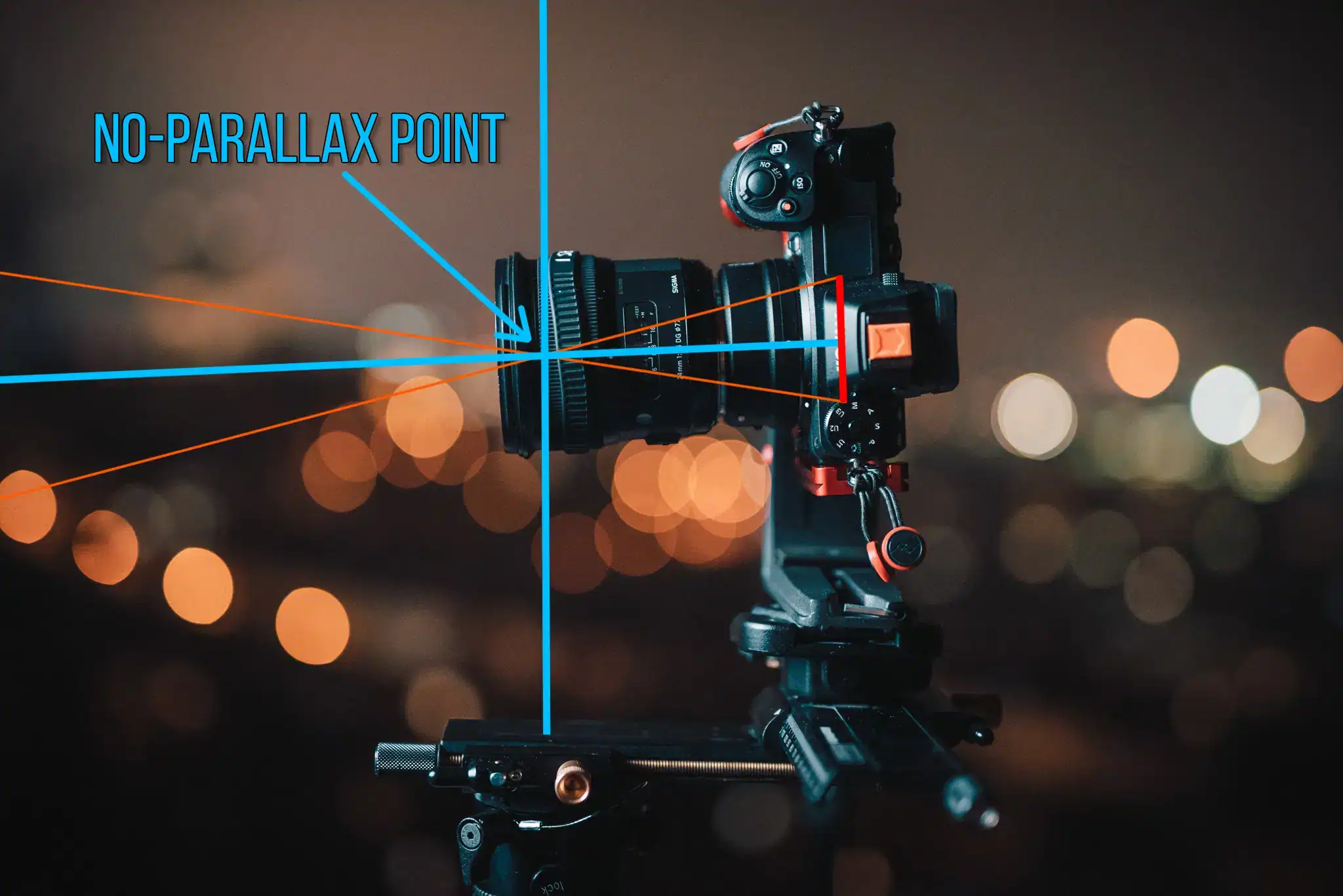
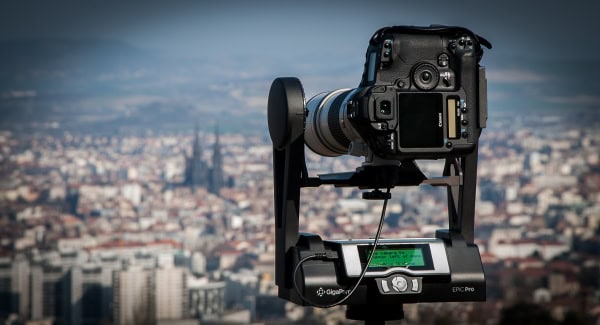
- Panoramic head: Enables rotating the camera around the lens’s entrance pupil (nodal point) to eliminate parallax—critical for stitching straight lines and near objects.
- Stable tripod with leveling base: Level the base so your yaw rotation remains flat; this keeps horizons straight and reduces post corrections.
- Remote trigger or app: Use a cable release, 2-second timer, or Nikon SnapBridge to avoid vibrations.
Optional Add-ons
- Pole or car mount: Great for vantage points or moving capture. Use safety tethers and mind wind loads—fisheyes see everything, including flex and vibration.
- Lighting aids: Small LED panels or bounced flash to lift shadows in dark interiors (avoid mixed white balances if possible).
- Weather protection: Rain cover, microfiber cloths, and silica packs for moisture control.
Step-by-Step Shooting Guide
Standard Static Scenes
- Level tripod & align nodal point: Mount the Z7 II on a panoramic head with a fore-aft rail. As a starting point for the 7Artisans 10mm, set the entrance pupil approximately 62–68 mm forward from the camera’s sensor plane mark (Φ symbol on the top plate). Fine-tune using the near–far lineup method until there’s no relative shift when panning.
- Manual exposure & locked white balance: Set M mode and lock WB (e.g., Daylight outdoors, a custom Kelvin for interiors). This prevents exposure/WB shifts that cause banding or color seams in stitches.
- Capture with overlap: Shoot 6 frames around at 60° yaw increments. Check histogram for clipping. Add 1 zenith (+60°) and 1 nadir (−60° or a separate offset “patch” later).
- Nadir cleanup: After the main set, move the tripod slightly, shoot a handheld nadir plate at the same exposure/WB to patch the tripod footprint in post.
HDR / High Dynamic Range Interiors
- Bracket ±2 EV, 3–5 frames per angle: On the Z7 II, enable auto bracketing (AEB). Keep aperture fixed (f/8) and vary shutter speed. This balances bright windows and dark furniture without noise.
- Lock WB and turn off Auto ISO: Keep color and exposure consistent across brackets so stitching remains seamless.
Low-Light / Night Scenes
- Use a tripod, turn IBIS off, and enable electronic front-curtain shutter: This minimizes micro-shake. Typical settings: f/4–f/5.6, ISO 100–400, shutter 1–8 s.
- Use a remote or self-timer: Prevents any tactile vibration on long exposures. Avoid silent shutter under certain LED lighting to prevent banding.
Crowded Events
- Two passes: First pass fast for coverage; second pass patiently to capture “clean plates” when gaps appear in the crowd.
- Mask in post: Use PTGui’s masking to prefer frames without people in overlapping regions.
Special Setups (Pole / Car / Elevated)
- Secure everything: Use safety tethers and don’t exceed your pole’s safe load rating. Keep rotations slow to avoid vibrations and rolling shutter artifacts.
- Use higher shutter speeds: If handheld/pole, aim 1/250–1/500 at f/5.6–f/8, ISO 400–800. Enable IBIS when not on a tripod.
Recommended Settings & Pro Tips
Exposure & Focus
| Scenario | Aperture | Shutter | ISO | Notes |
|---|---|---|---|---|
| Daylight outdoor | f/8–f/11 | 1/100–1/250 | 100–200 | Lock WB (Daylight). Base ISO 64 gives best DR. |
| Low light/night | f/4–f/5.6 | 1/30–8 s (tripod) | 100–400 | Turn off IBIS; use EFCS and remote release. |
| Interior HDR | f/8 | Bracket ±2 EV | 100–400 | 3–5 brackets per angle; avoid Auto ISO and Auto WB. |
| Action / moving subjects | f/5.6–f/8 | 1/200+ | 400–800 | Two passes to capture clean plates for masking. |
Critical Tips
- Manual focus: With a 10 mm fisheye at f/8, set focus around 0.5 m (near hyperfocal). Enable peaking on the Z7 II for confidence.
- Nodal calibration: Mark your rail position for this combo once dialed in. Reuse the setting for fast, repeatable setup.
- White balance lock: Prevents stitch seams from color shifts, especially in mixed lighting.
- RAW capture: Always shoot RAW on the Z7 II to maximize dynamic range and color latitude.
- IBIS usage: Off on a tripod; on for handheld or pole. Check results at 100% for micro-blur.
- Non-CPU lens data: In the Z7 II menu, set focal length to 10 mm so IBIS (when used) stabilizes correctly and EXIF is more informative.
Stitching & Post-Processing
Software Workflow
Import RAW files into Lightroom or Capture One for base adjustments (WB, exposure, lens CA/fringing). Export 16-bit TIFFs to a dedicated stitcher. With diagonal fisheye input, PTGui typically excels thanks to robust control point detection and masking. Expect to stitch a 12k–16k wide equirectangular from a 6+2 set on the Z7 II. Aim for 25–35% overlap per frame; fisheye coverage simplifies alignment while keeping shot count low. For open-source, Hugin can also produce excellent results with careful control points. For PTGui insights, see a hands-on review highlighting why many pros use it in production. Read a PTGui overview for pro-grade panoramas.
Cleanup & Enhancement
- Tripod/nadir patch: Use PTGui’s Viewpoint optimization with a separate nadir shot or clone in Photoshop. Some AI tools can remove the tripod quickly.
- Color balance: Match temperature/tint across the pano; address mixed lighting (tungsten + daylight) with local WB adjustments.
- Noise reduction: Apply modest NR to shadow brackets from HDR sets, especially at ISO 400–1600.
- Leveling: Set horizon and correct yaw/pitch/roll in the stitcher for a natural VR view.
- Export: Output equirectangular JPEG/TIFF. For VR publishing, follow platform specs. See Oculus’ guide to DSLR/Mirrorless 360 photos.
For a deeper primer on pano-head setup and techniques, explore this practical tutorial on entrance pupil alignment and shooting flow. Panoramic head setup: eliminating parallax.
A practical video overview of panoramic capture and stitching best practices.
Disclaimer: Stitching tools evolve—verify features and current workflows in the latest official documentation.
Useful Tools & Resources
Software
- PTGui panorama stitching
- Hugin (open source)
- Lightroom / Photoshop
- AI tripod removal or content-aware fill tools
Hardware
- Panoramic heads (Nodal Ninja, Leofoto, Fanotec)
- Carbon fiber tripods with leveling bases
- Wireless remotes or app-based shutter control
- Pole extensions / car suction mounts (with safety tethers)
Disclaimer: Names provided for search reference; confirm specs and compatibility on official product pages.
Common Mistakes & How to Avoid Them
- Parallax error: Not aligning the entrance pupil. Solution: Calibrate and mark your rail for the 7Artisans 10mm on the Z7 II.
- Exposure flicker: Using auto exposure or auto WB across frames. Solution: Manual exposure and locked WB.
- Tripod in frame: Failing to shoot a nadir patch. Solution: Offset nadir shots or viewpoint correction in PTGui.
- Ghosting from movement: Crowds, leaves, water. Solution: Multi-pass capture and masking preferences in the stitcher.
- Night noise or blur: High ISO and/or micro-shake. Solution: Use a tripod, low ISO, EFCS, remote trigger, and IBIS off on tripod.
Field-Tested Scenarios & Settings
Indoor Real Estate
Mount the Z7 II on a panoramic head, level the base, and shoot at f/8, ISO 100–200, with 3–5 bracketed exposures at ±2 EV. Lock WB to a neutral preset or set Kelvin (e.g., 4000–4500K for mixed LED/tungsten). Use 6 around + zenith + a handheld nadir. Keep the camera at least 30 cm from reflective glass and watch for your own reflections—shoot extra frames if needed to patch.
Outdoor Sunset Cityscape
Arrive early to calibrate. Start near base ISO (64–100) at f/8 with shutter speeds around 1/60–1/125 for the main pass. As the light drops, do an HDR pass to protect highlight gradients. The Z7 II’s dynamic range will retain color separation and cloud detail—avoid Auto ISO that might creep up and reduce DR.
Crowded Event or Festival
Run a fast first pass at f/5.6, 1/250, ISO 400–800 to freeze people. Then do a slow second pass and wait for gaps to build clean plates. Later, prefer frames without people using stitcher masks. If space is tight, a fisheye’s fewer frames reduce your exposure to bumps and gear snags.
Rooftop / Pole Shooting
Keep the rig light and balanced. Use 1/250+ shutter speeds, f/5.6–f/8, ISO 400–800; enable IBIS if not on a tripod. Secure a tether line and beware of gusts—fisheye lenses catch wind. Limit rotations to the minimum needed frames (e.g., 6 around) to reduce motion-induced micro-blur.
Car-Mounted Pass
Use vibration-damping suction mounts and safety cables. Pre-set manual focus and exposure, and shoot at 1/500–1/1000 if possible. Expect some stitching compromises and plan to mask frames with fewer moving elements. Safety first: never mount where it obstructs the driver or violates local regulations.
Visual Aids
Frequently Asked Questions
- Can I shoot handheld panoramas with the Nikon Z7 II?
Yes, for quick coverage. Enable IBIS, use faster shutter speeds (1/250+), and maintain consistent overlap. Expect more stitching cleanup, especially with near objects. For critical interiors or straight lines, a pano head is strongly recommended.
- Is the 7Artisans 10mm f/2.8 II wide enough for a single-row 360?
Yes. With 6 shots around (60° spacing) plus a zenith and nadir, you can cover full 360×180. In tight spaces or complex scenes, consider 8 around for extra overlap and stitching flexibility.
- Do I need HDR for interiors with bright windows?
Usually. Bracketing ±2 EV with 3–5 frames preserves window detail and clean shadows. The Z7 II’s base-ISO DR is excellent, but bracketing ensures consistent highlight rolloff and minimizes noise.
- How do I avoid parallax issues?
Use a panoramic head and align the entrance pupil of the 10 mm lens with the rotation axis. Start with about 62–68 mm from the sensor plane, then refine using a near–far test. Mark the rail for future sessions. For methodology, see this pano head setup guide. Learn entrance pupil alignment.
- What ISO range is safe on the Z7 II in low light?
On a tripod, stick to ISO 64–400 and lengthen shutter time. Handheld or pole work is fine at ISO 400–800, with 1600 as a practical upper bound if you must. The files remain highly workable, especially in RAW with noise reduction.
- Can I set up Custom Shooting Modes for pano?
Yes. Use the Z7 II’s custom banks to store “Pano-Daylight” and “Pano-Interior HDR” profiles (manual exposure, fixed WB, drive/bracket settings, EFCS). This speeds up on-site setup.
- How do I reduce flare with a fisheye?
Avoid pointing directly at strong light sources when possible; shade the lens with your hand just out of frame; clean the front element meticulously. Take an extra frame with your hand not in the shot for patching if needed.
- What’s the best tripod head for this setup?
A two-rail panoramic head with a vertical L-bracket is ideal (e.g., Nodal Ninja, Leofoto). Ensure fine fore–aft adjustment and solid clamping to hold the Z7 II and lens without flex.
Safety, Limitations & Data Protection
Fisheye front elements are exposed—use a cap whenever you move the tripod. On rooftops or poles, always tether the camera. In crowds, keep a low footprint and consider an assistant. The 7Artisans 10mm is fully manual; double-check aperture and focus before every pass. For reliability, shoot a second safety round and maintain a redundant backup workflow: dual cards if possible, offload to a laptop or SSD after each location, and keep checksum-verified copies. The Z7 II’s files are large; plan for storage and battery management.