
Why This Camera & Lens Are Great for Panoramas
The Nikon Z6 II paired with the Tokina ATX-i 11–20mm f/2.8 is a strong, budget-friendly combo for high‑quality 360° panoramas and wide sweeping landscapes. The Z6 II’s 24.5MP full-frame BSI CMOS sensor (35.9×23.9 mm, ~5.94 µm pixel pitch) delivers excellent dynamic range at base ISO (about 14 stops) and very clean files up to ISO 1600–3200. It also offers in-body image stabilization (IBIS), an accurate electronic level, focus peaking, and robust RAW output—features that directly simplify panoramic capture.
The Tokina ATX‑i 11–20mm f/2.8 CF is a rectilinear ultra‑wide zoom designed for APS‑C (DX) imaging. On the Z6 II you’ll run it via an FTZ adapter in DX crop mode, which gives an effective full‑frame equivalent field of view around 16.5–30mm. Rectilinear perspective preserves straight architectural lines, which is a big plus for real estate and interiors. The constant f/2.8 aperture helps in low light, while stopping down to f/5.6–f/8 yields crisp, even sharpness across the frame. Expect moderate barrel distortion on the wide end and some lateral chromatic aberration—both are easily controlled in stitching software or RAW development.
Compared with fisheyes, this rectilinear setup requires more images to cover a full sphere, but rewards you with more natural geometry, less “fisheye look,” and cleaner lines around windows, cabinets, and horizons. It’s a great all‑rounder for creators who want one kit for interiors, cityscapes, and landscapes.
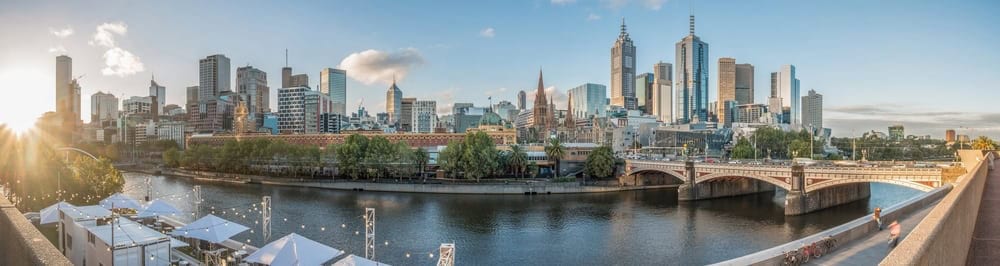
For a concise introduction to DSLR/mirrorless 360 workflows, see Meta’s guide on using a DSLR or mirrorless to shoot and stitch 360 photos at the end of this section. Using a DSLR or mirrorless camera to shoot and stitch a 360 photo
Quick Setup Overview
- Camera: Nikon Z6 II — Full frame (FX) 24.5MP BSI CMOS, ~14EV DR at ISO 100; IBIS; DX crop output ~10MP per frame.
- Lens: Tokina ATX‑i 11–20mm f/2.8 CF (rectilinear, APS‑C). Constant f/2.8; takes 82mm filters; moderate barrel distortion at 11mm; lateral CA manageable.
- Mounting: Use Nikon FTZ adapter. AF works on most copies, but panoramas are best shot with manual focus locked.
- Estimated shots & overlap (rectilinear, 30% overlap target):
- Cylindrical (single row, 360° horizon): at 11mm DX ≈ 8 shots around; at 14mm ≈ 10; at 20mm ≈ 12–14.
- Full spherical (360×180): at 11mm DX ≈ 3 rows × 8 around (±45°, 0°) + zenith + nadir = ~26 frames. At 14mm, 3 rows × 10 + Z/N ≈ 32. At 20mm, 3 rows × 12–14 + Z/N.
- Difficulty: Intermediate (rectilinear panoramas require careful nodal alignment and consistent exposure).
Planning & On-Site Preparation
Evaluate Shooting Environment
Look for moving elements (people, cars, trees in wind), reflective surfaces (glass, polished floors), and high contrast (windows vs interiors). If shooting through glass, keep the front element close—within a few centimeters—to reduce reflections. Avoid direct bright light hitting the front element; recompose or shade the lens to minimize flare and ghosting, especially at 11–14mm where the field of view is very wide.
Match Gear to Scene Goals
The Z6 II’s DR helps in challenging light (sunset skyline, interiors with bright windows). For interiors, plan on bracketing ±2EV (or 5–7 frames in extreme cases). The Tokina’s rectilinear projection keeps lines straight—preferred by real‑estate shooters—but you’ll need multi‑row capture for full spheres. The Z6 II is clean at ISO 100–800 for tripod work; handheld or pole work can go to ISO 1600–3200 with good noise control. If you only need quick coverage outdoors, shoot at 11mm to minimize shot count but still retain natural geometry.
Pre-shoot Checklist
- Power and storage: Full batteries, fast UHS-II cards, a spare set. Clean lens elements and sensor; dust shows up in skies and walls.
- Tripod leveling & pano head calibration: Level the base first; verify your nodal point alignment before you start.
- Safety: On rooftops, use a weight or tether in wind. For car mounts and poles, secure all clamps, use safety lines, and mind bystanders.
- Backup workflow: Shoot a second full pass; if something moves or a frame fails, you’ll have clean replacements.
Essential Gear & Setup
Core Gear
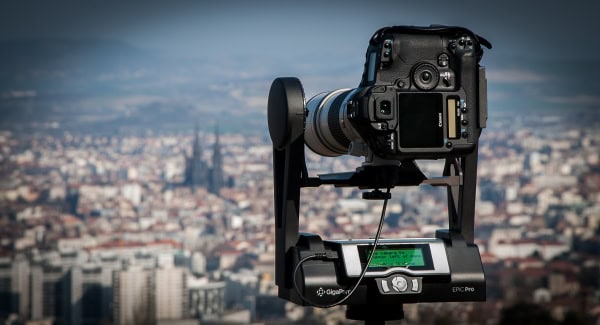
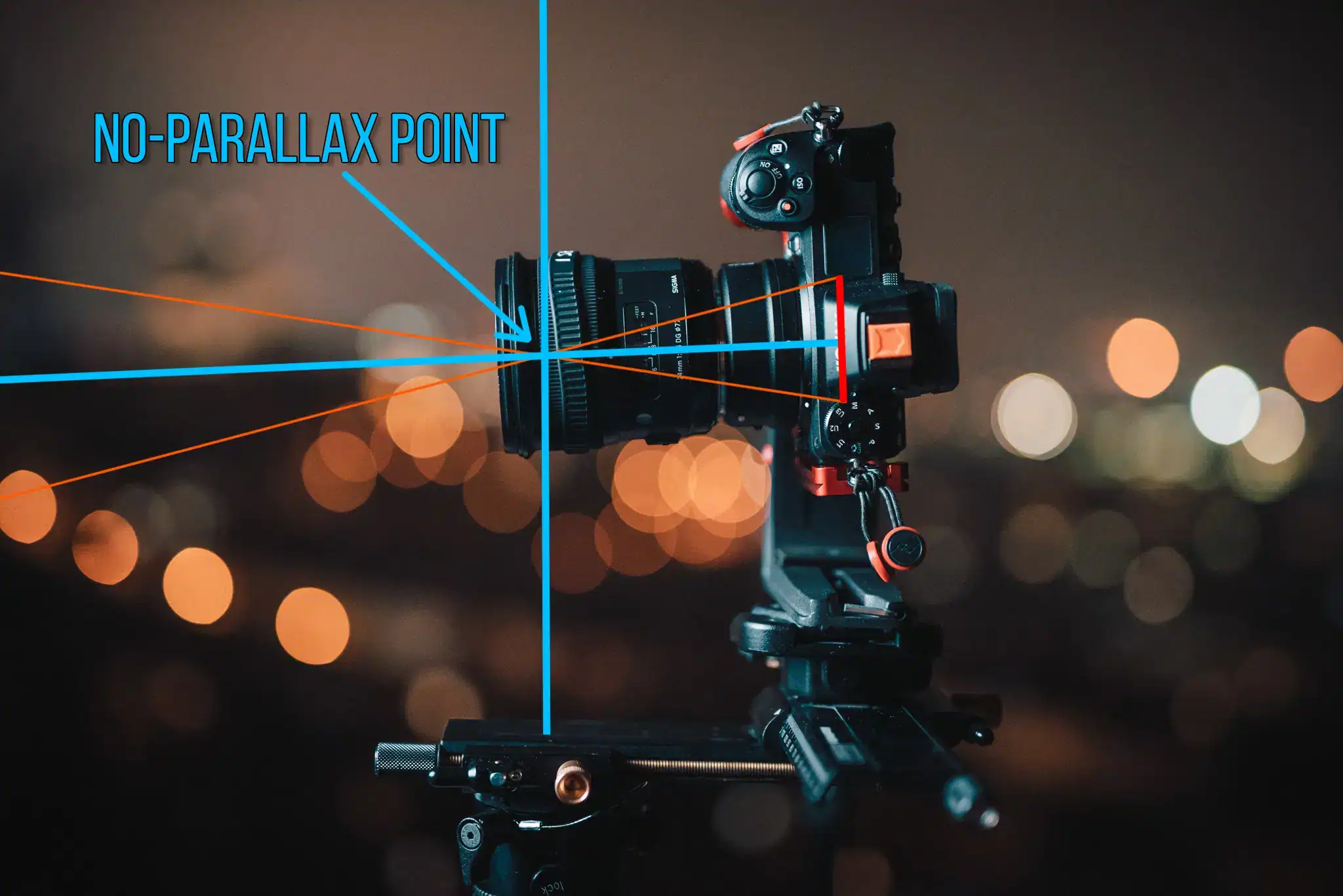
- Panoramic head: Lets you rotate the camera around the lens’s entrance pupil (often called the “nodal point”) to eliminate parallax. This is essential with rectilinear lenses for perfect stitches.
- Stable tripod with leveling base: A quick‑leveling half‑ball or base saves time and prevents horizon drift across rows.
- Remote trigger or Nikon SnapBridge app: Avoids vibrations and keeps timing consistent when bracketing.
Optional Add-ons
- Pole or car mount: Great for elevated or moving perspectives—be ultra‑conservative with wind and vibration; always use a safety tether.
- Lighting aids: Small LED panels or bounced flash for interior corners; keep lighting constant through each row.
- Weather gear: Rain covers and desiccant packs. Salt spray and dust can ruin a shoot and your lens coatings.
If you’ve never set up a panoramic head, this illustrated tutorial will help you master the basics. Panoramic head setup tutorial
Step-by-Step Shooting Guide
Standard Static Scenes
- Level the tripod and align the nodal point: On your pano head, slide the camera forward/backward until foreground and background objects don’t shift relative to each other when you pan left/right. Do this at your chosen focal length (11mm, 14mm, or 20mm) and at a typical subject distance for the scene. Expect the entrance pupil to sit roughly near the front half of the Tokina at 11mm; it shifts rearward slightly as you zoom toward 20mm.
- Lock manual exposure and white balance: Take a meter reading at mid‑tone and set Manual mode. Fix white balance (Daylight, Tungsten, or a custom Kelvin) so color doesn’t change between frames. Shoot RAW.
- Use consistent overlap: For this lens, aim for ~30% overlap. For a full sphere at 11mm DX, a solid pattern is 3 rows × 8 around at pitch angles +45°, 0°, and −45°, plus one zenith and one nadir shot.
- Capture a clean nadir: After the main rows, tilt down and shoot the ground. You can also shoot a handheld nadir after moving the tripod aside to make tripod removal easier in post.
HDR / High Dynamic Range Interiors
- Bracket exposures: Use ±2EV (3 frames) for moderate contrast or 5–7 frames for bright windows and dark interiors. Keep shutter speed the variable; aperture and ISO fixed.
- Lock white balance and focus: Changing WB or focus mid‑row will complicate stitching and tonemapping. Consider shooting one full pass per exposure value for consistent timing across rows.
Low-Light / Night Scenes
- Long exposures on tripod: Use f/4–f/5.6, ISO 100–400 to retain DR and color fidelity. Exposures from 1–8 seconds are common at night—use the remote or a 2s timer.
- IBIS off on tripod: Disable in-body stabilization to prevent micro‑vibrations during long exposures. Re‑enable IBIS for handheld or pole work.
Crowded Events
- Shoot two passes per row: a “fast coverage” pass and a “clean” pass where you wait for gaps. Mark your rows mentally or via the pano head’s degree scale.
- In post, use masking to pick the cleanest frames for each sector. This minimizes ghosting and doubles your chances of a seamless result.
Special Setups (Pole / Car / Drone)
- Secure everything: Tighten all clamps; add a safety tether from the camera plate to the pole/car frame. Check balance before lifting or driving.
- Mind wind and vibration: Rotate slowly, use faster shutter speeds (1/200–1/500) and higher ISO (800–1600) if needed. Accept a little extra noise to avoid motion blur.
Recommended Settings & Pro Tips
Exposure & Focus
| Scenario | Aperture | Shutter | ISO | Notes |
|---|---|---|---|---|
| Daylight outdoor | f/8–f/11 | 1/100–1/250 | 100–200 | Lock WB to Daylight; use electronic level |
| Low light/night | f/4–f/5.6 | 1/30–8s | 100–400 (tripod) | Remote or 2s timer; IBIS OFF on tripod |
| Interior HDR | f/8 | Bracket ±2EV | 100–400 | Bracket shutter only; keep timing consistent |
| Action / moving subjects | f/5.6–f/8 | 1/200+ | 400–1600 | Freeze motion; consider double pass |
Critical Tips
- Manual focus at hyperfocal: On DX at 11mm and f/8, hyperfocal ≈ 0.77 m, giving near‑to‑infinity sharpness. At 20mm f/8, hyperfocal ≈ 2.5 m. Set once and tape the ring.
- Nodal point calibration: Do the classic parallax test with a near and far object. Mark rail positions for 11, 14, and 20mm on your pano head with tape or a paint pen.
- White balance lock: Mixed interior lighting can shift color between frames; fix Kelvin or use a custom WB shot of a grey card.
- RAW over JPEG: The Z6 II’s RAW files preserve highlight headroom—useful for bright windows and sunset skies.
- Stabilization: IBIS off on tripod; on for handheld/pole. Keep shutter speeds high when you can’t use a tripod.
Stitching & Post-Processing
Software Workflow
Import and cull in Lightroom or your RAW editor. Apply consistent lens corrections (vignette/CA) but avoid auto‑cropping. Export to TIFF or keep RAW for stitching in PTGui or Hugin. Rectilinear ultra‑wide images stitch well if you used adequate overlap (~25–30%). For single-row cylindrical panos, Lightroom/Photoshop can suffice. For 360×180 spheres, PTGui offers superior control points, masking, and horizon leveling. PTGui review and why it excels for complex panoramas
Cleanup & Enhancement
- Nadir patch: Use PTGui Viewpoint Correction or export and clone/heal in Photoshop. AI content‑aware fill works well on uniform floors.
- Color and noise: Match white balance globally, then refine local color casts. Apply mild noise reduction for ISO 800+ or night scenes.
- Leveling: Use verticals and the horizon to correct roll/pitch. PTGui’s horizon tool and vertical line constraints help.
- Export formats: For VR, export equirectangular at 2:1 ratio. Common outputs are 12,000×6,000 or 16,000×8,000 pixels, depending on your capture density.
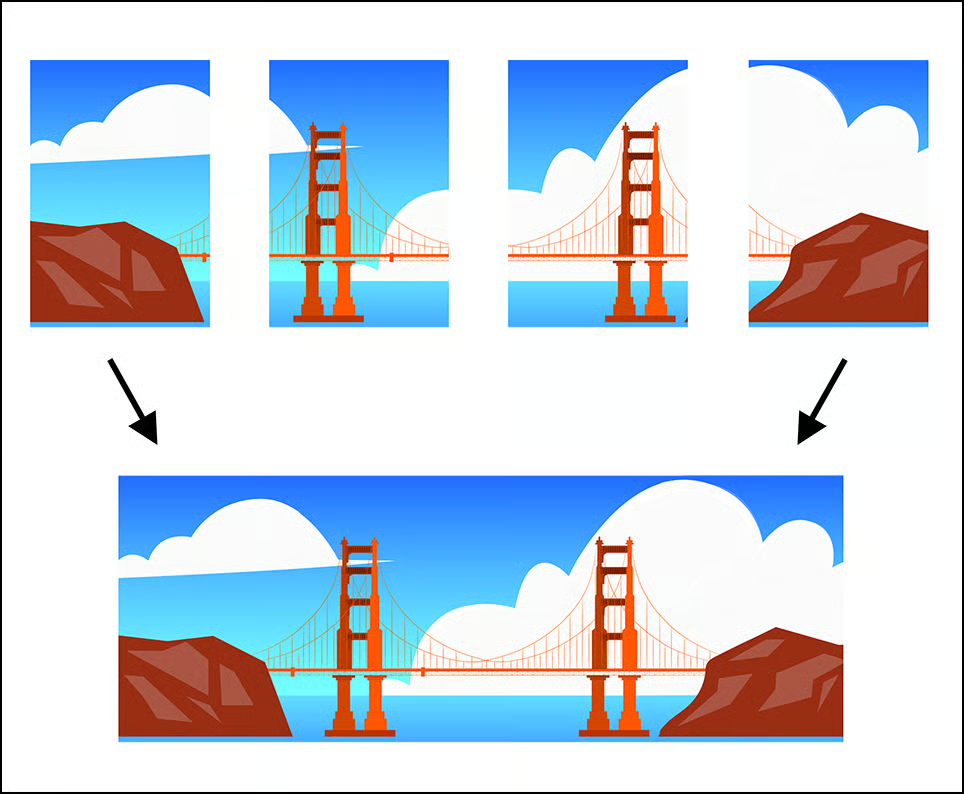
Want to see a full capture‑to‑stitch walkthrough? The short video below complements the steps above.
For broader background on panoramic techniques, see this Q&A thread and best practices overview. Best techniques to take 360 panoramas
Useful Tools & Resources
Software
- PTGui panorama stitching
- Hugin open source
- Lightroom / Photoshop
- AI tripod removal tools
Hardware
- Panoramic heads (Nodal Ninja, Leofoto)
- Carbon fiber tripods with leveling bases
- Wireless remote shutters
- Pole extensions / car suction mounts with safety tethers
Disclaimer: software/hardware names provided for search reference; check official sites for details.
Field Examples & Case Studies
Indoor Real Estate (Bright Windows)
At 11–14mm, shoot 3 rows × 8–10 around with ±2EV bracketing. Set f/8, ISO 100–200, bracketing shutter speed only. Lock WB around 4000–4500K for mixed daylight + warm lamps. The Z6 II’s DR lets you recover a lot, but bracketed HDR is more consistent for window pulls. Keep the front element parallel to windows to reduce reflected hotspots.
Outdoor Sunset Skyline
Use 11mm for fewer frames, f/8, ISO 100. Meter for highlights; optionally bracket ±2EV to protect the sunlit clouds. Rotate smoothly and watch the wind—hang a bag on the tripod to damp vibrations. The Z6 II handles dusk at 1/30–1/60s with excellent detail if the tripod is solid.
Crowded Event Floor
Set 14–16mm equivalent (≈11–12mm DX) and 1/200–1/400s shutter at ISO 800–1600. Do two passes per row and mask later. Aim the camera slightly above eye level to reduce parallax with close subjects and avoid blocked overlaps when people walk through.
Rooftop or Pole Shooting
At 11mm, a single‑row cylindrical 360 (8 shots) can be enough for a banner or web embed. On a pole, use 1/250–1/500s, ISO 800–1600, f/5.6. Always tether gear and keep clear of power lines. Rotate slowly and keep your stance stable.
Safety, Gear Protection & Data Integrity
Wind is the #1 enemy of clean stitches and safe equipment. Don’t extend your center column outdoors. On rooftops or poles, use a tether. Avoid silent electronic shutter under flickering LED lights (banding risk). In rain or sea spray, use covers and wipe the front element often—water droplets ruin overlaps.
For data safety, shoot dual card slots if your workflow allows, or back up to a phone/tablet via SnapBridge after critical shoots. For commercial jobs, shoot a second full pass; redundancy costs minutes and saves reshoots.
Nodal Calibration Notes for This Combo
Entrance pupil positions vary slightly by copy and focal length, so always calibrate on your pano head. A good starting point: at 11mm, expect the entrance pupil near the front half of the Tokina; by 20mm it moves a bit toward the camera. Do a quick near/far parallax test and mark your rail with three references (11, 14, 20mm). Once marked, you’ll be able to switch focal lengths confidently without re‑testing each time.
For a step‑by‑step panoramic head setup guide with visuals, consult this training resource after you’ve tried a few test shots. Set up a panoramic head for perfect high‑end 360 photos
Common Mistakes & How to Avoid Them
- Parallax error → Always align the entrance pupil; re‑check if you change focal length.
- Exposure flicker → Manual mode and locked WB; avoid auto ISO for multi‑row sequences.
- Tripod shadows or footprints → Shoot a dedicated nadir and patch it later.
- Ghosting from movement → Double‑pass capture and mask in stitching software.
- High ISO noise → Use tripod, lower ISO, and expose to protect midtones; use denoise tools if needed.
- IBIS artifacts on tripod → Turn IBIS off for long exposures on a solid support.
Frequently Asked Questions
-
Can I shoot handheld panoramas with the Nikon Z6 II?
Yes for quick cylindrical panos (single row), especially at 11mm with 1/200s+ and IBIS ON. For full 360×180 spheres or interiors, use a tripod and panoramic head to avoid parallax and ensure perfect stitching.
-
Is the Tokina ATX‑i 11–20mm f/2.8 wide enough for a single‑row 360?
For a full sphere, no—rectilinear 11mm on DX doesn’t cover enough vertical angle in one row. You’ll need multi‑row capture (e.g., 3 rows × 8 around at 11mm), plus zenith and nadir. For cylindrical 360° around the horizon, one row of ~8 shots at 11mm often works.
-
Do I need HDR for interiors with bright windows?
Usually, yes. Bracket ±2EV (3 frames) as a baseline; in very bright scenes, use 5–7 frames. This keeps window views while maintaining clean interior detail and reduces banding in gradients after stitching.
-
How do I avoid parallax issues with this rectilinear zoom?
Use a calibrated panoramic head. Perform a quick parallax test at your chosen focal length and mark the rail. Keep the camera level and rotate only around the entrance pupil. Even a few millimeters off can cause stitching gaps near close objects.
-
What ISO range is safe on the Z6 II for low light panoramas?
On tripod: ISO 100–400 for maximum DR and color depth. Handheld/pole: ISO 800–1600 is very usable; 3200 is acceptable with noise reduction. The Z6 II’s BSI sensor handles higher ISO well, but keep it low when DR is critical.
Bonus Visual: What a Clean Setup Looks Like
The image below shows a typical multi‑row head ready for a gigapixel or 360º job—note the leveling base and rail markings for repeatability.