
Why This Camera & Lens Are Great for Panoramas
The Nikon Z6 II paired with the Sony FE 16–35mm f/2.8 GM is an unusual but surprisingly capable combo for panoramic and 360° work—provided you use a reliable adapter. The Z6 II’s 24.5MP full-frame BSI CMOS sensor (approx. 35.9 × 23.9 mm) delivers strong dynamic range (about 14 stops at base ISO) and excellent high-ISO performance for low-light interiors. With large ~5.9 µm pixels, files are clean and flexible for stitching and HDR blending. Its 5-axis in-body stabilization (IBIS) helps handheld frames (turn IBIS off on a tripod), and the camera’s quiet shutter and refined ergonomics make multi-shot sequences easy.
The Sony FE 16–35mm f/2.8 GM is a rectilinear ultra-wide zoom renowned for corner-to-corner sharpness, controlled coma, and low CA at typical pano apertures (f/5.6–f/8). At 16mm, you get an expansive rectilinear field of view without fisheye distortion, which helps architectural lines stay straight—ideal for real estate and interiors. The trade-off versus a fisheye is shot count: you’ll need more frames to cover a full sphere at 16mm rectilinear, but stitching can be cleaner along straight edges.
Compatibility note: to use the Sony E-mount 16–35mm GM on a Nikon Z6 II, mount it with a thin AF-capable adapter such as the Techart TZE-01/TZE-02. Expect slightly slower or occasional hunting AF and limited on-lens button support. For panoramas, manual focus is recommended anyway. Balance can be front-heavy: use a robust panoramic head and plate to avoid flex. If a native Z-mount wide prime is available, it’s simpler—but this GM lens is optically excellent if you already own it.
Quick Setup Overview
- Camera: Nikon Z6 II — Full-frame 24.5MP BSI CMOS, dual processors, native ISO 100–51,200 (expandable 50–204,800), approx. 14 stops DR at ISO 100, 5-axis IBIS.
- Lens: Sony FE 16–35mm f/2.8 GM (rectilinear zoom) — extremely sharp from f/5.6–f/11, mild barrel distortion at 16mm, 82mm filter thread. Use Techart TZE adapter for Nikon Z.
- Estimated shots & overlap (tested guidelines on full frame):
- 16mm rectilinear, full 360×180: 3-row multi-row is safest: 8 shots at +45°, 8 at 0°, 8 at −45° (≈30–35% overlap) + 1 zenith + 1–3 nadir cleanup = 26–28 shots.
- 16mm rectilinear, minimalist: 12 shots around the horizon + zenith + nadir = 14; risk of top/bottom gaps outdoors.
- Gigapixel look: zoom to 24–35mm and add more rows (e.g., 12×3 at 24mm ≈ 36 + z/n).
- Difficulty: Intermediate (easier with a calibrated panoramic head).
Planning & On-Site Preparation
Evaluate Shooting Environment
Survey light and movement before you set up. For interiors, note mixed lighting (LED, tungsten, daylight) and reflective surfaces like glass and polished floors. To minimize reflections through glass, shoot as close as practical (a few centimeters if possible) and keep the lens slightly off-axis to avoid catching your own tripod in reflections. Outdoors, watch the sun’s position; shooting shortly after sunset or during overcast conditions reduces harsh contrast and flare, making stitching easier.
Match Gear to Scene Goals
This combo excels at clean, rectilinear coverage with excellent tonal flexibility. The Z6 II comfortably handles ISO 100–800 with minimal noise; ISO 1600 is still usable with light denoising. The 16–35 GM gives you options: stay at 16–18mm to reduce shot count for a 360, or zoom to 24–35mm for higher-resolution, multi-row panoramas or gigapixel looks. Unlike a fisheye (fewer shots, more distortion), this rectilinear zoom preserves straight lines—great for architecture and real estate—but expect more frames for complete spherical coverage.
Pre-shoot Checklist
- Power & storage: charge batteries; bring a spare. The Z6 II’s dual slots (CFexpress/XQD + SD UHS-II) allow backup recording—use it for paid work.
- Clean optics: wipe front/rear elements; use a blower on the sensor before precision work.
- Head & tripod: level your tripod; pre-calibrate the panoramic head for this lens (nodal/entrance pupil alignment).
- Safety: in wind or rooftop setups, add sandbags/weights and a safety tether. For vehicle mounts, use redundant straps and verify torque on clamps.
- Backup workflow: shoot a second safety round—especially for dynamic scenes and HDR interiors.
Essential Gear & Setup
Core Gear
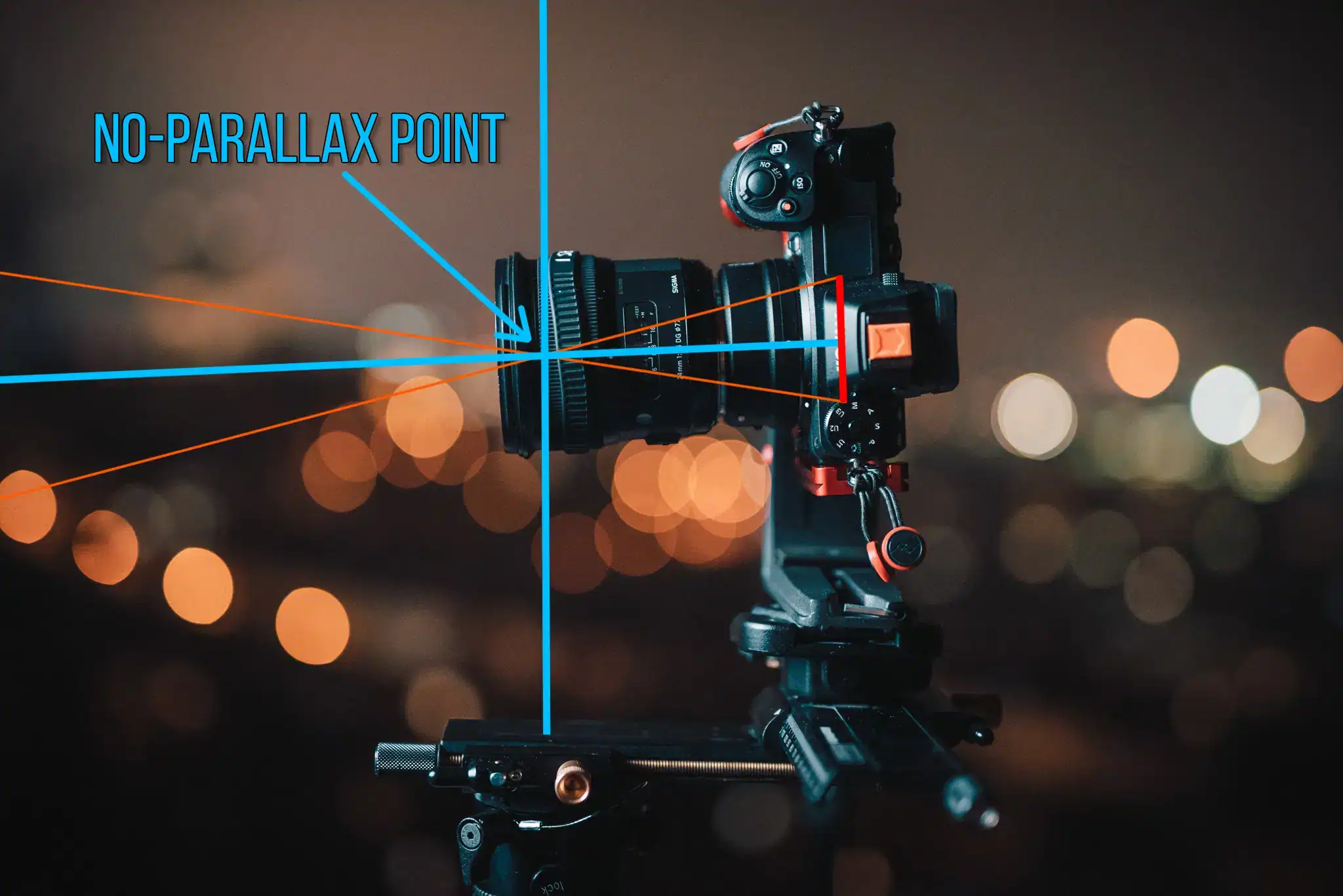
- Panoramic head: Allows rotation around the lens’s entrance pupil (often called nodal point) to prevent parallax. For a zoom, mark two calibrations: 16mm and ~24mm.
- Stable tripod with leveling base: A leveling base saves time and keeps rows consistent, reducing stitch errors.
- Remote trigger or app: Use the Nikon app or a cable release to minimize vibration; consider a 2-second self-timer for extra stability.
Optional Add-ons
- Pole or car mount: A carbon pole extends vantage points (rooftops/crowds), and car rigs offer moving captures—always use redundant tethers and inspect all clamps.
- Lighting aids: Small LED panels for interiors; be aware of flicker when using electronic shutter; mechanical shutter avoids LED banding.
- Weather protection: Rain covers, microfiber cloths, and lens hoods reduce flare and keep drops off glass.
Deep dive on panoramic head setup and why nodal alignment matters is well explained here: Panoramic head tutorial (360 Rumors).
Step-by-Step Shooting Guide
Standard Static Scenes
- Level and align: Level the tripod using the leveling base. Mount the panoramic head and set the lens to your chosen focal length (start at 16mm). Align the rotational axis through the lens’s entrance pupil. Practical tip: point the camera at two objects—one close, one far—crossing the frame edge. Rotate. If their relative alignment shifts, adjust the fore/aft rail until parallax disappears. On this 16–35 GM at 16mm, the entrance pupil sits near the front group; expect the clamp to sit forward compared to a 35mm setting.
- Manual exposure and locked white balance: Meter a mid-tone scene and switch to full manual (M). Set a fixed Kelvin white balance (e.g., 5600K daylight or a measured value) to avoid color shifts across frames.
- Focus: Switch to manual focus. For 16–18mm, set focus near hyperfocal at f/8–f/11 for maximum depth. Use magnified live view for precision.
- Capture sequence with adequate overlap: For a full sphere at 16mm rectilinear: 8 shots at −45°, 8 at 0°, 8 at +45° (≈30–35% overlap), plus 1 zenith (tilt up ~90°) and 1–3 nadir frames for tripod coverage. If time-constrained outdoors, 12 around + zenith + nadir can work but may leave small polar gaps.
- Nadir (ground) shot: After the main sequence, tilt down and shoot the ground with the tripod slightly offset, or move the tripod a few centimeters and shoot a clean plate to patch later.
HDR / High Dynamic Range Interiors
- Bracket ±2 EV (3–5 frames) to hold bright windows and dark corners. The Z6 II’s low base ISO helps keep noise under control; keep ISO 100–200 for HDR brackets when possible.
- Lock WB and aperture: Maintain a constant f-stop (e.g., f/8) and focus, changing only shutter speed between brackets.
- Sequence discipline: Shoot all brackets at each camera yaw before rotating to the next frame to keep overlap consistent and reduce ghosting.
Low-Light / Night Scenes
- Use a tripod, turn IBIS off, and consider mechanical shutter to avoid LED banding. Start at f/4–f/5.6, ISO 100–800, and let shutter speed lengthen (1–8s) as needed.
- Remote trigger or 2-second timer prevents micro-shake; wind can introduce motion blur, so add weight to the tripod.
- Minimize sky gradients issues: shoot the sky first if it’s changing quickly, then the rest.
Crowded Events
- Two-pass method: First pass quickly for coverage; second pass wait for gaps to reduce moving subjects. You can mask later between passes.
- Faster shutter: Use 1/200–1/500s and ISO 400–1600 if needed to freeze people, accepting some noise over motion blur.
Special Setups (Pole / Car / Drone)
- Pole: Keep the camera’s mass centered over the pole, and rotate more slowly. Use a strap/tether; avoid gusty conditions. At 16mm, 12–16 frames around plus nadir/zenith is a good starting point.
- Car rigs: Use damped suction mounts, safety cables, and shorter exposures (1/500s+). Plan a low-traffic route and shoot multiple takes.
For a useful visual walkthrough of panoramic head setup principles, watch this short video:
If you’re new to virtual tour pipelines from DSLR/mirrorless capture to stitching, this high-level guide is also helpful: Using a DSLR or mirrorless to shoot and stitch a 360 photo (Meta/Oculus).
Recommended Settings & Pro Tips
Exposure & Focus
| Scenario | Aperture | Shutter | ISO | Notes |
|---|---|---|---|---|
| Daylight outdoor | f/8–f/11 | 1/100–1/250 | 100–200 | Lock WB (Daylight or measured K) |
| Low light/night | f/4–f/5.6 | 1/30–8s | 100–800 | Tripod + remote; IBIS off on tripod |
| Interior HDR | f/8 | Bracket ±2 EV | 100–400 | Balance windows and shadows |
| Action / moving people | f/5.6–f/8 | 1/200+ | 400–1600 | Freeze motion, consider two-pass capture |
Critical Tips
- Manual focus at hyperfocal: At 16mm and f/8 on full frame, focusing ~1–1.5 m gives near-to-infinity sharpness. Confirm with magnified live view.
- Nodal (entrance pupil) calibration: Start with the rail moving the lens forward so the rotation point is near the front element at 16mm; refine using the foreground/background alignment test. Mark your rail for 16mm and for 24–28mm.
- White balance lock: Pick a Kelvin value or custom WB target to prevent stitching seams from WB shifts.
- RAW over JPEG: RAW maximizes the Z6 II’s DR and color headroom—especially important in HDR and night scenes.
- IBIS and shutter: Turn IBIS off on a tripod. Prefer mechanical shutter under LED lighting to avoid banding; electronic shutter is fine outdoors.
- Adapter realities: With Techart TZE, AF may be less reliable. For pano, AF is unnecessary—switch to MF and you’re set.
For theory on coverage, overlap, and output resolution trade-offs, see this technical background: DSLR spherical resolution (PanoTools wiki).
Stitching & Post-Processing
Software Workflow
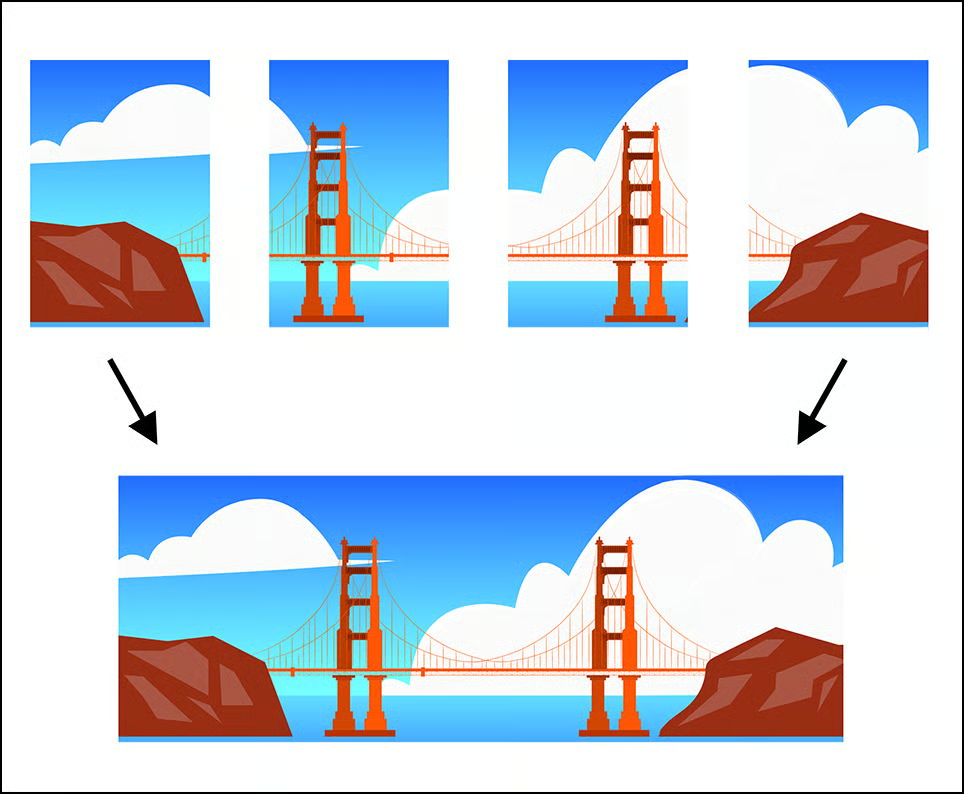
Import RAWs into Lightroom or your preferred RAW editor, apply a neutral profile, correct lens vignetting minimally, and sync exposure/WB. Export 16-bit TIFFs to a stitcher like PTGui or Hugin. Rectilinear wides like the 16–35 GM typically need 25–35% overlap for robust control points, especially near the top/bottom rows. Expect more frames than a fisheye, but line preservation is better. Industry norms: 25–30% overlap for fisheye sequences; 20–35% for rectilinear depending on scene detail.
PTGui remains a fast, reliable option with excellent optimizer, HDR merging, and masking tools; Hugin is a capable open-source alternative. After stitching, export an equirectangular 2:1 image (e.g., 12000×6000 or 16000×8000), then finish in Photoshop/Lightroom for final color and selective denoise/sharpen.
PTGui review and usage insights: Why PTGui excels for complex panoramas (Fstoppers).
Cleanup & Enhancement
- Nadir patch: Use a clean plate from your sequence or an AI-based tripod removal tool. Content-Aware Fill often works for uniform floors.
- Color and noise: Apply global color correction first, then selective noise reduction in shadow regions. The Z6 II tolerates moderate lifting, but avoid over-pushing ISO 3200+ frames.
- Leveling: Ensure horizon is correct; adjust roll/yaw/pitch in PTGui or with Photoshop’s Adaptive Wide Angle/Transform.
- Export: For VR platforms, use JPEG 8–10 quality at target resolution (e.g., 8192×4096 or 10000×5000). Keep metadata or inject XMP for 360 viewers if needed.
For a structured panoramic head setup refresher that impacts stitching quality, see: Set up a panoramic head for high‑end 360 photos (Meta/Oculus).
Useful Tools & Resources
Software
- PTGui (commercial stitcher) for complex multi-row and HDR pano workflows
- Hugin (open source) for robust, free stitching
- Lightroom / Photoshop for RAW prep and cleanup
- AI tripod removal tools (e.g., content-aware or generative fill) for nadir patching
Hardware
- Panoramic heads: Nodal Ninja, Leofoto, Sunwayfoto
- Carbon fiber tripods with leveling bases
- Wireless remotes or smartphone control
- Pole extensions and secure car mounts with safety tethers
Disclaimer: product names are for reference; confirm specs and compatibility on the manufacturers’ sites.
Common Mistakes & How to Avoid Them
- Parallax error: Not rotating around the entrance pupil. Solution: calibrate the panoramic head at 16mm and mark the rail positions.
- Exposure flicker: Auto exposure shifts between frames. Solution: shoot full manual and lock WB.
- Tripod shadows/footprints: No nadir plan. Solution: capture a clean nadir plate and patch later.
- Ghosting in crowds: Only one fast pass. Solution: do a two-pass capture and mask in post.
- High-ISO noise at night: Pushing ISO too far. Solution: use longer shutters at ISO 100–800, stable mount, remote trigger.
- Adapter surprises: AF quirks or flex. Solution: switch to manual focus and ensure a solid, play-free adapter fit.
Frequently Asked Questions
- Can I shoot handheld panoramas with the Nikon Z6 II?
Yes for simple single-row panos, but for full 360×180 spheres you’ll get the best results on a tripod with a panoramic head. Handheld introduces parallax and alignment errors; if you must, use high shutter speeds, overlap generously (40%+), and expect more cleanup in post.
- Is the Sony FE 16–35mm f/2.8 GM wide enough for single-row 360?
At 16mm rectilinear it’s possible to do 12 around + zenith + nadir, but coverage at the poles can be thin. For reliable full coverage, use a 3-row approach (e.g., −45°, 0°, +45°) plus zenith/nadir, or switch to a fisheye lens to reduce shot count.
- Do I need HDR for interiors with bright windows?
Usually, yes. Bracketing ±2 EV (3–5 frames) preserves window detail and interior shadows. The Z6 II’s dynamic range is strong, but single exposures often clip windows; HDR gives clean, natural results when blended carefully.
- What ISO range is safe on the Z6 II for low light panoramas?
Stick to ISO 100–800 for the cleanest stitches. ISO 1600 is usable with mild denoising; above that, noise becomes more noticeable when viewing 360s at full resolution. Prefer longer shutter speeds on a stable tripod rather than pushing ISO.
- How do I avoid parallax errors with this lens on a pano head?
Calibrate at the actual focal length you’ll use (e.g., 16mm). Align the fore/aft rail so close and distant objects at the frame edges maintain alignment as you rotate. Mark rail positions for 16mm and 24–28mm. Keep the clamp tight to avoid flex, especially with the adapter in the stack.
Real-World Scenarios & Field Notes
Indoor Real Estate
Use 16–18mm to keep rooms spacious yet undistorted. Shoot HDR brackets at ISO 100–200 and f/8. Lock WB at a measured Kelvin to smooth mixed lighting. Expect 3 rows + zenith/nadir for clean coverage; mask windows to prevent HDR halos. A leveled head saves time correcting verticals.
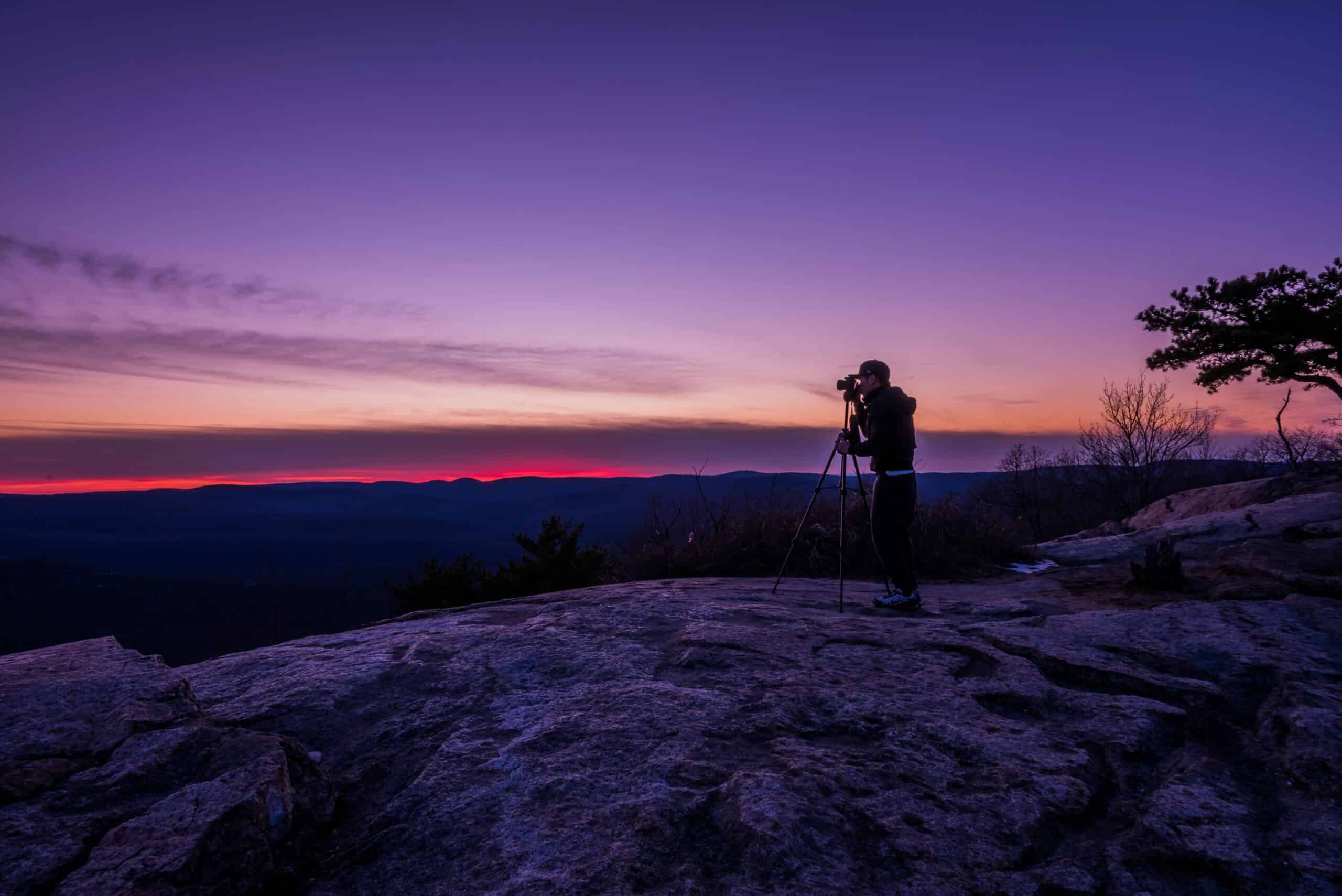
Outdoor Sunset
In high-contrast twilight, meter for mid-tones and bracket ±2 EV if the sky is bright. Wind can cause micro blur—add weight to the tripod. Shoot the sky first to freeze changing color; then complete the lower rows. Avoid direct sun in the frame if possible; use your hand or a flag just out of frame to minimize flare.
Event Crowds
Keep shutter 1/200s+ and ISO 400–1600 depending on light. Capture a quick full sequence, then wait for gaps for a second pass. Later, blend the clean plates to remove people crossing stitch seams. A shorter lens (16mm) reduces the total number of frames you need to sync across passes.
Rooftop or Pole
Extend a carbon pole for a fresh angle, but avoid gusty weather. Use higher shutter speeds and secure tethers. Rotate slowly and keep overlap at 35–40% to help the stitcher compensate for slight sway. Consider a safety lanyard to your harness when leaning out for a nadir plate.
Visual Examples
Below are a couple of visuals that align with the techniques above—entrance pupil alignment and the stitching concept.
Safety, Reliability & Backup Practices
Always secure your camera and lens—especially with an adapter between mounts—using high-quality plates and clamps. On rooftops or poles, use a redundant tether. In traffic or public spaces, maintain a safe perimeter and never leave a rig unattended. For paid jobs, enable the Z6 II’s dual card recording (RAW to CFexpress/XQD and backup JPEG/TIFF to SD). After each pano, quickly review a few frames from each row to ensure you didn’t miss a rotation step, then shoot a safety second pass.
Final Thoughts
If you’ve wondered how to shoot panorama with Nikon Z6 II & Sony FE 16–35mm f/2.8 GM, the key is embracing a disciplined, multi-row workflow. With the Z6 II’s clean RAWs and the GM’s sharp rectilinear rendering, you’ll produce panoramas with straight lines and rich tonality. Calibrate your nodal point, lock exposure and WB, overlap generously, and your stitches in PTGui or Hugin will come together reliably. Once you’ve marked your rail positions for 16mm and dialed in your bracket routine for interiors, this hybrid setup becomes fast and dependable.